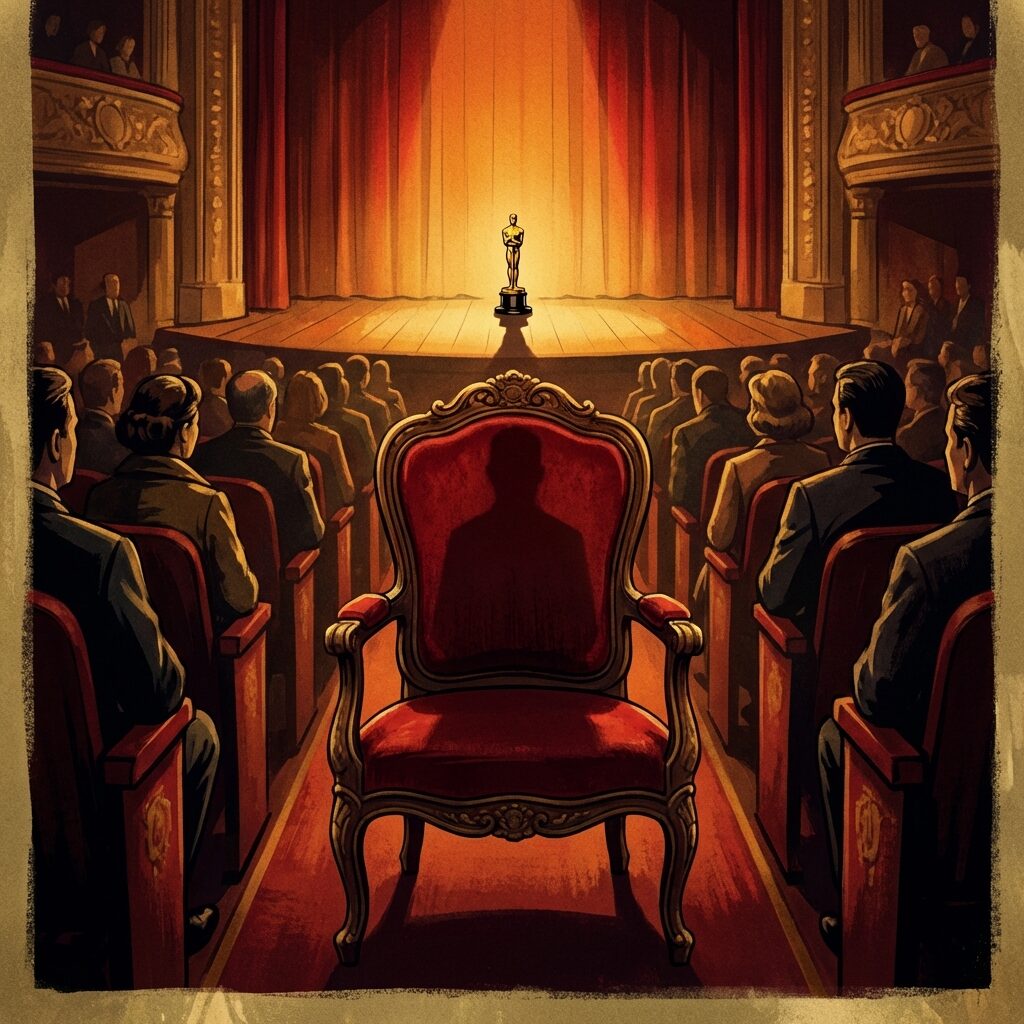
Kendrick Lamar | Not Like Us
The Kill Shot Nobody Expected
Rap’s most devastating diss track broke the genre’s own rules, it sounds like a block party, not a threat. That’s exactly what made it so dangerous.
You can dance to the most devastating diss track in rap history. That fact alone tells you something broke.
Diss tracks aren’t supposed to work this way. The template has been fixed for decades: find the nerve, hit it, keep hitting. Tupac screamed through “Hit ‘Em Up” like he wanted to burn the tape after recording it. Nas delivered “Ether” with clinical detachment, taking Jay-Z apart piece by piece. Ice Cube spat “No Vaseline” with the disgust of a man who’d already moved on. Every canonical rap beef follows the same emotional register, dark, menacing, ugly on purpose.
Then on May 4, 2024, less than twenty hours after releasing “Meet the Grahams”, a somber, track-by-track address to Drake’s parents, his son, and his alleged daughter, Kendrick Lamar put out “Not Like Us.” A 100 BPM West Coast bounce track built on sped-up saxophones from a 1968 soul record. Hyphy-influenced. Finger snaps and 808s. The kind of thing you’d hear at a block party in Inglewood. It ended up being so infectious that 62,000 people in London screamed every word back at Tottenham Hotspur Stadium, and a federal judge later cited its “catchy beat and propulsive bassline” as legal evidence in a copyright dispute.
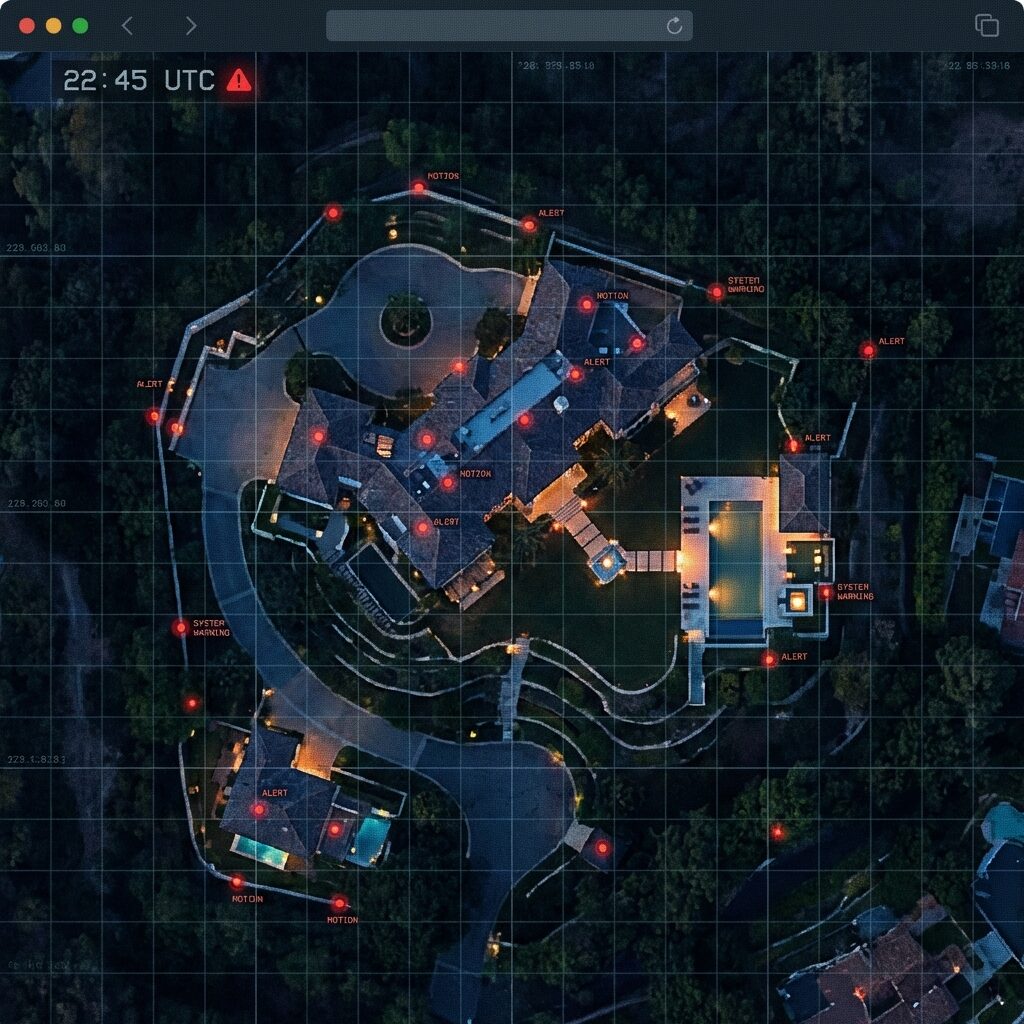
The cover art was its own kind of violence: a bird’s-eye Google Maps screenshot of Drake’s $100 million Toronto mansion, plastered with thirteen sex offender registry markers. A pedophilia accusation formatted as a meme. The whole thing looked like a joke until you thought about it for two seconds.
So how did a song that sounds like a party invitation become the most commercially successful, critically contested, and legally complicated diss track anyone has ever recorded?
Thirty Minutes and a Midnight Text
Mustard spent months firing beats at Kendrick before a 30-minute session, inspired by imagining Dre and Lil Jon collaborating, produced the track. Neither he nor co-producer Momberger were in the studio when it was recorded. Mustard found out the song existed when everyone else did.
Mustard had been trying to get a beat to Kendrick Lamar for months. Five beats a day, sometimes more, fired off like applications to a job posting with no listed requirements. He’d tagged along to a To Pimp a Butterfly session years back when Terrace Martin invited him, but nothing came of it. Kendrick stayed out of reach, a whole universe away from Mustard’s club-ready sound.
The chain of events traces back to Sean Momberger, a Florida-born producer who relocated to Los Angeles in 2014 after playing keyboards on Iggy Azalea’s “Fancy.” Momberger had been feeding Mustard sample ideas for a while, little melodic scraps and loops to build from. On April 6, 2024, one of them landed. Mustard sat down with a weird thought he couldn’t shake: “What would Dr. Dre do if Lil Jon was in the studio and they was collaborating on the beat?”
He had his answer in about thirty minutes.
He sped up a sample from Monk Higgins’ 1968 cover of “I Believe to My Soul,” yanking the saxophones, violins, and piano into a faster, more urgent register. He stacked 808s and finger snaps underneath. What came out split the difference between Dre’s surgical precision and Lil Jon’s raw chaos, a beat that felt controlled and reckless at the same time, which shouldn’t work but did.
He sent it to Kendrick along with six other beats, then left for his manager’s birthday dinner. Kendrick responded with a heart emoji. Then nothing. Hours crawled by. Around midnight, a text: “This is fire.”
Neither Mustard nor Momberger set foot in the studio when Kendrick actually recorded the track. Sounwave, Lamar’s longtime collaborator, is the third credited producer, but nobody outside that room knows what happened during the session. “I heard the song when everybody else heard it,” Mustard told Billboard. “I never heard it before, I was never in the studio with them.”
When “Not Like Us” dropped on May 4, a friend texted Momberger that Kendrick had new music out. He clicked the link, recognized their beat immediately, and FaceTimed Mustard. They screamed and laughed. Hours earlier, Top Dawg Entertainment had tweeted the opening line of the song, a breadcrumb nobody caught until the track was already everywhere.
The Anatomy of a Block Party Weapon
A 100 BPM West Coast bounce built on a sped-up 1968 soul sample, with barely-moving chords that lock you into a hypnotic loop and a triple-meaning ‘A minor’ line that works as music theory, accusation, and racial commentary all at once.
The tempo matters. “Not Like Us” runs at roughly 100 BPM, West Coast bounce speed, the pace that lets you nod without rushing. Trap sits around 70 BPM. Kendrick and Mustard picking 100 wasn’t just preference. It was a regional statement made through rhythm.
The song sits in B minor with almost no harmonic movement. People disagree on the exact chords, analyses range from Bm-G to Bm-Em to more complex readings involving F-sharp, but everyone agrees the chords barely go anywhere. There’s no pull toward resolution, no tension looking for release. The loop just keeps cycling, and that’s what makes the hook stick. You’re not following a progression. You’re caught in one.
The Monk Higgins sample is doing most of the work. “I Believe to My Soul,” from Higgins’ 1968 album Mac Arthur Park, was itself a cover of a Ray Charles song from 1959. Mustard sped up the saxophones, violins, and piano, pitching them higher into something bright and nervous. The original has a patient, churchy feel to it. Sped up, those same instruments sound like they’re trying to get somewhere fast. The booming sax hits before Kendrick starts rapping come straight from Higgins’ track.
The source material has its own commentary baked in, too. The original lyrics to “I Believe to My Soul” include: “You’re trying to make a fool out of me” and “You’re going around with your head so hard, I think I’m gonna have to use my rod.” Nobody planned that resonance, but it’s there.
Mustard put one persistent rumor to rest: he didn’t sample Nas’ “Ether.” The resemblance is coincidental. “One thing you may not know is I did not sample the ‘Ether’ beat,” he told interviewers. “I didn’t sample a Nas song.”
Then there’s the “A minor” line. When Kendrick sings “Tryna strike a chord and it’s probably A minor,” stretching those last two words out for about five seconds, mimicking the way Drake dragged out “Dave Freeeeee’s” on “Family Matters”, he’s working three meanings at once. A minor is a somber key. “A minor” means an underage person, reinforcing the pedophilia accusations. And the A minor scale uses only white keys on a piano, which reads as a comment on Drake’s contested place within Black culture. Fans also noticed that Kendrick wrote the song in B minor, one half-step above A minor, like he’s placing himself just above the accusation.
Every Bar Is a Different Weapon
Kendrick frames Drake as a cultural colonizer through layered wordplay, each bar working on multiple levels, and he wrote every word alone.
Psst, I see dead people
(
Mustard on the beat, ho
)
[Verse 1]
Ayy, Mustard on the beat, ho
Deebo any rap nigga, he a free throw
Man down, call an amberlamps, tell him, “Breathe, bro”
Nail a nigga to the cross, he walk around like Teezo
What’s up with these jabroni-ass niggas tryna see Compton?
The industry can hate me, fuck ’em all and they mama
How many opps you really got? I mean, it’s too many options
I’m finna pass on this body, I’m John Stockton
Beat your ass and hide the Bible if God watchin’
Sometimes you gotta pop out and show niggas
Certified boogeyman, I’m the one that up the score with ’em
Walk him down, whole time, I know he got some ho in him
Pole on him, extort shit, bully Death Row on him
Say, Drake, I hear you like ’em young
You better not ever go to cell block one
To any bitch that talk to him and they in love
Just make sure you hide your lil’ sister from him
They tell me Chubbs the only one that get your hand-me-downs
And Party at the party playin’ with his nose now
And Baka got a weird case, why is he around?
Certified Lover Boy? Certified pedophiles
Wop, wop, wop, wop, wop, Dot, fuck ’em up
Wop, wop, wop, wop, wop, I’ma do my stuff
Why you trollin’ like a bitch? Ain’t you tired?
Tryna strike a chord and it’s probably A minor
[Chorus]
They not like us, they not like us, they not like us
They not like us, they not like us, they not like us
[Verse 2]
You think the Bay gon’ let you disrespect Pac, nigga?
I think that Oakland show gon’ be your last stop, nigga
Did Cole foul, I don’t know why you still pretendin’
What is the owl? Bird niggas and burnt bitches, go
The audience not dumb
Shape the stories how you want, hey, Drake, they’re not slow
Rabbit hole is still deep, I can go further, I promise
Ain’t that somethin’? B-Rad stands for bitch and you Malibu most wanted
Ain’t no law, boy, you ball boy, fetch Gatorade or somethin’
Since 2009, I had this bitch jumpin’
You niggas’ll get a wedgie, be flipped over your boxers
What OVO for? The “Other Vaginal Option”? Pussy
Nigga better straighten they posture, got famous all up in Compton
Might write this for the doctorate, tell the pop star quit hidin’
Fuck a caption, want action, no accident
And I’m hands-on, he fuck around, get polished
Fucked on Wayne girl while he was in jail, that’s connivin’
Then get his face tatted like a bitch apologizin’
I’m glad DeRoz’ came home, y’all didn’t deserve him neither
From Alondra down to Central, nigga better not speak on Serena
And your homeboy need subpoena, that predator move in flocks
That name gotta be registered and placed on neighborhood watch
I lean on you niggas like another line of Wock’
Yeah, it’s all eyes on me, and I’ma send it up to Pac, ayy
Put the wrong label on me, I’ma get ’em dropped, ayy
Sweet Chin Music and I won’t pass the aux, ayy
How many stocks do I really have in stock? Ayy
One, two, three, four, five, plus five, ayy
Devil is a lie, he a 69 God, ayy
Freaky-ass niggas need to stay they ass inside, ayy
Roll they ass up like a fresh pack of ‘za, ayy
City is back up, it’s a must, we outside, ayy
[Chorus]
They not like us, they not like us, they not like us
They not like us, they not like us, they not like us
[Verse 3]
Once upon a time, all of us was in chains
Homie still doubled down callin’ us some slaves
Atlanta was the Mecca, buildin’ railroads and trains
Bear with me for a second, let me put y’all on game
The settlers was usin’ townfolk to make ’em richer
Fast-forward, 2024, you got the same agenda
You run to Atlanta when you need a check balance
Let me break it down for you, this the real nigga challenge
You called Future when you didn’t see the club (Ayy, what?)
Lil Baby helped you get your lingo up (What?)
21 gave you false street cred
Thug made you feel like you a slime in your head (Ayy, what?)
Quavo said you can be from Northside (What?)
2 Chainz say you good, but he lied
You run to Atlanta when you need a few dollars
No, you not a colleague, you a fuckin’ colonizer
The family matter and the truth of the matter
It was God’s plan to show y’all the liar
[Bridge]
Mm
Mm-mm
He a fan, he a fan, he a fan (Mm)
He a fan, he a fan, he a
Freaky-ass nigga, he a 69 God
Freaky-ass nigga, he a 69 God
Hey, hey, hey, hey, run for your life
Hey, hey, hey, hey, run for your life
Freaky-ass nigga, he a 69 God
Freaky-ass nigga, he a 69 God
Hey, hey, hey, hey, run for your life
Hey, hey, hey, hey, run for your life
Let me hear you say, “OV-ho” (
OV-ho
)
Say, “OV-ho” (
OV-ho
)
Then step this way, step that way
Then step this way, step that way
[Outro]
Are you my friend?
Are we locked in?
Then step this way, step that way
Then step this way, step that way
What most people miss about “Not Like Us” is the frame holding all the bars together: colonialism. Kendrick is painting Drake as a settler who wandered into Atlanta’s hip-hop ecosystem, a city where one in five residents was enslaved before the Civil War, where the railroad system was built by slave labor, and took what he wanted for cultural credibility. He names names: Future, Lil Baby, 21 Savage, Young Thug, Quavo, 2 Chainz. Artists whose sounds and stories Drake absorbed and reflected back through his own lens. Drake’s own words make the case for him. On Migos’ “Versace” remix, he’d rapped: “Born in Toronto but sometimes I feel like Atlanta adopted us.”
The wordplay doesn’t let up. “Certified Pedophiles” flips Drake’s album title Certified Lover Boy into an accusation so blunt that Pitchfork’s Alphonse Pierre called it “the defining lyric of the decade.” “OV-ho” twists Drake’s OVO label into something dismissive. Every owl reference, and there are many, doubles as “foul/fowl,” turning Drake’s brand iconography into a punchline. The Deebo reference pulls from the sociopathic bully in Friday. “Amberlamps” combines the viral mispronunciation of “ambulance” with AMBER Alert. “Jabroni” channels The Rock. A John Stockton metaphor explains why Kendrick passed on attacking Drake physically, he’s just here to set up the plays.
Then there’s Drake’s circle, and this is where it gets harder to dismiss. Chubbs, Drake’s head of security. PartyNextDoor, the first OVO signee. Baka Not Nice, who was arrested in 2014 for allegedly prostituting a woman, pleaded guilty to assaulting another woman in 2015, and had served prison time for human trafficking before signing to OVO. Each name adds a brick to the wall: it’s not just Drake. It’s the company he keeps.
Worth sitting with: Kendrick wrote every word alone. In an era of committee songwriting, where hit records routinely carry eight or ten credited writers, “Not Like Us” came from one person. That’s not incidental. A song this dense, with this many moving parts, and nobody else’s fingerprints on it. He wanted that to be obvious.
Lamar himself put it plainly in Harper’s Bazaar, interviewed by SZA in October 2024: “‘Not Like Us’ is the energy of who I am, the type of man I represent… a man who can recognize his mistakes and not be afraid to share the mistakes.”
Compton’s Victory Lap
Filmed across Compton and Watts on the Fourth of July, the video gathers LA’s creative community for a roll call of everyone who matters to Kendrick, while methodically wrecking Drake’s OVO imagery along the way.
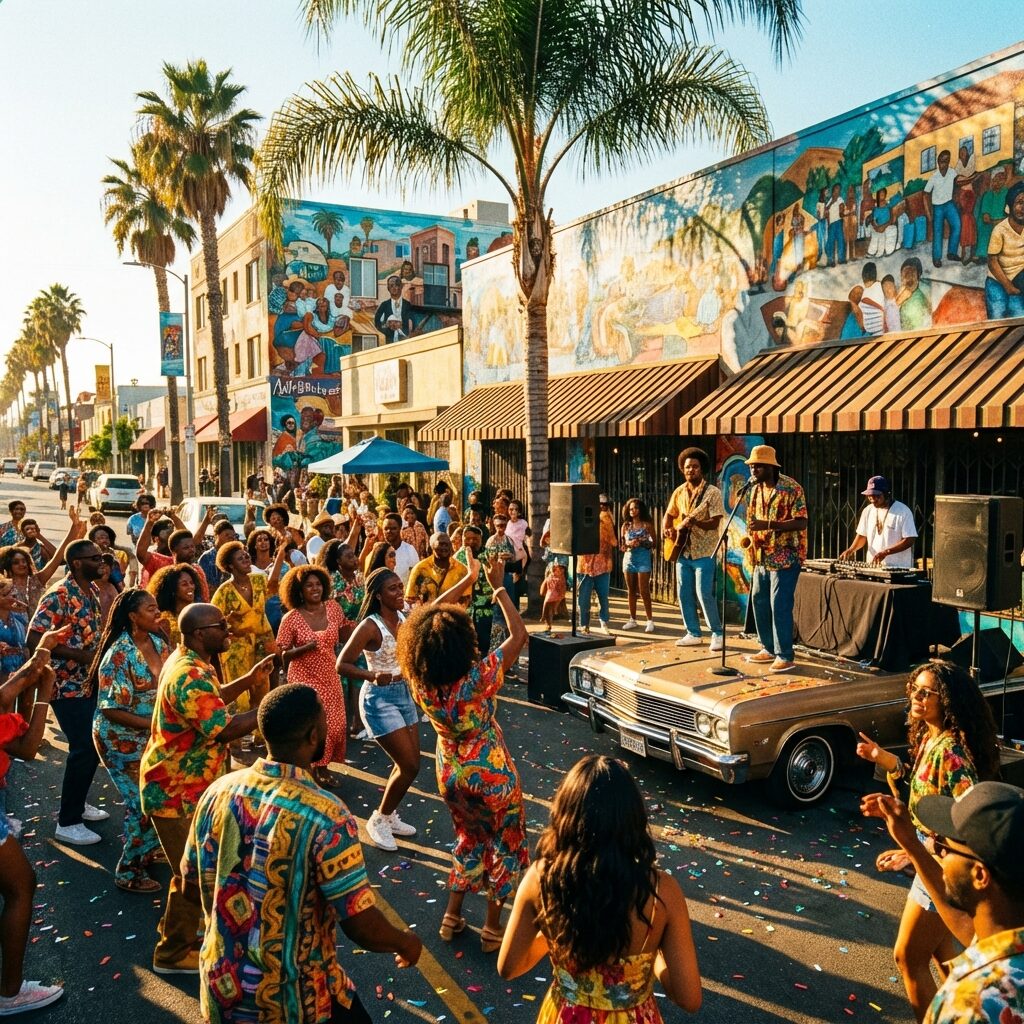
The music video dropped on July 4th, Independence Day, yes, and no one’s pretending that wasn’t deliberate. Kendrick co-directed with Dave Free, his pgLang partner, filming on June 22 across Compton: City Hall, Enterprise Park, Tam’s Burgers No. 21 on Rosecrans Avenue, the Compton Courthouse, then over to Nickerson Gardens in Watts. More than a thousand fans showed up to watch the shoot. LA County Sheriff’s deputies worked security at $120 an hour.
Look at the cast list. Jay Rock, Schoolboy Q, and Ab-Soul all show up, which means the full TDE roster is together on camera for the first time in years. Steve Lacy, Thundercat, Roddy Ricch. DeMar DeRozan and Russell Westbrook. Hit-Boy brought his father, Big Hit. Tommy the Clown runs his Hip Hop Clowns through choreography. Whitney Alford, Kendrick’s fiancée, Crip Walks on camera while their children, son Enoch included, appear nearby. This isn’t really a music video. It’s a roll call. Everyone Kendrick Lamar considers family, on screen, accounted for.
Then there’s the owl thing, and he is not subtle about it. An owl perched on Kendrick’s arm. An owl locked in a cage. An owl-shaped piñata getting smashed while kids cheer. An on-screen disclaimer reads: “No OVHoes were harmed during the making of this video.” Each shot takes apart Drake’s OVO branding with the energy of someone who already won and is now just playing in the rubble.
Choreographer Charm La’Donna, who also served as associate producer, said Kendrick’s dancing was improvised, “just vibing”, which is a funny thing to say about a production this tightly coordinated. But that tension is the whole idea. The video wants to look effortless, because putting in effort would mean Drake was worth the trouble.
The video version also adds a new intro where Kendrick name-drops Kamasi Washington over crowd vocals, pushing the whole thing past victory lap into something communal, almost devotional. Not just Compton anymore. All of LA.
Five Times at the Forum
From five consecutive performances at the Kia Forum to the Super Bowl halftime show to 62,000 people screaming along in London, the song kept getting bigger. Every venue made it less of a diss track and more of a communal event.
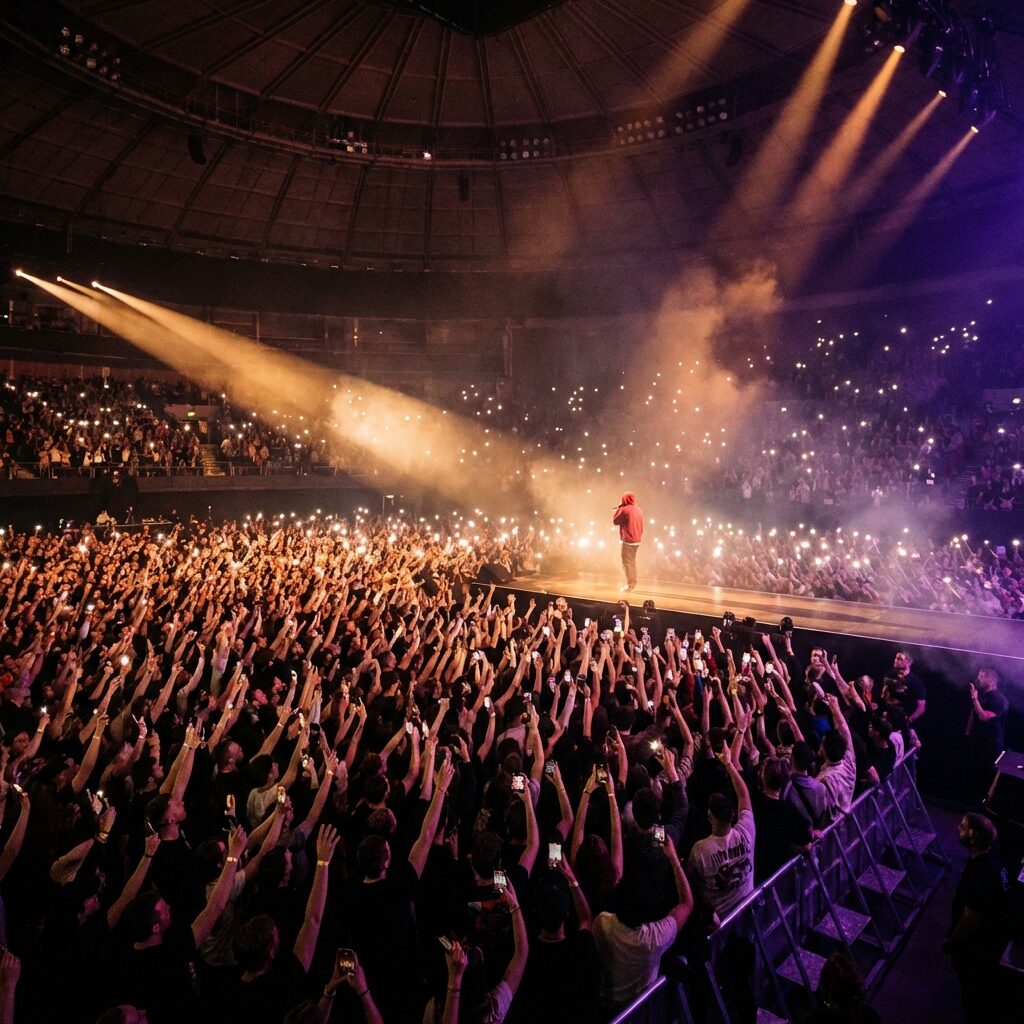
On Juneteenth, June 19, 2024, Kendrick Lamar played “Not Like Us” five times in a row at the Kia Forum in Inglewood, California. The concert, called The Pop Out: Ken & Friends, had been surprise-announced two weeks earlier and livestreamed on Amazon Prime Video and Twitch to 18,000 people in the building and god knows how many watching from home.
Dr. Dre introduced the first performance by whispering into the microphone: “I see dead people.” Kendrick walked out in a red hoodie, jeans, and Nike Shox, an outfit fans immediately compared to Tupac’s look at the 1994 Source Awards, another moment where a West Coast artist walked into a room and made it clear he wasn’t there to make friends. By the fourth and fifth plays, the stage was packed with dozens of performers: YG, Steve Lacy, Roddy Ricch, Schoolboy Q, DeMar DeRozan, Russell Westbrook. The crowd held the “A minor” punchline, screaming it back “for what seemed like an eternity.” Power 106 radio rebranded as “Kendrick 106” for the day.
LeBron James was in the audience. Drake responded by covering his King James tattoo and changing a lyric that had honored LeBron. That’s what happens when you show up to the wrong party.
Eight months later, on February 9, 2025, Kendrick performed “Not Like Us” at Super Bowl LIX in the Caesars Superdome in New Orleans. Nearly 134 million people watched, making it the most-viewed halftime performance in history. Samuel L. Jackson introduced the set dressed as Uncle Sam. Kendrick performed nine songs before pausing mid-set to acknowledge what everyone was waiting for: “I wanna perform they favorite song, but you know they love to sue.” He performed “Luther” and “All the Stars” with SZA, then closed with “Not Like Us” anyway. He self-censored the word “pedophile”, the NFL had banned it, but left everything else intact, staring directly into the camera with a grin while rapping “Say Drake, I hear you like ’em young.” Serena Williams Crip-walked during the performance. A protester unfurled a Palestinian and Sudanese flag during the A-minor punchline. The FCC received 125 complaints.
On the Grand National Tour, the song became the nightly closer everyone waited for. At London’s 62,000-capacity Tottenham Hotspur Stadium in July 2025, NME described the crowd screaming every line of “Not Like Us” “with a roar fit for a winning Championship goal.” Somewhere along the way, the diss track part stopped mattering. Sixty thousand strangers were just singing together because they knew every word.
The Numbers Are Absurd
53 weeks on the Hot 100, three trips to number one, nearly 3 billion Spotify streams, and Diamond certification, a diss track putting up numbers that don’t really have a precedent in rap.
“Not Like Us” debuted at number one on the Billboard Hot 100 with 70.9 million streams, 5 million radio airplay audience impressions, and 15,000 copies sold, on a shortened five-day tracking week. No rap song had ever topped the Hot 100 under those conditions. It was Kendrick’s fourth number one single and his first to debut at the top without a feature.
What happened next on the charts doesn’t really have a comparison. The song spent 53 weeks on the Hot 100, the longest-charting rap song in the chart’s history and the first to stick around for over a year. It logged three non-consecutive weeks at number one, including a return to the top spot after the Super Bowl and Grammy Awards, when streams surged 156% and sales jumped 432%. A ten-month-old diss track was moving units like a fresh release. That’s not normal.
On Hot Rap Songs, it sat at number one for 26 weeks, breaking a record Lil Nas X had held with “Old Town Road” since the chart launched in 1989. On Hot R&B/Hip-Hop Songs, it held the top spot for 22 weeks, passing SZA’s “Kill Bill” on a chart that goes back to October 1958.
The Spotify numbers barely look real. On release day, “Not Like Us” pulled 12.8 million streams, more than doubling Drake and Lil Baby’s previous single-day record of 6.593 million for “Girls Want Girls.” It became the fastest rap song to hit 100 million streams (9 days), 200 million (19 days), 300 million (35 days), and 1 billion (250 days). Total global streams approached 3 billion. It crossed 10 million units sold in the United States, earning Diamond eligibility faster than any other rap song released in the 2020s.
For Mustard, a producer who’d shaped the sound of mid-2010s pop with beats for YG, Ty Dolla Sign, and Rihanna, the song was also a weird personal milestone. After more than a decade of hits, he’d never actually had a number one on the Hot 100. This diss track, of all things, got him there.
When a Diss Track Becomes the Anthem
From USA Basketball to the Winter Olympics to Taylor Swift singing along at the Grammys, the song escaped hip-hop entirely and became a universal shorthand for winning, especially against Canada.
You know a song has truly landed when people who couldn’t name a single Kendrick album start blasting it after beating Canada at something. That’s what happened with “Not Like Us.”
USA Basketball played it after an exhibition win over Canada during the 2024 Paris Olympics buildup. The Los Angeles Dodgers adopted it during their 2024 World Series run. Argentina’s national football team’s social media used the title to mock Drake after he lost a $300,000 bet on Canada in the Copa América semifinals. When the USA Men’s Hockey Team won gold against Canada at the 2026 Winter Olympics, the song played in the locker room. Grambling State and the University of Tennessee marching bands learned it. A diss track about a rapper from Toronto had somehow become shorthand for American triumph over anything Canadian, which is both hilarious and a little unfair to Drake, who didn’t ask to represent his entire country in every sporting event.
The internet, meanwhile, was having a field day. Someone vandalized Drake’s Toronto mansion on Google Maps, renaming landmarks on his property to “Owned by Kendrick” and “Kendrick’s dog.” Drake’s OVO store on London’s Carnaby Street was tagged with “They not like us” in silver lettering within three days of release. Some iPhone users found that asking Siri for Drake’s Certified Lover Boy played “Not Like Us” instead. Developer Richie Branson built a free-to-play video game called Not Like Us: The Game that attracted 1.2 million players in 36 hours.
Then came the Grammys in February 2025. Taylor Swift was filmed singing along to “Not Like Us” from the audience, pop’s biggest star mouthing the words to hip-hop’s most vicious takedown, which tells you everything about where the song had traveled. Kendrick took home five awards that night, Record of the Year, Song of the Year, Best Rap Performance, Best Rap Song, Best Music Video, making it the most-awarded rap song in Grammy history. DJ Mustard, who’d already accepted three awards at the Premiere Ceremony on Kendrick’s behalf, walked back onstage for the main show and said what everyone was thinking: “Somebody get the broom out.”
Those five Grammy wins matched Drake’s entire career total. In one night, with one song.
Drake’s Lawsuit and the Judge’s Verdict
Drake’s defamation lawsuit against UMG was dismissed by a federal judge who pointed to the song’s “catchy beat” as evidence it wasn’t meant as factual assertion. Drake has appealed, and the case is pending.
Drake’s legal response came in stages, and every one of them made the song bigger. In November 2024, he filed a petition against Universal Music Group and Spotify alleging a conspiracy to inflate the track’s streaming numbers. He withdrew it. In January 2025, he filed an 81-page defamation lawsuit against UMG, not against Kendrick Lamar himself, which says something, in the U.S. District Court for the Southern District of New York. The claims included defamation, harassment in the second degree, and violations of New York General Business Law. He alleged that UMG had offered undisclosed financial incentives, removed copyright restrictions, and quietly coordinated with Spotify to juice the song’s numbers.
UMG’s motion to dismiss, filed in March 2025, contained one sentence that basically ended the whole argument: Drake “lost a rap battle that he provoked and in which he willingly participated.” UMG CEO Sir Lucian Grainge filed a sworn declaration resisting being added as a document custodian. The label’s public statement was less diplomatic: “From the outset, this lawsuit was an affront to all artists and their creative expression.”
In October 2025, U.S. District Judge Jeannette A. Vargas dismissed the lawsuit in a 38-page opinion that read like a music review written in legalese. She ruled that the song’s lyrics constitute “nonactionable opinion,” noting that the track is “replete with profanity, trash-talking, threats of violence, and figurative and hyperbolic language, all of which are indicia of opinion.” Then she did something genuinely strange: she pointed to the song’s “catchy beat and propulsive bassline” as signals to listeners that the content isn’t meant as factual assertion. A federal judge cited groove as legal evidence. I still don’t fully know what to do with that.
Vargas called the feud “perhaps the most infamous rap battle in the genre’s history” and wrote that “Not Like Us” “dealt the metaphorical killing blow.” That language is now in the public record. It will probably outlast both artists’ discographies.
Drake appealed. His 60-page brief, filed in January 2026, argued that the lower court had created “an unprecedented and overbroad categorical rule that statements in rap diss tracks can never constitute statements of fact.” UMG’s response was due March 27, 2026. The broader question of whether rap lyrics can count as legal speech remains open, but the practical result is already settled: a lawsuit meant to shrink the song instead handed it a federal judge’s written confirmation that it won.
The Party’s Still Going
A 1968 soul record made in Chicago, buried in Inglewood, sampled in Inglewood, performed in Inglewood, and the diss track that refused to stay a diss track.
Monk Higgins was born in Menifee, Arkansas, in 1930. He played tenor saxophone, arranged records for Chess Records, and helped build the hard-soul sound of 1960s Chicago. He died in 1986 at Centinela Hospital in Inglewood, California, and was buried at Inglewood Park Cemetery. He lived most of his later years in the neighborhoods surrounding the Kia Forum.
Mustard grew up in those same neighborhoods. He built a beat from Higgins’ 1968 recording in thirty minutes. That beat was performed to 18,000 people at the Kia Forum on Juneteenth. A soul record made by a man buried in Inglewood, sampled by a producer from Inglewood, for a concert in Inglewood. You can’t draw a tighter circle than that. Maybe the West Coast has been building toward this song for fifty-six years and nobody noticed until Kendrick Lamar danced on it.
“Ain’t nothing more powerful than rap music,” Kendrick said at the Grammys, accepting Song of the Year from Diana Ross. “We are the culture. It’s gonna stay.”
The appeal is still pending. The song is still charting. It’s still being played at sporting events, still getting screamed back by stadium crowds on four continents. The diss track that was supposed to end a beef instead became permanent, a club record, a political statement, a legal document, and a victory lap that somehow all live in the same five minutes of music.
Kendrick didn’t just win the biggest rap beef in history. He threw a party on Drake’s grave and invited the whole country. The whole country showed up. And they’re still dancing.
🎤 The most devastating diss track in rap history is a song you can dance to. How a 30-minute beat, a 56-year-old soul sample, and a West Coast block party changed everything. New deep dive on @MusicologyNYC 👇 https://bit.ly/4stMtlh

Click to Tweet