Beastie Boys | Licensed to Ill (album)
The Joke Nobody Got
Licensed to Ill was a satirical album everyone took at face value, an inside joke that went Diamond and outsold every rap record before it, cobbled together from borrowed parts and happy accidents.
“There were tons of guys singing along to ‘Fight for Your Right’ who were oblivious to the fact it was a total goof on them.” That’s Mike D, talking about the single that turned three punk kids from Manhattan into the biggest rap act in America. Think about that for a second. The song was a parody. The guys screaming along at frat parties were the punchline. And nobody noticed.
Licensed to Ill works the same way, just at album scale. A satirical record taken completely at face value. An inside joke that went Diamond and outsold every rap album before it. Three punk kids made a hip-hop debut from stolen riffs, borrowed songs, castoff demos, and workarounds for equipment they didn’t own, and it became the first rap album to hit number one on the Billboard 200.
The original title was “Don’t Be a Faggot.” Columbia Records refused to release it under that name, and they were right to refuse. According to the Beastie Boys Book, the title was Rick Rubin’s idea. The final name, “Licensed to Ill,” was a pun on James Bond’s license to kill, arriving just two months after Run-DMC charted with “You Be Illin’.” So even the name was a compromise that happened sideways.
Most of the record happened sideways. The songs started as demos for other artists. Kerry King from Slayer played guitar on “No Sleep till Brooklyn” basically as a favor. The drum loops came from Led Zeppelin records, with tape literally strung around the room on mic stands because that’s how long the loop needed to be. The frat-boy persona was supposed to be a joke. The label deal fell apart over money. The UK tour ended in a riot. None of it went according to plan, and yet out of all that chaos, these three guys made a record that blew open who could make rap, who would buy it, and how big it could get. Not by design. By accident, over and over again.
Punk Kids on the Wrong Tour
The Beastie Boys started as a hardcore punk band called the Young Aborigines before Rick Rubin redirected them toward hip-hop. They cut their teeth opening for Madonna on the 1985 Virgin Tour, where more than 15,000 people booed them at Madison Square Garden. They didn’t care.
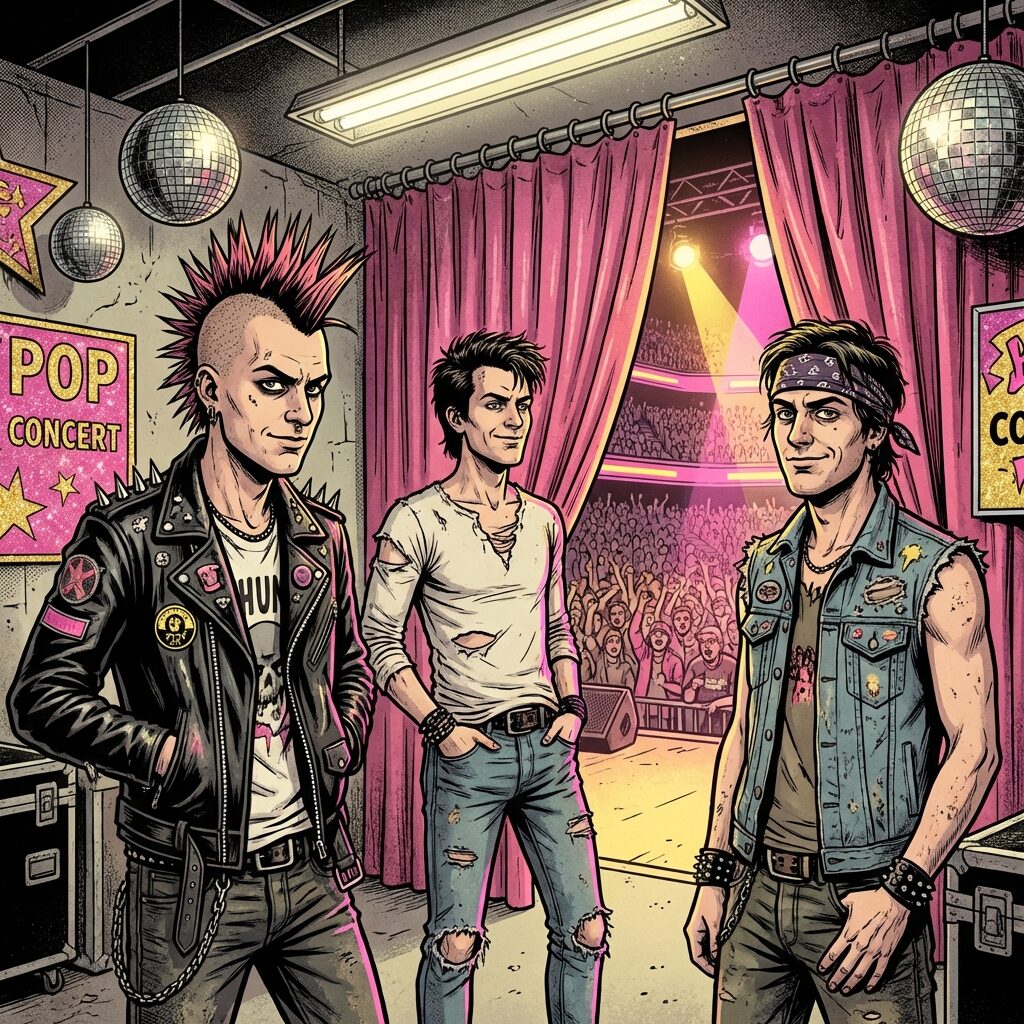
Before they were hip-hop anything, the Beastie Boys were a hardcore punk band. They evolved out of a group called the Young Aborigines, playing short fast loud sets in the New York hardcore scene alongside bands like Minor Threat and Bad Brains. The original lineup included Kate Schellenbach on drums. Then Rick Rubin showed up.
Rubin was an NYU student who DJ’d under the name DJ Double R and had co-founded Def Jam Recordings with Russell Simmons out of his dorm room. He saw something in the Beasties that went beyond punk. Or maybe he saw punk energy as the missing ingredient in hip-hop. Either way, he started redirecting them. Schellenbach was frozen out in 1984 as the band pivoted toward rap. Their 1983 single “Cooky Puss” had already shown they were willing to mess around with sampling. The 1984 12-inch “Rock Hard” sampled AC/DC’s “Back in Black” without permission and had to be pulled. They were figuring out the game by breaking rules they hadn’t bothered to learn yet.
Rubin shaped their public persona deliberately. He cited pro wrestlers Roddy Piper and Ric Flair as templates, guys who were brash and confrontational and impossible to ignore. The Beasties were supposed to be heels. The problem, as it turned out, was that a lot of people couldn’t tell the difference between a heel and a hero.
In 1985, Russell Simmons got them the opening slot on Madonna’s Virgin Tour by telling her management that his second choice, The Fat Boys, were unavailable. Simmons never managed the Fat Boys. It was a hustle, and it worked. The Beasties spent the tour earning $500 a week, antagonizing arenas full of teenage Madonna fans with deliberately obnoxious stage antics. At Madison Square Garden, more than 15,000 people booed them through their entire set. They didn’t care. They were recording their debut between tour stops.
This was the Def Jam ecosystem in 1985: Rubin and Simmons running the label, LL Cool J breaking out, Run-DMC at the peak of their powers. And three white punk kids from Manhattan in the middle of all of it, held together by the fact that they didn’t belong. By summer 1986, the Beasties were opening for Run-DMC on the Raising Hell Tour, playing three songs a night, “Hold It Now Hit It,” “Slow and Low,” and “She’s On It”, while Rubin stayed behind in the studio finishing their album.
The Art of the Workaround
Recorded above a Chinese restaurant at Chung King Studios, Licensed to Ill got built with tape loops spun around mic stands, a backward 808 beat made by physically flipping tape, and a Slayer guitarist who wandered in from down the hall.
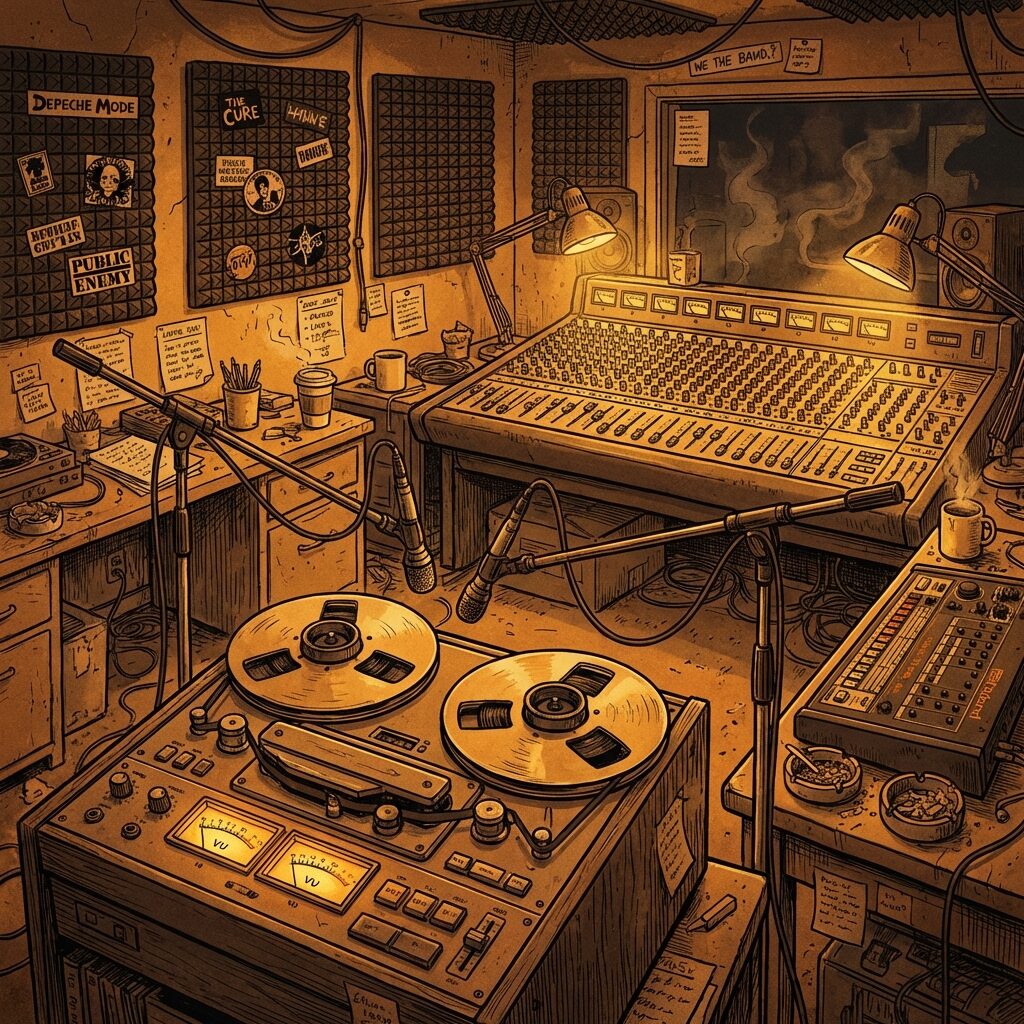
Chung King Studios sat on the sixth floor of 241 Centre Street in Chinatown. Below it was the Chung King Chinese restaurant. The studio was founded by producer John King and engineer Steve Ett, with backing from the Etches brothers. Rubin and Simmons first met John King at the Danceteria nightclub on 21st Street in 1984 and started booking sessions there right away. Rubin, who never missed a chance to brand something, renamed it “Chung King House of Metal,” mashing together the restaurant, King’s surname, and the hard rock acts cycling through the building.
This is where Licensed to Ill got made, in sessions that started in late 1985 and dragged on for a full year of 3 AM finishes. That kind of timeline was unheard of for hip-hop in 1986. Most rap records were cut fast and cheap. But Steve Ett, the lead engineer, had spent the previous decade working with Steely Dan and Rickie Lee Jones. He brought a perfectionist’s ear to a genre that didn’t know it wanted perfectionism yet. The result was a hip-hop record that sounded like nothing else, thick and layered, fussed over in ways that most listeners couldn’t name but could absolutely hear.
The workarounds were all physical. For “Rhymin & Stealin’,” they wanted John Bonham’s drum intro from Led Zeppelin’s “When the Levee Breaks,” that massive, cavernous boom that sounds like someone dropping a boulder down a stairwell. Problem: they didn’t have a sampler. So Ett recorded the drums onto reel-to-reel tape, placed a microphone stand in every corner of the room, and sent the tape spinning around the studio, held taut by tension against the stands, creating a continuous loop of 38 to 40 seconds. Duct tape and desperation. And it sounds incredible.
“Paul Revere” has that lurching, backward 808 pattern that sounds like the song is swallowing itself. Adam Yauch asked what the beat would sound like played in reverse. So they recorded a Roland TR-808 pattern, bounced it to another tape, physically flipped the tape around, and bounced it back to the multitrack. All analog. All manual. All before digital sampling made this kind of thing trivial.
Meanwhile, down the hall, Slayer was recording Reign in Blood. Same studio, same producer. Rubin was cutting a thrash metal landmark and a rap landmark at the same time, both on Def Jam, released a month apart. Kerry King, Slayer’s guitarist, wandered over during a break and ended up playing lead guitar on “No Sleep Till Brooklyn” and “Fight for Your Right.” His payment was a flat fee of a couple hundred dollars. No royalty points. “In hindsight, I wish I took a quarter point or something,” King said later, “’cause now I would be a rich man.” That one still has to sting.
The songs themselves came from everywhere. “Slow and Low” was originally written and demoed by Run-DMC for their King of Rock album but never used, with writing credits going to Run, DMC, and Rubin. The Beasties customized the lyrics, swapping “Run-DMC not Cheech and Chong” for “Beastie Boys not Cheech and Chong” and adding the ad-lib “White Castle fries only come in one size!” “Paul Revere” was born when the Beasties were waiting outside a studio for Run-DMC and Joseph Simmons came sprinting down the street screaming incoherently, then said, “Here’s a little story I got to tell.” That line became the opening of one of hip-hop’s most quoted tracks. “Fight for Your Right” was a song the Beasties actively hated. They thought it was corny. They were right, and it didn’t matter.
Rubin stripped the original tape-loop drum track off “Fight for Your Right,” had Ett replay the drums by hand on an Oberheim DMX, and added a cheesier, more over-the-top guitar sound. He financed a $20,000 music video directed by Adam Dubin and Ric Menello, shot over Thanksgiving weekend 1986. The Beasties heard the finished mix when someone brought a tape to their tour bus. They were furious. It became their biggest hit.
That’s the pattern of this entire record. Nobody’s steering. Things just keep happening.
Led Zeppelin Having Beats
Rick Rubin couldn’t blend records as a DJ, so he just smashed Led Zeppelin, Black Sabbath, AC/DC, and dozens of funk sources together, and that blunt collision became Licensed to Ill’s sound. Almost none of it was licensed. In 1986, nobody cared yet.
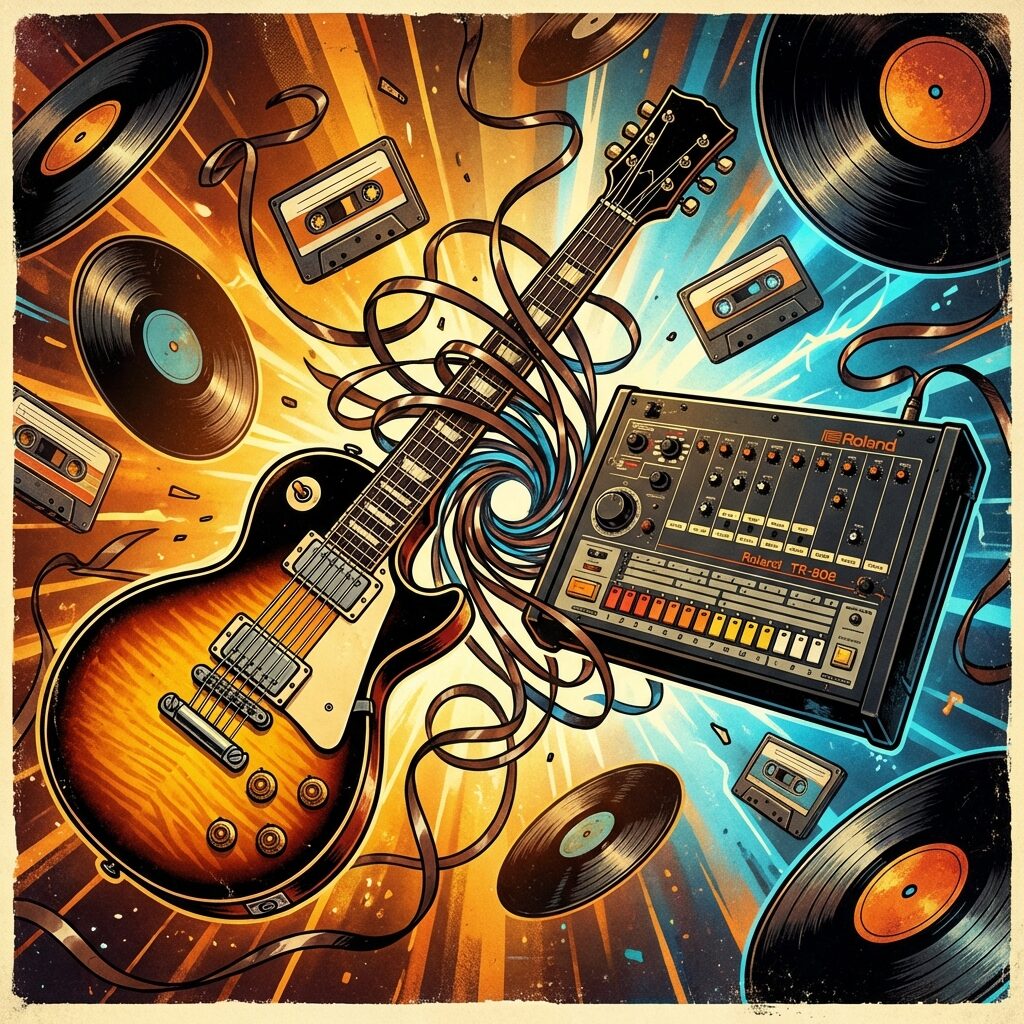
Mike D summed up the whole album in one line: “We got real into it, and into the idea of Led Zeppelin having beats.” That’s it. That’s Licensed to Ill. Take the heaviest rock riffs of the 1970s, drop them into a hip-hop framework, and see what happens. In 1986, nobody had tried it. The Beasties and Rubin just felt their way through.
“Rick definitely came from a whole AC/DC, Led Zeppelin, Long Island, like, rock background,” Diamond explained in The Beat documentary. “He, pretty much… introduced it to us. Because we kinda came from punk rock… ‘forget about that shit.'” The Beasties were punk kids. Rubin was a metal kid. Neither side had any business making a hip-hop record, which is probably why the thing sounds the way it does.
Here’s a detail I love: Rubin wasn’t a skilled DJ. He couldn’t smoothly blend records together the way a hip-hop DJ was supposed to. So he’d play wildly different styles back to back, a Kurtis Blow single followed by a Led Zeppelin album cut, and the whiplash itself became the point. He couldn’t be smooth, so he had to be blunt about it. Just smash them together and let the collision do the work.
The sample list alone is absurd. Led Zeppelin shows up at least four times: “When the Levee Breaks” on “Rhymin & Stealin’,” “The Ocean” on “She’s Crafty,” “Good Times, Bad Times” on “No Sleep Till Brooklyn,” and “Custard Pie” on “Time to Get Ill.” Then there’s Black Sabbath’s “Sweet Leaf,” AC/DC’s “Flick of the Switch,” The Clash’s “I Fought the Law,” and dozens of funk and hip-hop sources, Kurtis Blow, Trouble Funk, Kool & the Gang, Bob James, The Jimmy Castor Bunch, Wild Sugar, Barry White, Schoolly D. Almost none of it was licensed. This was 1986. Sample clearance as a legal concept barely existed. They were grabbing whatever they wanted.
Some of the individual tracks are ridiculous up close. “The New Style” used 24 separate tracks of percussion loops from drum machines, with Ett and Rubin dropping tracks in and out using the mixing board’s mute buttons like instruments, performing the mix in real time, making arrangement decisions with their fingers on the faders. “Time to Get Ill” crams 14 different samples into under four minutes: Barry White, Creedence Clearwater Revival, the Mr. Ed theme, the Green Acres theme, Stevie Wonder, and more. By all rights it should be a mess. It isn’t.
Two tracks got cut before release. A cover of the Beatles’ “I’m Down” was pulled because Michael Jackson owned the publishing rights through ATV Music. Jackson reportedly told Quincy Jones, “I hate the record, and I hate them.” And here’s the kicker, the Fat Boys, the very group Simmons had lied about managing to get the Beasties on the Madonna tour, received permission to cover a different Beatles track. The other cut, “Scenario,” was dropped because of references to smoking crack. Both eventually surfaced on bootlegs and a 2002 unofficial 12-inch.
Pirates, Parties, Plausible Deniability
Licensed to Ill is full of references to Treasure Island, Longfellow, and Melville that nobody expects from a frat-rap album. The lyrics were smarter than the persona, and the Beasties spent the next two decades publicly reckoning with the parts that weren’t a joke anymore.
Run-D.M.C – Run-D.M.C1985
LL Cool J – Radio
1986
Afrika Bambaataa & Soulsonic Force – Planet Rock: The Album
Beastie Boys – Licensed to Ill
Run-D.M.C. – Raising Hell
1987
Boogie Down Productions – Criminal Minded
Eazy-E – Eazy-Duz-It
Eric B. & Rakim – Paid In Full
MC Lyte – Lyte As a Rock
Public Enemy – Yo! Bum Rush the Show
1988
Big Daddy Kane – Long Live the Kane
Boogie Down Productions – By All Means Necessary
EPMD – Strictly Business
Eric B. & Rakim – Follow the Leader
Jungle Brothers – Straight Out the Jungle
Marley Marl – In Control, Volume 1
N.W.A. – Straight Outta Compton
Public Enemy – It Takes a Nation of Millions to Hold Us Back
Slick Rick – The Great Adventures of Slick Rick
Ultramagnetic MC’s – Critical Beatdown
1989
Big Daddy Kane – It’s a Big Daddy Thing
De La Soul – 3 Feet High and Rising
The D.O.C. – No One Can Do It Better
Beastie Boys – Paul’s Boutique
Geto Boys – Grip It! On That Other Level
Kool G. Rap & DJ Polo – Road to Riches
1990
A Tribe Called Quest – People’s Instinctive Travels & the Paths of Rhythm
Brand Nubian – One for All
Digital Underground – Sex Packets
EPMD – Business as Usual
Eric B. & Rakim – Let the Rhyme Hit You
Geto Boys – The Geto Boys
Ice Cube – AmeriKKKa’s Most Wanted
LL Cool J – Mama Said Knock You Out
Lord Finesse – Funky Technician
Masta Ace – Take a Look Around
Poor Righteous Teachers – Holy Intellect
Public Enemy – Fear of a Black Planet
Too $hort – Short Dog’s in the House
Tragedy Khadafi – Intelligent Hoodlum
1991
2Pac – 2Pacalypse Now
A Tribe Called Quest – The Low End Theory
Black Sheep – A Wolf in Sheep’s Clothing
Cypress Hill – Cypress Hill
De La Soul – De La Soul Is Dead
Del tha Funkee Homosapien – I Wish My Brother George Was Here
Gang Starr – Step in the Arena
Geto Boys – We Can’t Be Stopped
Ice Cube – Death Certificate
Ice-T – O.G. Original Gangster
Lord Finesse – Return of the Funky Man
Main Source – Breaking Atoms
Naughty by Nature – Naughty by Nature
N.W.A. – Niggas 4 Life
Organized Konfusion – Organized Konfusion
Public Enemy – Apocalypse 91…The Enemy Strikes Black
1992
Compton’s Most Wanted – Music to Drive-By
Diamond D. & Psychotic Neurotics – Stunts, Blunts & Hip-Hop
Dr. Dre – The Chronic
EPMD – Business Never Personal
Eric B. & Rakim – Don’t Sweat the Technique
Gang Starr – Daily Operation
Ice Cube – The Predator
Pete Rock & CL Smooth – Mecca and the Soul Brother
Redman – Whut? Thee Album
The Pharcyde – Bizarre Ride II the Pharcyde
1993
A Tribe Called Quest – Midnight Marauders
Black Moon – Enta da Stage
Cypress Hill – Black Sunday
Del tha Funkee Homosapien – No Need for Alarm
Digable Planets – Reachin’ (A New Refutation of Time & Space)
Esham – KKKill the Fetus
KRS-One – Return of the Boom Rap
Onyx – Bacdafucup
Snoop Dogg – Doggystyle
Souls of Mischief – 93 ‘Til Infinity
Wu-tang Clan – Enter the Wu-tang (36 Chambers)
1994
Beastie Boys – Ill Communication
Common – Resurrection
Digable Planets – Blowout Comb
Gang Starr – Hard to Earn
Gravediggaz – 6 Feet Deep
Jeru da Damaja – The Sun Rises in the East
Method Man – Tical
Nas – Illmatic
Notorious B.I.G. – Ready to Die
Organized Konfusion – Stress: The Extinction Agenda
Outkast – Southernplayalisticadillacmuzik
Pete Rock & CL Smooth – The Main Ingredient
Redman – Dare Iz a Darkside
Scarface – The Diary
1995
2Pac – Me Against the World
AZ – Doe or Die
Big L – Lifestylez ov da Poor & Dangerous
Geto Boys – The Resurrection
Goodie Mob – Soul Food
GZA – Liquid Swords
Kool G Rap – 4, 5, 6
KRS-One – KRS-One
Mobb Deep – The Infamous
Ol’ Dirty Bastard – Return to the 36 Chambers
Raekwon – Only Built 4 Cuban Linx
The Roots – Do You Want More??!!!
Smif ‘N Wessun – Dah Shinin’
1996
2Pac – All Eyez on Me
2Pac – The Don Killuminati: The 7 Day Theory
Dr. Octagon – Dr. Octagonecologyst
The Fugees – The Score
Ghostface – Ironman
Jay-Z – Reasonable Doubt
Mobb Deep – Hell on Earth
Nas – It Was Written
Outkast – ATLiens
Ras Kass – Soul on Ice
Redman – Muddy Waters
The Roots – Illadelph Halflife
Xzibit – At the Speed of Life
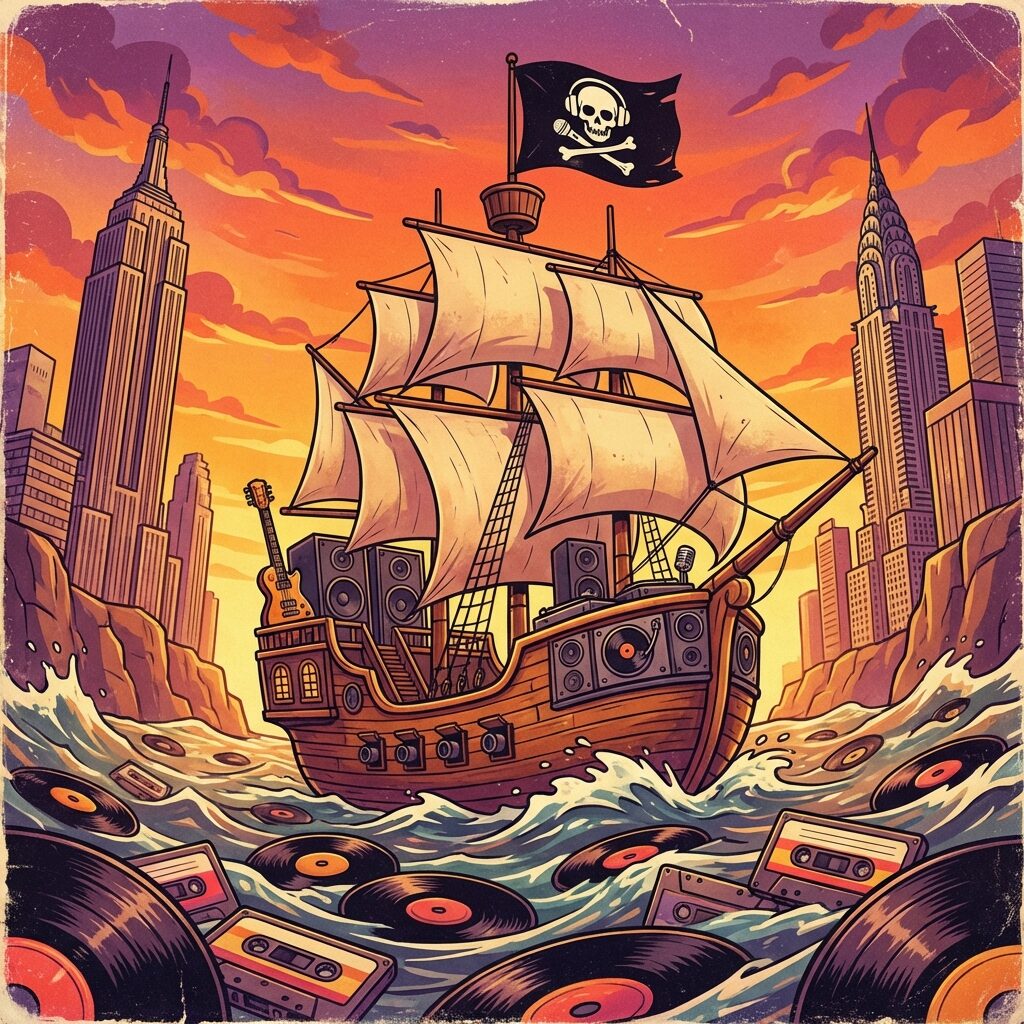
Here’s what’s easy to miss about Licensed to Ill if you only know the singles: these guys were well-read. Weirdly well-read for a group of twenty-year-olds making a party rap album.
“Paul Revere” isn’t just a goofy origin story about how the three Beasties met. It’s a carefully constructed fictional mythology. Ad-Rock rides a horse named Paul Revere, fleeing the sheriff “for what I did to his daughter.” MCA drops the line “I got a license to kill,” connecting the narrative to the album title. The horse’s name references “Fugue for Tinhorns” from Guys and Dolls: “I got the horse right here, the name is Paul Revere.” The meter and cadence borrow from Longfellow’s poem “Paul Revere’s Ride.” Nobody making a frat-rap record in 1986 is supposed to be referencing Longfellow. But here we are.
“Rhymin’ and Stealin'” goes even further. The pirate and seafaring imagery pulls from Treasure Island, the HMS Bounty mutiny, Blackbeard, and Moby Dick. Three guys referencing Herman Melville over John Bonham’s drums while Black Sabbath’s guitar riff grinds underneath. Hard to think of a more well-read party rap track. The title itself tells you how the album was made: they were rhyming, and they were absolutely stealing.
But then there’s the other side. The satire problem. The Beasties started out mocking a certain kind of lunkheaded frat-boy misogyny. But Russell Simmons and Rick Rubin saw commercial potential in playing that persona straight. The line between satire and celebration got blurry, and then it disappeared entirely. “Girls”, “Girls, to do the dishes / Girls, to clean up my room / Girls, to do the laundry”, was supposed to be ridiculous. It was ridiculous. But a lot of people were singing along without any sense of irony, and the song still put those words into the world. “Brass Monkey” includes lyrics about putting Spanish Fly in someone’s drink. These aren’t things that age well, and they shouldn’t.
What happened next is the part worth paying attention to. The Beasties actually reckoned with it. In 1994, MCA addressed the group’s past on “Sure Shot”: “I want to say a little something that’s long overdue / The disrespect to women has to got to be through.” In 1999, Ad-Rock published an apology in New York Times Magazine: “I would like to formally apologize to the entire gay and lesbian community for the s—ty and ignorant things we said on our first record. There are no excuses. But time has healed our stupidity.” In the Beastie Boys Story documentary, Diamond and Horovitz openly acknowledge their embarrassment about the early lyrics. They even won a lawsuit against a company that used “Girls” without permission and donated all the proceeds to a charity supporting STEM programs for women.
Most artists bury the embarrassing stuff. The Beasties kept it in print and kept apologizing for it. That doesn’t erase what’s on the record, but it counts for something.
First Rap Album to Number One
Licensed to Ill hit #1 on the Billboard 200 in March 1987, stayed there for seven weeks, went Platinum inside three months, and remains the only 1980s rap album to go Diamond, all while the Beasties barely saw a dime.
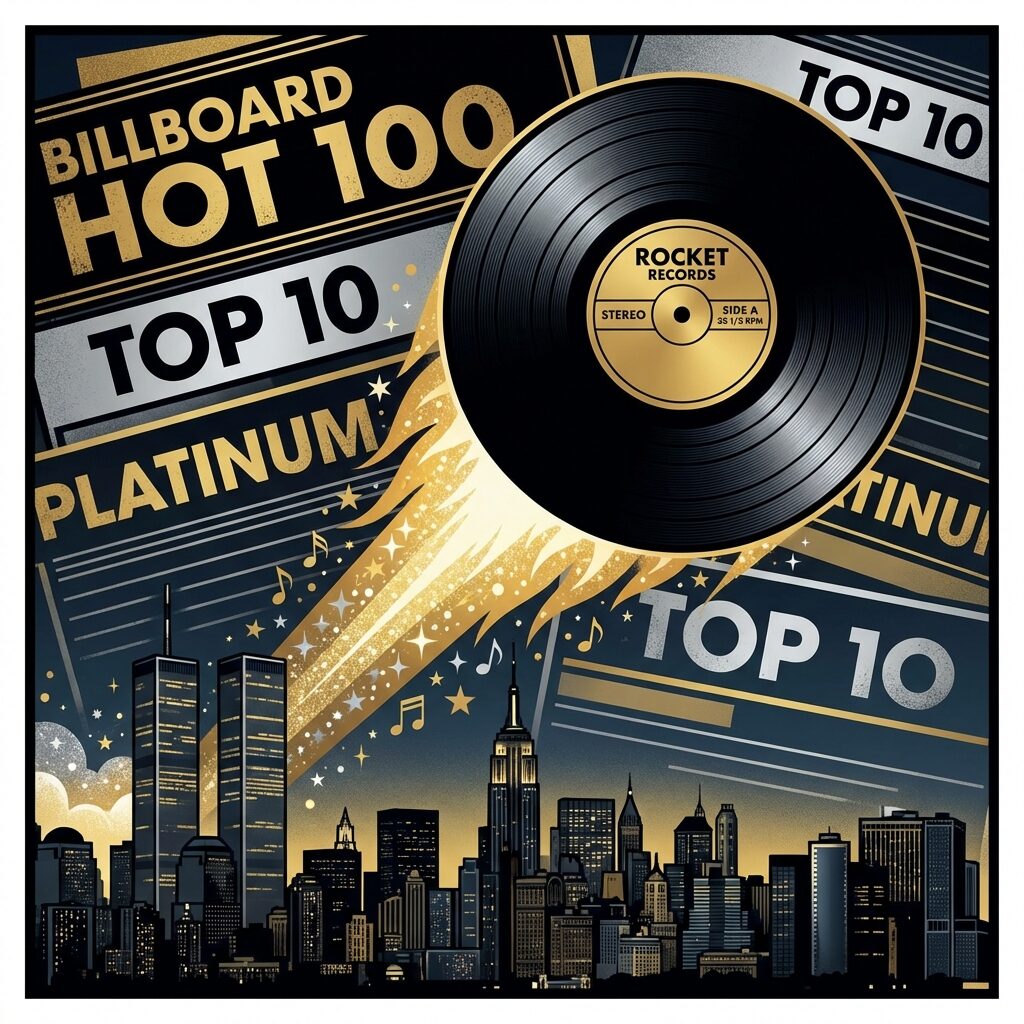
The numbers on this thing are genuinely stupid.
Licensed to Ill hit number one on the Billboard 200 the week of March 7, 1987, less than four months after release. It sat there for seven weeks. Spent 73 total weeks on the chart. No rap album had ever reached number one before. It was only the second rap album certified Platinum by the RIAA, and one of Columbia Records’ fastest-selling debuts in the label’s history.
A million copies shipped in just over three months. By May 1989, 4.5 million sold in the United States alone. It was the best-selling rap album in America until MC Hammer showed up in 1990. Then in 2015, it crossed the Diamond threshold, 10 million copies shipped, the first Def Jam album to get there and still the only 1980s rap album on that list. Even counting just the SoundScan era, since 1991, it’s moved another 5.5 million copies.
The singles did their part. “Fight for Your Right” peaked at number seven on the Hot 100. “Brass Monkey” landed at number 48 and eventually went Gold. They pulled seven singles off one debut album: “Hold It Now, Hit It,” “Paul Revere,” “The New Style,” “Fight for Your Right,” “Brass Monkey,” “No Sleep till Brooklyn,” and “Girls.” Seven singles. From a debut. In 1986 and ’87.
And here’s the part that should make you wince: Russell Simmons credited Licensed to Ill’s catalog sales with keeping Def Jam alive through the label’s financial struggles in the early 1990s. The album the Beasties never got properly paid for was the same one propping up the label that owed them money. We’ll get to that.
VW Badges and a Hydraulic Phallus
Licensed to Ill accidentally set off a nationwide VW emblem theft spree, sent a 20-foot hydraulic penis on tour (Tipper Gore showed it on Oprah), and smuggled hip-hop into white suburban America on a scale nobody had pulled off before.
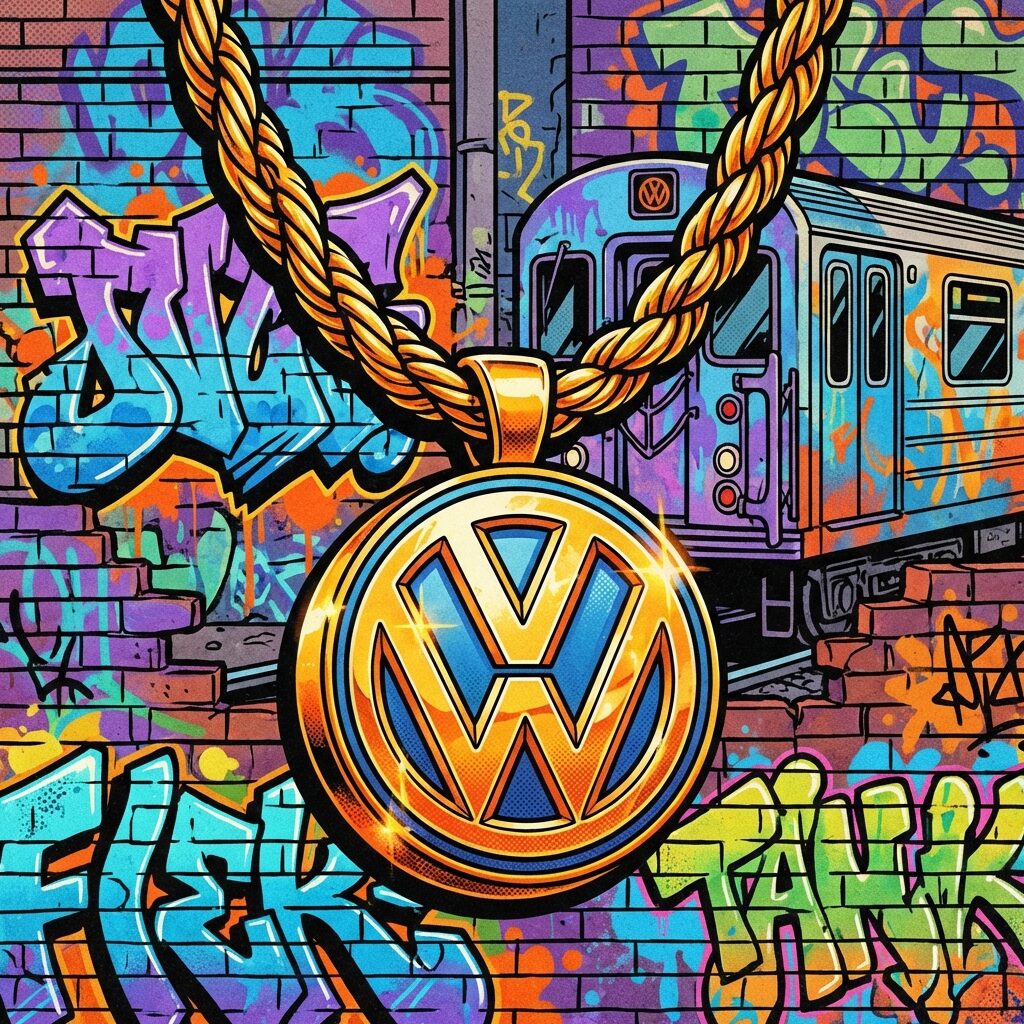
Mike D wore a Volkswagen emblem on a rope chain around his neck. It was a joke, a parody of the heavy gold chains that rappers like Run-DMC and LL Cool J wore as status symbols. He was poking fun at the trope by replacing expensive jewelry with a car part. Naturally, nobody got the joke.
Fans across America started ripping VW badges off parked cars. The practice got its own name: “getting Beastied.” Volkswagen reported somewhere between 150 and 250 customers per day requesting replacement emblems. The craze spread to BMW, Mercedes, and Audi badges. Volkswagen UK eventually started offering free replacements and ran a 1987 ad that read, “People have been sporting our Volkswagen badge for years.” A VW spokesperson said, “We find the whole thing relatively distasteful.” A parody of materialism had accidentally created a petty crime wave.
Then there was the stage show. The Licensed to Ill tour launched on December 26, 1986, at The Ritz in New York City, and it was designed to offend. The centerpiece was a 20-foot-tall hydraulic penis. There were go-go dancers in cages. Giant Budweiser cans. Beer spraying everywhere. A week before the Syracuse concert in April 1987, The Oprah Winfrey Show aired an episode with Tipper Gore revealing the stage props to a horrified daytime television audience. A concert in Columbus, Georgia led directly to the passage of a local lewdness ordinance. And here’s the detail that kills me: according to the Beastie Boys Book, the band has been paying storage bills for that hydraulic penis prop for decades. They can’t bring themselves to throw it away. Somewhere in a storage unit, a 20-foot mechanical phallus from 1987 is racking up monthly charges.
But the spectacle was cover for what was actually going on. Licensed to Ill was putting rap music into white suburban teenage bedrooms at a volume nobody had managed before. Touré called the Beastie Boys the first mainstream white hip-hop group. They were on Def Jam alongside LL Cool J, Run-DMC, and Public Enemy, which gave them credibility in hip-hop that they wouldn’t have had on a rock label. And it worked both ways. Chuck D credited Licensed to Ill with paving the way for subsequent hip-hop acts, calling it a “formula record” that groups like Public Enemy directly benefitted from. The Beasties kicked a door open. Everybody else walked through it.
Fleet Street, Liverpool, and the Money
The Licensed to Ill UK tour brought fabricated tabloid stories, a tear-gassed riot in Liverpool, and a royalty dispute with Def Jam where the Beasties were owed $2.5 million but paid less than $100,000, ending with the band broken up and signing to Capitol.
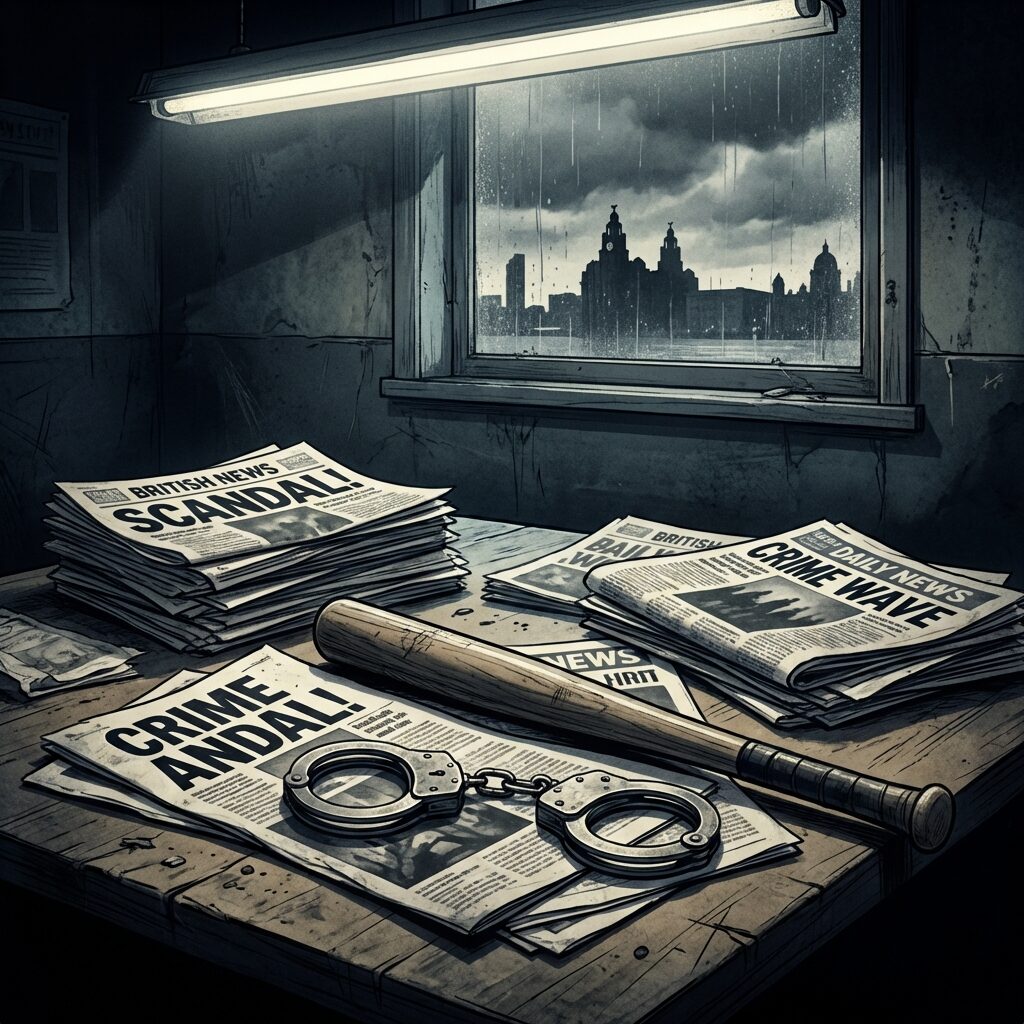
When the Beastie Boys toured the UK in May 1987, the British tabloids had already decided what the story would be.
The Daily Mirror published a fabricated “exclusive” by journalist Gill Pringle claiming the Beastie Boys had told terminally ill children at the Montreux Golden Rose Rock Festival to “Go away you f****** cripples.” The story was entirely made up. Completely false. It didn’t matter. The UK tabloids ran with it, “the world’s nastiest pop group,” “Get Lost Beasties,” “Pop Idols Sneer at Dying Kids.” The BBC banned “Fight for Your Right.” Questions were asked in Parliament about whether the band should even be allowed in the country. The Times compared their arrival to punk’s onset in 1976. “That story about us telling crippled kids to fuck off upset us so much that we were wondering if it was even worth performing in Britain any more,” the band said at the time.
Then Liverpool happened. On May 30, 1987, the final UK date, approximately 3,000 fans packed the Royal Court Theatre. The show lasted eleven minutes. Fans started hurling beer cans at the stage. Ad-Rock went backstage, came back with a baseball bat, and started swatting cans out of the air. One struck a young woman in the face. Police dispersed the crowd with tear gas. Ad-Rock was arrested at the band’s hotel, released on bail to continue the tour to Japan, and appeared before Liverpool magistrates on November 10, 1987. He was represented by Sir David Napley, one of Britain’s most prominent solicitors, and was found not guilty.
The tabloid circus was loud, but the money situation was worse. The Beasties’ Def Jam contract called for approximately $2.5 million in royalties from Licensed to Ill. Both sides agreed the group received less than $100,000 before payments stopped. Russell Simmons suspended royalties and told the band he’d pay up when they signed on for a second album. “Russell was like, if you don’t go in the studio, then I’m not paying you,” Mike D told The Guardian in 2018. “His calculation was that we would all be like, ‘Oh we want our millions. OK, Russell, we’re going to do it.’ But we were all immediately, ‘F*ck you.'”
It got worse. Rick Rubin allegedly proposed a 90/10 split for a potential Beastie Boys feature film, 90 percent to Rubin and Simmons, 10 percent to the band. Ad-Rock confirmed: “This for real happened.” Rubin’s response years later: “I don’t remember any of that… but I can’t imagine Adam just making that up.” Simmons threatened to release an unauthorized album called “White House” from unreleased recordings. In fall 1987, the Beasties’ attorneys notified Def Jam and Rush Productions of breach of contract due to nonpayment. In August 1988, Def Jam and CBS filed suit claiming the Beasties broke their contract by refusing to record. The Beasties counter-sued.
The exit was ugly. The Beastie Boys signed with Capitol Records on November 15, 1988, exactly two years after Licensed to Ill’s release. And then they scattered. Horovitz went to LA to act, appearing in the film Lost Angels. Diamond went through a period of heavy drug use. Yauch retreated to the New York underground and started a new band called Brooklyn. Three guys who’d made the best-selling rap debut ever, and none of them were talking to each other. As Chuck D put it in his Rock and Roll Hall of Fame induction speech years later: “After Licensed to Ill, the Beasties left the Def Jam label and broke with their producer Rick Rubin and still kept it going on.”
Growing Up in Public
The Beastie Boys went from hydraulic penis to Tibetan Freedom Concerts, from “Girls” to feminist charity donations, and the album they outgrew is the one that funded everything that came after.
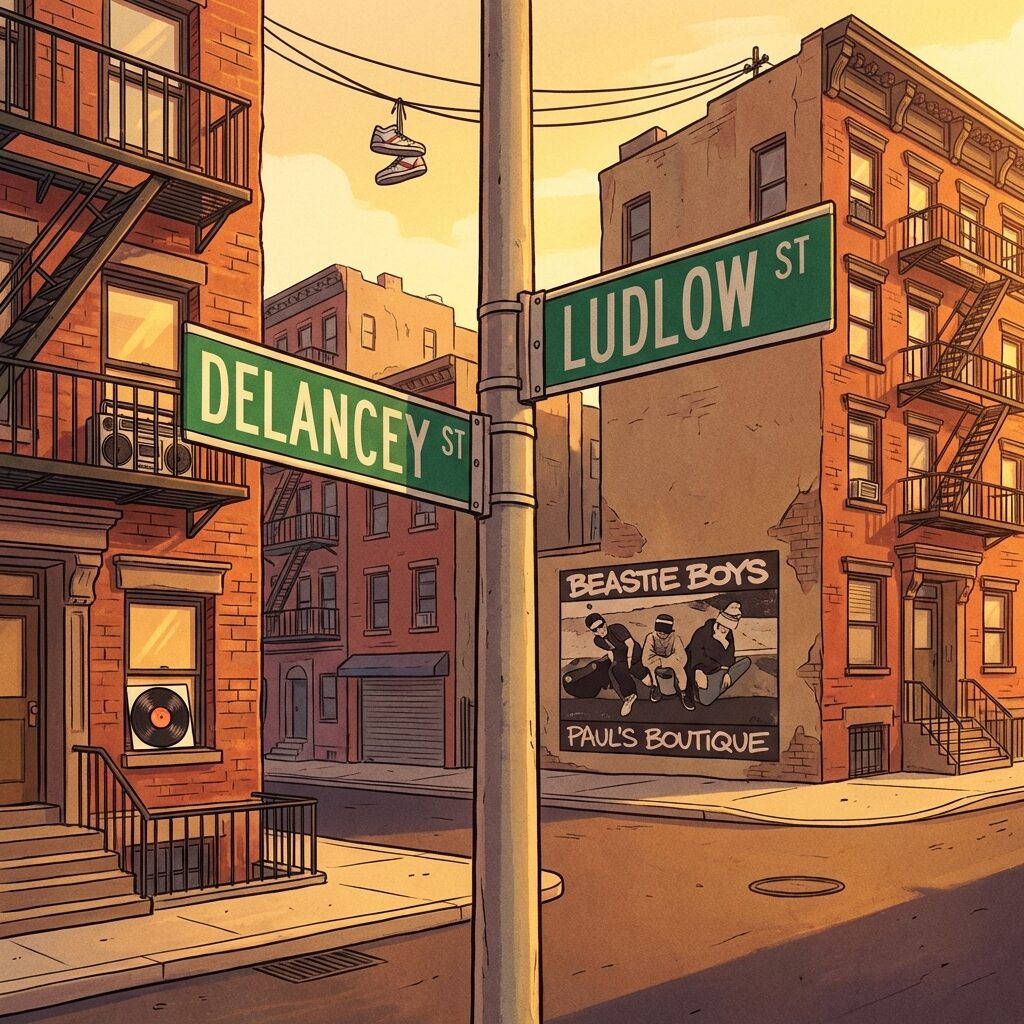
The arc is almost too neat. From a hydraulic penis on stage to organizing the Tibetan Freedom Concerts. From “Girls, to do the dishes” to donating lawsuit proceeds to women’s STEM programs. From frat-rap provocateurs to the authors of the Beastie Boys Book, a 590-page memoir that’s part oral history, part art project, part reckoning. I’m not sure any other band in hip-hop has pulled off a transformation this public and this convincing. Maybe no band in any genre has.
After the Capitol signing, Paul’s Boutique arrived in 1989. It tanked commercially and made a creative leap so enormous that it took years for anyone to catch up. Then Check Your Head in 1992. Ill Communication in 1994. Hello Nasty in 1998. Each album moved further from Licensed to Ill, not out of embarrassment exactly, but out of a refusal to sit still. The party-rap guys became jazz-funk experimentalists, Buddhist activists, magazine publishers (Grand Royal), indie-label operators. They didn’t just grow up. They did it in public, in real time, with receipts.
In 2012, the Beastie Boys were inducted into the Rock and Roll Hall of Fame. Chuck D gave the induction speech, the same Chuck D who had credited Licensed to Ill with opening doors for Public Enemy. Three weeks later, on May 4, 2012, Adam Yauch died of cancer. He was 47.
The response was immediate and massive. Licensed to Ill re-entered the Billboard 200 at number 18, with sales up 802 percent. “Paul Revere” saw digital sales spike 1,114 percent. “No Sleep Till Brooklyn” was up 1,087 percent. “So What’cha Want” surged 1,621 percent. Seven Beastie Boys songs debuted simultaneously on the Rap Digital Songs chart. The record the band had spent decades moving past was still the first thing people reached for.
In 2022, New York City renamed the intersection of Ludlow and Rivington streets “Beastie Boys Square”, a corner in the Lower East Side, the neighborhood where three punk kids had started making noise four decades earlier. The city literally put their name on a street sign.
And here’s the thing about Licensed to Ill that nobody quite says out loud. The album the Beasties outgrew is the one that funded the rest. Paul’s Boutique doesn’t get made without Licensed to Ill’s commercial explosion. Neither does Check Your Head. Neither does Ill Communication. The Tibetan Freedom Concerts, the political activism, the artistic reinvention, none of it happens without a Diamond-certified debut that three guys in their twenties didn’t even enjoy making. They wished the explosion had looked different. But without it, there’s nothing to reshape.
The Record They Had to Make Wrong
Every “mistake” on Licensed to Ill, the borrowed songs, the misunderstood satire, the unlicensed samples, turned out to be structural. Pull any single one and the album collapses. Nobody planned for an inside-joke record to put hip-hop at number one on the Billboard 200 for the first time, and that’s exactly why you can’t reverse-engineer the formula.
Go back through the list of everything that went into Licensed to Ill and look at how much of it was borrowed, broken, or accidental. The songs came from Run-DMC’s reject pile. The guitar came from a thrash metal guy who wandered in from down the hall for beer money. The drums were Led Zeppelin samples looped on tape that spun around microphone stands because nobody had a sampler. The persona was satire that got taken literally. The title was a compromise after the label vetoed the original. The mix was finished by someone other than the artists. And the biggest single? The track the band hated most.
Here’s what’s strange: every one of those “mistakes” turns out to be structural. Pull any of them and the album collapses. Give them a proper sampler and you lose the physicality of those tape loops. Let them keep the original title and Columbia probably doesn’t distribute it. Let them kill “Fight for Your Right” like they wanted to and there’s no crossover hit, no MTV saturation, no path to number one. The whole thing is held together by accidents and compromises and decisions that nobody would have made on purpose. Which maybe says something uncomfortable about how the best records actually get made.
“The fact that so many people liked it was really a shock to us, because it’s such an inside album,” Rick Rubin told XXL. “There’s so many inside jokes and it’s such a personal album.” He’s right. Licensed to Ill was never supposed to be for everyone. It was supposed to be for a small circle of people who got the references and understood the satire. That it escaped, that it put hip-hop on the Billboard 200 throne for the first time in history, nobody planned that. You can’t plan that. Three guys making an inside joke album for their friends don’t get to decide it becomes a cultural hinge point. The audience decided, and the audience didn’t care about the satire.
So what do you do with that? Probably just accept that some records work for reasons their creators never intended, and that trying to reverse-engineer the formula would miss the point entirely. Licensed to Ill happened the way it happened. Nobody’s making that album on purpose, not then, not now.
Did you know? Kerry King of Slayer played guitar on “No Sleep Till Brooklyn” for a couple hundred bucks and has regretted not taking royalty points ever since 🎸💀 #BeastieBoys #Slayer #1980sHipHop https://bit.ly/4cBbfJN

Click to Tweet