Eminem | Lose Yourself
The Shot He Almost Missed
Barbra Streisand read the winner’s name at the 75th Oscars, and the man who wrote the song was asleep at home. That detail pretty much explains how “Lose Yourself” ended up bigger than hip-hop.
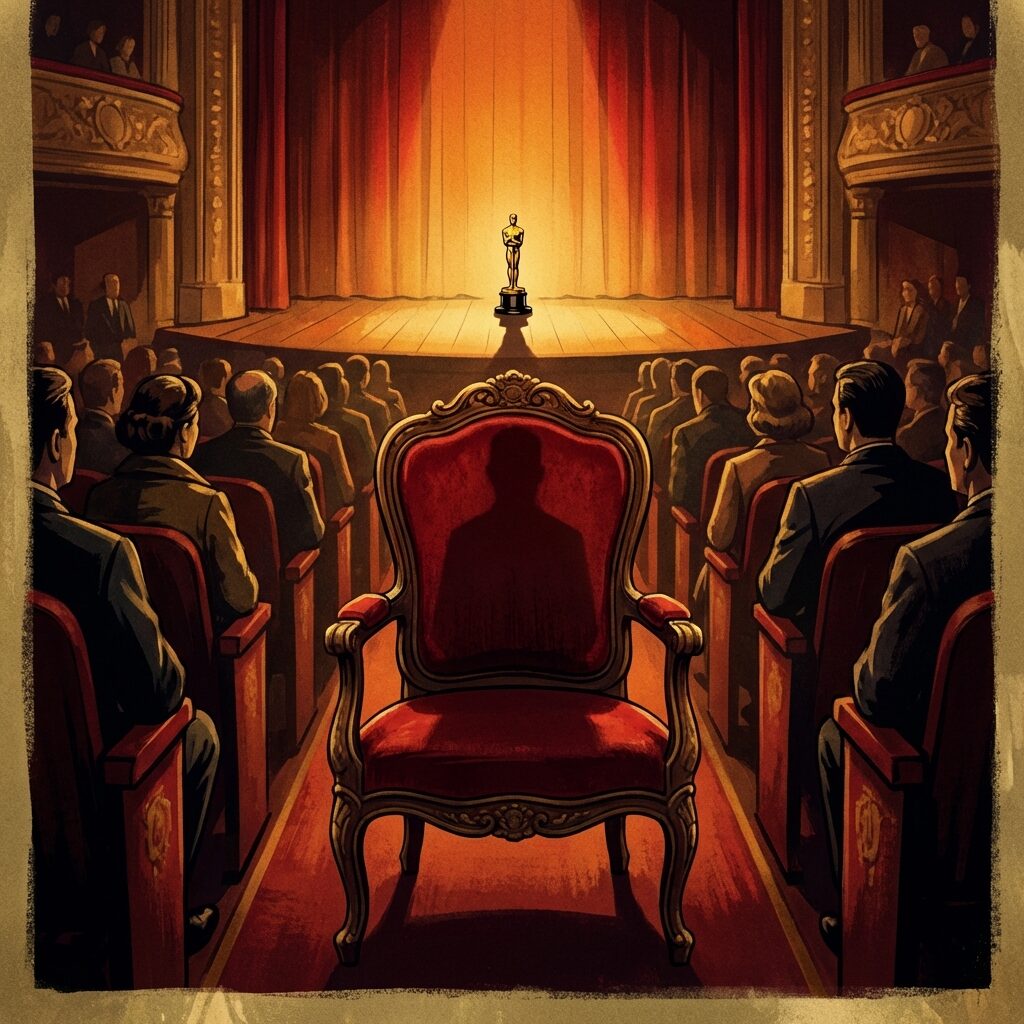
Barbra Streisand read the winner’s name at the 75th Academy Awards, and nobody was there to hear it. Not the man who wrote the song. Not the man who produced the beat. Not even Jeff Bass, who played the guitar riff half the world already knew by heart, he was home with his newborn. And Eminem was asleep.
Luis Resto, Eminem’s keyboard player, walked to the podium alone to accept the first Oscar ever given to a hip-hop song. Somewhere in Detroit, a phone rang and rang. Eminem picked up, groggy: “Motherf, , I’m trying to sleep!” Resto told him he’d won. “I did?”
Here’s what makes that story stick: Eminem thought it proved the award was real. “That to me shows how authentic and real that award is,” he told Variety years later. “When you don’t show up and you still win.”
The song about seizing your one opportunity, the most urgent, white-knuckled argument against wasting your shot ever put to a rap track, was claimed by a man who skipped the ceremony because his daughter had school in the morning. The irony isn’t just funny. It’s the whole point.
“Lose Yourself” arrived sounding like it had always existed, which makes how it got made all the stranger. Written in stolen 15-minute lunch breaks on a film set. Recorded one verse at a time, first take, in a portable studio parked outside the shoot. Ostensibly about a fictional character that Eminem would later admit was really himself all along. It became the first hip-hop song to win Best Original Song at the Oscars, held the record for longest-running No. 1 rap song on the Billboard Hot 100 for years, crossed two billion Spotify streams, and somehow wound up in presidential campaigns, Super Bowl ads, gospel choirs, and courtrooms on the other side of the planet.
This isn’t primarily about chart stats, though we’ll get there. It’s about the specific accident of pressure and craft that lets a song escape its genre and become something everyone feels like they own a piece of.
Written Between Takes
The music existed for nearly a year before the lyrics did. When Eminem finally wrote the words, he did it on a film set between takes, on A4 notebook paper, in 15-minute lunch breaks. The first vocal he recorded was the one that ended up on the record.
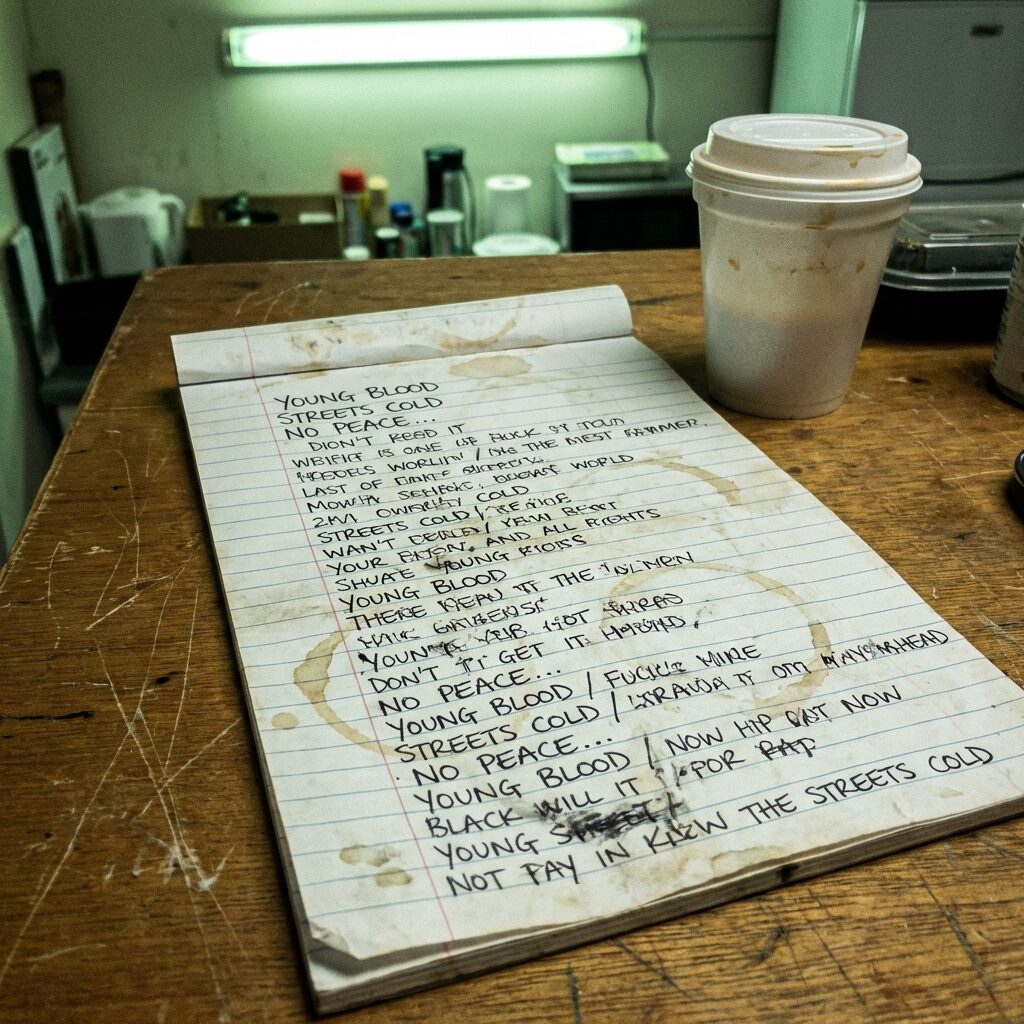
The groove existed before the story did. Jeff Bass and Eminem started working on what would become “Lose Yourself” in September 2001, just drums and a guitar line, pulled off the computer each session, waiting for something to land on top. “We started ‘Lose Yourself’ in September of ’01, and it came out in ’02,” Bass told Billboard. “So it took about a year, back-and-forth, to complete. A lot of the music was completed but the vocals and the words weren’t 100 percent completed by that time.”
A film changed everything. Director Curtis Hanson was making 8 Mile, a semi-autobiographical drama set in Detroit’s underground rap battle scene, and he asked Eminem to write music from his character’s perspective. The problem: Eminem’s entire creative identity ran on autobiographical confession. “I don’t know how to write about someone else’s life,” he told his manager Paul Rosenberg. That friction, playing a character while telling the truth, turned out to be exactly the pressure the song needed.
He wrote it on set. Between shooting scenes, on A4 writing pad paper, in the gaps between takes. Taryn Manning, who played Jimmy’s ex-girlfriend Janeane, watched it happen: “you could just see him formulating stuff in his head.” That actual lyric sheet appears in 8 Mile, there’s a scene of B-Rabbit on the bus, scribbling in exactly the notebook Eminem used. The sheet later sold on eBay for $10,000. In his 2008 autobiography The Way I Am, Eminem describes writing “in-between shooting scenes and taking care of his kids.” Two jobs at once, same as the character he was playing.
The recording is where things get strange. Studio engineer Steve King gave the definitive account in Tape Op Magazine, Issue #84: “We were on the set for the movie when Marshall did his vocal. He would come in on his lunch break, which was usually 15 minutes long. The vocal that ended up being the final vocal was the first take.”
Every internal rhyme, every consonant punch, every shift between Jimmy Smith Jr. and Marshall Mathers, one pass. The lunch break version was the record.
The production went through its own changes before that moment. The choruses originally hit with heavy distorted rock guitars, the kind of crunch that would have pushed the song toward Linkin Park territory. Bass described what changed: “It had a lot of really heavy distorted rock guitars originally. And then the script came in, and he wrote the lyrics. You know, the character was in place, and the flow came pretty quick. And then it made sense to remove some of those hard-rock guitars and replace it with keyboards doing virtually the same thing.” Strip the guitars, add keyboards, and the whole thing got more cinematic. More desperate, less aggressive.
King, who mixed the track and was present throughout, had worked with Aretha Franklin, Patti Smith, George Clinton, 50 Cent, and D12. He won a Grammy in 2003 for The Eminem Show. He died at 56, in a suburban Detroit hospital, after a diagnosis of liver disease. His name doesn’t come up much when people talk about the song.
Motor City, 2002
The 8 Mile soundtrack wasn’t built to anchor an album cycle, it was a compilation with only four new Eminem solo tracks, which left “Lose Yourself” unusually unencumbered. No sequencing to satisfy, no other songs to balance against. It could just be what it was.
“Lose Yourself” wasn’t designed to anchor a proper album. The 8 Mile soundtrack is a compilation, various artists, four new Eminem solo tracks: “Lose Yourself,” “8 Mile,” “Rabbit Run,” and “Stimulate” (on the deluxe edition). A document of a specific moment, not a conventional artistic statement.
That moment was hard to overstate. In late October 2002, Eminem simultaneously held the No. 1 movie at the US box office (8 Mile), the No. 1 single on the Billboard Hot 100 (“Lose Yourself”), and the No. 1 album on the Billboard 200 (the 8 Mile soundtrack). Almost nobody pulls that off. The film was a semi-autobiographical drama where he essentially played a younger, more exposed version of himself, and it connected in ways that surprised even people who already liked him.
NME called the song “excellent, if obviously an offcut from ‘The Eminem Show,’ all thundering rawk guitars and Rocky-ish bassline.” That’s a backhanded compliment delivered straight, and it’s mostly right: the song has the emotional weight of that album, the paranoia, the hunger, the unguarded self-examination, without the shock-value armor he typically wore in 2002. The Eminem Show had been out since May. The controversies from The Marshall Mathers LP were still in circulation. The movie gave him cover to be vulnerable in a way a straightforward rap album probably wouldn’t have.
Not having to sit alongside “Without Me” or “Cleanin’ Out My Closet” let the song exist on its own terms. One purpose, no armor, written in the gaps between other people’s scenes. Most rap singles don’t get that kind of breathing room.
Three Verses, Three Men
“Lose Yourself” moves across three verses and three shifting perspectives: B-Rabbit in third person, then Eminem himself in third person, then a first-person drop of the pretense entirely. The craft in those verses, the assonance clusters, the syllabic logic, the rhetorical pivot from “I” to “you”, is as deliberate as anything he’s put on record.
Look, if you had one shot or one opportunity
To seize everything you ever wanted in one moment
Would you capture it or just let it slip?
Yo[Verse 1]
His palms are sweaty, knees weak, arms are heavy
There’s vomit on his sweater already, mom’s spaghetti
He’s nervous, but on the surface, he looks calm and ready
To drop bombs, but he keeps on forgetting
What he wrote down, the whole crowd goes so loud
He opens his mouth, but the words won’t come out
He’s chokin’, how? Everybody’s jokin’ now
The clock’s run out, time’s up, over, blaow
Snap back to reality, ope, there goes gravity
Ope, there goes Rabbit, he choked, he’s so mad
But he won’t give up that easy, no, he won’t have it
He knows his whole back’s to these ropes, it don’t matter
He’s dope, he knows that, but he’s broke, he’s so stagnant
He knows when he goes back to this mobile home, that’s when it’s
Back to the lab again, yo, this old rhapsody
Better go capture this moment and hope it don’t pass him[Chorus]
You better lose yourself in the music
The moment, you own it, you better never let it go (Go)
You only get one shot, do not miss your chance to blow
This opportunity comes once in a lifetime, yo
You better lose yourself in the music
The moment, you own it, you better never let it go (Go)
You only get one shot, do not miss your chance to blow
This opportunity comes once in a lifetime, yo
You better
[Verse 2]
His soul’s escaping through this hole that is gaping
This world is mine for the taking, make me king
As we move toward a new world order
A normal life is boring, but superstardom’s
Close to post-mortem, it only grows harder
Homie grows hotter, he blows, it’s all over
These hoes is all on him, coast-to-coast shows
He’s known as the Globetrotter, lonely roads
God only knows he’s grown farther from home, he’s no father
He goes home and barely knows his own daughter
But hold your nose ’cause here goes the cold water
These hoes don’t want him no mo’, he’s cold product
They moved on to the next schmoe who flows
He nose-dove and sold nada, and so the soap opera
Is told, it unfolds, I suppose it’s old, partner
But the beat goes on, da-da-dom, da-dom, dah-dah-dah-dah
[Chorus]
You better lose yourself in the music
The moment, you own it, you better never let it go (Go)
You only get one shot, do not miss your chance to blow
This opportunity comes once in a lifetime, yo
You better lose yourself in the music
The moment, you own it, you better never let it go (Go)
You only get one shot, do not miss your chance to blow
This opportunity comes once in a lifetime, yo
You better
[Verse 3]
No more games, I’ma change what you call rage
Tear this motherfuckin’ roof off like two dogs caged
I was playin’ in the beginning, the mood all changed
I’ve been chewed up and spit out and booed off stage
But I kept rhymin’ and stepped right in the next cypher
Best believe somebody’s payin’ the Pied Piper
All the pain inside amplified by the
Fact that I can’t get by with my nine-to-
Five and I can’t provide the right type of life for my family
‘Cause, man, these goddamn food stamps don’t buy diapers
And there’s no movie, there’s no Mekhi Phifer, this is my life
And these times are so hard, and it’s gettin’ even harder
Tryna feed and water my seed, plus teeter-totter
Caught up between bein’ a father and a prima donna
Baby-mama drama, screamin’ on her, too much for me to wanna
Stay in one spot, another day of monotony’s gotten me
To the point I’m like a snail, I’ve got
To formulate a plot or end up in jail or shot
Success is my only motherfuckin’ option, failure’s not
Mom, I love you, but this trailer’s got
To go, I cannot grow old in Salem’s Lot
So here I go, it’s my shot, feet, fail me not
This may be the only opportunity that I got
[Chorus]
You better lose yourself in the music
The moment, you own it, you better never let it go (Go)
You only get one shot, do not miss your chance to blow
This opportunity comes once in a lifetime, yo
You better lose yourself in the music
The moment, you own it, you better never let it go (Go)
You only get one shot, do not miss your chance to blow
This opportunity comes once in a lifetime, yo
You better
[Outro]
You can do anything you set your mind to, man
******* This Lyrics is NOT for Commercial use *******
Most songs have one perspective. “Lose Yourself” has three, layered across three verses, and Eminem’s own Genius annotations are the clearest record of how deliberately it was built.
Verse 1 is B-Rabbit. Jimmy Smith Jr., the fictional character. “It’s me talking about Jimmy Smith Jr.,” Eminem wrote. “Like, I’m not saying my sweater, I’m saying his. I’m trying to show you what his life is about.” Third person throughout, Eminem as narrator, dropping you into the pre-battle dread of someone who knows he has one shot.
Verse 2 shifts to Eminem himself, still in third person, still maintaining the pretense: “God only knows he’s grown farther from home, he’s no father / He goes home and barely knows his own daughter.” The cost of ambition. But not yet his own cost, not quite.
Verse 3 drops it. First person, wall gone: “There’s no movie, there’s no Mekhi Phifer, this is my life.” The character was always the vehicle.
Eminem’s breakdown of Verse 2’s internal rhymes is worth reading straight: “Maybe people are just thinking father rhymes with daughter or something. But it’s about repeating a pattern. The trick is to get the pattern to hit on the same beat, ‘grown farther,’ ‘own daughter,’ the ‘knows’ and ‘goes,’ like that.” End rhymes aren’t the point. Assonance clusters landing on the same beat are, vowel sounds functioning as rhythm. The “ea/y” sounds in “sweaty/heavy/spaghetti/ready” work the same way: four words, same vowel, landing together in a way that sounds almost melodic even though he’s rapping.
The “mom’s spaghetti” line has its own strange afterlife. It started as an early internet meme on 4chan, went mainstream through a YouTube video of Eminem apparently singing almost entirely about spaghetti, and eventually got so embedded in the culture that in 2021 he opened an actual restaurant in Detroit called Mom’s Spaghetti. In 2020, he donated spaghetti meals to healthcare workers at Henry Ford Health System, citing the lyric. A line about pre-battle nerves became a restaurant. Vague anxiety fades. Vomit on your sweater, specifically your mom’s spaghetti, does not.
The hook is rhetoric as much as song. Almost every line opens with “you”: “You better lose yourself in the music, the moment / You own it, you better never let it go / You only get one shot.” The anaphora pulls the song from confession into direct address. By the second chorus, it’s not Eminem’s story anymore, the listener is the one being warned. That shift from “I” to “you” is why the song ends up at political rallies and graduation speeches and pre-game locker rooms, none of which have anything to do with Detroit battle rap.
Verse 3 closes the loop. Eminem told Genius the Mekhi Phifer line came down to syllabics: “I had started with this syllable scheme, ‘somebody’s paying the pied piper’ and ‘Mekhi Phifer’ ended up fitting. That was all it was.” The real and the fictional bleeding together, which they always were. The form just finally stopped pretending otherwise.
Two Chords, Your Soul
Jeff Bass called it “just two, three chords that grab your soul and don’t let go”, and what sounds like a simple production turns out to be precisely built to carry the emotional weight of the lyrics.
Jeff Bass has a way of describing the piano progression at the heart of “Lose Yourself” that cuts right to it: “It’s not that it’s so difficult; it’s just two, three chords that just kind of grab your soul and don’t let go.”
He’s not wrong. The song opens with a D minor riff, Dm, C, Dm, left hand landing on the first beat of every bar like a fist on a table. Instantly recognizable the way simple things played with total conviction are. Not complicated. Just committed. You feel where it’s going before it gets there. Then the guitar comes in, what critics called “a tense, unrelenting guitar lick,” and the whole thing locks into something with physical momentum.
Bass on the guitar: “The chunky guitar in the song, I think it goes really well with the drums that were done. It rolls in a way that’s very motivating.” Motivating is the right word. There’s something physical about this track that most hip-hop of the era didn’t have. It moves your body toward something rather than just moving it.
The production tracks the lyrical arc. Verse 1 is nervous and thin, stripped back, the anxiety given room to breathe. Verse 2 is angrier, fuller, the sound expanding as Eminem stops observing the character and starts exposing himself. Verse 3 is dense, production at full capacity, matching the emotional release of the first-person shift. It builds in intensity and texture both, adding layers as the pressure finally breaks.
Eminem’s vocal delivery works as a separate instrument. He hits consonants, K, P, T, hard enough that they add rhythmic information beyond what the drum programming is already doing. The assonance clusters work like melodic hooks without being melody. He’s not singing, but he’s doing something with melodic weight, using vowel sounds the way a horn section might use a repeated note. Percussion and melody at once.
Swapping the distorted rock guitars for keyboards made the song. Critics noticed the unusual transparency of the mix, every instrument audible, nothing buried. Hip-hop production in 2002 was often dense and compressed. This track breathes. You can hear each element clearly, which is why it holds up across wildly different contexts: a gospel choir can strip it to its chord progression and rebuild it from scratch, a car commercial can run just the instrumental, an Olympic athlete can run to it, a New Zealand courtroom can examine it note by note. The song leaves room for you to bring something to it. Bass’s chunky guitar and Eminem’s drum programming kept that space open.
The sheet music marks the tempo starting at 66 BPM and building to 79 BPM, a subtle acceleration that mirrors the mounting pressure of the lyric. Small detail. Big effect.
Twelve Weeks at the Top
In a year when only nine songs topped the Hot 100, the second-lowest total in chart history, “Lose Yourself” debuted at No. 43, then sat at No. 1 for twelve consecutive weeks, a rap record that stood for nearly two decades.
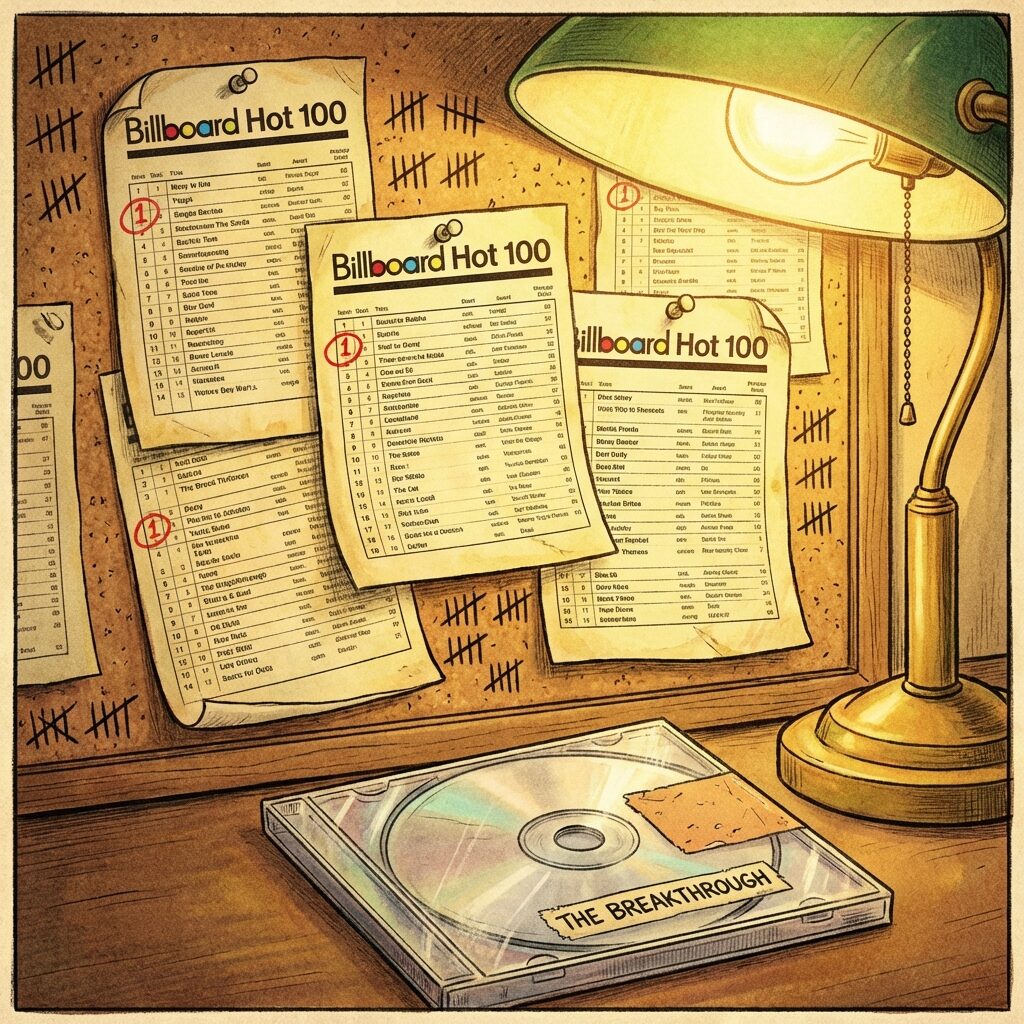
Here’s a number worth sitting with: in 2002, only nine songs reached No. 1 on the Billboard Hot 100. Second-lowest total in chart history. The year was historically compressed at the top. Into that compression, “Lose Yourself” debuted at No. 43 the week of October 5, 2002, before it was even officially released, jumped to No. 18 one week later, and hit No. 1 the week of November 9, 2002.
Then it stayed there for twelve consecutive weeks.
For someone who’d been one of the most dominant artists in music for three years, this was his first Hot 100 No. 1 single. Strange, given how much of the conversation he’d owned. The song also topped the charts in Canada, Australia, the UK, Ireland, New Zealand, Denmark, Sweden, Switzerland, and about eleven other countries, twenty total. In Australia it matched the American run exactly: twelve straight weeks at No. 1.
The rap record stood until the Black Eyed Peas’ “Boom Boom Pow” tied it in 2009, then Wiz Khalifa’s “See You Again” in 2015, and Lil Nas X’s “Old Town Road” finally broke it at nineteen weeks in 2019. Nearly two decades.
Then something odd happened in February 2020. Eminem performed the song as a surprise at the 92nd Academy Awards. The next morning, “Lose Yourself” hit No. 1 on the US iTunes Sales Chart. His entire catalog sold a combined 7,000 downloads that night, up 307% from 2,000 the previous day. One performance was enough to reactivate a song that had never really stopped moving.
The streaming numbers back that up: over 2 billion Spotify streams, sixth most-streamed song from the 2000s on the platform, approaching 500 weeks on the Billboard Rap Digital Song Sales chart as of 2025. The RIAA certified it 13× Platinum in March 2023, ten million digital downloads in the United States alone. It never really peaked and came back down. It just kept going.
The Oscar He Slept Through
The first hip-hop song to win the Oscar for Best Original Song was accepted by a keyboard player while the songwriter slept at home. When Eminem found out, his reaction said everything about why the song worked.
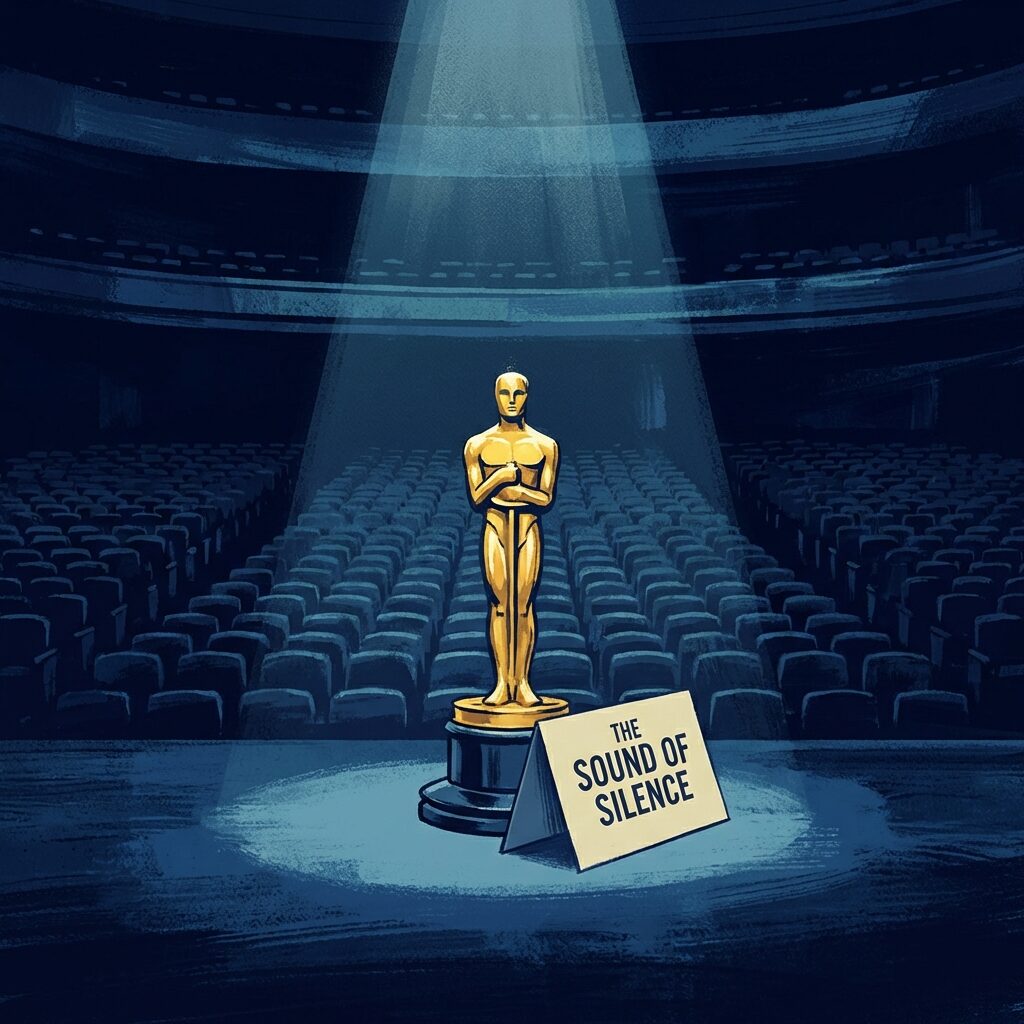
The 75th Academy Awards, March 23, 2003. Barbra Streisand opened the envelope for Best Original Song. “Lose Yourself” had been up against “I Move On” from Chicago, “Burn It Blue” from Frida, “The Hands That Build America” from Gangs of New York, and “Father and Daughter” from The Wild Thornberrys Movie. Luis Resto walked to the stage. Eminem was home. Asleep.
It was the first hip-hop song in Oscar history to win Best Original Song. Also the first winning song, since the ceremony started being televised, not performed at the telecast. Two firsts, and the artist wasn’t in the building for either one.
Eminem’s account of that night is one of the best stories in music. “Luis Resto, my keyboard player who produces records with me, went up and accepted it, and I know people were probably like, ‘Who the f— is this guy?’ So he called me, and I remember the phone kept ringing, and I’m like ‘Motherf—, I’m tryin’ to sleep!'” When he finally processed it: “That to me shows how authentic and real that award is, when you don’t show up and you still win.” A 2003 People magazine article ran the headline “Eminem Naps Through His Oscar Victory.” Genuinely one of the best music headlines ever written.
At the 46th Grammy Awards in February 2004, the song took everything available. Best Rap Song, the inaugural winner of a brand new category. Best Male Rap Solo Performance, beating 50 Cent’s “In da Club,” the other song that owned that exact moment. It was also nominated for Record of the Year and Song of the Year, which meant the Recording Academy was treating hip-hop as a general-category contender, not something to be filed away in its own corner.
Rolling Stone ranked it No. 166 on their 2004 list of the 500 Greatest Songs of All Time, one of only three 21st-century rap songs to appear in either the 2004 or 2021 version. The 2021 update moved it one spot, to No. 167. Some things settle into position and stay there.
The 2020 Oscars performance, seventeen years after the win, was its own strange thing. Lin-Manuel Miranda introduced him. The Dolby Theatre had been locked down during rehearsals to keep the surprise from leaking; Eminem had a contractual option to cancel if news got out. It didn’t. Brad Pitt and Leonardo DiCaprio were caught on camera mouthing every word. Billie Eilish, who was nine when the song came out, gave a standing ovation. Eminem tweeted afterward: “Look, if you had another shot, another opportunity… Thanks for having me @TheAcademy. Sorry it took me 18 years to get here,” with a GIF of Barbra Streisand announcing his 2003 win.
Everyone’s Song Now
Barack Obama used it to stay focused during the 2008 campaign. Chrysler built their most famous Super Bowl ad around it. A New Zealand court ruled on it. A Detroit gospel choir recorded it for charity. ‘Lose Yourself’ has moved through American life for two decades without a remix, a rewrite, or a softened edge.

In his 2020 memoir A Promised Land, Barack Obama wrote about what he turned to during the 2008 campaign when he needed to keep his head right: “When I needed some inspiration on the presidential campaign I often turned to music. It was rap that got my head in the right place. Two songs especially: Jay-Z’s ‘My 1st Song’ and Eminem’s ‘Lose Yourself.’ Both were about defying odds and putting it all on the line; how it felt to spin something out of nothing; getting by on wit, hustle, and fear disguised as bravado.”
A song Detroit’s most controversial artist made about a fictional white kid trying to survive the underground battle rap scene of the mid-1990s became one of two songs the first Black president used to stay grounded during the most scrutinized campaign in a generation. Joe Biden used it as campaign music during his 2020 run in Michigan. The song didn’t need a demographic. It just kept showing up.
The Chrysler Super Bowl commercial in February 2011 is probably the most deliberate use of the song anyone has pulled off. Eminem had turned down over 100 licensing requests before this one. Chrysler CMO Olivier Francois made the pitch directly to Joel Martin, manager of Eight Mile Style. Chrysler CEO Sergio Marchionne called the decision “gut-wrenching” and then said this about Eminem: “He represents part of America that I think is important as hell. I think it’s at the heart of what we are.” The two-minute-and-two-second ad, one of the longest Super Bowl spots ever aired, ran an instrumental version of “Lose Yourself” as Eminem drove a Chrysler 200 through Detroit to the Fox Theatre and delivered the closing line: “This is the Motor City, and this is what we do.” The Associated Press wrote that the commercial sent “shivers of pride through the battered city.” Detroit was deep in the wreckage of the auto industry collapse and approaching bankruptcy. The timing wasn’t incidental.
Later that year, a gospel remix arrived. The Selected of God choir, produced by Eight Mile Style with Luis Resto and Jeff Bass, released their version on August 1, 2011. All publishing proceeds went to three Detroit nonprofits: Abayomi Community Development Corporation, The Yuinon, and the Robert Skumake Foundation. The music video featured the Spirit of Detroit, the Joe Louis Fist, Hitsville U.S.A., and the Cass Tech marching band. Eminem didn’t appear.
And then there’s the New Zealand High Court. In 2014, the New Zealand National Party aired a campaign ad using a background track called “Eminem Esque,” purchased from an Australian music library. Eight Mile Style filed suit. During the 2017 trial in Wellington, judges recited Eminem lyrics in the courtroom. Jeff Bass, the man who played the guitar riff, played it live for the judge. Justice Helen Cull issued her ruling on October 25, 2017: “Eminem Esque sounds like a copy and is a copy of Lose Yourself.” Plaintiff’s counsel Garry Williams called it “the jewel in the crown of Eminem’s catalogue” and “a high value song that can fetch premium licensing fees.” The ad had aired 186 times over eleven days.
Jodie Foster quoted the chorus in a University of Pennsylvania commencement speech in May 2006. Michael Phelps used it as pump-up music at multiple Olympics. At an Austin concert, over 100,000 people recited every word without prompting. There’s no tidy explanation for why a two-decade-old Detroit rap song about a fictional battle rapper keeps turning up in places like these. But it’s specific where most anthems are vague, and it’s about stakes rather than triumph, which is a different thing, and rarer.
The Song Worth Fighting For
Eight Mile Style has litigated “Lose Yourself” across four countries and multiple decades, against Apple, Spotify, a New Zealand political party, and a Detroit car dealership, and Eminem has been absent from nearly all of it.

The song has a legal life entirely separate from its creator.
In July 2003, Apple used “Lose Yourself” in an iTunes TV commercial, a ten-year-old kid singing it on MTV, without asking anyone. Eight Mile Style sued Apple, Viacom, MTV, and ad agency TBWA/Chiat/Day in Detroit federal court, seeking $2.58 million in music sales plus $14 million in damages. Steve Jobs personally called Joel Martin and asked him and Eminem to reconsider. They said no. The case settled out of court.
Four years later, a separate suit targeted the iTunes Store itself. Eight Mile Style argued an obscure contract clause meant digital sales required a distinct deal, one that was never made. Aftermath had been collecting at least $4 million off Eminem’s catalog on iTunes; Apple paid Aftermath 70 cents per download while Eight Mile got 9.1 cents. iTunes revenue from “Lose Yourself” alone came to $466,916. The trial ran five days in Detroit federal court before settling with no disclosed terms.
In August 2019, Eight Mile Style filed against Spotify in Nashville federal court, claiming roughly 243 Eminem compositions had been streamed without proper licenses since 2011, about $120 million in unpaid royalties across 280 billion streams. The detail that stops you cold: Spotify’s licensing agent had categorized “Lose Yourself” as “Copyright Control,” a designation for songs whose rights holder is unknown, even though Eight Mile Style owned 90% of the publishing rights, publicly listed on BMI.com, while Eminem had 32 million monthly Spotify listeners at the time of filing. Judge Aleta Trauger issued summary judgment for Spotify in August 2024, finding Eight Mile had run a “wait-and-sue strategy” and that liability would fall on Kobalt Music Group, which had administered the catalog, rather than Spotify. Eminem’s publicist put out a statement saying he wasn’t a party to the lawsuit and that his team was “just as surprised as anyone else.”
In January 2025, Eight Mile Style sued LaFontaine Ford in Detroit federal court over a 30-second TikTok video promoting a Detroit Lions-branded F-150. The caption read: “With only 800 produced, you only get one shot to own a Special Edition Detroit Lions 2024 PowerBoost Hybrid F-150.” Eight Mile’s attorneys noted the earlier Chrysler deal “brought in millions.” The case was dropped after the dealership pulled the content and fired the vendor responsible.
What ties all of this together: Eminem doesn’t own Eight Mile Style. He wasn’t consulted about the New Zealand case. He told Variety that if he saw any of the damages from that suit, he’d donate them to Hurricane Harvey relief. The legal history of “Lose Yourself” runs to hundreds of pages across multiple jurisdictions. Most of it has nothing to do with Marshall Mathers.
The Moment That Keeps Coming
Written in 15-minute lunch breaks on a film set and recorded in one take, the song was built around a character who was really just Eminem under pressure. It keeps finding new contexts, memoirs, courtrooms, commercials, because the feeling at the center of it never needed updating.
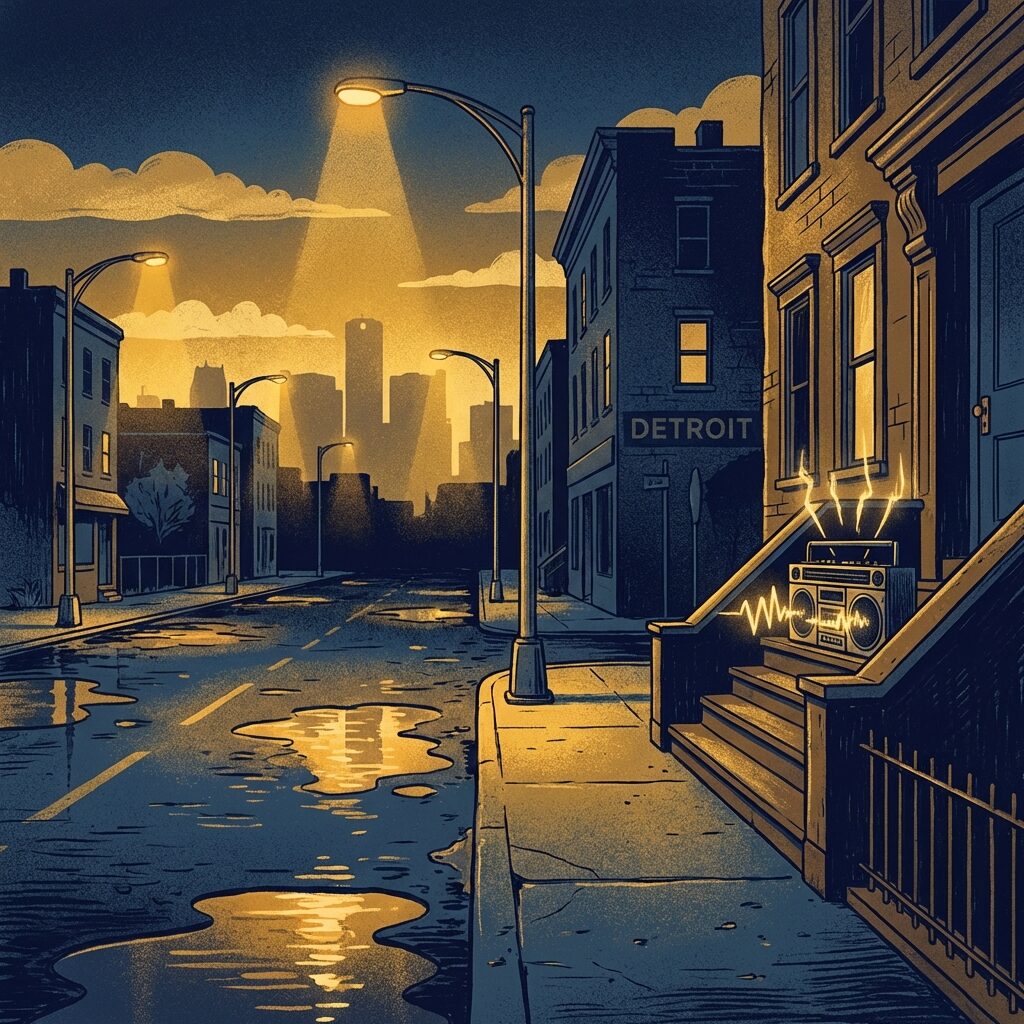
Return to the beginning. Fifteen-minute lunch breaks on a film set. One take per verse. A notepad. A portable studio in a parking lot. A fictional character who turned out to be the most honest thing Eminem ever made, because the pressure was real even if the character wasn’t.
What’s strange about “Lose Yourself” is that it keeps getting rediscovered, a presidential memoir, a Super Bowl commercial, a surprise Oscars performance, a New Zealand courtroom, a Ford dealership TikTok, without needing to be updated or softened for any of them. The terror of the one shot. The cost of it. The thing you do when you’re out of time and it’s now or never. Nobody needs that explained. Everybody has been in that moment.
Jeff Bass said something about the chord progression that keeps coming back: “It’s not that it’s so difficult; it’s just two, three chords that just kind of grab your soul and don’t let go.” That’s the whole story. Not just of this song, but of why certain things last and others don’t. The simplest things, executed under pressure, with everything on the line, made in stolen moments with no time to second-guess, those get in and stay in.
Eminem slept through his Oscar. Luis Resto accepted it on his behalf. The phone rang off the hook in a Detroit bedroom, and when he finally answered, the conversation lasted about twenty seconds. Then he went back to sleep.
The song didn’t. It’s still on the charts. Still playing in gyms and rallies and courtrooms, and somewhere right now in someone’s earbuds before something they can’t afford to blow.
Eminem recorded ‘Lose Yourself’ verse by verse on 15-min lunch breaks, one take each — then slept through his Oscar win 🎤😴 #Eminem #HipHop #2000s https://bit.ly/47tNC3R

Click to Tweet