The Cowboy Who Almost Left
Stevie Wonder showed up to his record-breaking Motown contract signing dressed as a cowboy, just months after publicly announcing he was quitting music and moving to Ghana. Songs in the Key of Life is what poured out when he changed his mind and decided he hadn’t said nearly enough yet.
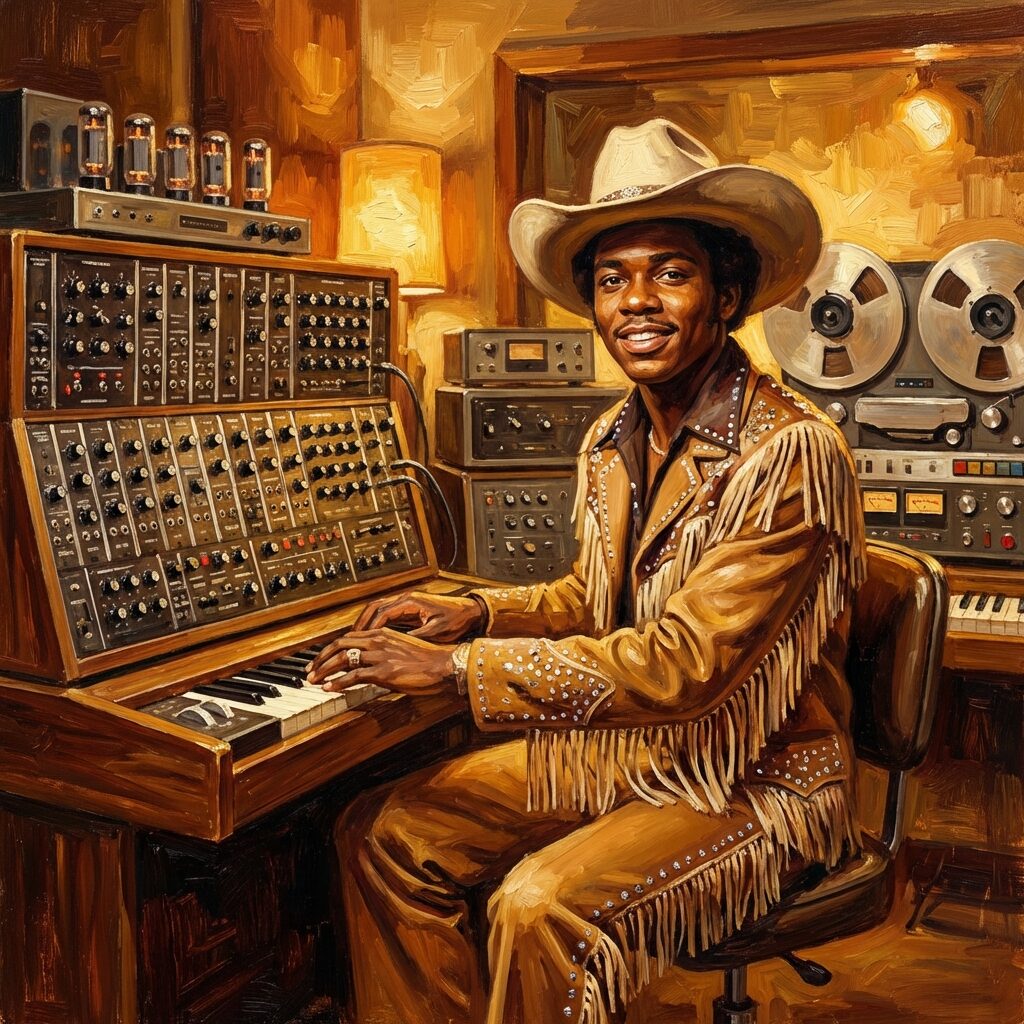
Picture this: August 5, 1975. Motown Records is throwing a party. Roast beef, pie, champagne, thirty thousand dollars’ worth of celebration for the biggest recording contract in music history. And in walks the guest of honor wearing a full cowboy outfit. Ten-gallon hat. Leather fringe. And a gun holster emblazoned with the words “Number One With A Bullet.”
The man in the costume was Stevie Wonder. He was twenty-five years old. He had already won Album of the Year at the Grammys twice in a row. And just months earlier, he had been planning to leave all of it behind.
Not leave as in take a break. Leave as in emigrate to Ghana, work with disabled children, and play a farewell concert with proceeds going to Ghanaian charities. He’d held a press conference in Los Angeles in March 1975 and everything. The dashiki tunics had replaced the Motown-issue mod suits. He was done with Vietnam, done with Watergate, done with an industry that had paid him one dollar of the thirty million he’d earned as a child star. He was out.
And then he wasn’t.
What changed between the farewell announcement and the cowboy entrance, nobody has fully explained. But whatever flipped in him, it flipped hard. What followed wasn’t just a new album. It was two and a half years of near-daily recording sessions, sometimes stretching forty-eight hours without rest. Approximately two hundred songs recorded, whittled down to twenty-one. Studios on both coasts and in Jamaica. A Times Square billboard advertising an album that didn’t exist yet. And when it finally arrived on September 28, 1976, it debuted at number one and simply refused to leave.
Songs in the Key of Life is the album of a man who almost walked away and then decided he hadn’t said enough yet. Not even close. You can hear it in the sheer volume of the thing, a double album plus a bonus EP, four sides of vinyl, every genre he could get his hands on. Nearly fifty years later, it still sounds like someone trying to fit an entire life into a single release. Which, if you think about it, is exactly what he was doing.
Four Albums That Changed Everything
Before Songs in the Key of Life, Stevie Wonder had already released four masterpieces in three years, won back-to-back Album of the Year Grammys, and negotiated full creative control away from Motown after the label paid him one dollar of thirty million earned as a child. By 1976, he was so dominant that Paul Simon thanked him for not releasing an album that year.
To understand why Wonder’s near-departure shook the music world, you have to understand what he’d already done. Between 1972 and 1974, he released four albums that changed what people thought pop music could be: Music of My Mind, Talking Book, Innervisions, and Fulfillingness’ First Finale. Four masterpieces in three years. Each one more ambitious than the last, and each one a commercial and critical smash.
Innervisions won Album of the Year at the 1974 Grammys, making Wonder the first Black musician to take that prize. Fulfillingness’ First Finale won the same award the following year. Back to back. Nobody had done that before.
But the run had deeper roots than the Grammy hardware suggests. Wonder had been signed to Motown at eleven years old, billed as “Little Stevie Wonder,” a child prodigy who could play harmonica and sing with a joy that stopped people in their tracks. He made the label enormous amounts of money. And when he turned twenty-one, Motown paid him exactly one dollar of the approximately thirty million he’d earned as a minor.
That kind of betrayal leaves a mark. In 1971, following the precedent Marvin Gaye had set with What’s Going On, Wonder negotiated something almost unheard of at Motown: full creative control, retained publishing rights through his own Black Bull Music, and an advance north of nine hundred thousand dollars. He would write, produce, arrange, and play most of the instruments himself. The mod suits disappeared. The dashiki tunics arrived. The wardrobe told you what the contract already said: he belonged to himself now.
By 1976, Wonder was so dominant that other artists defined themselves in relation to him. When Paul Simon accepted Album of the Year at the 18th Grammy Awards for Still Crazy After You, he opened with what became one of the most quoted lines in Grammy history: “I’d like to thank Stevie Wonder, who didn’t make an album this year.” It got a huge laugh. It also told you everything about where Wonder stood. He wasn’t competing with anyone. Everyone else was competing with him.
So when word got out that this man was thinking about walking away from music entirely, it wasn’t gossip. People genuinely feared what popular music would sound like without him in it.
From Ghana to the Biggest Deal in Music
Wonder’s plan to emigrate to Ghana was genuine, driven by frustration with American politics and a desire to trace his ancestry. What brought him back was the largest recording contract ever offered to a single artist: $13 million upfront, full creative control, and 200,000 copies of a greatest hits package sent to the incinerator.
The Ghana plan wasn’t a negotiating tactic. It wasn’t a bluff to squeeze more money out of Motown. Stevie Wonder genuinely wanted to go.
He believed his ancestral lineage could be traced to Ghana. He was disgusted by Vietnam. Watergate had confirmed his worst suspicions about the American power structure. He’d held a press conference in Los Angeles and laid out the plan: a farewell tour, proceeds going to Ghanaian charities, then emigration. He wanted to work with disabled children. For a man who’d been blind since birth, retinopathy of prematurity, diagnosed in infancy, this wasn’t abstract philanthropy. It was personal.
But while Wonder was looking toward West Africa, the music industry was looking at him. And panicking.
Arista Records came calling. So did Epic. Both saw what everyone saw: the most gifted recording artist of his generation, potentially available. The bidding war was on. Back at Motown, Berry Gordy was doing the math, not just financial, but existential. Losing Stevie Wonder wouldn’t just hurt the bottom line. It would gut the label’s identity.
Gordy described the negotiations in his memoirs with unusual candor: “The most grueling and nerve-racking we ever had. But I had to do it, because there was no way I was going to lose Stevie. … I was shaking in my boots!” He sent Motown president Ewart Abner to deal with Wonder’s lawyer, Johanan Vigoda. What they came back with was something nobody had seen before.
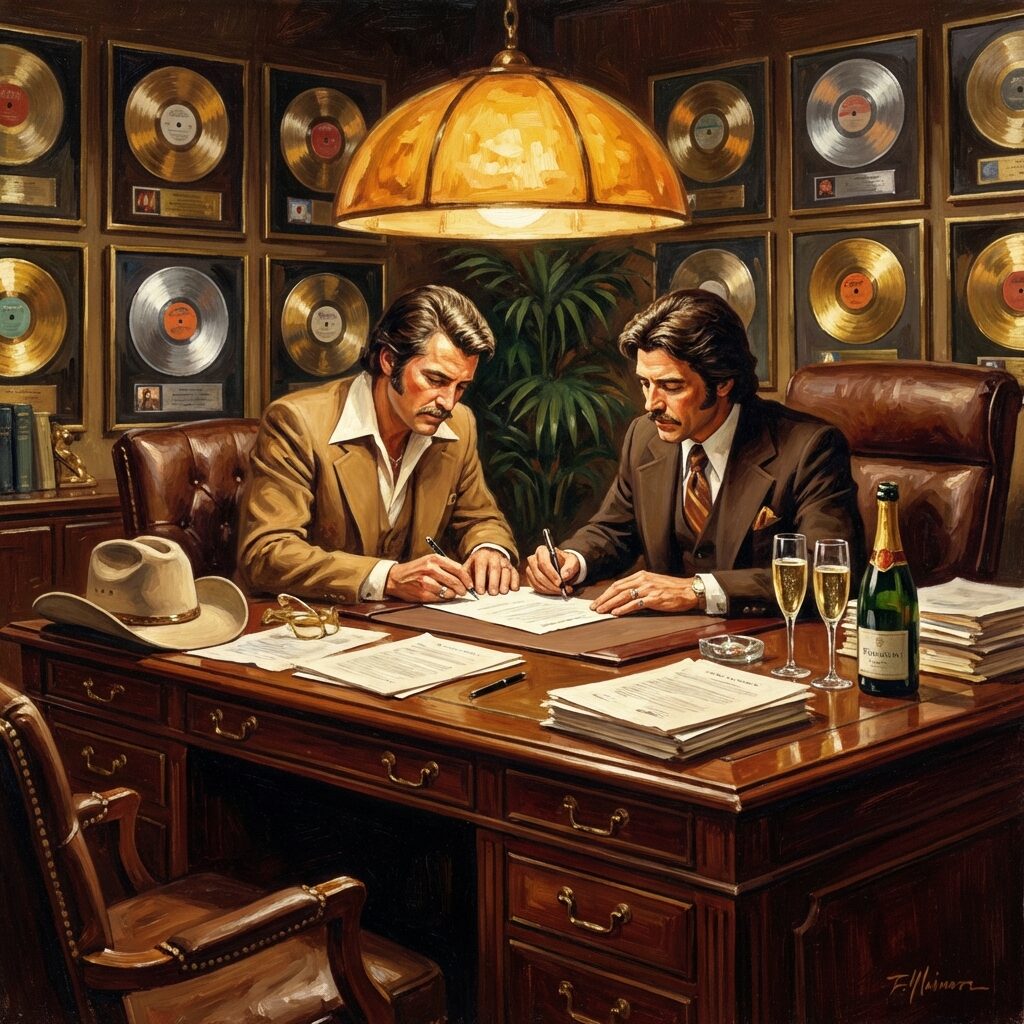
The contract, signed on August 5, 1975, was a seven-year, seven-album deal. Thirteen million dollars upfront. A bonus structure that could push the total to thirty-seven million, roughly two hundred twenty-one million in today’s dollars. Twenty percent royalties. Full artistic control. Publishing ownership. Veto power over which singles Motown could release. Freedom to collaborate with any artist he chose. And a clause requiring Wonder’s personal permission if Motown was ever sold.
Oh, and one more thing. Motown had already pressed two hundred thousand copies of a triple-disc greatest hits package. Wonder didn’t want it released. So all two hundred thousand copies went to the incinerator. Just like that.
It was the largest recording contract ever made with a single artist. And Wonder celebrated by showing up to the gala in that cowboy outfit, grinning under the ten-gallon hat, holster reading “Number One With A Bullet.” If you’re going to stay, stay with style.
But the contract wasn’t really about money. Not for Wonder. The money was Motown’s way of saying please don’t go. The creative control was Wonder’s way of saying I’ll stay, but only if I can make exactly the album I hear in my head. No A&R executives suggesting he needed a more radio-friendly single. Just Stevie, his musicians, his studios, and however long it took.
It would take a while.
Two Years of ‘Stevie Time’
From late 1973 through summer 1976, Wonder recorded roughly 200 songs across studios in Hollywood, Sausalito, New York, and Jamaica, with sessions that sometimes ran 48 hours straight. Motown’s marketing team, stuck waiting, printed “We’re Almost Finished” T-shirts and rented a Times Square billboard for an album that didn’t exist yet.
Two hundred. That’s roughly how many songs Stevie Wonder recorded during the sessions for Songs in the Key of Life. Twenty-one made the final cut. The other hundred and seventy-nine were complete enough to be considered, good enough to have anchored most other artists’ albums. They got shelved.
Recording had actually begun back in December 1973, before the contract drama, before the Ghana plans, before any of it. The instrumental “Contusion” was among the first tracks laid down. From there, sessions ran near-daily through the summer of 1976, sometimes stretching forty-eight hours without anyone sleeping. “It went on for two years almost every day, many hours and huge amounts of material,” recalled co-engineer John Fischbach. “I guess it was really his most prolific time.”
The primary base was Crystal Sound Studios in Hollywood, owned by Fischbach. But Wonder wasn’t the type to stay put. Sessions also ran at the Record Plant in both Hollywood and Sausalito, the Hit Factory in New York (where the team relocated for about six weeks when Crystal Sound had a prior booking), and Bob Marley’s studio in Jamaica. The Jamaica trip was supposed to be a quick session to record backing vocals on a single track. It turned into two or three weeks. “Just because it was Stevie,” as the story goes. The song they worked on never made the album.
Wonder had split with Robert Margouleff and Malcolm Cecil, the production team behind his earlier classic-period records. In their place, he elevated Gary Olazabal, who’d started assisting on Innervisions sessions at age nineteen or twenty, to first engineer. Olazabal would become one of the key witnesses to the marathon.
The process was, by all accounts, a kind of productive disorder. Wonder would arrive at the studio with what Olazabal described as “a complete arrangement in his head.” He’d sit down at the Yamaha GX-1 synthesizer and start building. Musicians learned to stay close or keep their phones on. “There are ‘sessions’ and then there’s Stevie Time,” laughed keyboardist Greg Phillinganes, who played on several tracks. You didn’t schedule a session with Stevie Wonder. You made yourself available and waited for the call.
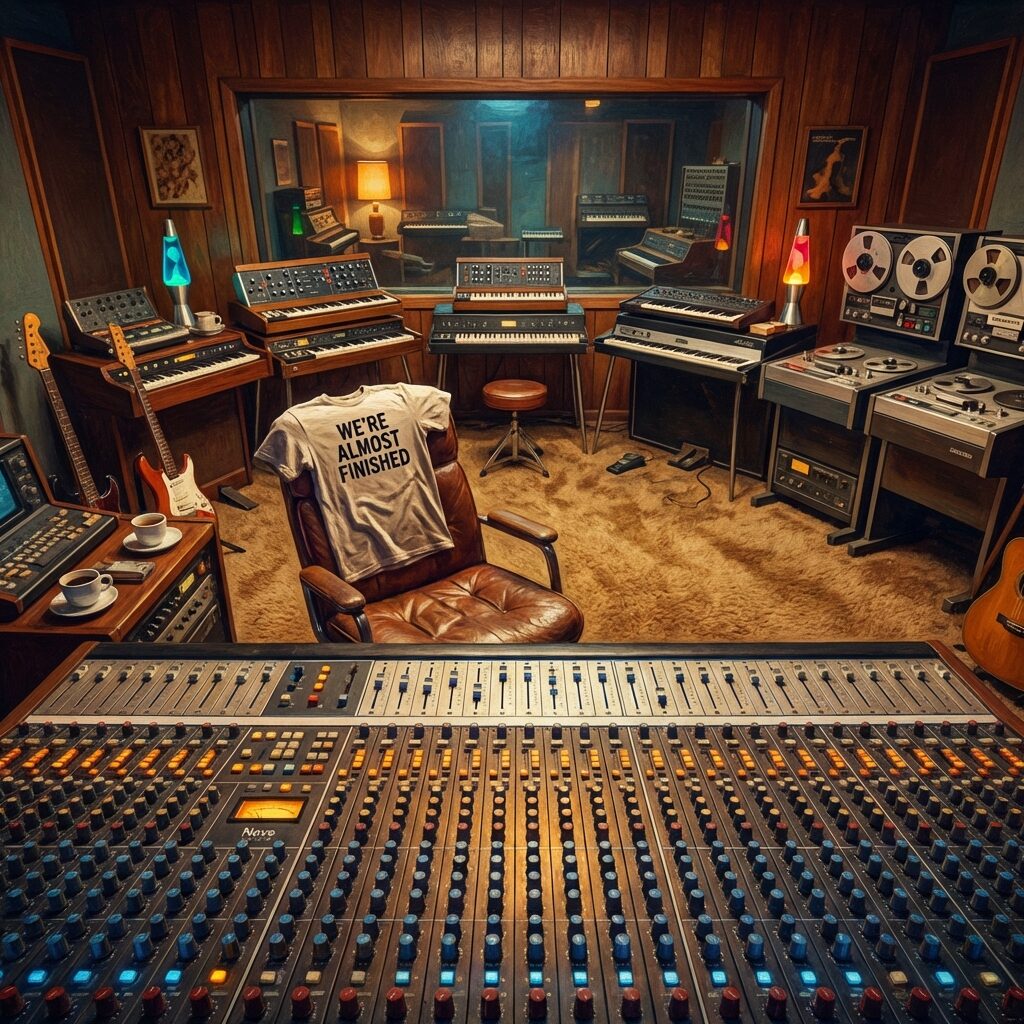
The album was initially supposed to drop around October 1975. Then it wasn’t. Wonder kept remixing. Kept adding. Kept chasing something only he could hear. The delays became legendary enough that Motown’s marketing department, in a move that reads as either genius or desperation, printed up T-shirts reading “We’re Almost Finished.” Originally made for the engineering team, they turned into a running joke across the industry. Olazabal remembered: “Motown thought it would be a good marketing tool. I think they made a few thousand.”
Meanwhile, Motown had sunk seventy-five thousand dollars into a sixty-by-four-hundred-foot billboard in Times Square promoting an album that didn’t exist yet. It hung there for four months. Four months of New Yorkers looking up at advertising for a record nobody could buy.
The album’s working title during most of the sessions was Let’s See Life the Way It Is. But somewhere in the fog of two and a half years of near-constant recording, the real title came to Wonder. In a dream. Songs in the Key of Life. He’d been trying to capture everything he could reach, every genre and feeling, and the name found him in his sleep.
When the album was finally ready, Motown orchestrated one of the more theatrical press launches anyone could remember. On September 7, 1976, journalists were bused from Manhattan’s Essex House at 7:30 in the morning, driven through Times Square to see that billboard, then taken to JFK Airport and flown to Long View Farm in North Brookfield, Massachusetts. A rural recording retreat where Wonder personally presented the album and handed out autographed copies.
From Times Square to a farm in Massachusetts. For a double LP with a bonus EP and a twenty-four-page lyric booklet. That was the scale of the thing.
The $60,000 Dream Machine
Wonder’s secret weapon was the Yamaha GX-1, a $60,000 polyphonic synthesizer so rare that fewer than 100 were ever made. It let one blind musician sound like a full orchestra, and it’s just one piece of an album that covers funk, Bach-inspired classical, jazz, gospel, and Afrofuturism across 21 tracks.
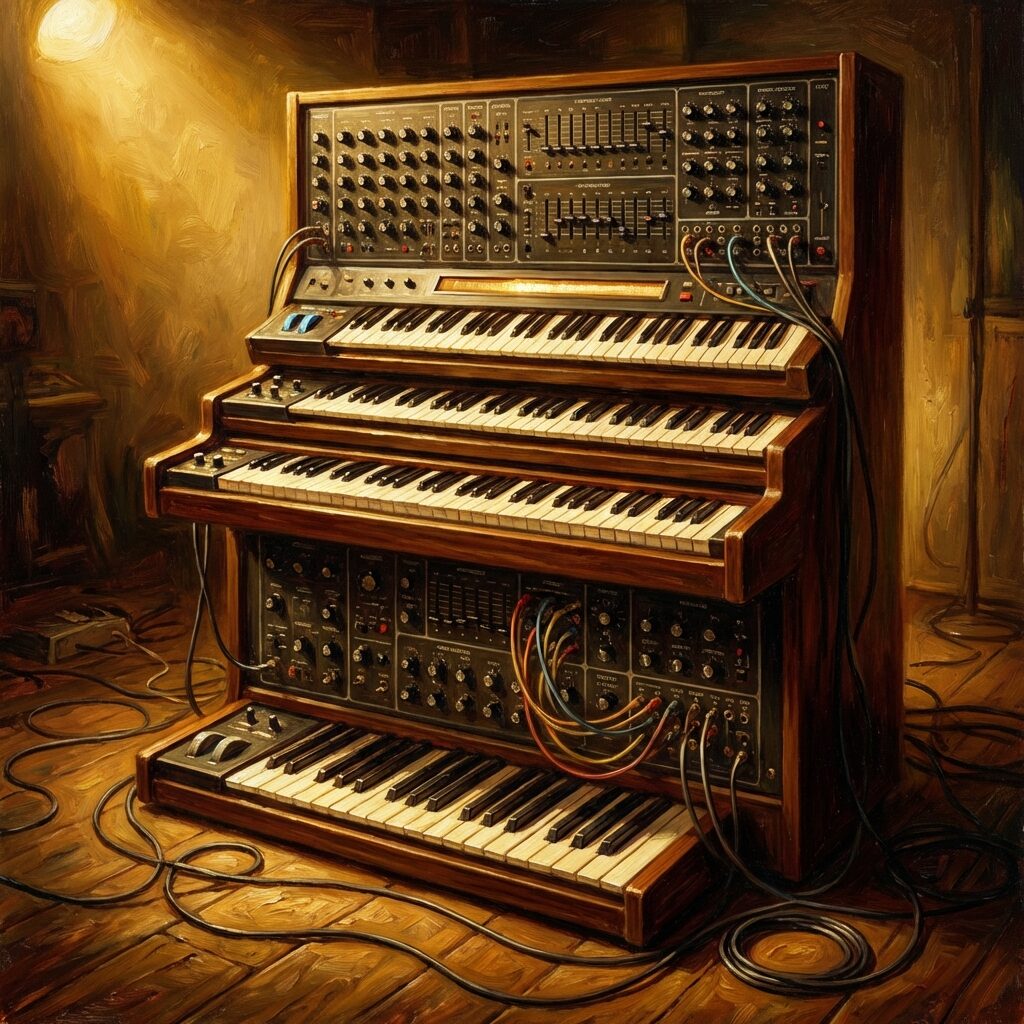
Let’s talk about the Yamaha GX-1, because this instrument is basically a character in the album’s story. Introduced in 1973, the GX-1 was a polyphonic analog synthesizer that looked like something out of a science fiction film: three tiered keyboards, a pedalboard, ribbon controller, two swell pedals, a spring-loaded knee controller, and enough sonic firepower to replicate an entire orchestra. It cost sixty thousand dollars. Fewer than a hundred were ever made. Wonder reportedly bought two. One now lives at Madame Tussauds in Las Vegas, which feels both wrong and perfect.
The album credits list it as “Dream Machine, Yamaha Electrone Polyphonic Synthesizer GX10,” and the nickname is earned. Listen to “Village Ghetto Land”, that’s Wonder alone, no other musicians, performing entirely on the GX-1. What sounds like a full string section, a chamber orchestra scoring a satirical tour of urban poverty, is one man and one machine. In 1976, that kind of thing simply didn’t happen.
But the GX-1 was just one instrument in a much larger collection. Wonder also used the ARP 2600 synthesizer (prominent on “I Wish”), Clavinet, Fender Rhodes, RMI Electra Piano, and Moog. He played drums on multiple tracks. He played harmonica. He sang lead and backing vocals. On more than one song, he played every single instrument.
The genre range across the album’s twenty-one tracks borders on ridiculous when you list it out. “I Wish” is pure funk, hips-first and grinning. “Contusion” is jazz fusion that would make Return to Forever nod in approval. “Have a Talk with God” is gospel. “Saturn” is Afrofuturism before the term was in common use. And “Pastime Paradise” draws its main riff from J.S. Bach’s Prelude No. 2 in C Minor, built from synthesizer tracks rather than drums, which was practically unheard of in 1976. Most records started with a drummer laying down the groove. Wonder started with the keys and let the rhythm emerge from the harmony.
If you’re a music nerd, and I know some of you are, here are some details that’ll make you appreciate the craft even more. Wonder preferred the keys of B major and E-flat minor because they sat perfectly in his vocal range. According to bassist Nathan Watts, Wonder tuned down a half-step from standard pitch and required every musician to match. This is the kind of thing that drives session players crazy and makes records sound distinctively themselves.
The microphone choices tell their own story. For upbeat, energetic vocals like “I Wish,” engineer Gary Olazabal set up an Electro-Voice RE20, a dynamic microphone with a warm, punchy presence that handles high sound pressure levels without flinching. For the more contemplative “Pastime Paradise,” they switched to a Sony C500 condenser with minimal reverb, pulling Wonder’s voice closer, making it more intimate. Same singer, different sonic character, and the mic selection was a big part of why.
And then there’s the bass on “I Wish.” You know that sound: thick, growling, sliding between notes with an attitude that borders on belligerent. That’s Nathan Watts, playing a Jazz Bass at three in the morning at Crystal Sound. Olazabal suggested plugging into an Ampeg tube preamp and driving it hard to get the distortion. Watts later told Bass Player magazine: “The slides sound angry because it was 3 in the morning!” Great bass tones, it turns out, sometimes come from sleep deprivation and a cranky tube amp.
“Pastime Paradise” deserves its own paragraph for the Hare Krishna session alone. Olazabal went out to Hollywood Boulevard and recruited around a hundred Hare Krishna devotees to come to Crystal Sound and record chanting. A hundred people, off the street, into the studio. Add the gospel singers from the West Angeles Church of God, who also contributed a closing rendition of “We Shall Overcome,” and you’ve got one of the stranger ensemble recordings of the 1970s. The backward gong effect was recorded separately at the Record Plant in Sausalito, because of course it was.
“Sir Duke,” the joyous tribute to Duke Ellington, who had died in 1974, was cut live after Wonder rehearsed the entire band. The horn line, one of the most recognizable in pop music, is built on a B major pentatonic scale with a bVI chord substitution that pulls the harmony somewhere unexpected before resolving beautifully. There’s a German augmented sixth chord in there too, if you want to get really granular. Watts played his ’74 P-Bass with Rotosound strings, recorded direct. No amp, no effects. Just the instrument and the board.
The average tempo across the album sits around 92 BPM, but the range stretches from 54 to 129. That spread tells you something about the album’s emotional range. It doesn’t just cover multiple genres, it covers multiple heart rates.
Everything, All at Once
Songs in the Key of Life spans love, faith, social justice, childhood nostalgia, Afrofuturism, and fatherhood across 21 tracks, from a satirical tour of urban poverty to a Bicentennial counter-narrative to a song with real baby sounds that Wonder wouldn’t release as a single, all of it somehow on one record.
[Intro: Beyoncé]
Yeah
How y’all feeling tonight?
I want you to stand up on your feet life you love Stevie Wonder
If you love Stevie Wonder like i love Stevie Wonder I want you to stand u on your feet
Hello Stevie, How you feeling
[Pre Break 1: Beyoncé]
Everybody say yeah (yeah!)
Everybody say yeah (yeah!)
I think y’all can do a little better than that
Everybody say yeah (yeah!)
Everybody say yeah (yeah!)
Say yeah (yeah!)
Say yeah (yeah!)
[Pre Break 2: Beyoncé]
Just a little bit of sou-ou-ou-ou-oul
Just a little bit of sou-ou-ou-ou-oul
[Chorus: Beyoncé]
Clap your hands just a little bit louder
Clap your hands just a little bit louder
Clap your hands just a little bit louder
Clap your hands just a little bit louder
[Dance Break: Beyoncé]
(SCATTING)
[Verse: Beyoncé]
I know? Yeah
Everybody had a good time
So if you want me to
If you want me to
I’m gonna swing the song, yeah
[Chorus: Beyoncé]
Clap your hands just a little bit louder
Clap your hands just a little bit louder
Clap your hands just a little bit louder
Clap your hands just a little bit louder
[Dance Break: Beyoncé]
(SCATTING)
[Chorus: Beyoncé]
Clap your hands just a little bit louder
Clap your hands just a little bit louder
Clap your hands just a little bit louder
Clap your hands just a little bit louder
[Pre Break 3: Beyoncé]
Now I need y’all to repeat after me again
Say yeah (yeah!)
Say yeah (yeah!)
Yeah, Yeah, Yeah, Yeah!
**MASTER BLASTER (JAMMIN’)**
[Intro: Beyoncé]
Alright ladies and gentlemen, i want y’all to scream loud and proud for Ed Ed Sheeran
[Verse 1: Ed Ed Sheeran & Beyoncé]
Everyone’s feeling pretty
It’s hotter than July
Though the world’s full of problems
They couldn’t touch us even if they tried
From the park I hear rhythms
Marley’s hot on the box
Tonight there will be a party
On the corner at the end of the block
[Chorus: Ed Ed Sheeran & Beyoncé]
Didn’t know you
Would be jamming until the break of dawn
I bet nobody ever told you that you
Would be jamming until the break of dawn
You would be jamming and jamming and jamming, jam on
[Verse 2: Ed Ed Sheeran & Beyoncé]
They want us to join their fighting
But our answer today
Is to let all our worries
Like the breeze through our fingers slip away
Peace has come to Zimbabwe
Third World’s right on the one
Now’s the time for celebration
Because we’ve only just begun
[Chorus: Ed Sheeran & Beyoncé]
Didn’t know that you
Would be jammin’ until the break of dawn
Bet you nobody ever told you that you
Would be jammin’ until the break of dawn
You would be jammin’ and jammin’ and jammin’, jam on
Bet you nobody ever told you that you
Would be jammin’ until the break of dawn
I know nobody told you that you
Would be jammin’ until the break of dawn
We’re jammin’, jammin’, jammin’, jam on
Blah! (SCATTING)
**HIGHER GROUND**
[Intro: Beyoncé]
All the way from Texas i want y’all to get up on your feet, give it up for Gary Clark Jr
[Verse 1: Beyoncé & Gary Clark Jr.]
People keep on learning
Soldiers keep on warring
World keep on turning
Because it won’t be too long
[Verse 2: Beyoncé]
Powers keep on lying
While your people keep on dying
World keep on turning
Because it won’t be too long
[Chorus: Beyoncé, Gary Clark Jr. & Ed Sheeran]
I’m so darn glad he let me try it again
Because my last time on earth I lived a whole world of sin
I’m so glad that I know more than I knew then
Going to keep on trying
Until I reach my highest ground
[Guitar Break: Beyoncé, Gary Clark Jr. & Ed Sheeran]
Come on play that thing Gary
Play that thing, play that thing, play that thing
[Chorus: Beyoncé, Gary Clark Jr. & Ed Sheeran]
I’m so darn glad he let me try it again
Because my last time on earth I lived a whole world of sin
I’m so glad that I know more than I knew then
Going to keep on trying
Until I reach my highest ground
[Outro: Beyoncé]
Come on, Come on, Come on, Come on
Come on, Come on, Come on, Come on
We Love You Stevie!
Most double albums have filler. Let’s just say it. Even the great ones, The White Album, Exile on Main St., London Calling, have tracks where the energy dips and you can feel the artist reaching. Songs in the Key of Life has twenty-one tracks plus a bonus EP, and the wild part isn’t that there’s no filler. It’s that Wonder had a hundred and seventy-nine more songs he decided weren’t good enough. That’s the bar he was working with.
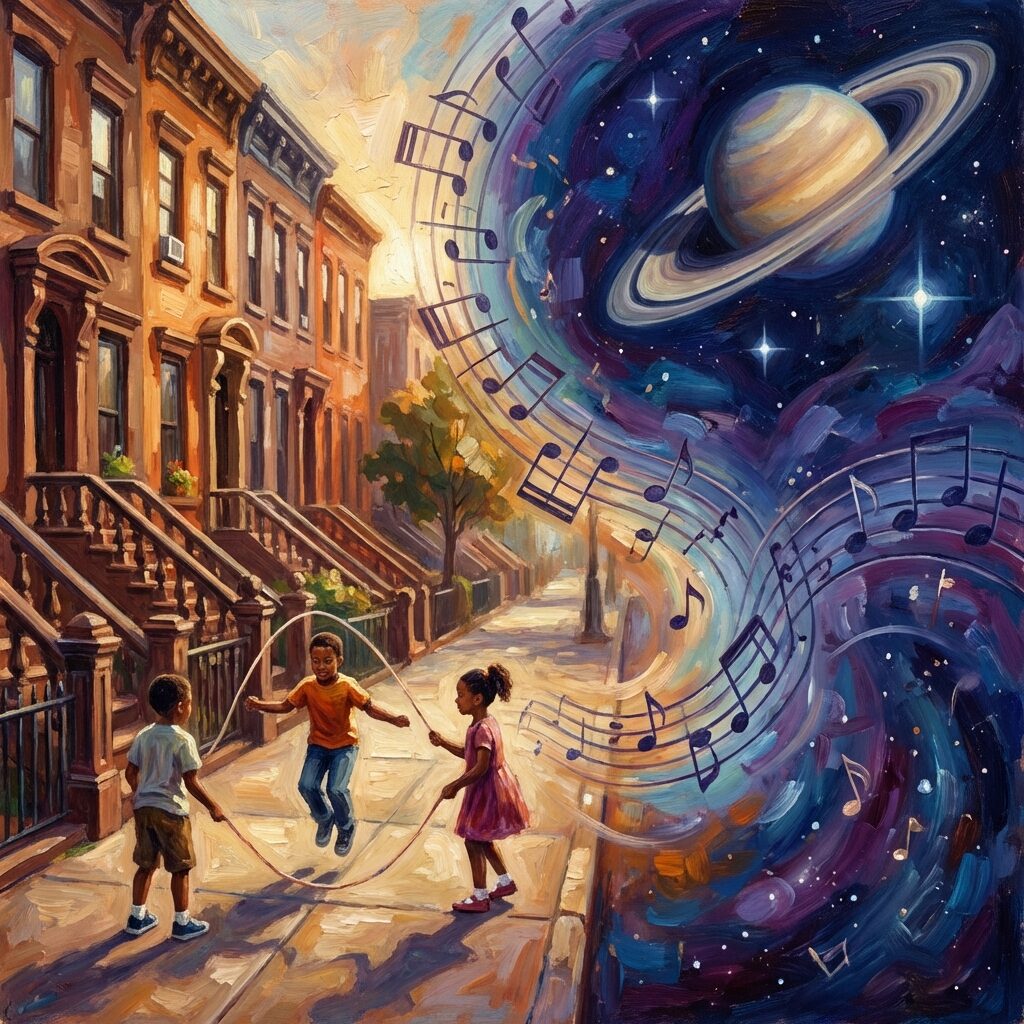
This album covers love, faith, social justice, childhood nostalgia, Afrofuturism, fatherhood, and spiritual searching, sometimes within the same song. Wonder wasn’t assembling a tracklist. He was building out an entire worldview. Apple Music put it well: the album starts “in deep space with the Afrofuturist fantasia ‘Saturn'” before zooming “light-years to an urban playground where we can hear the sound of Black children skipping Double Dutch.” That kind of range doesn’t happen by accident.
“Love’s in Need of Love Today” opens the album, and it works as a mission statement. Wonder’s voice enters soft, almost pleading, over gentle electric piano. “Good morn or evening friends, here’s your friendly announcer.” It’s casual, warm, like a DJ easing you into the broadcast. But the message underneath is urgent. Wonder later explained: “I wanted to do it because you know it and we all know that more than ever in the world, love is in such need of love.” In 1976, after Watergate, after Vietnam, after the assassinations of the 1960s, that kind of sincerity took nerve.
“Village Ghetto Land” goes somewhere completely different. Over what sounds like a chamber orchestra (actually just Wonder on the Yamaha GX-1), the lyrics offer a satirical guided tour of urban poverty aimed at wealthy listeners who’ve never seen it up close. “Tell me, would you be happy in Village Ghetto Land?” Co-written with Gary Byrd, who spent three months on the lyrics, only to have Wonder call back after approving them and say he’d forgotten to mention there was another verse needed in ten minutes because the band was waiting, it’s one of the sharpest pieces of social commentary Wonder ever recorded. The contrast between the elegant instrumentation and the brutal subject matter is the whole point.
“Black Man,” also co-written with Byrd, arrived during America’s Bicentennial year and worked as a counter-narrative. While the nation was celebrating two hundred years of independence, Wonder was reminding listeners about Crispus Attucks, Sacagawea, and Garrett Morgan, the contributions of Black, Indigenous, and other non-white Americans that the official celebrations tended to skip. At eight and a half minutes, it’s the album’s longest track and its most explicitly educational.
Then there’s “Isn’t She Lovely,” and here’s where the personal and the political share the same record without anyone having to explain why. The song celebrates the birth of Wonder’s daughter Aisha Morris on February 2, 1975. The opening sounds are from an actual childbirth. The outro features real audio of Wonder bathing Aisha, you can hear him cooing, the water splashing. “Londie, it could have not been done, without you who conceived the one,” he sings, referencing Aisha’s mother Yolanda Simmons. It’s one of the most nakedly joyful songs in pop music. And it sits on the same album as “Pastime Paradise,” which rattles off “dissipation, race relations, consolation, segregation” like a litany of everything America refuses to fix.
That’s what holds the album together, not some grand unifying concept, but the simple fact that these things exist at the same time. You can hold your newborn daughter and still be angry about the state of the world. Holding your daughter might actually make you angrier.
One of my favorite stories from the sessions involves “Saturn.” Wonder played Michael Sembello a version of the song where he sang about going back to Saginaw, Michigan, his actual hometown. Sembello misheard “Saginaw” as “Saturn” and wrote lyrics about the planet instead. Wonder loved it. And just like that, a song about Michigan homesickness became an Afrofuturist meditation on escaping Earth for a better world. You can’t plan that kind of thing.
Scholar Craig Werner, in his 2004 book Higher Ground, wrote that “context can’t be ignored” when assessing the album. He’s right. Songs in the Key of Life arrived in a moment when the country was genuinely lost, post-Watergate, post-Vietnam, the idealism of the 1960s curdling into late-’70s cynicism. Wonder’s response wasn’t cynical, but it wasn’t naively optimistic either. He made room for the ghetto and the cosmos on the same record, for fury and for bathing his baby daughter. He looked at the mess and found something worth singing about inside it, without pretending the mess wasn’t there.
The Albums It Buried
Songs in the Key of Life debuted at #1 with over a million advance orders, making Wonder the first American artist to enter the chart at the top. It spent 14 total weeks there, holding off Led Zeppelin, Rod Stewart, and Earth, Wind & Fire, while its most famous track never officially charted at all.
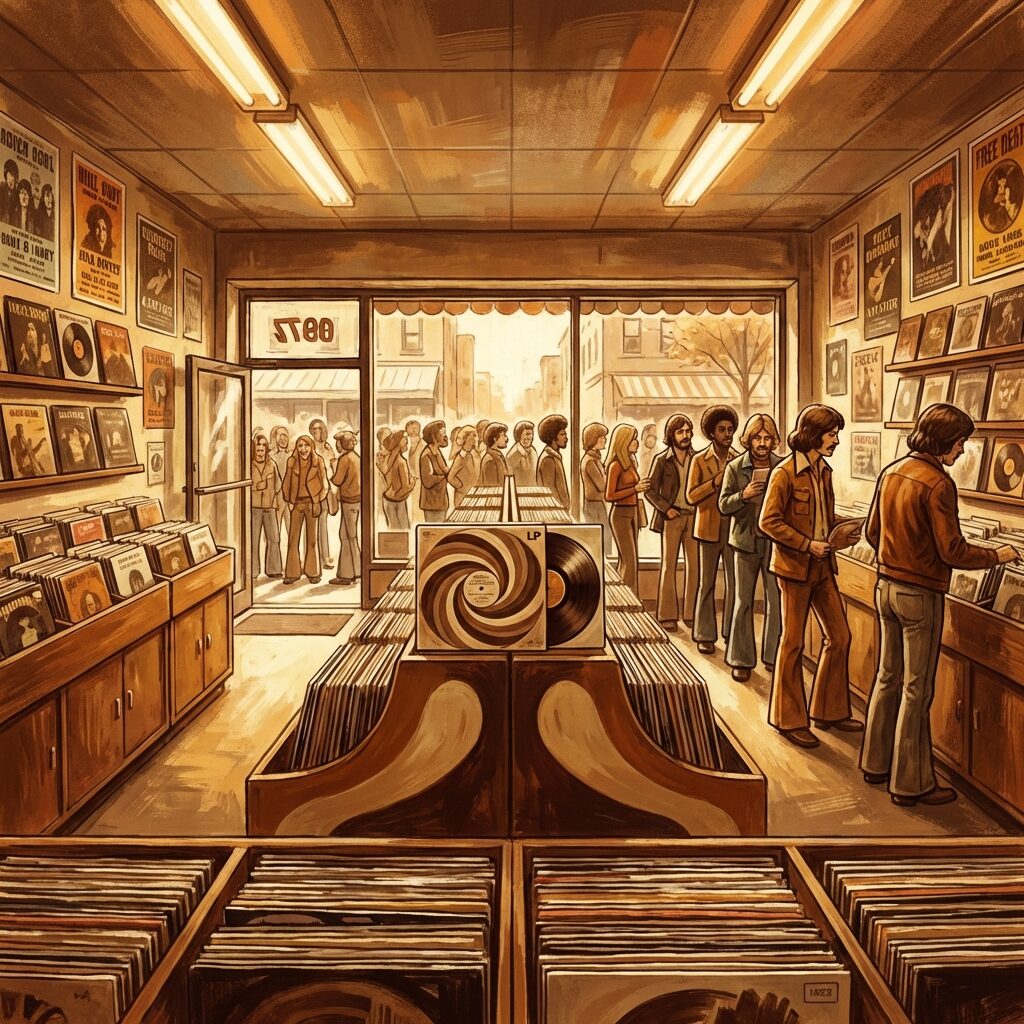
The numbers for Songs in the Key of Life are the kind you assume someone inflated. Nobody inflated them.
When the album hit stores on September 28, 1976, there were already over one million advance orders. One million. Before anyone outside Wonder’s inner circle had heard a single note. Two and a half years of silence, a billboard in Times Square, and a fanbase that had been losing its patience will do that.
It debuted at number one on the Billboard 200 on October 8, 1976. Only two albums had ever done that before: Elton John’s Captain Fantastic and the Brown Dirt Cowboy and Rock of the Westies, both from 1975. But those were by a British artist. Wonder was the first American to pull it off.
And then it just stayed there. Thirteen consecutive weeks at number one. It dropped to number two for a single week, bumped by the Eagles’ Hotel California, which is at least losing to quality. Then it came back for a fourteenth week at the top. Fourteen total weeks at number one. Thirty-five weeks in the top ten. Eighty weeks on the chart overall.
Look at what it held off during that run: Boz Scaggs’ Silk Degrees, Earth, Wind & Fire’s Spirit, Led Zeppelin’s The Song Remains the Same, Rod Stewart’s A Night on the Town. A murderer’s row, all stuck behind Wonder. On the year-end chart for 1977, it finished second overall, behind only Fleetwood Mac’s Rumours. That’s about as good as the competition gets.
The singles did their part. “I Wish” hit number one on the Hot 100 in January 1977 and topped the R&B chart for five weeks. “Sir Duke” went to number one for three weeks that May. Wonder was the only artist with more than one number-one hit on the Hot Soul Singles chart in all of 1977.
And then there’s the weird one. “Isn’t She Lovely,” probably the most recognizable song on the album, the one that gets played at baby showers and in romantic comedies and by street musicians in every city on earth, never charted on the U.S. Billboard Hot 100. Not once. Wonder refused to let Motown release it as a single. He felt the full six-minute-thirty-four-second version, complete with Aisha’s baby sounds and the bathing outro, was the complete artistic statement, and he wasn’t going to let them chop it down to a radio-friendly edit. It might be the most famous song that never technically charted.
The RIAA gave it Diamond certification in 2005, meaning over ten million units moved in the United States. For a double LP, a format that costs more and nobody impulse-buys, that number is staggering. It works out to roughly five million physical copies sold.
Three in a Row (and a Gaffe)
Songs in the Key of Life won four Grammys including Album of the Year, Wonder’s third in four years, a run nobody has matched. His satellite acceptance from Nigeria was a technical mess, capped by host Andy Williams asking the blind musician “Can you see us?”

At the 19th Annual Grammy Awards on February 19, 1977, Songs in the Key of Life received seven nominations and won four: Album of the Year, Best Male Pop Vocal Performance, Best Male R&B Vocal Performance (for “I Wish”), and Producer of the Year.
The Album of the Year win was the headline, and the statistic behind it is absurd. It was Wonder’s third Album of the Year in four years, after Innervisions in 1974 and Fulfillingness’ First Finale in 1975. Three wins with three consecutive album releases. No other artist has ever done that. The only year he didn’t win was 1976 (for the 1975 ceremony), when Paul Simon took it for Still Crazy After All These Years, and Simon, you’ll recall, used his acceptance speech to thank Wonder for not releasing an album that year.
The ceremony itself, though, produced one of the most uncomfortable moments in Grammy history. Wonder wasn’t in Los Angeles. He was in Nigeria, exploring his musical heritage, a trip that connected to the same ancestral pull that had nearly taken him to Ghana. The Recording Academy set up a satellite link for his acceptance speech.
It was a disaster. The video was blurry. The audio was inaudible. Wonder was speaking, but nobody in the audience could make out what he was saying. And then host Andy Williams, apparently forgetting, or perhaps never knowing, the most basic fact about the man on the screen, asked: “Stevie, can you see us?”
To a man who had been blind since birth.
It’s the kind of moment that makes you wince decades later. But it also, in a weird way, says something about Wonder’s music: he was so completely defined by what he created that people genuinely forgot he couldn’t see. The blindness just wasn’t the thing you thought about.
The critical reception has only grown warmer with time. When Rolling Stone published its 500 Greatest Albums list in 2003, Songs in the Key of Life came in at number 56, respectable, but arguably low. By the magazine’s 2020 revision, it had climbed to number 4. The Library of Congress inducted it into the National Recording Registry in 2005, deeming it “culturally, historically, or aesthetically significant.” Apple Music ranked it number 6 on their 100 Best Albums list.
But the endorsement that sticks with me is Elton John’s, from a 2003 Rolling Stone interview: “Let me put it this way: wherever I go in the world, I always take a copy of Songs in the Key of Life. For me, it’s the best album ever made, and I’m always left in awe after I listen to it.” This is Elton John talking. A man who has made some of the greatest pop records of all time, who has heard everything there is to hear. And he carries this album with him like a talisman.
The Gift That Keeps Sampling
Coolio’s “Gangsta’s Paradise” turned a “Pastime Paradise” synth line into 1995’s top-selling single (after Wonder himself cleaned up the lyrics and co-produced the remix). Will Smith paid half a million to sample “I Wish” for “Wild Wild West.” Producers from Digital Underground to J. Cole have kept mining the catalog ever since. But the deeper legacy is about ambition, Kanye West named it as the bar he was trying to clear, and artists from Michael Jackson to Frank Ocean to Whitney Houston all pointed to the same album when asked what the standard sounds like. In 2013, Wonder finally performed it front to back, thirty-seven years late, and the songs sounded like they’d only gotten bigger.

Most albums fade. Songs in the Key of Life kept showing up, in hip-hop producers’ sample crates, in interviews with artists you wouldn’t expect, in live performances decades after anyone had a right to expect the songs to still hit that hard.
The most famous afterlife belongs to “Gangsta’s Paradise.” In 1995, Coolio grabbed the haunting synth progression from “Pastime Paradise”, that Bach-inspired, orchestra-replacing keyboard line, and built what became the top-selling single of the year. But getting there required negotiation.
Wonder initially refused to clear the sample. He objected to profanity being layered over his composition. Coolio was stuck. Then Wonder’s then-wife, Josefa Salinas, brokered a meeting through Wonder’s brother. The lyrics were cleaned up. Wonder didn’t just approve the final version, he became a “major producer” of the remix, shaping the track’s arrangement himself.
The result: number one in sixteen countries, the first rap single to go straight to number one in Britain, Grammy for Best Rap Solo Performance. And it introduced “Pastime Paradise” to an entirely new generation. If you were a teenager in 1995, you probably heard Coolio’s version first and discovered Wonder’s original later, and realized the sample was actually the least interesting thing about the source material.
My favorite moment from the “Gangsta’s Paradise” era came at the 1995 Billboard Music Awards. Wonder joined Coolio and L.V. on stage. While L.V. sang the “pastime paradise” lyrics, Wonder sang “gangsta’s paradise.” The two versions intertwined live, past and present occupying the same space. They ended together on “ain’t no gangstas living in paradise.” Most sample-meets-source performances feel like a gimmick. This one actually added something to both songs.
“I Wish” got its biggest second life when Will Smith turned that growling Nathan Watts bass line into “Wild Wild West” in 1999. The sample clearance cost five hundred thousand dollars, Wonder knew what he had. The approval story is worth telling: during the playback for Wonder, Jada Pinkett-Smith reportedly got up and started dancing halfway through. That was the sign. If Jada’s moving, you’ve got a hit.
The sampling trail stretches across hip-hop’s whole timeline. Digital Underground sampled “I Wish” for “No Nose Job” in 1992. Ja Rule used “Knocks Me Off My Feet” for “Thug Lovin'” in 2002. 50 Cent sampled “Part-Time Lover” for “So Amazing.” J. Cole went to “My Cherie Amour” for “Love Me Not.” Action Bronson pulled from “For Once in My Life.” Producers keep going back to the Wonder catalog because the musicianship is dense enough that there’s always another melodic idea buried in there, another groove worth pulling into a new context.
But the influence runs deeper than sampling. It’s about what artists think is possible. When Kanye West was working on Late Registration in 2005, he told Clash magazine something that says everything about how musicians relate to this record: “I’m not trying to compete with what’s out there now. I’m really trying to compete with Innervisions and Songs in the Key of Life. It sounds musically blasphemous to say something like that, but why not set that as your bar?”
Why not, indeed. Michael Jackson called it his favorite Stevie Wonder album. So did George Michael. Frank Ocean has cited “If It’s Magic” as an influence on his vocal approach. Whitney Houston requested that Songs in the Key of Life be played throughout her Greatest Hits photo sessions. These are people who could have picked anything, and they kept picking this.
In December 2013, Wonder performed the album in its entirety for the first time, thirty-seven years after its release, at the Nokia Theatre in Los Angeles. More than twenty musicians on stage. Guests included Herbie Hancock, Chick Corea, John Mayer, and Esperanza Spalding. “Isn’t She Lovely” stretched to nine minutes with an extended harmonica solo. Rolling Stone compared Wonder to Duke Ellington leading an R&B orchestra. The subsequent tour, running from late 2014 through 2015 and extended due to overwhelming demand, proved the songs hadn’t just held up. They’d gotten bigger.
The Dream That Named Itself
After two and a half years of recording everything he could, the album’s title came to Wonder in a dream, and nearly fifty years later, Songs in the Key of Life endures as the sound of one person deciding to stay and pour everything into the staying.

Here’s the alternate history that haunts me: what if he’d gone?
What if the Ghana plan had stuck? What if Berry Gordy hadn’t shaken in his boots, if the contract hadn’t materialized, if Wonder had played that farewell concert and boarded a plane to Accra? We’d still have Innervisions and Talking Book and Fulfillingness’ First Finale, a body of work that would place Wonder among the greatest artists who ever lived. But we wouldn’t have this. No “Sir Duke,” no “As,” no “Isn’t She Lovely.” No Coolio sampling “Pastime Paradise” nineteen years later. No Kanye West setting Wonder’s ambition as the bar for his own. There’d be a Wonder-shaped hole in the culture that nothing else could fill.
But he stayed. And the album’s title tells you something about what the staying felt like. After two and a half years of recording everything he could, two hundred songs, sessions stretching through the night, studios on both coasts and in Jamaica, a hundred Hare Krishna devotees off Hollywood Boulevard, the name didn’t come from a brainstorming session or a marketing meeting. It came in a dream. Songs in the Key of Life. The original working title, Let’s See Life the Way It Is, was accurate enough. But the dream title was truer. These weren’t observations about life. They were songs written in life’s own key, the one that contains joy and grief and funk and Bach and baby sounds and political fury all at once.
Wonder himself, reflecting on the album in a 1995 Q magazine interview, put it simply: “Of all the albums, Songs in the Key of Life I’m most happy about. Just the time, being alive then. To be a father and then… letting go and letting God give me the energy and strength I needed.”
The Library of Congress, in their essay inducting the album into the National Recording Registry, wrote something that I keep returning to: “I don’t think it is possible to appreciate the importance of this album by analyzing its musicological elements or abstracting its influences; there is an ephemeral spirit that infuses this album and makes it transcendent.” That’s a musicologist essentially saying: I can break down the chords and the production and the cultural context, but something about this album exists beyond all of that.
I’ve spent the last several thousand words doing exactly what that quote warns against, analyzing, contextualizing, breaking things down. And I stand by all of it. The GX-1 matters. The contract matters. The 3 a.m. bass take matters. But the Library of Congress is right, too. There’s something about Songs in the Key of Life that exceeds the sum of its parts. Something about the way “As” builds toward that repeating “always” coda, or the way “If It’s Magic” strips everything away to just voice and harp. Or the baby sounds on “Isn’t She Lovely” reminding you that this whole sprawling double album was made by a guy who’d just become a father and couldn’t keep it together about it.
I think that something is urgency. Not the rushed kind, the album took two and a half years, after all. The existential kind. The kind you get from almost leaving and then deciding to stay. Stevie Wonder came within months of walking away from music forever, and Songs in the Key of Life is what poured out of that decision. Every genre he loved, every emotion he felt, every idea that woke him up at 3 a.m. in a Hollywood studio or arrived unbidden in a dream.
He almost quit. Instead he made what might be the greatest album anyone’s ever heard. And the title came to him while he slept, because after you’ve said everything, the name finds you.
🤠 Did you know? Stevie Wonder showed up to sign the biggest recording contract in history wearing a cowboy outfit with a holster reading “Number One With A Bullet” — months after planning to quit music entirely. #StevieWonder #SongsInTheKeyOfLife #Motown 🎹 https://bit.ly/4bN1996

Click to Tweet