Leonard Cohen | Hallelujah
The Floor of the Royalton
Leonard Cohen spent five years writing Hallelujah, banging his head on a hotel floor in despair, and then his label rejected it. How it got from there to everywhere is one of popular music’s strangest accidents.

Here’s the image. It’s sometime in the early 1980s, and Leonard Cohen is sitting on the floor of the Royalton Hotel on 44th Street in Manhattan. Poet, novelist, recording artist, ladies’ man, future Zen monk. He’s in his underwear. He is banging his head on the carpet. Around him, notebook pages. A cheap Casio synthesizer that doesn’t even have an audio output. And the stubborn skeleton of a song he cannot finish.
“I filled two notebooks,” Cohen told The Telegraph, “and I remember being in the Royalton Hotel, on the carpet in my underwear, banging my head on the floor and saying, ‘I can’t finish this song.'”
The song was “Hallelujah.” You’ve heard it. You’ve heard it at weddings where it made your aunt cry and funerals where it made everyone cry. You’ve heard it at the Olympics, on SNL, in a movie about a green ogre, on X Factor Christmas specials, in karaoke bars where somebody who’s had four beers reaches for that chorus like it might save their life. The New York Times has literally called for a moratorium on it. By some measures it’s the most covered song of the modern era, with north of 300 documented versions, translations into at least six languages, performances at presidential funerals and reality TV finales alike.
So how does a song get from the floor of the Royalton in a man’s underwear to a place in the Library of Congress? How does it go from being rejected by its own record label (not shelved, not delayed, rejected) to becoming what writer Alan Light called “perhaps the only song that has truly earned” the designation of a modern standard?
The answer, it turns out, involves about two decades of accidents, covers, deaths, and quiet resurrections. None of it was planned. “Hallelujah” had to be broken before it could be whole, which is maybe the most Leonard Cohen thing a Leonard Cohen song could do.
Cohen at Fifty
By 1984, Leonard Cohen was fifty, hadn’t recorded in five years, and was coming off two commercial disasters, one of which involved Phil Spector pulling a gun on him in the studio. He was writing unfashionable songs on a Casio at a label that was busy counting Thriller money.
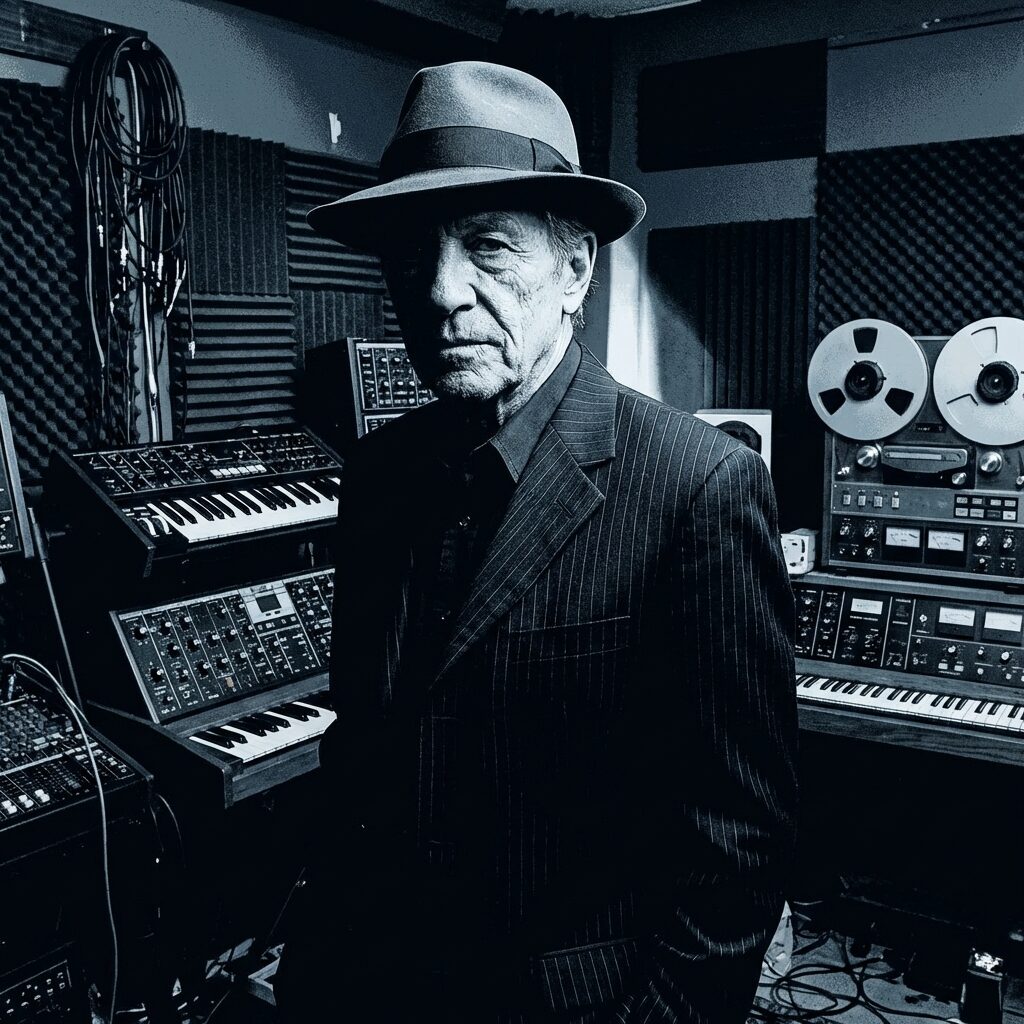
You can’t talk about “Hallelujah” without talking about where Leonard Cohen was in 1984. He was fifty. He was a respected poet, Governor General’s Award, serious literary reputation in Canada, who’d stumbled into a second career as a recording artist, one he didn’t even start until he was thirty-three. And by any normal music-industry measure, that career was stalling out.
His two most recent albums had been, to put it politely, adventures. Death of a Ladies’ Man in 1977 was a collaboration with Phil Spector, the genius producer who also happened to be unhinged. During those sessions, Spector pulled a gun on Cohen in the studio, a crossbow in some tellings, a pistol in others, but a weapon either way, aimed at the guy who just wanted to sing quiet songs about God and women. The album sounded exactly like you’d expect from that collision: huge, loud, and all wrong. Then came Recent Songs in 1979, a quiet course correction that nobody bought either.
After that, silence. Five years without a record. No new writing until Book of Mercy in 1984, a collection of prose poems that told the music industry what it already assumed: Leonard Cohen was not a commercial proposition.
His label CBS Records, meanwhile, was operating on another planet. Walter Yetnikoff was running the show, riding Michael Jackson’s Thriller, the best-selling album in history, moving a million copies a week at its peak. Billy Joel, Bruce Springsteen, Cyndi Lauper. CBS had the biggest acts in the world. And somewhere in the filing cabinet sat Leonard Cohen, a fifty-year-old Canadian poet writing songs on a Casio keyboard about King David and Bathsheba.
When Cohen reconnected with producer John Lissauer to make what would become Various Positions, even that was its own small story. The two hadn’t worked together or spoken since their 1974 collaboration on New Skin for the Old Ceremony. A planned follow-up called Songs for Rebecca had been killed by Cohen’s manager Marty Machat, who torpedoed the project to clear the decks for the Spector sessions. Lissauer had been left hanging. But enough time had passed, and they found their way back to each other.
Lissauer later recalled the sessions with obvious affection: “I’ve never had a more rewarding experience. It was so much fun… it was high art, it was just thrilling.” He believed he was making the best work of his career. CBS would disagree.
Five Years in Two Notebooks
Cohen wrote somewhere between 80 and 150 verses of Hallelujah over four to five years, holding himself to a rule that every discarded line had to be finished as carefully as a kept one. The real breakthrough was figuring out how much scripture the song could carry, and then letting the human stuff take over.
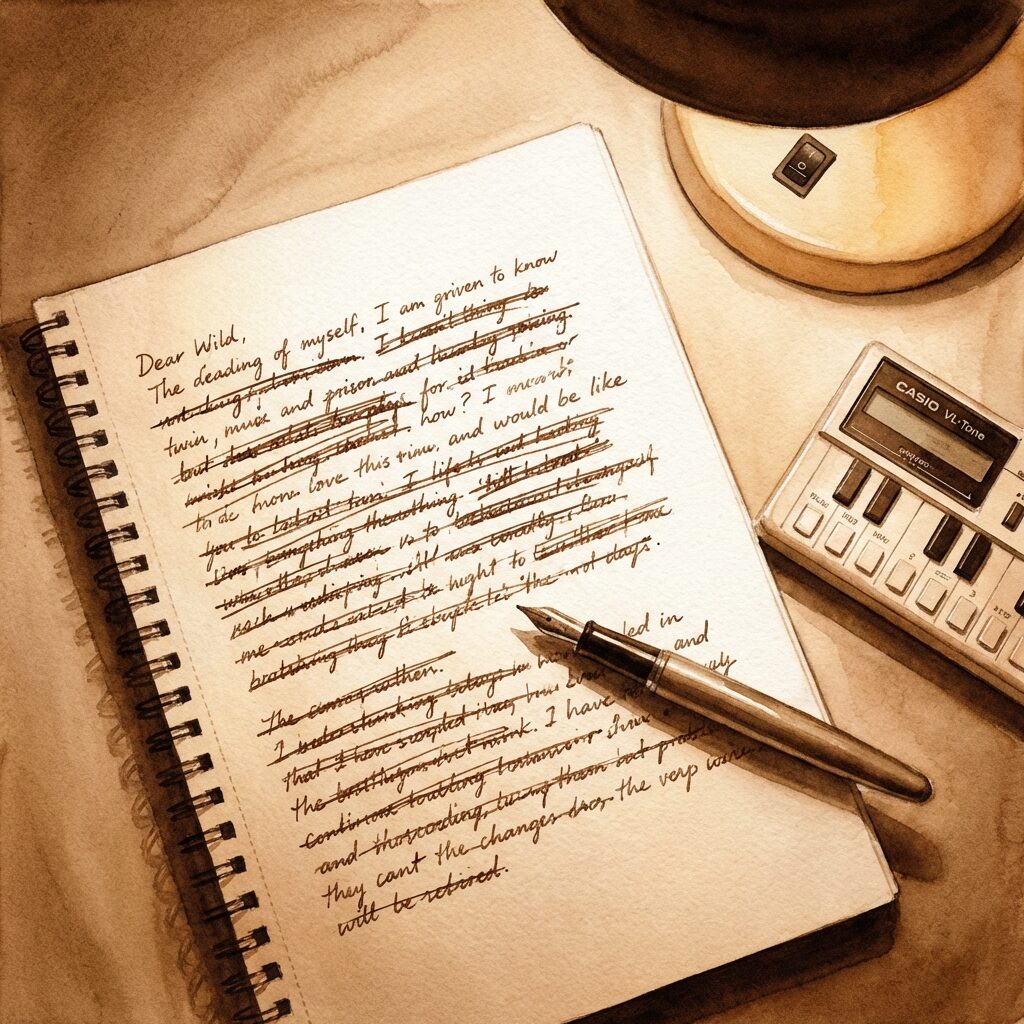
Cohen himself said he wrote about eighty verses of “Hallelujah.” Other accounts push it to 150. His notebooks, now housed across nearly 100 boxes at the Fisher Library at the University of Toronto, contain 84 carefully catalogued verses, though that number gets murky fast because many are variations on the same line, the same image turned over and over like a stone in a tumbler.
The writing process stretched across four to five years. “Hallelujah was at least five years,” Cohen said. Five years on one song. Most albums get written in less time. Bob Dylan, Cohen’s friend and occasional sparring partner, told him over coffee in Paris that he wrote “I and I” in fifteen minutes. Cohen took five years on “Hallelujah” and still ended up banging his head on a hotel floor because he couldn’t finish it.
What made it take so long wasn’t just perfectionism, though Cohen certainly had that problem. It was a specific rule he imposed on himself: every discarded verse had to be written as carefully as a kept one. “I can’t discard a verse until I’ve written it as carefully as the one I would keep,” he said. “So that lengthens the process considerably.” He was finishing marble he planned to throw away. Nobody works like that. It’s also probably why the song holds up the way it does.
The early versions leaned heavily on Cohen’s Jewish heritage. The song began life steeped in scripture, King David’s harp, the story of Bathsheba, Samson’s betrayal by Delilah. Cohen described the central creative breakthrough as figuring out the ratio of sacred to secular. “It had references to the Bible in it, although these references became more and more remote as the song went from the beginning to the end,” he explained. “Finally I understood that it was not necessary to refer to the Bible anymore. And I rewrote this song; this is the ‘secular’ Hallelujah.”
That word “secular” is doing a lot of work. The finished song still opens with David playing a secret chord that pleased the Lord. It still has Bathsheba on the rooftop and Delilah with the shears. But these biblical figures become entry points into something messier, wanting someone, losing someone, trying to reach for something you can barely name. The religion doesn’t disappear. It just stops being the destination. What’s left is the hallelujah you drag out of the ruins.
Some abandoned lines survived in notebooks but never made the final cut. “When David played, his fingers bled”, you can see the appeal, and you can see why he let it go. It’s too literal, too much suffering-artist-as-martyr. The kept verses work because they’re slippery, because the biblical and the erotic keep sliding into each other until you can’t tell where scripture ends and the bedroom begins.
And then there’s the Royalton Hotel floor. Cohen on the carpet, in his underwear, head-banging, notebooks everywhere. It’s almost too neat as an image for what songwriting actually costs, the guy who spent five years polishing verses he’d never use, now physically prostrate, trying to wrench the last ones into shape. He wasn’t dashing off lyrics on the back of a napkin. He was trying to earn something from the song, and the song wasn’t giving it up easy.
When he finally brought the song into Quadrasonic Sound Studios in New York in June 1984, it was midway through the Various Positions sessions. Lissauer recalled there was no discussion about which verses to use or what order they’d go in: “There was no ‘Should we do this verse?’, I don’t think there was even a question of the order of verses.” After five years of agonizing, Cohen had apparently made his choices. Engineer Leanne Ungar confirmed the discipline: “He wouldn’t bring extra verses to the studio because of time pressure. The meter is running there.”
Lissauer, responding to the Old Testament references and the prayer-like quality of the song, suggested a gospel treatment, a church-type choir to build the chorus. Cohen was enthusiastic, though he wanted specifically “the sound of Jewish choir.” Jennifer Warnes, who’d been singing backup for Cohen since 1972, arranged the vocal parts. The Casio keyboard that Cohen composed on, the one without audio output, that had to be miked up like an acoustic instrument, gave the recording what Lissauer described as the atmosphere of a “storefront church.” It was cheap, it was lo-fi, and it was perfect.
A Song That Explains Itself
The first verse of Hallelujah literally describes its own chord changes as they happen, “the fourth, the fifth, the minor fall, the major lift”, making it maybe the best example of music-and-meaning fusion in all of popular songwriting.
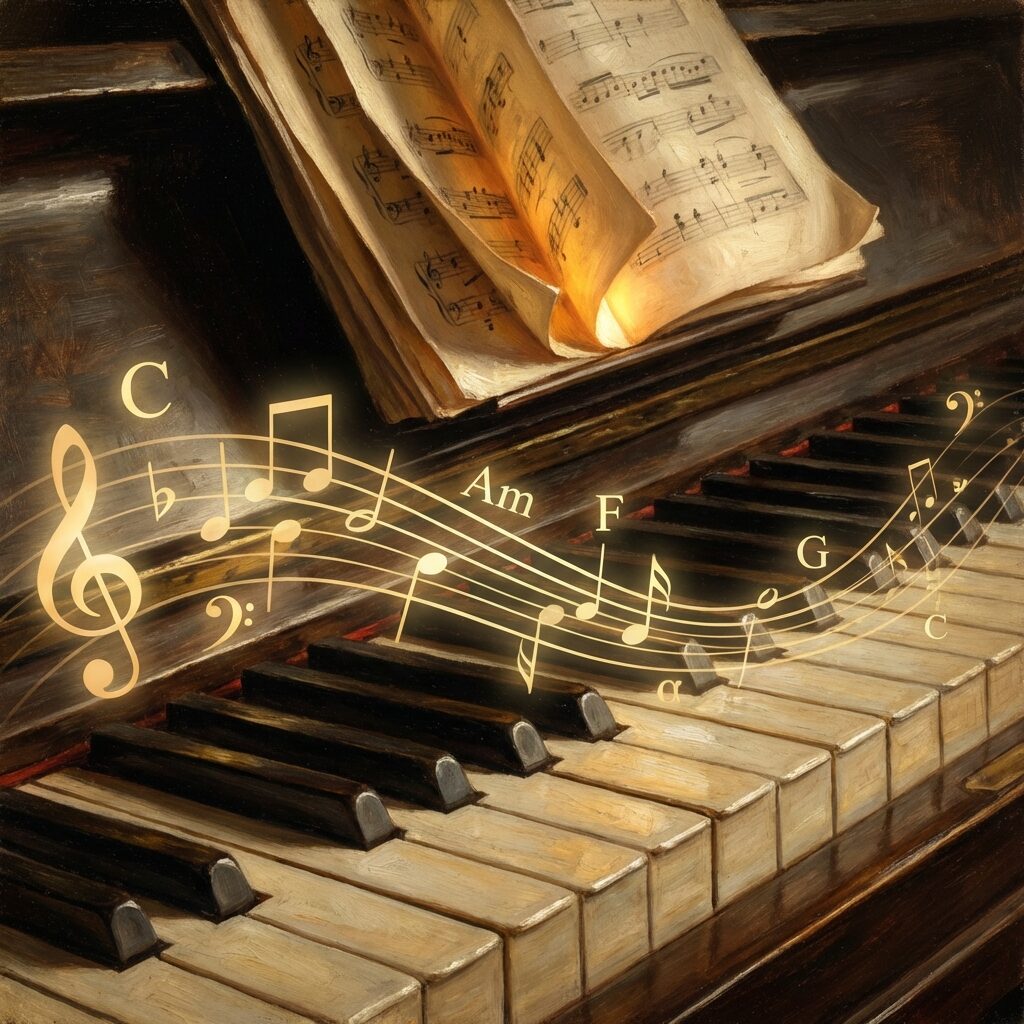
Here’s the thing about “Hallelujah” that music theory people love to point out, and they’re right to love it: the first verse literally describes the song’s own chord changes as they happen. Cohen sings about “a secret chord that David played” and tells you it goes like this, “the fourth, the fifth, the minor fall, the major lift.” And right underneath those words, the chords move from the IV (F major) to the V (G major), drop to the vi (A minor, the minor fall), and resolve back to the IV (F major, the major lift).
The song is explaining its own architecture in real time. You’re hearing the blueprints read aloud while standing inside the finished building. I’ve seen this covered in academic papers and YouTube explainers alike, and it genuinely never gets old. The technical term is prosody, where music and meaning fuse, and I’m not sure there’s a better example of it anywhere in popular songwriting.
The full chord progression runs C–Am–F–G with an E7 that shows up to add a little tension (later covers, including Cale’s and Wainwright’s, often swap that E7 for a gentler Em). It’s rooted in gospel and early soul, which fits a song that’s essentially a prayer trying to figure out who it’s praying to. The time signature is 12/8, compound meter, which gives it that rolling, swaying quality you hear in classic soul and blues. Four dotted quarter notes per bar, twelve eighth notes, everything grouped in threes. You can feel it breathe.
Structurally, the song is strophic, verse, chorus, verse, chorus, on and on. No bridge. No middle eight. No key change for the final chorus. Just verses flowing into that repeated “Hallelujah” refrain, the same shore getting hit by wave after wave. There’s something hypnotic about it, almost liturgical. Each verse stacks a new layer of meaning on top, but the chorus stays put, a word that somehow means the same thing and something completely different each time it comes around.
This is also why the song translates so well to stripped-down covers. When Cale sat down with just a piano, when Buckley picked up a guitar, the song didn’t lose anything essential. The melody carries itself. The progression is simple enough to feel familiar but harmonically rich enough to hold up under scrutiny. You don’t need Lissauer’s synthesizers or the gospel choir, though they’re beautiful on the original, because the song’s structure is that sturdy. Strip it down to nothing and it still sounds right.
Cohen himself was not a conventionally gifted musician. He played basic guitar, composed on a Casio that had to be miked up because it didn’t have a proper audio output. But his musical instincts were something else entirely. He understood, maybe intuitively, that a song about finding the divine in the broken needed harmony that held together on its own, familiar enough to feel like you already knew it, but put together well enough that you couldn’t dismiss it. The fourth, the fifth, the minor fall, the major lift. He tucked the whole song inside its own first verse, and most people walk right past it.
Holy and Horny in Equal Measure
“Hallelujah” threads biblical stories through frank sexual imagery in a way that should be embarrassing but isn’t. Cohen’s deep grounding in Kabbalah, where sex is already sacred, lets him collapse the distance between bedroom and temple until the song’s real subject emerges: praise that survives after love has wrecked you.
Now I’ve heard there was a secret chord
That David played and it pleased the Lord
But you don’t really care for music, do ya?
It goes like this, the fourth, the fifth
The minor fall, the major lift
The baffled king composing “Hallelujah”
[Chorus]
Hallelujah, Hallelujah
Hallelujah, Hallelujah
[Verse 2]
Your faith was strong, but you needed proof
You saw her bathing on the roof
Her beauty and the moonlight overthrew ya
She tied you to a kitchen chair
She broke your throne and she cut your hair
And from your lips she drew the Hallelujah
[Chorus]
Hallelujah, Hallelujah
Hallelujah, Hallelujah
[Verse 3]
You say I took the name in vain
I don’t even know the name
But if I did, well, really, what’s it to ya?
There’s a blaze of light in every word
It doesn’t matter which you heard
The holy or the broken Hallelujah
[Chorus]
Hallelujah, Hallelujah
Hallelujah, Hallelujah
[Verse 4]
I did my best, it wasn’t much
I couldn’t feel, so I tried to touch
I’ve told the truth, I didn’t come to fool ya
And even though it all went wrong
I’ll stand before the Lord of song
With nothing on my tongue but hallelujah
[Chorus]
Hallelujah, Hallelujah
Hallelujah, Hallelujah
Hallelujah, Hallelujah
Hallelujah, Hallelujah
Hallelujah, Hallelujah
Hallelujah, Hallelujah
Hallelujah, Hallelujah
Hallelujah, Hallelujah
Hallelujah, Hallelujah
[Outro]
Hallelujah, Hallelujah
[Additional Lyrics]
Baby, I’ve been here before
I know this room, I’ve walked this floor
I used to live alone before I knew ya
And I’ve seen your flag on the marble arch
Love is not a victory march
It’s a cold and it’s a broken Hallelujah
[Additional Lyrics]
There was a time you let me know
What’s really going on below
But now you never show it to me, do ya?
And remember when I moved in you
The holy dove was moving too
And every breath we drew was Hallelujah
[Additional Lyrics]
Maybe there’s a God above
But all I’ve ever learned from love
Was how to shoot at someone who outdrew ya
And it’s not a cry that you hear at night
It’s not somebody who’s seen the light
It’s a cold and it’s a broken Hallelujah
Journalist Larry Sloman nailed it when he described “Hallelujah” as “one part biblical, one part the woman that Cohen slept with last night.” An unidentified critic that Sloman cited put it even more directly: Cohen was most interested in “holiness and horniness.” It sounds like a punchline, but it’s actually the skeleton key to the whole song.
The biblical references come thick and fast if you know where to look. The second verse gives you David and Bathsheba: “You saw her bathing on the roof / Her beauty and the moonlight overthrew you.” In the Book of Samuel, King David sees Bathsheba bathing, commits adultery with her, and has her husband killed. It’s a story about desire obliterating judgment, about wanting someone so badly it undoes a king. Then Samson and Delilah show up: “She broke your throne, and she cut your hair.” Delilah seduces Samson to learn that his strength lives in his uncut hair, then sells him out. Intimacy as weapon. Love as the thing that wrecks you.
What Cohen does next is the part most songwriters couldn’t survive. He doesn’t keep these stories at a scholarly distance. He collapses them into something bodily and immediate: “I remember when I moved in you / And the holy dove was moving too / And every breath we drew was Hallelujah.” That’s sex written as prayer. The bedroom and the sanctuary share a wall, and Cohen just knocked it down. Anyone else attempting to rhyme scripture with desire would come off pretentious or ridiculous. Cohen somehow makes it feel like the only honest thing to say.
None of this was accidental theology. Cohen drew deeply on Kabbalah, the tradition of Jewish mysticism where sex and procreation are understood as holy acts, symbols of the union between human and divine. He’d studied Martin Buber, who argued that spirituality lives in the texture of everyday experience, not sealed behind the walls of formal worship. He’d read Gershom Scholem’s pioneering academic work on Kabbalah. He eventually became an ordained Zen Buddhist monk. The man put in the hours. And “Hallelujah” is the place where all that study and all that living finally meet.
Harry Freedman, who wrote Leonard Cohen: The Mystical Roots of Genius, put it well: “His lyrics are full of references to the Bible, the Talmud and Kabbalah but they are easily missed, he wove them so skilfully into his songs before reinterpreting them in completely new erotic, spiritual or mystical ways.” Freedman compared Cohen to a paytan, a figure from fifth-century Israel who served as both poet and prayer leader. That dual role, the person who prays and the person who writes, is the exact tension running through “Hallelujah” like a live wire.
Then the floor drops out. After the biblical grandeur, after the sex-as-sacrament, Cohen lands here: “Love is not a victory march / It’s a cold and it’s a broken Hallelujah.” That couplet is the center of gravity for the whole song. Theology, desire, disappointment all crash into each other and what’s left is just honesty. Love doesn’t triumph. It survives, barely. And the praise you manage to choke out after love has beaten you half to death? That’s the hallelujah that actually counts. The quiet one. The one you say from the floor.
Cohen explained it his own way to The Atlantic in 2012: “This world is full of conflicts and full of things that cannot be reconciled. But there are moments when we can reconcile and embrace the whole mess, and that’s what I mean by ‘Hallelujah.'” He said he wanted “to affirm my faith in life, not in some formal religious way, but with enthusiasm, with emotion.” And: “I wanted to indicate that hallelujah can come out of things that have nothing to do with religion.”
The final verse, whichever one Cohen happened to be singing on a given night (he treated his 80-plus drafts as a rotating pool), typically arrived somewhere between surrender and defiance: “And even though it all went wrong / I’ll stand before the Lord of Song / With nothing on my tongue but Hallelujah.” A man showing up empty-handed before whatever judgment is waiting, and all he’s carrying is the word itself. No argument. No defense. Just hallelujah. He’s got nothing and he knows it, but he’s got this one word, and he seems to believe, against all evidence, that it’s enough.
We Don’t Know If You’re Any Good
CBS Records president Walter Yetnikoff rejected the entire Various Positions album for U.S. release, telling Cohen, “We know you’re great, but we don’t know if you’re any good.” The Rolling Stone review didn’t even mention Hallelujah.
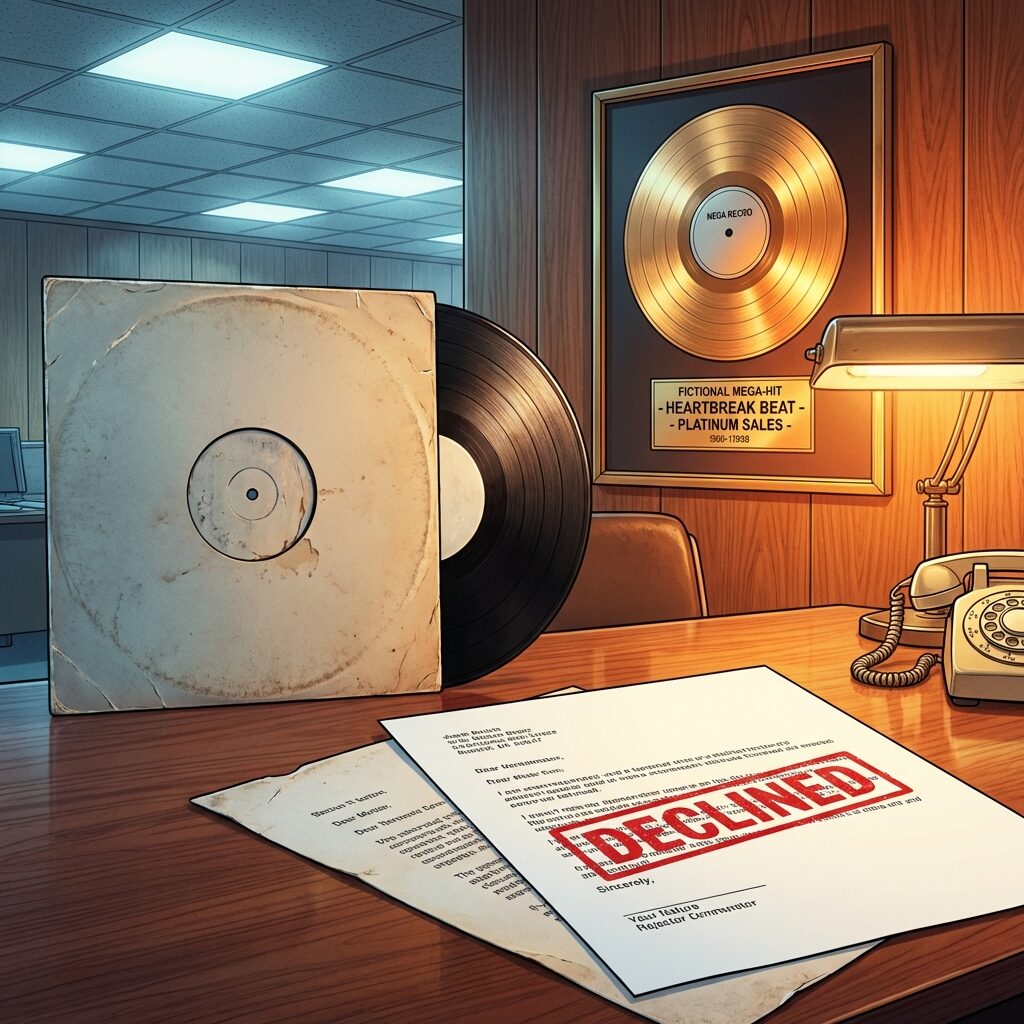
Walter Yetnikoff’s rejection of Various Positions has become one of the most quoted blunders in music industry history. The CBS Records president, riding high on Thriller, listened to Cohen’s quiet, synthesizer-heavy, spiritually searching collection and reportedly told him: “We know you’re great, but we don’t know if you’re any good.”
One of the greatest songs ever written was sitting right there on that album, and the head of the label couldn’t hear it.
The rejection wasn’t just of “Hallelujah.” It was the entire album. CBS refused to release Various Positions in the United States. It came out in Canada and internationally on Columbia in December 1984, but American listeners had to wait until February 1985, when the independent label Passport/PVC Records picked it up. Cohen was signed to one of the biggest labels in the world, and his album had to go through the equivalent of a back door. Think about that for a second.
Dominique Issermann, Cohen’s partner at the time, said he was “absolutely crushed” by the rejection. Cohen wasn’t the type to perform torment publicly. Lissauer noted that “he’s not one to share his struggles.” But the rejection cut deep. Lissauer had wanted to push “Hallelujah” as a single, believing it would be “the breakthrough.” Instead, Cohen’s manager Machat blamed Lissauer for the album’s rejection, souring that relationship yet again.
And the critical reception? Don Shewey’s review in Rolling Stone praised “John Lissauer’s lucid and beautiful production” but didn’t mention “Hallelujah” at all. Not a word. The song that would eventually be inducted into the Grammy Hall of Fame, enshrined in the Library of Congress, covered over 300 times, and performed at the Olympics for an audience of billions. It didn’t even rate a mention in the album review.
The same label that was printing money on Thriller couldn’t find room for a song that would outlast virtually everything else in its 1984 catalogue. But maybe that’s the point. “Hallelujah” needed to fail first. It needed to be ignored, passed over, broken open before anyone could hear what was actually in it. The song’s own theology kind of insists on that reading.
The Resurrection Chain
“Hallelujah” was revived by a chain of covers, each one doing what the last couldn’t, John Cale stripped it to piano, Jeff Buckley gave it a martyr’s mythology, Shrek put it in front of a $484 million audience, and k.d. lang delivered the performance that made Cohen himself say the song had finally been done to perfection.
If “Hallelujah” had stayed where CBS left it, buried on an independent release, unreviewed, unheard, you wouldn’t be reading this. The song needed other people to find it, break it open, and pass it along. What followed was an improbable game of telephone where each artist who touched the song changed it fundamentally, and each change brought it closer to the version the world would eventually sing.
It started with John Cale in 1991. The Velvet Underground co-founder was recording a track for I’m Your Fan, a Cohen tribute album organized by the French music magazine Les Inrockuptibles. Cale asked Cohen for the lyrics, and Cohen faxed him, and this detail is almost too good, fifteen pages. Fifteen pages of verses for one song. Cale went through them and, in his own words, “just picked out the cheeky verses.”
What Cale did with that selection reshaped the song completely. He stripped everything back to voice and piano. No synthesizers, no drum machine, no gospel choir. Just a man at a keyboard, letting the melody breathe. His arrangement was mid-tempo, spacious, and emotionally direct in a way Cohen’s more produced original wasn’t. It became the template. Almost every major cover that followed, Buckley, Wainwright, lang, Burke, took Cale’s arrangement as its starting point, not Cohen’s original. The Welsh experimentalist who’d made noise art with Lou Reed gave “Hallelujah” its second life as a piano ballad.
Then came Jeff Buckley.
Buckley discovered “Hallelujah” not from Cohen’s original but from a copy of I’m Your Fan he found in a New York apartment. He was putting together material for his debut album Grace, released in 1994, and he made the song entirely his own. Where Cohen was wry and weathered, Buckley was raw and ecstatic. Where Cale was restrained, Buckley was operatic. He described his interpretation as “a hallelujah to the orgasm” and told the Dutch magazine OOR: “Whoever listens carefully to ‘Hallelujah’ will discover that it is a song about sex, about love, about life on earth.”
Buckley also said, with characteristic self-awareness, “I hope Leonard doesn’t hear it.” He used Cale’s verse selection rather than Cohen’s original lyrics, further cementing the Cale arrangement as the definitive text. And then, in 1997, Buckley drowned in the Wolf River in Memphis. He was thirty years old. His death built a mythology around Grace and around “Hallelujah” specifically, the young genius gone too soon, the song about broken hallelujahs sung by someone who would become shorthand for beautiful things that don’t last. Grace went on to sell two million copies worldwide, eventually earning Platinum certification in the U.S. in 2016, nearly two decades after its release.
The next link in the chain came from an unlikely place: a cartoon swamp. When DreamWorks was assembling the soundtrack for Shrek in 2001, Cale’s version played in the film itself (during the emotional montage when Shrek returns alone to his swamp), while Rufus Wainwright recorded a cover for the soundtrack album. Shrek grossed $484 million worldwide. The soundtrack went double Platinum in the U.S. Suddenly, millions of people who had never heard of Leonard Cohen, John Cale, or Jeff Buckley knew this song. They might not have known who wrote it, Wainwright himself later said the association had been “really hard” because audiences expected him to perform a song that wasn’t his, but they knew the melody, the chorus, the feeling.
And then there was k.d. lang, who may have given the version that makes all other versions unnecessary.
Lang included “Hallelujah” on her 2004 album Hymns of the 49th Parallel, and her live performances of the song became events in themselves. At the 2005 Juno Awards, she sang it barefoot and received a two-minute standing ovation. At Cohen’s 2006 induction into the Canadian Songwriters Hall of Fame, she performed it again, and something in the room shifted. Cohen’s partner Anjani Thomas described the aftermath: “We looked at each other and said, ‘well, I think we can lay that song to rest now! It’s really been done to its ultimate blissful state of perfection.'”
They couldn’t lay it to rest, of course. Lang performed “Hallelujah” at the opening ceremony of the 2010 Winter Olympics in Vancouver, with an estimated global audience of over a billion people. The song had gone from a rejected album track to the biggest stage on earth in twenty-six years.
What holds my attention about this chain is how each link did something the others couldn’t. Cale built the arrangement. Buckley gave it a martyr. Shrek put it in front of millions of people who’d never heard of any of them. Lang showed what the song could do in a room when someone truly committed to it. And each cover sent listeners backward through the chain, discovering Buckley through lang, Cale through Buckley, Cohen through Cale. The song didn’t just get covered. It got slowly unearthed.
The UK Christmas Hallelujah Won
In December 2008, “Hallelujah” held the top two positions on the UK Singles Chart simultaneously, the first time that had happened in 51 years. Cohen’s original finally charted for the first time at No. 36, twenty-four years after release, behind two cover versions of his own song.

December 2008 is when “Hallelujah” stopped being a beloved deep cut and turned into something no one could ignore. The charts tell the story better than I can.
On December 21, 2008, “Hallelujah” held the top two positions on the UK Singles Chart simultaneously. That hadn’t happened with the same song in fifty-one years, not since Tommy Steele and Guy Mitchell both charted competing versions of “Singing the Blues” in January 1957.
At No. 1 was Alexandra Burke, who had just won that year’s X Factor and released “Hallelujah” as her winner’s single. Her numbers were absurd: 576,000 copies in the first week alone, split almost evenly between 287,000 physical and 289,000 downloads. She set the record for fastest-selling single by a female solo artist in UK chart history, the European record for most singles sold in 24 hours (105,000), and the one-week UK digital download record. By January 2009 she’d passed a million sales. It was the 2008 Christmas Number One, and 2008 happened to be the first year downloads of the Christmas chart-topper exceeded CD sales.
At No. 2 was Jeff Buckley’s version, pushed there by a grassroots internet campaign. The campaign was explicitly anti-X Factor. Fans who felt the show was cheapening a song that deserved better rallied behind Buckley’s recording as a protest vote. It sold 81,000 copies that week on downloads alone, since it had never been released as a physical single in the UK. There’s something funny about that: a grassroots campaign against commercial pop, rallying behind a version of a song that was itself a commercial failure.
And at No. 36? Leonard Cohen. The original. Charting in the UK top 40 for the first time ever. Twenty-four years after release.
Think about what that means. Leonard Cohen, the man who wrote the song, who spent five years on it, who banged his head on the Royalton floor trying to finish it, saw his version enter the chart for the first time a full generation later, behind two cover versions of his own composition. He was in third place on a song he created.
It gets weirder. Cohen’s original didn’t reach the Billboard Hot 100 until after his death in November 2016, when it debuted at No. 59. That same week, Pentatonix’s a cappella version sat at No. 56. Even in death, even with a 1,177% spike in downloads and 3.8 million U.S. streams in a single week, Cohen’s “Hallelujah” was charting behind someone else’s. The song had finally outlived its creator’s commercial invisibility, but only barely, and only because he died.
The Song That Won’t Shut Up
“Hallelujah” got so inescapable that the New York Times called for a moratorium, and even Cohen nearly silenced it himself. Then the 2020 RNC played it without permission, twice, after being told no, and the estate’s response had teeth.

There’s a point where a song stops being popular and starts being inescapable. “Hallelujah” hit that point years ago. Weddings. Funerals. Olympics. SNL. Political conventions. Karaoke bars at 1 AM. X Factor finals. Charity telethons. The first dance and the last goodbye. It’s everywhere, and plenty of people wish it would stop.
David Daley wrote in Salon in 2011 that “a beautiful, mysterious song has been turned into a tacky karaoke number, and become so common that it’s been drained of its power to move.” The New York Times went further and called for an outright moratorium. Honestly? Fair enough. When you hear the same song at a stranger’s wedding, a singing competition, and a car commercial in the same week, even a masterpiece starts to feel like hold music.
Cohen himself almost pulled the plug. “Once or twice I’ve felt maybe I should lend my voice to silencing it,” he admitted. Then he backed off: “But on second thought no, I’m very happy that it’s being sung.” Think about that for a second. A man who spent five years writing a song, deciding the song no longer belongs to him, and being genuinely fine with it.
The song kept finding its way into moments of collective grief that Cohen probably never saw coming. When Kate McKinnon opened Saturday Night Live on November 12, 2016, she sat at a piano dressed as Hillary Clinton and played “Hallelujah.” It was the week after the presidential election. It was also the week Leonard Cohen died. The performance was doing several things at once: mourning an election result, mourning Cohen himself, and using his own song as the vehicle for both. No sketch. No jokes. Just McKinnon at the piano, and at the end, turning to the camera and saying, “I’m not giving up, and neither should you.” One of those rare cultural moments where a song is the only adequate response to something too big for ordinary words.
Then came the 2020 Republican National Convention, and this one’s worth telling in full because of what it says about how loaded the song had become. Both the Cohen estate and Sony/ATV Music Publishing turned down the RNC’s request to use “Hallelujah” at the convention. Both said no. The RNC played it anyway. Twice. First, Tori Kelly’s prerecorded cover from the Sing soundtrack scored a fireworks display that spelled “Trump” over the National Mall. Then a live operatic version was performed from a White House balcony, paired with “Ave Maria.”
The estate’s response was surgical. Lawyer Michelle L. Rice called it “a rather brazen attempt to politicize and exploit in such an egregious manner ‘Hallelujah,’ one of the most important songs in the Cohen song catalogue.” Then she twisted the knife, with the kind of dry wit Cohen would have loved: “Had the RNC requested another song, ‘You Want It Darker,’ for which Leonard won a posthumous Grammy in 2017, we might have considered approval of that song.” Tori Kelly tweeted, then deleted, that neither she nor her team had received a request either.
There’s a Bob Dylan story worth slipping in here. In July 1984, the morning after a Dylan concert in Paris, Cohen and Dylan sat at a café trading lyrics. Cohen sang “Hallelujah.” Dylan especially liked the final verse. Then Dylan mentioned he’d written “I and I” in fifteen minutes. Cohen’s song had taken five years. Two completely different relationships with the creative process, and yet both men recognized what the other had. Dylan went on to perform “Hallelujah” at two shows in 1988 and said the song had “a connective chorus, which when it comes in has a power all of its own.”
The song won’t shut up because it doesn’t belong to any single moment or meaning anymore. It works as a hymn. It works as a sex song. It works at funerals and weddings and political protests. That slipperiness, the same quality that left CBS executives scratching their heads in 1984, is exactly why it fits everywhere. The Financial Times‘ Enuma Okoro put it well: “The lyrics and the tone of the song seem to sway between hymn and dirge.” It sways, and wherever you happen to be standing, it meets you there.
A Cold and a Broken Hallelujah
A song about praise in imperfection only became something like perfect through decades of messy, unplanned transmission, faxed lyrics, stripped covers, a cartoon ogre, and a reality TV show.
Go back to the Royalton Hotel. Cohen on the floor, underwear, head on the carpet, two notebooks full of verses he’s written as carefully as the ones he’ll keep. He doesn’t know it yet, but the song he can’t finish will outlive him. It will outlive the label that rejected it. It will be sung at Olympics and funerals and by cartoon ogres and reality TV winners and a comedian dressed as a presidential candidate, the week its author dies.
But it will only get there by breaking.
CBS breaks Cohen’s heart by refusing to release it. The Rolling Stone review doesn’t mention it. For seven years, nothing happens. Then John Cale strips it to piano and picks out the cheeky verses from a fifteen-page fax. Then Jeff Buckley turns it into an erotic prayer and drowns at thirty, making the song a memorial. Then a $484 million animated movie makes it background music for a lonely ogre. Then k.d. lang sings it barefoot and makes Cohen himself think it’s finally been perfected. Then two different versions fight for the UK Christmas No. 1 while Cohen’s original trails in at thirty-six. Then the whole world sings it until the New York Times begs them to stop.
A song about finding praise in imperfection became something like perfect, but only through decades of imperfect transmission. Faxed lyrics. Stripped-down covers. A cartoon ogre. A reality TV show. A grassroots internet campaign. Each step was messy, unplanned, and necessary.
Alan Light wrote that “Hallelujah” is “unquestionably a modern standard, perhaps the only song that has truly earned that designation in the past few decades.” He’s right. But it earned that designation for the same reason Cohen wrote it: because the cold and broken hallelujah is the one that counts. The shiny, triumphant version, the one CBS might have released, the one that might have been a hit in 1984, would be forgotten by now. The version that survived is the one that was rejected, ignored, rediscovered, reinterpreted, and finally, reluctantly, embraced.
Cohen standing before the Lord of Song with nothing on his tongue but Hallelujah. It’s not a boast. It’s not even a prayer, exactly. It’s just the only word left after everything else has been tried and found wanting. It means “praise God” and it sounds like it might also mean “I give up” and “I’m still here” and “this is all I’ve got” and “it’s enough.”
It’s enough.
🎹 Did you know Leonard Cohen wrote ~150 draft verses of “Hallelujah” over 5 years — then CBS rejected the entire album? It took 24 years for the original to chart. #LeonardCohen #Hallelujah #MusicHistory 🕯️ https://bit.ly/4lN6MI2

Click to Tweet