Backstreet Boys | I Want It That Way
The Riddle Everyone Knows
Everyone knows the lyrics to “I Want It That Way.” Nobody knows what they mean, including the Backstreet Boys. Somehow that’s the whole point.
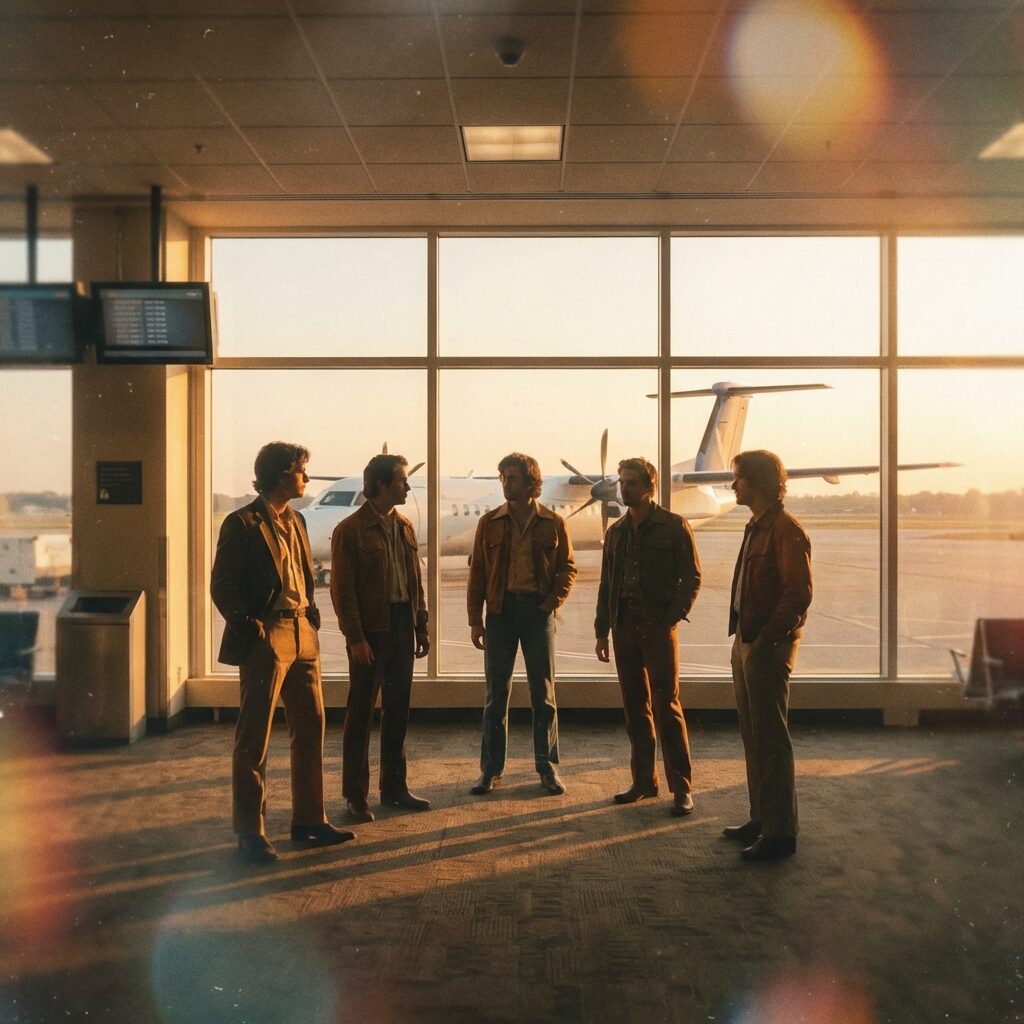
Ed Sheeran put it best: “You can’t be in a bar, a couple of beers in, and ‘I Want It That Way’ comes on and not be like, ‘This is a good song.'” He’s right, and you know he’s right. It doesn’t matter if you think boy bands are beneath you. The opening arpeggio hits, someone in the room sings “you are my fire,” and suddenly everyone’s in. There are no holdouts. There never are.
Which is genuinely weird when you think about it. Because if you actually sit down and read those lyrics, really read them, sober, in daylight, they don’t mean anything. At all. “Tell me why / Ain’t nothin’ but a heartache / Tell me why / Ain’t nothin’ but a mistake / Tell me why / I never wanna hear you say / I want it that way.” What way? Whose heartache? Why is wanting it that way a bad thing if you also want it that way? What even is “it”?
In June 2018, Chrissy Teigen finally said what millions of us had been thinking. She took to Twitter and started dissecting the lyrics in real time: “I never wanna hear you say, ‘I want it that way’ cause I want it that way. He doesn’t wanna hear it because he is the one that wants it that way? He wants to be the one to say it? Also, what is ‘it’?” It was the question nobody had bothered to formally ask for nearly two decades, and it went absolutely viral.
The Backstreet Boys’ official account fired back with an explanation that was, beautifully, just as incomprehensible as the song itself: “Don’t wanna hear you say that you want heartaches and mistakes… or to be 2 worlds apart. We don’t want you to want ‘it’ that way, that’s the way we want it… for you to not want it that way.” Kevin Richardson later admitted they were just messing around. “We thought we’d have fun with her and just give her an answer back that really didn’t mean anything.”
So how does a song that fails basic grammar, a song whose own performers openly admit means nothing, end up ranked #240 on Rolling Stone’s 500 Greatest Songs of All Time? How does it sell 30 million copies, dominate TRL for 65 days, and still fill arenas a quarter century later? There’s an answer, and it’s more interesting than “catchy hook plus nostalgia.” It starts with five guys who had way more going on than anyone gave them credit for.
Five Guys With Something to Prove
In late 1998, the Backstreet Boys were dealing with lawsuits, personal tragedies, and a boy band war, and they picked a fight with their own label for the right to lead with a mid-tempo ballad.
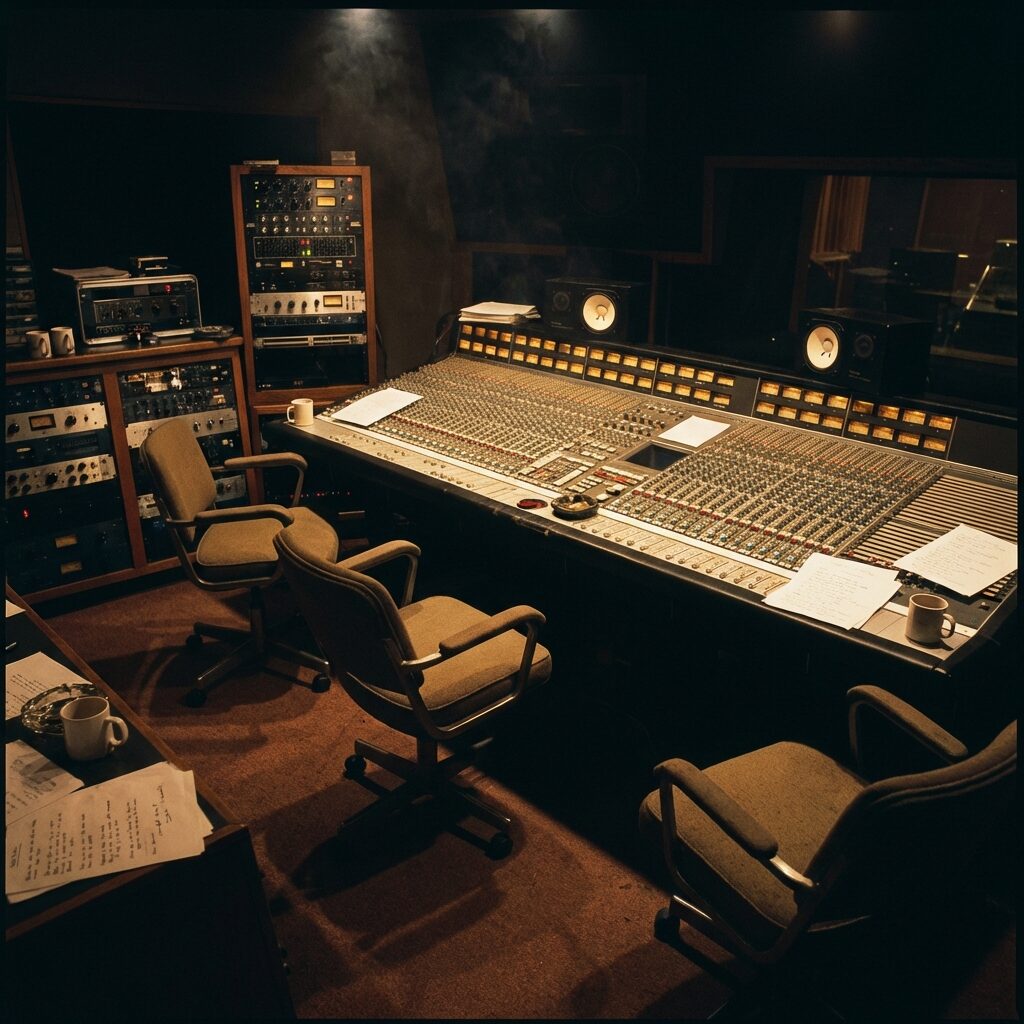
By late 1998, the Backstreet Boys were in a strange place. Internationally, they were enormous, multiplatinum in Europe, massive in Asia, the kind of famous where airports need crowd control. But in the United States, they were still fighting for legitimacy. Their first two albums had sold well enough, but they weren’t yet an American phenomenon. And behind the scenes, things were falling apart in ways the screaming fans never saw.
The business side was ugly. The group had filed a lawsuit against their manager Lou Pearlman, the same guy who’d simultaneously been managing their direct rivals, *NSYNC, claiming they’d received only $300,000 from all their recording and touring while Pearlman had kept over $10 million. Pearlman, who had the nerve to call himself “the sixth Backstreet Boy,” was still profiting off a group that wanted nothing to do with him. The band left his management company, Wright Stuff, on September 18, 1998, trying to break free from the guy who’d built them and was now bleeding them dry.
But the personal devastation during the Millennium sessions made the contract dispute look manageable. Kevin Richardson suffered two family deaths. Brian Littrell underwent open heart surgery. Howie Dorough lost his sister to lupus. And Denniz PoP, the legendary Swedish producer who’d helped shape their sound from the beginning, died of stomach cancer. That is a staggering amount of grief for five young men to carry into a recording studio, and it changed how they thought about what the album needed to say.
Which brings us to the decision that defined everything. The safe play, the play their first two albums had established, was to lead with an upbeat single. Something danceable, something that screamed “summer hit.” “Larger Than Life” was already in the can and ready to go. The label wanted it. But the band pushed back. They wanted to lead with something different. A mid-tempo ballad. Something that felt more mature, more emotionally honest, even if executives at Zomba Recording warned them they could “alienate fans” with a slower song fronted by vague lyrics.
Think about what that took. Five guys in their early-to-mid twenties, dealing with lawsuits and grief and open heart surgery, picking a fight with their own label over the first single from the album that needed to be their American breakthrough. Meanwhile, *NSYNC, the group their own former manager had created specifically to compete with them, was breathing down their neck. This wasn’t a band casually experimenting with a new direction. Their careers were on the line, and they knew it. And into that pressure, they chose to bet on a ballad that didn’t even make grammatical sense.
The Metal Kid Who Invented Modern Pop
Max Martin, a former glam metal frontman turned pop architect, and his neighbor Andreas Carlsson created the song’s DNA at Cheiron Studios, where producers ran the show and artists showed up to sing.

If you told someone in 1992 that the frontman of a Swedish glam metal band called It’s Alive would go on to write more number-one hits than almost anyone in pop history, they’d have assumed you were confusing your timelines. But that’s exactly what happened with Max Martin, born Karl Martin Sandberg in Stockholm in 1971, who traded leather pants and Marshall stacks for the most tightly controlled pop songwriting setup the industry had seen.
By 1998, Martin was running Cheiron Studios, the unassuming Stockholm facility that Denniz PoP and Tom Talomaa had established in 1992. After Denniz PoP’s death from cancer that year, Martin stepped up as director, inheriting both the studio’s infrastructure and its philosophy: pop music could be engineered with mathematical precision without losing its emotional punch. Martin codified this into what became known as “Melodic Math”, write the melody first, keep it simple, fit syllables to notes rather than the other way around, get to the chorus within the first 50 seconds, and limit the song to no more than three or four individual parts. It sounds clinical on paper. In practice, it’s how you get songs that lodge in someone’s skull for weeks and make them feel something every time.
The power dynamic at Cheiron was the opposite of what most people imagine when they think about pop recording. The producers wrote the songs. The producers played the instruments. The producers engineered and mixed the recordings. The artist came in near the end to do vocals, and that was pretty much it. Andreas Carlsson put it bluntly in his memoir Live To Win: “For a long time, Martin was actually the Backstreet Boys’ sixth member.” Martin himself was obsessive about the process: “I want to be part of every note, every single moment going on in the studio. I want nothing forgotten, I want nothing missed. I’m a perfectionist.”
Carlsson’s own path to co-writing one of the biggest pop songs ever recorded is the kind of thing that sounds made up. In 1996, the 23-year-old aspiring pop star got a last-minute call to replace British pin-up Peter Andre as the opening act for the Backstreet Boys’ Swedish tour. Picture this: a kid with a guitar, no dancers, no choreography, and, as he’d later joke, definitely not the abs of Peter Andre, standing on a stage in front of thousands of screaming fans who were absolutely not there to see him. He couldn’t even hear his own vocals over the noise.
Carlsson had been working on a solo album at Cheiron before pivoting to songwriting, and as it turned out, he lived next door to Max Martin in Stockholm. One late night, they shared a cab home from work. Martin had been kicking around ideas for the Backstreet Boys’ next album. By the time they got out of the cab, Carlsson was a co-writer. Martin already had the bones of the song, including the line that would open it. He needed someone to help him finish the lyrics. He’d picked the right neighbor. He just didn’t know yet how perfectly wrong those lyrics would turn out to be.
Two Days, Two Swedes, One Cab Ride
Martin and Carlsson wrote a song where the melody worked and the lyrics didn’t make sense, they knew it, kept going anyway, and pulled inspiration from everywhere between Melodic Math and Metallica.

Max Martin showed up with the core idea already in his head. He had the melody. He had “you are my fire / the one desire.” He had the chorus hook. What he didn’t have was the rest of it, verses, bridges, the scaffolding that turns a hook into an actual song. That’s where Carlsson and the cab ride came in.
The first verse fell into place pretty quickly. “You are my fire / the one desire / believe when I say / I want it that way.” Clean, simple, direct. A straight-up declaration. The second verse is where things got weird, and, depending on how you feel about lyrics, either genius or completely busted.
Carlsson talked about this years later with the kind of candor you only get once enough time has passed: “We tried a million different variations on the second verse, and finally we had to go back to what was sounding so great, ‘you are my fire, the one desire.’ And then we changed it to ‘am I your fire, your one desire,’ which made absolutely no sense in combination with the chorus, but everybody loved it!” They knew the logic was broken. They could hear the melody was right. They went with the melody.
And honestly, that’s Melodic Math doing exactly what it’s supposed to do. When you build the melody first and wedge syllables into the notes afterward, words stop being words. They become sounds. You pick them for how they sit in your mouth and how they hit someone’s ear, not for whether they’d pass a grammar quiz. Martin and Carlsson were both Swedish, and while how well they spoke English at the time depends on who you ask (Kevin Richardson put it diplomatically to LA Weekly in 2011: “His English has gotten much better, but at the time…”), what’s obvious is that they were composing in melodies, not sentences.
Then there’s the intro. You know it, that acoustic guitar arpeggio before anyone opens their mouth, four notes that instantly tell your brain what’s coming. Carlsson said they wrote it last, right at the tail end of the sessions. And it was inspired by Metallica’s “Nothing Else Matters.” Yeah. The most recognizable opening in boy band history came from a metal ballad. Max Martin’s glam metal years weren’t just a fun backstory. They were wired into the song itself.
The Backstreet Boys flew into Stockholm in November 1998 for two weeks of recording. When they walked into Cheiron Studios, Martin played them the demo, mostly just the chorus at that point, with Martin singing on it himself. The band got it immediately. Carlsson told Billboard: “The band and the record company heard it and they immediately said, ‘This is a classic.'”
They cut the vocals in two days. Two days for what would become one of the best-selling singles of the decade. All five of them, AJ McLean, Howie Dorough, Nick Carter, Brian Littrell, Kevin Richardson, rotated through lead vocals, turning it into a showcase for every voice in the group. By November 16 they were gone, flying out for an Oprah taping the next day. The whole thing had that Cheiron quality, precise, fast, and sounding effortless even though nothing about it was accidental. This was a built thing. Every note placed on purpose. Every harmony where it belonged. Except the lyrics, of course. The lyrics were a happy accident that nobody wanted to touch.
Well. Almost nobody.
The Version That Made Sense
Jive Records flew Mutt Lange from Switzerland to Sweden to fix the nonsensical lyrics. The band recorded his coherent rewrite, then all five members voted to reject it and keep the original.
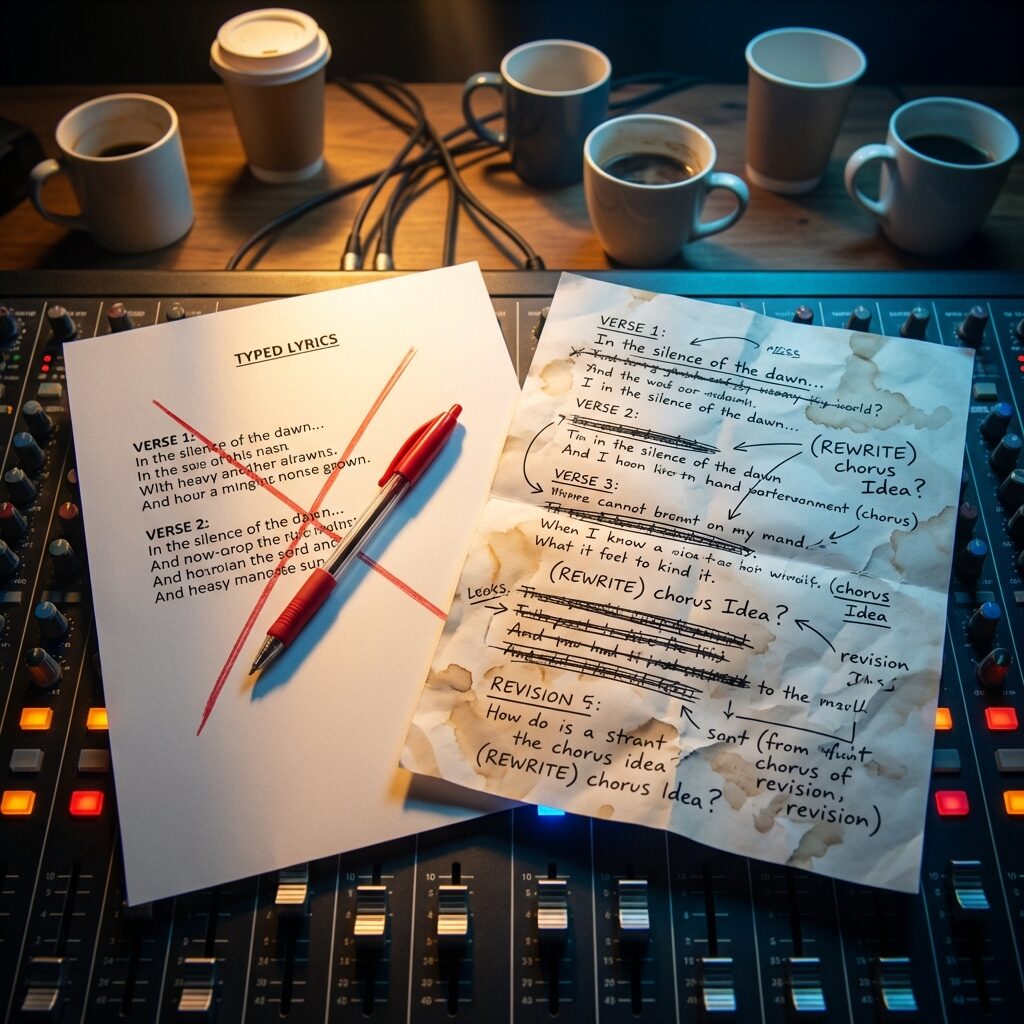
Here’s where it gets good.
Jive Records head Clive Calder listened to the finished track and loved everything about it except the words. The melody, the production, the vocal arrangement, all great. The lyrics made no sense, and he was worried that would cost them. So Calder did something that tells you exactly how much money was on the line: he flew Robert John “Mutt” Lange, the producer behind AC/DC’s Back in Black and Def Leppard’s Hysteria, from Switzerland to Sweden to rewrite the words to a Backstreet Boys song.
Consider what’s being spent here. International flights for a rock legend. Dedicated studio time. Multiple re-recording sessions. All because a label executive couldn’t parse what “I want it that way” was supposed to mean. Lange sat down with Carlsson and Martin and they wrote a new version. It got the official title “I Want It That Way (Alternate Lyrics)” and fans eventually came to know it as the “No Goodbyes” version.
The big change was in the chorus. “I never wanna hear you say” became “I love it when I hear you say.” The full alternate chorus: “No goodbyes / Ain’t nothing but a heartache / No more lies / Ain’t nothing but a mistake / That is why I love it when I hear you say / I want it that way.” Read that. It makes sense. It tells a clear story: the singer loves hearing their partner say they want it that way. No ambiguity. No grammatical confusion. No riddle.
It’s also completely lifeless.
The original chorus works because of its tension. “I never wanna hear you say / I want it that way”, there’s longing and resistance and contradiction knotted together, and you feel all of it even if you can’t diagram it. The rewrite resolves that tension into a straight love affirmation. It’s a Hallmark card where there used to be a gut punch. Making the lyrics coherent drained them of the thing that made them stick.
The band recorded the alternate version in January 1999. Then they did something remarkable: they voted. All five members. Against their label. Against a rewrite overseen by Mutt Lange, a producer whose track record could fill a wall. AJ McLean later put it perfectly: “I don’t think that it would have ended up the way that it did had we gone with the proper version. I guess you could say, you know, the one that made sense.” Kevin Richardson was blunter: “It made sense, but it didn’t sound as good!”
That vote is really the whole story in miniature. Five guys in a studio, some barely out of their teens, chose feeling over meaning. They trusted their ears over their label’s logic and bet that listeners would respond to how the song felt rather than what it literally said. They were right, to the tune of 30 million sales and a quarter-century of cultural staying power.
The alternate version didn’t vanish completely. It turned up in some early demo presses of the album and eventually leaked to Napster, that beautifully lawless file-sharing service where you could find anything, labeled correctly maybe half the time. Fans who heard both versions overwhelmingly confirmed what the band already knew: the broken one was better. The version that made no sense worked better than the one that did.
Why Your Brain Can’t Resist It
Under its pop exterior, “I Want It That Way” pulls off a neat trick: descending melodies over simple triads generate jazz-level harmonic tension without anyone noticing, and the whole-step key change at 2:25 lands like a punch because Martin spent two minutes lulling you with simplicity first.

Alright, let’s talk about what’s actually happening musically, because this is where “I Want It That Way” turns out to be sneakier than its boy-band packaging lets on.
The song sits in A major, bright, confident, but it doesn’t stay comfortable there. The verse progression is F♯m – D – A, and that F♯ minor up front is doing quiet, important work. F♯ minor is the relative minor of A major, so by leading with it, the verses carry this melancholy undertow pulling against the brightness of the key. You feel hopeful and sad at the same time. Before anyone sings a word about heartache or desire, the harmony has already told you this is a song about reaching for something just out of grasp. The push-pull between major and minor mirrors the lyrical confusion, whether that parallel was deliberate or just Max Martin’s instincts firing correctly, who knows.
The chorus is where Martin’s melodic math gets interesting. The melody starts from E and walks down the A major scale, and it does this over a D chord. Here’s why that matters: those descending notes landing against a D chord create intervals suggesting 9ths, 7ths, and 13ths, tensions you’d normally hear in jazz or sophisticated R&B. But Martin isn’t writing extended chords. He’s writing simple triads. All the complexity lives in the gap between the melody and the chords underneath, so your ear picks up emotional richness while your brain processes nothing complicated. You just feel it. That gap between simplicity on paper and complexity in the ear, that’s the trick, and it’s a good one.
One harmony voice sings in consecutive thirds beneath the lead through most of the chorus, and the effect is this warm, enveloping texture that makes the “tell me why” hook feel bigger than three notes have any right to feel. Billboard’s Jon O’Brien singled out the “you are” crescendo, that moment where the harmonies stack and build, calling it something “that would put any classic vocal troupe to shame.” Hard to argue. Those five voices were doing real vocal group work, not just singing in unison with studio gloss smoothing things over.
And then there’s the key change. Around 2:25, the song modulates up a whole step from A major to B major. Music writer Dave Fawbert called it “one of the greatest key changes in music history,” which sounds like the kind of thing you’d say after three drinks, except go back and listen to it again. Notice how hard it lands. Part of why it works is that Martin kept the harmonic language so plain throughout. When you’ve been hearing basic triads for two and a half minutes, a whole-step modulation doesn’t just lift the song. It detonates. Your body physically responds. The simplicity was always the setup. The key change was always the payoff.
The tempo sits at 99 BPM in standard 4/4 time, slower than your typical late-’90s pop single. This was the exact risk the label had flagged, a mid-tempo lead single felt like a gamble when everyone else was competing on energy and choreography. But that tempo gives the song room to breathe. It gives the harmonies space. It turns what could have been a dance track into something you lean into rather than bounce along with. Each member takes a turn on lead vocals, and at that pace, every handoff registers. You hear AJ’s rasp, Brian’s clarity, Nick’s brightness as distinct textures rather than interchangeable parts.
The arrangement is a lesson in knowing when to hold back. It opens with that Metallica-inspired acoustic arpeggio, builds through layered synthesizers and guitar lines weaving around the vocals, and never overplays its hand. The bridge uses a 4-3 suspension twice, resolving differently each time, the first pulling a classic V-to-I resolution that feels like a sigh. The whole production has this quiet confidence to it, like everyone in the room knew exactly what buttons they were pressing and pressed them anyway.
Two Days at LAX
Shot over two days at LAX with a rented casino jet, the airport video turned out to be an accidentally perfect visual metaphor for a song about wanting something just out of reach, then held TRL hostage for 65 days straight.

The video was shot on April 1-2, 1999, at Los Angeles International Airport, specifically, the Tom Bradley International Terminal. Director Wayne Isham brought in a Boeing 727, registration N727BE, hired from the Imperial Palace casino in Las Vegas. Five guys in white, an airplane, a terminal full of extras playing adoring fans, and two days to get it done. Same energy as the Stockholm recording sessions: get in, nail it, move on.
When the video debuted on MTV’s TRL on May 5, 1999, it immediately took over. Not “did well.” Took over. The video hit #1 on the countdown 47 times during a 65-day run. Forty-seven times. Carson Daly was practically a hostage.
The airport setting turned out to be accidentally perfect. The whole concept, arrivals and departures, connection and separation, people reaching for each other across terminal gates and tarmac, just happens to map onto a song about wanting something you can’t quite reach. I don’t think anybody sat down and said “the lyrics are about incoherent longing, so let’s put them in a place defined by coming and going.” But that’s what happened. The video handed the song a visual metaphor it didn’t know it needed.
The video crossed one billion YouTube views in November 2021, one of only a handful of 1990s videos to hit that mark. It was averaging more than 400,000 daily views at the time, for a video shot at an airport terminal two decades earlier. And then there’s this: twenty years after the original shoot, the Backstreet Boys ended up on a giant pillar welcoming visitors to LAX, right outside the same terminal where they’d filmed the video. The airport they’d borrowed for two days put them up permanently.
Spring ’99 Belonged to Them
The song hit #1 in 25+ countries but stalled at #6 in the US, launched an album that moved over a million copies in its first week, and lost every Grammy to the only song that could match its weight: Santana’s “Smooth.”
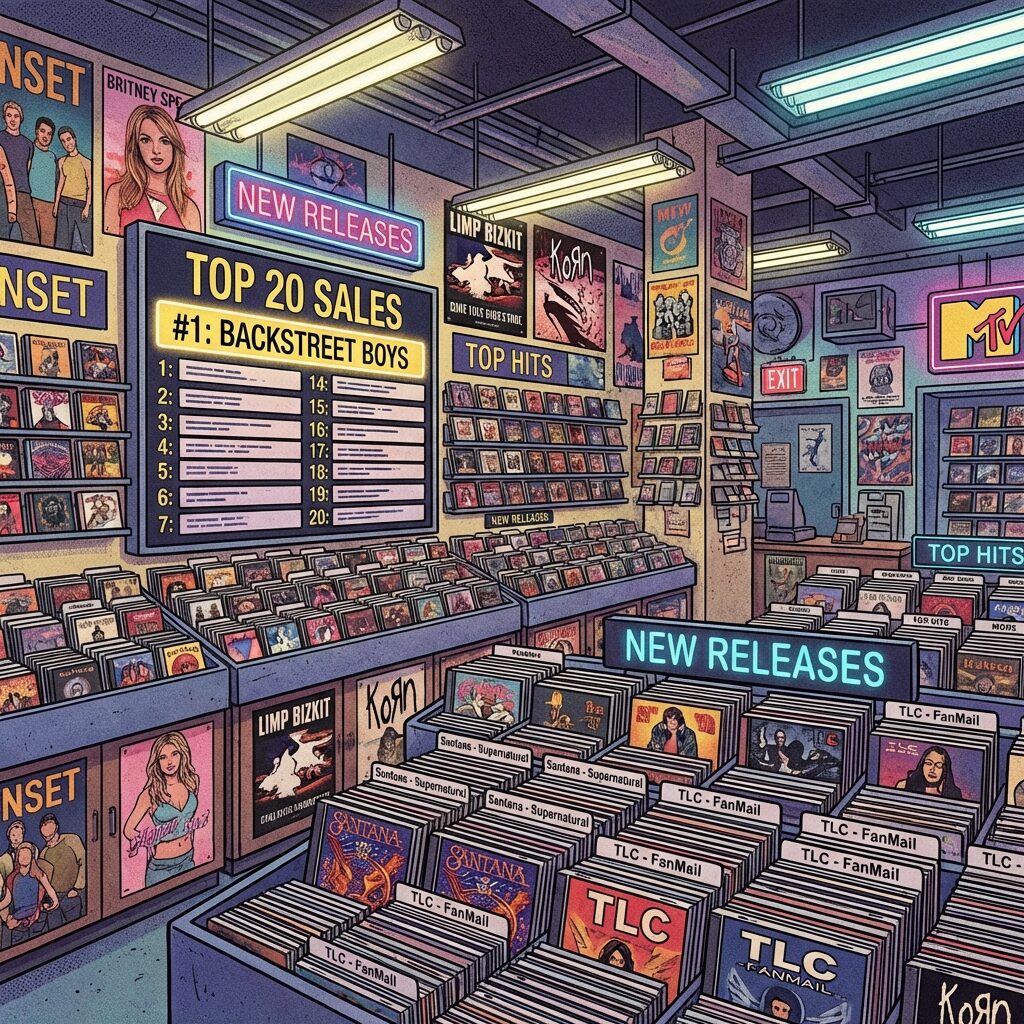
The numbers are staggering, but they contain a paradox. “I Want It That Way” went to #1 in more than 25 countries. It sold nearly 94,000 copies in its first week in the UK alone, 33,000 ahead of Westlife’s “Swear It Again”, giving the Backstreet Boys their only UK #1 single. It topped the Eurochart Hot 100 for seven consecutive weeks. For the spring and summer of 1999, it was the dominant pop single on the planet.
And it peaked at #6 on the Billboard Hot 100.
That’s it. Number six. Their signature song, the one that defines the boy band era, the one that would go on to sell an estimated 30 million copies worldwide, it never cracked the top five in the United States. It sat at that #6 peak for eight non-consecutive weeks while topping literally every other chart on earth. The Hot 100 in the spring of ’99 was a bloodbath, and nothing stayed on top for long.
The album is where the real story lives. Millennium dropped on May 18, 1999, roughly a month after the single’s release, and it didn’t just sell well. It moved approximately 500,000 copies on day one, a record at the time. The first-week total hit 1.13 million, shattering the Nielsen SoundScan record Garth Brooks’ Double Live had held. Over a million copies in seven days. In 1999, when you had to physically drive to a store and buy a CD. Millennium became the best-selling album of 1999 with 9.4 million copies sold that year alone, eventually earning Diamond certification from the RIAA at 13x Platinum. The Guinness World Record for best-selling album in the USA by a boy band still belongs to this record.
The Grammys came calling. “I Want It That Way” picked up nominations for Record of the Year, Song of the Year, and Best Pop Performance by a Duo or Group with Vocal at the 42nd Grammy Awards on February 23, 2000, at the Staples Center in Los Angeles. Millennium itself got nods for Album of the Year and Best Pop Album. They lost everything. Record of the Year and Song of the Year both went to Santana’s “Smooth,” and Best Pop Performance went to Santana’s “Maria Maria.” It was the year of Santana’s impossible comeback, and the only song with enough weight to overshadow “I Want It That Way” happened to land at the exact same time. Rotten luck. But the Grammy losses didn’t touch the song’s legacy, if anything, time has been kinder to “I Want It That Way” than to “Smooth,” which few people are spontaneously singing in bars 25 years later.
The label executives who’d worried about alienating fans with a mid-tempo lead single could not have been more wrong. The bet the Backstreet Boys made, feeling over formula, ballad over banger, produced the biggest album launch in history at the time. Sometimes the artists know something the suits don’t.
A Song That Won’t Stay in Its Lane
From Brooklyn Nine-Nine’s iconic lineup scene to Lil Uzi Vert sampling it when he was barely out of kindergarten to China banning it for “vulgar content,” the song became a kind of Rorschach test, everyone hears something different in it, and nobody can leave it alone.
You know a song has left the building when it shows up in a police lineup. The Brooklyn Nine-Nine cold open from Season 5’s “DFW” episode is maybe the best proof that “I Want It That Way” lives somewhere in everyone’s brain whether they want it to or not. Andy Samberg’s Jake Peralta lines up five suspects and has them sing the song, one by one, for an increasingly emotional witness. “It was number five. Number five killed my brother.” The bit only works because the song is so universally known that a murder witness can get swept up in it mid-investigation. GQ published an oral history of the scene. The TikTok clip racked up 1.9 million likes. During filming, a crew member had to tell Samberg he was singing the melody going up when it should go down, even professional comedians can’t resist performing this song, even when they’re getting it wrong.
But the footprint started years before Brooklyn Nine-Nine. In January 2000, Blink-182 released the music video for “All the Small Things,” directed by Marcos Siega, and it was the most loving parody imaginable. White suits. A private jet at Van Nuys Airport. Choreography. Screaming fans. The whole production was a point-by-point recreation of boy band video tropes, and “I Want It That Way” was the primary target. Siega later explained: “They were all doing the same thing, selling a product. That was our job, and it was the peak of boy-band videos, which seemed prime for parody.” The song was so dominant that it had become shorthand for what pop music looked like, enough to be worth mocking. That’s a specific kind of power. You’re no longer just a participant. You’re the reference point. Fun footnote: Mark Hoppus met his wife Skye Everly, an MTV executive, on the set of that video. Apparently the Backstreet Boys were matchmaking for punk rockers and didn’t even know it.
Weird Al Yankovic got his turn with “eBay” on 2003’s Poodle Hat, repurposing the melody for a narrator obsessed with buying bizarre items online, “a used pink bathrobe,” “a Smurf TV tray,” “an Alf alarm clock.” The album won Best Comedy Album at the 2004 Grammys. But the Weird Al connection also produced one of the best snapshots of early internet chaos: a parody called “Which Backstreet Boy Is Gay?”, actually by Portland radio station Z100’s Morning Zoo, spread across Napster and LimeWire labeled as a Weird Al track. In the early file-sharing era, literally any song parody got attributed to Yankovic whether he’d made it or not. If you downloaded music in 2001, you’ve probably heard it and probably thought Al made it. He didn’t.
The covers are where things get properly weird, because they span every genre you can think of and prove the melody can hold up under just about anything. Steel Panther did a hair metal version. The 1975 played faithful renditions on their 2023 world tour. Korn, Korn, did a cover on TikTok in 2022. Brittany Howard and Jim James recorded a version for a Chipotle commercial. Vanilla Fudge, a band whose members were in their seventies, put it on an album. Over 60 covers have been recorded in total, and the song has been sampled in more than 30 tracks.
The sample that sticks with me most came from Lil Uzi Vert, who interpolated the song for “That Way” in 2020, the second single from Eternal Atake. Here’s what gets me: Uzi was approximately five years old when “I Want It That Way” came out. He was in kindergarten. The song reached forward in time and grabbed him anyway. Nick Carter tweeted at Uzi: “Now you’re gonna have to be featured on our next album bud.” It’s not just genre-hopping at that point. It’s time travel.
And then there’s the China thing. On August 19, 2011, China’s Ministry of Culture placed “I Want It That Way” on a blacklist of 100 songs required to be removed from the Chinese internet by September 15 for “poor taste and vulgar content.” A lyrically nonsensical pop ballad, a song that its own writers admit means nothing, was deemed a threat to public morality alongside Lady Gaga, Katy Perry, Beyoncé, and Britney Spears. The song was twelve years old. E! Online noted the absurdity: “Exactly how the Ministry of Culture picks the titles is not clear, but the randomness of some other songs being chosen is just absurd.” Hard to argue.
The most recent big moment came on March 29, 2020, when the five members performed virtually from their separate homes, Brian in Atlanta, Nick in Las Vegas, Howie in Orlando, AJ and Kevin in Los Angeles, for Fox’s iHeart Living Room Concert for America, hosted by Elton John. Kevin’s sons joined on drums and guitar. Nick’s toddler made a cameo by the pool. In the middle of a global pandemic, with the world locked down and terrified, five guys sang a song that doesn’t mean anything from five different living rooms, and it felt like exactly what everyone needed. The song had become comfort food. Familiar, warm, completely unconcerned with making sense. In March 2020, that was honestly the most relatable quality a piece of art could have.
The Heart Wants What It Wants
The song’s incoherence isn’t a bug. It’s why the thing works at all. The greatest pop songs don’t need to make sense, they just need to land somewhere words can’t reach.

So here we are, back where we started: the song’s power is its incoherence. And the more you sit with that idea, the more it starts to feel true about how music works, and maybe about how desire works, too. When was the last time you wanted something and could explain exactly why in a grammatically correct sentence? Longing doesn’t come with a thesis statement. It’s contradictory and inarticulate, and it hits you somewhere that language can’t quite reach. “I Want It That Way” sounds like what wanting feels like. That’s not a flaw. That’s the whole point.
AJ McLean said it best, with the kind of shrug that only comes from having answered the same question for two decades: “It’s one of those songs that doesn’t have to mean anything. It just works.” He’s right. But it’s worth understanding why it just works, because the answer goes well beyond one boy band single. Max Martin’s Melodic Math proved something that still governs pop music today: the shape of a phrase, its rhythm, its vowel sounds, the way it sits in a melody, matters more than its dictionary meaning. The sound of the word “desire” landing on that particular note in that particular chord progression does more emotional work than any amount of lyrical clarity ever could.
The songwriters prioritized melody over meaning. The band voted to keep the broken lyrics. The label flew in Mutt Lange and still lost the argument. Every decision in this song’s history came down to a choice between logic and feeling, and every time, feeling won. Twenty-five years of chart dominance, a billion YouTube views, an appearance on a Chinese government blacklist, and a Brooklyn Nine-Nine cold open that still makes people cry-laugh. All because five guys in a Stockholm studio trusted their instincts over everyone else’s objections.
In 2025, the Backstreet Boys went back to LAX and recreated the video. Twenty-six years later, same terminal, same song, same thing happening that nobody can quite name. The song outlasted sense. It outlasted the boy band era. It outlasted the CD format it was originally sold on. It’ll probably outlast whatever format comes next, too. Because a song that doesn’t mean anything specific can mean whatever you need it to. And somewhere in your chest, you’ve always known that, even when your head couldn’t figure out why.
Did you know? The Backstreet Boys rejected a version of “I Want It That Way” that actually made sense — voting against their own label to keep the nonsensical lyrics we all love 🎤🔥 #BackstreetBoys #90sPop #IWantItThatWay https://bit.ly/4bviXUT

Click to Tweet