Adele | Rolling in the Deep
The Take You Can’t Redo
The biggest song of 2011 uses a vocal from a three-hour demo session, one that Rick Rubin and a stacked band at Shangri-La Studios couldn’t beat, no matter how hard they tried.
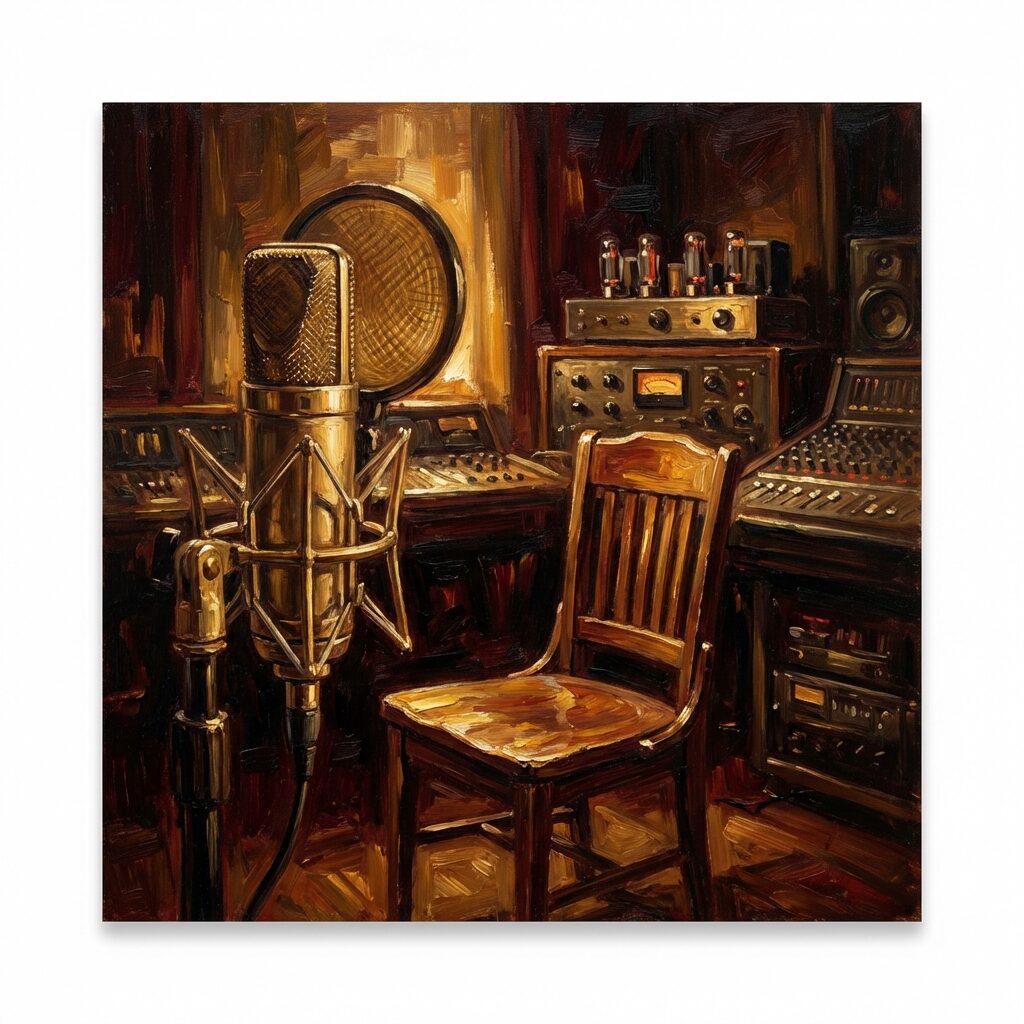
The biggest song of 2011, Grammy Record of the Year, Song of the Year, north of 20 million copies sold, 2.88 billion YouTube views at last count, uses a vocal from a demo session. Not a carefully tracked studio performance. A demo. Recorded in about three hours. The day after Adele’s heart got broken.
You’d expect that to get replaced at some point. And someone did try. Rick Rubin, who stripped Johnny Cash to his bones and reinvented the Red Hot Chili Peppers, signed on to produce Adele’s second album. He pulled together a stacked lineup of session musicians at Shangri-La Studios in Malibu and re-recorded “Rolling in the Deep” from scratch. Technically, the result was excellent. But everyone who heard both versions kept going back to the demo. The industry has a word for this: “demoitis,” the stubborn feeling that the original had something the redo just doesn’t.
Paul Epworth, who co-wrote and produced the original session, put it plainly: “Rick’s version was awesome, but there was a rawness in her original vocal performance and in the stripped-down nature of the demo that was impossible to replicate.”
Sit with that for a second. One of the most accomplished producers in the history of recorded music, working with elite players in a world-class studio, and they couldn’t match what a 21-year-old laid down in a cramped London room while the wreckage of her first real relationship was still fresh. Not because they lacked skill. Because skill wasn’t the point.
Some songs get built. They’re assembled from parts, refined through rounds of tracking, polished until they shine. “Rolling in the Deep” wasn’t built. It was caught, almost by accident, the way you might catch lightning in a photograph you weren’t even trying to frame. How that happened, and why it couldn’t happen twice, gets at something real about what makes a song land the way this one did.
Adele at Twenty-Two
In 2010, Adele was caught between a breakout SNL appearance that put her on America’s radar, a quiet education in roots music picked up on tour buses through the South, and an 18-month relationship about to blow up badly enough to fuel an album.

To understand why “Rolling in the Deep” sounds the way it does, you have to know where Adele was when she made it. Not just emotionally, though we’ll get there. Professionally, musically, all of it feeds into the recording.
By 2010, Adele Laurie Blue Adkins was in a strange middle ground. Her debut album 19, named for her age when she wrote it (as all her albums would be), had done well in the UK and earned her real attention in the States after an October 2008 appearance on Saturday Night Live. That performance aired the same night as a Sarah Palin sketch that drew record ratings, so millions of Americans who tuned in for political comedy got an unexpected introduction to a young woman from Tottenham with an enormous voice. Rick Rubin was one of them. He started attending her shows and eventually approached her after a Hollywood Bowl performance.
But Adele wasn’t yet a phenomenon. She was a rising artist with a well-received debut and a growing American audience, still figuring out who she was going to be on record. And something happened on tour that quietly shaped the sound of her second album: she fell in love with American roots music.
Touring the American South in support of 19, she spent long hours on the bus with her driver, who had a Nashville background and strong opinions about country radio. “We’d rock out late at night, chain smoking and listening to Rascal Flatts,” Adele recalled. That sounds like trivia until you hear what it produced. The country and gospel and blues she absorbed on those drives bled directly into 21. Barry Walters at Rolling Stone would later describe the album’s sound as evidence of “the British knack for rejiggering the sound of American roots music.” He wasn’t wrong, but the roots ran through a tour bus somewhere south of Nashville.
Then there was the relationship. An 18-month affair with a man ten years her senior, her first serious one. She’s never publicly identified him, and I’m not going to speculate. What’s known is that her friends reportedly couldn’t stand him, that it was intense, and that it ended badly enough to fuel an entire album. 21 was named for her age when she wrote it, which means she was processing her life in real time through music, naming each record like a diary entry. At twenty-two, she was about to write the entry that would change everything.
Three Hours After the End
Written and recorded in a single three-hour session the day after Adele’s breakup, the demo featured her stomping in heels for percussion and singing into a Rode Classic 2, a performance that would prove unrepeatable.
The timeline of how “Rolling in the Deep” came into existence is almost too neat to be real. But every source lines up, and the people who were there all tell the same story.
During the relationship, Adele had written a song called “Take It All”, a raw, pleading track that laid bare the trouble she was in. At some point she played it for her boyfriend. The relationship ended shortly after. Within a day, she called Paul Epworth.
Epworth was an interesting choice. He’d built his reputation working with acts like Bloc Party, Florence and the Machine, and Plan B, not exactly Adele’s world. Adele herself had reservations about the pairing given their different styles, but she’d later call the collaboration “a match made in heaven.” The mismatch turned out to be the whole point.
She arrived at Epworth’s London studio wanting to write a ballad. Of course she did, she was heartbroken, and ballads are where heartbroken singers go. Epworth shut that down immediately. “Absolutely not!” he told her. “I want to write a fierce tune.” That refusal matters more than it might seem. If Epworth had said yes to the ballad, 21 might have opened with something lovely and wounded. Instead it opens with a song that sounds like it wants to kick down a door.
The first verse wasn’t entirely new, either. Adele had started writing it roughly two years earlier, in a Chinese restaurant where she’d once performed in 2008. She’d gotten the opening lines down but never finished it. Now, with fresh emotional fuel and Epworth pushing her away from her comfort zone, she completed it in a single session.
After trying various jazz riffs, Adele attempted the first verse a cappella. Epworth grabbed an acoustic guitar and started improvising, finding what he described as “simple Tom Waits-like chugged chords” for the verse and chorus. The song’s architecture emerged in real time, two people reacting to each other in a room, one of them running on adrenaline and hurt.
Adele’s own framing of the song’s emotional engine is about as direct as it gets: “Being told that my life was going to be boring and lonely and rubbish, and that I was a weak person if I didn’t stay in the relationship. I was very insulted, and wrote that as a sort of fuck you.” She also told The Independent: “I never get angry, but I was ready to murder.” Epworth’s take was quieter: “She was obviously quite fragile and very open about what had happened.” Both descriptions seem to have been true at once, she was falling apart and she was dangerous.
The recording details from that session are worth knowing.
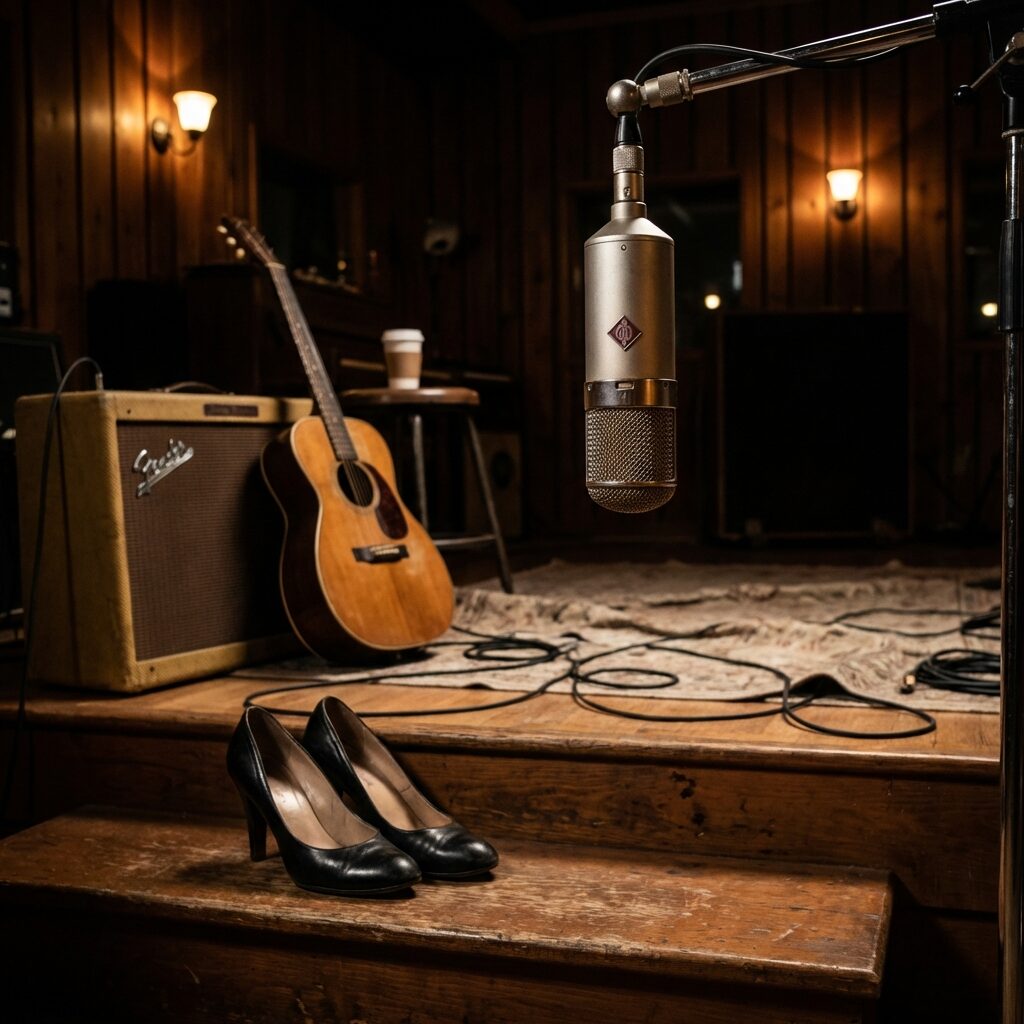
The demo was tracked in Logic. Adele sang into a Rode Classic 2 microphone running through a Universal Audio 6176 preamp. Epworth added “quite a bit of Logic overdrive” on her voice to add harmonics, a subtle distortion that gives the vocal a slightly roughened edge, like someone whose voice has been wrecked by crying but who’s singing anyway. Leo Taylor played drums, using a vintage 1960s marching band bass drum that gives the song its martial, stomping pulse. Adele herself stood on a wooden step in heels, stomping along to add percussive weight. She sang her own backup vocals, layering her voice on top of itself.
Epworth played most of the other instruments: acoustic guitar, electric guitar, bass, percussion, backing vocals. He deliberately kept the arrangement stripped down, partly because the song seemed to want that and partly because Rick Rubin was expected to re-record and produce the final version. What Epworth was making, in his mind, was a sketch. A blueprint. Something to hand off to one of the most celebrated producers alive.
They kept the count-in. They kept the vocal imperfections. They kept everything that sounded like a real person in a real room having a real moment. The whole session took roughly three hours.
What nobody in that room understood yet was that they’d already made the record. The sessions that followed, the all-star musicians, the studio upgrades, the mixing by one of the best engineers in the business, all of it would end up trying to protect what happened in those three hours, not replace it.
Shangri-La Couldn’t Touch It
Rick Rubin brought Chris Dave, Pino Palladino, Matt Sweeney, and James Poyser to Shangri-La to re-record the song. They played the hell out of it, but the technically spotless result couldn’t touch the raw emotion of Epworth’s demo, so Adele went back to the original vocal.
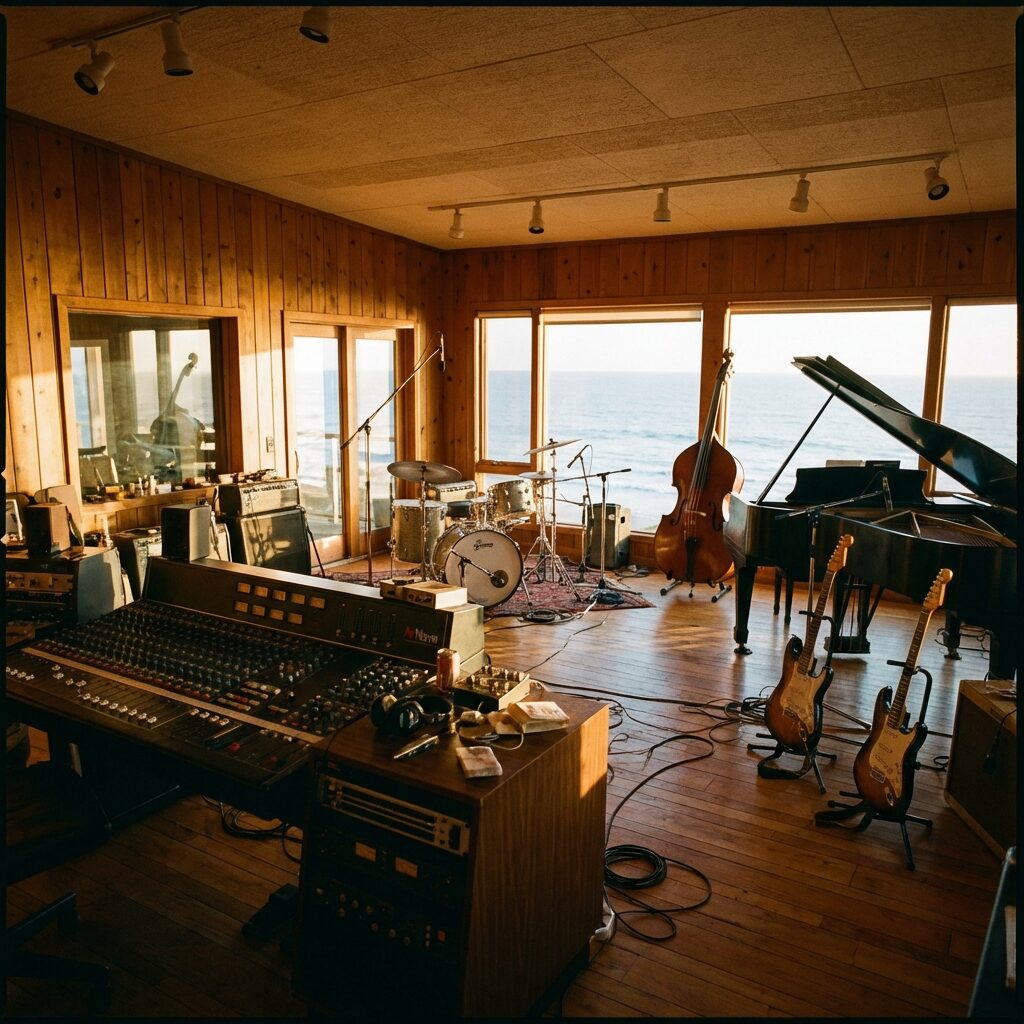
Rick Rubin doesn’t do things small. When he committed to producing 21, he meant it. His interest in Adele went back to that 2008 SNL appearance, and by 2009 he’d been to enough of her shows to know what he was working with. The original plan was for Rubin to produce the entire album himself.
In April 2010, Adele flew to Malibu for sessions at Shangri-La Studios, Rubin’s home base, originally built by The Band in the early ’70s. The same room where they filmed The Last Waltz was now going to host the re-recording of “Rolling in the Deep.”
Look at the band Rubin put together. Chris Dave on drums, the man who’s played with D’Angelo, Robert Glasper, and Adele’s own hero Beyoncé. Matt Sweeney on guitar, known for his work with Bonnie “Prince” Billy and Iggy Pop. James Poyser on piano, a Soulquarian, a Roots member, deep in the architecture of neo-soul. Pino Palladino on bass. Pino Palladino. The guy who replaced John Entwistle in The Who, who played on D’Angelo’s Voodoo, whose fretless bass on Paul Young’s “Every Time You Go Away” is one of the most recognizable bass tones of the 1980s. This wasn’t a session band. This was a supergroup assembled for a single song.
And they played the hell out of it. By every technical measure, the Shangri-La version was excellent. These are musicians who can lock into a groove and make it breathe in ways most players only dream about. The recording sounded clean, heavy, and tight.
It also didn’t have the thing.
You know exactly what I mean by “the thing” even though it’s impossible to define precisely, which is kind of the whole point. The Shangri-La take was a band playing a song. The demo was a woman processing a wound in real time while a producer scrambled to capture it. The difference isn’t about skill. It’s about stakes.
The industry calls this demoitis, and it’s usually written off as an irrational attachment, a psychological quirk where the first version of something imprints so hard that nothing after it can compete, even if the later version is technically better. But with “Rolling in the Deep,” the attachment wasn’t irrational. The demo genuinely had something the re-recording didn’t. Epworth put it plainly: “Rick’s version was awesome, but there was a rawness in her original vocal performance and in the stripped-down nature of the demo that was impossible to replicate.”
Sit with what that sentence is actually saying. One of the best vocal producers alive, working with one of the most powerful voices in pop, couldn’t get a vocal take that matched what happened by accident in a three-hour session. Not because Adele’s voice had changed or her technique had slipped. Because the emotion was different. The day after a breakup, she was singing from inside the experience. Months later, she was performing a memory of it. You can hear the difference.
So Adele went back to Epworth. Rather than starting over, they upgraded the demo at Eastcote Studios in London, doing final tracking in Pro Tools. They polished the instrumental bed, added production elements, tightened the arrangement. But the vocal, the vocal you hear on the album, the vocal that won Record of the Year, the vocal that 20 million people bought, is still from that first session. Still the Rode Classic 2 through the UA 6176. Still the count-in and the imperfections and the sound of a woman who was ready to murder.
It turns out vulnerability has a sound. And you can’t summon it on cue, not with the best musicians in the world, not in the best studio money can buy, not with Rick Rubin running the board.
How the Song Actually Works
Written in C minor at 105 BPM, the song gets its power from holding back in the verses with bare power chords and harmonic ambiguity, then letting the chorus blow the doors open with layered production. Tom Elmhirst’s mix adds sub-bass weight and surgical vocal processing that makes the whole thing hit you physically.
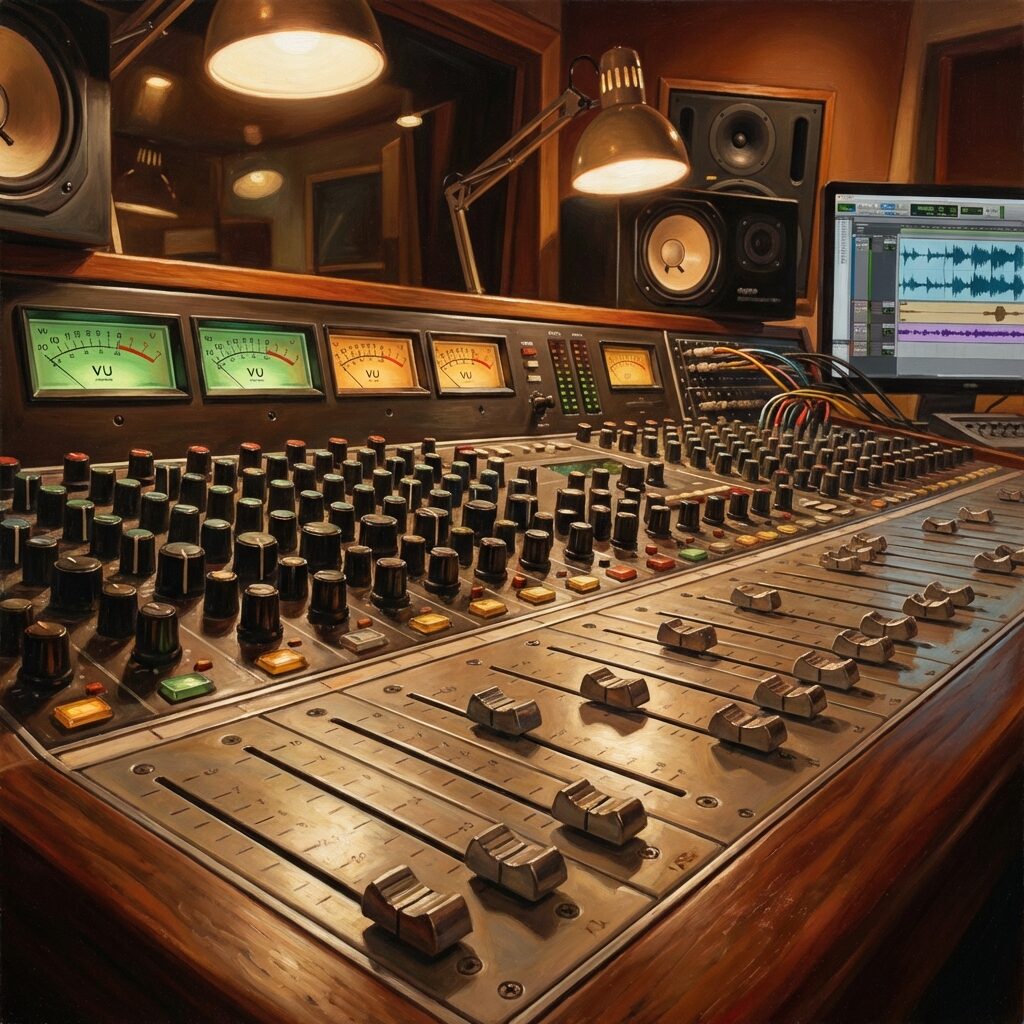
Okay, let’s get into the guts of this thing. Because “Rolling in the Deep” doesn’t just feel powerful, it’s built to be powerful, and the construction rewards close listening. Key of C minor. 105 BPM. 3 minutes and 48 seconds. Those are the numbers. Here’s what the numbers don’t tell you.
The arrangement runs on restraint. The song withholds. Listen to the verses: you get a sparse, mono acoustic guitar playing eighth notes with palm muting. Power chords, C5, G5, B-flat 5, deliberately avoiding full triads. When you play a power chord instead of a full major or minor chord, the listener’s ear fills in the gap. It creates tension because the music isn’t telling you how to feel yet. It’s holding something back.
Against that skeletal guitar, Adele’s vocal does all the work. Jason Lipshutz at Billboard described how “she gracefully lingers on the last line of the verses and attacks the sorrowful chorus’ first words, ‘We could have had it all,’ head on.” Restraint in the verse, attack in the chorus, and the vocal mirrors exactly what the instruments are doing.
The pre-chorus adds a light keyboard and hi-hat, just enough to signal that something’s building. Then the chorus hits. Stereo strumming replaces the mono guitar. Pounding piano eighth notes come in like a heartbeat that’s lost control. The martial stomping percussion, that’s Adele in her heels on the wooden step, plus Leo Taylor’s vintage marching band bass drum, drives underneath everything. Layered vocals stack on top of themselves. Bobby Owsinski, the production analyst, noticed something unusual about the structure: there’s no distinct intro, no interludes, no outro. The song just launches. You’re in it from the first strum, and it doesn’t let you out until it’s done with you.
Underneath the obvious elements, there’s Epworth’s electric guitar lurking in the mix. He described it as creating a “seething tension,” which is exactly right. You might not consciously hear it, but you’d feel its absence. Spring reverbs recorded at the Dap Kings’ studio add analog warmth. And then there’s what Tom Elmhirst did in the mix.
Elmhirst, who mixed the track on a Neve VR console, added sub-bass to the bass track that creates what he called “an unnatural and wicked low end in the chorus.” That’s the physical sensation you get in your chest when the chorus hits. It’s not just loud, it’s low in a way that the acoustic instruments alone couldn’t achieve. The drums are kept drier in the verses and the reverb comes up in the chorus and bridge, which is another way the song creates the feeling of opening up, of a room expanding around you.
For the gear nerds, and I know you’re out there, here’s what Elmhirst did to Adele’s vocal. The lead vocal chain: Pultec EQ, Urei 1176, Tube-Tech CL1B on the sub insert. Then Waves Q6 notching out specific frequencies at 930 Hz, 1634 Hz, and 3175 Hz with narrow Q settings. Three separate de-essers hitting at 4185 Hz, 7413 Hz, and 7712 Hz. Additional Waves Q10 notching at 537 Hz, 2973 Hz, and 10899 Hz at maximum Q. A Sonnox Oxford EQ cutting below 100 Hz and boosting around 8 kHz. Plus a Digirack EQIII, Lo-Fi plug-in, and Trim for good measure. That is surgical work, the kind of processing designed to let a voice cut through a dense arrangement without harshness, to make it feel present and close even when the instrumental is at full roar.
The pre-chorus chord movement is worth noting too. It runs A-flat (the sixth) to B-flat (the seventh) to G minor (the fifth) and back, building tension before resolving, or rather not quite resolving, into the chorus. The chorus itself moves through C minor, B-flat, A-flat major seventh, and B-flat again. That major seventh on the A-flat is a beautiful choice. It adds a shade of warmth and complexity to what could otherwise be a straightforward minor-key progression. It’s the kind of detail you feel rather than analyze, unless you’re sitting with a guitar trying to figure out why the chorus hits so hard.
Adele herself described the song as “a dark blues-y gospel disco tune.” That sounds like she’s throwing darts at a genre board, but listen again and she’s right. The stomp is disco. The chord voicings lean blues. The vocal delivery is pure gospel. And the darkness is just Adele being Adele. Simon Reynolds in The New York Times heard “1960s rhythm-and-blues tightened up with modern production.” Critics also caught a hint of Wanda Jackson’s dirty-blues growl in her delivery. However you want to file it, the song sits between genres in a way that probably explains why it connected with such a weirdly broad audience.
Fire, Scars, and a Ship Laid Bare
From the title’s origin in British slang to the accidental brilliance of the clean version’s nautical metaphor, the lyrics walk a razor line between heartbreak and weaponized empowerment.
There’s a fire starting in my heart
Reaching a fever pitch and it’s bringing me out the dark
Finally, I can see you crystal clear
Go ahead and sell me out and I’ll lay your shit bare
See how I’ll leave with every piece of you
Don’t underestimate the things that I will do
There’s a fire starting in my heart
Reaching a fever pitch and it’s bringing me out the dark
[Pre-Chorus]
The scars of your love remind me of us
They keep me thinkin’ that we almost had it all
The scars of your love, they leave me breathless
I can’t help feeling
[Chorus]
We could’ve had it all (You’re gonna wish you never had met me)
Rolling in the deep (Tears are gonna fall, rolling in the deep)
You had my heart inside of your hand (You’re gonna wish you never had met me)
And you played it to the beat (Tears are gonna fall, rolling in the deep)
[Verse 2]
Baby, I have no story to be told
But I’ve heard one on you, now I’m gonna make your head burn
Think of me in the depths of your despair
Make a home down there, as mine sure won’t be shared
[Pre-Chorus]
(You’re gonna wish you never had met me) The scars of your love remind me of us
(Tears are gonna fall, rolling in the deep) They keep me thinkin’ that we almost had it all
(You’re gonna wish you never had met me) The scars of your love, they leave me breathless
(Tears are gonna fall, rolling in the deep) I can’t help feeling
[Chorus]
We could’ve had it all (You’re gonna wish you never had met me)
Rolling in the deep (Tears are gonna fall, rolling in the deep)
You had my heart inside of your hand (You’re gonna wish you never had met me)
And you played it to the beat (Tears are gonna fall, rolling in the deep)
Could’ve had it all
Rolling in the deep
You had my heart inside of your hand
But you played it with a beating
[Bridge]
Throw your soul through every open door (Ooh woah, oh)
Count your blessings to find what you look for (Woah)
Turn my sorrow into treasured gold (Ooh woah, oh)
You’ll pay me back in kind and reap just what you’ve sown
[Breakdown]
(You’re gonna wish you never had met me)
We could’ve had it all (Tears are gonna fall, rolling in the deep)
We could’ve had it all, yeah (You’re gonna wish you never had met me)
It all, it all, it all (Tears are gonna fall, rolling in the deep)
[Chorus]
We could’ve had it all (You’re gonna wish you never had met me)
Rolling in the deep (Tears are gonna fall, rolling in the deep)
You had my heart inside of your hand (You’re gonna wish you never had met me)
And you played it to the beat (Tears are gonna fall, rolling in the deep)
Could’ve had it all (You’re gonna wish you never had met me)
Rolling in the deep (Tears are gonna fall, rolling in the deep)
You had my heart inside of your hand (You’re gonna wish you never had met me)
But you played it, you played it, you played it
You played it to the beat

The first thing you hear Adele sing, after that skeletal guitar strum and before the song has announced what it’s going to be, is this: “There’s a fire starting in my heart / Reaching a fever pitch and it’s bringing me out the dark.” Listen to what that image is actually doing. The fire isn’t destructive. It’s illuminating. Anger as a way of seeing clearly for the first time. She’s not burning down; she’s burning through. That’s the entire emotional arc of the song compressed into its opening couplet.
The title itself carries more weight than you’d expect. “Rolling in the deep” adapts the British slang phrase “roll deep,” which means to always have someone who has your back. Your crew, your person, the one who’s there. Adele explained it to Rolling Stone: “That’s how I felt in the relationship… I thought that’s what I was always going to have, and it ended up not being the case.” So the title isn’t about drowning in emotion, though it sounds like it could be. It’s about the loss of security. The person who was supposed to be your ride-or-die turned out to be neither.
Then there’s this line: “You had my heart inside of your hand / And you played it to the beat.” Two meanings stacked on top of each other. “Played” as in manipulated, obviously. But “played it to the beat” adds something else: casually, rhythmically, like it was nothing. Like her heart was a drum he was keeping time with. That kind of double meaning doesn’t feel written. It feels found, the way the best lyrics do, like the language itself knew what it wanted to say and just needed someone angry enough to say it.
There’s also the question of what might be the song’s most famous line, and it comes in two versions. The explicit lyric, the one Adele actually wrote, is “Go ahead and sell me out and I’ll lay your shit bare.” The clean version, necessary for radio and certain markets, swaps it to “I’ll lay your ship bare.” Here’s the thing: the euphemism accidentally created a richer image. Laying a ship bare is a real nautical concept, stripping a vessel down to its hull, leaving it exposed and unable to sail. It’s a threat that carries the weight of actual metaphor in a way that “shit” simply doesn’t. Sometimes the radio edit wins.
The tone of the lyrics walks a razor line that most breakup songs can’t manage. It’s heartbroken and empowering at the same time, wounded and weaponized. “We could have had it all” is a lament. “The scars of your love remind me of us” is damage assessment. “Think of me in the depths of your despair” is a curse. Adele herself framed it plainly: she wanted to “get the fuck out of her house instead of begging him to come back.” The song does both at once. It’s the sound of someone leaving while looking over their shoulder, furious at what she sees and furious at herself for looking.
Jurassic Park to the Tenth Power
Director Sam Brown turned clichés into iconic imagery, vibrating water glasses, a burning paper city, a dancer improvising in talcum powder, and the result has over 2.2 billion YouTube views to show for it.
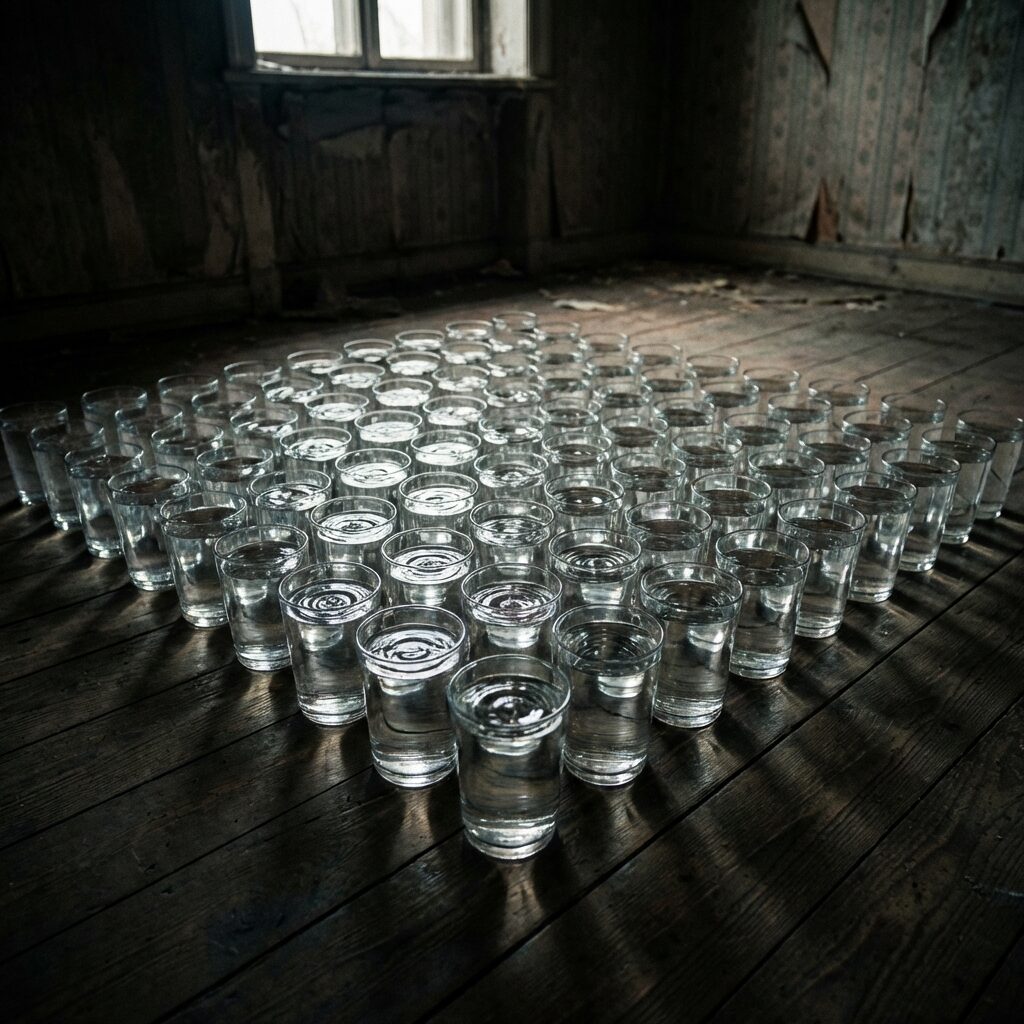
The music video for “Rolling in the Deep” shouldn’t work as well as it does. On paper, the concept sounds almost absurdly simple: Adele sits in a chair in an abandoned house while symbolic things happen around her. No narrative arc. No costume changes. No choreography. And yet it’s one of the most-watched music videos ever made, and the imagery has become so iconic that people who’ve never heard the song would probably recognize the water glasses.
Adele sought out director Sam Brown specifically after seeing his video for Jay-Z’s “On to the Next One”, a stark, black-and-white piece full of arresting visual contrasts. She wanted that same energy for her song. Brown’s concept was, in his words, “finding different ways of expressing the anger in the words… I was wanting to take well-trodden clichés from films and videos and amplify them to a crazy extreme.”
And that’s exactly what he did. The water glasses, hundreds of them, arranged on the floor, vibrating to the pulse of the bass drum, are the video’s signature image. Billboard called it “like Jurassic Park to the tenth power,” which is the kind of comparison you earn, not manufacture. The glasses tremble with every kick drum hit, making the song’s power visible. It’s a simple practical effect, but it gets at something words can’t: this music is a physical force. You don’t just hear it. It moves things.
The other visuals go further. Plates smash against a wall. A meticulously constructed miniature paper city gets set ablaze by bursting light bulbs, burning down what you’ve built together, rendered literally. And dancer Jennifer White improvises in talcum powder, her movements captured across four separate takes, each one unique. No choreography. No rehearsal. Just a body responding to the music, leaving ghostly trails in the white powder. Like what Adele did vocally in the demo: an unrepeatable performance caught in the moment.
The video was filmed in July 2010 and premiered on Channel 4 that December. It’s since accumulated over 2.2 billion YouTube views, making it Adele’s second video to cross the 2 billion mark after “Hello.” No special effects, no celebrity cameos, no real plot. Just a strong concept, executed cleanly. Apparently that’s enough.
The Numbers That Stagger
The first song to sell 5 million digital copies, a 7-week Billboard #1, and the engine behind the best-selling album of the 21st century, the numbers behind “Rolling in the Deep” are hard to believe, and harder to repeat.

I don’t usually lead with chart statistics. Numbers without context are just trivia. But the commercial performance of “Rolling in the Deep” tells a story about scale that’s worth sitting with, because nothing like it had happened before, and the music industry has been trying to replicate it ever since.
The song became the first in digital history to sell 5 million copies, hitting that mark in just 35 weeks, faster than anything before it. By February 2012, US digital sales alone had surpassed 8.7 million copies. Worldwide, the number would eventually cross 20.6 million. It sat at number one on the Billboard Hot 100 for seven consecutive weeks between May and July 2011, spent 65 total weeks on the chart, and was named the Year-End number one single for 2011. Longest-running number one of the year.
Billboard called it “the biggest crossover hit in the United States from the past 25 years.” That sounds like magazine copy, but the data backs it up, the song simultaneously topped the pop chart, the adult pop chart, and the adult contemporary chart, which almost never happens because those audiences want different things. “Rolling in the Deep” didn’t care what you usually listened to. It just walked in and sat down.
On adult contemporary radio alone, it spent 19 consecutive weeks at number one. Its peak sales week moved 294,000 digital copies. It reached number one in at least 11 countries, with some sources counting as many as 13. In South Korea, a market with completely different pop sensibilities, it sold 4.25 million digital downloads.
And then there’s the album. 21 sold over 31 million pure copies worldwide, making it the best-selling album of the 21st century. It topped the Billboard 200 for 24 non-consecutive weeks and spent 560 total weeks on the chart. That’s nearly eleven years. Adele became the first artist in Nielsen SoundScan history to simultaneously hold the year’s number one album, number one single, and number one music video. She was the first woman to top Billboard’s Artist of the Year, Billboard 200 Album of the Year, and Hot 100 Song of the Year in the same calendar year.
“Rolling in the Deep” was the engine behind all of it. Lead single, opening track, the thing that told the world what 21 was going to be. Every other hit from the album, “Someone Like You,” “Set Fire to the Rain,” “Rumour Has It”, rode in the wake of what this song built. As of now, it has 1.14 billion streams on Spotify and roughly 2.88 billion views on YouTube. A demo vocal, still doing its job fifteen years later.
The Night She Came Back
Four months after vocal cord surgery that nearly ended her career, Adele sang “Rolling in the Deep” at the Grammys, her first live performance since the operation. She swept all six of her nominations and left Paul McCartney on his feet.
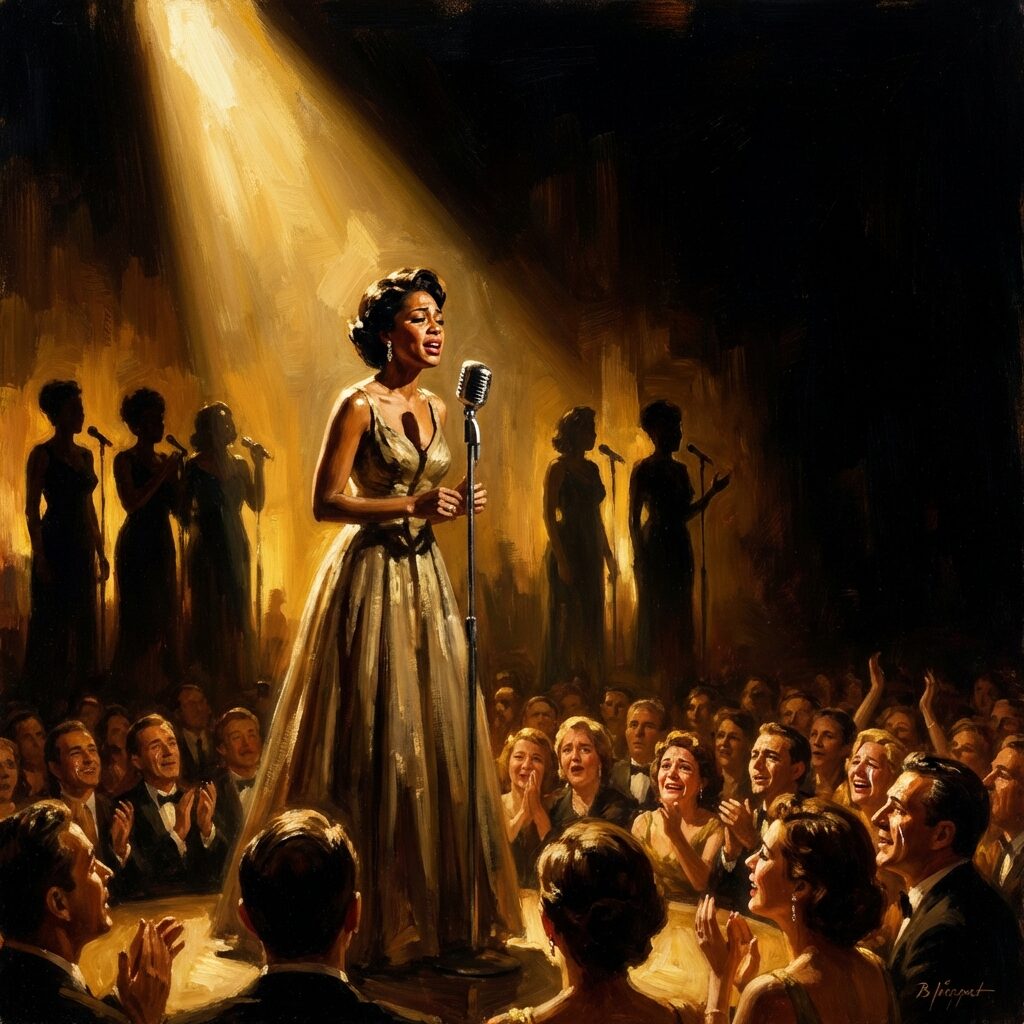
If “Rolling in the Deep” had only been a massive hit, it would still be worth writing about. But the song has a chapter that turns it into something else entirely, and it happened on February 12, 2012, at the 54th Grammy Awards at Staples Center in Los Angeles.
To understand what that night meant, you need to know what came before it. In May 2011, at the peak of the song’s chart dominance, Adele was diagnosed with a vocal hemorrhage. She recovered enough to keep performing, but then suffered a second hemorrhage that forced her to cancel the remainder of her tour. In October 2011, Dr. Steven Zeitels performed surgery on her vocal cords in Boston. Her career was in real jeopardy. The voice behind the biggest recording of the year might never sound the same again.
The Grammy performance was her first time singing in front of an audience since the operation, the one that was supposed to save her voice, or confirm that it couldn’t be saved. Nobody in that room knew what was going to come out when she opened her mouth.
The staging was stripped down on purpose: Adele and four backup singers. No pyrotechnics, no dancers, no set pieces. She opened with the chorus a cappella, “We could have had it all”, with just those four voices behind her. Then the band came in and the full arrangement built around her. Start spare, let the voice do the work, then let everything else catch up.
When the cameras panned the audience, Paul McCartney was on his feet. Rihanna had her fingers pressed to her temples, looking physically affected by what she was hearing. The applause when Adele finished wasn’t polite industry clapping. It was a sustained standing ovation. Adele mouthed “phew” and then “thank you,” which might be the most British possible response to a room full of the biggest names in music losing their minds.
She won six of her six nominations that night, tying the record Beyoncé had set for most Grammy Awards won by a female artist in a single ceremony. “Rolling in the Deep” alone accounted for three of them: Record of the Year, Song of the Year, and Best Short Form Music Video. Only one other song in Grammy history has swept all three categories, “We Are the World” in 1986. Paul Epworth also won Producer of the Year, Non-Classical.
Her acceptance speech was perfect in its understatement: “I can’t believe I’m getting emotional already. And seeing as it’s a vocal performance, I need to thank my doctors, I suppose, who brought my voice back.” I suppose. As if thanking the surgeon who saved your instrument from permanent damage just occurred to her on the spot. As if she hadn’t spent months wondering whether this moment would ever happen. The understatement of the decade, delivered with the same honesty that made the demo great in the first place.
When Aretha Calls It Special
From Aretha Franklin’s final single to Chester Bennington singing Adele with no armor to over 350,000 covers worldwide, “Rolling in the Deep” became a song people felt belonged to them as much as to the woman who wrote it.
You can measure a song’s reach by its chart performance. You can measure its influence by who covers it. And when Aretha Franklin covers your song, that’s something else.
Franklin first encountered “Rolling in the Deep” in the most ordinary way possible: she saw a promo where “kids were on a bus singing ‘We could’ve had it all.'” She was intrigued enough to learn the song and eventually record it as the lead single from Aretha Franklin Sings the Great Diva Classics in 2014, medleying it into “Ain’t No Mountain High Enough.” She compared Adele’s songwriting to Carole King’s work on Tapestry, telling Rolling Stone: “She’s a very, very fine, solid writer. She reminds me how Carole King used to be.” From Aretha Franklin, that’s not a compliment. It’s a coronation.
The cover made Franklin the first female artist, and fourth overall, to place 100 songs on Billboard charts. It became her final single before she retired in 2017 and died in 2018. Mix engineer Tom Elmhirst, who’d mixed the original, put it simply: “When Aretha Franklin covers your song, that’s when you know it’s special.”
Franklin was the most famous name to record it, but “Rolling in the Deep” kept finding new lives through other artists. Jamie xx created a shuffle remix on XL Records in 2011, stripping the song down to its rhythmic skeleton and reassembling it for dance floors. Donald Glover, performing as Childish Gambino, then rapped a “male response” over the Jamie xx beat, creating a three-link chain from original to remix to reinterpretation. Songs don’t usually do that. Most covers are endpoints. This one kept spawning.
Chester Bennington of Linkin Park performed a stripped-down, soulful live cover at The Roundhouse in London during the A Thousand Suns world tour and at the iTunes Festival in 2011. The frontman of one of nu-metal’s defining bands, singing Adele with no irony and no armor. It worked, which says more about the song than any chart position does. John Legend recorded an R&B a cappella version for SoundCloud. Glee had Lea Michele and Jonathan Groff cover it, and their version charted at number 29 on the Hot 100. Celine Dion added it to her Las Vegas residency. Even KIDZ BOP covered it, which is its own form of cultural canonization, I suppose.
The total count, as of the last reliable survey: over 350,000 covers worldwide. A 2012 YouTube mashup compiled 71 different versions into a single video. Three hundred and fifty thousand people heard this song and thought, I need to sing this myself. That’s not fandom. That’s a song that’s passed into the commons, something people feel belongs to them as much as it belongs to the woman who wrote it.
What the Demo Knew
Fifteen years and 20 million copies later, you’re still listening to a three-hour demo, proof that vulnerability is the one thing even the best musicians in the world can’t fake.
Here’s what it comes down to. Rick Rubin, a man who has produced records for Johnny Cash, Jay-Z, the Beastie Boys, Metallica, the Red Hot Chili Peppers, Kanye West, and roughly half the Rock and Roll Hall of Fame, assembled a band of elite musicians at one of America’s most legendary studios, and they produced a version of “Rolling in the Deep” that everyone agreed was excellent. And then everyone involved threw it away, because a 21-year-old woman had already made the version that mattered, in three hours, the day after her life fell apart.
People will call that demoitis, a quirk of psychology where you get attached to the first version of something. I don’t buy it. This is a story about what music actually is when it’s working at its highest level. The technically perfect version isn’t always the right one. Sometimes the take with the count-in left in, the vocal imperfections kept, the heels stomping on a wooden step because nobody had a proper percussion setup, sometimes that’s the one. The cracks are where the truth lives.
Adele said something about the session that I keep coming back to: “He brought a lot out of me. He brought my voice out as well, there’s notes that I hit in that song that I never even knew I could hit.” She’s talking about Epworth, but she might as well be talking about the breakup itself. The heartbreak didn’t just give her something to sing about. It unlocked capabilities she didn’t know she had. The pain opened a door to a room in her voice she’d never visited, and she walked through it in front of a Rode Classic 2 microphone while the wounds were still fresh.
Fifteen years later. Over 20 million copies. Nearly 3 billion YouTube views. Grammy Record of the Year. Covered by the Queen of Soul herself. Every single copy, every single stream, every single time you’ve heard it in a bar or a car or coming through someone’s phone speaker on public transit, you’re hearing a woman who walked into a studio the day after her heart broke, stomped her heels on a wooden step, and just sang.
That’s the demo that beat Rick Rubin. The take you can’t redo. And when Adele opens her mouth on the first line, “There’s a fire starting in my heart”, you believe her. Not because she’s a great singer, though she is. Because she meant it. You can hear the difference.
🎤 Did you know? The vocal on Adele’s “Rolling in the Deep” is from a demo recorded the day after her breakup. Rick Rubin tried to re-record it with an all-star band at Shangri-La — and couldn’t beat it. #Adele #RollingInTheDeep #21 https://bit.ly/4bJ9dGN

Click to Tweet