Britney Spears | Toxic
Three Rejections and a Masterpiece
Rolling Stone’s #9 song of the 21st century was turned down by Janet Jackson, Kylie Minogue, and nearly killed by Britney’s own label, and yet it became the consensus greatest pop single of its generation.
Rolling Stone’s ninth-greatest song of the twenty-first century was turned down by two major artists and nearly buried by the label that eventually released it. Sit with that for a second.
The song was written with Janet Jackson in mind. Offered to Kylie Minogue, who balked at the title. Then pitched to Britney Spears, whose own A&R team at Jive Records wanted literally anything else as the second single from In the Zone, “(I Got That) Boom Boom,” “Outrageous,” basically any track that didn’t sound like a Bollywood spy movie having a nervous breakdown at 143 beats per minute.
And yet.
If you’ve heard “Toxic”, and you have, because it has nearly 1.9 billion Spotify streams and counting, you know it in your body before you know it in your brain. Those searing, swooping strings that hit six seconds in. The breakbeat underneath, frenetic and relentless. Britney’s voice arriving like a whisper from someone who’s already made up her mind about something dangerous: Baby, can’t you see I’m callin’? The whole thing is three minutes and eighteen seconds that sound like they’re about to fly apart at any moment but never do.
Britney herself has called it her favorite song from her entire career. Not “…Baby One More Time,” the song that made her. Not “Oops!…I Did It Again,” the one that proved she wasn’t a fluke. “Toxic.” The song three people didn’t want.
So how does a song like that almost not exist? That’s the story. And it starts in a Stockholm hotel room with a songwriter who couldn’t sleep.
Seven Days of Sheer Torture
Cathy Dennis flew to Stockholm to write with Janet Jackson in mind and spent seven agonizing days unable to finish the lyrics, finally recording the vocal on the morning of her flight home.

By the early 2000s, Cathy Dennis had co-written Kylie Minogue’s “Can’t Get You Out of My Head” and held six Ivor Novello Awards, more than any woman in the history of the prize. She was the kind of songwriter who could make a global smash sound like it wrote itself. When Dennis flew to Stockholm for a ten-day writing session at Murlyn Studios, she had a target in mind: Janet Jackson.
Not a commission. Not a formal request from Jackson’s team. Dennis had met with Janet, possibly in London or New York, and she went to Sweden, as she later put it, “to write with Janet Jackson in mind.” Waiting for her at Murlyn were Christian Karlsson and Pontus Winnberg, the Swedish production duo known as Bloodshy & Avant, along with guitarist Henrik Jonback.
The melody came first. That much was easy. If you hum the vocal line of “Toxic” right now, you’ll notice it moves in these angular, unexpected intervals, dizzying jumps that cover a range from F3 to G5. It sounds simple because it’s catchy, but try singing it cold and you’ll realize the thing is doing something weird. Dennis had that melody locked. The problem was everything else.
“That was sheer torture,” Dennis told Songwriting Magazine in 2013. “I beat myself up for seven days, not sleeping. The melody came first, then I had this puzzle of trying to fit words to the right number of syllables. It was really weird. I kept writing and then re-editing myself again, and again, and again.”
They started “Toxic” on day one of seven working days. By day two, Dennis couldn’t finish the lyrics. She told her collaborators to move on: “Look, let’s start on something else.” The team wrote three other songs that week. But Dennis couldn’t let it go. In her hotel room at night, she kept editing, fitting syllables to that insistent melody, trying to find the words that would lock into its rhythm without fighting it.
The lyrics to “Toxic” feel effortless, short, punchy, almost throwaway in their cool detachment. A guy like you should wear a warnin’.I took a sip from my devil’s cup. They land on the beat like they were always there. Seven sleepless days to get there.
Day seven was D-Day. Dennis was flying back to England that morning. She knew it was now or never, went into the studio, and finally recorded the vocal. Whatever had been blocking her for a week broke loose in those final hours.
Meanwhile, Bloodshy & Avant were building the track around her. Their approach was melody-first: start with a strong melodic idea, then layer everything else on top. For “Toxic,” they’d found something extraordinary to layer, a sample from “Tere Mere Beech Mein,” a 1981 Bollywood track composed by the legendary Laxmikant-Pyarelal and sung by Lata Mangeshkar for the Hindi film Ek Duuje Ke Liye. Those swooping, urgent strings. Karlsson and Winnberg looped them over breakbeats and surf guitar with aggressive twang: dance-pop meets bhangra meets Dick Dale meets drum-and-bass. At 143 BPM, a tempo that’s practically sprinting, it felt like a car chase in a movie that didn’t exist yet.
A song that sounds like pure adrenaline, the most effortless rush in 2000s pop, was born from a songwriter staring at a hotel room ceiling in Stockholm, shuffling syllables at 2 a.m. for a week straight. The ease you hear in “Toxic” is a lie, and a well-earned one.
The Fish That Got Away
Janet Jackson never recorded it, Kylie Minogue rejected it because she didn’t like the word “Toxic,” and Jive Records tried to bury it, but Britney Spears heard it once and fought her own label to make it a single.

So now you’ve got this song. This brilliant, completely weird song. And nobody wants it.
The Janet Jackson connection never materialized. Jackson went on to work with Cathy Dennis on a different track, “Island Life,” which ended up on Janet’s Damita Jo album in 2004. It’s a perfectly fine song. You’ve never hummed it in the shower. The demo for “Toxic” sat there, orphaned.
Next up: Kylie Minogue. This made sense on paper. Dennis had already given Minogue “Can’t Get You Out of My Head,” which spent four weeks at number one in the UK and went top five in basically every country with a radio station. Minogue was working on her ninth studio album, Body Language, and the team offered her the track. Kylie listened to a snippet of it in the record-company offices.
She passed.
Her reason is so perfectly human it stings a little. “I was like, ‘Toxic? I don’t know if I want a song called Toxic,'” she later told The Sun. Not the melody. Not the production. Not the Bollywood strings or the breakbeat. The title. She just didn’t want a song called “Toxic.”
You can almost understand it. In 2003, Kylie Minogue was deep into sleek, sophisticated Euro-pop. “Toxic” is not sleek. “Toxic” is a song that grabs you by the collar and drags you through a Bollywood action sequence. It didn’t fit the vibe. But still.
Enter Christian Karlsson’s back channel. While working at a studio in Los Angeles on another project in 2002, Karlsson had received a visit from Britney Spears’ A&R representative, something he later acknowledged was a “no-no,” since “you’re not supposed to invite anyone from another label” while you’re working for a different artist. But that visit got the connection made. Karlsson was eventually brought in to work on songs for Spears’ fourth album, In the Zone, and while he was already in the studio with Britney on other tracks, he pitched her “Toxic.”
Spears was immediately “down.” She heard it and she wanted it. But wanting it and getting it released were two different problems.
Jive Records, Britney’s label, the company whose entire financial model basically ran on Britney Spears being Britney Spears, didn’t want “Toxic” as a single. They wanted “(I Got That) Boom Boom” or “Outrageous” as the second single from In the Zone. These were safer choices. More conventional. More obviously radio-friendly. “Toxic” was… what, exactly? A dance-pop song with Indian strings and spy-movie energy? How do you even describe that to a program director?
Britney fought them. In December 2003, MTV News reported that after the label tried to choose between the other two options, Spears had overruled them and selected “Toxic.” She described it simply: “It’s an upbeat song. It’s really different, that’s why I like it so much.”
As for Kylie, she took it well. Years later, reflecting on the song that got away, she said: “I wasn’t at all angry when it worked for her. It’s like the fish that got away. You just have to accept it.” A pretty generous take from someone watching a song she rejected go on to become maybe the most recognizable pop single of the 2000s.
Spy-Movie Calculus
Beneath its pop surface, “Toxic” uses tritone substitutions, Ukrainian Dorian mode, and a Bollywood sample that still has the original guitar bleeding through, making it far stranger than anything else on the radio in 2004.

Let’s talk about why the gatekeepers kept passing on this song. Because “Toxic” is, by any analytical measure, weird. It’s a pop song doing things pop songs aren’t supposed to do, and doing them so confidently that most listeners never notice.
The Sample
That string riff, the one you’re hearing in your head right now, is sampled from “Tere Mere Beech Mein” (“Between You and Me”), a song from the 1981 Bollywood film Ek Duuje Ke Liye. The original was composed by Laxmikant-Pyarelal, who scored over 700 Hindi films between 1963 and 1998, and sung by Lata Mangeshkar and S.P. Balasubrahmanyam. The lyricist, Anand Bakshi, won a Filmfare Award for Best Lyricist for his work on the film.
Bloodshy & Avant sampled the string passage and looped it into the backbone of “Toxic.” But here’s a detail that production nerds will love: if you listen carefully, you can still hear the original guitar from the 1981 recording bleeding through underneath the strings. The producers apparently couldn’t fully EQ it out of the sampled riff. It’s right there in the mix, a ghost of the original track haunting the new one. The liner notes credit the strings to “Stockholm Session Strings,” but the sampled Bollywood strings are doing the real work on those passages everyone remembers.
The Genre Collision
Try describing “Toxic” to someone who’s never heard it. Go ahead, I’ll wait. Dance-pop? Sure. But also bhangra-influenced. With surf guitar, that aggressive, twangy riff that Henrik Jonback lays down. Over breakbeats. At 143 BPM, which is allegro, fast, quick, and bright in classical tempo markings. For reference, most dance-pop sits around 120-130 BPM. “Toxic” is practically sprinting past its peers.
The whole thing sounds like a spy-movie soundtrack that accidentally became the biggest pop song of 2004. And that cinematic quality isn’t a happy accident. The strings pull you forward. The breakbeat won’t let you stop moving. The surf guitar makes it feel dangerous in a retro, Tarantino kind of way. And then Britney’s breathy, whispery vocal sits on top of all of it like she’s the calmest person in a room that’s on fire.
The Theory
If you want to understand why “Toxic” confused industry gatekeepers, look at what it’s actually doing harmonically. Hooktheory, one of the more rigorous music-theory analysis sites out there, has broken the song down section by section, and their verdict is blunt: “Toxic” is “significantly more complex than the typical song, having above average scores in Chord Complexity, Melodic Complexity, Chord-Melody Tension, Chord Progression Novelty and Chord-Bass Melody.”
Put plainly: this song is doing more, in more unusual ways, than almost anything else on the radio.
The verse uses inverted chords and borrowed chords, chords pulled from outside the song’s home key to create tension. The pre-chorus is built on the fourth mode of G Harmonic Minor, which theorists call the Ukrainian Dorian mode. If you just did a double-take at seeing “Ukrainian Dorian mode” in a Britney Spears analysis, welcome to “Toxic.” The chorus deploys tritone substitutions, a jazz technique where you replace an expected chord with one a tritone away, creating this slippery, disorienting feeling that something is constantly shifting under your feet. Add in seventh chords, secondary dominants, altered chords, and real chord-melody tension throughout, and you’ve got a pop song doing spy-movie calculus while pretending to be simple.
The key itself is a matter of some debate. Official sheet music says G minor. Multiple digital analysis tools identify F minor. Hooktheory analyzes sections in C minor and C Dorian. This isn’t unusual for a harmonically complex song; different sections can operate in different tonal centers, and your analytical framework determines what you call “the key.” But the disagreement itself tells you something: “Toxic” doesn’t sit still.
The Voice
Classic FM, not typically your go-to source for Britney Spears analysis, but hear them out, made an observation about the vocal performance worth sitting with: “The melody of ‘Toxic’ is very angular and would stretch any singer, but Britney simply nails those dizzying jumps, in the coolest sotto voce.” She moves from chest voice in the verse to falsetto in the pre-chorus, combining both techniques in the chorus, covering a range from F3 to G5. And she does all of it in this breathy, detached, almost bored delivery that makes the whole thing sound easy.
It isn’t easy. That’s the trick.
And if you’re one of those people who assumed it was all Auto-Tune, fair enough, that was a common take in 2004. But in 2017, Britney’s original demo for “Toxic” leaked on YouTube, containing her unedited vocals without Auto-Tune processing. The reception was generally positive, with outlets noting that the raw vocals sounded remarkably close to the final version. The narrative about Britney as a studio construction doesn’t hold up here. She sang this thing.
Addiction as Architecture
Cathy Dennis built “Toxic” around a single extended metaphor, love as chemical dependency, and Britney’s own reading of the narrator as a villain rather than a victim quietly rewires the whole song.
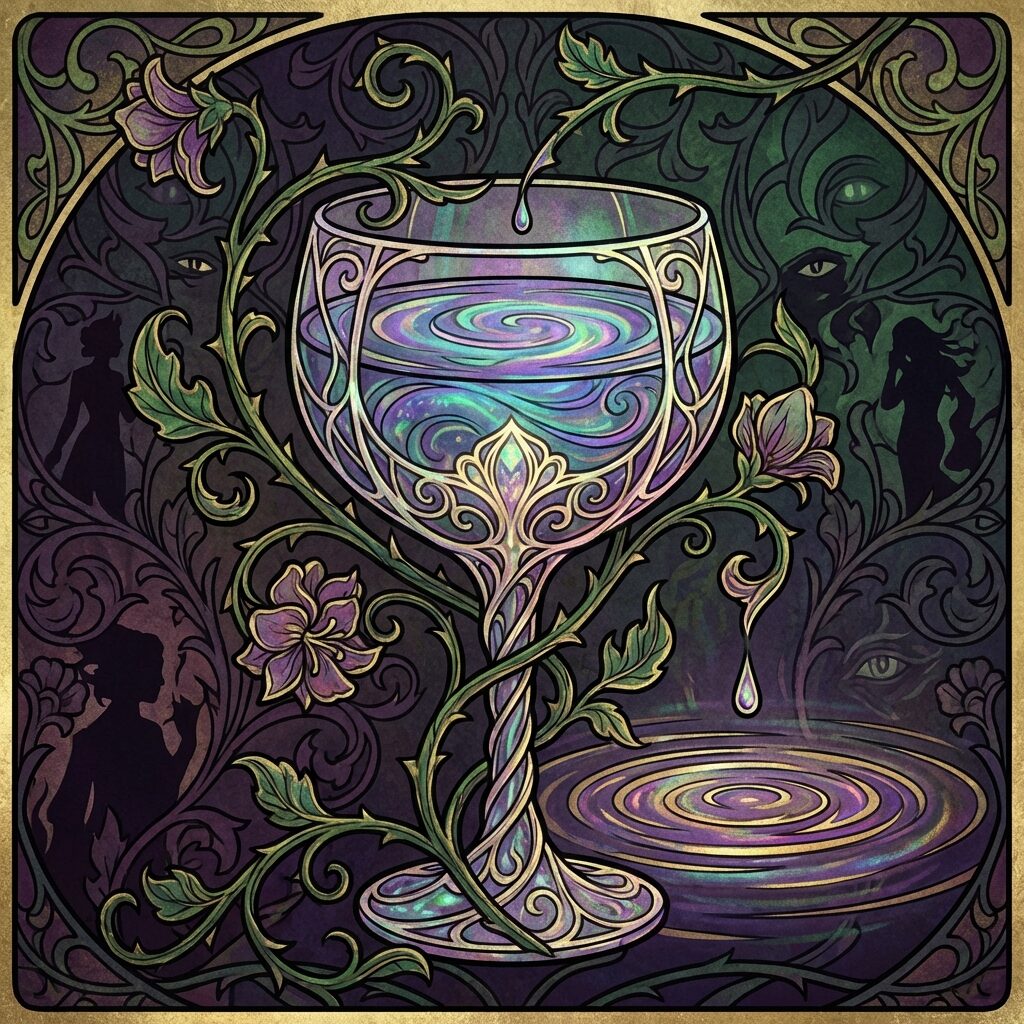
Cathy Dennis spent seven sleepless days fitting syllables to melody. What came out of that week is ruthlessly efficient, every phrase short, landing hard on the beat, nothing left over. The whole song is basically one sustained metaphor: attraction as chemical dependency, love as substance abuse.
And Dennis commits to it fully. “A guy like you should wear a warnin'”, he’s hazardous material. “I took a sip from my devil’s cup”, the choice to engage is deliberate and she knows the cost. “With a taste of a poison paradise / I’m addicted to you”, pleasure and destruction collapsed into the same moment. “I need a hit, baby, give me it” barely qualifies as subtext; it’s right there on the surface, daring you to hear it both ways.
What’s interesting is how Britney herself read the song. In a 2003 MTV interview, she described it as “basically about a girl addicted to a guy,” but then added something unexpected: “This villain girl, she’ll do anything to get what she wants.” She didn’t hear the narrator as someone trapped by another person’s toxicity. She heard her as the active agent, the one choosing the poison, the one who’s dangerous. That flips the whole thing. It’s not he’s toxic and I’m stuck. It’s I’m toxic and I know exactly what I’m doing.
There’s a biographical footnote here that Dennis has never fully confirmed or denied. In the early 2000s, she was dating Noel Fitzpatrick, an Irish veterinarian who would later become famous as TV’s “Supervet” on Channel 4. They reportedly met around 2000 when Dennis brought her Labrador, Charlie, to his surgery. They broke up in 2003, the same year “Toxic” was composed. When asked on ITV’s This Morning whether the song was about him, Fitzpatrick sidestepped with diplomacy: “I think you need to get Cathy on the show and ask her… Who knows, we need to wait for Cathy’s biography on that one.” In his book Listening to the Animals, he wrote: “Cathy and I remain good friends and I’m sad that I couldn’t give her, or anyone else, what is needed in a healthy relationship.” Neither a confirmation nor a denial. The rumor went viral on social media in June 2023, and Fitzpatrick has maintained his careful silence ever since.
Whether or not there’s a real Noel behind the narcotics, the lyrics hold up because of their economy. Dennis took seven days to write them, and you can feel that labor in the precision. Every line hits its syllable count exactly. Every image, poison paradise, devil’s cup, wearing a warning, is concrete enough to picture. The words don’t describe a feeling so much as construct one, line by line, until you’re inside the addiction alongside the narrator. And at 143 BPM, you don’t get time to decide whether you want to be there.
A Million-Dollar Disguise
Britney conceived the spy-movie concept herself, including the diamonds glued directly to her skin, and then watched the video get exiled to late-night TV as collateral damage from Janet Jackson’s Super Bowl controversy.
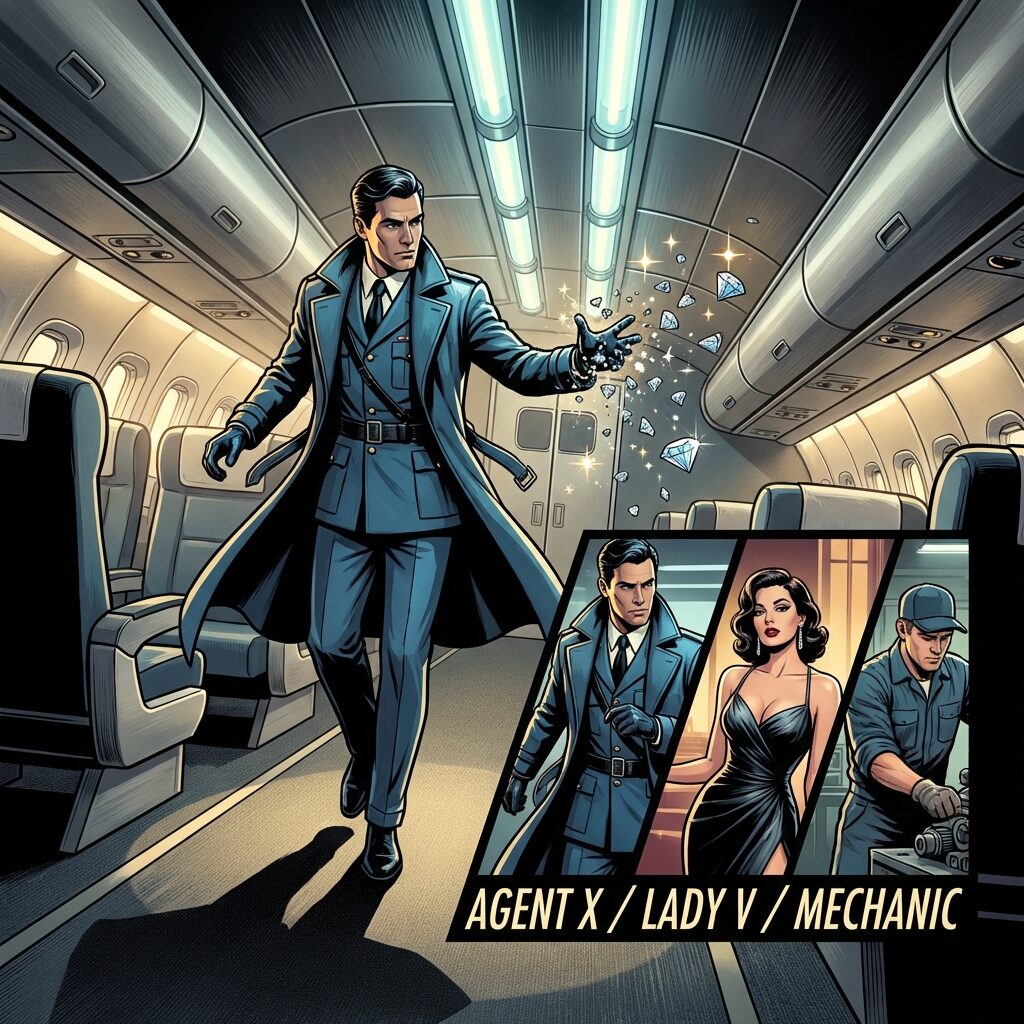
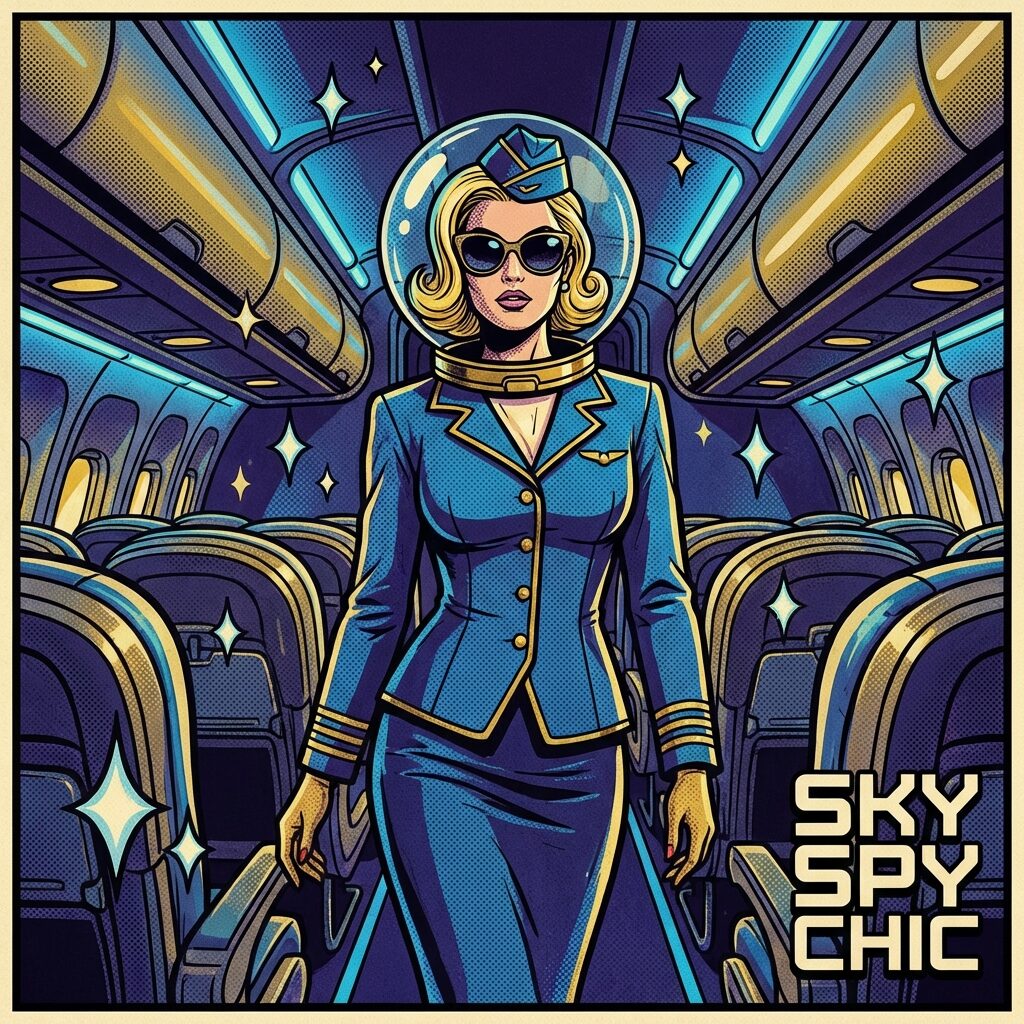
The music video for “Toxic” has its own legacy, and it starts with Britney Spears herself. She came up with the concept: the multiple disguises, the mile-high seduction, the idea of being covered in diamonds. Nobody pitched her a treatment. She walked in knowing what this was.
Joseph Kahn directed, working with a $1 million budget, the most expensive video Spears had made at that point. The shoot took place on a Los Angeles soundstage in December 2003, with cinematographer Brad Rushing and editor David Blackburn. The flight attendant costume was designed by Jeremy Scott. The cast included Tyson Beckford on a Ducati 999 motorcycle and Martin Henderson as the unfaithful boyfriend (you’d recognize him from The Ring and Torque).
Henderson had a great line about the experience. “But no one mentioned I actually had to make out with Britney,” he told Entertainment Tonight, which is either the best or worst workplace surprise depending on your perspective.
The video is packed with references, all of them intentional. The red-haired catsuit character is a direct nod to Sydney Bristow from Alias, Jennifer Garner’s spy series, which was everywhere in 2003-2004. The futuristic Paris establishing shots reference Blade Runner. There’s a The Seven Year Itch lifted-dress moment. The three dark birds in the opening are a John Woo signature. The whole thing plays like a Bond film compressed to three minutes, and honestly, the song wouldn’t work with anything less.
And then there’s the diamonds. This is a piece of pop-culture trivia that genuinely trips people up: many viewers remember Britney wearing a diamond-studded bodysuit. She wasn’t. The diamonds were glued directly to her skin. BuzzFeed flagged this as a genuine Mandela Effect, a collective false memory shared by millions of people. It’s one of those details that gets stranger the longer you sit with it.
Kahn made some inspired choices with the supporting cast. The man in the airplane bathroom was originally supposed to be conventionally attractive, but Kahn suggested making him heavy-set so, in his words, “the common man would feel represented.” Matthew Felker played the role, an attractive man underneath a prosthetic fat suit. The poison-pouring scene at the end was a delicate editorial negotiation. Henderson had a hint of a smile on his face before Britney pours the vial into his mouth, and that ambiguous expression, is he in on it? Is he clueless?, is apparently what got the shot past censors. The plane passenger who receives Britney’s attention was Kahn’s actual longtime casting director.
The video premiered on MTV’s Making The Video on January 13, 2004, and immediately became one of the most-played clips on the network. Then, three weeks later, everything went sideways.
On February 1, 2004, during the Super Bowl XXXVIII halftime show in Houston, Justin Timberlake exposed Janet Jackson’s breast on live television, triggering over 540,000 FCC complaints. The fallout was swift and punitive: Viacom CEO Les Moonves ordered Jackson blacklisted from CBS, MTV, and Infinity Broadcasting. MTV was banned from producing future Super Bowl halftime shows. The FCC attempted to fine CBS $550,000. And in the collateral damage, MTV moved the “Toxic” video to late-night programming, 10 p.m. and later, starting February 10, 2004.
The thing that gets me about this whole chain of events: “Toxic” was originally written with Janet Jackson in mind. The video got punished because of a Janet Jackson controversy. The song survived being rejected by Jackson’s camp only to get caught in the fallout from Jackson’s most notorious public moment. Reality has no respect for plausibility.
Top Ten on Air Alone
“Toxic” reached #9 on the Hot 100 without a physical single or digital sales, purely on airplay, then went on to become Britney’s first song to hit 1 billion Spotify streams.

One number tells you exactly where “Toxic” sat in the music industry’s strange transitional moment: it reached #9 on the Billboard Hot 100 without a physical single release and without digital sales. Pure airplay. Before streaming existed, before iTunes had reshaped how people bought music, “Toxic” cracked the top ten because radio stations couldn’t stop playing it and the Hot 100 formula couldn’t ignore that.
It entered the chart at #53 on January 31, 2004, the week’s highest debut, and climbed to its peak of #9 by March 27. It spent 20 weeks on the chart total. It was Spears’ fourth top-ten hit and her first in almost four years, a gap that felt enormous in early-2000s pop time. The song also hit #1 on the Pop Airplay chart, which measured what radio actually wanted to play versus what was selling.
Internationally, the numbers were more dramatic. “Toxic” went to number one in eleven countries, including Australia, Canada, Hungary, Ireland, Norway, and the United Kingdom. It debuted at #1 in Australia, Ireland, and Norway outright. In the UK, it was Spears’ first #1 single in four years, spending one week at the summit and fourteen weeks on the chart overall. UK sales eventually reached 458,000 copies.
But the chart run in 2004 turned out to be the smaller part of the story. “Toxic” didn’t disappear. In July 2023, it became the first Britney Spears song to hit 1 billion streams on Spotify, still her only song to reach that milestone. As of the most recent data, it’s approaching 1.9 billion total Spotify streams. On YouTube, it’s nearing 500 million views.
The annual streaming numbers put this in perspective. Over a twelve-month period ending around May 2023, “Toxic” earned 99.5 million U.S. on-demand streams and 92,000 radio plays. For comparison, “…Baby One More Time”, the song that created Britney Spears as a cultural phenomenon, earned 59 million streams and 68,000 radio plays over the same period. “Toxic” is streaming at nearly double the rate of the song most people would name as Britney’s signature hit.
There’s also a weird piece of chart trivia worth mentioning: “Toxic” has appeared on the Hot 100 in three separate incarnations across different decades. The original in 2004. “Toxic Pony” by Altégo, a mashup with Ginuwine’s “Pony” that went viral on TikTok and got an official Sony release, which even helped Spears debut on the Hot R&B Songs chart. And “Toxic Las Vegas” by Jamieson Shaw. The song keeps getting recycled into new forms, and people keep responding to it. In 2004, it was the most-searched piece of music on Google, with Spears herself as the most-searched artist on the platform.
The RIAA has certified it 6× Platinum. Not bad for a song that almost got replaced by “Boom Boom.”
Her Only Grammy
“Toxic” won Britney’s only Grammy, beating Kylie Minogue in the same category, but the award wasn’t even televised, and Spears didn’t show up to the ceremony.

On February 13, 2005, at the 47th Annual Grammy Awards at the Staples Center in Los Angeles, “Toxic” won Best Dance Recording. Queen Latifah hosted; CBS televised. That should feel like a victory lap, so let me add the details that complicate it.
First: the award wasn’t presented during the main telecast. It was briefly flashed as text during the pre-show. Second: Spears didn’t attend. Third, and this is the detail that makes the whole thing feel like a short story, one of the nominees she beat was Kylie Minogue’s “Slow.” The same Kylie Minogue who had passed on “Toxic” because she didn’t like the title. The same Kylie Minogue who had ridden Cathy Dennis’s previous song to global dominance. You couldn’t write it better if you tried.
The other nominees were Basement Jaxx featuring Lisa Kekaula (“Good Luck”), Scissor Sisters (“Comfortably Numb”), and The Chemical Brothers (“Get Yourself High”). Respectable company. But “Toxic” was the only one of those songs that your average person on the street could hum.
That Grammy remains Britney Spears’ only win from eight career nominations. One of the best-selling female artists of all time, a woman who defined pop music for an entire generation, has one Grammy. And it was given to her in the pre-show. The Grammys have always had this weird relationship with pop dominance, rewarding it sideways, if at all, and “Toxic” is the one moment where the institution grudgingly acknowledged what the public already knew.
The critics, at least, were less stingy. Rob Sheffield, writing for Rolling Stone, called it “the great pop song of this century. The ultimate Britney Spears classic.” Pitchfork’s Jess Harvell was more measured but no less definitive: “‘Toxic’ was the last great Britney single (so far), the last where it felt like a personality was inhabiting the tune.” Jeffrey Epstein of Out compared its sound to Madonna’s “Vogue”, high company for any pop single. AllMusic’s Stephen Thomas Erlewine called it “a delirious, intoxicating rush.” Spin‘s Caryn Ganz simply noted that “Spears hits pay dirt on ‘Toxic.'”
Rolling Stone would eventually rank it #1 among all 170 Britney Spears songs, #9 on their list of the best songs of the 21st century, and include it in their 500 Greatest Songs of All Time. Billboard named it #1 on their 100 Greatest Songs of 2004 list. NME placed it at #92 on their 500 Greatest Songs of All Time. The consensus built slowly but it all landed in the same place: this is the one.
Classical Music in Year Five Billion
A Doctor Who joke about “Toxic” surviving as classical music keeps landing because it’s barely a joke. Between a three-hour radio show of nothing but covers, an endless sample chain, and a cultural life completely independent of Britney’s own story, the song has become something closer to a permanent fixture than almost any pop track of its era.

There’s a moment in Doctor Who, the 2005 revival, second episode, where the Doctor and Rose Tyler are on a space station orbiting a dying Earth in the year five billion. A jukebox plays “Toxic.” It gets introduced as a “ballad from Earth’s classical era.”
It’s a joke, obviously. But the best jokes have some truth in them. If you had to pick one pop song from the early 2000s that might still be recognizable in the year five billion, “Toxic” would be on the short list. The Doctor Who writers clearly agree, because they keep going back to it. The show brought “Toxic” back for a Children in Need sketch called “Looking for Pudsey” and again in a Series 15 episode called “The Well” in 2025. They return to the joke because it keeps landing, and it keeps landing because nobody argues with the premise. Everyone already knows “Toxic” is permanent.
The cover versions tell you everything. On June 9, 2021, Ken Freedman of WFMU, the New Jersey freeform radio station, devoted an entire three-hour show to nothing but cover versions of “Toxic.” Three hours. One song. Country versions. Punk versions. Hip-hop versions. Piano ballad versions. A Static Lullaby turned it into pop-punk thrash. Mark Ronson recruited Tiggers and Ol’ Dirty Bastard for a hip-hop reimagining in 2007. Yael Naim recorded a piano version in 2008 that turns the song inside out. The BossHoss did it as country in 2005. Ingrid Michaelson covered it. The Glee cast performed it twice, once in the “Britney/Brittany” episode that drew 13.51 million viewers, and again for the 100th-episode celebration. At this point there’s a version of “Toxic” for every genre and every mood you can think of.
The sample chain runs the other direction, too. Childish Gambino sampled the vocal directly on “Toxic” from his 2012 mixtape Royalty, produced by Skywlkr. Coco Jones sampled it on “Taste” in 2025. The biggest sample story, though, is “Toxic Pony,” the Altégo mashup of “Toxic” with Ginuwine’s “Pony” that blew up on TikTok, racking up 33.9 million streams and 11,000 downloads before Sony gave it an official release. A song from 2004 and a song from 1996, stitched together by a TikTok creator, released by a major label in the 2020s. “Toxic” just keeps generating raw material for other people’s music.
The visual side has been just as durable. The flight attendant look became an institution, an annual Halloween costume so common that Endeavor Air employee Marcus Gindrow made news in 2023 for recreating the video during a layover in Atlanta. Taylor Swift’s “Bad Blood” visuals were reportedly inspired by the “Toxic” video. Britney herself built on it: the 2008 “Break the Ice” anime music video was based on the “Toxic” spy character, and she described the “Womanizer” video as a direct sequel.
But the most remarkable thing about “Toxic” after 2004 might be how completely the song detached from Britney’s own biography. Think about what it outlasted. The conservatorship. The public breakdown coverage of 2007-2008. Years of tabloid cruelty. The #FreeBritney movement. Through all of that, “Toxic” kept accumulating streams, kept showing up in covers and samples and TV shows and Halloween costumes, kept building a life that had nothing to do with whether its singer was okay. The song became its own thing, independent of the person who sang it.
That’s what it looks like when a pop song actually becomes permanent. Not a museum piece. Not a nostalgia act. Something that keeps finding new contexts and new forms, that people keep pulling apart and reassembling because the raw material is too good to leave alone. Classical music in the year five billion. The Doctor Who writers were joking. I’m not totally sure they were wrong.
The Song That Trusted Itself
Every gatekeeper had a reasonable-sounding reason to reject “Toxic,” and the people who saved it were the ones closest to the music itself.

Let’s go back to where we started. Three rejections.
Janet Jackson’s team never picked it up. They went with “Island Life” instead, a perfectly competent song that left no mark on the culture. Kylie Minogue heard a snippet and got hung up on the title, choosing to pass on the song that would have fit perfectly into the adventurous side of Body Language but felt wrong for her brand. Jive Records, the label that was supposed to champion their biggest artist, tried to steer Britney toward safer singles because “Toxic” was too weird to explain to radio programmers.
None of these were stupid decisions, though. Jackson was building a specific album with a specific sound. Kylie was protecting a carefully constructed image. Jive was a business trying to minimize risk on a major release cycle. In each case, someone looked at “Toxic” and made a reasonable, defensible, data-informed choice to say no. Too strange. Too hard to categorize. Too much of a gamble.
The people who said yes were the ones closest to the actual music. Cathy Dennis, who tortured herself for seven sleepless days because she knew the melody was extraordinary and she had to find lyrics worthy of it. Christian Karlsson, who broke protocol by letting Britney’s A&R rep visit his studio and then championed the song to Spears directly. Bloodshy & Avant, who heard a 1981 Bollywood recording and thought: what if we put breakbeats under this? And Britney Spears herself, who heard the song, said she was “down,” and then fought her own label until they relented.
Every one of those people was operating on instinct, not data. They couldn’t point to a comparable hit and say “it’ll work because that worked.” There was nothing comparable. A Bollywood-sampling, breakbeat-driven, spy-movie-themed dance-pop song with tritone substitutions and Ukrainian Dorian mode in the pre-chorus? You can’t market-test that. You either believe in it or you don’t.
The lesson isn’t that labels are dumb or that A&R people don’t know music. It’s that great pop has an instinct problem. The qualities that make a song weird and hard to categorize are often the same qualities that make it last. “Toxic” endures precisely because it doesn’t sound like anything else. That strangeness is the whole point. It’s what made people nervous, and it’s what made the song undeniable.
In 2005, Sony Ericsson ran a global poll. Over 700,000 people in sixty countries voted for their favorite song of all time. “Toxic” came in second, behind only Queen’s “We Are the Champions.”
Not bad for a song three people didn’t want.
🎵 Did you know Kylie Minogue passed on “Toxic” because she didn’t like the TITLE? It went on to become Rolling Stone’s #9 song of the 21st century and Britney’s only Grammy win. 🏆 #BritneySpears #Toxic #PopMusic https://bit.ly/4bs6EbW

Click to Tweet