John Lennon | Imagine
The Song Everyone Knows Wrong
“Imagine” is the most-played peace anthem in history, and John Lennon openly called it a sugar-coated Communist Manifesto. Nobody seemed to notice, or maybe nobody wanted to.
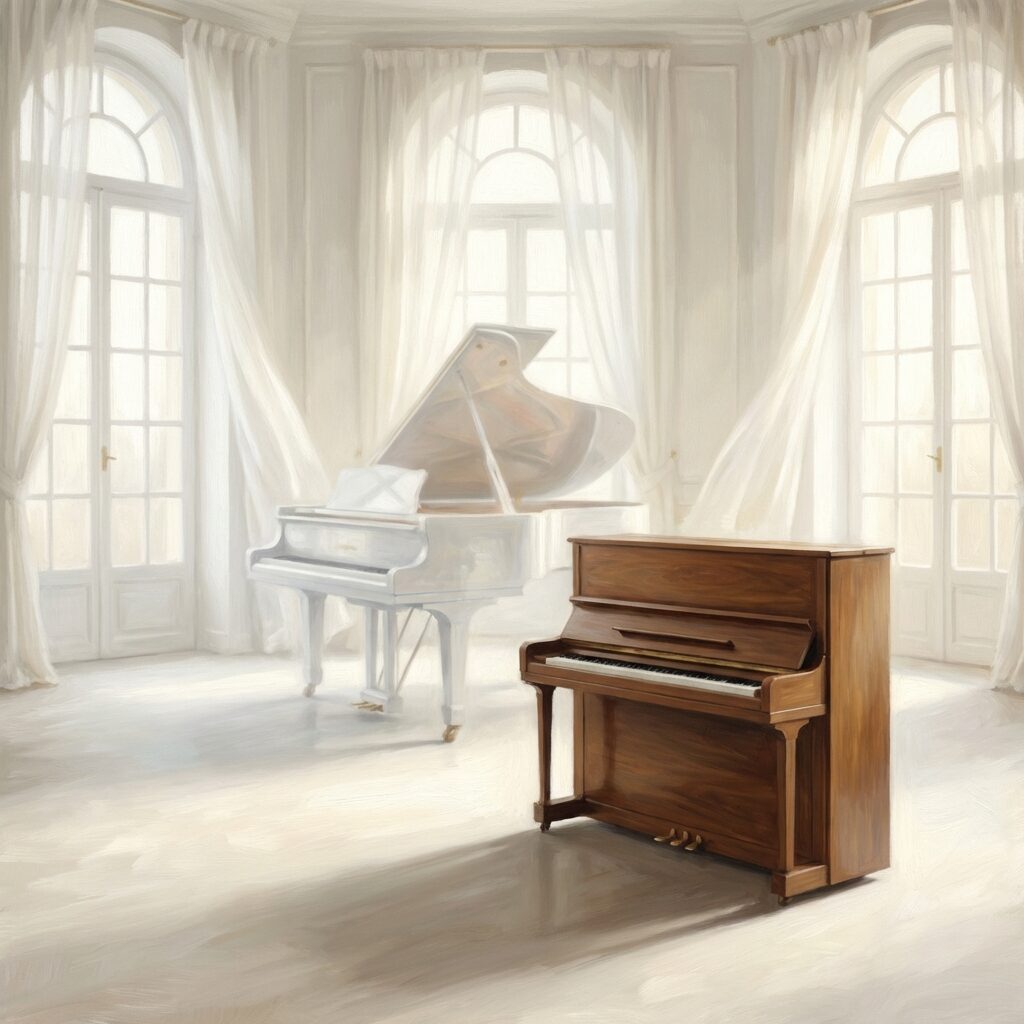
The most-played peace anthem in human history is, by its own creator’s cheerful admission, “virtually the Communist Manifesto.” John Lennon said those words. Out loud. On the record. And the world just kept swaying along, lighters in the air, nobody blinking.
He even told us exactly how he pulled it off. The song, he explained, was “anti-religious, anti-nationalistic, anti-conventional, anti-capitalistic, but because it is sugar-coated it is accepted.” Right there, the whole game, explained by the person running it. He called it “‘Working Class Hero’ with sugar on it,” referencing his own earlier song that said roughly the same things but with enough profanity and raw fury that radio stations flinched. Same message. Different wrapping paper. One became a singalong; the other stayed underground.
But that’s barely the start of it.
The piano you picture when you hear “Imagine”, that gleaming white Steinway grand in the all-white room, Yoko opening the shutters, isn’t the instrument the song was recorded on. The co-writer whose conceptual art book provided the song’s central technique didn’t get her name on it for 46 years. The man singing “imagine no possessions” was doing so from within a 72-acre estate in Ascot, Berkshire, one he’d later sell to Ringo Starr. Phil Spector, the producer, called it “the national anthem.” Which raises an odd question: the national anthem of what country? The one Lennon was asking you to imagine doesn’t exist?
So no, the story of “Imagine” isn’t really a story about a beautiful song that changed the world. It’s a story about what happens when a song gets so famous that people stop actually hearing it. Pull at any thread and you find another gap between what the song seems to be and what it is. The strangest part is that Lennon never hid any of it. He told us everything. We just preferred the version where we didn’t have to think about it.
Yoko’s Book, a Cree Woman’s Words, and a Prayer Book
“Imagine” drew from at least three sources: Yoko Ono’s 1964 conceptual art book Grapefruit, a Christian prayer book on “positive visualization” from activist Dick Gregory, and possibly a Cree woman’s translated words during the Montreal bed-in. The song sat for two years before Lennon played it nearly complete in a single sitting.
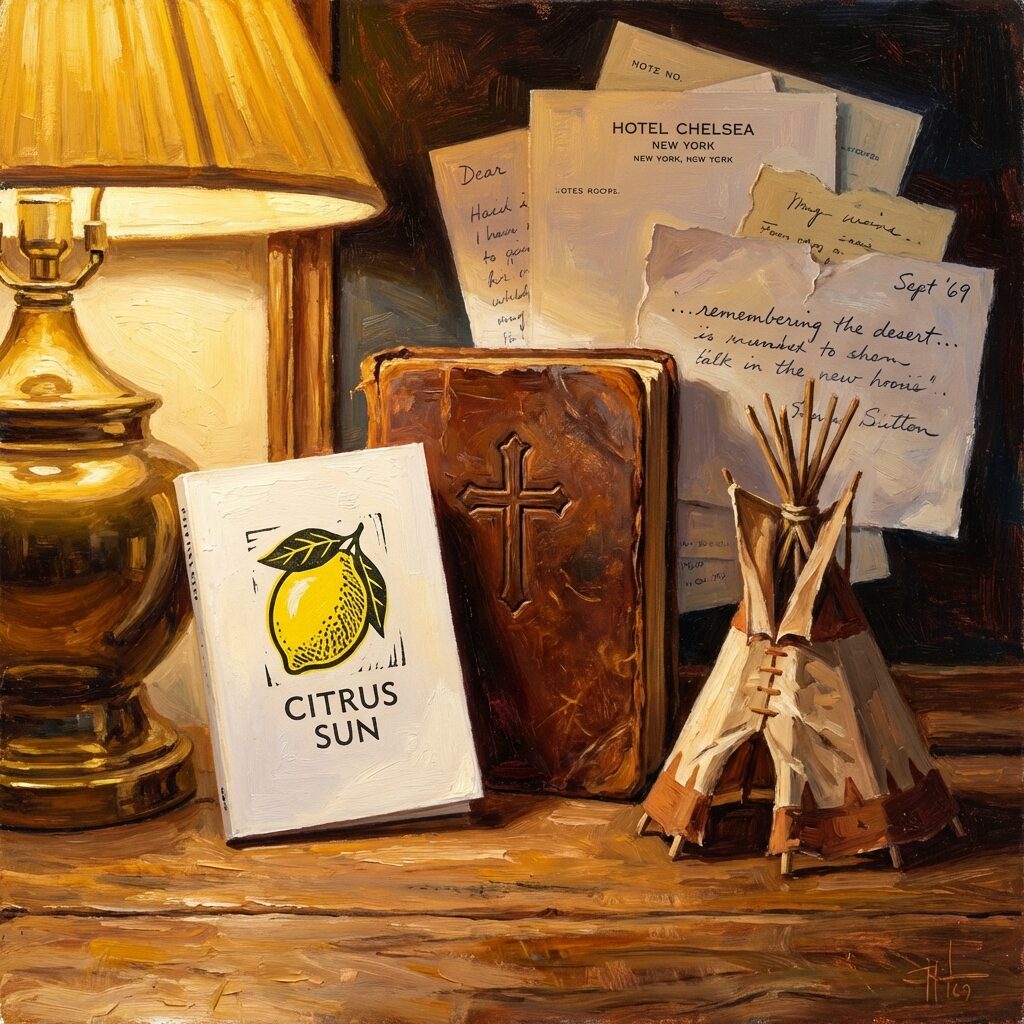
Before “Imagine” was a song, it was an instruction.
On July 4th, 1964, seven years before Lennon sat down at a piano in Ascot, Yoko Ono self-published a slim artist’s book in Tokyo through Wunternaum Press. Five hundred copies. She called it Grapefruit, because she considered herself a hybrid of Japanese and American, “like a grapefruit is a hybrid of lemon and orange.” The cover was white because that was all she could afford. She tried selling copies on the streets of Tokyo from an orange crate.
Inside were over 150 “instruction works,” event scores from the Fluxus tradition, little poems that asked the reader to do something impossible in their mind. “Imagine the clouds dripping,” one reads. “Dig a hole in your garden to put them in.” Another: “Imagine your head filled with pencil leads / Imagine one of them broken.” And another: “Imagine your body spreading rapidly all over the world like thin tissue.” That word, imagine, appears throughout the book almost like a mantra, turning the reader into a participant. These aren’t requests. They’re instructions.
Capitol Records thought enough of the connection to reproduce the “Cloud Piece” poem on the back cover of the original Imagine LP. Lennon himself wrote the introduction for Simon & Schuster’s 1970 reprint: “Hi! My name is John Lennon. I’d like you to meet Yoko Ono.” Ono’s dust jacket carried the instruction “Burn this book after you’ve read it.” Lennon’s response: “This is the greatest book I’ve ever burned.”
But Ono’s book wasn’t the only thing feeding the song.
In June 1969, comedian and civil rights activist Dick Gregory gave Lennon and Ono a Christian prayer book that introduced Lennon to “positive prayer,” the idea that instead of praying against something, you visualize what you want. Lennon grabbed onto this with typical bluntness: “If you want to get a car, get the car keys. Get it? ‘Imagine’ is saying that.” Skip the protest. Skip the complaint. Just picture the world you actually want.
And then there’s Lillian Piché Shirt. In May 1969, Shirt, a 26-year-old Cree woman from Saddle Lake Cree Nation, set up a tipi in Winston Churchill Square in Edmonton, Alberta, to protest the lack of Indigenous housing. That same month, Lennon and Ono began their Montreal bed-in at the Queen Elizabeth Hotel. Lennon, hearing about Shirt’s protest, contacted her via Edmonton radio station CJCA. What Shirt told him, translating her grandmother’s Cree words, sounds a lot like what ended up in the song: “Imagine that if, there was no hate, if we loved each other, we loved one another, that there would be no war between us.” Lennon asked permission to use the words.
Now, I want to be careful here. This connection came to light through Indigenous scholar Corinne George’s 2006 master’s thesis at the University of Calgary, and as Avenue Edmonton honestly acknowledged, “there is no certain way to know if Shirt provided any inspiration.” But the language is striking, the timing aligns, and the exchange is documented. Draw your own conclusions.
The song sat for two years after these encounters. A piano motif close to the final melody, later called “John’s Piano Piece,” surfaced in January 1969 during the Beatles’ Let It Be sessions. Lennon scribbled lyrics on whatever was handy: a Majorcan hotel bill, New York Hilton stationery. Then one morning in early 1971, he sat down at a walnut-finished Steinway upright in his home studio, and Ono watched as the melody, chord structure, and nearly all the lyrics arrived in a single sitting. Almost fully formed. As if everything he’d been absorbing over the previous two years, a Japanese artist’s instruction poems, a civil rights activist’s prayer book, possibly a Cree grandmother’s translated wisdom, had been sitting somewhere in the back of his mind, waiting for the right morning.
The Wrong Piano
The white grand piano everyone pictures when they hear “Imagine” wasn’t the one Lennon actually played, the song was recorded on a walnut Steinway upright that now sits in a museum, worth over a million pounds, which is exactly the kind of thing the song argued against.
Close your eyes and think of “Imagine.” You’re seeing it, aren’t you? The all-white room. Yoko Ono pulling open the shutters, light flooding in. John Lennon at a gleaming white Steinway grand, playing those opening chords in what looks like the inside of a cloud.
That image is a lie. A gorgeous one, but a lie all the same.
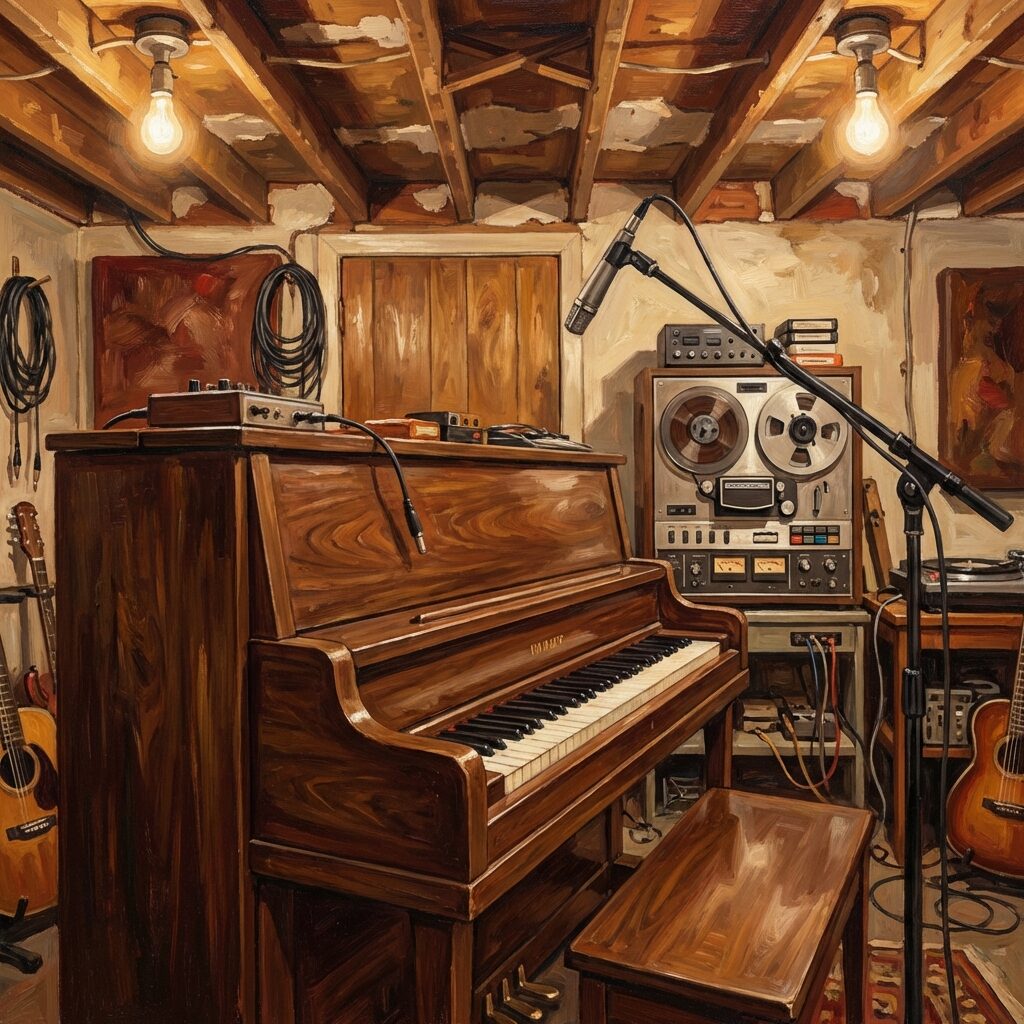
The promotional film was shot at Tittenhurst Park on July 21, 1971, two months after the song was actually recorded. The white grand looked incredible on camera. But when Lennon tracked “Imagine” on May 27th, he was downstairs in a converted photography room, playing a walnut-finished Steinway Model Z upright he’d bought in December 1970 for £1,000 from Steinway & Sons in London. They did try the grand first. It didn’t work out. So they went to the studio, sat down at the upright, and cut the song that would define his solo career.
That studio, Ascot Sound Studios, deserves its own paragraph. Eddie Veale, who built it starting in August 1970, believed it was the first professional home studio in the UK. The brief from Neil Aspinall could fit on a napkin: “Please build a studio for John as good as Apple.” Veale and Dave Dearden (who’d later found Audient) designed a custom 16-channel mixing console around CADAC modules. The tape machine was a 3M M56, an upgrade from the 1-inch M23 that Lennon had purchased in 1968, the same model the Beatles first used at EMI when they recorded “While My Guitar Gently Weeps.” The ceiling had serious damp rot. A wall had to come down to enlarge the control room. This was a working studio built inside a house with real structural problems, not the gleaming white temple from the film.
The recording itself was almost embarrassingly simple. Engineer Phil McDonald remembered it as “one of the easiest tracks to record, almost all live, in a few takes.” Three takes were laid down; the second was chosen. Klaus Voormann on bass, Alan White on drums, Lennon on piano and vocals, most of it captured live. The whole Imagine album was finished in nine days. Lennon liked to point out that Plastic Ono Band took ten.
The piano, the actual piano, the walnut upright, went on to have an afterlife that Lennon probably would have hated.
After his murder, the estate sold it to a private British collector in 1992. It was loaned to the Beatles Story Museum in Liverpool. Then, on October 18, 2000, George Michael purchased it at auction at the Hard Rock Café in London for £1.45 million, outbidding Robbie Williams and a telephone bid from Noel and Liam Gallagher. Michael used it to compose the title track of his 2004 album Patience. “It’s not the type of thing that should be in storage somewhere or being protected,” Michael said. “It should be seen by people.”
In 2007, Michael and partner Kenny Goss created the Imagine Piano Peace Project, touring the instrument across the United States. After Michael’s death on Christmas Day 2016, the piano went on loan to Strawberry Field in Liverpool, where it sits today, a million-pound artifact from a song about imagining no possessions. The instrument that recorded a hymn against materialism became a collector’s prize, a celebrity’s composing tool, and finally a museum piece. Lennon would have had something to say about that.
Why Three Chords Feel Like a Hymn
“Imagine” runs on just three chords, but a one-beat Cmaj7 passing tone, a descending bass line in the bridge, and a single out-of-key E7 on the word “dreamer” do most of the heavy lifting, making something harmonically minimal feel inevitable.
Let’s talk about what’s actually happening in this song, because “Imagine” sounds simple and it really, really isn’t.
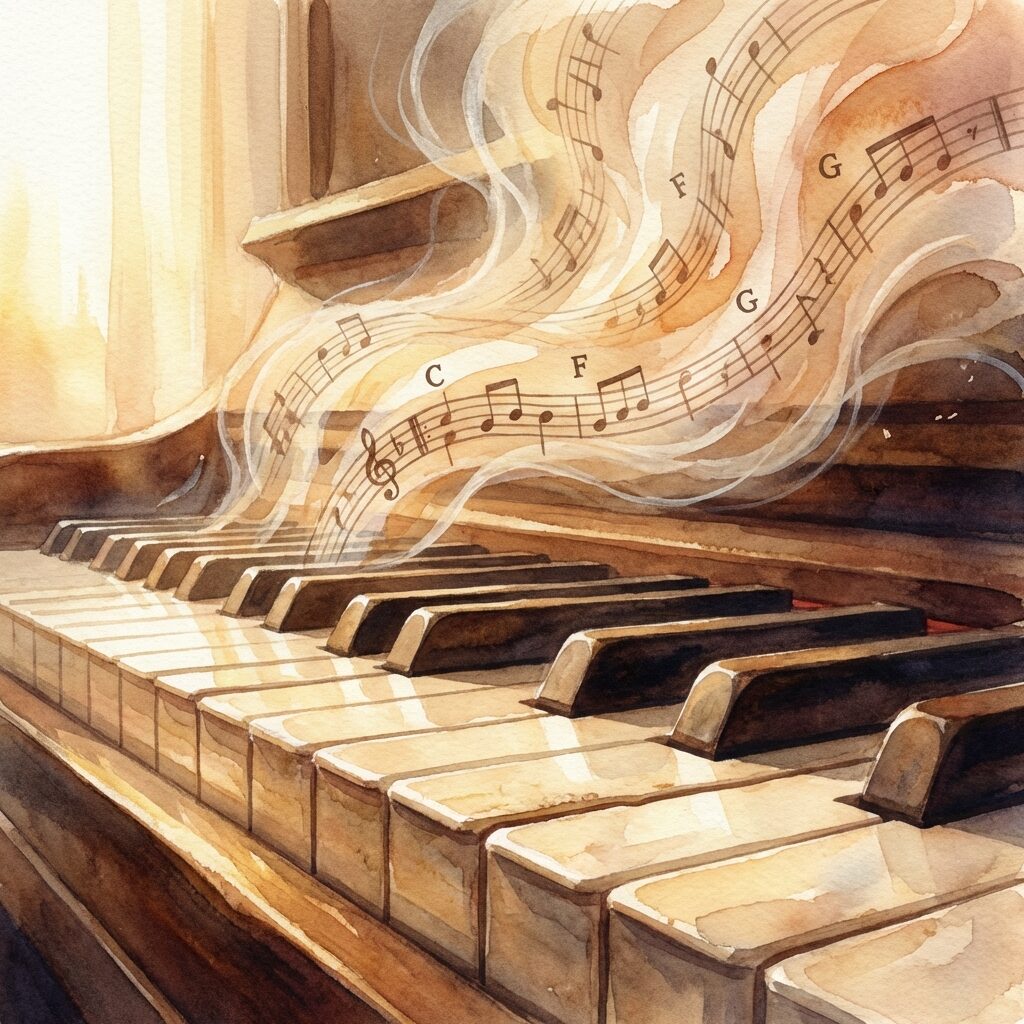
The song is in C major, around 76 BPM, and the harmonic vocabulary is tiny, mostly I, IV, and V. C major, F major, G major. Three chords. The kind of thing a first-year guitar student learns in week two. But Lennon does something sneaky with those three chords that gives the song its strangely church-like pull, and it comes down to one small moment most people never consciously clock.
Listen to the verse. The piano plays three beats of C major, then on beat four, it shifts to Cmaj7. That’s one note changing, the C stays, the E stays, the G stays, but a B sneaks in at the top. One beat. Then the B slides down a half step to A and becomes the third of the next chord, F major. That C-to-Cmaj7-to-F movement, repeating over and over with Lennon’s steady eighth-note pulse in the right hand and bass notes anchoring the left, creates something that feels less like a chord progression and more like breathing. In, out. In, out. You stop noticing it’s happening, which is exactly the point for a song that keeps telling you to imagine.
The bridge is where things pick up. The left hand starts walking a descending bass line, F down through E (with an A minor chord on top) down to D (under a Dm7, sometimes notated as Dm7/C), landing on F/C before resolving to G and G7. That descending bass is what gives the bridge its weight and forward motion. The verse floats; the bridge pulls you somewhere. It’s when the song stops asking questions and starts building toward something.
And then there’s the chorus, where Lennon drops the song’s one real harmonic surprise: an E7 chord. E-G♯-B-D. That G-sharp does not belong in C major. It’s a chromatic intruder, a secondary dominant functioning as V/vi, in plain English, it borrows tension from a key the song isn’t in to make the resolution back to C feel more earned. It’s the one moment where “Imagine” introduces actual harmonic friction, and it lands on the word “dreamer.” Maybe that’s intentional wordpainting, maybe it’s a happy accident. Either way, it works. The whole song sits in this easy diatonic space, and then that single out-of-key note shows up and you feel it in your chest even if you can’t name why.
Phil Spector’s production deserves credit for what he held back. This is the man who invented the Wall of Sound, who buried everything in layers of echo and overdubbed instrumentation until you couldn’t tell where one instrument ended and the next began. On “Imagine,” he left space. The basic track was mixed at Tittenhurst, and Spector added strings on top of the stereo tape at Record Plant East in New York on July 4, 1971. The string arrangement was scored by Torrie Zito. The players, dubbed “The Flux Fiddlers” by Lennon, were members of the New York Philharmonic. Rolling Stone described the result as a “summer-breeze echo” that “bathed Lennon’s performance in gentle strings.”
Worth remembering what came right before this. Months earlier, Lennon had released Plastic Ono Band, one of the rawest, most emotionally brutal albums in rock history. Primal scream therapy turned into music. Almost no production polish at all. “Imagine” is Lennon deliberately choosing to be inviting instead of confrontational. The politics didn’t change. The worldview didn’t change. But he’d tried the unvarnished version on Plastic Ono Band and the world had admired it without quite taking it in. So he wrapped the same ideas in Cmaj7 passing chords and Philharmonic strings, and this time the world actually listened.
Sugar-Coated Radicalism
The lyrics of “Imagine” systematically dismantle religion, nationalism, and capitalism in 22 lines, borrowing a hypnotic technique straight from Yoko Ono’s conceptual art to make radical demands land like gentle suggestions.
Imagine there’s no heaven
It’s easy if you try
No hell below us
Above us, only sky
Imagine all the people
Living for today
I[Verse 2]
Imagine there’s no countries
It isn’t hard to do
Nothing to kill or die for
And no religion too
Imagine all the people
Living life in peace
You
[Chorus]
You may say I’m a dreamer
But I’m not the only one
I hope someday you’ll join us
And the world will be as one
[Verse 3]
Imagine no possessions
I wonder if you can
No need for greed or hunger
A brotherhood of man
Imagine all the people
Sharing all the world
You
[Chorus]
You may say I’m a dreamer
But I’m not the only one
I hope someday you’ll join us
And the world will live as one
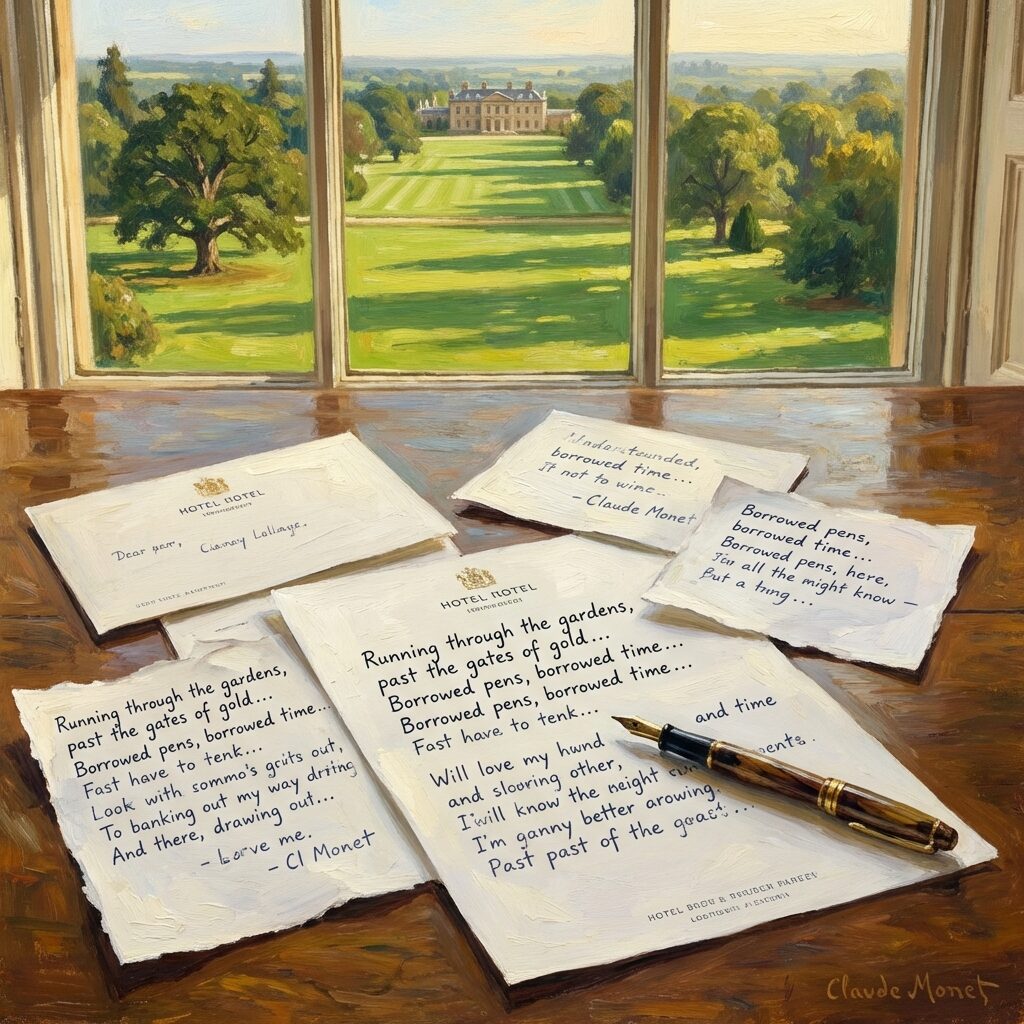
Twenty-two lines. That’s all it takes. Three verses, two choruses, and Lennon dismantles religion, the nation-state, and private property while sounding like he’s reading you a bedtime story.
The technique is borrowed directly from Ono’s Grapefruit event scores, and once you see it, you can’t unsee it. The word “imagine” isn’t a request. It’s an instruction. The same kind of instruction Ono had been issuing since 1964: imagine the clouds dripping, imagine your body spreading like thin tissue. The anaphora, that repeated “imagine” at the top of each verse, works as a kind of hypnotic induction. By the time Lennon gets to “imagine no possessions,” your defenses are already down. You’ve been imagining for two verses. You’re in the exercise. You’re compliant.
Lennon knew what he was doing and said so plainly. The song is “anti-religious, anti-nationalistic, anti-conventional, anti-capitalistic.” It’s “virtually the Communist Manifesto, even though I am not particularly a Communist and I do not belong to any movement.” It’s “‘Working Class Hero’ with sugar on it.” That last comparison is the one worth sitting with. “Working Class Hero,” from Plastic Ono Band, delivered the same class-conscious fury with the F-word and an acoustic guitar and zero sweetener. It got banned from radio. “Imagine” got played at the Olympics.
Same message. Different packaging. The packaging is the whole game.
The World Church once asked Lennon to change “and no religion too” to “imagine one religion.” He basically told them they’d missed the point. “It would defeat the whole purpose of the song,” he said. He wasn’t arguing for his preferred religion over yours. He was asking you to picture a world where the question didn’t come up. That’s a far stranger proposition than ecumenism, and the fact that a world church couldn’t see the difference says a lot about how well the sugar coating did its job.
In a 1980 Playboy interview with David Sheff, Lennon tried to soften the reading slightly: “If you can imagine a world at peace, with no denominations of religion, not without religion, but without this ‘my God-is-bigger-than-your-God’ thing, then it can be true.” But that’s the positive prayer framework talking, the Dick Gregory influence. The song isn’t anti-God; it’s anti-institution. It’s not atheism; it’s anarchism. And Lennon understood that calling it prayer rather than protest made it palatable to people who would have thrown the same ideas back in his face if he’d printed them in a pamphlet.
Which brings us to the elephant in the all-white room: “Imagine no possessions / I wonder if you can.” Written in a 72-acre Grade II listed estate in Ascot. Recorded in a custom-built home studio with a Steinway piano. By a millionaire rock star married to a millionaire artist. Elton John, who knew Lennon well, who loved him, captured the absurdity in a private parody: “Imagine six apartments / It isn’t hard to do / One is full of fur coats / Another’s full of shoes.”
Lennon knew. Listen to that second line again: “I wonder if you can.” That’s not the confident instruction of the other verses (“it’s easy if you try,” “it isn’t hard to do”). There’s a wobble in it. A self-awareness. I wonder if you can, because he couldn’t, and he knew he couldn’t, and saying it out loud while sitting in a mansion might be the most honest moment in the whole song.
46 Years to Get Her Name on It
Lennon admitted two days before his murder that “Imagine” should have been credited to Lennon-Ono, but 37 more years passed before the NMPA corrected the record in 2017, in a ceremony that left Ono in tears.
On December 6, 1980, two days before Mark David Chapman shot him outside the Dakota, John Lennon sat down for a BBC Radio interview with Andy Peebles and just said it.
“Actually that should be credited as a Lennon-Ono song because a lot of it, the lyric and the concept, came from Yoko. But those days I was a bit more selfish, a bit more macho, and I sort of omitted to mention her contribution. But it was right out of Grapefruit.”
Right out of Grapefruit. No hedging, no spin. The conceptual framework, the instructional “imagine” device, much of the lyrical approach, it came from the book his wife had self-published seven years before they even met. And he’d left her name off because he was “selfish” and “macho.” His words.
Then he named the specific double standard, and this is the part that stings. “If it had been Bowie, I would have put ‘Lennon-Bowie.’ … Harry Nilsson, ‘Old Dirt Road,’ it’s ‘Lennon-Nilsson.’ But when we did it I just put ‘Lennon’ because, you know, she’s just the wife.”
She’s just the wife. You could write a whole book about women’s contributions getting erased from popular music, Sister Rosetta Tharpe, the Brill Building writers, on and on, but those four words say it as clearly as anything I’ve read. Lennon, to his credit, didn’t dress it up or make excuses. He called it sexism, admitted he’d done it, and that was that. Two days before he died.
It took 37 more years.
On June 14, 2017, at the National Music Publishers Association’s annual meeting in New York City, CEO David Israelite made an announcement that caught Ono completely off guard. She’d come expecting to receive the NMPA’s inaugural Centennial Song Award, an honor in itself. Instead, Israelite played a recording of Lennon’s 1980 BBC interview, the one where he calls himself selfish and macho, the one where he says her name should be on the song. In the room, Ono welled up in tears.
“Imagine” would now be credited to John Lennon and Yoko Ono.
Sean Ono Lennon posted on Instagram that it was the “proudest day of my life.” Patti Smith performed “Imagine” at the ceremony, her daughter Jesse Smith on piano.
I should note that what this credit change actually means legally is surprisingly murky. Sources directly contradict each other. Variety reported that adding Ono would not extend the song’s copyright. Consequence of Sound claimed it guaranteed a 37-year minimum extension. PBS said the copyright would now last 70 years past Ono’s death. I’ve read all three accounts and I honestly can’t tell you which is correct. Even the correction is complicated, which feels about right.
But forget copyright law for a second. Here is a song about imagining a world without barriers, no countries, no religion, no possessions, nothing to separate people from each other. And for 46 years, it carried a woman’s creative contribution credited to a man. The song asking you to imagine a world of equals couldn’t manage equal partnership on its own title page. I don’t say that as a gotcha. Lennon himself identified the contradiction. He just didn’t get to fix it in time.
A Hit That Kept Becoming a Hit
“Imagine” wasn’t a number one hit when it came out, it peaked at three, blocked by Cher. It only topped the charts after Lennon’s murder, and since then it keeps resurfacing at specific moments: the London Olympics, COVID, the millennium. The song charts when people are scared, which says more about what it means to the world than Lennon probably intended.
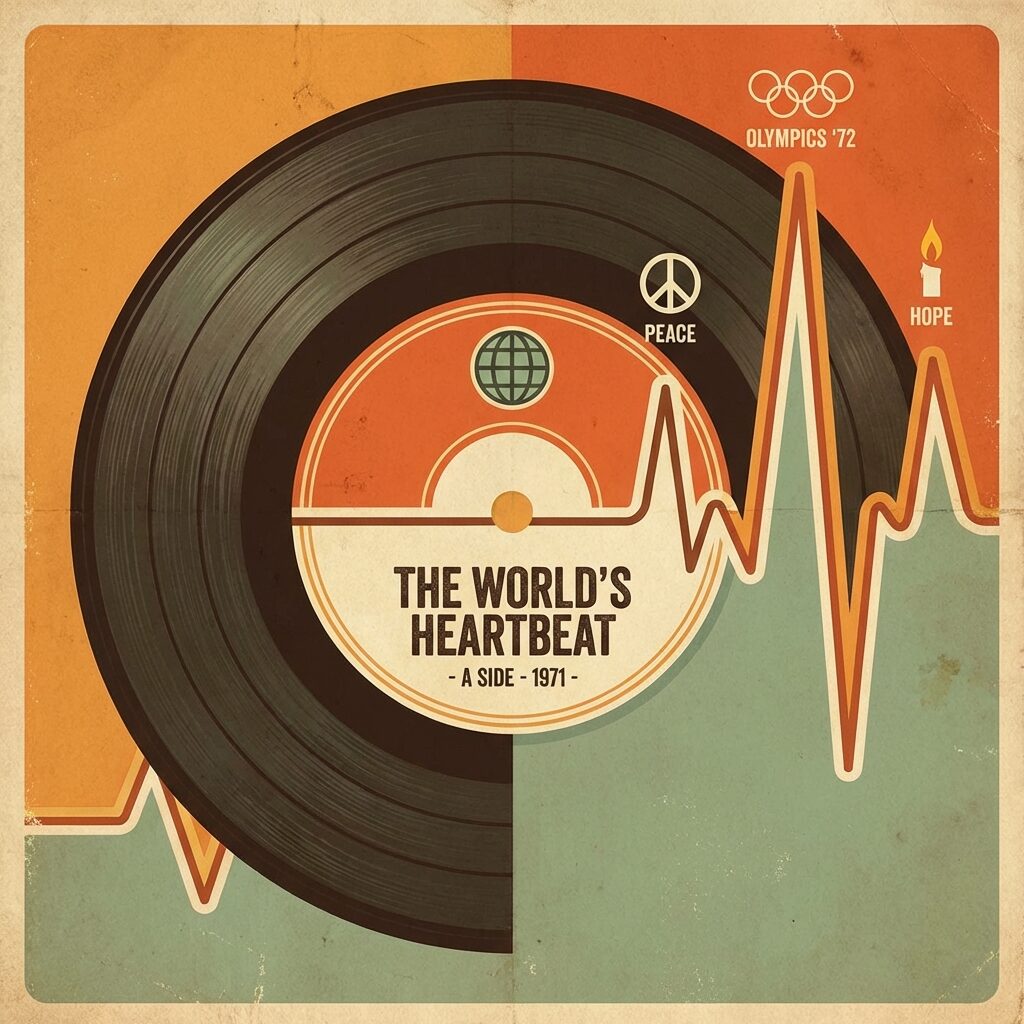
Here’s an odd thing about “Imagine”: it wasn’t actually a number one hit. Not at first.
When the single dropped in the US on October 11, 1971, it climbed to number three on the Billboard Hot 100 and sat there for nine weeks, stuck behind Cher’s “Gypsys, Tramps & Thieves.” It hit number one on Record World and number two on Cashbox, but on the chart that mattered most, it peaked at three. In the UK, it wasn’t even released as a single until October 1975, four years after the album, when Apple put it out to promote the compilation Shaved Fish. It reached number six.
The song became a number one hit the way nobody would have wanted. After Lennon was murdered on December 8, 1980, orders for “Imagine” exceeded 300,000 copies in the UK before it was even officially re-released. It spent four weeks at number one beginning January 4, 1981, passing platinum, one million UK copies, during that run. Then “Woman,” also by Lennon, replaced it at the top, making him only the second artist to replace himself at number one, after the Beatles did it in 1963.
And then “Imagine” did something no one planned. It became the song people reach for when the world hurts.
After the 2012 London Olympics closing ceremony, where a Liverpool choir performed it in a sequence that assembled a mosaic of Lennon’s face from sculpture fragments, it re-entered the UK chart at number 18. During the COVID-19 pandemic in March 2020, it appeared on the Billboard Hot Rock Songs chart at number 15. It had been released as a “Millennium Single” in December 1999, reaching number three in the UK. There’s a pattern here, and it’s not subtle: the song resurfaces during moments of collective panic or grief, almost like clockwork.
The numbers for a 1971 single are kind of absurd. Best-selling solo single of Lennon’s career: over 1.7 million copies in the UK alone. Over 700 million Spotify streams. Over 900 million YouTube views. ChartMasters calculates 22.19 million equivalent album sales, placing it among the top 10 most successful songs of the entire 1970s.
But what I keep coming back to is the chart pattern. “Imagine” doesn’t chart because of a TikTok trend or an algorithm push. It charts when people are frightened and grasping for something that feels like it might hold. That says more about what the song actually means to people than any critical essay could. Lennon wrote a radical political manifesto. Most of the world has always heard a prayer. And every time things get bad enough, they reach for the prayer again, whether he would have liked that or not.
The Song They Keep Trying to Ban
For over five decades, authorities have tried to suppress “Imagine,” and for over five decades, the song has outlasted every one of them, sometimes by decades.
If “Imagine” were really just a pretty lullaby, if the sugar coating were the whole story, nobody would bother trying to suppress it. But institutions keep going after it, decade after decade, which tells you somebody out there is actually listening to the words.
The first recorded attempt came in 1972, just a year after release. Seniors at Denmark High School in Green Bay, Wisconsin voted to make “Imagine” their class song. The principal shut it down, calling it “anti-religious and anti-American with communist overtones.” The seniors didn’t get their song. But at their twentieth reunion, in 1992, with the Cold War freshly over and communism no longer the boogeyman it had been, they finally made it their official class theme. Twenty years, and the song won.
The Gulf War brought a fresh wave of anxiety about the song’s message. The BBC restricted “Imagine” from airplay during the conflict. Think about that for a second: the British Broadcasting Corporation, the same institution that had hosted Lennon’s final interview, decided his most famous song was too dangerous for wartime. In 1991, a high school student named Aaron Salinger in Riverside, California, wrote the lyrics of “Imagine” on an American flag on Lennon’s birthday. He was suspended for “desecrating the flag.” The organization CURB, Clean Up Radio Broadcasting, demanded radio stations ban the song entirely.
The religious establishment has been particularly stubborn about it. In 2006, St. Leonard’s Primary School, a Church of England school in Exeter, Devon, banned “Imagine” from its year-end concert after students had already rehearsed it for weeks. Head teacher Geoff Williams explained: “As a church school, we decided it was not appropriate to sing it.” Three years later, Liverpool’s Anglican Cathedral played it on its bells, the highest and heaviest ringing peal bells in the world, despite 64 percent of Church Times readers opposing the plan. The performance was led by Sam Austin, a 23-year-old studying at Manchester’s Royal Northern College of Music, with a team of seven who rehearsed on hand bells first. It was conceived by artist Cleo Evans for the Futuresonic festival. One church bans the song. Another rings it from its tower. That’s the whole story of “Imagine” in miniature.
Some of the attempts to defuse the song have gotten creative. Ben Stein’s 2008 documentary Expelled: No Intelligence Allowed used “Imagine” in its soundtrack to argue that the song illustrated what “the Darwinist establishment wants to do: get rid of religion.” Lennon, who rejected organized religion but told Playboy the song was about imagining no denominations, “not without religion,” would have had no idea what Stein was talking about.
And then there’s CeeLo Green, who on New Year’s Eve 2011 in Times Square, changed “and no religion too” to “and all religions true.” Which is the same misreading the World Church attempted during Lennon’s lifetime, the one he said would “defeat the whole purpose of the song.” The backlash was immediate and fierce. But the impulse behind it, the need to sand down the song’s radical edge, to make it safe, to turn a challenge into a comfort, is what Lennon was getting at when he called it sugar-coated. The sugar works so well that people keep trying to add more.
From Olympics to Cringe
“Imagine” became the unofficial anthem of global ceremonies, Olympics, New Year’s, memorials, until Gal Gadot’s 2020 celebrity sing-along laid bare the contradiction the song always carried: millionaires singing about no possessions, only now from their mansions on Instagram while the world fell apart.
At some point, and it’s hard to say exactly when, “Imagine” stopped being a song and became a ceremony.
The Olympic tradition is the clearest example. Stevie Wonder performed it at the Atlanta Games in 1996. Peter Gabriel sang it in Turin in 2006. The 2012 London closing ceremony turned it into a full production: 29 singers from the Liverpool Philharmonic Youth Choir, 25 members of the Liverpool Signing Choir performing the lyrics in British Sign Language, 101 dancers assembling a mosaic of Lennon’s face at the centre of a Union flag, all while a remastered video of Lennon, exclusively prepared by Ono from the July 1971 Tittenhurst photoshoot, played on the arena screens. It was performed at the Pyeongchang Winter Olympics in 2018 and the Tokyo Games in 2020. And at the Paris 2024 opening ceremony, Juliette Armanet sang it on a floating stage on the River Seine while pianist Sofiane Pamart’s grand piano was literally set on fire beneath him.
You don’t set a piano on fire during just any song. That’s what we’re dealing with here.
Since 2005, it’s been played in Times Square at 11:55 PM before every New Year’s Eve ball drop, the song that marks the transition between years, the five minutes when an entire city collectively holds its breath. Since 2010, it’s been performed live by the headlining artist. It plays at memorials. It plays at benefit concerts. It plays at moments when institutions need something that feels universal and spiritual but isn’t attached to any specific faith. It has become the anthem of secular humanism, the song you play when you need a hymn but can’t pick a religion.
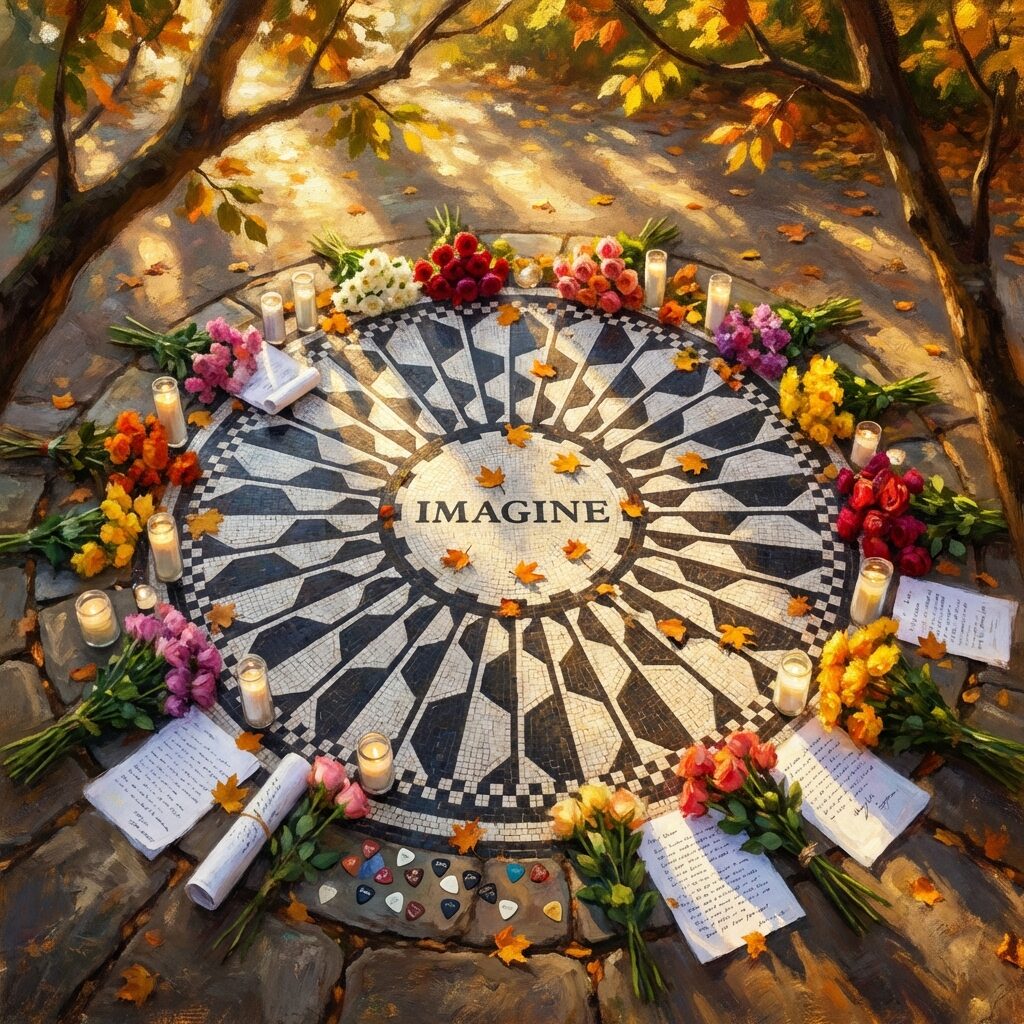
Jimmy Carter put it this way: “In many countries around the world, my wife and I have visited about 125 countries, you hear John Lennon’s song ‘Imagine’ used almost equally with national anthems.” The Strawberry Fields memorial in Central Park, established in 1985, features a single mosaic with a single word: IMAGINE. Liverpool renamed its airport and put “Above us only sky” on the roof. The song got built into the furniture of public life. It’s just there now, like a flag or a national park.
And then, on March 18, 2020, it became cringe.
Gal Gadot posted a three-minute Instagram video. You probably remember it, or remember hearing about it, or remember the discourse that consumed the internet for approximately 72 hours. Gadot, Kristen Wiig, Natalie Portman, Will Ferrell, Zoë Kravitz, Jamie Dornan, Jimmy Fallon, Norah Jones, Amy Adams, Mark Ruffalo, Sarah Silverman, and others, each singing a single line of “Imagine” from their very nice homes during the first terrible week of COVID lockdowns. Gadot said she was inspired by seeing an Italian man play the song on trumpet from his balcony.
The video was nearly universally panned. Jon Caramanica of the New York Times called it “an empty and profoundly awkward gesture.” Chris O’Dowd called it “that first wave of creative diarrhea” and said “any backlash was justified.” It was parodied on The Boys in the episode “Herogasm.” Experimental musician Lingua Ignota remixed it into a harsh noise wall song titled “Above Us Only Sky.” Gadot herself later admitted it was “in poor taste.”
But the thing that actually interests me about the Gadot video, beyond the easy dunk, is that the reason it felt so wrong, millionaires singing “imagine no possessions” from their mansions while nurses reused garbage bags as PPE, is exactly the contradiction Lennon embodied when he wrote the song. He was a millionaire singing about no possessions from his mansion. The difference, and it matters, is that Lennon knew. He called himself on it. He told the press. He let Elton John make fun of him. The Gadot video wasn’t a betrayal of “Imagine.” It was the song’s original sin, finally made visible in a way nobody could look away from.
So now the song sits in this weird triple state: sincere when Lennon sang it, ceremonial when institutions play it, cringe when celebrities perform it from positions of comfort. All three are true at the same time. Maybe that’s inevitable for a song that was built on a contradiction from the first note. Or maybe “Imagine” just got too big for any one person to sing without it reflecting something back at them they didn’t want to see.
The Dream and the Dreamer
“Imagine” survives its contradictions not because the world ignores them, but because Lennon never pretended they didn’t exist, and because asking an imperfect world to try is more powerful than pretending you have the answers.
So here’s what we’re left with. A song recorded on the wrong piano. A woman’s concept under a man’s name for nearly half a century. A radical manifesto dressed as a lullaby, written in a mansion, produced by Phil Spector with uncharacteristic restraint, banned by schools and rung from cathedral bells, adopted by the Olympics and rejected by the Church of England, sincere from Lennon’s lips and unbearable from celebrities’ iPhones.
The song survives all of it. Every contradiction, every hypocrisy, every well-meaning butchering at a New Year’s Eve broadcast. And I think it survives precisely because Lennon never pretended the contradictions didn’t exist. He called the song propaganda. He called himself selfish. He called the lyrics the Communist Manifesto. He knew he was a rich man singing about no possessions and he said “I wonder if you can” instead of “it isn’t hard to do.” That tiny wobble of self-awareness in the third verse is what separates honesty from hypocrisy.
In 2023, “Imagine” was inducted into the Library of Congress National Recording Registry, the first recording by a solo former Beatle to receive the honor. Kenneth Womack of Monmouth University, who wrote the accompanying essay, used the words “culturally, historically, or aesthetically significant.” All three apply, but the middle one might matter most. “Imagine” is historically significant not because it changed the world (it didn’t, not in the way the lyrics ask for) but because it gave people a vocabulary for wanting something better. And that vocabulary turned out to be durable enough to outlast the man who wrote it and every institution that tried to suppress, co-opt, or domesticate it.
The song’s real power was never in imagining a perfect world. It was that an imperfect man, selfish and macho and rich and aware of all of it, sat down at a walnut upright piano and asked you to try anyway.
Ono put it simply, the way the best descriptions of complicated things are simple: “Just what John believed: that we are all one country, one world, one people.”
You may say he was a dreamer. He wasn’t the only one. And the dream didn’t need to be pure to be worth having.
Did you know? “Imagine” wasn’t recorded on the famous white grand piano, it was tracked on a walnut Steinway upright that George Michael later bought for £1.45 million 🎹✨ #JohnLennon #Imagine #MusicHistory https://bit.ly/41jvPcb

Click to Tweet