Ramones | Ramones (debut album)
Twenty Minutes, Twenty Songs
Sire Records president Seymour Stein was home sick when the Ramones played their showcase, so he booked a rehearsal room the next day. They ripped through twenty songs in twenty minutes and he signed them on the spot, to make the $6,400 album that blew apart mid-seventies rock excess.
Seymour Stein had the flu. That’s the only reason the audition happened the way it did.
The president of Sire Records had missed the Ramones’ special showcase gig, he was home in bed, miserable, probably listening to one of the European prog acts his label had been signing. So the next day, he rented a rehearsal studio for an hour. The band showed up, plugged in, and in twenty minutes blasted through roughly twenty songs. Stein signed them.
Twenty songs in twenty minutes. That’s sixty seconds per song, including the time it takes to count in and stop. In 1976, Yes was releasing albums where a single track ran longer than the Ramones’ entire set. Emerson, Lake and Palmer had just toured with a full orchestra and a thirty-six-foot revolving stage. Peter Frampton’s Frampton Comes Alive! was about to become the best-selling album in America, a double live record, because apparently one disc of extended jams wasn’t enough.
And then four guys from Queens showed up playing so fast they hadn’t bothered to learn how their songs ended.
The album they made, self-titled, fourteen tracks, twenty-eight minutes and fifty-three seconds, sounds like the simplest record ever put to tape. Three chords, downstrokes, one-two-three-four. It sounds like anyone could make it. But nobody had. The simplicity was an illusion. Behind those twenty-nine minutes of chaos was a producer borrowing Beatles-era studio tricks, orchestral microphone techniques, and layered overdubs to manufacture something that sounded raw but hit with real force.
The whole thing cost $6,400. In 1976 dollars. That’s roughly $36,000 today, still less than most bands spend on a single music video. It barely charted. It sold six thousand copies in its first year. But it blew a hole in the wall that every punk band since has walked through.
Four Guys from Queens
The Ramones came together at a New York rehearsal studio in January 1974, borrowed their shared surname from a Paul McCartney alias, and spent a year blasting through seventeen-minute sets at CBGB before anyone thought to sign them.
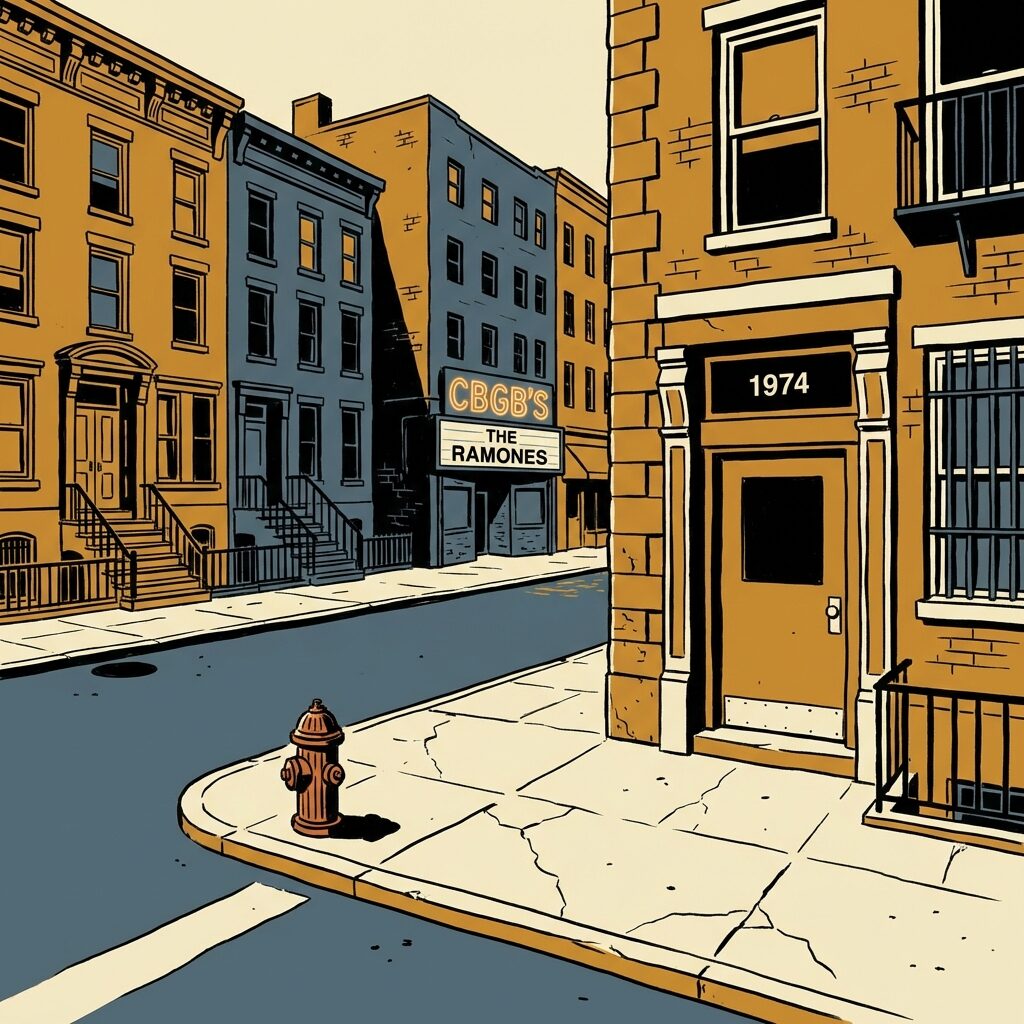
The Ramones first gathered on January 28, 1974, at Performance Studios in New York City. Monte Melnick, who would become their long-suffering road manager, worked there and made the connection. The lineup that day: John Cummings on guitar, Douglas Colvin on bass, and Jeffrey Hyman on drums. Thomas Erdelyi was supposed to manage them.
None of those names meant anything to anybody, which was sort of the point. Dee Dee Colvin had an idea: they’d all take the same last name, the way a gang would. He’d picked it up from Paul McCartney, who used to check into hotels as “Paul Ramon” back when the Beatles were still the Silver Beetles. So Douglas became Dee Dee Ramone. John became Johnny. Jeffrey became Joey. And when Tommy eventually had to step out from behind the manager’s desk and sit behind the drums, because Joey couldn’t hack the tempos they wanted to play, he became Tommy Ramone.
Joey’s move to vocals turned out to be the thing that made the band work. He was tall, rail-thin, hidden behind a curtain of hair and Coke-bottle glasses, and he sang like he was trying to swallow the microphone whole. He didn’t have range. He had presence. The voice was nasal, plaintive, weirdly sweet for a band that played like they were being chased. Without it, the Ramones would have been a blur. With it, there was something to hold onto.
Their first public gig was March 30, 1974, at Performance Studios, playing as a trio before Tommy joined. Their CBGB debut came on August 16, 1974, opening for Angel and the Snake, a band that would soon rename itself Blondie. That date fell exactly five years after Woodstock, which nobody planned but everybody should appreciate. Woodstock was the counterculture at its most earnest. The Ramones were what grew in the wreckage.
They became CBGB regulars, playing the Bowery club over seventy times in 1974 alone. Their average set clocked in at seventeen minutes. Most people get this part wrong: they weren’t playing short sets because they were punk minimalists making an artistic statement. They were playing short sets because they only knew how to do one thing, and they did it as fast as humanly possible. Their live show was basically one continuous blast with different riffs swapped in and out. No pauses between numbers. No rehearsed endings. When a song was done, they just crashed into the next one. The audience either got it immediately or walked out. Most walked out. But the ones who stayed, they started bands.
Through the Stage Door at Radio City
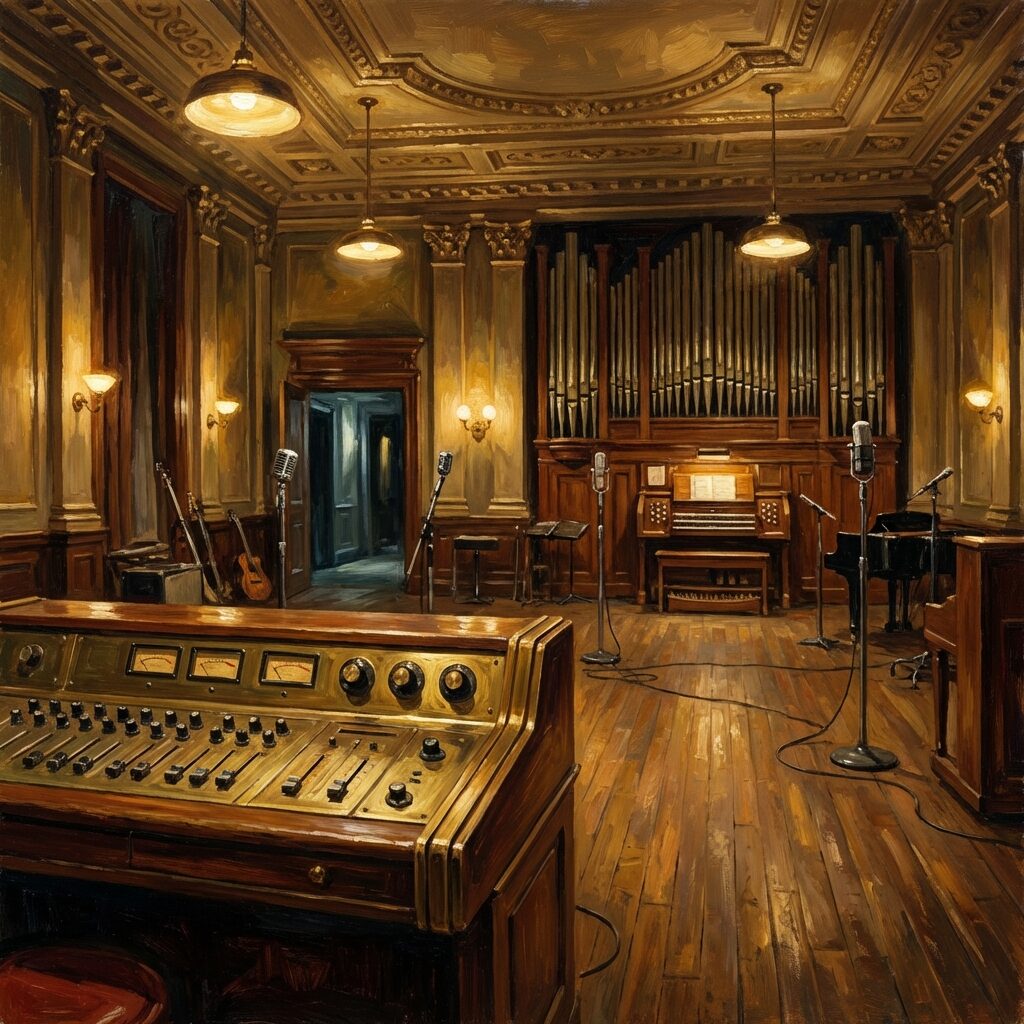
After getting pelted with bottles at a Blue Sky Records audition and landing on Sire through sheer persistence, the Ramones recorded their debut in Toscanini’s old rehearsal space inside Radio City Music Hall, arriving after 7 PM for cheaper rates, working until 5 AM, and placing Johnny’s guitar amp in the Rockettes’ rehearsal room.
Getting signed was not a straight line.
Lisa Robinson, editor of Hit Parader and Rock Scene, saw the Ramones at CBGB in early 1975 and immediately started badgering Danny Fields to manage them. Fields was a legend in his own right: the guy who’d convinced Elektra to sign both the Stooges and the MC5, co-editor of 16 magazine, a man who’d been at the center of every interesting thing in rock for a decade. Tommy Ramone had been calling Fields four or five times a week before Fields finally agreed to come see them on April 14, 1975. He became their manager that November.
Meanwhile, Craig Leon, a young A&R man at Sire Records, caught them performing in the summer of 1975 and brought a demo to Seymour Stein. Linda Stein, Seymour’s ex-wife, also championed the band. Sire had previously signed only European progressive rock acts, so you can imagine the internal pitch meeting. They initially offered just a single deal for “I Wanna Be Your Boyfriend,” but the band held out for a full album. Smart move. The only other label interest came from Blue Sky Records, where the Ramones auditioned and were booed and pelted with bottles. Blue Sky was not where punk was going to happen.
Then came the flu, the rented rehearsal room, the twenty songs in twenty minutes, and Seymour Stein’s conversion experience. The Ramones had their album deal.
And the where of this album is almost as unlikely as the what.
Plaza Sound Studios was located inside Radio City Music Hall. To get there, you entered through the stage door, took a private elevator to the sixth floor, then trudged up another flight and a half of stairs through battleship-gray corridors past the Rockettes’ dance rehearsal rooms. The studio itself had been Arturo Toscanini’s rehearsal space when he conducted the NBC Symphony Orchestra. It featured a Wurlitzer pipe organ, authentic art-deco décor, and a floor suspended on steel springs and cork for acoustic isolation. The house engineers, accustomed to orchestral sessions and easy-listening records, thought a bunch of thugs had walked into the control room. They weren’t entirely wrong.
The band arrived after 7 PM every night to get cheaper studio rates and worked through until 5 AM. They recorded songs in the same order they played them in their live set. Not as some conceptual statement about authenticity, but because that was the order they knew. Johnny refused to do more than a few takes per track. A metronome with a flashing light was set up in Tommy’s drum booth because they literally couldn’t get a click track to go fast enough for the Ramones’ tempo. Johnny’s guitar amp was placed in the Rockettes’ rehearsal room for isolation. I keep coming back to that image: the sound of punk being born bouncing off the walls where the Rockettes practiced their kicks.
Craig Leon had to solve a fundamental problem: until the album sessions, the band hadn’t rehearsed how to end songs. Their live sets were one continuous blast, different riffs, same energy, no stops. Leon had to teach them how to bring individual tracks to a close. He considered making the record a single continuous track with no breaks, which would have been a fascinating artifact but probably not a great album. In the end, he partially employed this approach between “I Don’t Wanna Walk Around With You” and “Today Your Love, Tomorrow the World,” where the songs flow together without a gap.
Craig Leon has spent decades trying to explain something most people still don’t get: the Ramones’ debut does not sound the way it sounds because someone just stuck a microphone in front of the band and pressed record. “Capturing the energy of the live shows was quite important,” Leon told Rolling Stone. “But if you jump to the conclusion that the sound of the recording was just the sound of the band live, you would be mistaken, even though that’s what I was trying to convey. The album is quite layered and structured and took full advantage of the studio technology of its time.”
Layered and structured. That’s the producer of what everyone assumes is the most primitive album ever made talking. The comfortable story is that the Ramones walked in, plugged in, and captured lightning. What actually happened is that the lightning was carefully engineered, in seven days, for $6,400, in Toscanini’s rehearsal room, with the Rockettes down the hall.
The Buzzsaw and the Beatles
Craig Leon called the Ramones “the Bizarro World Beatles,” and he meant it literally. He and Tommy Ramone copied Capitol Records’ hard stereo panning, vocal doubling, and tape delay techniques from the 1964 Beatles mixes to make a $54 Mosrite guitar through a cranked Marshall sound like a bomb going off.
Craig Leon called them “the Bizarro World Beatles,” and if you think that’s a throwaway line, you’re missing the entire production concept behind this record.
The Beatles connection isn’t a metaphor. It’s the actual blueprint. Leon and Tommy Ramone deliberately mimicked Capitol Records’ US Beatles mixes from 1964 and 1965, with that hard stereo panning that put instruments on opposite sides of the stereo field. On the Ramones’ debut, bass sits hard left, guitar hard right, drums and vocals dead center. Nobody was mixing records this way in 1976. People mixed records this way in 1964, before stereo technique got more sophisticated. Leon tried a conventional stereo mix first and found it “kind of boring.” It lacked the visceral impact of those early Beatles records where the separation made everything feel more urgent.
The Beatles borrowing went deeper than panning, though. Tommy wanted what he called “that swirling hi-hat sound” that ran through everything the Beatles recorded. The vocals used doubling and artificial tape delay, a technique where the signal is played back with a slight time offset and pitch variation, so it sounds like two people singing when it’s really one. Standard Beatles trick, pioneered by Abbey Road engineer Ken Townsend because John Lennon hated double-tracking his vocals. The Ramones used it to make Joey’s thin, nasal voice fill the center of the mix like a presence rather than a sound.
And then there’s the guitar. Let’s talk about the guitar.
Johnny Ramone’s instrument on this album was a blue 1965 Mosrite Ventures II that he’d bought at Manny’s Music in January 1974 for just over fifty-four dollars. Fifty-four dollars. The cheapest guitar in any room he ever walked into. Basswood slab body, thin fast neck, single-coil pickups. He ran it through a Marshall JMP 100-watt head with all controls at 10, meaning maximum volume, maximum everything, no subtlety, no negotiation. Bridge pickup only. No effects whatsoever: no reverb, no chorus, no delay. Just the sound of the guitar hitting the amp as hard as possible.
What made Johnny’s playing actually revolutionary was his right hand. He played almost exclusively downstrokes. Not alternate picking, where you go down-up-down-up, which is how virtually every guitarist plays fast passages. Just down. Down. Down. Down. Every stroke the same direction, every stroke hitting all six strings of a full barre chord. Not power chords, either. Full six-string barre chords, which are harder to fret and harder to keep clean at speed. He’d gotten the idea from Jimmy Page’s rapid downstroke riff in “Communication Breakdown,” but Page only did it for a riff. Johnny did it for entire songs, at an average tempo of 170 BPM, for an entire album, for an entire career.
Ed Stasium, who engineered later Ramones records, put it perfectly: “Johnny makes it sound simple, but I can’t do it, and I bet Eddie Van Halen can’t.” The most technically gifted shredder of the era probably couldn’t do what the guy with the fifty-four-dollar Mosrite did every night.
But the myth of simplicity breaks down again with the guitar tone. It wasn’t just one guitar cranked to ten. It was several guitar tracks blended together. Craig Leon used orchestral microphone placement, a close mic (SM57) right on the cabinet plus a Neumann U87 about six feet away to capture the room sound, then blended the two. Multiple passes were layered. The result was what Leon described as “a bomb going off” on tracks like “Havana Affair,” a wall of distortion that sounds like a single take but is actually a carefully constructed composite.
There’s a beautiful accident buried in all this deliberate craft, too. That hard stereo panning accidentally created a punk guitar instruction tool. If you were a kid in 1977 with a cheap stereo, you could turn the balance knob all the way to the right and hear Johnny’s guitar isolated from everything else. Then turn it left and hear Dee Dee’s bass. The album taught itself. Fourteen songs in under twenty-nine minutes, and every one of them sounded like something you could learn in an afternoon, even if, in Johnny’s case, you actually couldn’t.
B-Movies, Baseball Bats, and the Bowery
Underneath the cartoon speed of the Ramones’ lyrics sits autobiography so raw it still stings, Dee Dee’s confession about hustling on 53rd Street, Joey’s memory of a mother beating her child in a lobby, and a censored Nazi lyric that laid bare the band’s most painful tensions.
Tracklist
- Blitzkrieg Bop
- Beat on the Brat
- Judy Is a Punk
- I Wanna Be Your Boyfriend
- Chain Saw
- Now I Wanna Sniff Some Glue
- I Don’t Wanna Go Down to the Basement
- Loudmouth
- Havana Affair
- Listen to My Heart
- 53rd & 3rd
- Let’s Dance
- I Don’t Wanna Walk Around With You
- Today Your Love, Tomorrow the World
The lyrical world of the Ramones’ debut is a pop culture blender running at 170 BPM: horror films, Mad magazine, Hogan’s Heroes, Roger Corman B-movies, the Bay City Rollers, and the geography of mid-seventies New York at its most broken. “Chain Saw” opens with the sound of a running circular saw, lifted straight from Tobe Hooper’s The Texas Chainsaw Massacre. “I Don’t Wanna Go Down to the Basement” is a horror-movie scenario compressed into two minutes and thirty-five seconds. “Judy Is a Punk”, which Tommy later admitted was “basically based on ‘I’m Henry VIII, I Am’ by Herman’s Hermits”, was Joey’s song about neighborhood kids drinking on a rooftop.
You could stop there and decide the Ramones were writing cartoon punk, loud, fast, funny, disposable. A lot of people did. But then there’s “53rd & 3rd.”
The intersection of 53rd Street and Third Avenue in Midtown Manhattan was, in the 1970s, a notorious pick-up spot for male prostitutes. Dee Dee wrote the song alone, and it is autobiography with no distance whatsoever. The protagonist is a rent boy, “the one they never pick”, who claims to be a Green Beret and eventually murders a customer with a razor blade to prove he isn’t what he is. Dee Dee admitted in his book Addict that he’d worked as a hustler, starting as a homeless teenager in California after running away from home at sixteen, turning tricks to fund his heroin habit. As he put it: “The song speaks for itself. Everything I write is autobiographical and written in a very real way.”
On the record, Joey sings the verses, his voice giving the story a strange, almost tender quality, while Dee Dee half-shouts, half-sings the bridge. The murder is widely considered fiction. The prostitution isn’t. It might be the most brutal piece of autobiography on any rock record from that decade, and it’s buried inside an album most people think is about nothing.
Then there’s “Beat on the Brat.” Joey wrote it after watching a mother hit her child with a baseball bat in the lobby of his apartment building in Forest Hills. That’s it. That’s the song. Domestic violence, observed and reported with the same flat affect you’d use to describe the weather. The chorus, “beat on the brat with a baseball bat”, sounds like a joke until you know where it came from. Then it doesn’t.
The most complicated track on the album, at least in terms of what it says about the band’s internal dynamics, is “Today Your Love, Tomorrow the World.” Dee Dee wrote it about growing up in Germany, his father was an American soldier, his mother German, and he spent his childhood in postwar Berlin, finding Nazi memorabilia in the rubble. The original lyric was blunt: “I’m a Nazi, baby, I’m a Nazi, yes I am.” Seymour Stein threatened to pull the track entirely. The band changed it to “I’m a shock trooper in a stupor, yes I am” for the album. But Joey always sang the original uncensored line live, you can hear it on the 1979 live album It’s Alive, and the 2016 fortieth anniversary remix restored the original lyrics.
Here’s the part that makes your stomach tighten: both Joey and Tommy were Jewish. Tommy’s parents had barely survived the Holocaust in Hungary. Dee Dee was writing about his own German childhood, processing his own history, and the Jewish members of the band were singing and playing along, Joey defiantly performing the uncensored version every night. The song isn’t an endorsement. It’s a provocation, a piece of damaged autobiography from a damaged kid who grew up in the wreckage of the Third Reich. But the tension between what the words say, who’s singing them, and what they’d all been through is hard to sit with. The Ramones never explained it away because the Ramones never explained anything.
And then there’s “Blitzkrieg Bop,” which the band openly considered a Bay City Rollers homage. Tommy wrote the music and lyrics. The gap between the bubblegum intent, they wanted their own “Saturday Night,” a fist-pumping chant for the kids, and what actually happened is the whole Ramones story in miniature. They reached for pop and accidentally invented punk. “Hey! Ho! Let’s go!” was supposed to be fun. It turned into a battle cry.
6,000 Copies That Started Everything
The Ramones’ debut peaked at #111 on the Billboard 200 and sold just 6,000 copies in its first year. It didn’t go Gold until 2014, thirty-eight years later, after three of the four band members had died.
Let’s talk numbers, because the numbers are insane.
The Ramones’ debut peaked at number 111 on the Billboard 200. It never cracked the top 100. Both singles, “Blitzkrieg Bop” backed with “Havana Affair,” and “I Wanna Be Your Boyfriend”, failed to chart at all. First-year sales in the United States: six thousand copies. Six thousand. That’s not a rounding error; that’s the actual number.
The album received its RIAA Gold certification, meaning 500,000 copies sold in the US, on April 30, 2014. Thirty-eight years after release. By that point, Joey Ramone had been dead for thirteen years (lymphoma, 2001). Dee Dee had been dead for twelve (heroin overdose, 2002). Johnny had been dead for ten (prostate cancer, 2004). The record went Gold after the band that made it was mostly in the ground. It remains the only Ramones studio album to achieve Gold certification.
And then there’s the thing that really messes with your head: they sold more t-shirts than records. The Arturo Vega presidential seal logo, which we’ll get to, became one of the most recognizable images in rock, worn by millions of people who couldn’t name a single song beyond “Blitzkrieg Bop.” The band toured relentlessly for twenty-two years, played 2,263 concerts, and never had a hit single.
The critics, at least, got it right away. Robert Christgau gave it an A in the Village Voice in 1976, writing: “For me, it blows everything else off the radio: it’s clean the way the Dolls never were, sprightly the way the Velvets never were, and just plain listenable the way Black Sabbath never was.” Creem magazine called it “the most radical album of the past six years”, which, counting back from August 1976, puts the previous benchmark somewhere around the Stooges’ Fun House or the Who’s Live at Leeds. Charles M. Young wrote in Rolling Stone that it was “one of the funniest rock records ever made.”
The critics loved it. The public ignored it. And yet, this is the line that haunts me, as Tim Stegall put it: “Everyone who bought Ramones seemed to start a band.” Six thousand people bought that record in its first year, and a disproportionate number of them went home and picked up guitars. Measured in dollars, it was a flop. Measured in bands formed and sounds invented, nothing else comes close.
London, July 4, 1976
On the American Bicentennial, the Ramones played London’s Roundhouse to 2,000 people. Within six months, fans who’d been in the audience had formed the Damned, Siouxsie and the Banshees, Generation X, the Slits, and X-Ray Spex.
On July 4, 1976, the American Bicentennial (the kind of poetic coincidence you couldn’t write in a screenplay because no one would believe it), the Ramones played London’s Roundhouse in Camden. Two thousand people showed up. At the time, the band was drawing around 150 in New York.
Think about that for a second. The Ramones were bigger in London than in their own city, six months after releasing an album that almost no one had bought. The UK music press had been paying attention even when American radio hadn’t. The NME had reviewed the debut in May, calling it “an object lesson in how to successfully record neanderthal hardrock,” which was meant as a compliment, I think. The Roundhouse show was organized by Linda Stein, and the bill featured the Flamin’ Groovies headlining, the Ramones in the middle, and the Stranglers opening. Marc Bolan of T. Rex attended and was invited onstage.
Now, there’s a myth that gets repeated in almost every Ramones biography and punk history, and I want to correct it here because it matters: the Sex Pistols and the Clash were not at the Roundhouse show on July 4. They couldn’t have been. Both bands were performing that night at the Black Swan pub in Sheffield, which happened to be the Clash’s first-ever gig, supporting the Pistols. The members of the Sex Pistols, the Clash, the Damned, and Chrissie Hynde (future Pretenders) came to the Ramones’ second London show, at Dingwalls on July 5. That’s the gig where everything cross-pollinated. The Roundhouse was the public event. Dingwalls was the industry earthquake.
The Damned made their debut the very next day, July 6. Look at that timeline. The Ramones play Dingwalls on the 5th; the Damned debut on the 6th. Rat Scabies and Gaye Advert of the Adverts had been at the Roundhouse. By the end of 1976, less than six months later, fans of the Ramones and the Sex Pistols had formed Siouxsie and the Banshees, the Adverts, Generation X, the Slits, X-Ray Spex, and the Damned was already gigging regularly. An entire genre, maybe an entire subculture, grew out of these two London shows and the album that preceded them.
Joe Strummer understood exactly what had happened. “If that Ramones record hadn’t existed,” he said in the documentary End of the Century, “I don’t know that we could have built a scene here because it filled a vital gap between the death of the old pub rocking scene and the advent of punk.” That’s a remarkable thing for the frontman of the Clash to say. He’s not talking about inspiration or influence. He’s saying the Ramones made his band possible. That without them, British punk wouldn’t have had a bridge from what came before.
Donna Gaines, the sociologist who wrote the text for the Ramones’ Rock and Roll Hall of Fame induction, put it well: “The Ramones democratized rock and roll, you didn’t need a fat contract, great looks, expensive clothes or the skills of Clapton.” That’s what the $6,400 album really was. Not just a record but a permission slip. You could do this. You, personally, with your three chords and your cheap guitar and your friends. The Ramones had done it, and now you could too.
The Flamin’ Groovies and Ramones double bill was reprised at the Roxy Theatre in Los Angeles the following month, carrying the spark to the West Coast. By then, there was no stopping it.
From CBGB to the Library of Congress
The album the NME dismissed as “neanderthal hardrock” in 1976 now sits in the Library of Congress National Recording Registry, ranks as the greatest debut album ever by Rolling Stone, and has its cover photo hanging in MoMA.
The critical trajectory of the Ramones’ debut might be the best second-act story in music journalism. In 1976, the NME called it “neanderthal hardrock.” By 2022, Rolling Stone had named it the number one debut album of all time.
The shift happened gradually. Christgau’s A-grade in the Village Voice was early and prescient. Creem‘s “most radical album of the past six years” landed in August 1976. Rolling Stone‘s Charles M. Young called it “one of the funniest rock records ever made” in 1977, which gets at something about the album that pure punk orthodoxy sometimes misses. It is funny. The cartoonish velocity, the deadpan delivery, the absurdist subject matter. There’s genuine wit in this record, not just volume.
The album’s movement on Rolling Stone‘s 500 Greatest Albums list is worth tracking: number 33 in 2003, number 33 again in 2012, then number 47 in the 2020 reboot. That might look like a decline until you realize the 2020 list was tabulated from Top 50 lists submitted by more than 300 artists, producers, critics, and music-industry figures. A wider pool of voters dropped it fourteen spots, which honestly just means the original list over-indexed on critical consensus and the new one diluted it slightly with genre diversity. It’s still in the top fifty albums ever made, in any genre, by any artist, in any era. And in 2022, when Rolling Stone compiled its 100 Best Debut Albums list, the Ramones sat at number one. Not Please Please Me. Not Are You Experienced. Not The Velvet Underground & Nico. The Ramones.
In 2012, the Library of Congress inducted the album into the National Recording Registry, placing it alongside Pink Floyd’s Dark Side of the Moon, the Saturday Night Fever soundtrack, and Chubby Checker’s “The Twist.” The Registry preserves recordings that are “culturally, historically, or aesthetically significant,” and an album that sold six thousand copies in its first year was deemed as significant as the best-selling soundtrack of the 1970s. Because significance isn’t about sales. It’s about what changes.
The Ramones were inducted into the Rock and Roll Hall of Fame on March 18, 2002, their first year of eligibility. Spin magazine ranked them the number two greatest band of all time, behind only the Beatles. Behind only the Beatles! Craig Leon’s “Bizarro World Beatles” line starts to feel less like a quip and more like a genuine critical assessment.
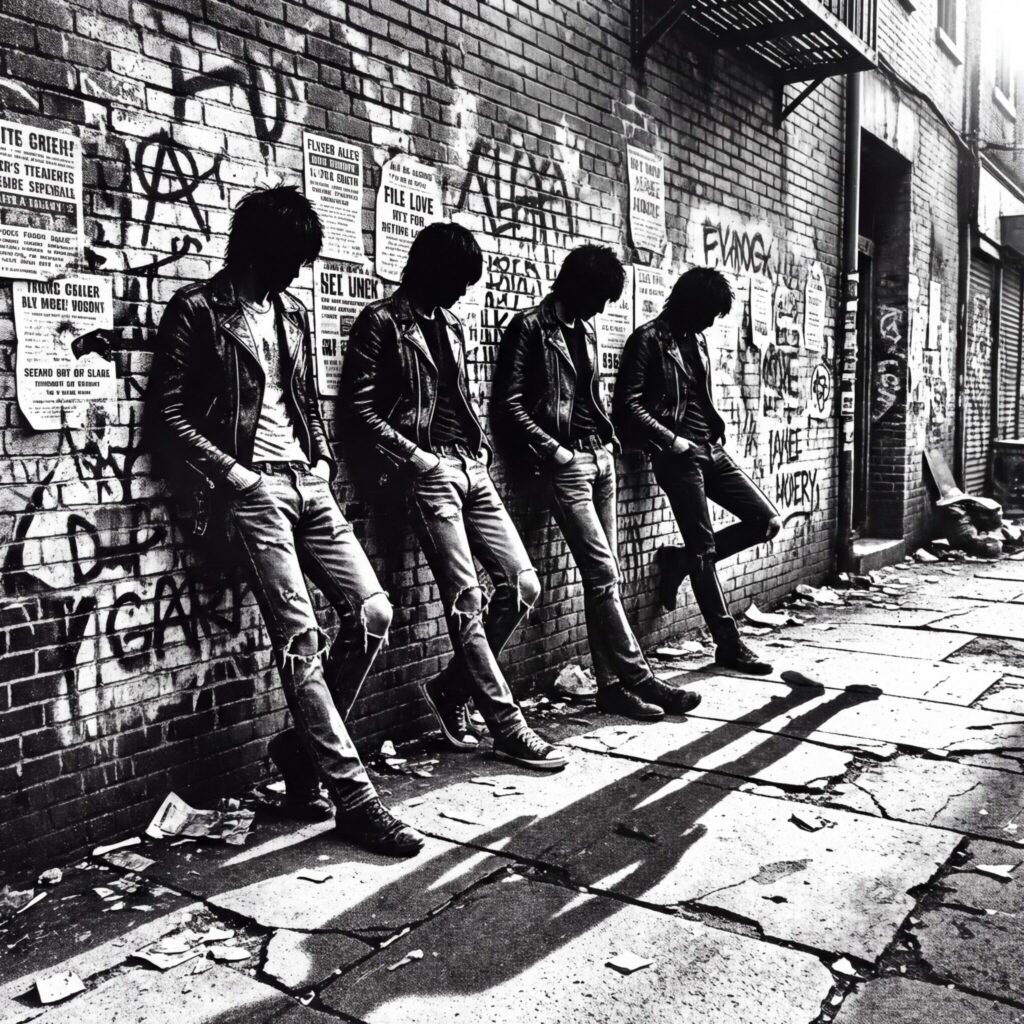
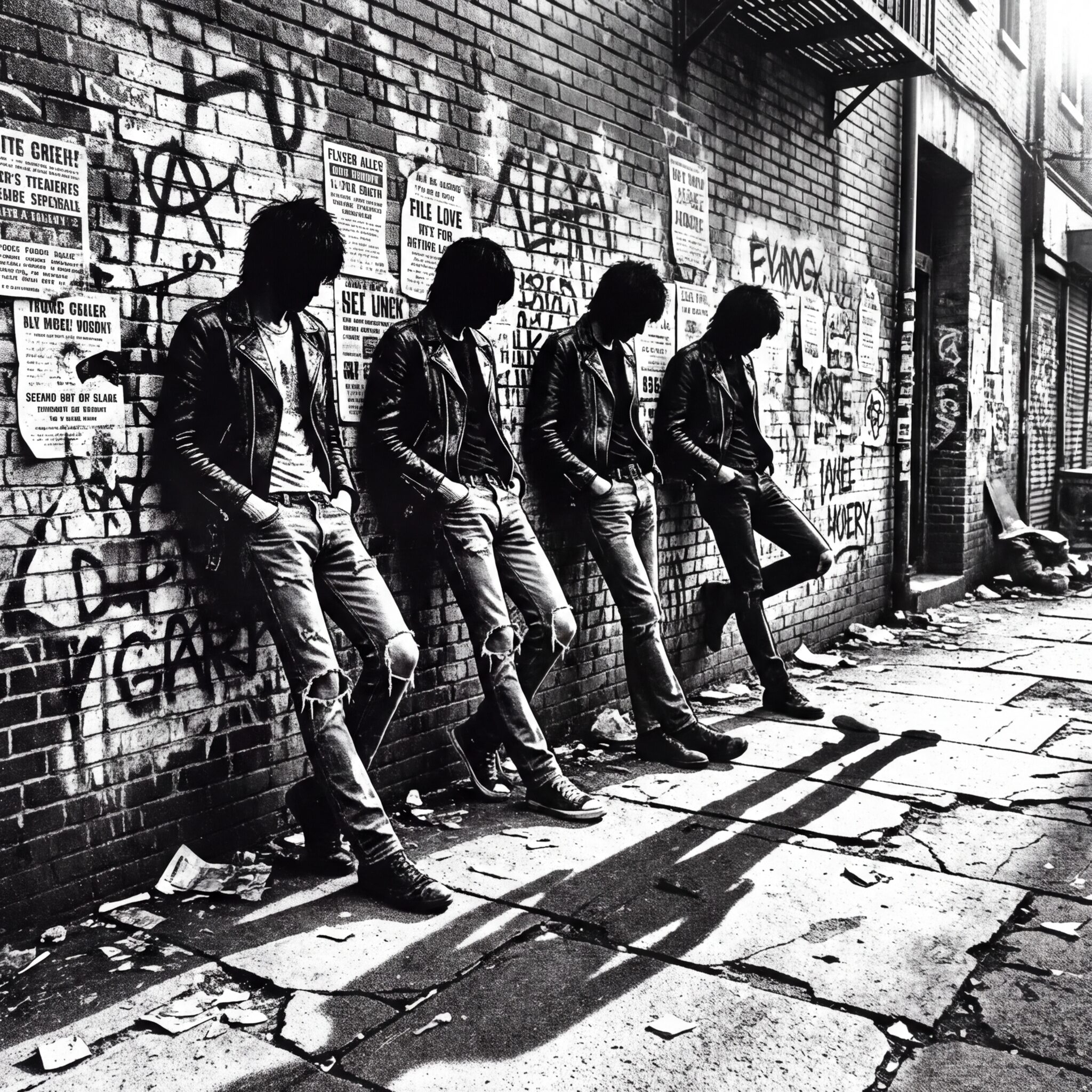
And the album cover, Roberta Bayley’s black-and-white photograph of four guys against a crumbling brick wall at Albert’s Garden on the Bowery, hangs in the Museum of Modern Art. The photo cost $125. It’s now in MoMA. You could write a whole essay about what that means, about the art world’s relationship with punk, about who gets to decide what’s art, but the simplest version is the best one: four guys stood against a wall, a photographer with a camera she’d owned for three months pressed the shutter, and the image became iconic. The Ramones’ whole philosophy in a single frame.
And if you want proof that this thing has escaped music entirely: Alvin and the Chipmunks parodied the album cover for Chipmunk Punk. When the Chipmunks are copying you, you’re not a band anymore. You’re an institution.
The Family Tree
From Screeching Weasel recording the entire debut track-for-track to Metallica, U2, and Weird Al each claiming their favorite, the Ramones’ first album spawned a whole ecosystem of tributes. And Arturo Vega’s presidential seal logo may have outlasted all of them, worn on t-shirts by millions who’ve never heard a single song.
You want to know how deep an album got into people’s bones? Don’t check the chart position. Watch what other musicians do with it.
In 1992, Screeching Weasel released a cover of the entire Ramones debut, track for track, on Selfless Records. Not a tribute album with various artists picking their favorites. One band, covering the whole thing, start to finish. It’s obsessive, and it works because Ben Weasel understood that the album is a unified statement, not a collection of singles. You can’t cherry-pick from it.
Other people cherry-picked from it anyway, and it turned out great. The 2003 tribute album We’re a Happy Family brought together artists who had no business being on the same record: Red Hot Chili Peppers covering “Havana Affair,” Rob Zombie doing “Blitzkrieg Bop,” Metallica tackling “53rd & 3rd,” U2 taking on “Beat on the Brat,” and John Frusciante interpreting “Today Your Love, Tomorrow the World” solo, as in a Chili Pepper doing his own Ramones cover on a tribute album that already had the Chili Peppers on it. That’s a level of Ramones devotion that deserves its own footnote. Pete Yorn handled “I Wanna Be Your Boyfriend” with a tenderness that reminded everyone the Ramones could write a love song when they wanted to.
And then there’s Weird Al Yankovic, who covered “Beat on the Brat” on the Dr. Demento Covered in Punk LP in 2018. I have a theory about Weird Al: when he covers you, you’re in the permanent canon. Not the cool canon, not the critics’ canon, but the everyone canon. The canon your parents know about. Weird Al is the final stage of cultural absorption, and the Ramones passed through it.
But the most lasting visual tribute never involved a note of music. Arturo Vega, the Mexican-American graphic designer who attended all but two of the Ramones’ 2,263 concerts and is rightly called “the fifth Ramone,” designed the presidential seal logo in 1976 after a trip to Washington, D.C. He took the Great Seal of the United States and made it punk: band members’ names replaced “Seal of the President,” the eagle holds a baseball bat (Johnny’s love of baseball, “Beat on the Brat”), an apple tree branch replaces the olive branch (“American as apple pie”), and “Look Out Below,” later changed to “Hey Ho Let’s Go,” replaces “E Pluribus Unum.” Vega had the logo tattooed on his own back. It is, arguably, the most recognized band logo in rock. More recognized than the Stones’ tongue. More recognized than the Dead’s skull or Zeppelin’s Icarus. You see it on t-shirts in every country on earth, worn by people who have never heard a Ramones song in their lives. The logo is the band, in the same way the music is the band: simple, blunt, readable at a glance, and stuck in your head the moment you see it.
The $6,400 Question
The Ramones didn’t strip rock and roll down, they rebuilt it from scratch using the same studio tools as everyone else, and made simplicity sound inevitable, all for less than the cost of a used car.
Six thousand four hundred dollars. In 1976 money, that’s roughly $36,000 today, still less than most bands spend on a single music video. Less than a year of rent in the city where it was made. Less than the white Mosrite that Johnny played for the next twenty years eventually sold for at auction ($937,500, if you’re curious). The Ramones made what might be the most consequential debut in rock history for the price of a used car.
And they had material left over. The band walked into Plaza Sound with enough songs for three albums. The surplus gave them Leave Home and Rocket to Russia, both released in 1977, both building on the template laid down in those seven nights past the Rockettes’ rehearsal rooms. Three albums’ worth of material, recorded and released in under two years, all of it drawn from the same well of speed and melody and autobiography and horror-movie glee.
Joey understood what they’d done, even if the sales figures didn’t reflect it yet. “Doing an album in a week and bringing it in for $6,400 was unheard of,” he said, “especially since it was an album that really changed the world.”
He wasn’t bragging. He was stating a fact, and the decades have only made it harder to argue with. Every punk band that ever booked a cheap studio and tried to capture something real and fast and alive, they’re working in the space the Ramones opened up. Not just sonically, but philosophically. The debut proved that you didn’t need money or time or virtuosity or anyone’s permission. You needed songs, conviction, and someone smart enough to make it all sound right.
Because here’s the thing I keep coming back to: the Ramones didn’t strip rock and roll down. That’s the myth, and it’s wrong. They rebuilt it from scratch, using the same studio tools everyone else had access to, the same microphones, the same tape machines, the same mixing boards. Craig Leon used Beatles techniques. Tommy used his experience engineering Hendrix sessions. They layered overdubs, they doubled vocals, they positioned microphones like they were recording an orchestra. They did everything a “real” record would do. They just did it in service of a vision so focused and so fast that it sounded like nothing was happening at all.
That’s the trick, and it’s a better one than simplicity. The illusion of simplicity. Making it sound so inevitable, so much like the only way these songs could possibly exist, that an entire generation heard the album and thought: I can do that. A lot of them went and proved it. All for $6,400.
🎸 Did you know? The Ramones recorded their debut album at Plaza Sound Studios inside Radio City Music Hall, past the Rockettes’ rehearsal rooms, in Toscanini’s old space. Cost: $6,400. Result: punk rock. #Ramones #PunkRock #1976 🤘 https://bit.ly/47WquLA

Click to Tweet