Taylor Swift | You Belong With Me
A Phone Call, A Chorus, A Grenade
A two-hour writing session produced a song that kicked off the most infamous moment in awards show history, a corporate war worth hundreds of millions, and a re-recording campaign that changed the music industry, and it’s still not done.
Here’s a story that sounds made up. A teenage songwriter overhears a friend on the phone with his girlfriend. He’s getting chewed out, doing that desperate back-pedal thing, “No, baby… Of course I love you. More than anything!”, and she feels bad for him. So she takes that feeling into a writing session, knocks out a song in about two hours, and moves on with her life.
That song kicks off the most infamous moment in awards show history. It becomes the thing at the center of a corporate fight worth hundreds of millions of dollars. It gets re-recorded out of spite and principle, registered as a literal legal entity, and performed on stage 381 times across five world tours. In 2025, it’s still generating headlines.
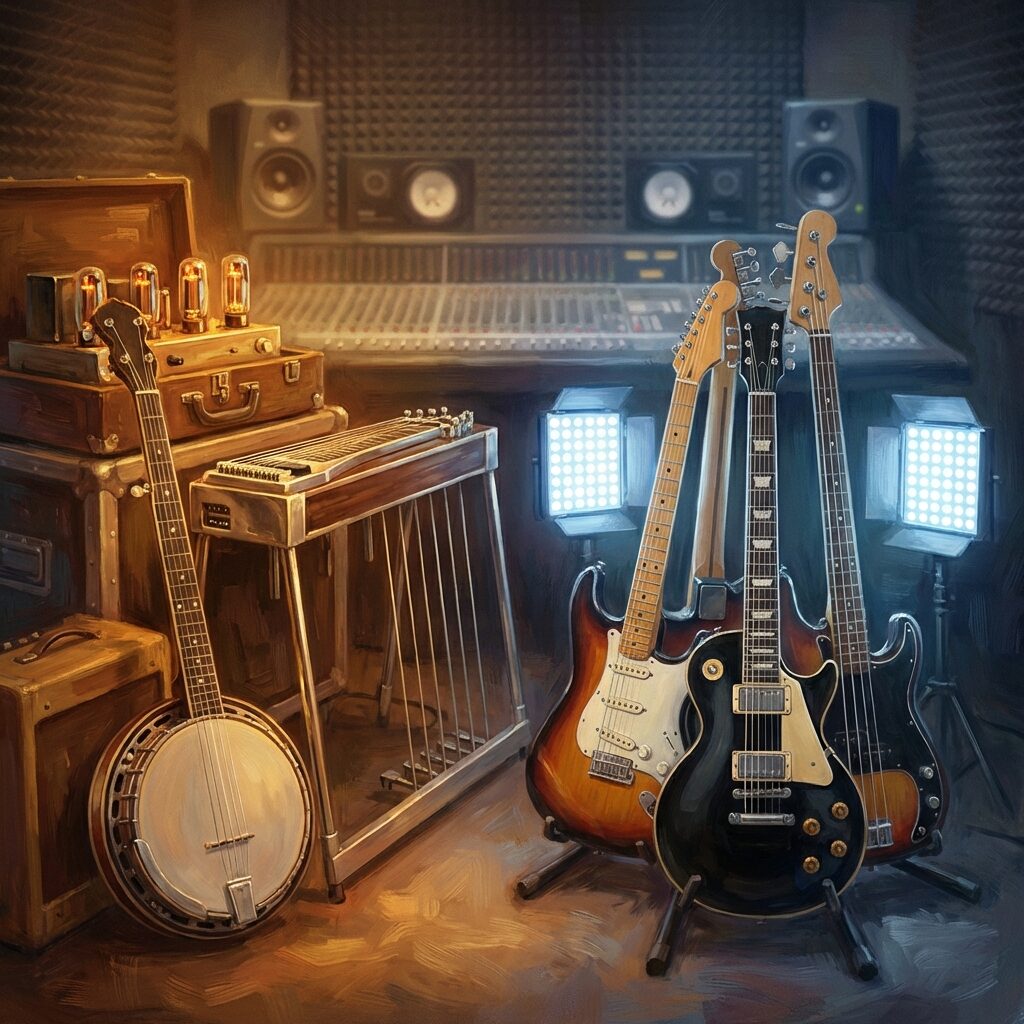
The song is “You Belong with Me.” And if you haven’t listened to it in a while, go put it on. You’ll hear a banjo picking out a bright little intro over pedal steel, the kind of thing that says country in neon letters. Then the verses roll in, conversational, syncopated, a little breathless, and you can feel the whole thing coiling. When the chorus hits, the banjo disappears, electric guitars flood in, and suddenly you’re not in Nashville anymore. You’re somewhere between a 90s rock radio station and a high school parking lot, and the hook is so sticky it’ll live in your head for three days.
Taylor Swift once said that this song and “Love Story” were the two that “really, really changed my life in a huge way.” She was right about that. But I don’t think she had any idea how many different lives this one song would go on to live.
Let me tell you the full story.
Eighteen and Already Producing
At eighteen, Swift was already co-producing her own album and had fought her label to work with unknown producer Nathan Chapman, recording over fifty songs and cutting all but thirteen, with an instinct for curation that went way beyond her age.
To understand why “You Belong with Me” hit the way it did, you need to understand where Taylor Swift was in late 2008. She was eighteen years old. She’d been the youngest signing in Sony/ATV’s publishing history at fourteen. She was about to release her sophomore album, Fearless, with exactly thirteen tracks on the standard edition, because thirteen was her lucky number and she was absolutely the kind of person who’d structure a major label release around superstition. Which, honestly, tells you more about how much control she already had than any behind-the-scenes documentary could.
What gets lost in the retelling is that Fearless was Swift’s debut as a record producer. Not a songwriter who sat in while the adults worked the board, a producer, with the credit to prove it. At eighteen. She co-produced every track with Nathan Chapman, and how that partnership came together is one of my favorite bits of music industry lore.
When Swift first signed to Big Machine Records, they did what labels do, they sent her to work with established, big-name producers. Nashville heavyweights. The results were fine. Professional. Polished. And Swift hated them. She kept going back to the demo versions, the ones recorded by an unknown guy named Nathan Chapman in what she described as “a shack behind a publishing company in Nashville.” Those demos had something the expensive sessions didn’t. Eventually the label gave in and let Chapman produce the records for real.
Chapman was a one-man band in the studio, his credits on Fearless read like an instrument inventory: acoustic guitar, bass guitar, electric guitar, keyboard, Hammond organ, mandolin, mixing, percussion, piano, programming, steel guitar, vocal harmony. He and Swift recorded over fifty songs for the album. Thirteen made the cut. That ratio is almost comically brutal, and it says something real about Swift’s instinct for curation. Most eighteen-year-olds would have a hard time letting go of songs they’d written. She was cutting them without flinching.
So that’s where we are in the fall of 2008. A teenager who’d fought her label for creative control and won. A self-taught producer with a sharp ear for what belonged on her record and what didn’t. She was still very much a country artist, the Nashville establishment had embraced her, the CMA Awards were rolling in, but she was standing right at the edge of something much bigger, even if she couldn’t see it from where she stood.
The album was almost finished. It just needed one more song.
Written in Two Hours, Detonated for Decades
Swift overheard a bandmate’s phone fight with his girlfriend while on tour and brought the idea to co-writer Liz Rose days before the album deadline. They knocked it out in two hours flat, the last of over fifty candidates to make Fearless, with a hidden message buried in the CD booklet’s capitalized letters: LOVE IS BLIND SO YOU COULDN’T SEE ME.
The story of how “You Belong with Me” got written is almost comically casual for a song that would become one of the biggest pop hits of the decade.
Swift was on tour, and one of her band members was having a rough phone call with his girlfriend. Not a private call, apparently, Swift could hear enough to piece together the dynamic. “He was completely on the defensive,” she recalled, “saying, ‘I love you more than anything! Baby, I’m so sorry.'” The girlfriend was laying into him, and Swift felt genuinely bad watching it happen. She filed the feeling away.
Not long after, she brought the concept to her regular co-writer Liz Rose. The timing was tight. Rose remembered Swift telling her: “I’m finishing the record on Monday. Let’s write an uptempo song.” This was literally the last song written for Fearless, chosen from over fifty candidates.
Swift came into the session with the core conceit already locked: the girl-next-door who knows a guy better than his actual girlfriend does. She had what she described as her favorite lines to write, “She wears short skirts, I wear T-shirts”, six words that make the whole narrative click into place. Rose picked up on the contrast and pushed it further, suggesting “something about bleachers.” That’s where “She’s Cheer Captain and I’m on the bleachers” came from, the cheerleader versus the wallflower.
The whole thing took about two hours. Rose later marveled at the gap between how fast the song came together and how much was already embedded in it: “It’s amazing to go back to the work tape and listen to it, because you wouldn’t believe the nuances that show up in the album version, too. When she’s writing something, she’s already producing in her head. She hears it all.”
That’s not an exaggeration. Swift had a specific goal for the song that she articulated clearly: she wanted “to pen an uptempo song in which the verses explode into the chorus.” Think about that for a second. She wasn’t just writing lyrics and letting the producer figure out the dynamics. At eighteen, she was designing how the song would feel, the buildup in the verses, the release in the chorus, the thing that would make it stick on radio. She was thinking like a producer before she ever touched a fader.
And then there’s the Easter egg. If you had the original Fearless CD, the physical booklet, with all the lyrics printed out, you could find a hidden message encoded in capitalized letters scattered through the text. String them together and they spell: LOVE IS BLIND SO YOU COULDN’T SEE ME. Swift did this for every song on the album, burying secondary meanings inside the packaging. She kept it up through 1989 before retiring the trick. This particular message, though, is hard to shake once you know what the song is about. She wrote a song about wanting to be seen, then hid a message about not being seen inside the liner notes. You could call that clever packaging. You could also call it the thesis of her entire early career.
Four Chords and a Banjo That Disappears
Built on pop’s most common four-chord progression, the song’s real trick is production: country instrumentation drives the verses, then drops back as electric guitars take over the chorus. It’s a genre shift disguised as a dynamic shift, and it’s why nobody could agree on what to call it.
Let me walk you through the construction here, because it’s sneakier than it sounds.
On paper, “You Belong with Me” is built on the most common chord progression in pop music: I–V–vi–IV. In the key of F-sharp major, at about 130 beats per minute. The same four chords cycle through both the verses and the chorus. This is the progression that podcasters love to make fun of, the one shared by “Let It Be” and “No Woman No Cry” and roughly ten thousand other songs. It should be boring. The musical equivalent of painting with only primary colors.
So why isn’t it? Because those four chords are doing almost nothing. Everything interesting happens in the instrumentation layered over them.
The production trick at the heart of this song is a genre shift disguised as a dynamic shift. Listen to the verses: banjo and pedal steel guitar are driving the rhythm, fiddle weaving around the edges. Country instrumentation, full stop. Nashville to its bones. Then the chorus arrives and those instruments just… submerge. They don’t disappear entirely, but they drop way back in the mix as electric guitars and a pumping bass line surge forward. Suddenly you’re hearing something that, as Billboard‘s Andrew Unterberger put it, sounds “almost like a 90s rock song.”
Every verse reassures country radio that this is one of theirs. Every chorus reaches out and grabs pop listeners by the collar. The same four chords, but the instrumental wardrobe change makes them feel like two completely different songs stitched together at the seams. Music scholar Perone called the combination of steady eighth-note rock textures with country banjo, fiddle, and mandolin “highly unusual,” and he was right. But it doesn’t feel unusual when you’re listening. It just feels like the song getting bigger.
The vocal arrangement is doing similar work. In the verses, Swift’s delivery is syncopated, her notes landing between the beats rather than on them. There’s a restless, fidgety quality to it that matches the lyrical frustration. She’s a girl who can’t sit still because the guy she likes is with someone else. Then the pre-chorus straightens out rhythmically, everything clicking onto the beat, building tension like a runway before takeoff. And when the chorus opens up, each line starts right on beat one with the chord change. Big, declarative, no more hiding between beats. She was placing syllables against the pulse to control how anxious or triumphant the song felt at any given moment, and you can hear it if you know to listen for it.
Musicologists Nate Sloan and Charlie Harding identified a melodic motif they call the “T-Drop,” a three-note descending figure that shows up across Swift’s catalog, from “You Belong with Me” through “Mean” and “State of Grace” to “Welcome to New York.” Most listeners would never consciously notice it, but it’s one of those signature moves that contributes to the sense that a Taylor Swift song sounds like a Taylor Swift song, even when the genre changes completely.
The genre classification debate around this track is honestly kind of hilarious. Jody Rosen called it power pop. Nolan Gasser heard “typical pop rock.” Other critics invoked new wave, pop-punk, even compared it to 80s subgenres. And of course it charted as a country song. “You Belong with Me” sits in a genuinely weird genre space, and the fact that nobody could agree on what to call it is probably why it worked everywhere at once.
Two Taylors, One High School
Swift plays both the girl-next-door and the cheerleader antagonist in a video filmed at her brother’s actual high school, a visual choice that made the song’s drama literal and turned the video into something people still reference almost two decades later.
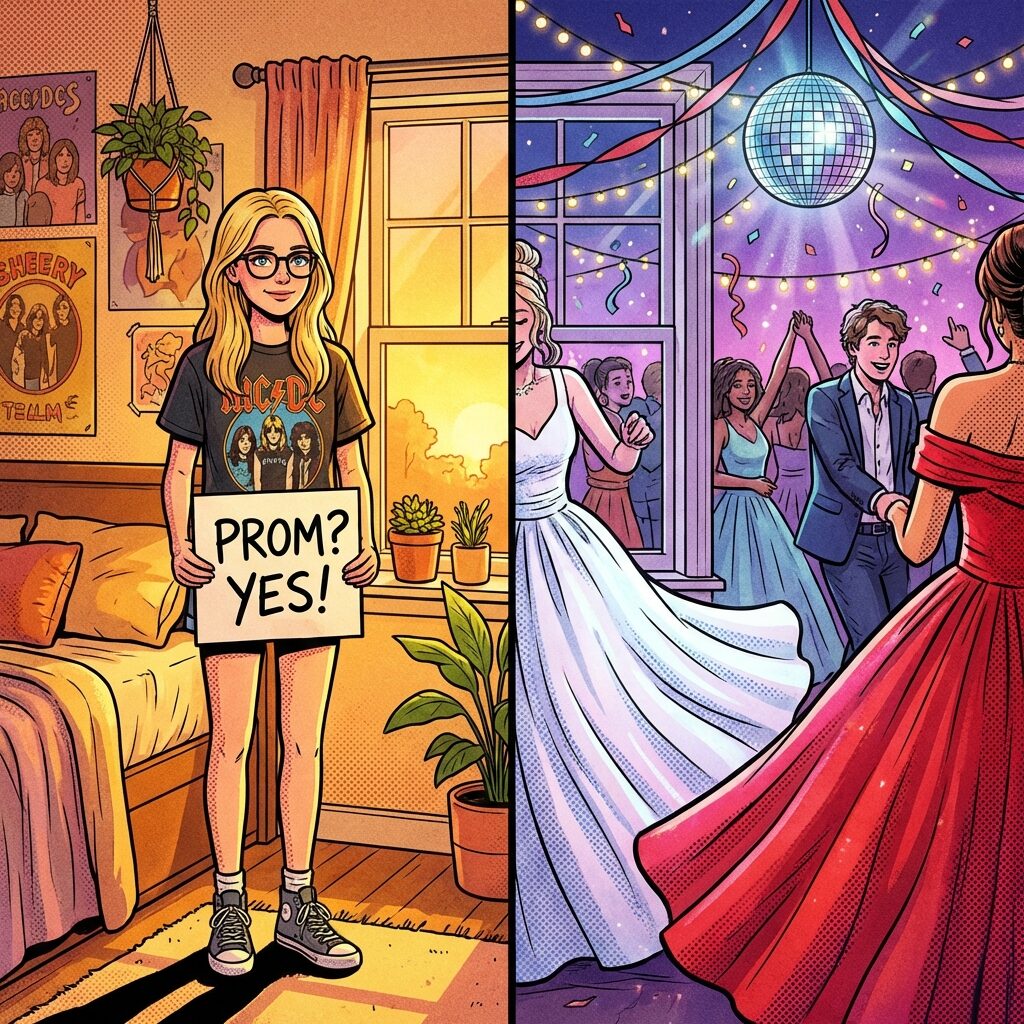
The music video for “You Belong with Me” might be better known than the song at this point. Directed by Roman White, who’d also done Swift’s “Fifteen”, it premiered on CMT on May 4, 2009, and it made one choice that separated it from every other teen heartbreak video of that era.
Swift plays both characters.
She’s the blonde, curly-haired, bespectacled girl-next-door, T-shirts, sneakers, marching band, and she’s also the brunette, straight-haired popular cheerleader in short skirts and high heels. Same face, two wigs, and suddenly the song’s binary drama is right there on screen, one person arguing with herself. It’s almost too on-the-nose, but Swift commits to both roles with enough sincerity that you buy it. The brunette villain isn’t campy or exaggerated. She’s just… the other option. The one he keeps choosing.
The filming location helps sell the whole thing in a way that set design never could. They shot at Pope John Paul II High School in Hendersonville, Tennessee, where Swift’s younger brother actually attended. The students in the hallway scenes? Real students from the school, pressed into service as extras. The guy on the football field flirting with the cheerleader? One of her brother’s friends. Lucas Till, who plays the male lead, was someone Swift had met on the set of Hannah Montana: The Movie, she’d been drawn to his “cool look” and thought he’d make a convincing “dreamy guy.”
One of my favorite production details: Swift had choreographed a proper dance routine for the bedroom scenes where she’s rocking out alone. Director Roman White scrapped it and told her to do “the dumbest moves” instead. He was right. A goofy teenager dancing badly in her room reads as real in a way that choreography never could. That single call is why people watch those scenes and think “that’s me” instead of “that’s a music video.”
The whole thing builds to a prom climax that’s pure teen-movie fantasy. The protagonist shows up in a white dress, procured from Jovani Fashion, and yes, the color choice was deliberate, while the antagonist wears tight red. Throughout the video, Swift’s character and Till communicate by holding up handwritten signs through their adjacent bedroom windows. At the prom, they each reveal a folded sign that reads “I love you.” They kiss. The cheerleader loses. It’s corny and earnest and completely irresistible, which is basically the song’s whole deal.
Billboard ranked it number 52 on their list of the 100 Greatest Music Videos of the 21st Century. Given that the video’s most famous appearance would be at the VMAs four months after its premiere, in a context nobody could have predicted, that ranking might even be conservative.
The Country Song That Conquered Pop Radio
The first country song to top Billboard’s all-genre Radio Songs chart in nearly two decades, reaching 117 million radio listeners in a single week. No country track had managed that kind of crossover since modern chart tracking began.
The chart performance of “You Belong with Me” isn’t just impressive. It’s historically strange. This was a country song that behaved like a pop song on every chart that existed, breaking records that had stood since modern chart tracking began.
Start with the big one. When “You Belong with Me” hit number one on Billboard‘s Radio Songs chart, it became the first country song to top the all-genre airplay chart since Billboard began incorporating Nielsen BDS-monitored data in 1990. Nearly two decades of radio tracking, all that data, and no country song had crossed over hard enough to be the most-played song on all of American radio. Until this one.
The radio numbers were absurd. In the week of September 24, 2009, Billboard reported that “You Belong with Me” reached 117 million radio listeners, making it the most-heard song on US radio that week and the first country crossover track to hit that mark since Nielsen SoundScan began tracking. At the same time, it and “Love Story” were sitting at numbers one and two on Nielsen’s BDS Top 10 Most Played Songs chart, all genres. Two country songs monopolizing the top of a chart that included every genre in American music.
On the Hot 100, it peaked at number two the week of August 22, 2009. The only thing keeping it from number one was the Black Eyed Peas’ “I Gotta Feeling,” which was in the middle of one of those interminable chart runs that defined the summer of 2009. If you were alive and had ears that summer, you heard both of these songs approximately four hundred times.
The crossover milestones just kept coming. It simultaneously topped Hot Country Songs and Radio Songs, the first country song to pull that off. It sat in the top five of both the Hot 100 and Hot Country Songs for the week ending July 31, 2009. The last song to manage that was Faith Hill’s “Breathe,” over nine years earlier. It also hit number one on the Adult Contemporary chart for fourteen weeks, Swift’s longest reign at that format.
The song had debuted as a promotional single back in November 2008, entering at number twelve on the Hot 100 with 172,000 digital downloads, a strong showing for what was essentially a pre-album teaser. It fell off the chart the next week, then re-entered at number 87 when it was officially released to radio in April 2009 and began its proper climb.
Certifications fill in the rest of the picture. Seven-times platinum in the US from the RIAA. Two-times platinum in Australia, where it peaked at number five and was the only international market to get a physical single release. Over 5.1 million units sold worldwide according to the IFPI. And when Fearless (Taylor’s Version) brought the re-recorded version into the streaming era, it passed one billion Spotify streams, Swift’s twenty-second song to cross that line.
In 2014, Billboard ranked it number one among all of Taylor Swift’s Hot 100 songs. Not “Shake It Off.” Not “Blank Space.” The country song about wanting the boy next door to notice you.
Kanye, the VMAs, and the Moment That Changed Everything
The 2009 VMAs were supposed to be Taylor Swift’s Cinderella moment. Instead, Kanye West grabbed the microphone ten seconds into her first acceptance speech, and what followed was a feud that would wind through apologies, retractions, diss tracks, and hidden acronyms for over a decade.
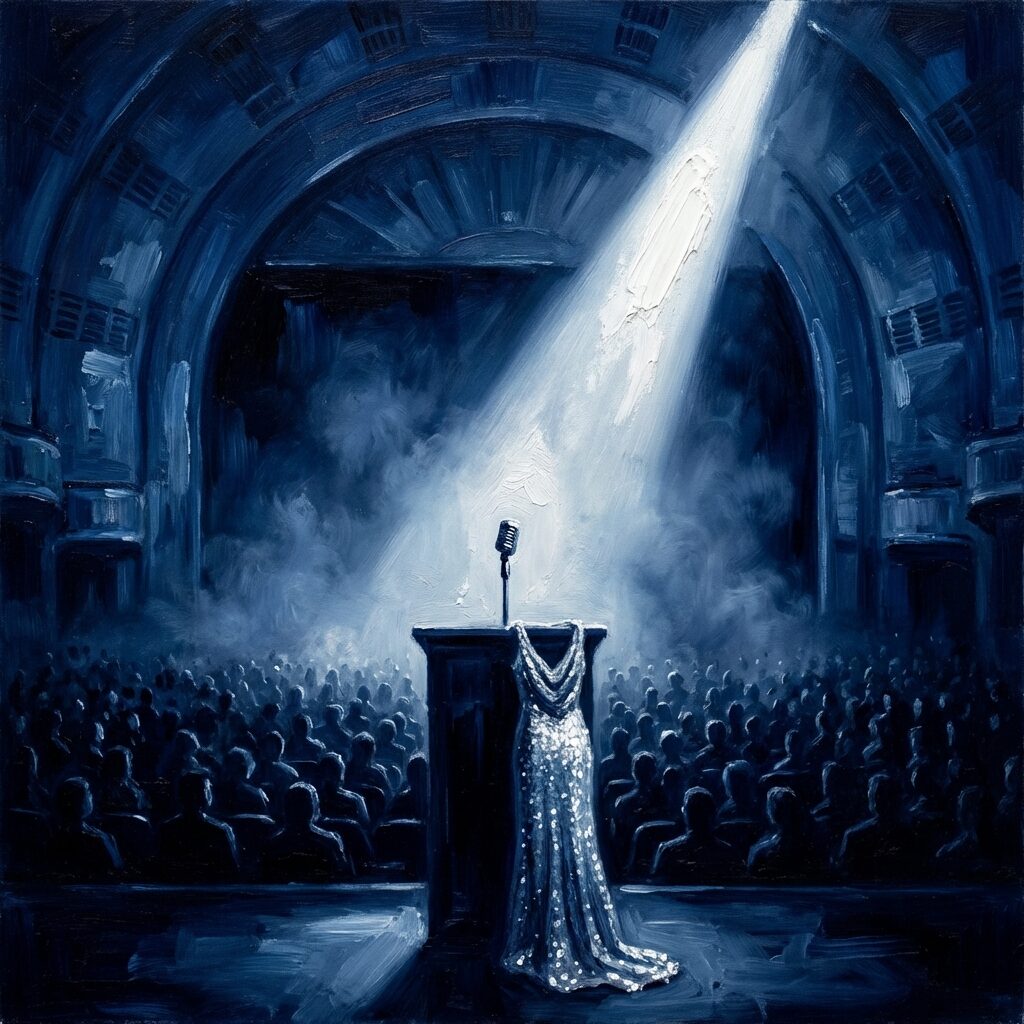
September 13, 2009. Radio City Music Hall, New York City. The MTV Video Music Awards, hosted by Russell Brand. Taylor Swift is nineteen years old and she arrives in a Cinderella-style horse-drawn carriage wearing a silver sequined gown, which is the kind of detail that only makes sense when you remember she was nineteen and this was her first VMA ever.
The award for Best Female Video is presented by Shakira and Taylor Lautner, whom Swift was dating at the time. The nominees include Beyoncé’s “Single Ladies (Put a Ring on It),” which everyone assumed would win. It didn’t. “You Belong with Me” won instead, and Swift walked to the stage to accept the first VMA of her career.
She got about ten seconds into her speech.
Kanye West, age thirty-two, came from the front row. He took the microphone from her hands. And he said the words that would become the most quoted sentence in awards show history: “Yo, Taylor, I’m really happy for you, I’mma let you finish, but Beyoncé had one of the best videos of all time! One of the best videos of all time!” He raised his middle fingers toward the audience as he walked off. The crowd booed. West was removed from the show.
Swift stood there. She later revealed in the Miss Americana documentary that she didn’t even understand what was happening in real time: “It was so echo-y in there. At the time, I didn’t know they were booing him doing that. I thought they were booing me.”
The fallout was immediate, massive, and bipartisan in a way almost nothing in 2009 was. Pink reportedly shook her head as she passed West and then chewed him out to his face. Katy Perry tweeted two words that don’t need repeating here. President Barack Obama, in an off-the-record comment to CNBC, called West “a jackass.” Former presidents Jimmy Carter and Donald Trump both condemned the interruption, which might be the only thing those two ever agreed on. Oprah Winfrey sent Swift flowers the next morning.
Backstage, Swift was seen crying hysterically. Beyoncé and her father Mathew Knowles were also in tears. When Beyoncé won Video of the Year later that night, an outcome that had been spoiled to her backstage by Viacom president Van Toffler specifically so she could invite Swift back to the stage, she did exactly that, calling Swift up to finish her acceptance speech. It was a generous move, and the fact that it was pre-arranged by a network executive rather than purely spontaneous doesn’t really diminish Beyoncé’s willingness to do it.
And then Swift had to perform. The song she performed was, of course, “You Belong with Me,” the song that had just won the award, the song that had just been publicly declared unworthy of the award by one of music’s most famous figures. The first portion of the performance was prerecorded because Swift was too shaken to perform live. But the second half found her emerging from the Rockefeller Center subway station and performing on top of a taxi on the street outside. Picture that for a second: a nineteen-year-old singing a song about wanting to be seen, minutes after being publicly told she didn’t deserve to be seen, standing on the roof of a cab in midtown Manhattan.
Nine million people watched the show that night, a 17% jump over 2008 and the highest VMAs audience since 2004. Rolling Stone later named it the wildest moment in VMA history. It gave the internet the endlessly remixed snowclone format: “X is one of the greatest Y of all time.”
But the real story is the long tail. West’s apologies shifted over the years: a deleted blog post, a tearful appearance on Jay Leno (where Leno asked how his late mother would have felt, a moment of television cruelty disguised as moral seriousness), a Twitter storm followed by account deletion, and finally a 2013 New York Times interview where he said he had no regrets and had only apologized due to “peer pressure,” calling himself “a soldier of culture” and the interruption “selfless.”
Swift processed it in stages, each one public. She hosted Saturday Night Live in November 2009 and joked about it. She debuted “Innocent” at the 2010 VMAs, performing barefoot while footage of the 2009 interruption played behind her, a song of forgiveness that was also, unmistakably, a power move. She kept a framed photo of the interruption above her fireplace with the caption “Life is full of little interruptions,” the actual VMA trophy displayed under glass beside it. She presented West with the Video Vanguard Award at the 2015 VMAs, parodying the incident, in what seemed like a détente.
It wasn’t. West’s 2016 single “Famous” claimed he’d made Swift famous. The feud reignited. Swift’s “Look What You Made Me Do” video premiered at the 2017 VMAs with Swift wearing her 2009 VMA outfit. And in 2024, her album The Tortured Poets Department included a track called “thanK you aIMee,” with the capital letters spelling K-I-M, a reference that required absolutely zero explanation.
In Miss Americana, Swift reflected on the VMA moment with a bluntness she probably couldn’t have managed at the time: “That was a sort of catalyst for a lot of psychological paths that I went down, and not all of them were beneficial. It was all fueled by not feeling like I belonged there.”
Not feeling like she belonged there. At the VMAs. Accepting an award for a song called “You Belong with Me.” You can’t write that kind of irony on purpose.
Taking the Song Back
When Scooter Braun bought Swift’s masters for $300 million, she re-recorded everything. A single word change in “You Belong with Me”, “the room” becoming “my room”, turned into a symbol of the whole ownership fight.
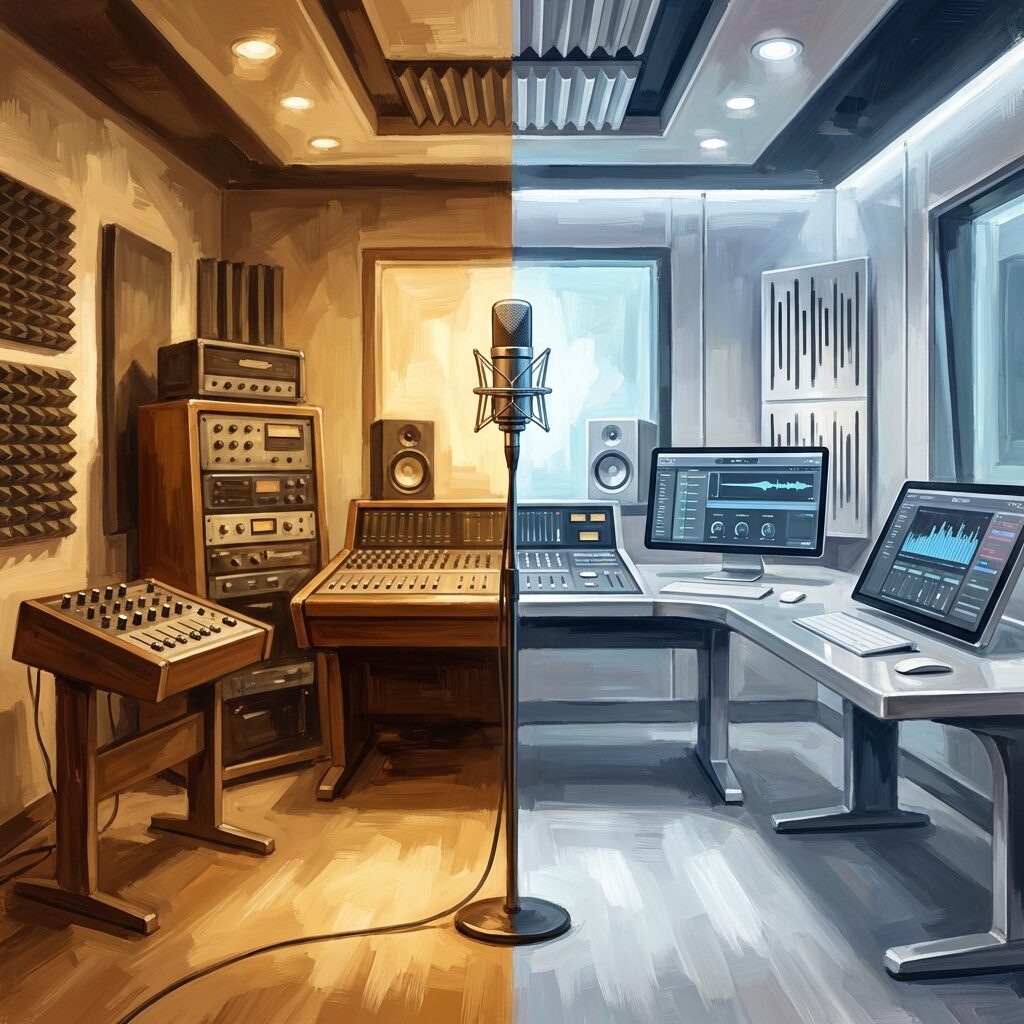
The re-recording of “You Belong with Me” is a story about ownership, and it starts with a contract signed by a fourteen-year-old.
When Taylor Swift first signed with Big Machine Records in 2005, and a publishing deal with Sony/ATV Tree in 2004, the terms were standard for the industry. The label owned the master recordings. That’s how the music business worked. That’s how it had always worked. Nobody thought much about it until they had to.
Swift left Big Machine and signed with Republic Records in November 2018, securing ownership of all future masters. Seven months later, on June 30, 2019, talent manager Scooter Braun’s Ithaca Holdings bought Big Machine Label Group for $300 million. That purchase included the master recordings for Swift’s first six albums, Taylor Swift, Fearless, Speak Now, Red, 1989, and Reputation. Her life’s work, bought by someone she didn’t choose to do business with.
Swift claimed she was denied a reasonable opportunity to buy back her own masters and that Braun had demanded an NDA. On August 25, 2019, she went on CBS This Morning and announced her plan to re-record everything. “I think that artists deserve to own their work,” she said on Good Morning America. “I feel very passionately about that.”
In October 2020, Braun sold the masters to Shamrock Holdings. Swift began re-recording the following month. And on April 9, 2021, Fearless (Taylor’s Version) dropped, the first re-recorded album, and the first real move in what would become a years-long effort to take back her catalog.
“You Belong with Me (Taylor’s Version)” is both the same song and not the same song. Christopher Rowe replaced Nathan Chapman as co-producer, Chapman didn’t return for the re-recordings. Swift recorded her vocals at Kitty Committee Studio in London. The new version was mixed by Serban Ghenea at MixStar Studios in Virginia Beach, mastered by Randy Merrill. A different team in different rooms in different countries, rebuilding something from thirteen years earlier.
Critics noticed. Alexandra Pollard of The Independent said the musical elements were “painstakingly reconstructed.” Kitty Empire of The Observer heard a “smoother” and more “nuanced” production, particularly in “the interplay between the guitar and banjo.” The guitar tones are fuller, more polished. The drums hit harder, processed with a more contemporary pop-country ear. The harmonies are thicker, the backing vocals stacked differently in the choruses and bridge. And then there’s the voice, an eighteen-year-old singing versus a thirty-one-year-old, and you can hear every one of those thirteen years of touring and recording in the difference.
But the detail that fans absolutely lost their minds over was a single word. In the original, Swift sings “I’m in the room.” In Taylor’s Version, it became “I’m in my room.” Two letters. Thousands of Reddit threads, TikTok analyses, thinkpieces. Some fans experienced a genuine Mandela Effect, swearing the original had always said “my room.” Others heard it as something more pointed, the whole reason she re-recorded was to reclaim what was hers, and here was the word “my” showing up in the lyric where it hadn’t been before. Whether Swift did it on purpose or just drifted into it after years of performing the song, the reading was too good to resist.
The story has a coda. On May 30, 2025, Swift formally repurchased her original masters from Shamrock Holdings. The buy-sell cycle earned Braun and Ithaca a profit of $265 million, a figure that Rolling Stone effectively annotated by listing Braun’s original purchase as one of the 50 worst decisions in music industry history. iHeartRadio replaced the original versions with Taylor’s Version tracks in their airplay rotation. The song literally replaced itself on the radio, the new recording overwriting the old one in the infrastructure of American broadcasting.
A song about wanting someone to see you, re-recorded so the whole industry could see exactly who owns what.
381 Nights and a Banjolin
Performed 381 times across five tours, called out as a “pick me anthem,” covered on banjolin at the Grammys, and eventually registered as its own LLC, the song kept accumulating cultural weight for seventeen years.
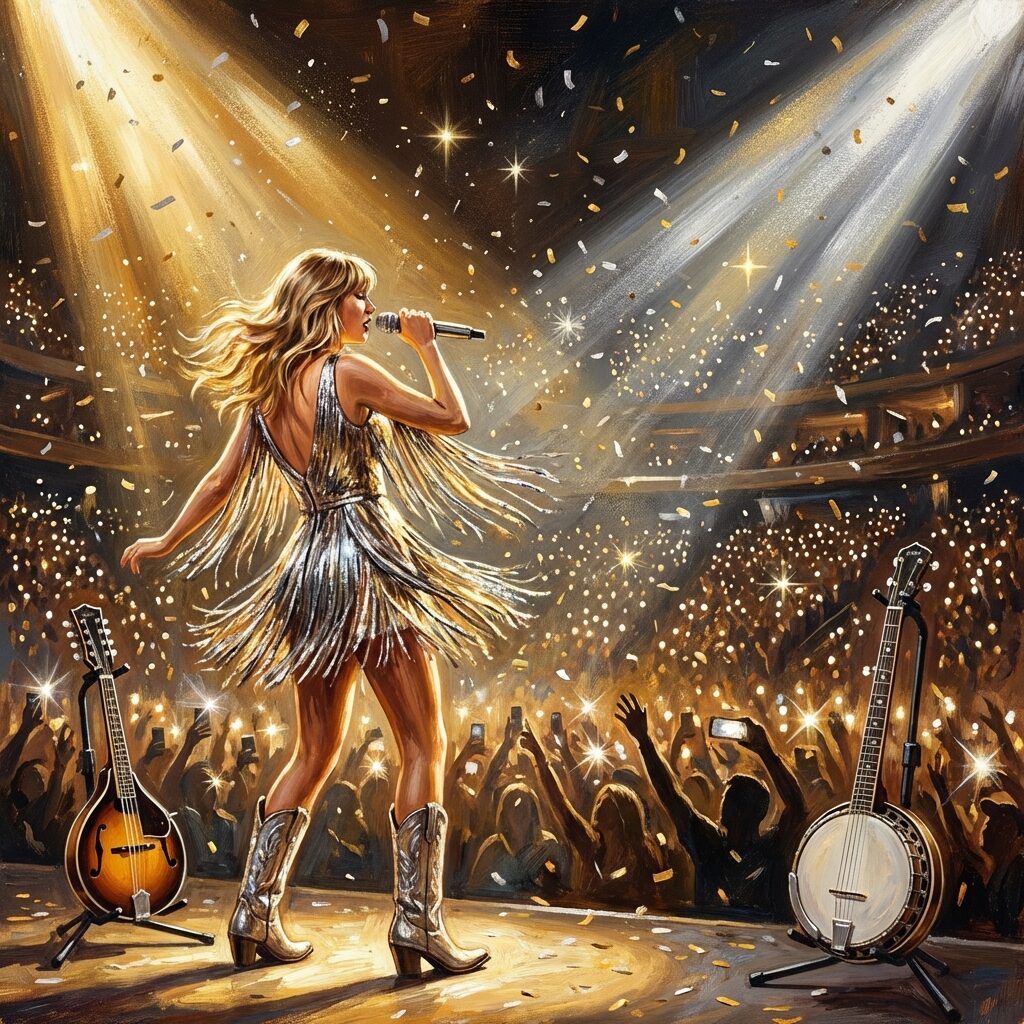
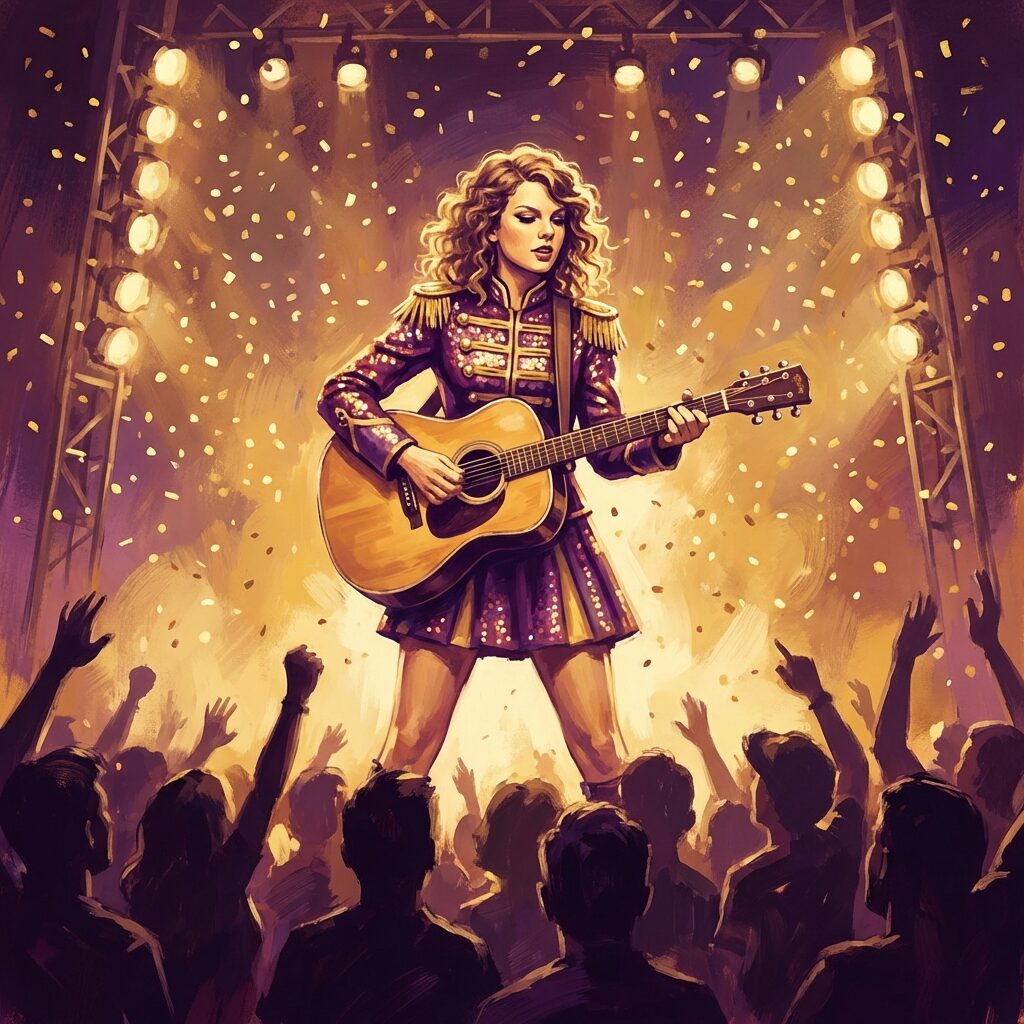
The live performance history of “You Belong with Me” tells its own story. Before the Eras Tour, Swift had performed the song 381 times, making it her third most-played track behind “Love Story” at 491 and “Our Song” at 404. It appeared on five of her six headlining tours, which means it’s been performed in a drum majorette uniform, in stadium spectacle mode, and in the metallic fringed dress and country boots of the Eras Tour’s Fearless act, where it was sung in the key of F rather than the album’s F-sharp.
On the Fearless Tour in 2009-2010, it was literally the opening number, Act 1, Song 1, the first thing audiences heard across 118 dates in North America, England, Australia, and Japan. The stage was decorated as a school hallway. Six dancers dressed as cheerleaders. Swift’s seven-member backing band wore marching band outfits. She’d appear in the drum majorette uniform, then strip it off mid-song to reveal a sparkling silver cocktail dress and boots. The show had supporting acts including Kellie Pickler, Gloriana, and, on select dates, a young Justin Bieber, which is one of those historical footnotes that gets funnier the longer you think about it.
The Butch Walker story is one of my favorites in this entire saga. In November 2009, Walker, a well-respected producer and musician in his own right, the kind of guy who’d worked with everyone from Fall Out Boy to Pink, posted a banjo arrangement of “You Belong with Me” on YouTube, shot at the Hotel Cafe in Los Angeles. Just him and a banjo, playing the song from a male perspective in a folk-bluegrass style. By February 2010, it had a quarter million views.
Swift saw it and tweeted: “@butchwalker covered You Belong With Me and I’m losing my MIND listening to it! Blown away.” Then she called him directly and asked if he’d join her at the 52nd Grammy Awards. Walker agreed, but he had one condition: he wanted to play the banjolin, which he described as “a combination of mandolin and banjo, but not quite either.” At the Staples Center, Walker joined Swift and Stevie Nicks for a stripped-down medley of “You Belong with Me,” “Today Was a Fairytale,” and Fleetwood Mac’s “Rhiannon.”
Walker later told Rolling Stone, with the kind of amused self-awareness that makes you like him immediately: “The irony is that the first time I’m ever playing the Grammys or even going, and I’m playing the banjolin for Taylor Swift.” A veteran musician’s first Grammy appearance, and it’s playing an instrument that’s “not quite either” of the things it’s named after, backing a country-pop song by a twenty-year-old. Music is weird and wonderful.
I want to talk honestly about the feminist critique, because it’s there and it’s not nothing. “You Belong with Me” has been called “the pick me anthem” on social media more times than anyone could count. The subreddit r/notliketheothergirls references it regularly. The argument: the song sets up a binary between a “good” girl-next-door (T-shirts, bleachers, understanding his humor) and a “bad” popular girl (short skirts, cheer captain, high heels) that amounts to slut-shaming. The cheerleader is punished for being attractive and social; the narrator is rewarded for being, essentially, low-maintenance.
It’s a fair reading. It’s also worth noting that Swift was eighteen when she wrote this, drawing on high-school archetypes that had been stock characters in teen movies for decades. The song is fictional, born from overhearing a friend’s phone call, not from an actual rivalry. And the cultural conversation about internalized misogyny in pop music was different in 2008 than it is now. None of which makes the critique invalid, but context matters. The song captures a feeling that’s real, wanting someone who doesn’t see you, even if the way it frames the obstacle reflects the limited lens of an eighteen-year-old in 2008.
One more thing. Lady Gaga, Lady Gaga, admitted that she gets embarrassed because she sings along too loudly when “You Belong with Me” comes on the radio. If pop’s most committed avant-gardist, the woman who wore a meat dress to the VMAs, can’t resist the chorus, I’m not sure any of us should feel bad about it either.
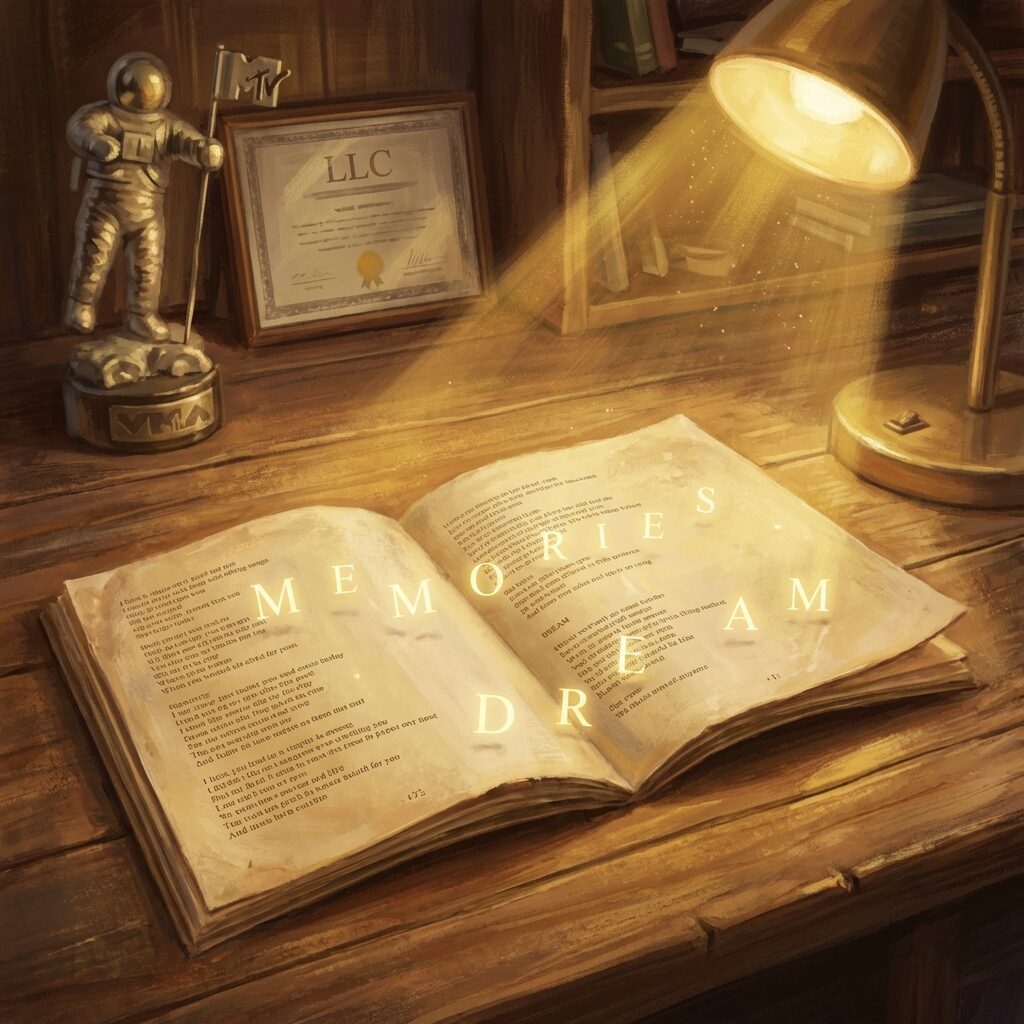
And in 2025, Swift registered her intellectual property under an entity called “You Belong With Me, LLC.” The song became a literal legal entity. A two-hour writing session from 2008 now has its own corporate filing. If that doesn’t tell you everything about where this song ended up, nothing will.
The Song That Wouldn’t Stay Written
From a two-hour writing session to a VMA explosion, a masters war, and an LLC filing, “You Belong with Me” kept showing up at every turning point because four chords and an honest feeling don’t have a shelf life.
So here’s what two hours in a Nashville writing room produced: a song that won a VMA and had that VMA become the most notorious moment in awards show history. A crossover hit that broke chart records standing since the dawn of modern tracking. A video that Billboard ranked among the century’s best. A corporate flashpoint in a $300 million ownership dispute. A re-recording that changed how the entire music industry thinks about artist rights. An LLC filing. 381 live performances and counting.
Most songs do one thing. “You Belong with Me” kept finding new things to do. It showed up at every major turning point of Swift’s career, not because anyone planned it that way, but because the song had a strange persistence, like it was always already relevant to whatever was happening next.
Billboard put it plainly in 2017: throughout all the twists and turns of Swift’s career, she “has not, and perhaps will never, eclipse the magnificence of ‘You Belong with Me.'” That’s a big claim for a song built on four chords and high-school archetypes. But I think they’re right.
Because underneath the controversy, the chart math, the corporate warfare, the song is doing something very simple. It’s a song about wanting someone to see you. Liz Rose, who co-wrote it in that two-hour session seventeen years ago, described what it looks like from the stage: “It’s really fun to do live, it’s really fun to watch young girls to 50-year-old women get up and sing it.” The song outlasted every controversy and every corporate battle because that feeling, wanting to be noticed by someone who doesn’t notice you, doesn’t have a shelf life. Four chords and an honest feeling. That’s it.
The hidden message Taylor Swift buried in the original Fearless CD booklet for this song was LOVE IS BLIND SO YOU COULDN’T SEE ME.
After seventeen years, everyone sees her now.
🎸 Did you know? “You Belong with Me” was the FIRST country song to top Billboard’s all-genre Radio Songs chart since they started using Nielsen data in 1990. Written in just 2 hours! 🤯 #TaylorSwift #CountryPop #Fearless https://bit.ly/3OqfmA6

Click to Tweet