Taylor Swift | Love Story
Twenty Minutes on a Bedroom Floor
A 17-year-old Taylor Swift got sent to her room after her parents vetoed a boyfriend, grabbed a guitar, and came back with a song that rewrites the ending of Romeo and Juliet through a single key change.
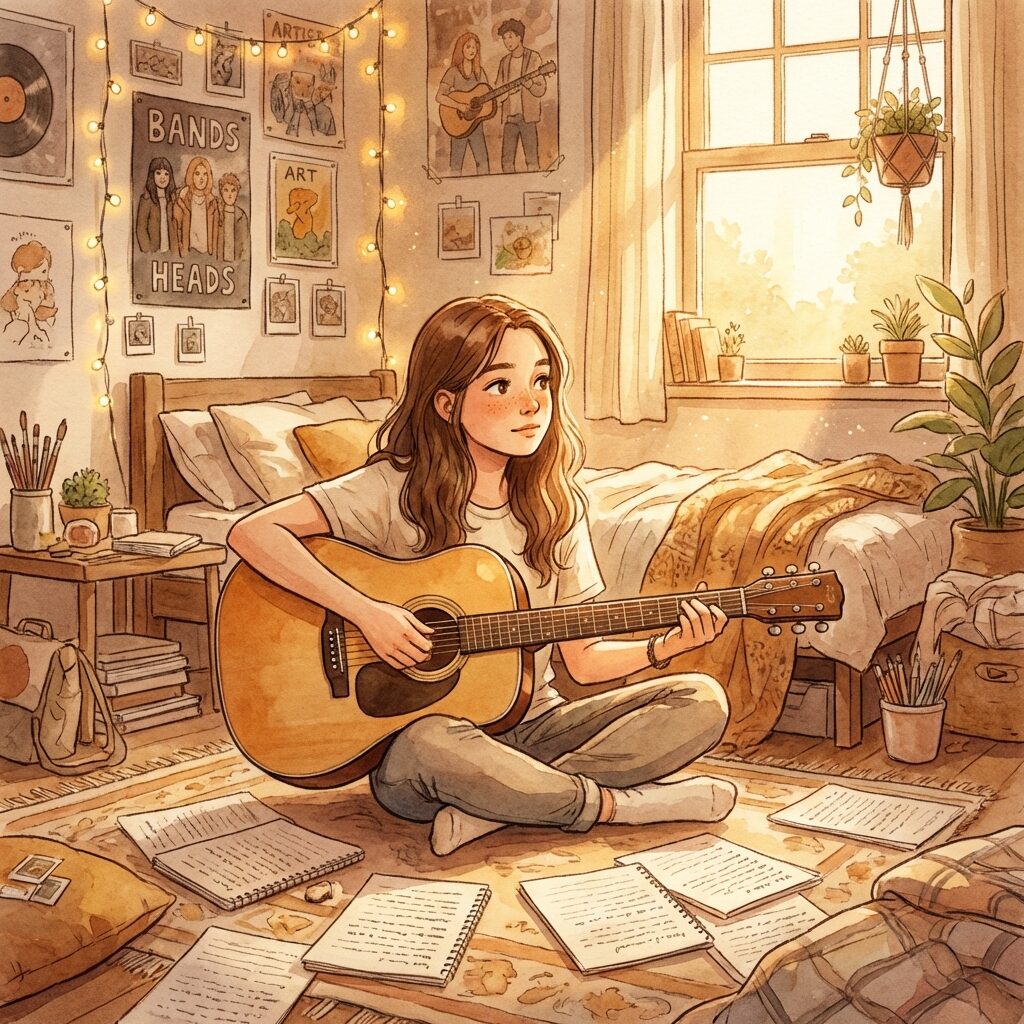
Here’s the scene. It’s sometime in early 2008. Taylor Swift is seventeen years old, and she’s just had the kind of fight with her parents that only happens when you’re seventeen and convinced you’ve found the love of your life and everyone around you is wrong. She storms upstairs, closes the door, grabs her guitar, and sits down on the floor of her bedroom.
What happens next depends on who you ask. Swift says she wrote the whole thing in about twenty minutes. Her mother Andrea, speaking at the 2015 ACM Awards, told a slightly different version: “She went to her room, and she closed the door, and she came out about an hour later with a song called ‘Love Story.'” Whether it was twenty minutes or sixty, the point stands either way. In the time it takes most of us to decide what to order for dinner, a teenager wrote a song that would sell eighteen million copies worldwide.
But here’s what gets me every time I think about this origin story. She didn’t just write a song about a boy her parents didn’t approve of. Plenty of teenagers have done that. She reached for the most famous love story in the English language, Shakespeare’s Romeo and Juliet, a play that’s been performed for over four centuries, a tragedy so thoroughly baked into the culture that “star-crossed lovers” is practically a cliche, and she decided the ending was wrong.
Not wrong as in poorly written. Wrong as in unacceptable. As in: why should they have to die? As in: I’m going to fix this.
And the way she fixed it, the actual musical mechanism she used to lift the story from tragedy into triumph, was a key change. One whole step up, from D major to E major, arriving at the exact moment Romeo drops to his knee and proposes. The music ascends into a brighter key as the narrative resolves into a happy ending. That single modulation is the moment “Love Story” stops being a teenage diary entry and becomes a pop standard. It’s the hinge the whole song swings on, and honestly, it’s the hinge this whole article swings on too.
The Boy, The Fight, The Song
The real story behind “Love Story” involves a universally disapproved-of crush, a deliberate rewrite of Shakespeare’s tragic ending, and a literary debate about one couplet that’s still going seventeen years later.
So who was the boy? Swift has never officially confirmed it, but the evidence points most convincingly to Martin Johnson, the frontman of Boys Like Girls. Johnson was a punk rocker dealing with his own issues, not exactly the ideal match for someone being carefully positioned as Nashville’s American sweetheart. Swift’s publicists reportedly felt the pairing was a bad look. Her family agreed. Her friends agreed. Everyone in Taylor Swift’s orbit looked at this guy and said: no.
“‘Love Story’ is actually about a guy that I almost dated,” Swift told Time magazine in April 2009. “But when I introduced him to my family and my friends, they all said they didn’t like him. All of them!” Andrea Swift confirmed as much at the ACM Awards years later: “Her dad and I strongly disapproved of a certain young man, and rightfully so.”
And Swift herself, with the kind of bluntness you only get in retrospect, admitted on 60 Minutes in 2011 that the boy in question was indeed “a creep, looking back.” But at seventeen? At seventeen he was Romeo.
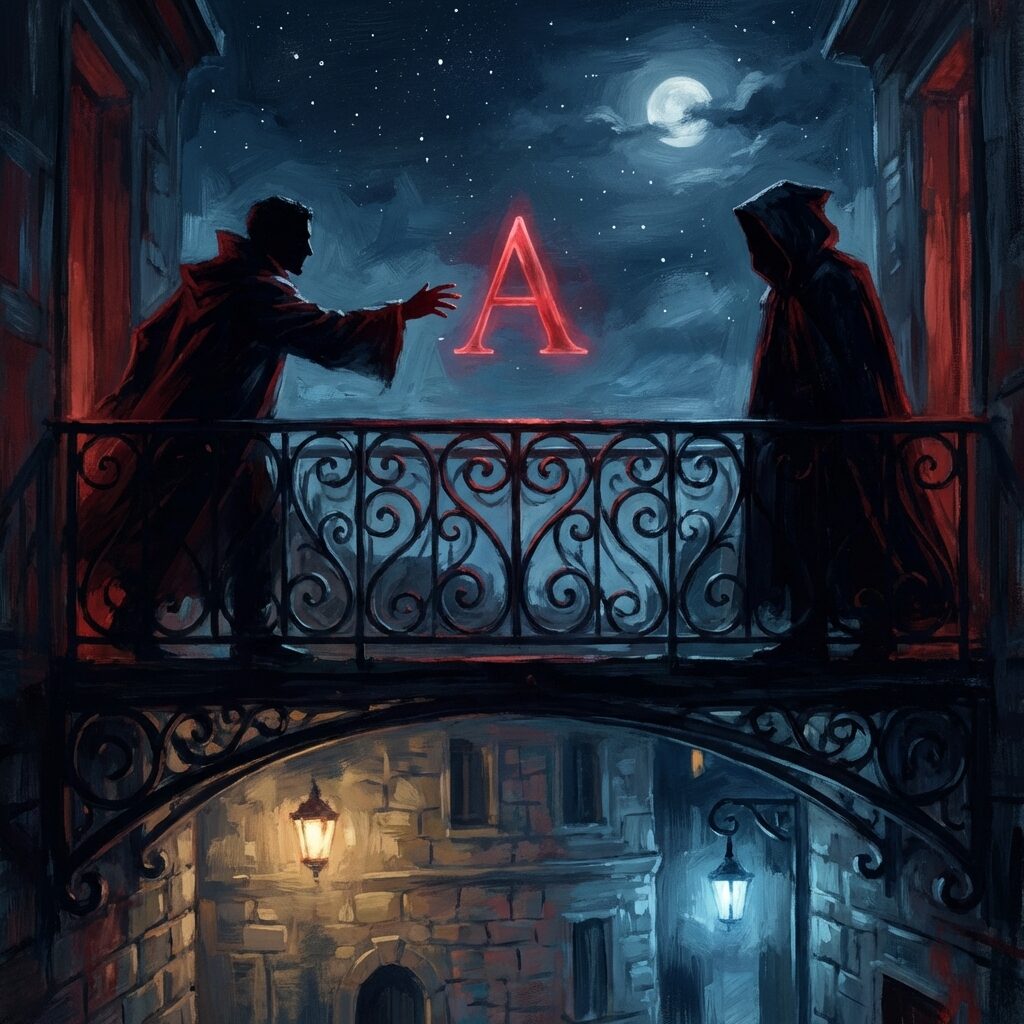
That’s what I think critics sometimes miss when they pick at the literary references. Yes, Swift reaches for Shakespeare. The balcony scene is right there in the opening verse: “I’m standing there on a balcony in summer air.” The pre-chorus, “You were Romeo, you were throwing pebbles, and my daddy said stay away from Juliet”, maps the parental disapproval directly onto the Montague-Capulet feud. And then there’s that Scarlet Letter reference: “‘Cause you were Romeo, I was a scarlet letter.”
That line has generated more critical debate than almost any other single lyric in Swift’s catalog. Jonathan Keefe at Slant Magazine called it “point-missing” and the Hawthorne reference “inexplicable,” which, okay, I see his point. Hester Prynne’s scarlet A is about shame and public punishment for adultery in Puritan Massachusetts, not exactly a one-to-one map for a teenage crush. But Alexis Petridis at The Guardian argued that the clumsiness was “believably teenage,” and I think he’s closer to the truth. A seventeen-year-old reaching for the biggest literary metaphors she can find and not quite sticking the landing? That’s not a flaw. That’s what real writing looks like at that age. She’s not defending a thesis. She’s processing heartbreak through every story she’s ever loved, and the emotional logic holds even where the textual analysis gets wobbly. The scarlet letter is about shame and forbidden love, she felt shamed for loving someone everyone told her not to love. The metaphor works in the gut, even if an English professor might dock points.
But the more interesting move isn’t the literary borrowing. It’s the rewrite. Swift told Songfacts: “I was really inspired by that story. Except for the ending. I feel like they had such promise and they were so crazy for each other… I thought, why can’t you make it a happy ending and put a key change in the song and turn it into a marriage proposal?” Read that quote carefully. She doesn’t just want a happy ending for the narrative. She wants the key change to be the happy ending. The musical structure and the story structure are the same thing in her mind. The modulation is the proposal.
It’s also worth noting that Swift has implied “Love Story” was written about the same person as “White Horse,” the single that followed it. If that’s true, then we’re looking at the same relationship from two angles, one where she rewrites reality to make it work, and one where she accepts that fairy tales don’t always hold up. The romantic version and the honest version, written by the same seventeen-year-old about the same boy, probably on the same bedroom floor. She already understood something about narrative that a lot of older songwriters never get to: you can tell two contradictory stories about the same thing and both of them can be true.
Nine Guitars and a Whole Step Up
Beneath the fairy-tale lyrics sits a carefully built production: nine stacked acoustic guitars, a live vocal take with the band, and a key change timed to land exactly where the story’s tragedy flips to a happy ending.
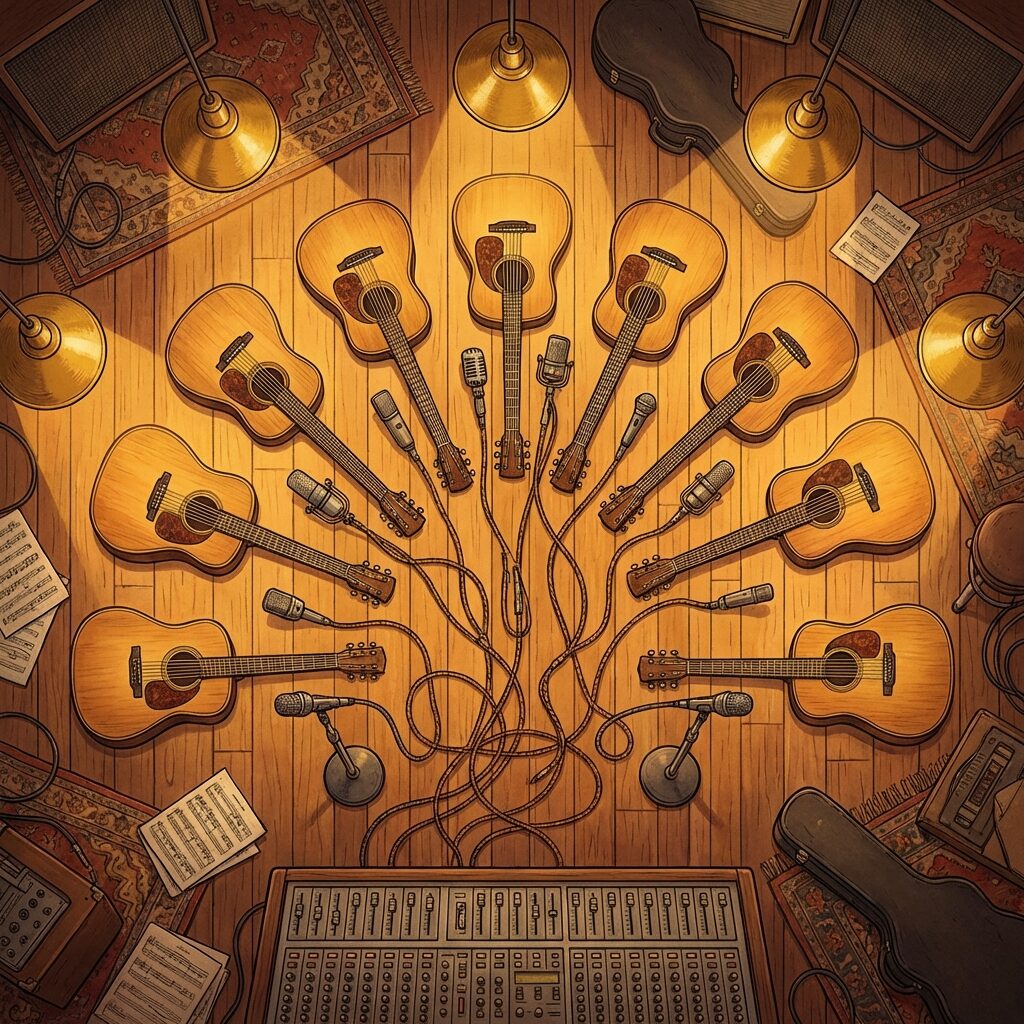
Let’s talk about the bones of this song, because they seem simple at first. The chord progression that carries most of “Love Story” is I-V-vi-IV, which in the key of D major means D, A, B minor, G. If you’ve spent any time studying pop music, you know this one. It’s the same progression behind “No Woman No Cry,” “With or Without You,” “Let It Be,” and roughly ten thousand other songs. It might be the most reliable four-chord pattern in Western popular music.
But the question with these chords is always what you do on top of them. And what producer Nathan Chapman did with them in Blackbird Studio in Nashville, tracking in Studio D, overdubs in Studio E, mixing in Studio F, is build a production that sounds simple on first listen but keeps revealing new layers.
“I think there are nine acoustic guitars on that track,” Chapman told Mix Online in 2009, “and I stacked several background vocals, me singing, ‘Ah’s.'” Nine acoustic guitars. Sit with that for a second. Each one adds its own slightly different timbre, its own resonance, its own string noise. Stacked together, they create this huge wash of acoustic sound that somehow still feels close and warm. All those wooden bodies vibrating together give the song its warmth, but the sheer number of them is what makes it feel so wide open.
The production builds deliberately section by section. The verse is relatively spare: acoustic guitar providing the melody and rhythmic scratches, Swift’s vocal sitting close and conversational. Drums enter during the pre-chorus to heighten the tension. By the time you hit the chorus, electric guitars, banjo, mandolin, steel guitar, and dobro are all layering in. The bridge strips things back before the final chorus escalates with accelerated drums and harmonized vocals. It’s a loud-soft-loud arc, but Chapman pulls it off with enough subtlety that the build never feels forced.
And then there’s the microphone. Chapman had tested mic after mic on Swift, trying to find one that matched her voice. Nothing sounded right until he tried an Avantone CV-12 multi-pattern tube microphone with a custom tube designed and built by Ray Kennedy, a country singer-producer-audio engineer who clearly knows his way around vacuum tubes. That particular mic became the sound of Fearless. When you hear that vocal, bright without being brittle, forward in the mix without being harsh, you’re hearing the CV-12.
Swift sang live with the band during vocal tracking: acoustic guitar, bass, and drums all playing together in the room. Everything else was overdubbed later. This matters more than you might think. There’s an energy in a live vocal take that you just can’t get when a singer is alone in a booth with headphones on. The slight push and pull between the vocal and the rhythm section, the way the dynamics breathe together, that’s what gives “Love Story” its sense of forward motion. The vocal sounds live because it is live.
But the real moment, the one I keep coming back to, is the key change. In the final chorus, the song modulates up a whole step from D major to E major. If you’re following along on guitar, every chord shifts up: D becomes E, A becomes B, B minor becomes C-sharp minor, G becomes A.
Key changes in pop music are common enough. Boy bands in the late ’90s used them like punctuation, just cranking the song up a half step for the last chorus to give the audience a little lift. But Swift’s modulation is different because of when it happens and what it means. The key change arrives at the exact moment the narrative resolves, when Romeo kneels and pulls out a ring, when the lyric shifts from longing to fulfillment. “He knelt to the ground and pulled out a ring and said, ‘Marry me, Juliet, you’ll never have to be alone.'” The tragedy becomes a comedy, in the classical Shakespearean sense of a story that ends in marriage, and the music physically rises to meet that turn.
The song doesn’t just tell you the ending changed. It makes you feel the ending change. Swift was seventeen when she wrote it, and she already understood the difference between describing an emotion and putting you inside one.
The Double Life on a Laptop
Nathan Chapman pulled the finished country mix into Apple Logic on his laptop, muted the fiddle and banjo, and built a pop remix with amp-sim guitars and a stock drum machine, a guerrilla crossover that made “Love Story” the first country song ever to top Billboard’s Pop Songs chart.
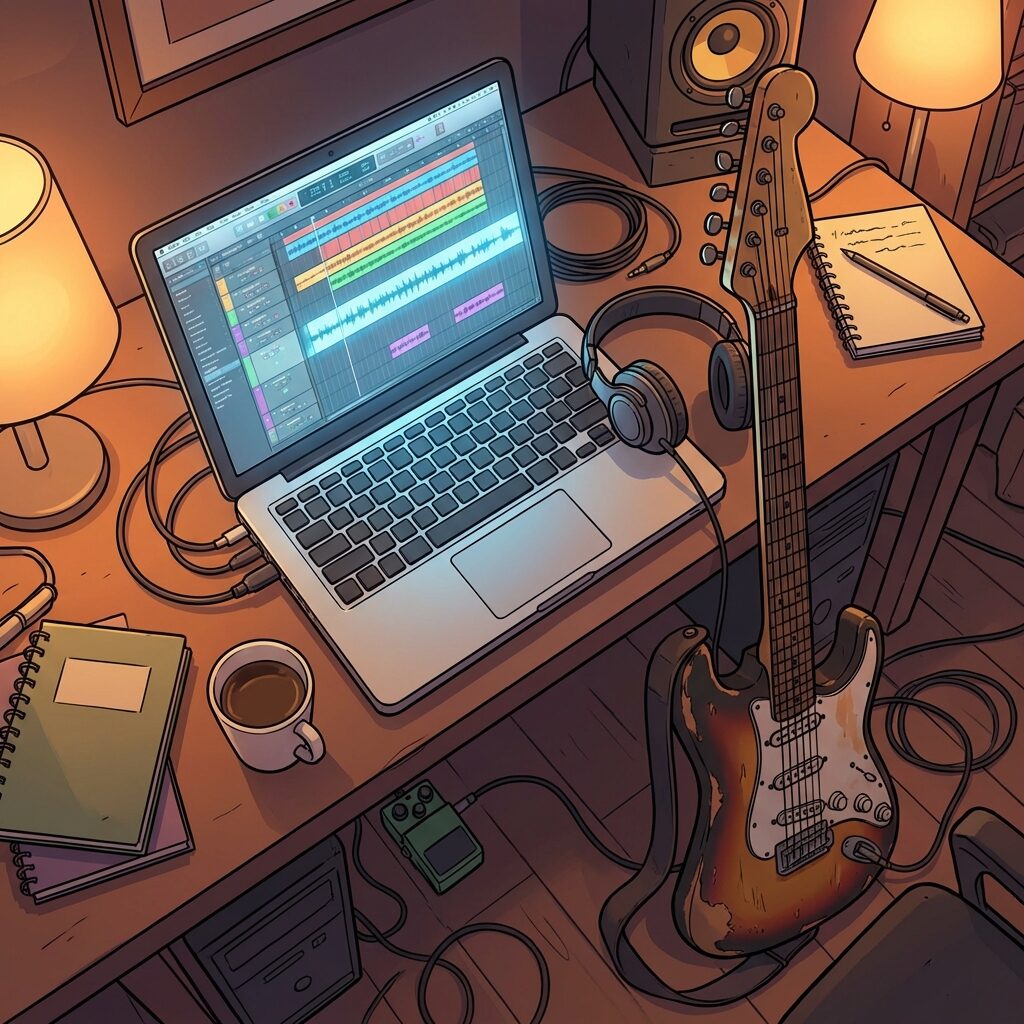
The country version of “Love Story” was already a hit, it debuted at #25 on Hot Country Songs and was climbing. But Chapman knew the song had pop potential, and he had an idea for how to unlock it. His approach was, to put it charitably, unconventional.
He took Justin Niebank’s finished mix stems, Niebank had mixed the song on a Solid State Logic 9080 K Series console through Genelec 1032 monitors, proper high-end studio gear, and pulled them into Apple Logic. On his laptop. He muted the fiddle. He muted the banjo. In their place, he laid down electric guitars recorded through Amplitube, an amp simulation plugin. For the opening beat, he fired up Logic’s Ultrabeat, a built-in drum machine. Rolling Stone‘s Keith Harris would later describe those electric guitars as “suitably gargantuan,” which is about right, they transform the song from a Nashville ballad into something that could sit comfortably next to Rihanna or Katy Perry on a pop playlist.
This wasn’t a remix commissioned by a major label A&R team and executed in a million-dollar studio. This was a producer on his personal computer, stripping out the genre signifiers and replacing them with pop ones. Guerrilla crossover.
Big Machine released the pop version to radio on October 14, 2008, through a partnership with Republic Records. And it worked. It more than worked. “Love Story” became the first country song in the history of Billboard’s Pop Songs chart to reach number one. A chart that had been tracking pop radio airplay for years, dominated by every genre you can name, pop, R&B, hip-hop, rock, had never put a country song at the top. The version that finally broke through was a laptop remix.
Rolling Stone described the song as living “a double life,” and that’s exactly what it was. The country version was country. The pop version was pop. Same vocal, same melody, same lyric, same key change, but different animals depending on which instruments were in the mix. The Boot noted that the crossover was “no accident,” pointing to the careful pop mix of Swift’s earlier single “Teardrops on My Guitar” as evidence of a deliberate strategy. But having a strategy and having a song that can survive the translation are two different things. “Love Story” could survive it and then some.
A Welsh Castle in Tennessee
The crew nearly flew to Europe before discovering Castle Gwynn, a handmade replica of a 12th-century Welsh castle in Arrington, Tennessee, built by a retired portrait photographer who couldn’t let go of a high school architecture project.
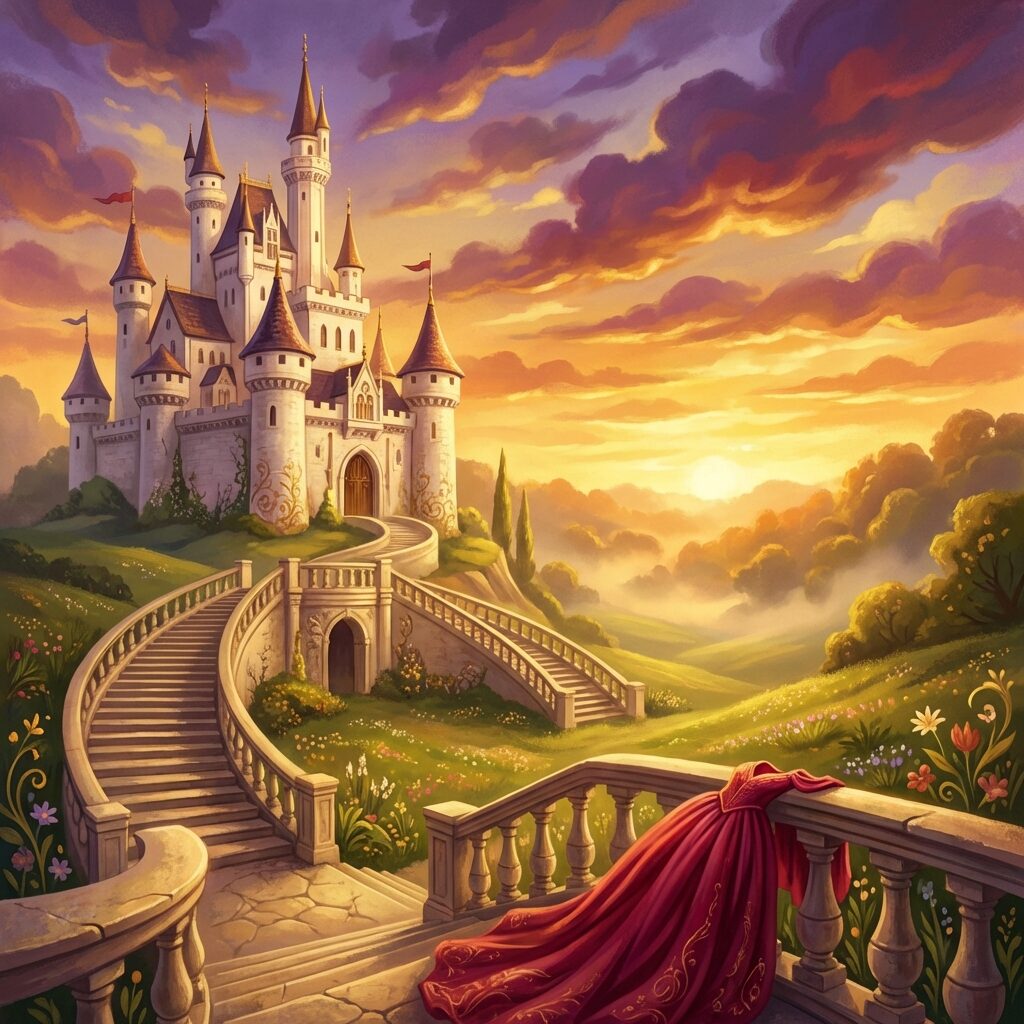
When it came time to shoot the music video, director Trey Fanjoy and the crew had a problem: where do you find a castle that looks real enough for a Romeo and Juliet fairy tale but doesn’t require flying a 75-person crew to Europe? The answer was about thirty miles south of Nashville, in Arrington, Tennessee, where a retired portrait photographer named Mike Freeman had spent the better part of three decades building one from scratch.
Castle Gwynn, “gwynn” is Welsh for “white castle”, is a replica of a 12th-century Welsh border castle, and the story of how it got there is just as strange as anything else in this chapter. Freeman first conceived the idea as a high school architecture project in 1970. He spent ten years researching, then began construction on roughly forty acres in 1980. The scale of the thing is hard to overstate: white towers topped with twelve-ton, thirty-foot-diameter cone-shaped roofs. A kitchen with sixty brick arches and more than fourteen thousand bricks. Stained glass windows. Twelfth-century gargoyles imported from England. A table from Warwick Castle that’s nearly four hundred years old. A floor tile that’s over six hundred years old, bearing the coat of arms of Henry VII. All of it assembled by a portrait photographer in middle Tennessee because a class assignment got stuck in his head.
This was where Taylor Swift would film her fairy tale, over two days in August 2008. More than seventy-five crew members worked the shoot, which ran until two and three in the morning. The crew waited until late afternoon to catch the light shining through Swift’s hair in the balcony scenes. The art director painted rocks onto brown mortar walls for authenticity, those paintings are apparently still visible today, though faded. Wardrobe came from Jacquard Fabrics, except for Swift’s balcony-scene dress.
Finding the male lead took a while. Swift spent six months searching for the right co-star before an acquaintance recommended Justin Gaston, a fashion model and Nashville Star contestant. Swift later told Freeman she was “so scared she was going to trip and fall on the long dress” while running down the castle’s double staircase. There’s something endearing about that, a teenager bold enough to rewrite Shakespeare, genuinely terrified of tripping over her costume.
The video premiered and the visitors started showing up. Not architecture buffs, but teenage girls. Three hundred schoolgirls, all asking the same question: “Where did Taylor Swift stand? I want to stand in the same place.” Freeman, who’d spent decades building a castle because a high school project wouldn’t leave his imagination alone, suddenly found his life’s work caught up in someone else’s fame. “To have the castle, it’s part of her legacy,” he told WKRN in 2023. He sounded like a man who’d made peace with the fact that his castle would be remembered for a reason he never could have predicted.
Breaking the Country Ceiling
“Love Story” didn’t just chart, it became the first country song to reach #1 on Billboard’s Pop Songs chart, sold eighteen million copies worldwide, and turned Taylor Swift from a Nashville success into a global pop force.
The numbers on this song are almost absurd. The chart trajectory alone tells you a story about a genre barrier coming apart.
“Love Story” debuted at #25 on Billboard’s Hot Country Songs chart the week of September 27, 2008, and climbed to #1, where it spent two weeks. Standard country hit behavior, nothing unusual there. On the Hot 100, it debuted at #16 and peaked at #4. Strong, but Swift wasn’t the first country artist to crack the Hot 100 top five.
The real milestone was Pop Songs, Billboard’s Mainstream Top 40 chart. “Love Story” climbed to #1. First country song. Ever. Not first country song in a while, not first country song by a female artist, first, period. A chart that tracked pop radio airplay across the entire United States had never put a country song at the top until a seventeen-year-old from Reading, Pennsylvania rewrote Shakespeare over four chords.
Then it crossed the ocean. “Love Story” hit #1 in Australia, Swift’s first chart-topper there. It landed in the top five in the UK, Canada, and Ireland. It reached #3 in New Zealand, where it spent eight weeks at #1 on the Radio Airplay chart. It cracked the top three in Japan. Billboard compared its cultural impact to Rihanna’s “Umbrella”, and that comparison says a lot about where this song put Swift. She wasn’t a country artist who’d had a crossover hit. She was competing for pop real estate with the biggest names in mainstream music.
The sales milestones kept piling on. “Love Story” became the first country song to sell three million digital downloads, reaching that mark by February 2009. It eventually moved 6.13 million downloads in the US alone, racked up 2.2 billion Spotify streams, 1.4 billion YouTube streams, and over two billion streams on Chinese platforms. The worldwide total hit eighteen million copies. The RIAA certified it eight times Platinum. In Australia, it went seven times Platinum. In the UK, four times.
And then there was the parent album. Fearless sold 592,000 copies in its first week, spent eleven weeks at #1 on the Billboard 200, became the best-selling album of 2009, and was eventually certified Diamond by the RIAA. “Love Story” was the engine behind all of that, the lead single that proved Taylor Swift’s reach extended well beyond Nashville.
It topped the Adult Contemporary chart for six weeks starting in June 2009, which makes sense, the chord changes and melodic construction work on basically any radio format. It was the sixth-most-downloaded single of 2009 globally. It won Video of the Year and Female Video of the Year at the CMT Music Awards, Music Video of the Year at the CMA Awards, and BMI’s Country Song of the Year. The Guardian‘s Alexis Petridis would later rank it the second-best Taylor Swift single of all time, behind only “Blank Space.”
640 Performances and Counting
“Love Story” is the only Taylor Swift song performed on all six of her headlining tours, staged with castles, covered by Coldplay after a Vienna terror threat, and turned into the backdrop for hundreds of real-life proposals along the way.
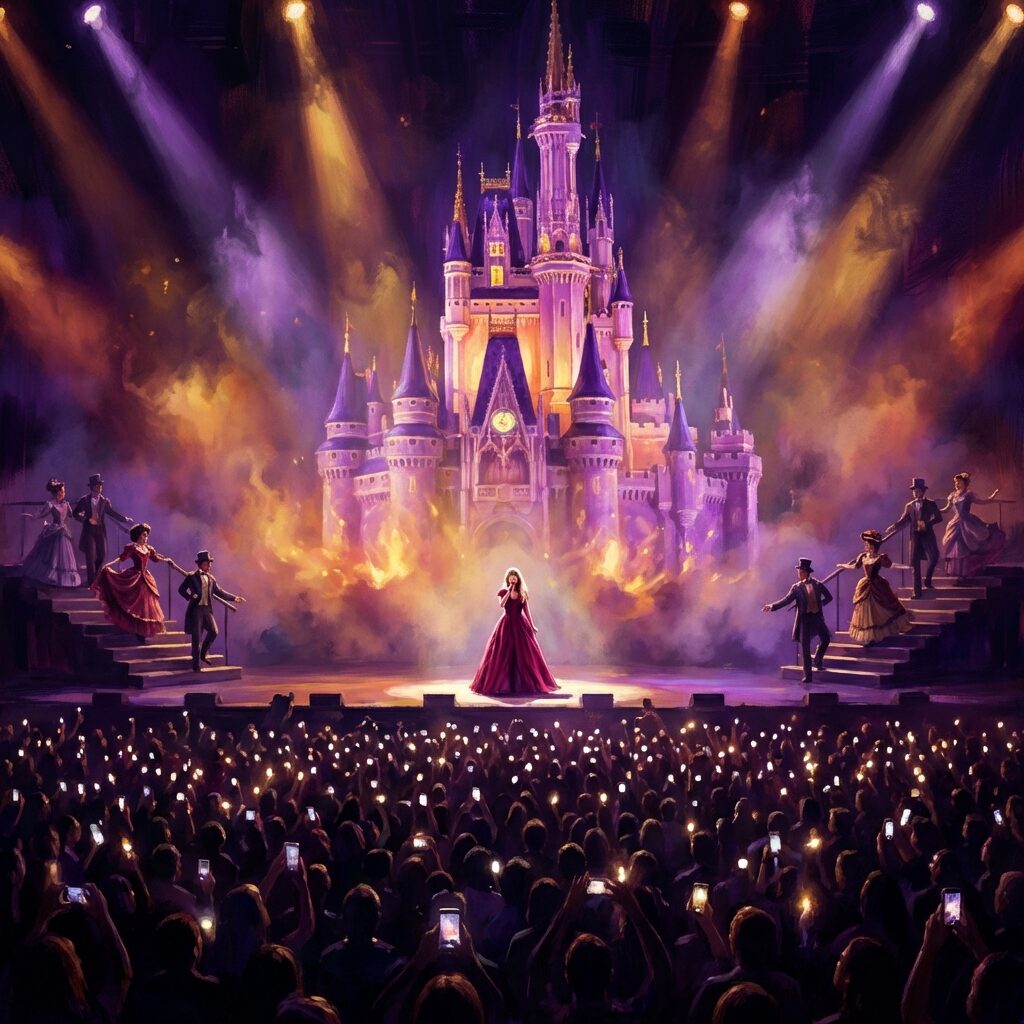
“Love Story” has been performed live over 640 times. It’s appeared on all six of Taylor Swift’s headlining tours, Fearless, Speak Now World Tour, The Red Tour, The 1989 World Tour, Reputation Stadium Tour, and The Eras Tour. No other song in her catalog can claim that. Every other track, no matter how beloved, has been rotated out of at least one setlist. “Love Story” is permanent.
The Fearless Tour staging was peak fairy tale. Backup dancers in Victorian costumes danced to Pachelbel’s Canon, yeah, that Pachelbel’s Canon, the same piece of music that’s been played at approximately 100% of all weddings since 1680, while a castle was projected onto the stage behind them. Swift emerged wearing an eighteenth-century-styled crimson gown with golden accents, the song’s romantic universe turned physical, lit by more than a million lumens of light. It was extravagant and earnest in a way that shouldn’t have worked but absolutely did, because the song earned every bit of that spectacle.
It keeps changing shape depending on the tour. On the 1989 World Tour, it was part of a medley. On the Reputation Stadium Tour, it got woven together with “Style” and “You Belong with Me.” At the Time 100 Gala in April 2019, Swift stripped it down to just voice and piano at Lincoln Center, which is maybe the truest test of whether a song actually works, can it survive with nothing but the melody and the words? It could. On the Eras Tour, it lives in the Act 2 Fearless segment, Swift in a gold fringed dress, and even after 640 performances the key change still lands.
And then there’s the proposal phenomenon. Couples regularly get engaged during the bridge section of “Love Story” at Swift’s concerts. Think about that, the song she wrote at seventeen about a boy everyone told her not to date has become the soundtrack for hundreds, maybe thousands, of real marriage proposals. The fake proposal she wrote to give Romeo and Juliet a happy ending keeps generating real ones.
One of the most moving moments in the song’s live history happened when Swift wasn’t even on stage. In August 2024, three Eras Tour shows in Vienna were cancelled after authorities uncovered a terror plot targeting the concerts. In the aftermath, Coldplay and Maggie Rogers covered “Love Story” at Vienna’s Ernst-Happel-Stadion during the Music of the Spheres World Tour. It was grief and stubbornness all at once, the song as comfort when the real world breaks through. Chris Martin singing Romeo’s lines to a stadium full of people who needed to hear someone say it would be okay. That’s what a song like this does after enough time. It stops belonging to the person who wrote it.
Reclaiming the Story
When Taylor Swift launched her re-recording campaign against Scooter Braun’s acquisition of her masters, she chose “Love Story” as the strategic first release, and changed one word that set the internet on fire.
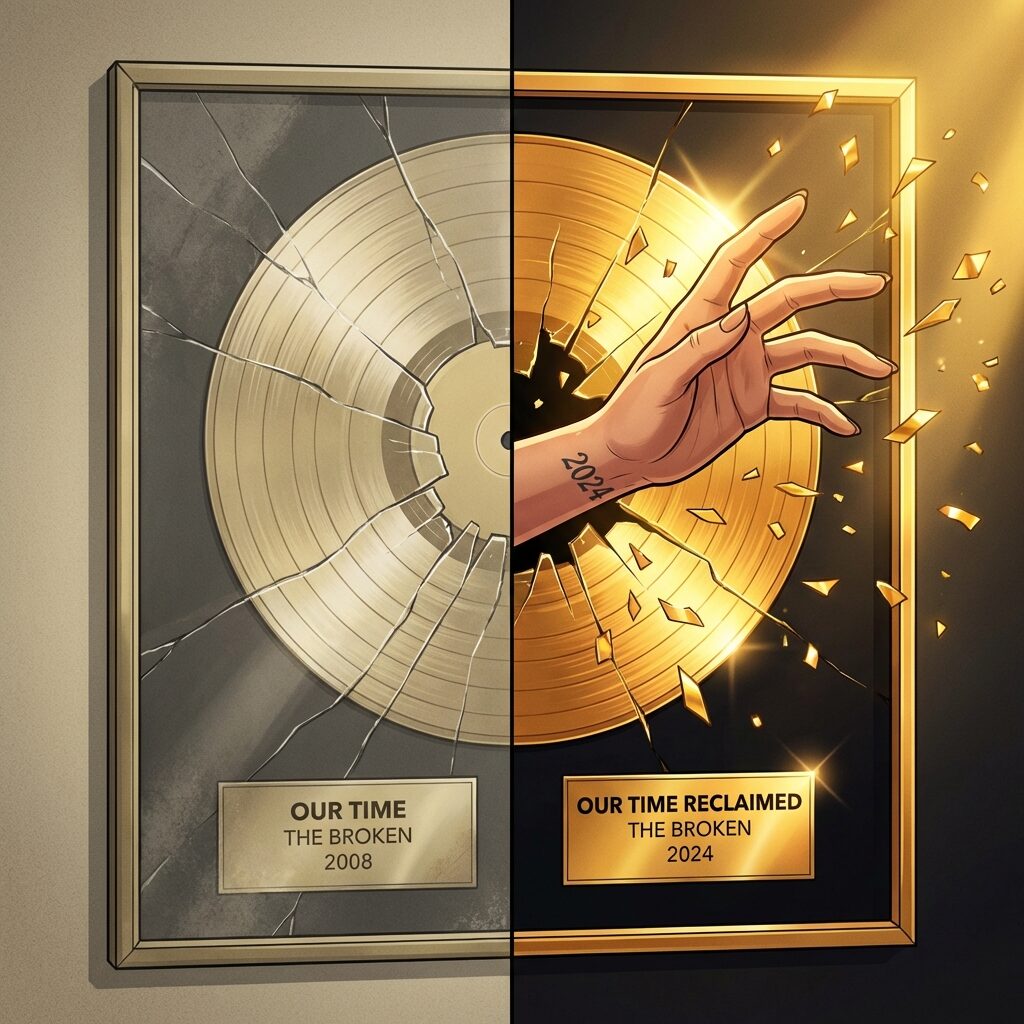
If you want to understand why Taylor Swift chose “Love Story” as the first official re-release in her campaign to re-record her back catalog, go back to that Songfacts quote about Shakespeare. “I thought, why can’t you make it a happy ending?” The same artist who rewrote Romeo and Juliet at seventeen was now rewriting the ending of her own business relationship, the 2019 dispute with Scooter Braun and Big Machine Records over the ownership of her master recordings.
“Love Story (Taylor’s Version)” dropped on February 12, 2021. It was a statement before it was a single. Leading with this particular song, the biggest hit from her biggest album, the one everybody knew, the one that represented the Fearless era at its most recognizable, was no accident. If she could convince fans to stream and buy a re-recorded version of “Love Story” instead of the original, the whole re-recording project had legs. If she couldn’t, it was a nice idea that wouldn’t survive contact with reality.
It worked. The song sold over ten thousand copies on its first day, more than any single song was selling in an entire week at that point. It pulled 10.1 million US streams and 30,000 downloads in its first tracking period. It debuted at #1 on Hot Country Songs, Swift’s first-ever #1 debut on that chart (her eighth #1 overall), making her only the second artist after Dolly Parton to top the chart with both an original and a re-recorded version of the same song. On the Hot 100, it entered at #11, marking Swift’s 129th entry on the chart, a record for women.
The production changed hands. Christopher Rowe, who’d first worked with Swift on a radio remix of “Our Song” back in 2006, produced Taylor’s Version instead of Nathan Chapman. None of the original musicians played on the re-recording, Chapman’s absence is generally attributed to his continued work with Big Machine artists rather than any personal conflict. Instead, Swift’s touring band stepped in: Mike Meadows on acoustic guitar, banjo, and mandolin; Amos Heller on bass; Matt Billingslea on drums; Max Bernstein and Paul Sidoti on electric guitar; Jonathan Yudkin on fiddle. Lead vocals were recorded by Sam Holland at Conway Recording Studios in Los Angeles, with additional vocals captured by David Payne at Blackbird Studios in Nashville.
And then there was the lyric change. In the original, the final line reads “baby, just say yes.” In Taylor’s Version, it became “baby, just said yes.” Past tense. One word, one letter, and the internet immediately erupted with speculation that Swift was hinting at an engagement to Joe Alwyn. Whether or not that was the intention, the shift from present to past tense does something quiet but real to the song’s meaning, it turns the proposal from a hypothetical plea into a confirmed outcome. The fairy tale isn’t being wished for anymore. It already happened.
The cultural moment around the re-release went beyond the music itself. Ryan Reynolds licensed Taylor’s Version for a Match.com commercial featuring Satan falling in love with a personification of 2020, a genuinely strange ad that rewarded close watchers: a fallen scooter visible in one shot and the number 6 written on a wall, both widely read as references to Scooter Braun and the Big Machine dispute. Fearless (Taylor’s Version), released two months later on April 9, 2021, became the first chart-topping album in history that was a re-recorded version of a previous #1 album.
The Ending She Chose
From a bedroom floor to a re-recorded reclamation, “Love Story” kept finding new endings, and the key change that rewrote Shakespeare became something like a working philosophy for Swift’s entire career.
Let’s come back to that key change. D major to E major. A whole step up. It takes about three seconds, and you might not consciously notice it. But your body does. Your emotional register shifts. The song gets brighter, and you feel it before you understand why.
I keep thinking about that modulation as a metaphor for everything that came after. Swift’s career has been a series of key changes, moments where she refused the ending that seemed inevitable and lifted the story somewhere else entirely. Country to pop. Pop to indie folk. Indie folk to synth-pop. Public feuds she turned into album concepts. A masters dispute she turned into a re-recording project that reshaped how the industry thinks about ownership. Every time someone wrote an ending for her, she modulated.
“I was really inspired by that story. Except for the ending.” That’s not just a line about Shakespeare. It’s the closest thing she has to an artistic manifesto. Why accept the ending someone else wrote when you can write your own? Why stay in the same key when there’s a whole step waiting?
Bedroom floor to twenty minutes (or an hour) with a guitar. Nine stacked acoustics in Blackbird Studio to a laptop pop remix that broke through country radio’s ceiling. A replica Welsh castle in Tennessee to 640 performances across six world tours. A boy who was, in hindsight, a creep, to a song that generates real marriage proposals every time it’s performed live. A disputed master recording to a re-recorded version that sold ten thousand copies in a single day.
The song kept finding new endings. It keeps finding them still.
Swift closed the 2009 CMT Music Awards with a line that sounded like a throwaway at the time: “This is for everybody who still believes in love stories, because I do.”
She was nineteen. She’s spent the years since backing it up, not by believing love stories always end well, but by insisting that how they end is a choice. A choice you make with a chord change, a laptop remix, a re-recorded vocal, a single word shifted from present tense to past. A whole step up. Into a brighter key.
Did you know? The pop version of “Love Story” that broke country’s genre barrier was remixed on a laptop using Logic’s Ultrabeat and Amplitube plugins 🎸🏰 #TaylorSwift #LoveStory #CountryPop https://bit.ly/4cWU07w

Click to Tweet