Fugees | The Score
Slayed Everyone With a Feather
In 1996, while East Coast and West Coast hip-hop waged war, three Haitian-American kids from New Jersey snuck up from behind with borrowed sounds and a basement studio budget of $135,000.
“The East Coast and West Coast were in an arms race to see who could be more hardcore,” Rolling Stone wrote, “when the Fugees snuck up from behind and slayed everyone with a feather.”
That’s one of my favorite lines ever written about a hip-hop album, because it captures something that’s easy to forget three decades later: how improbable The Score really was. Rewind to early 1996. Death Row Records was the most feared empire in music. Bad Boy was building its own. Tupac and Biggie were alive and locked in a feud that would end in two coffins. The prevailing wisdom was clear, hip-hop meant hard, and hard meant sales.
And then three Haitian-American kids from New Jersey, one album deep into what the industry politely called “a total brick”, released a record that outsold nearly all of it. Not by being harder. By being stranger and warmer. By sampling Enya next to The Delfonics, rapping in French and Haitian Creole, covering Roberta Flack over an A Tribe Called Quest beat, and doing it all in someone’s uncle’s basement while an aunt cooked rice and beans one floor up.
The Score came out on February 13, 1996. Within three months it had moved two million copies in the US alone. By year’s end, only Alanis Morissette and Celine Dion had outsold the Fugees in America. It eventually reached 22 million worldwide, still the best-selling album by a hip-hop group in history. That record has held for nearly thirty years.
But here’s what gets me every time I come back to this album: it doesn’t sound like a blockbuster. It sounds like three people in a room, figuring things out in real time. There’s a looseness to it, a human roughness that no amount of Pro Tools polish could replicate. And that roughness wasn’t a stylistic choice in the way we usually mean, it was born from financial desperation, a clandestine love affair that was tearing the group apart from the inside, and a literal basement studio where the budget for everything, equipment included, was $135,000.
That desperation is all over the record. It’s what made it work.
Refugees From a Flop
The Fugees came together as high school kids in New Jersey, reclaimed a slur as their name, and watched their debut album sell just 119,000 copies before the label gave them one last chance with $135,000 and full creative control.
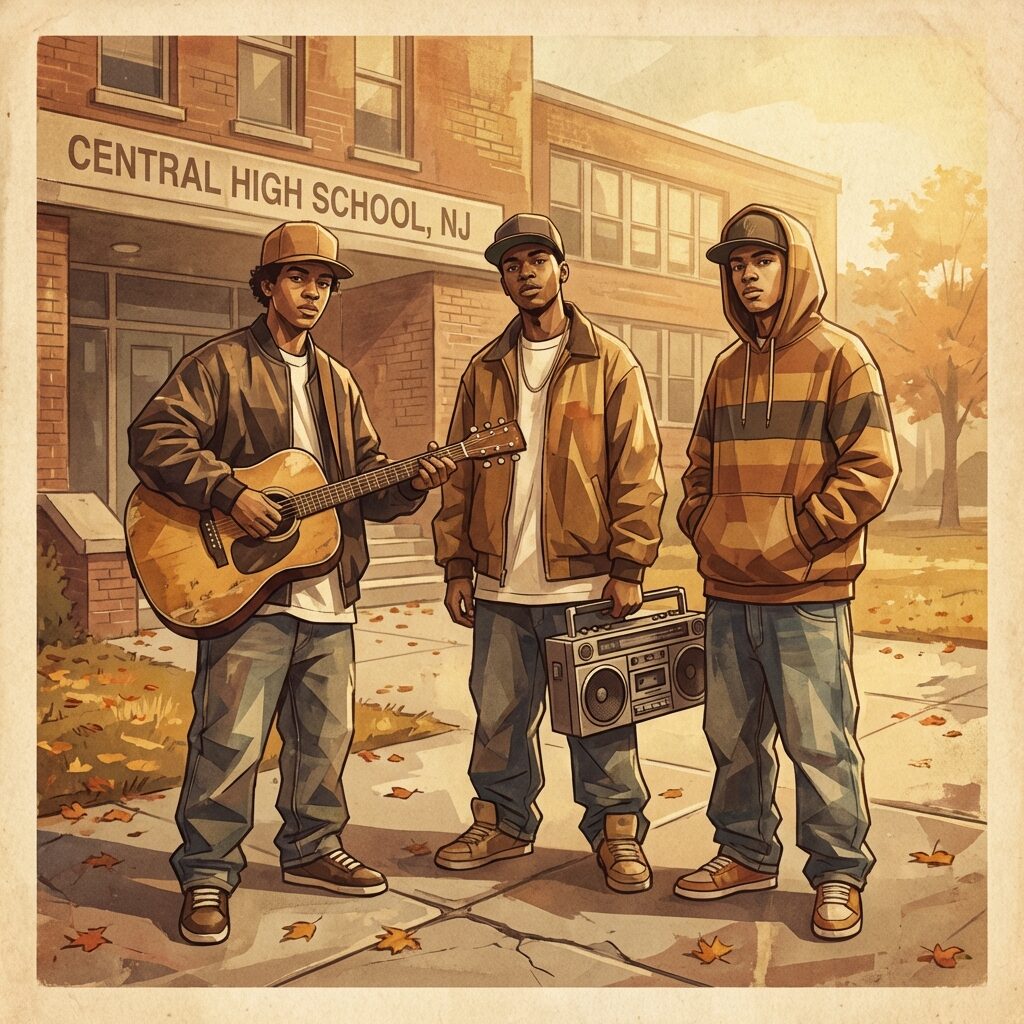
The group started around 1990 at Columbia High School in Maplewood, New Jersey, where Lauryn Hill and Pras Michel were students. Pras’s cousin, a Haitian immigrant named Wyclef Jean who’d come to the US at age nine, rounded out the trio. They called themselves the Tranzlator Crew, until an 80s new wave band called Translator hit them with a legal threat and forced a name change.
So they became the Fugees. Short for “refugees.” If you didn’t grow up Haitian in America, you might not know that “refugee” was a slur, a word thrown at Haitian kids in schoolyards and on street corners. The Fugees took it back. Made it theirs.
The audition that got them signed is worth telling. Wyclef picked up his acoustic guitar, the three of them started rapping over it, and Chris Schwartz at Ruffhouse Records, flush with cash from Kriss Kross and Cypress Hill, heard something worth betting on. Ruffhouse signed them in 1993.
What followed was a disaster. Their debut, Blunted on Reality, came out on February 1, 1994. Eighteen tracks. It sold 119,000 copies. In France, a country that would later adopt the Fugees as near-royalty, it moved a pathetic 10,000 units. The group later admitted they’d handed their producers too much control over the sound, and a label dispute had delayed the release until the hip-hop world had moved on without them. By summer 1994, the Fugees were in serious danger of getting dropped.
What saved them was a remix. Salaam Remi reworked their single “Nappy Heads,” and the new version climbed to #49 on the Hot 100. Just enough of a pulse to convince Ruffhouse the group wasn’t dead yet. Chris Schwartz offered them one more shot: a $135,000 advance and, crucially, something the label had never given them before. Complete artistic control.
So that was it. A hundred thirty-five thousand dollars and total creative freedom, on the understanding that if this record flopped too, they were done. What happened next probably shouldn’t have worked at all.
The Booga Basement Sessions
Wyclef Jean’s preacher father kicked him out for making sinful music. He landed in his uncle’s basement in East Orange, New Jersey, where the Fugees poured their $135,000 advance into equipment and spent five months recording around the clock. They were broke, tangled up in a secret love triangle, and had nothing to fall back on. The album they made down there was The Score.
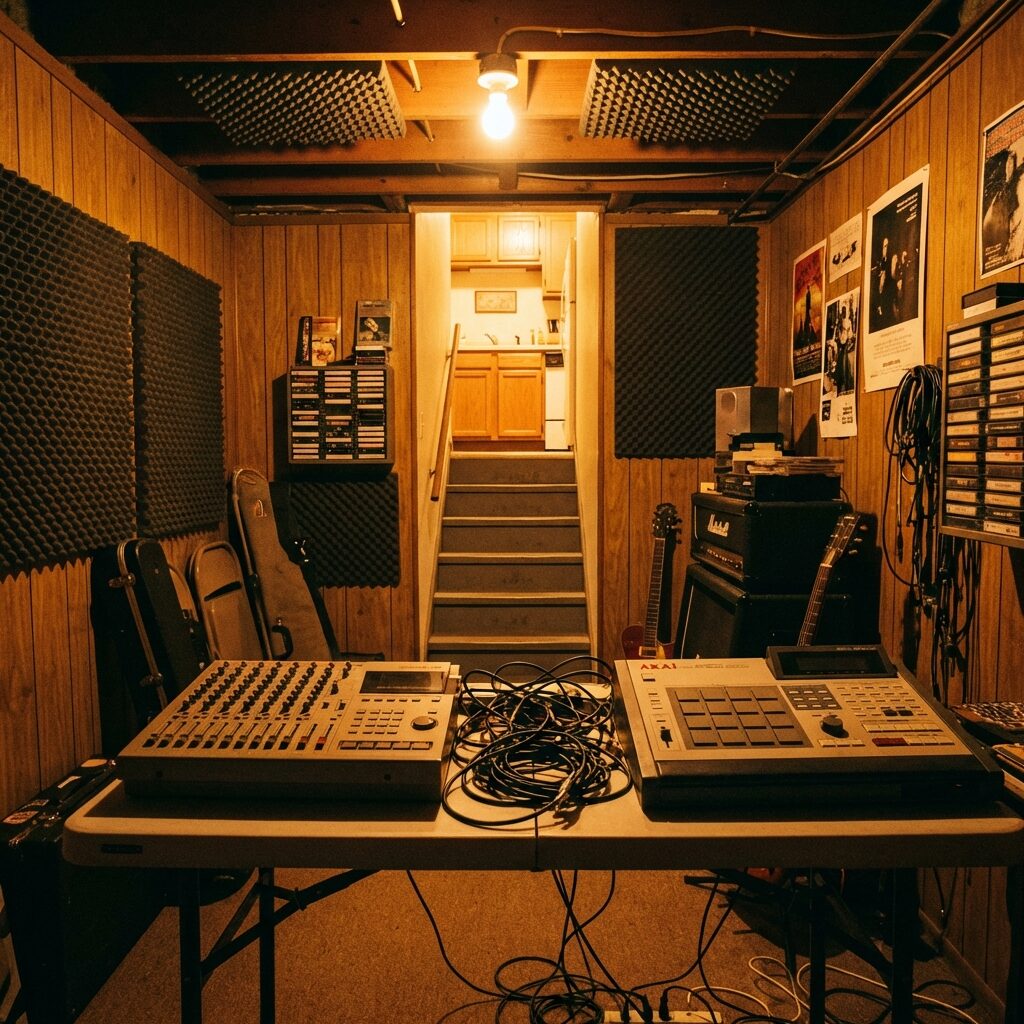
Wyclef Jean’s father was a preacher. Reverend Jean did not approve of his son making what he considered sinful music. So Wyclef got kicked out. He ended up in a bedroom above a basement in his uncle’s house in East Orange, New Jersey, and that basement is where the Fugees made the best album of the 90s.
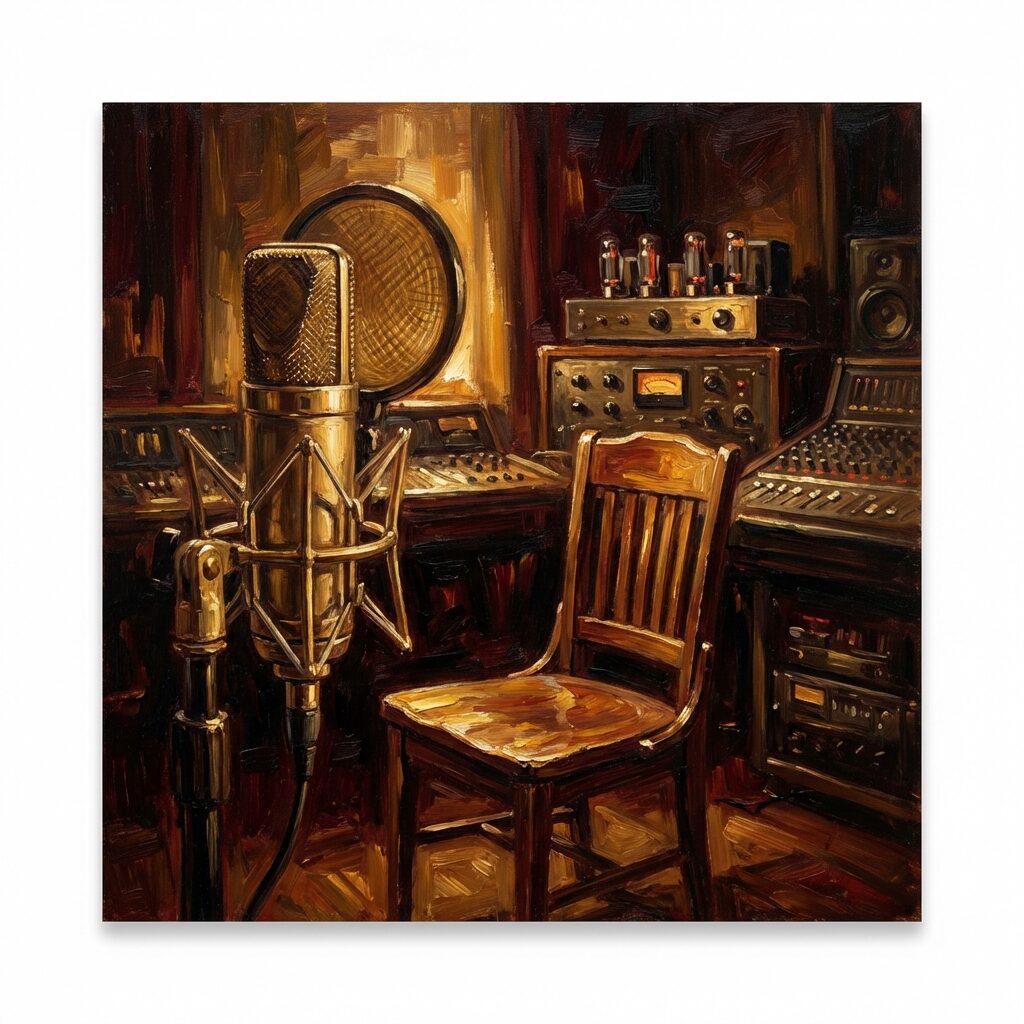
They called it the Booga Basement. Founded by Wyclef and his cousins Renel and Jerry Duplessis, it was not, by any professional standard, a real recording studio. Rolling Stone described the setting as “a shabby white house in East Orange, New Jersey, where you can always wander into the kitchen and get a plate of rice and beans.” That kitchen belonged to Wyclef’s aunt, Jerry Wonda’s mother, who would cook upstairs while the Fugees recorded below her feet.
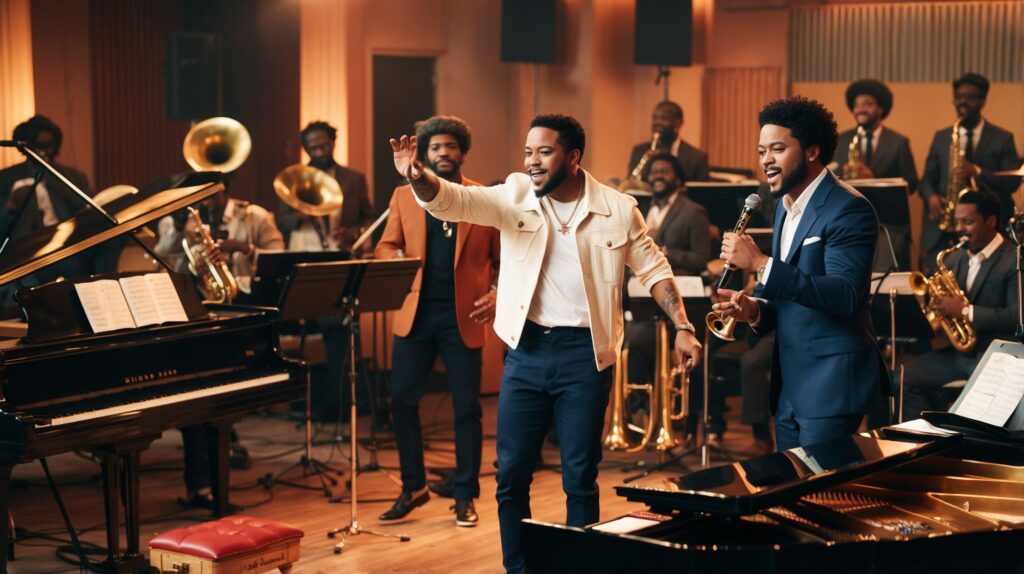
The $135,000 didn’t go to renting time in a proper studio. It went into equipment: a Linn 9000 drum machine, an Ensoniq VFX keyboard, a Tascam multitrack tape recorder that cousin Renell bought, and later a Studer A827 multitrack. The logic was simple. Instead of burning through the advance paying hourly studio rates, they’d own their gear and have unlimited access to their own space. No clock running. No label A&R sitting in the corner taking notes. Just the three of them, twenty-four hours a day, for five months.
“We couldn’t afford to go into some big room with a Neve,” Wyclef told HipHopDX in 2017, “so my uncle gave us the basement. Me, Jerry, Lauryn and Pras would go to the basement and from the basement is where all of this stuff is created.”
From June to November 1995, that basement became their entire world. You can hear it in the music. Everything sounds close, like the walls are right there. These were people with nowhere else to go, and they played like it.
A rejected beat becomes Fu-Gee-La
The foundational track started with a rejection. Producer Salaam Remi had been working on music for Spike Lee’s film Clockers and brought the Fugees in for a session. During a break, both Wyclef and Lauryn, independently and without knowing the other had asked, requested that Remi play a particular beat he’d made. A beat that Fat Joe had already turned down.
Wyclef heard it and immediately started rapping: “We used to be number ten, now we’re permanent one.” His first album sold 119,000 copies, and here he was rapping about being permanently number one. He was broke, kicked out of his father’s house, recording in a basement. But he meant it.
Remi believed in the track enough to record “Fu-Gee-La” in his own studio, on his own dime and time, before the Fugees even had a confirmed album budget. Wyclef and Pras knocked out their verses in a day or two. Lauryn Hill spent seven consecutive days on hers. Seven days. She cycled through different choruses, a Stevie Wonder melody from “Never Dreamed You’d Leave in Summer,” Chaka Khan hooks, before landing on the Teena Marie interpolation: “Ooh la la la.” When she hit on that melody, everyone in the room knew.
Tears on Ready or Not
“Ready or Not” was actually the first song they recorded for The Score. The Delfonics sample was built on the first MPC that Pras had ever bought. They were literally still learning how to use it. And the haunting Enya vocal that floats through the track? Wyclef discovered that sample while watching the Stephen King horror film Sleepwalkers in the Booga Basement, getting high. He heard “Boadicea” playing over the end credits and thought: that’s the one.
What happened during the recording session is the kind of thing you can’t manufacture. Pras described it years later: “The three of us was each going through some pain. Lauryn was crying when she did her vocals. It was unbelievable. To see her singing with tears coming out of her eyes, it made me want to cry too.”
That pain was real. Wyclef and Lauryn were deep into a clandestine romantic relationship. He’d married Claudinette Jean in 1994, but his affair with Hill had been going on since 1991 or 1992. The emotional wreckage of that situation runs through every track on The Score if you know where to listen. As Wyclef himself later admitted: “The Score wouldn’t’ve happened without the love triangle of everything that you’re hearing.”
The last track recorded
“Killing Me Softly” was the final song they cut, and it was Pras’s idea, both the decision to cover Roberta Flack’s classic and the stroke of genius to layer in A Tribe Called Quest’s “Bonita Applebum” as the rhythmic foundation. The original plan was to rewrite the song as “Killing Them Softly,” but songwriters Charles Fox and Norman Gimbel refused permission for a rewrite while allowing a straight cover.
The arrangement came together through collaboration and instinct. Engineer Joe Nicolo stripped the second verse down to just Lauryn Hill’s voice and the beat, nothing else, at Wyclef’s insistence. That decision, trusting the power of a single voice over empty space, is the reason people still get chills when they hear it thirty years later.
Three People Figuring It Out
The Score’s genre-blending wasn’t a marketing strategy, it was what happened when three people who were Haitian, American, and Caribbean all at once made music from everything they’d grown up on, and it came out sounding like nothing else in 1996.
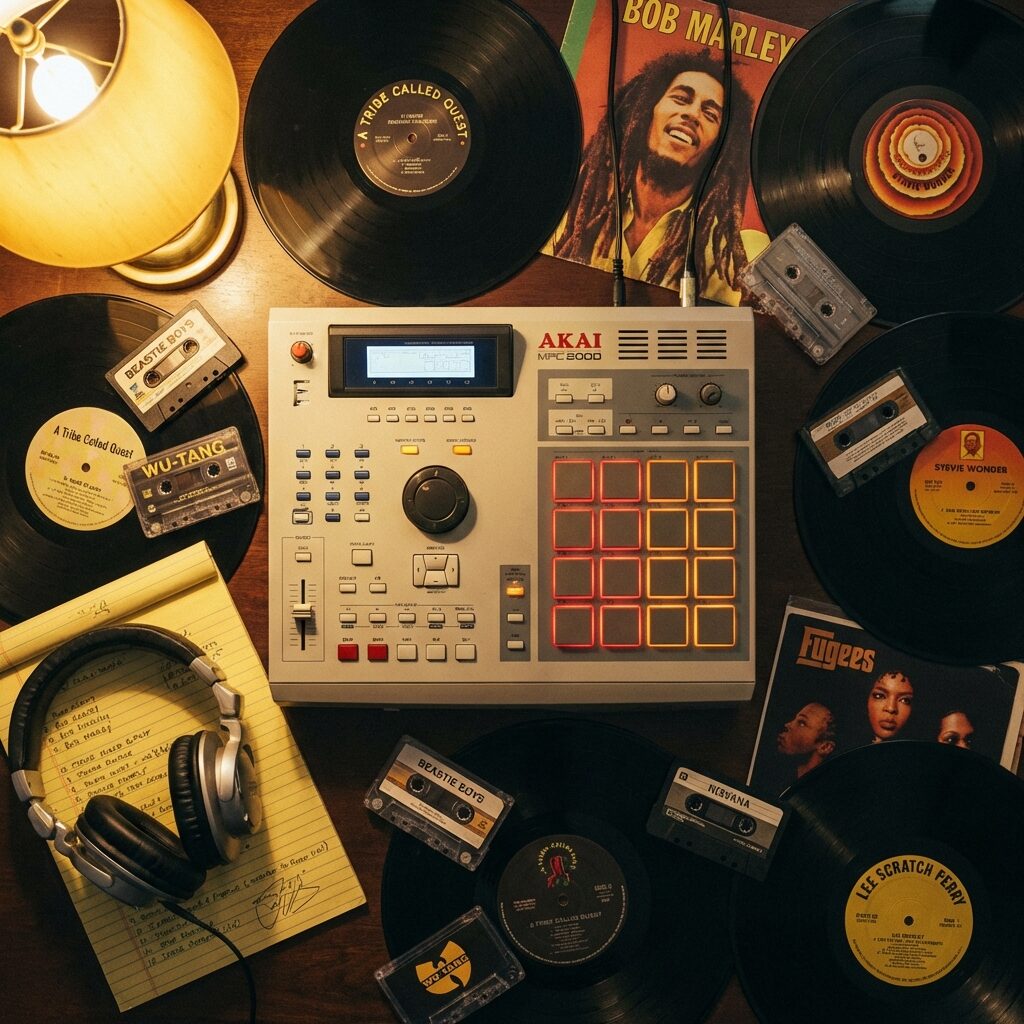
Here’s what I think people miss when they talk about The Score as a “genre-blending” album. That phrase makes it sound deliberate, like someone sat in a room and said, “Let’s combine hip-hop with reggae and R&B for maximum crossover appeal.” That’s not what happened. The genre-blending on The Score is just what identity sounds like. These were people who were Haitian and American and Caribbean all at once. Who grew up on Bob Marley and A Tribe Called Quest and Roberta Flack and church hymns. The music sounds the way it does because that’s who they actually were.
Listen to how the samples work on this record. It’s collage art. Enya’s ethereal Celtic vocals sit next to The Delfonics’ Philly soul. A Tribe Called Quest’s jazz-rap groove supports a Roberta Flack cover. The Flamingos’ 1959 doo-wop classic “I Only Have Eyes for You” gets repurposed on “Zealots” alongside Eurythmics and Willie Williams. And then there’s the title track, which might be the wildest production choice on the album: it samples every other track on the record, stitching the whole thing into a self-referential audio loop. Lauryn Hill described the concept as “an audio film. It’s like how radio was back in the 1940s. It tells a story, and there are cuts and breaks in the music. It’s almost like a hip-hop version of Tommy, like what The Who did for rock music.”
The production philosophy is what really separates The Score from everything else charting in 1996. Dr. Dre’s G-funk was thick and layered, synths stacked on synths, everything polished to a chrome shine. Puffy’s Bad Boy records were glossy and sample-heavy, built for clubs. The Fugees went the other direction. Their tracks breathe. There’s space in them. Live instrumentation, Wyclef’s guitar, hand percussion, turntable scratches, sits alongside the samples, and you can feel the difference. It sounds warm in a way that money alone can’t buy.
As Selwyn Seyfu Hinds wrote in Spin, “A sense of organic interaction is the hallmark of this album… the album’s most important factor is its beats; chest-shaking, obscure-texture-having, freestyle-friendly beats.” He’s right. These beats feel handmade in the best sense. You can almost hear the room they were recorded in.
And then there’s Lauryn Hill’s vocal approach, which I think genuinely rewired what people expected hip-hop could sound like. On The Score, she moves between rapping and singing, sometimes within the same verse, sometimes within the same bar, with a fluidity that nobody in hip-hop had pulled off at that level. She doesn’t switch modes like she’s changing hats. The rapping becomes singing and the singing becomes rapping. There’s no seam. And if you trace the line from what she does on this album through The Miseducation of Lauryn Hill and forward into the 2000s and 2010s, you’re looking at where modern hip-hop vocals come from. Drake, Nicki Minaj, SZA, they’re all working in a space that Lauryn Hill broke open on The Score.
The rawness wasn’t a limitation. It was the whole point. Wyclef put it plainly: “The Score is raw storytelling: it’s a candid picture of who we were and the times we were living in. We didn’t make it in a slick upscale studio; we made it in a basement in the ‘hood in New Jersey. Our recordings were pure, no tricks in sight, and it connected with music fans around the world.”
Nina Simone Over Al Capone
Lauryn Hill’s lyrics on The Score are among the densest and most referentially rich in hip-hop history, she code-switches between languages, drops references to constellations, Bertolucci films, and Psalm 23 within bars of each other, and builds verses that still reward close reading decades later.
(Y-Y-You rockin’ loud but you ain’t sayin’ nothin’)
It’s time I settle the score
(
I play my enemies like a game of chess
)
(
Playin’ Mr. Big, I’m gonna get you sucka
)
(
Ha, ha, ha, ha, you shouldn’t diss Refugees
)
Soldiers
Left, right, left, right, left, right, left, right (It’s time I settle the score)
Left, right, left, right, left, left, left, left (It’s time I settle the score)
[Verse 1: Wyclef Jean]
Look to the rhyme (Rhyme), rum to the ripple (Ripple)
Single, but at times I come in triple
Blaow, blaow, put the heater to your head
Now you dead
Wyclef don’t give a ooh if you’re dead
Rah, rah, let me attack just like a black cat
You in the wrong neighborhood, check your map
Ooh, you’ve gotta go for backup to do what you gotta do
So you’ll be back with France CU
Traitor in your crew is mafo heat
You put poison in my tea and kill the toad, but I’ll be back with the centipede
I’m on some new technique, drunken bamboo
A-hoo, a-hoo, a-hoo, I’m taking all crews, what?
Competition, stimulation for the rap man
Losers, check your tooters as I’m suckin’ on your girl hooters
Don’t play macho ’cause you got the gun, son
‘Cause if you gotta reload (Man)
[Chorus: Wyclef Jean]
(You rocking loud but you ain’t sayin’ nothin’)
It’s time I settle the score
(
Too many emcees, not enough mics
)
(
Ready or not, here I come
)
(
Ha, ha, ha, ha, you shouldn’t diss Refugees
)
Soldiers
Left, right, left, right, left, right, left, right (It’s time I settle the score)
Left, right, left, right, left, left, left, left (It’s time I settle the score)
[Verse 2: Wyclef Jean]
Yo, Wyclef the multi-talented, average heads can’t handle it
I’ll bring it to you live, only if you want it (Only if you want it)
Me and my guitar go back like the days of the R MC’s (Come on)
(
Check out my melody
)
The W-Y-C-L-E-F, Wyclef
Through any contest, I’m victorious (Bing)
Still keep it real if you will, and manifest through your skills
Not by how many shells you peel
[Verse 3: Pras]
I’ma bring down the ruckus, play the nutcracker
Ruffneck rednecks, makes me no bother
Time after time, ask Cyndi Lauper (
Time after time
)
Boss, you don’t want to fuck with my partners
Motion, commotion, what’s your proposal?
Uphold two-fold, the crew is disposal
Like utensil, floss like dental
I autograph my lyrics with a number two pencil
[Chorus: Wyclef Jean]
(You rocking loud but you ain’t sayin’ nothin’)
It’s time I settle the score
(
Oba-observing the hypocrites
)
(They smile in my face, then they talk behind my back)
Soldiers
Left, right, left, right, left, right, left, right (It’s time I settle the score)
Left, right, left, right, left, left, left, left (It’s time I settle the score)
[Verse 4: Lauryn Hill & Wyclef]
Yeah, I’m the L, won’t you pull it? (Pull it)
Straight to the head with the speed of a bullet (Bullet)
Cuttin’ niggas off at the meeky-freaky gullet
Lyrical sedative, keep niggas medative
Head rushers, I give to creative kids and fiends
Dreams of euphoria, aurora
To another galaxy, phallic see, be this microphone
But get lifted, lyrically, I’m gifted
Burn on it without the roach clip, it hinders, mind bender
Pleasure sender so frequently your nerve endings belong to me
Wrongfully, you put me down not receiving the full capacity of my smoke
Wack niggas choke from the fumes that I emote
Or emit shit
See, even I feel the mahogany
L, natural hallucinogen turning boys to men again
With estrogen dreams, release blues, yellows and greens
From Brownsville to Queens
[Chorus: Wyclef Jean]
(You rocking loud but you ain’t sayin’ nothin’)
It’s time I settle the score
(
Ready or not, Refugees taking over
)
(‘Cause we soft-spoken doesn’t mean that we’ve forgotten)
(Now we’re permanent at one)
(And one day you will be gotten)
Soldiers
Left, right, left, right, left, right, left, right (It’s time I settle the score)
Left, right, left, right, left, left, left, left (It’s time I settle the score)
Soldiers
Left, right, left, right, left, right, left, right (It’s time I settle the score)
Left, right, left, right, left, left, left, left (It’s time I settle the score)
[Verse 5: Diamond D &
Lauryn Hill
]
(Diamond D)
I creep like a thief, no doubt the man’s swift (Swift)
I’m more magnificent than Lee Van Cleef (
Cleef
)
You stand stiff and got the nerve to let your man riff
(We know where to run)
And start flakin’ like dandruff (Come on)
Come on, son, my steelo’s tight (Uh-huh)
‘Cause by far, I’m the best producer on the mic (Right)
Born to write analytical conceptions
With precision, and leave lyrical incisions (Bing)
[Skit]
All J do is front and lie (Man, you crazy as hell)
Whatever, yo, I’m goin’ to get something to drink
You alright? You straight? (Yeah, I’m straight)
I’ll be right back
Ayo, LJ, I heard you fuckin’ Michelle
Nigga, I been fuckin’ Michelle
Michelle Leslie Brown? (Nigga, Michelle Leslie Brown)
From 225th Street?
Nigga, Michelle Leslie Brown from 225th Street
That play ball in the park?
Nigga, Michelle Leslie Brown from 225th Street that play ball in the park
Nigga, I been fuckin’ her
What happened? What about her?
This nigga said he fucked Michelle (He said he fucked her)
There go Michelle right there, call her over, yo
Ayo, Michelle, come here for a second, baby (What?)
Come here (Ask her, ask her)
Ayo, you fucked J? (Hell no, ew, what?)
Nigga, not that Michelle Leslie Brown from 225th Street that play ball in the park
The other Michelle Leslie Brown
Nigga, that’s the only one
Nigga, how many Michelle’s is there?
Nigga, she got a cousin or some shit like that, man, I’m saying though
He’s a frontin’-ass nigga on three
One, two, three
Let’s talk about what Lauryn Hill was actually doing on the page, because her writing on The Score is absurdly dense. Take one verse from “Ready or Not”: “So while you imitating Al Capone / I’ll be Nina Simone and defecating on your microphone.” That’s not just a flex. That’s a worldview in two lines. While the rest of hip-hop was cosplaying as gangsters, she was aligning herself with a jazz artist, a civil rights icon, a woman who was brilliant and difficult and uncompromising. And notice she picked Nina Simone, not Aretha Franklin, not Whitney Houston. That choice alone tells you where Hill’s head was at.
Or take “Zealots,” where she drops: “So while you fuming, I’m consuming mango juice under Polaris / You just embarrassed cause it’s your last tango in Paris.” She’s rhyming the North Star with a Bertolucci film. She’s placing herself under a constellation, literally above it all, while her competitors fumble through their last act. Elsewhere on the same track she’s referencing Porgy and Bess, Eliot Ness, Psalm 23, and the Lady Marmalade hook, often within bars of each other. She was building verses the way a grad student builds a bibliography, except it sounds effortless.
And then there’s the line that I think functions as the thesis statement for the entire album: “Even after all my logic and my theory, I add a ‘motherfucker’ so you ignorant n****s hear me.” Read that again. She’s telling you she’s smarter than the room, she knows it, and she’s willing to code-switch to make sure the message lands. That line is about hip-hop’s relationship with intellect. It’s about a woman who went to Columbia University making music for the streets. It’s about the constant negotiation between who you are and who your audience needs you to be.
The multilingual side of the album could fill its own essay. The Fugees rap and sing in English, French, Haitian Creole, and Patois. The “Fu-Gee-La” Refugee Camp Global Mix includes Wyclef rapping in French, “fils de prêtre, rappeur pas gangster” (preacher’s son, rapper not gangster). There’s Japanese counting on the album. There’s Caribbean dialect running underneath everything like a second language track at the bottom of a film. None of this was showing off. This was refugee identity expressed through code-switching, the reality of growing up between cultures, never fully belonging to just one.
Wyclef’s lyrics work differently from Hill’s. Where she’s literary and allusive, he’s mythic and personal. The preacher’s son who isn’t a gangster, bringing Haitian Sicilians to a mafia fight, quoting scripture alongside street wisdom. His father’s sermons are in his cadence even when he’s rapping about things Reverend Jean would never approve of.
Even the album’s title works on three levels, which should tell you these weren’t kids stumbling into cleverness. The Score is a film score (the audio film concept Hill described). It’s settling the score with everyone who wrote them off after Blunted on Reality. And it’s a heist, refugees pulling off something audacious, walking away with the whole vault. As Wyclef explained, the title implied that “fleeing one’s country was as daring as carrying out a heist at a heavily guarded casino.”
She Lives in a Castle
An uncleared Enya sample nearly killed The Score before it could become a hit. The Fugees had no idea sample clearance existed. But when Enya actually listened to the album, she recognized its message, settled out of court, and Wyclef walked away calling her gangsta for living in a castle.
Here’s where the story almost ends. Remember that Enya sample on “Ready or Not”, the one Wyclef discovered while watching Sleepwalkers in the basement? They never cleared it. Not because they were trying to get away with something. They just didn’t know that was a thing you had to do.
“We were not aware of sampling clearance at the time,” Wyclef admitted later. They’d lifted “Boadicea” from a horror movie’s end credits, not from the original album. To them, they’d found a cool sound and flipped it. That’s what you did in the basement. That’s what hip-hop had always done.
Enya’s label, WEA, did not share this casual attitude. When The Score started selling, really selling, millions of copies selling, the lawyers came. And they came hard. WEA prepared a lawsuit and threatened to pull the album from every store shelf in the world. Wyclef remembered the threat vividly: “Literally, we got threatened to pull everything from the album. She was like, ‘Remove everything from the shelf right now, or it’s not going to be good for you.'”
Picture that for a second. Your album is blowing up. You’ve gone from 119,000-copy failure to something nobody can ignore. And it might all vanish because of a sample you didn’t know you needed permission to use.
What happened next is one of my favorite footnotes in music history. Enya actually listened to the album. She found out the Fugees weren’t gangsta rappers, they were making socially conscious music with a positive message. She confirmed publicly that the group was “anti-crime and drugs and their message was quite positive.” And she settled out of court. Sony placed credit stickers on all existing copies with a message that read, in part: “We are very grateful to Enya for her kindness and consideration in allowing us of her track ‘Boadicea.'”
Wyclef’s response to the whole saga produced one of the great quotes in hip-hop: “She so gangsta, she live in a castle. You can’t get more gangsta than that.” Then, more seriously: “We learned the art of publishing is very serious. I always tell kids, get your copyrights right.”
The near-death experience with the Enya sample did something for hip-hop beyond the Fugees. It became the story producers told each other about clearance. The Fugees learned the hard way so others wouldn’t have to, though plenty still did.
There’s another tension running through the album that doesn’t resolve as neatly: the love triangle. Wyclef and Lauryn’s affair was at its peak during those five months in the Booga Basement. He was married. She was six years younger. The secrecy, the guilt, the passion, all of it got pressed into the recordings. You can hear it in the ache of Hill’s vocals on “Ready or Not,” in the way Wyclef’s verses swing between confidence and something more exposed. As he put it in his 2012 memoir: “I was a big-brother figure to Lauryn until it turned romantic, and the soundtrack of our relationship is ‘The Score.’ That album came out the way it did because of our passion.”
That same intensity would eventually tear the group apart. But in 1996, inside that basement, it was fuel.
Twenty-Two Million Copies Later
The Score sat at #1 on the Billboard 200 for four weeks, finished 1996 as the third best-selling album in America, and has sold somewhere between 14 and 22 million copies worldwide. No hip-hop group has come close to that number in the nearly thirty years since.
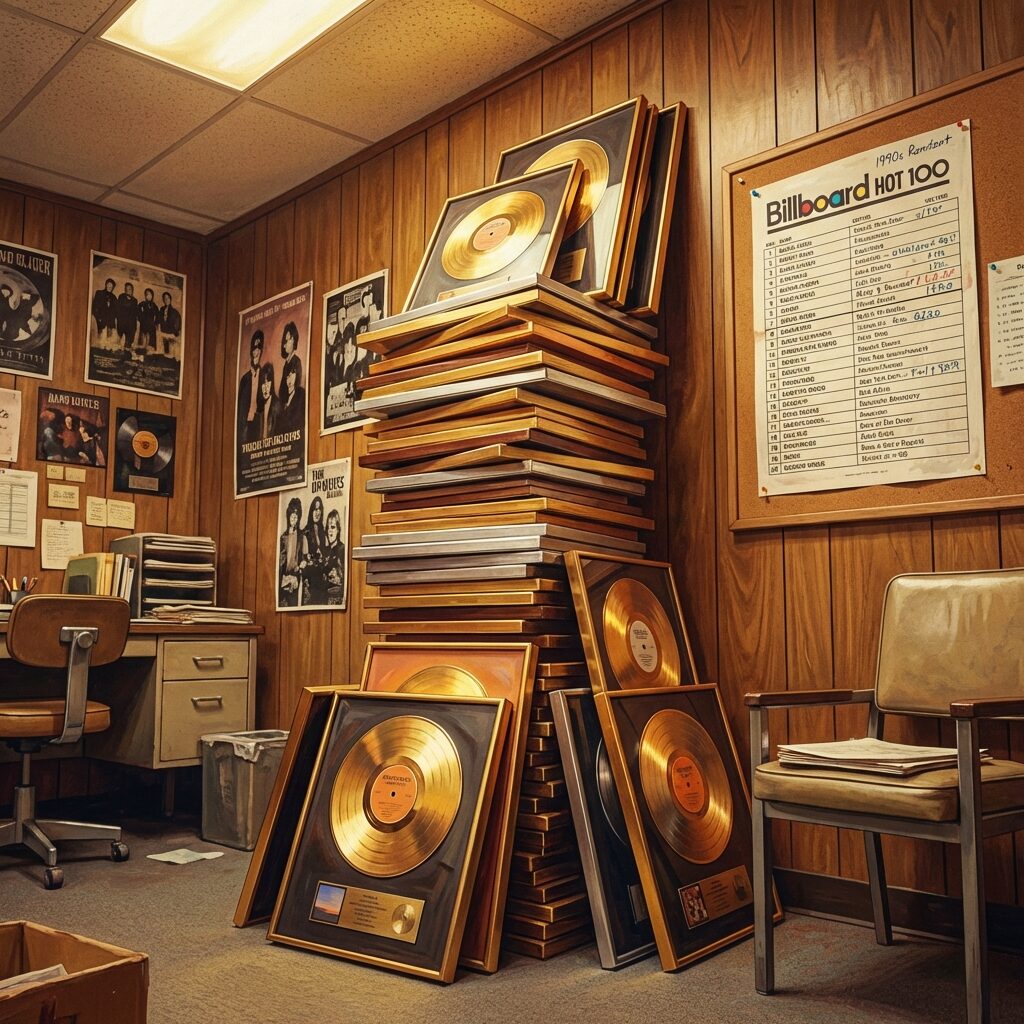
The numbers on The Score are absurd when you consider where the Fugees started. So here they are.
The album hit #1 on the Billboard 200, where it stayed for four weeks. It topped the R&B/Hip-Hop Albums chart for eight weeks, the longest run at #1 for any hip-hop group at that time. Three months after release, it had sold two million copies in the US and roughly six million worldwide. By the end of 1996, it was the third best-selling album in America, behind only Alanis Morissette’s Jagged Little Pill and Celine Dion’s Falling Into You. A hip-hop album made in a basement in East Orange, New Jersey, outsold everything that year except two of the biggest pop juggernauts of the decade.
The singles did damage everywhere. “Killing Me Softly” went to #1 in more than twenty countries. In the UK, it spent five non-consecutive weeks at the top and became the best-selling single of 1996 with 1.17 million copies, narrowly beating the Spice Girls’ “Wannabe” by about 10,000 units. It was the first single to debut at #1 on the German chart. In the US, it peaked at #2 on the Hot 100 despite a complicated release strategy that, depending on which source you believe, may not have included a traditional commercial single release.
“Ready or Not” followed and hit #1 in the UK as well, giving the Fugees back-to-back British chart-toppers. Spin magazine tied it with “Killing Me Softly” for best song of the year.
And then there’s France. What happened in France doesn’t quite make sense. The Score hit #1 and stayed there for eight weeks. It was the best-selling album in France in 1996, earning a Diamond certification for moving over a million copies. For context, the Fugees’ first album sold 10,000 copies in France. They went from 10,000 to Diamond. It remains the best-selling album by an American hip-hop act in French history.
The final worldwide tally, depending on which source you trust, lands somewhere between 14 and 22 million copies. Pras and multiple industry sources cite 22 million; tracking databases put it closer to 14 million across 35 verified countries. Either way, it’s the best-selling album by a hip-hop group of all time. Not was. Is. Nearly thirty years later, no hip-hop group has touched that number. The record that was almost pulled from shelves over an uncleared Enya sample became one of the most commercially successful albums in the history of recorded music.
The Grammy That Changed the Room
The Score won two Grammys and earned an Album of the Year nomination, only the second rap album ever nominated, while Christgau called it “so beautiful and funny its courage could make you weep.”
At the 39th Annual Grammy Awards on February 26, 1997, at Madison Square Garden, the Fugees walked away with two trophies: Best Rap Album and Best R&B Performance by a Duo or Group with Vocal for “Killing Me Softly With His Song.” Lauryn Hill became the first Black woman to win a Grammy for Best Rap Album, which, in 1997, tells you more about the Recording Academy than it does about Lauryn Hill.
The nomination that carried the most weight, though, was Album of the Year. The Score was only the second rap album ever nominated in that category, after MC Hammer’s Please Hammer Don’t Hurt ‘Em, and the first from a group that was genuinely rooted in hip-hop. They lost to Celine Dion, because of course they did, but that nomination put hip-hop at the industry’s biggest table for real. Two years later, Lauryn Hill would win Album of the Year for Miseducation, and you can draw a pretty straight line from The Score‘s nomination to that moment.
Critics were just as enthusiastic as record buyers, and sometimes better at explaining why. Robert Christgau, who handed out praise like it cost him money, called it “so beautiful and funny its courage could make you weep.” Billboard, writing on the album’s 20th anniversary, put the achievement in perspective: “By 1996, the world had seen plenty of hip-hop blockbusters. Some of these albums were poppy, some were gangsta, and some were given that slightly condescending label ‘socially conscious.’ Few, if any, checked all three boxes, and none did so more successfully, artistically or commercially, than the sophomore effort from Fugees.”
Cheo Hodari Coker’s review in the Los Angeles Times zeroed in on the craft: “The Score succeeds on all counts… Their specialty is matching a gymnastic rhyme flow and rock-solid beats with expert crooning.” Steve Huey at AllMusic called it “one of the most distinctive hip-hop albums of its era.” And the New York Times placed the Fugees “at the forefront of pop music.” Not hip-hop. Not R&B. Pop music.
The Feather That Changed Everything
The Score’s influence shows up in specific, traceable ways, from Lauryn Hill pioneering the rap-singing style that Drake and SZA would later build on, to the Booga Basement pumping out hits for Destiny’s Child and Whitney Houston, to Lin-Manuel Miranda weaving Fugees references into Hamilton.

The most obvious thing The Score changed is hip-hop vocals, and specifically what Lauryn Hill did with them. I know I’ve mentioned the rap-singing thing already, but I want to be more specific about why it matters. Before The Score, rappers rapped and singers sang. There were exceptions, Slick Rick had melody in his delivery, Bone Thugs-N-Harmony were blurring lines, but nobody was moving between modes the way Hill does on this album, where a verse starts as a rap and melts into singing without any seam showing. If you trace the line from what she does here through The Miseducation of Lauryn Hill (1998) and into the 2000s, you’re basically looking at the DNA of modern hip-hop. Drake built a career on the technique. Nicki Minaj weaponized it. SZA made it feel like confession. The fluidity between rapping and singing that defines so much of today’s music, that started here, in this basement, on this album.
The list of people who’ve claimed the Fugees is wild when you see it written out. Beyoncé, Jay-Z, Kanye West, Adele, Amy Winehouse, Dua Lipa, Christina Aguilera, H.E.R., Missy Elliott, Rapsody, all have cited the Fugees or Lauryn Hill specifically as formative influences. Lin-Manuel Miranda embedded Fugees references into Hamilton, pulling from “Lost Ones” for “We Know” and echoing Hill’s “Ready or Not” verse in “Helpless.” When your album shows up in the biggest musical theater phenomenon of the 21st century, something happened that chart positions don’t really account for.
The Booga Basement itself kept producing hits for years after The Score. The same room, the same equipment, the same cramped creative energy produced Destiny’s Child’s “No, No, No (Part II)” in 1998 and Whitney Houston’s “My Love Is Your Love” that same year. That $135,000 investment in a basement studio was still paying off long after the Fugees stopped making music together. Queen Latifah, Redman, and a young Akon all passed through those sessions.
Music journalist Danyel Smith made an argument that I find compelling: that Lauryn Hill effectively revived hip-hop after the murders of Tupac Shakur in September 1996 and The Notorious B.I.G. in March 1997. The genre’s two biggest stars were dead. The East Coast/West Coast rivalry that had defined the era had turned literally fatal. And it was The Score, and then Miseducation, that proved hip-hop could move forward, could be something more than the binary of gangsta or conscious, coast versus coast, hard versus soft.
That might be the thing about this album that lasts longest. As Billboard put it, The Score proved that a hip-hop album could be poppy, gangsta, and socially conscious simultaneously. It didn’t have to choose a lane. Before the Fugees, those categories felt mutually exclusive. After The Score, they never quite snapped back into place.
The Basement Still Echoes
The same emotional chaos that made The Score transcendent destroyed the Fugees as a group, but the album endures, a frozen moment proving that desperate, brilliant people with nothing to lose can make something that outlasts all of them.
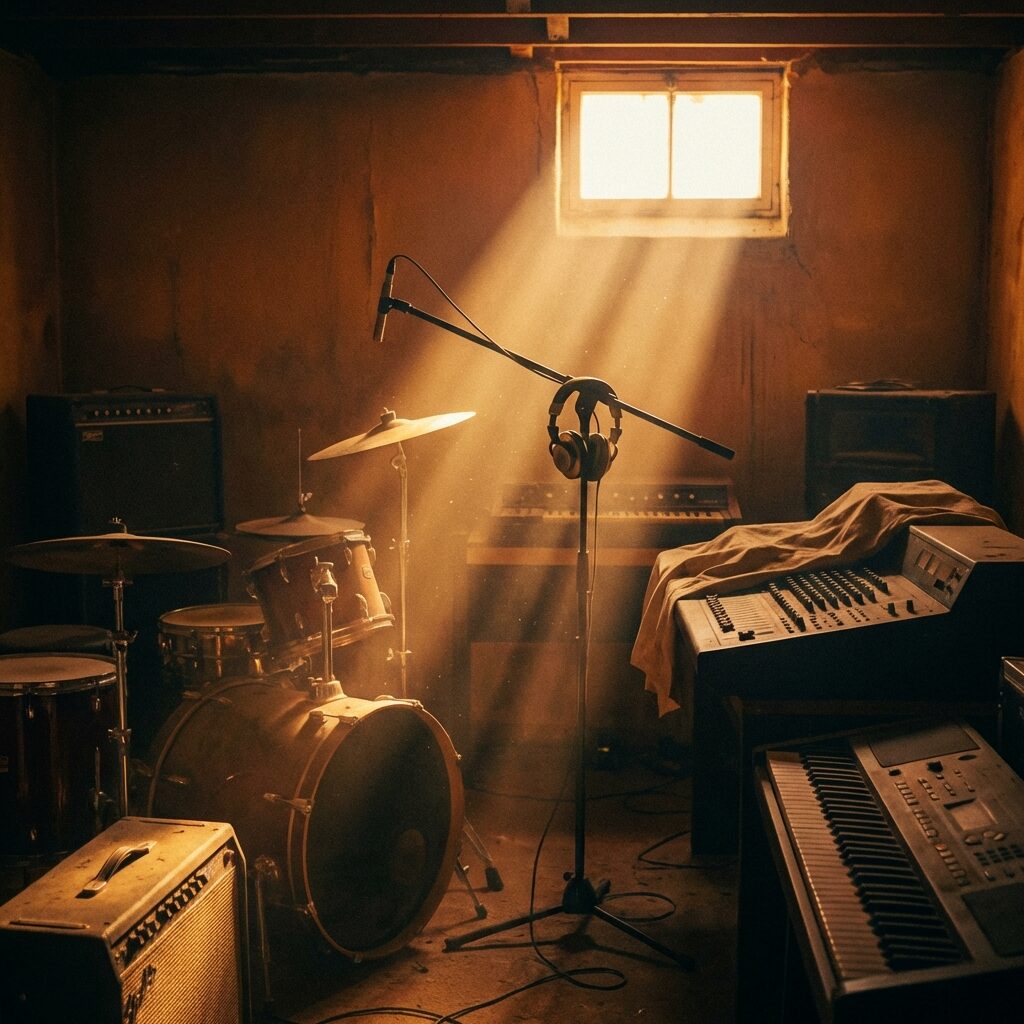
So here’s where we started: three people, $135,000, a rejected beat, a basement in East Orange, and something to prove. No label oversight. No professional studio. No safety net. Just time, equipment, talent, and the kind of creative desperation that tends to go one of two ways.
You know the ending, and it’s bittersweet in the way that the best music stories almost always are. The same emotional chaos that made The Score feel so raw and alive, the love triangle, the secrecy, the intensity of three people living on top of each other in a basement for five months, also destroyed the group. There was no second album. There never could have been. The affair between Wyclef and Lauryn collapsed into recrimination and heartbreak. Pras drifted into solo work and, eventually, federal legal troubles that would land him a fourteen-year prison sentence in 2025. Hill’s relationship with her own legacy has been complicated at best, brilliant and erratic, showing up late to her own concerts, releasing almost no new music for decades.
The reunion attempts tell the story in miniature. Dave Chappelle’s Block Party in 2004. A BET Awards medley in 2005. A 25th anniversary tour in 2021 that got postponed. A 2024 tour that was partially canceled. They keep trying to get back to that basement. They keep learning that you can’t revisit a moment that only worked because nobody knew what it was yet.
But the album endures. That’s what records do, they freeze a moment. And what The Score froze was something specific and irreplaceable: the sound of desperate, brilliant people making art with absolutely nothing to lose. Every constraint they faced, the tiny budget, the cramped space, the uncleared samples, the secret affair, the weight of a debut that had failed, fed the music instead of killing it. The limitations didn’t hold them back. The limitations were the album.
“The Score is raw storytelling,” Wyclef said. “It’s a candid picture of who we were and the times we were living in.” He’s right. And twenty-two million copies later, it turns out that a candid picture, made in a basement, powered by rice and beans and heartbreak and a beat that Fat Joe didn’t want, found an audience nobody predicted.
The basement still echoes. It probably always will.
Did you know? The Fugees sampled Enya without permission after hearing her music in a Stephen King horror movie. She threatened to pull the album from every shelf — then settled after hearing their positive message. 🎤🏰 #Fugees #TheScore #90sHipHop https://bit.ly/4dsocaR

Click to Tweet