The Record Scratch Heard Everywhere
A single record scratch on March 30, 2017 announced the most contradictory anthem of the decade, a song that commands humility while radiating ego, built on a beat that was never meant for Kendrick in the first place.

You know it the second you hear it. That record scratch, not some subtle production flourish, but a hard cut that wipes out whatever you were listening to before. American Songwriter called it “destined to go down in hip-hop history as one of the most iconic openings ever,” and for once the music press wasn’t reaching. It’s one of those sounds that pins you to a specific moment. You remember where you were.
March 30, 2017. Single and music video drop at the same time. No rollout, no teaser campaign. Just a record scratch, a deep piano riff, and Kendrick Lamar telling the entire world to sit down and be humble. The internet, predictably, did not sit down. It hit replay until the servers got warm.
Here’s what gets me about “HUMBLE.”, it shouldn’t work this well. On paper, it’s a contradiction that collapses under its own weight. A man commanding humility while radiating the opposite. A beat built from almost nothing, a piano, some 808s, hi-hats, that somehow pressurizes every inch of whatever room it’s playing in. A song made in FL Studio that hits like it was chiseled out of bedrock. Any one of those tensions should undermine the track. Instead they’re the whole point.
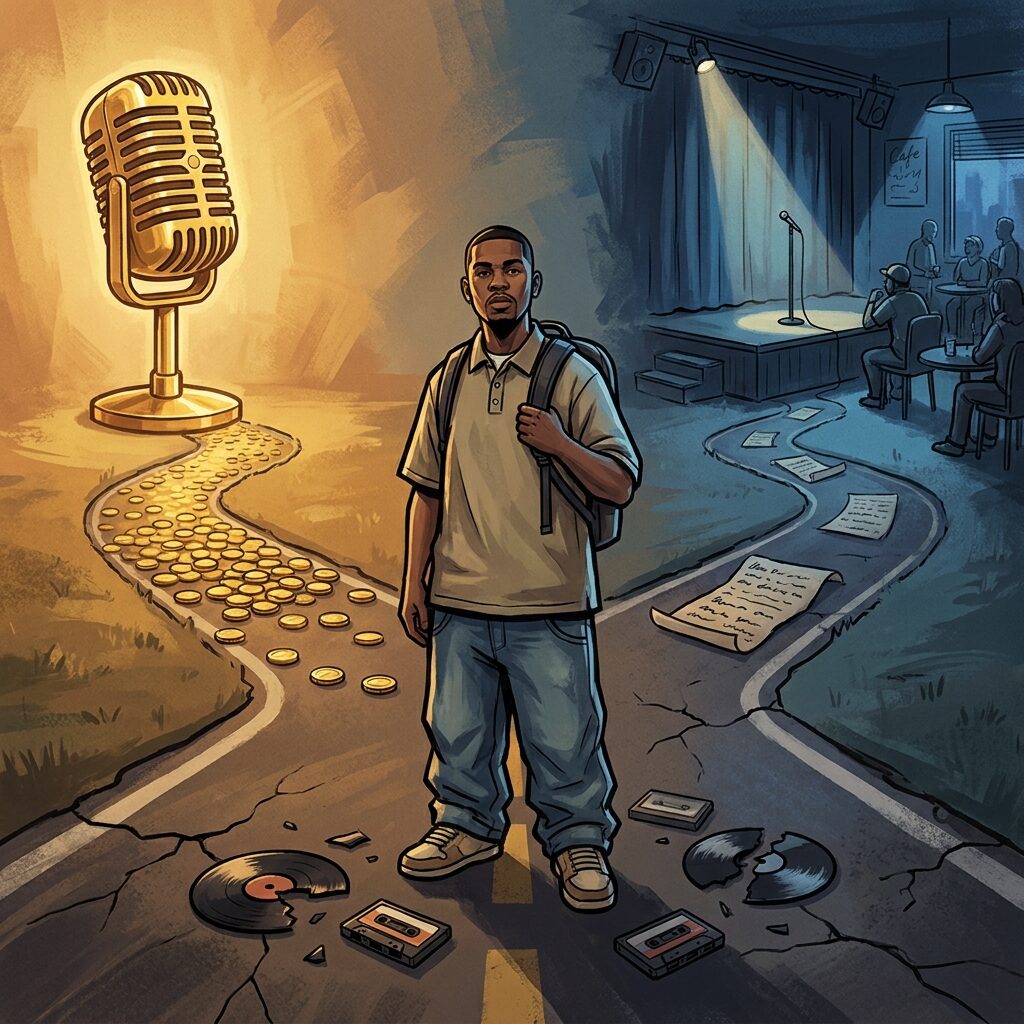
And then there’s the origin story, which is maybe the strangest part. This beat wasn’t made for Kendrick. It was built for a convicted felon’s prison homecoming, got rejected, sat around with no home, nearly got given away a second time, and then, more or less by accident, became the biggest song of 2017. But I’m getting ahead of myself.
Let’s start at the beginning. Or rather, let’s start with someone else’s beginning entirely.
A Beat Built for a Jailbird
Mike WiLL Made-It built the HUMBLE. beat in FL Studio for Gucci Mane’s 2016 prison release, but Gucci wanted a new sound and passed. The beat nearly died a second time when Kendrick offered it back for Mike WiLL’s own album, until Kendrick’s team talked him into keeping it.
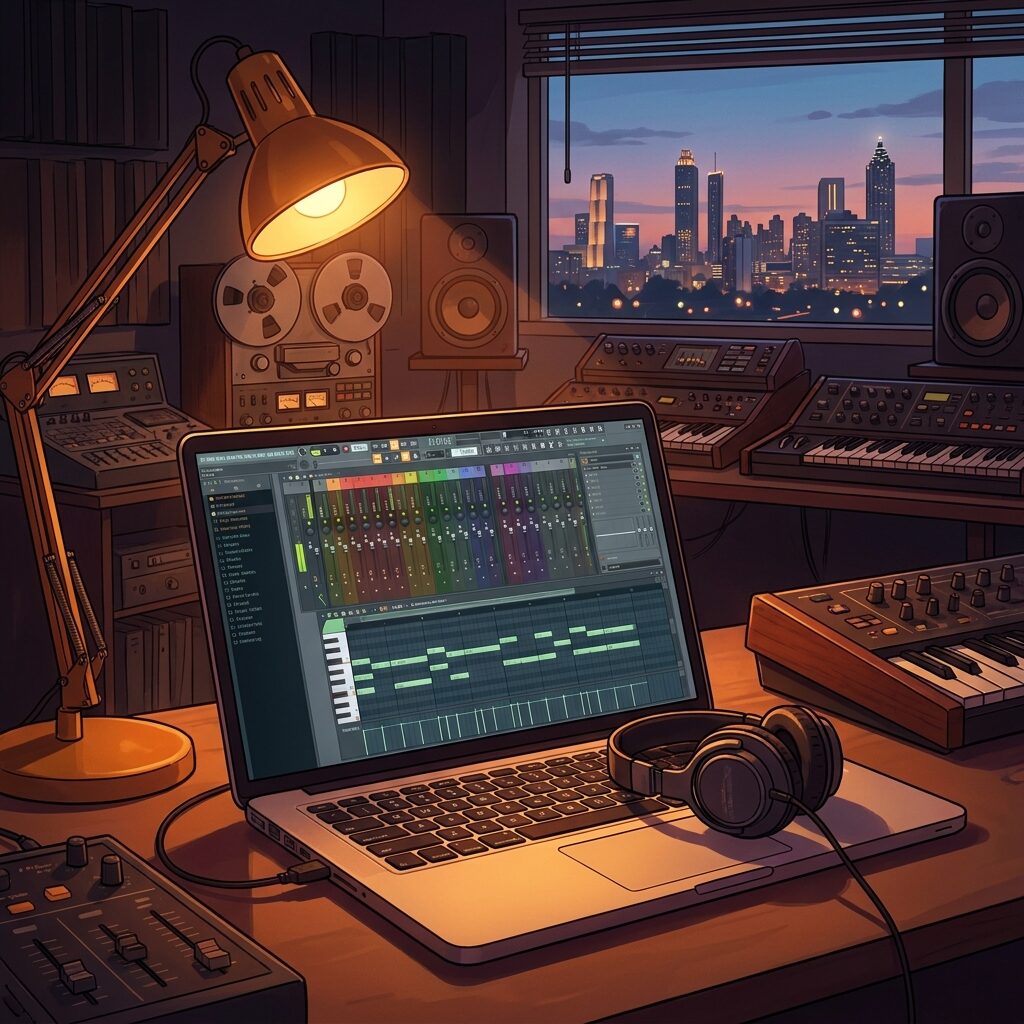
In 2016, Mike WiLL Made-It, born Michael Len Williams II in Marietta, Georgia, was cooking up beats in FL Studio with a specific occasion in mind. Gucci Mane was getting out of federal prison on May 26th, and Mike WiLL wanted something ready for the moment. Something that hit hard enough to announce Gucci’s return.
“With ‘HUMBLE.,’ I knew that beat was going to capture a moment,” Mike WiLL told NPR. “It just felt real urgent. I made that beat when Gucci Mane was getting out of jail; I made it with him in mind.”
Mike WiLL and Gucci went way back. When Mike WiLL was sixteen, he was doing what every aspiring producer in Atlanta does, shopping beats at studios, hoping someone with a name would take one for a spin. He ended up at PatchWerk Recording Studios, and Gucci Mane became the first major artist to ever rap over one of his beats. Gucci didn’t just try one track, either. He freestyled over every instrumental on the beat CD Mike WiLL handed him, then offered a thousand dollars for one of them. For a teenage producer, that’s the moment it stops being a hobby.
That relationship paid off for years, and when Gucci walked out of prison in May 2016, Mike WiLL was right there with the goods. He supplied Gucci with “1st Day Out tha Feds,” which became Gucci’s first post-prison track. But that urgent, piano-driven beat he’d been saving? The one that would become “HUMBLE.”? Gucci passed on it.
It wasn’t personal. Gucci Mane came home a different man, literally. He’d lost weight, cleaned up, and wanted his music to reflect that. He was deliberately moving away from his old sound. The beat Mike WiLL had crafted with all that urgency and energy sounded, to Gucci’s ears, too much like what he was trying to leave behind. So the beat went homeless.
Mike WiLL’s working relationship with Kendrick Lamar had been picking up steam since To Pimp a Butterfly. Their first link was the 2014 Ransom posse cut “Buy the World,” but by 2016 they were building something bigger. Mike WiLL played Kendrick the orphaned Gucci beat, and his pitch was smart, he framed it in terms of legacy.
“I was thinking, if Dot gets on this it’ll be his first time being heard on something like this,” Mike WiLL explained. “At the same time, it kind of has an NWA/Dr. Dre feel, an Eminem kind of feel. So I thought, let me see if Dot fucks with it. And he heard the beat and he liked it.”
But “liked it” almost wasn’t enough. Kendrick, in a move of generosity that nearly cost him his biggest hit, offered to give the beat back to Mike WiLL for his debut studio album Ransom 2 (which was due out March 24, 2017). Mike WiLL jumped at the offer. “I love that song so I was like, ‘Man, hell yeah.'”
Then Kendrick’s team stepped in. His people told him, straight up, you need to keep this one. And Mike WiLL agreed immediately. “I told him, ‘Bruh, you definitely should keep it, and you should use it as your single.'”
A producer telling an artist to keep a track he could have had for his own album. That takes a particular kind of self-awareness, knowing where a beat actually belongs matters more than owning it yourself.
The situation did have an upside: since Mike WiLL now had Gucci and Kendrick both in his orbit, he brought them together for the first time on “Perfect Pint” for Ransom 2, featuring Rae Sremmurd. Gucci lost the beat but gained a collaboration. Kendrick kept the beat and gained what would become the biggest song of his career. Mike WiLL got to watch a beat he made in FL Studio go everywhere.
“HUMBLE.” was one of the first songs produced for what would become DAMN., an album recorded in secret before being revealed to the public in 2017. And when Kendrick first sat with the beat, his mind went somewhere specific.
“All I could think of was Marley Marl’s ‘The Symphony’ and the earliest moments of hip-hop,” Kendrick told Rolling Stone, “where it’s complex simplicity, but it’s also somebody making moves.”
Complex simplicity. Hold onto that phrase, it runs through everything about this song.
Complex Simplicity
With just 808 bass, a two-chord piano riff, hi-hats, and a siren synth, Mike WiLL Made-It and co-producer Pluss filled the entire frequency spectrum, proof that knowing what to leave out matters more than what you put in.
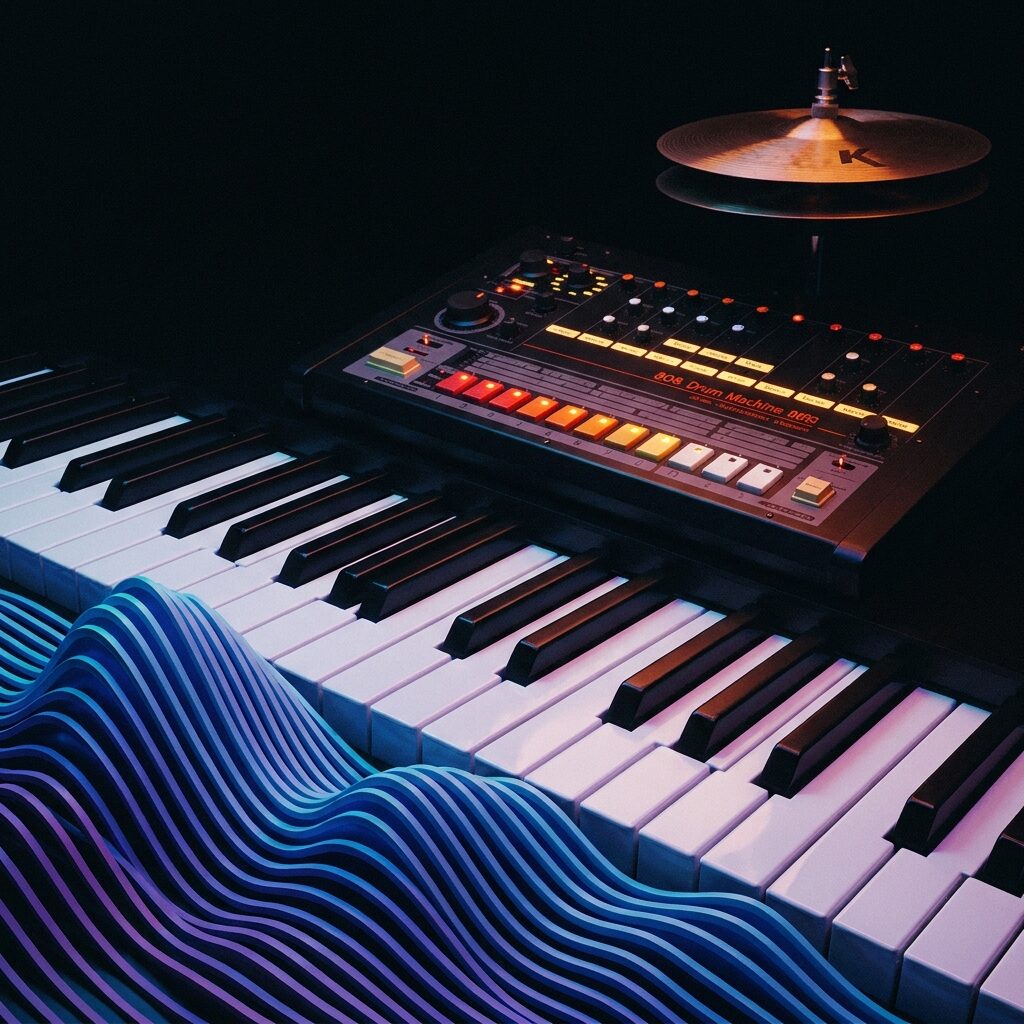
“Complex simplicity.” Kendrick’s own phrase for the beat, borrowed from his feelings about Marley Marl’s 1988 posse cut “The Symphony.” It sounds like a contradiction because it is one. But it’s also the most accurate two-word description of what Mike WiLL Made-It and co-producer Pluss pulled off here.
Here’s what’s actually on the track, because the list is almost comically short. On the bottom: 808 bass, doing what 808 bass does, filling out the low end with that thick, resonant thump you feel in your chest before you hear it in your ears. In the middle: a deep piano riff built on two repeated chords. Two chords. On the top: hi-hats ticking away and a “siren” synth that rounds out the frequency picture.
That’s the whole beat. Piano, bass, hi-hats, siren synth. You could count the elements on one hand. And yet, this is the part that makes producers lose sleep, it fills every frequency your speakers can produce. Low end, mid-range, high end, all covered. There’s no empty space in this mix. As Splice noted in their production breakdown: “HUMBLE. is proof that you don’t need to stack a song with tracks to make a hit.”
The genius is in the details. The chorus piano riff features an octave doubling, same notes played an octave apart at the same time, which gives it that wider, more commanding sound compared to the verses. The siren synth isn’t just texture; it doubles the chorus vocal melody, reinforcing the hook in a register that cuts through anything. Every four bars, something shifts: a different drum pattern, a brief dropout, a change in the stereo field. Your ears never get a chance to settle.
Then there’s the tempo. 150 BPM. In classical terms, that’s Allegro, fast and lively. In 4/4 time at that speed, you get this relentless forward push that makes the song feel like it’s chasing you down. It can also be counted in half-time at 75 BPM, which is why your head might nod slowly while your pulse races. That duality again.
Pluss, Mike WiLL’s childhood friend from Atlanta and an in-house producer at EarDrummers Records, co-produced the beat. His approach speaks to the thinking behind the whole track: “Some people start with 808 or drums but I look for a sound or an instrument first because that’s how I get my motivation for that beat.” On “HUMBLE.,” that sound was clearly the piano. Everything else serves it.
For Mike WiLL, this beat was a personal milestone. He’d been working in FL Studio, the same software bedroom producers use to make their first beats, and “HUMBLE.” was the track that made him feel like he’d actually mastered it. “I fucked around and made ‘Humble’ off of Fruity Loops,” he told Rolling Stone. “That’s when I felt like I mastered it. I made ‘Black Beatles’ off of Fruity Loops.” Making a beat this clean, this purposeful, this sonically complete in FL Studio is a flex on its own. Some producers need million-dollar studios. Mike WiLL needed Fruity Loops and a piano sound.
The production choices also serve the lyrics perfectly. When Kendrick raps about syrup sandwiches and counterfeits, the beat gives him room, the drums might thin out, the bass might pull back for a beat. When the chorus hits, everything stacks: octave piano, siren synth, full drums, Kendrick’s voice commanding you to sit down. The dynamics aren’t random. They’re architecture.
Syrup Sandwiches and Soprano C
Kendrick’s lyrics toggle between poverty and opulence, humility and braggadocio, with every bar loaded, from the childhood shorthand of syrup sandwiches to the musical self-awareness of “Soprano C, we like to keep it on a high note.” He stacks elite symbols just to undercut them, borrows Big Sean’s ad-libs in a song about humility, and claims modesty while daring you to call him on it.
Nobody pray for me
It been that day for me
Way (Yeah, yeah)
[Verse 1]
Ayy, I remember syrup sandwiches and crime allowances
Finesse a nigga with some counterfeits, but now I’m countin’ this
Parmesan where my accountant lives, in fact, I’m downin’ this
D’ussé with my boo bae, tastes like Kool-Aid for the analysts
Girl, I can buy your ass the world with my paystub
Ooh, that pussy good, won’t you sit it on my taste bloods?
I get way too petty once you let me do the extras
Pull up on your block, then break it down, we playin’ Tetris
A.m. to the p.m., p.m. to the a.m., funk
Piss out your per diem, you just gotta hate ’em, funk
If I quit your BM, I still ride Mercedes, funk
If I quit this season, I still be the greatest, funk
My left stroke just went viral
Right stroke put lil’ baby in a spiral
Soprano C, we like to keep it on a high note
It’s levels to it, you and I know
[Chorus]
Bitch, be humble (Hold up, bitch)
Sit down (Hold up, lil’— hold up, lil’ bitch)
Be humble (Hold up, bitch)
Sit down (Hold up, sit down, lil’— sit down, lil’ bitch)
Be humble (Hold up, hold up, hold up, hold up, lil’ bitch)
Bitch, sit down (Hold up, lil’ bitch)
Be humble (Hold up, bitch)
Sit down (Hold up, hold up, hold up, hold up)
Be humble (Hold up, hold up, hold up, hold up, lil’—)
Sit down (Hold up, lil’ bitch)
Be humble (Hold up, bitch)
Sit down (Hold up, sit down, lil’— sit down, lil’ bitch)
Be humble (Hold up, hold up, hold up, hold up, lil’ bitch)
Bitch, sit down (Hold up, lil’ bitch)
Be humble (Hold up, bitch)
Sit down (Hold up, hold up, hold up, hold up)
[Verse 2]
Who that nigga thinkin’ that he frontin’ on Man-Man? (Man-Man)
Get the fuck off my stage, I’m the Sandman (Sandman)
Get the fuck off my dick, that ain’t right
I make a play fucking up your whole life
I’m so fuckin’ sick and tired of the Photoshop
Show me somethin’ natural like afro on Richard Pryor
Show me somethin’ natural like ass with some stretch marks
Still’ll take you down right on your mama couch in Polo socks
Ayy, this shit way too crazy, ayy, you do not amaze me, ayy
I blew cool from AC, ayy, Obama just paged me, ayy
I don’t fabricate it, ayy, most of y’all be fakin’, ayy
I stay modest ’bout it, ayy, she elaborate it, ayy
This that Grey Poupon, that Evian, that TED Talk, ayy
Watch my soul speak, you let the meds talk, ayy
If I kill a nigga, it won’t be the alcohol, ayy
I’m the realest nigga after all
[Chorus]
Bitch, be humble (Hold up, bitch)
Sit down (Hold up, lil’— hold up, lil’ bitch)
Be humble (Hold up, bitch)
Sit down (Hold up, sit down, lil’— sit down, lil’ bitch)
Be humble (Hold up, hold up, hold up, hold up, lil’ bitch)
Bitch, sit down (Hold up, lil’ bitch)
Be humble (Hold up, bitch)
Sit down (Hold up, hold up, hold up, hold up)
Be humble (Hold up, hold up, hold up, hold up, lil’—)
Sit down (Hold up, lil’ bitch)
Be humble (Hold up, bitch)
Sit down (Hold up, sit down, lil’— sit down, lil’ bitch)
Be humble (Hold up, hold up, hold up, hold up, lil’ bitch)
Bitch, sit down (Hold up, lil’ bitch)
Be humble (Hold up, bitch)
Sit down (Hold up, hold up, hold up, hold up)
Here’s the central trick of “HUMBLE.” as a piece of writing: Kendrick Lamar spends two minutes and fifty-seven seconds telling everyone else to be humble while being the most braggadocious person alive. And he knows it. That’s not a bug in the song’s logic, it’s the entire point.
On DAMN., “HUMBLE.” is track eight, sequenced directly after “PRIDE.” That placement does a lot of work. “PRIDE.” is introspective, questioning, uncertain. Then that record scratch hits and Kendrick is standing on the table telling everyone in the room to sit down. The track titles across the album come in thematic pairs, PRIDE. and HUMBLE., LUST. and LOVE., FEAR. and GOD., and the tension between each pair is where the album actually lives.
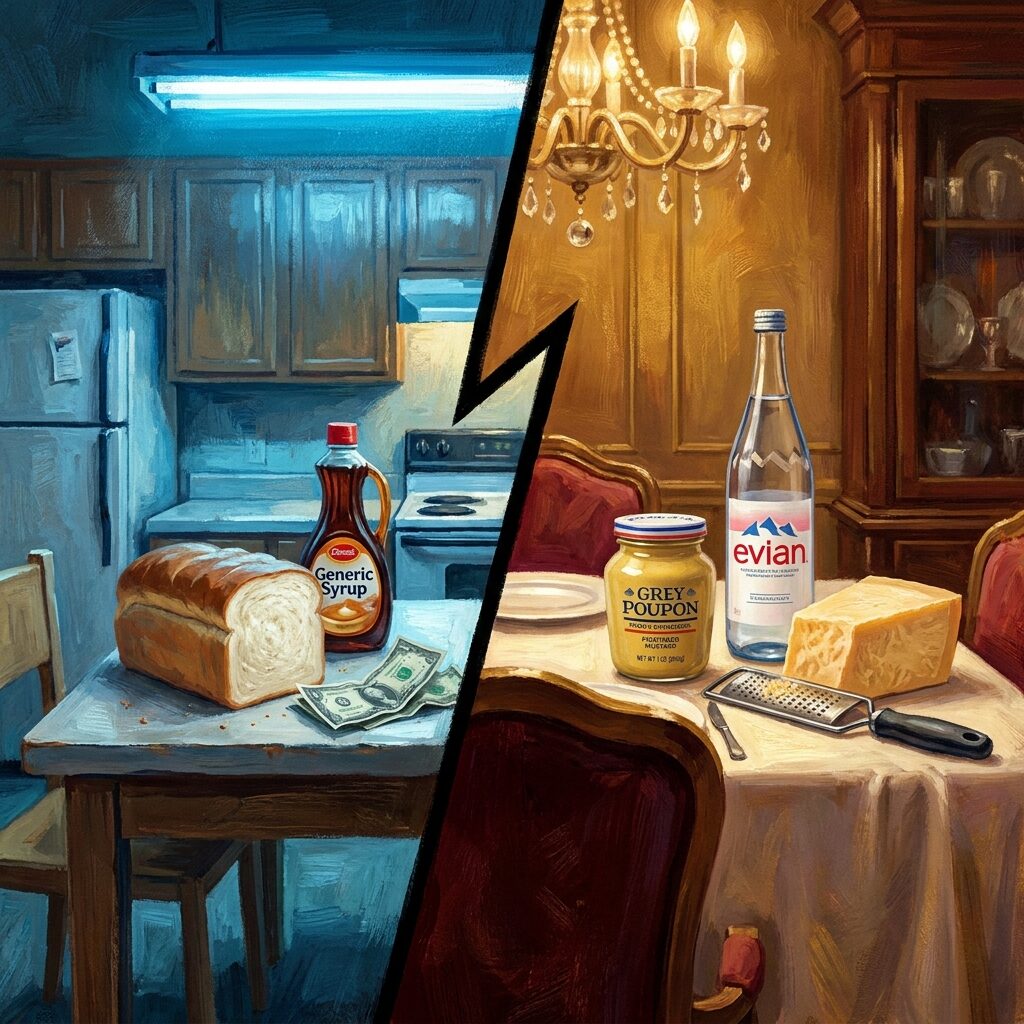
The first verse opens with autobiography. “I remember syrup sandwiches and crime allowances.” If you didn’t grow up broke, let me translate: syrup sandwiches are exactly what they sound like, bread and syrup, the kind of meal you eat when there’s nothing else in the kitchen. It’s poverty shorthand, and Kendrick delivers it flat, no self-pity. Just a fact. Crime allowances, money from illicit activities, possibly from gang-involved family members, and counterfeits, hustling with fake bills. The distance from there to “Parmesan where my accountant lives” (Parmesan = cheese = money, and yes, his accountant lives somewhere expensive) is the whole Kendrick Lamar biography in miniature.
Then comes one of my favorite lines on the track: “Soprano C, we like to keep it on a high note / It’s levels to it, you and I know.” Soprano C is the highest C note on a standard piano. Kendrick is making a musical reference inside a rap song about how he operates at the highest level, and the wordplay hits on musical pitch, quality of life, and standing in the rap game all at once. “It’s levels to it” isn’t just a phrase. He means it literally.
The second verse is where things get spicy, and where the controversy lives, but we’ll get to that in its own section. The Photoshop lines (“I’m so fuckin’ sick and tired of the Photoshop / Show me somethin’ natural like afro on Richard Pryor / Show me somethin’ natural like ass with some stretch marks”) generated more op-eds than most political speeches. But set the debate aside for a moment and listen to what surrounds them.
Kendrick stacks symbols of elite status like he’s playing Jenga: Grey Poupon (the fancy mustard from that old Rolls-Royce commercial, if you know, you know), Evian water, a TED Talk. He’s claiming entry to every tier of the establishment. But then he turns around and undercuts it: “Watch my soul speak, you let the meds talk.” While everyone else numbs out, Kendrick’s operating unfiltered. The trappings of wealth on one side, rawness of real expression on the other, and he refuses to pick.
There’s also the matter of the chorus ad-libs. “Hol’ up, lil’ bitch”, those are Big Sean’s signature phrases, pulled from Drake’s “All Me” and Big Sean’s own “Marvin & Chardonnay.” Twitter erupted with diss-track speculation when the song dropped, and while Kendrick never confirmed or denied it, borrowing another rapper’s ad-libs in a song called “HUMBLE.” is… well, it’s something. At minimum, it’s provocative. At maximum, it’s Kendrick telling Big Sean to take his own catchphrase’s advice.
And the meta-line that ties it all together: “I don’t fabricate it / Most of y’all be fakin’ / I stay modest ’bout it.” Kendrick claiming modesty in the middle of the least modest song of 2017. The wink is right there in the lyric. He’s daring you to call him a hypocrite, and he’s betting you won’t, because what are you going to do, argue that he isn’t the best rapper alive? Good luck with that.
The Pope of Compton
Shot in five days at a hotel lobby everyone mistook for a cathedral, the “HUMBLE.” video became one of the most imitated music videos of the decade, winning six VMAs and crossing a billion YouTube views.

Five days. That’s how long before the release date the “HUMBLE.” video was shot. The filming took place around March 25, 2017, at the Park Plaza Hotel (now The MacArthur) at 607 South Park View Street in Los Angeles. And here’s the thing that gets me: the opening shot of Kendrick in full papal regalia, cope, mitre, the whole Vatican wardrobe, was filmed in the hotel lobby. Not a church. The lobby just happens to look like one, with soaring arched ceilings and ornate stonework. People worldwide assumed Kendrick had rented out a cathedral. He had not. It’s where you check in for the night.
The video was directed by Dave Meyers and The Little Homies, the creative partnership between Kendrick and Dave Free, president of Top Dawg Entertainment. Meyers was no newcomer; the man had 11 MTV VMAs already, including co-directing Missy Elliott’s legendary “Work It” video. Put that kind of visual instinct together with Kendrick’s conceptual ambition and you get something bigger than a music video.
The imagery reads like a catalog of religious and social iconography, one frame after another. Kendrick as the Pope, obviously, but also a full recreation of Leonardo da Vinci’s The Last Supper with Kendrick seated in Christ’s place. A sea of bald Black men with Kendrick as the only person wearing cornrows, one head of hair in a crowd of smooth scalps, looking up while everyone around him looks down. Women dressed as nuns. Kendrick lying on a table of money, shooting cash from a cannon. And the closing shot: Kendrick as the only person in white at what appears to be a funeral.
Then there’s the split-screen shot that launched the controversy we’ll get to shortly, a woman shown simultaneously in two states: one half in flawless makeup with straight hair, the other natural with curly hair and visible stretch marks. It’s the visual equivalent of the Photoshop lyric, and it was performed by Carter Kim, a 21-year-old multicultural model who had no idea what she was walking into.
One subtle but important detail: the video’s intro doesn’t use the album version’s opening line (“Nobody pray for me / It been that day for me”). Instead, it opens with “Wicked or weakness / You gotta see this”, a direct callback to the central question posed in DAMN.‘s first track “BLOOD.,” where Bēkon asks “Is it wickedness? Is it weakness? You decide.” The video is tipping its hand, telling you that “HUMBLE.” is part of a larger argument about duality.
The Guardian’s Harriet Gibson described the visual style well: “the brilliantly cinematic video, with its fish-eye lens and cartoonish stylising, recalls classic Hype Williams.” The comparison holds, like Williams’s best work with Missy and Busta Rhymes in the late ’90s, the “HUMBLE.” video builds a visual world that belongs entirely to itself. But where Hype Williams went maximalist, Meyers and The Little Homies lean on negative space and symmetry, letting each image sit long enough to sear into you.
The view count alone tells a story. The video crossed one billion on YouTube, making it Kendrick’s most-watched by a factor of three, roughly triple the views of “DNA.,” which is itself a massive hit. Forbes placed it on their “25 Greatest Music Videos of All Time” list. Its visual vocabulary, according to multiple analyses, “has since been copied by many music video producers.” When you see that particular brand of fisheye lens work, split-screen portraiture, or religious iconography in a hip-hop video today, you’re almost certainly looking at “HUMBLE.” DNA.
At the 2017 MTV VMAs, the video cleaned up: six wins from eight nominations, including Video of the Year (beating Bruno Mars, DJ Khaled, The Weeknd, and Alessia Cara), Best Direction, Best Cinematography (Scott Cunningham), Best Art Direction (Spencer Graves), Best Visual Effects (Timber’s Jonah Hall, in their first VMA win), and Best Hip-Hop Video. Kendrick became the first artist to win Video of the Year for a video they co-directed. Not bad for a shoot in a hotel lobby.
Wickedness or Weakness
On DAMN., an album built to be played both forward and backward, “HUMBLE.” lands at the dead center of a structural argument about duality, sequenced against “PRIDE.” and caught between wickedness and weakness.
You can’t fully understand “HUMBLE.” without understanding the album it lives on, and DAMN. is not a normal album. It’s built like an argument with itself.
The structure runs on pairs. Track titles come in deliberate thematic opposites: PRIDE. and HUMBLE., LUST. and LOVE., FEAR. and GOD. The opener “BLOOD.” lays the ground rules with a question from Bēkon: “Is it wickedness? Is it weakness? You decide.” Every song after that can be heard through one lens or the other. Some analyses place “HUMBLE.” on the wickedness side, Kendrick giving in to ego, stunting on his competition, indulging in the very pride the previous track warned about. Others read it as weakness, Kendrick trying and failing to check his own arrogance, the command to “be humble” aimed at himself as much as anyone.
That both readings hold up is what makes the song work on this album.
It goes further than thematic pairings, though. DAMN. was designed to be played both forward and backward. Front to back, it tells one story, what some fans call “Kendrick the Weak,” a narrative of being humbled by life. Back to front, it tells another, “Kendrick the Wicked,” giving in to temptation and ego. Kendrick confirmed this reading himself: “You listen from the back end, and it’s almost the duality and the contrast of the intricate Kendrick Lamar. Both of these pieces are who I am.”
And he wasn’t speaking loosely. In December 2017, he released a Collector’s Edition of DAMN. with the track order completely reversed, so fans could experience the backward narrative as its own album.
“HUMBLE.” sits at track eight of fourteen, dead center. It comes directly after the introspective, uncertain “PRIDE.,” and the contrast is almost jarring. “PRIDE.” finds Kendrick questioning himself, wrestling with doubt. Then the record scratch hits and suddenly he’s the most confident man on Earth. That whiplash is doing real work in the sequencing.
The shift from To Pimp a Butterfly to DAMN. matters here too. Butterfly was outward-facing, political, systemic, jazz-infused protest music that arrived alongside the Black Lives Matter movement. DAMN. turned the camera around. As Kendrick put it: “the idea that I can’t change the world until I change myself.” “HUMBLE.” is what that internal reckoning sounds like at full volume, a man who knows his ego is a problem and can’t quite stop feeding it anyway.
Photoshop, Stretch Marks, and Who Gets to Say
The Photoshop lines and split-screen video scene set off a real argument about whether Kendrick was celebrating natural beauty or just telling women what to do with their bodies from a different angle. He never said a word about any of it.
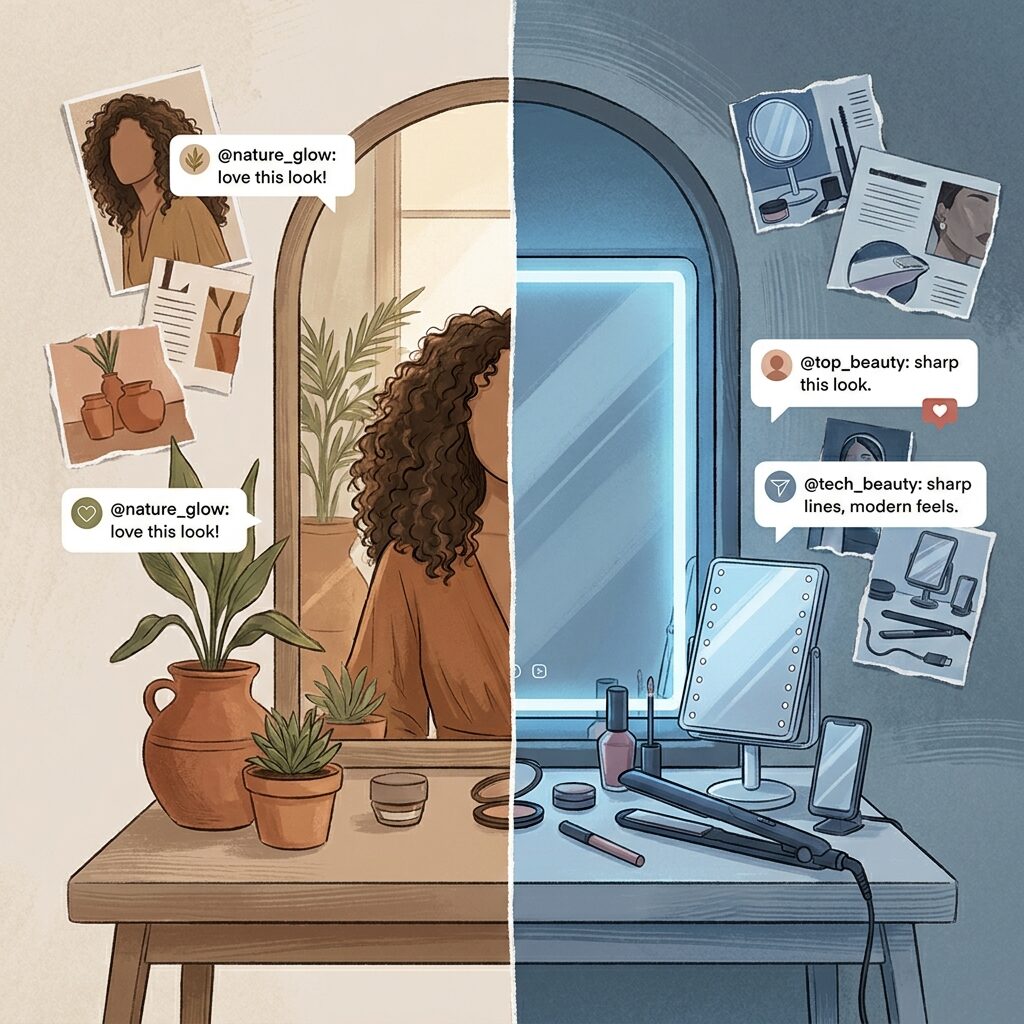
Let’s talk about the lines that broke the internet in a different way than the record scratch did.
“I’m so fuckin’ sick and tired of the Photoshop / Show me somethin’ natural like afro on Richard Pryor / Show me somethin’ natural like ass with some stretch marks.” On first listen, it sounds like body positivity. A major rapper, arguably the biggest rapper alive, telling women they don’t need filters and Facetune. Celebrate your natural beauty. Love your stretch marks. Grow your afro out.
Simple, right? It was not simple.
The backlash came fast and from multiple directions. The core argument: Kendrick was still telling women what to do with their bodies. He’d just swapped one male-dictated beauty standard for another. Instead of “look like a filtered Instagram model for me,” it was “look natural for me.” The operative words in both cases being for me.
Sesali Bowen’s piece in AFROPUNK put it bluntly: “To the untrained eye, this might look and sound like an affirmative moment that encourages women to love their own bodies… But to those of us who know better, it’s actually just another example of Black men giving women directives on how to present themselves to the world based on what men find attractive.”
Wear Your Voice Magazine went further, calling out the male gaze baked into the framing: “Oh, so you’re cool with stretch marks on black women now? How about armpit hair? How about leg hair?” The Conversation, Refinery29, Affinity Magazine, and The Diamondback all ran critical analyses. The word “misogynoir”, misogyny directed specifically at Black women, showed up in dozens of think pieces.
On the other side, major publications praised the lines as progressive. Vogue called it “a powerful message of feminist support.” Time described listeners as “blessed” with “positive body language messages.” Actress Amandla Stenberg posted a screengrab from the video to her Instagram in support.
Caught in the middle was Carter Kim, the 21-year-old multicultural model who appeared in the video’s split-screen natural beauty scene. The production team had framed her role positively: “You are the natural girl that is represented in 2017 in the society that has a ton of imperfections, but still loves herself.” But after the video dropped, Kim faced accusations of colorism because of her lighter complexion. The criticism came from places she didn’t expect.
“I was looking at these feminist pages and black empowerment blogs that were completely slandering me,” Kim told Newsweek. For a model who thought she was participating in a body-positive statement, the fallout was brutal. Newsweek itself observed that the backlash “sparked more misogyny between women than his HUMBLE. lyrics did.”
Worth noting: Kendrick had walked this exact road before. Years earlier, on Section.80, his track “No Makeup” made nearly identical commentary about women’s appearance choices and drew nearly identical criticism. This wasn’t his first time in this particular fire. Whether he learned from the first round or just repeated the same mistake depends entirely on which side of the debate you land on.
The most honest take might have come from Blavity, which threaded the needle: “Calling out the misogynoir doesn’t mean we can’t give our favorite song a good twerk.” Both things can be true. The lines can be well-intentioned and still paternalistic. The video can be visually stunning and still center the male gaze. The controversy can be real and the song can still slap.
Kendrick never publicly addressed any of it. Not a tweet, not an interview answer, not a bar on a subsequent album. Whether that silence was calculated or just a refusal to engage, it left the debate permanently open, which, on an album built around unresolved dualities, might be the most DAMN. thing about it.
Dethroning Ed Sheeran
“HUMBLE.” became the 1,062nd number-one hit in Hot 100 history, knocking Ed Sheeran’s “Shape of You” off the top after 12 weeks. It went on to sell a million pure digital copies, the only rap song in 2017 to do so.
Let’s talk numbers, because the numbers for “HUMBLE.” are absurd.
On the chart dated May 6, 2017, “HUMBLE.” hit number one on the Billboard Hot 100, the 1,062nd song in history to reach that spot. The song it dethroned? Ed Sheeran’s “Shape of You,” which had been parked at the top for twelve consecutive weeks. Ed Sheeran had the most dominant pop single of early 2017, an inescapable earworm backed by one of the biggest album rollouts of the year, and Kendrick knocked it off with a hip-hop track produced in FL Studio. Bruno Mars’s “That’s What I Like” eventually replaced “HUMBLE.” 2017 was stacked at the top of the charts.
The first-week numbers showed a song hitting from every angle: 111,000 digital copies sold, 51 million streams, and within ten days, 46 million YouTube views and 39 million Spotify streams. “HUMBLE.” debuted at number one on both Hot R&B/Hip-Hop Songs and Hot Rap Songs. On the Digital Song Sales chart, it became only the fourth song ever to debut at the top spot. It was Kendrick’s first Hot 100 number one as a lead artist. His only previous chart-topper was a feature on Taylor Swift’s “Bad Blood.”
By year’s end, “HUMBLE.” had sold over one million pure digital copies, the only rap song in all of 2017 to hit that mark. In an era when streaming had already cannibalized digital sales, a million people still paid to own this track. The IFPI ranked it the sixth best-selling single globally for 2017.
The certifications kept piling up: 10x Platinum in the United States, with total units exceeding 20 million. On Spotify, the song is approaching 3 billion streams, placing it in the top 40 most-streamed songs of all time on the platform. For a conscious hip-hop track with zero pop features and no sung hook, those are pop-star numbers.
Then there’s the Triple J Hottest 100, Australia’s annual listener-voted countdown, which drew a then-record 2,286,133 votes in 2017. “HUMBLE.” took the number one spot, making Kendrick the first person of colour ever to top the countdown. He was also the first non-Australian artist to win since Macklemore and Ryan Lewis’s “Thrift Shop” in 2012, and the first hip-hop song to take the crown in that same span. Triple J’s music director, Nick Findlay, put it plainly: “When I look back on 2017, it’s hard to deny that when it came to music, Kendrick Lamar dominated on all fronts.” Four tracks from DAMN. made the 2017 countdown: “HUMBLE.” at number one, “DNA.” at 34, “LOVE.” at 93, and “LOYALTY.” at 98.
The album kept pace. DAMN. debuted at number one on the Billboard 200 with 603,000 equivalent album units, the biggest opening week for any album that year. All fourteen tracks charted simultaneously on the Hot 100, making Kendrick only the fifth artist in history to have fourteen or more concurrent entries. The album spent four non-consecutive weeks at number one and eventually sold over 3.5 million copies. It became the first album by a rapper or solo artist to have every single song certified gold or higher by the RIAA.
And then, on April 16, 2018, DAMN. won the Pulitzer Prize for Music. First time in the award’s 75-year history that the honor went to a work outside classical or jazz. The Pulitzer committee, in a unanimous decision, described it as “a virtuosic song collection unified by its vernacular authenticity and rhythmic dynamism that offers affecting vignettes capturing the complexity of modern African-American life.” Dana Canedy, the Pulitzer Administrator, told the New York Times: “It shines a light on hip-hop in a completely different way. This is a big moment for hip-hop music and a big moment for the Pulitzers.”
A beat made in FL Studio for a convict who didn’t want it, attached to an album that won a Pulitzer. Nobody writes that script on purpose.
The Wall of Fire
From a literal wall of fire at the VMAs to a divided American flag at Super Bowl LIX, “HUMBLE.” is where Kendrick’s live shows cross over from concert into spectacle, and chaos tends to follow.
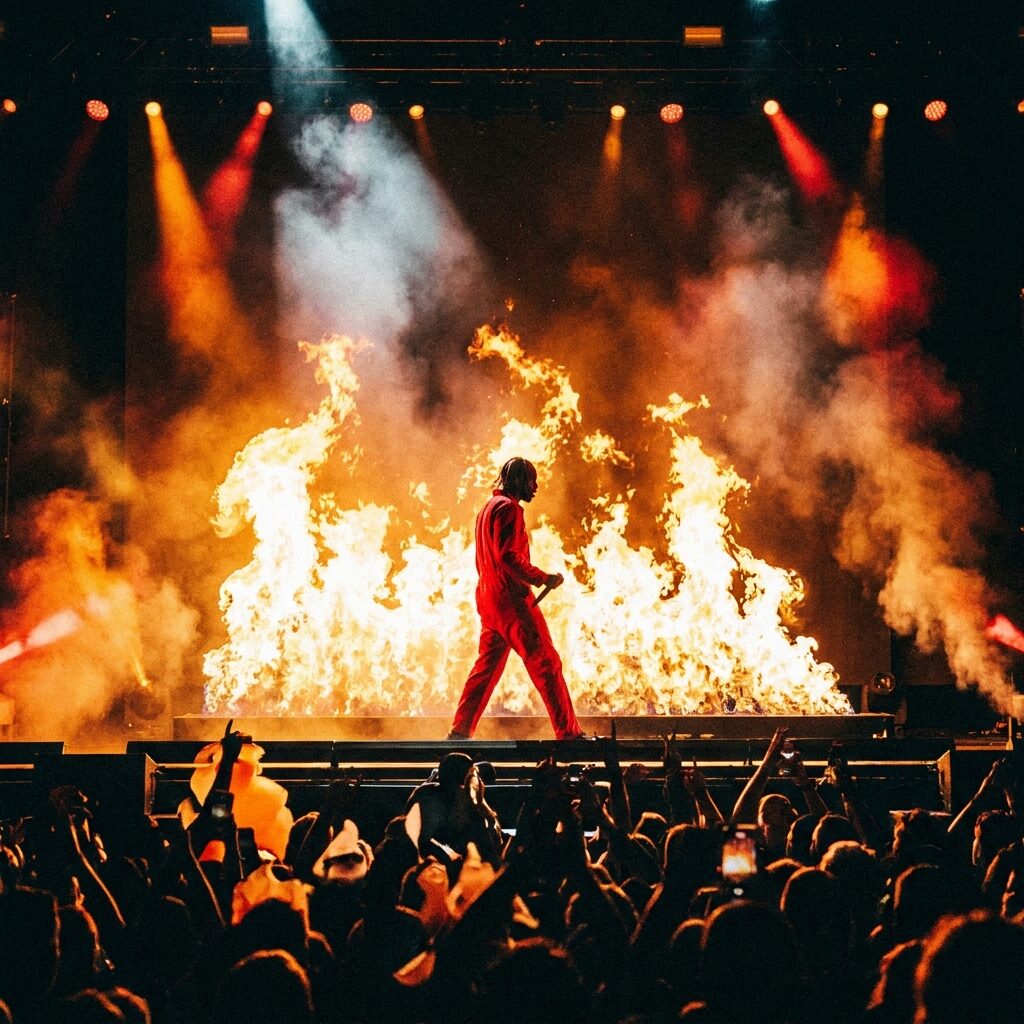
A song like this demands spectacle, and Kendrick has never been shy about delivering. “HUMBLE.” is where his live shows stop being concerts and start being events.
The 2017 MTV VMAs performance is probably the best live version anyone’s gotten. Kendrick opened the ceremony with a “DNA.”/”HUMBLE.” medley, wearing a bright red jumpsuit against a literal wall of fire. Here’s a fun backstage detail: that fire wall was originally planned for the DAMN. tour, but the tour’s insurance company wouldn’t cover it. Too dangerous, too expensive, too much liability. The VMAs production team, with their own budget and their own insurance, made it happen. So the most memorable visual of the entire DAMN. era only exists because a tour insurer said no and a television network said yes.
Fast forward to February 9, 2025: Super Bowl LIX at the Caesars Superdome in New Orleans. Kendrick became the first solo hip-hop artist to headline a Super Bowl halftime show, cramming eleven songs into a thirteen-minute set. “HUMBLE.” got roughly one minute of that runtime, dozens of dancers in red, white, and blue formed a divided American flag while Samuel L. Jackson appeared as Uncle Sam. SZA joined for “Luther” and “All the Stars,” Mustard showed up for “TV Off.” And in a moment that went viral for completely different reasons, a protester climbed atop Kendrick’s Buick GNX car and unfurled a flag before being tackled by security. Even at the Super Bowl, “HUMBLE.” couldn’t stay orderly.
The song’s live reach goes well beyond Kendrick’s own sets. At Splendour In The Grass in July 2017, “HUMBLE.” kept turning up across wildly different stages and genres, Winston Surfshirt and ScHoolboy Q performed live covers at the amphitheatre, while DJs RL Grime and Peking Duk mixed it into their electronic sets. When a hip-hop track slides into an EDM set and nobody blinks, the beat is doing something right. Kendrick closed Coachella 2017 with it, naturally.
And then there’s the afterlife beyond concerts. The “sit down, be humble” hook became one of the most inescapable memes of the late 2010s, GIFs, TikTok sounds, reaction images, all of it. The track was even added to the playlist for the Hollywood Rip Ride Rockit roller coaster at Universal Studios Florida, which means somewhere in Orlando, people are experiencing a 65-mile-per-hour corkscrew while Kendrick tells them to be humble. No marketing team on earth could have planned that.
The Humble King’s Paradox
Nothing about “HUMBLE.” is what it appears on the surface, and that permanent tension between opposites is exactly what made it the biggest song of 2017 and a fixture in the culture that nobody seems ready to let go of.
So here’s where we end up, and it’s exactly where we started: with a paradox.
“HUMBLE.” is the most humble song in hip-hop and the most arrogant, simultaneously. A man commands you to sit down while standing on every table in sight. The beat has almost nothing on it and fills every frequency. The video opens with Kendrick dressed as the Pope and closes with him at a funeral. Critics call the Photoshop lines empowering and misogynist in the same breath. The album plays forward and backward, and both versions are the real one.
And the beat itself, that urgent, stripped-back, piano-driven thing, was made for a purpose it never served. Rejected by its intended artist, offered to another album, nearly given away, rescued at the last minute, and then it became the biggest song in music. The plan fell apart and something better walked through the rubble. That’s usually how it works with the stuff that lasts.
Kendrick said it himself: “I learned when I look in the mirror and tell my story that I should be myself and not peep whatever everybody is doing. If I’m gonna tell a real story, I’m gonna start with my name.” That’s the engine of “HUMBLE.” Not humility as virtue, but humility as weapon. Humility as provocation. A dare to look closer and find the contradiction sitting right there on the surface.
The song is approaching 3 billion Spotify streams. It closed a Super Bowl halftime show in 2025, eight years after release. The hook is still the first thing people yell when someone needs to be taken down a peg. The record scratch still stops rooms. And the argument about what it all means, wickedness or weakness, empowering or patronizing, humble or anything but, hasn’t settled. It probably won’t.
Nobody agrees on what “HUMBLE.” is saying. That’s the point. Sit down. Be humble. Or don’t. Kendrick doesn’t care either way. He already won.
🎹 Did you know? The beat for Kendrick Lamar’s “HUMBLE.” was originally made for Gucci Mane’s prison release — but Gucci wanted a new sound, so the beat went homeless until Kendrick heard it. The rest is history. #KendrickLamar #HUMBLE #HipHop 🔥 https://bit.ly/4mUcqZh

Click to Tweet