The Song That Cleared the Room
The first time Arcade Fire played “Wake Up” live, half the audience literally ran out of the room. The song that cleared a shitty club became the defining crowd anthem of 21st-century rock.
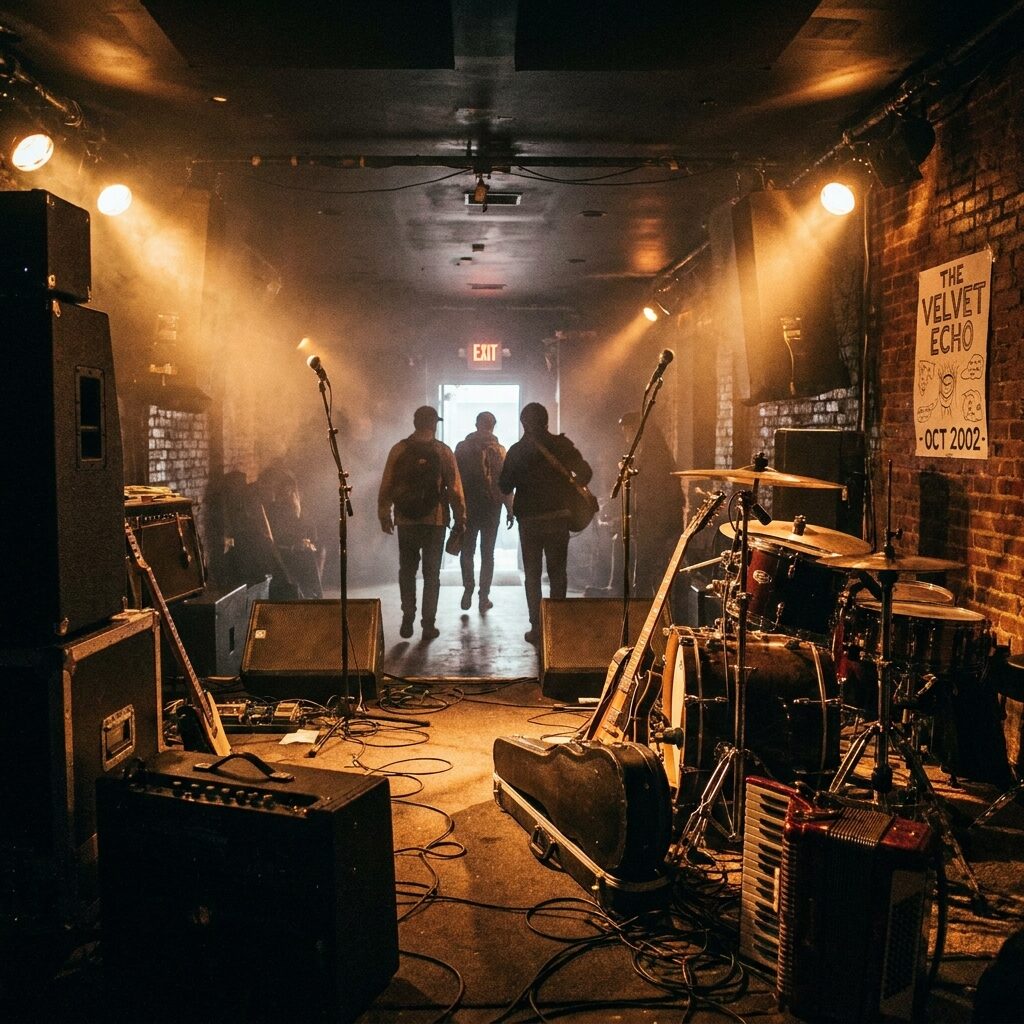
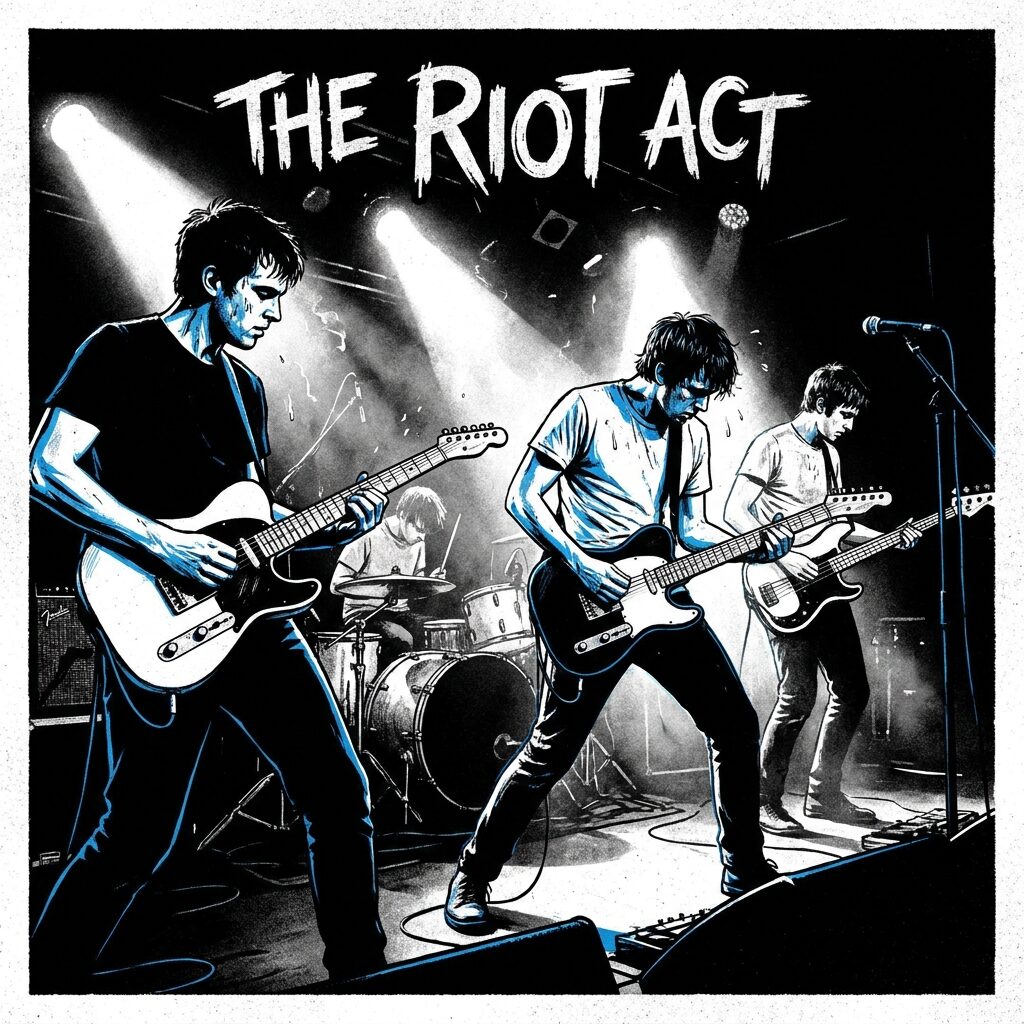
People ran. Literally ran out of the room. Win Butler watched it happen from behind his guitar, the first time Arcade Fire played “Wake Up” live in some shitty club where they were the opening act of three. Half the audience just got up and left. “They were horrified by it,” Butler told The Irish Times in 2018. The band had been playing quieter, more acoustic stuff before that. Then this thing detonated, and people fled like someone had pulled a fire alarm.
Think about that for a second, and then think about where the song ended up: David Bowie singing it at Radio City Music Hall. U2 pumping it through arena speakers before every show on a world tour. Barack Obama rallying crowds with it. Over 100 million streams on Spotify. American Songwriter calling it “a modern-day ‘Hey Jude.'” The gap between those two versions of the same song, half-empty club, people heading for the door, and then everything else, doesn’t really make sense unless you’ve heard it.
The part of the origin story that gets me, though, is that Butler didn’t hear the crowd fleeing and think, okay, we need to pull it back. He heard it and leaned in. He described “Wake Up” as a “fuck you” song. “It was like, ‘Hey, asshole, we’re playing, pay attention!'” he told The Guardian in 2010. That’s the energy. Not please love us. Not let us entertain you. Just: we’re doing this, and you can deal with it or you can leave.
Most of them left. And then, slowly, the world caught up. Because “too much” turned out to be exactly right. The song was too loud for that club, too big for that stage, too raw and weird and maximalist for the small rooms Arcade Fire was playing in 2003. But every quality that emptied that room is exactly what fills stadiums now. The same thing that made people run is what makes 50,000 strangers scream the wordless chorus in unison at a festival, all of them locked into the same feeling at the same time, none of them needing lyrics to get there.
So that’s where this starts. A song that cleared a room before it conquered everything outside it.
Montreal, Grief, and a Kitchen Audition
Win Butler inherited music from his grandfather Alvino Rey, a swing-era bandleader. He found Régine Chassagne singing jazz at a Montreal art show, and their clashing musical instincts, his pop melodies, her strange progressions, gave the band its friction. A kitchen performance of “Wake Up” recruited their engineer as a drummer. Then three band members lost family in quick succession, and the album they were making became Funeral because nothing else fit.
Win Butler’s relationship with music was never casual. It was genetic. His grandfather was Alvino Rey, a swing-era bandleader and jazz guitarist who led one of the most popular big bands of the 1940s. So when Butler moved from The Woodlands, Texas to Montreal around 2000 to attend McGill University, he wasn’t some kid picking up a guitar on a whim. Music was already in the bloodline. What Montreal gave him was context, a city with a thriving, eccentric arts scene and cheap rent, which is basically the recipe for interesting bands.
He met Régine Chassagne at an art opening at Concordia University, where she was singing jazz standards. Their first date was to see Crouching Tiger, Hidden Dragon, shown in French. She translated the entire film for him in the theater, whispering the plot while the swords flew. If you’re looking for the moment the creative partnership started, it’s probably right there: two people from completely different worlds, one of them whispering translations in the dark so the other could follow along.
Chassagne came from a Haitian family, grew up with different musical traditions, and had no frame of reference for the indie rock world Butler was moving in. She said as much herself: “I was from another planet. I didn’t even know what an ‘indie’ band was, it sounded so vague and mysterious.” But she heard something in Butler’s melodies, and she immediately had ideas about what to do with them. “Win wrote really good, catchy melodies (though with fairly typical chord changes, I thought), and right away I had all these ideas I wanted him to try: strange progressions, beats, instruments,” she told The New York Times in 2007. That friction, his pop instincts against her left-field musical imagination, is basically how Arcade Fire works.
The early version of the band, co-founded with Josh Deu around 2001, was a different animal from what it would become. Moody, arty, stripped-down. They played small venues and art openings. They put out a self-titled EP in 2003, recorded during a retreat to Maine. It was fine. It hinted at something. But it wasn’t the thing yet.
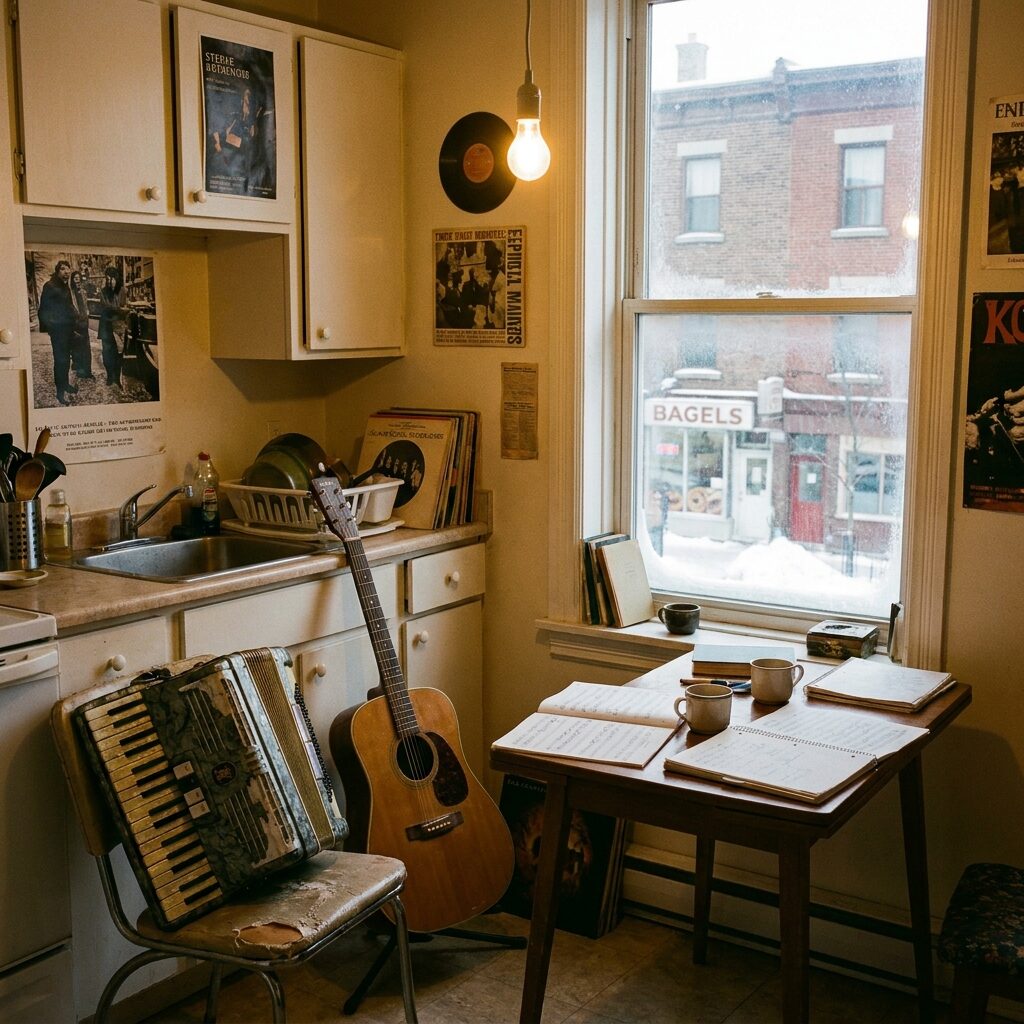
The thing happened in a kitchen. Howard Bilerman, a recording engineer who’d co-founded Hotel2Tango studio with members of Godspeed You! Black Emperor, got an email from the band asking to book studio time for two songs. He told them he wanted to hear them play first. So he went to Win and Régine’s apartment, and the band played “Wake Up” in the kitchen. “I was just knocked on my ass,” Bilerman told Exclaim!. A month later, he wasn’t just their engineer. He was their drummer.
Think about that for a second. The song was so good it recruited a new band member. Not through an audition. Not through a Craigslist ad. Just by existing in a kitchen and being undeniable.
And then the deaths started. Régine’s grandmother died in June 2003. Win and William Butler’s grandfather, Alvino Rey, the swing-era bandleader, died in February 2004. Richard Reed Parry’s aunt died in April 2004. The album they were making, Funeral, took its name from all of this grief. It was the only honest thing to call it. Butler seriously considered scrapping the whole project at one point, overwhelmed by the collective loss meeting the collective ambition of trying to make something huge. He nearly walked away from the record that would change everything.
He didn’t. But you can hear the weight of that decision in every note of the album. The joy in Funeral isn’t naive. It’s the kind of joy that only makes sense if you know what came before it, people who’d buried family members and decided to play louder anyway.
First Time Through the Speakers
Arcade Fire’s very first professional recording session produced “Wake Up” on a shoestring budget at Hotel2Tango in Montreal’s Mile End, Régine taught herself drums because they couldn’t afford a session player, and Win Butler rejected indie purity politics the first time he ever heard his own music through speakers.
Here’s what you need to understand about how early this was: “Wake Up” was recorded during Arcade Fire’s very first professional studio session. Not their first session for Funeral. Their first session, period. They had scraped together enough money to record exactly two songs for a split 7-inch, “Neighborhood #3 (Power Out)” and “Wake Up.” Two songs. One shot. Whatever came out of that room was going to be the only professionally recorded music Arcade Fire had.
And they didn’t have a drummer.
This is where the DIY thing stops being a vibe and becomes logistics. They couldn’t afford a session musician. They didn’t know the right people. So Régine Chassagne, already juggling vocals, keyboards, and accordion, taught herself to play drums so they could actually get the songs on tape. Just picked up a new instrument because the alternative was not recording. That kind of problem-solving runs through everything Arcade Fire ever did, but it started here, with Régine behind a kit she’d barely touched, keeping time on the song that would end up defining the band.
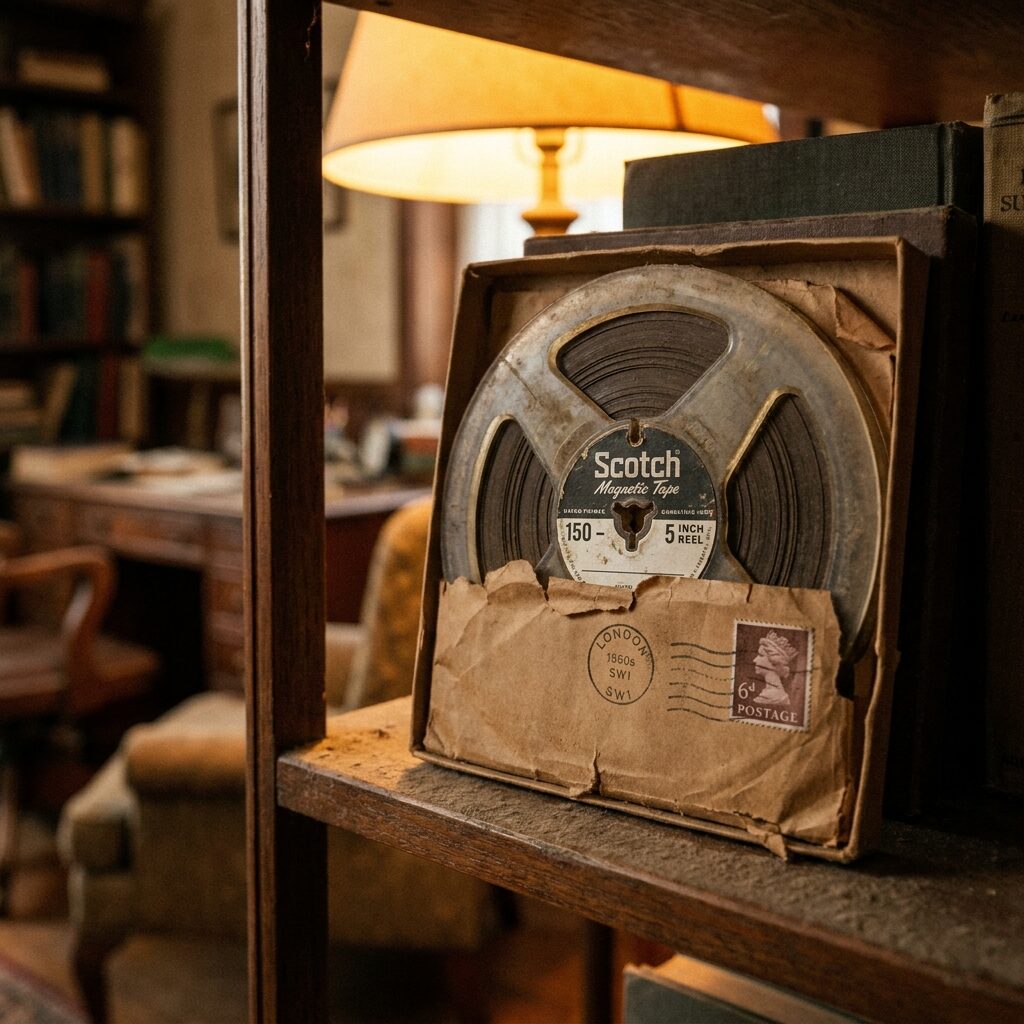
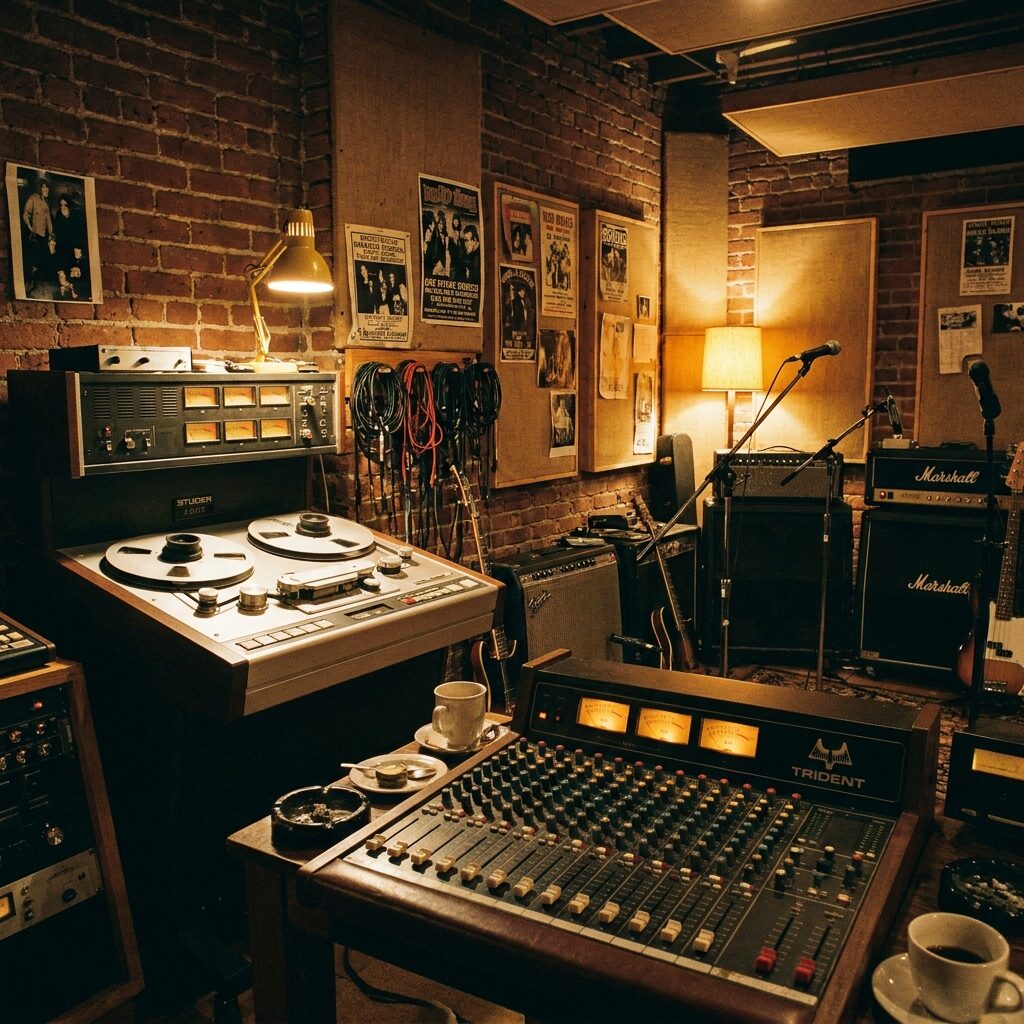
The session happened at Hotel2Tango, a 24-track analog studio in Montreal’s Mile End neighborhood. The place had a pedigree. It was co-founded by Bilerman along with Efrim Menuck and Thierry Amar of Godspeed You! Black Emperor, and it started life as Godspeed’s practice space on Van Horne Street around 1998-1999. All-analog, no digital audio workstation, just tape machines and whatever reels they could scrounge up. The band self-produced, using sometimes-used tape reels rather than fresh stock, which gave the recordings a warmth and grit you can hear all over Funeral. The entire album cost roughly $10,000 to make. A major-label rock album in 2004 could easily run half a million.
During the session, Butler did an electric guitar overdub, and the moment that followed tells you everything about who this guy was going to be. It was the first time he had ever heard his own music played back through speakers. Not bouncing around a live room or playing in his head, but coming through monitors, mixed and real. An unnamed recording assistant listened to the playback and told him: “It was better before the overdub. Yeah, you sell out. I can’t believe you put an overdub on your music.”
In the Montreal indie scene of the early 2000s, that kind of purity policing was the air you breathed. There were rules. Overdubs were suspect. Production was suspect. Anything that sounded too polished was a betrayal of some unwritten code. And Butler, hearing his music through speakers for the first time in his life, looked at this guy and thought: no.
“It made me really aware that it really doesn’t fucking matter what anyone thinks about any kind of political rules when it comes to music because it’s just really silly,” Butler told Red Bull Music Academy. “That’s exactly how I wanted it to sound. It was the first time I ever heard it coming out of the speakers and I was like, ‘Yes. That’s what I meant to say.'”
That moment is the whole band in miniature. Not some interview years later, not a retrospective documentary. A twenty-something kid hearing his own song for the first time and choosing his own ears over someone else’s ideology. If you want to understand why “Wake Up” sounds the way it does, why it has an orchestra’s worth of instruments where most indie bands would have three, why it builds to a chorus that could fill an arena without trying, it goes back to this decision. Butler decided, right at the start, that he was going to trust what sounded right over what sounded correct.
The emotional context matters too. Butler told Exclaim! in 2004 that “Wake Up” was written “in reaction to the band breaking up.” The early lineup had fragmented. Relationships had gone sideways. The song carries that energy, it’s not wistful or melancholy about the disintegration. It’s angry. It’s the sound of someone channeling frustration into volume, turning a collapse into a war cry. That’s why it hit so hard in that kitchen, why Bilerman ended up on the floor, why people ran out of the club. The aggression was real. It wasn’t a performance.
Simple Chords, Maximum Force
Built on a chord progression any beginner could play, “Wake Up” gets its force not from harmonic complexity but from how it’s played, a chorus that detonates mid-word, orchestral instrumentation on a shoestring budget, and a band that sounds like they mean every note down to the bone.
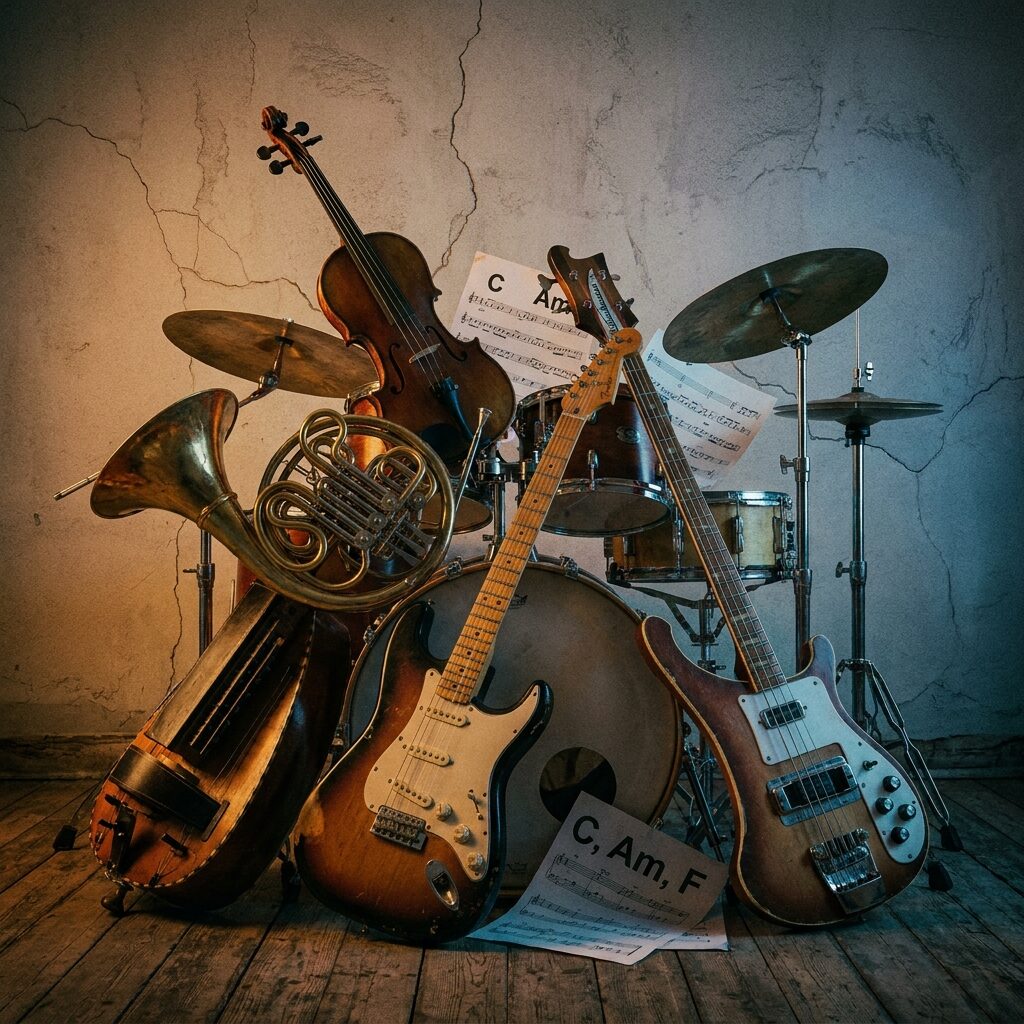
On paper, “Wake Up” is one of the simplest songs Arcade Fire ever wrote. C Major. 4/4 time. A verse progression of C–Am–F–C that any first-year guitar student could strum through. Nothing harmonically complex happening here. No jazz chords, no modal interchange, no clever key changes. Show someone the chord chart without letting them hear the song and they’d assume it was a campfire singalong.
Which is sort of the whole trick. The power of “Wake Up” has nothing to do with harmonic sophistication. It’s entirely about delivery, about the sheer volume of conviction behind those four chords. You don’t need complexity when everyone in the room believes it that hard.
The tempo is worth arguing about. Most automated databases clock it at 139 BPM, which gives you that breathless, forward-leaning urgency. But at least one detailed analysis puts it at 72 BPM, hearing the beat in half-time. Both readings are defensible, and honestly, the fact that the song supports both interpretations tells you something about how it works. It feels urgent and expansive at the same time. Rushing forward and opening up. Very few songs manage that contradiction without collapsing into one or the other.
But here’s where the thing actually explodes. The first verse is relatively restrained. Win Butler’s voice over sparse accompaniment, building quietly. The lyrics are heading somewhere, but you can’t see where yet. And then you hit the word “adjust”, “I guess we’ll just have to adjust”, and the chorus detonates. No setup. No pre-chorus. No lyrical warning. The “whoa-oh” just erupts, mid-word, like the song couldn’t contain itself any longer. It’s one of the most dramatic structural pivots in modern rock, and it works because it feels involuntary. The music does something the lyrics didn’t authorize.
Then there’s the instrumentation, and this is where Régine Chassagne’s fingerprints are all over the thing. Your average indie rock band in 2004 had guitar, bass, drums, maybe a keyboard. “Wake Up” rolls in with violin, viola, cello, double bass, French horn, xylophone, glockenspiel, accordion, harp, and hurdy-gurdy. Hurdy-gurdy. On an indie rock record made for ten grand. The orchestral arrangements don’t fight the simplicity of the chords. They amplify it. The violin lines weave into the wordless chorus, the French horn adds a weight that guitar alone can’t touch, and the whole thing swells into something that sounds like it should have cost a hundred times what it did.
Régine takes lead vocal on the bridge, her first on the album, and her voice brings a different quality than Win’s. Where his delivery is urgent and a little ragged, hers floats above the instrumentation, almost detached from it. That textural shift gives the song breathing room right before it charges back in for the final minutes.
In 2014, Pitchfork placed this chorus alongside “Born to Run,” “Biko,” and “Hey Jude” as one of the great wordless rock crescendos. Hard company to keep. But when the “whoa-oh” hits, you’re not thinking about chords or tempo or instrumentation. You’re just gone. That’s what four chords can do when a band plays them like their lives depend on it.
Million Little Gods
From “something filled up my heart with nothing” to “a million little gods causing rainstorms,” Butler’s lyrics channel post-9/11 numbness into a hymn-like plea that blows wide open at the exact moment it tells you to compromise.
Something filled up
My heart with nothing
Someone told me not to cry
But now that I’m older
My heart’s colder
And I can see that it’s a lie
[Verse 2]
Children, wake up
Hold your mistake up
Before they turn the summer into dust
If the children don’t grow up
Our bodies get bigger but our hearts get torn up
We’re just a million little gods causing rain storms
Turning every good thing to rust
I guess we’ll just have to adjust
[Bridge]
With my lightning bolts a-glowing
I can see where I am going to be
When the reaper he reaches and touches my hand
[Outro]
With my lightning bolts a-glowing
I can see where I am going
With my lightning bolts a-glowing
I can see where I am go-going
You better look out below!

“Something filled up my heart with nothing.” Seven words. That’s your opening line. And if you’ve ever tried to describe what numbness actually feels like, there it is, the paradox of fullness and emptiness happening simultaneously. You’re not empty. You’re full of nothing. Anyone who’s sat through grief or depression or just the low hum of modern disconnection recognizes that sensation. It’s not an absence. It’s a presence. Butler lands it in a single sentence.
The next line, “someone told me not to cry”, puts you square inside the social contract of suppressed emotion. Somebody handed you the rules: don’t feel this, don’t show this, hold it together. The song is barely ten seconds old and it’s already named the whole problem. We’re full of nothing and we’ve been told that’s fine.
From there, “Wake Up” turns into a plea aimed directly at children, which is a strange gear for a song this aggressive to shift into. “Children, wake up / Hold your mistake up / Before they turn the summer into dust.” There’s a reading of this, NME picked up on it, where “hold your mistake up” means owning your failures as a form of resistance. Don’t hide them. Don’t pretend they didn’t happen. Hold them up before the unnamed “they” can grind everything good into ash. It’s survival advice wearing a rock lyric’s clothes.
But the real gut-punch is the “million little gods” verse, and I’d argue it’s the best thing Butler ever wrote. “If the children don’t grow up / Our bodies get bigger but our hearts get torn up / We’re just a million little gods causing rainstorms / Turning every good thing to rust.” That image does so much work: we are all playing god in our own small domains, and we are all terrible at it. We break things. We corrode what we touch. We cause destruction on a scale we can’t even perceive because each of us is just one little god in a sea of millions, all making it rain on each other.
You don’t have to squint very hard to see the post-9/11 shadow here. The song was written three years after September 11th and one year after the Iraq War began. Butler never made it explicitly political, there are no references to specific events, no protest-song signaling. But the image of “a million little gods causing rainstorms” in a country that was bombing another country while telling its citizens not to cry about it? The context is right there if you want it.
The song is anti-religious but not anti-spiritual, and it manages to hold both of those things without collapsing into either. The reaper imagery, “when the reaper reaches and touches my hand”, acknowledges mortality without flinching. The lightning bolts could be epiphany or panic, depending on where you’re sitting. And the whole thing sounds like a hymn. That’s the part that gets me: a song questioning whether humans deserve the power they’ve claimed for themselves, delivered in the musical language of worship.
And then there’s the word “adjust.” “I guess we’ll just have to adjust.” It’s the hinge of the entire song, the last lyrical moment before the wordless chorus obliterates everything. The song literally explodes at the exact moment it tells you to compromise. Like the music heard the word “adjust” and said: absolutely not. The chorus is the refusal. The “whoa-oh” is the sound of a song that will not make itself smaller, will not quiet down, will not adjust. I keep coming back to that structural trick, the way the biggest, loudest moment in the song arrives right when the lyrics give up. I’m not sure any other rock song has pulled that off so cleanly.
The Critics Caught Up
“Wake Up” never once charted on the Billboard Hot 100, but it landed on nearly every major decade-end best-of list and won the Juno Award for Songwriters of the Year. Chart position and cultural weight, it turns out, have surprisingly little to do with each other.
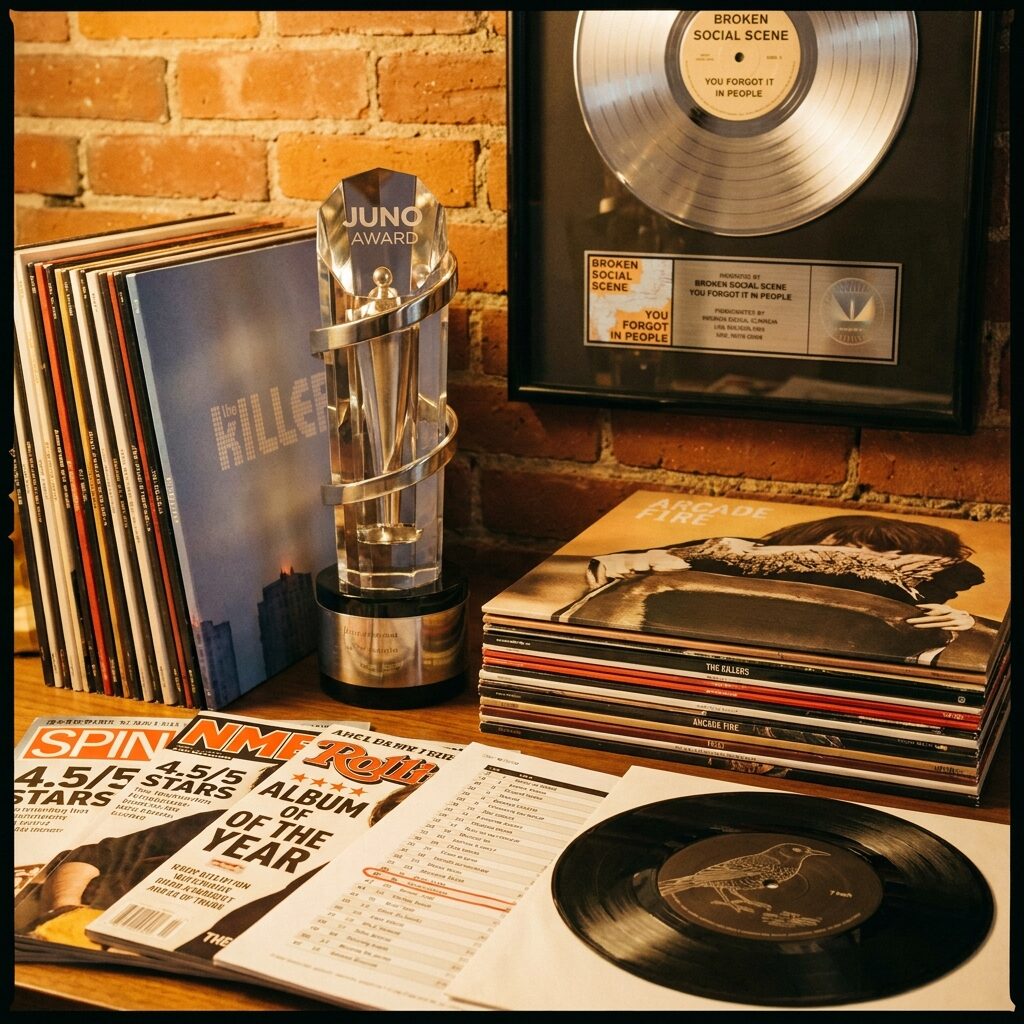
Here’s a funny thing about “Wake Up”: by almost every commercial metric the music industry cares about, it’s a modest performer. It peaked at #29 on the UK Singles Chart. It hit #4 on the UK Independent Singles Chart and sat at #1 on MTV2’s NME Chart Show for three weeks. In Canada, it reached #25 on the Rock Top 30. In Ireland, #40 for a two-week run. And in the United States, the country where the song would eventually soundtrack political rallies and Super Bowl commercials, it never charted on the Billboard Hot 100. Not once.
Which is kind of the point. “Wake Up” didn’t need radio saturation or a top-ten debut. It spread through live shows, word of mouth, and the sort of person-to-person evangelism that happens when a song genuinely rattles people. The single itself was released as a one-sided 7-inch vinyl in the UK only, with the B-side left blank and etched with custom artwork. No commercial digital or CD versions. Merge Records and Rough Trade weren’t trying to game the charts. They just put the song out and let it go.
The critics, though. The critics got it immediately. Pitchfork gave Funeral a 9.7, one of the highest scores the site had ever assigned. The album became the one people pointed to when they wanted to argue that indie rock could be big and loud and earnest without turning into a joke. “Wake Up” landed at #42 on both Pitchfork’s Top 500 Tracks of the 2000s and Rolling Stone’s 100 Best Songs of the 2000s. NME ranked it #25 on their Best Songs of the Decade list in 2009 and later placed it at #25 again on their Greatest Songs of All-Time list. Exclaim! ranked it #1 among all Arcade Fire songs. Ticketmaster UK put it at #1 on their Best Arcade Fire Songs list, with a line that gets at something real: “Blessed and cursed with writing one of the greatest songs of all time, Arcade Fire can never now end a set with anything else.”
In 2006, the band won the Juno Award for Songwriters of the Year, for “Wake Up,” “Rebellion (Lies),” and “Neighborhood #3 (Power Out).” Two years. A band that nearly broke up, that almost scrapped their album, winning Canada’s top songwriting prize within two years of releasing it. Butler had watched people run out of a club. Now he was accepting awards.
Rolling Stone described the song as “the first dose of the blessed excess that made Arcade Fire great, mixing art-collective clamor with enough passion to rouse Dick Cheney (OK, almost).” Billboard called it storming “out of the gate like an indie symphony.” And in 2014, Pitchfork ran a piece that placed the “whoa-oh” chorus alongside “Born to Run,” “Biko,” and “Hey Jude,” calling it “one of the most thrilling, bracing moments in recent rock history.”
The Canadian single eventually went platinum, 80,000 units as of 2020. It went gold in Portugal. Funeral itself sold somewhere between 750,000 and 900,000 copies across key markets, going platinum in Canada, the UK, and Ireland, and gold in the US. For a record that cost $10,000 to make on used tape reels in a converted practice space, that’s a hell of a return. But the sales figures are almost beside the point. They tell you how many people bought the thing. They don’t tell you what happened when those people pressed play.
Everyone Wanted This Song
From Bowie’s comeback stage to U2 arenas to Obama rallies to Spike Jonze’s film trailer, “Wake Up” got picked up by everyone, and its wordless chorus became what Pitchfork called “the most ubiquitous vocal device in contemporary rock.”

On September 8, 2005, David Bowie walked onto the stage at Radio City Music Hall in Manhattan for the Condé Nast Fashion Rocks charity event. It was his first live performance since his heart operation. Think about that decision for a moment: you’re David Bowie, and you’re choosing your comeback moment. You’ve got your entire catalog to draw from. You play “Life on Mars?” solo. And then, for your next act, you bring out a band from Montreal that most of the audience has probably never heard of, and you sing their song.
“This is a great song by Arcade Fire,” Bowie told the crowd. “It’s called ‘Wake Up.'” And then they played it together, Bowie, Butler, Chassagne, the whole band, at Radio City Music Hall, broadcast on CBS the next night, later released as a live EP on iTunes. David Bowie, who could have chosen literally any song in the world, chose “Wake Up.”
The event raised money for Hurricane Katrina victims. The performances were released as the Live EP (Live at Fashion Rocks) on November 21, 2005, though an initial technical error on the iTunes release gave early purchasers over five minutes of silence, which is a very 2005 kind of problem. Bowie’s connection with Arcade Fire continued: he’d later contribute backing vocals on the title track of 2013’s Reflektor.
U2 went even further. Throughout their entire Vertigo Tour, from March 2005 through December 2006, dozens of arena and stadium shows across the world, they played “Wake Up” as their pre-concert intro music. Every single night. Before “City of Blinding Lights” hit and the lights went up, it was Arcade Fire filling those rooms. A U2.com tour diary described the transition: “Arcade Fire’s Wake Up fades out and a disembodied voice, ‘everyone, everyone, everyone’, fades up, five huge burning red lamps lift off into the roof of the stage as a single orange spot plays on The Edge.” A brief snippet opens the concert film Vertigo 2005: Live from Chicago.
Here’s a detail I love: on bootleg recordings from the tour, there’s one from the Saitama Super Arena in Japan, December 4, 2006, fans labeled the track “Intro.mp3” because they had no idea what it was. People were searching forums trying to identify this mystery song that U2 was playing before their sets. That’s how underground Arcade Fire still was in some circles, even while one of the biggest bands in the world was using their song to warm up 20,000 people.
Arcade Fire opened three shows for U2 on the Vertigo Tour, in Montreal and Ottawa. At the Montreal show, both bands performed Joy Division’s “Love Will Tear Us Apart” during the encore. Bono, who wasn’t exactly shy with compliments, said Arcade Fire’s music “contains all the big themes and ideas that make all around them seem so vapid.”
Then Spike Jonze heard it. The director was working on his adaptation of Maurice Sendak’s Where the Wild Things Are, and he told Digital Spy: “I met Arcade Fire on their first record, Funeral. I loved that record and it was a record I was listening to while I wrote Where the Wild Things Are.” The band re-recorded a new version of “Wake Up” specifically for the trailer, which matched the song’s raw intensity to the film’s story about a kid who’s too much for the world around him and who finds a place where that’s fine. The actual film score went to Karen O and Carter Burwell, but the trailer is what most people remember, and the trailer is “Wake Up.”
It kept spreading. Obama’s campaign used it at rallies in 2008. The band played at Beachland Ballroom in Cleveland on March 3 and at campaign stops in Greensboro and Carrboro, North Carolina on May 1. After the inauguration, they played a private concert for Obama’s staffers in 2009. The song was licensed for a Super Bowl XLIV commercial in 2010, with all proceeds donated to Partners in Health for Haiti earthquake relief. Butler explained: “That was very much an emergency situation and we were trying to figure out ways to make money fast to help Haiti.” The BBC used it for their autumn 2005 season advertisement. Sports teams grabbed it too: the New York Rangers for pre-game intros in 2006-2007, Manchester City at home games, Burnley as their walkout song at Turf Moor, Linfield in the Irish Premier League since 2005.
John Legend and The Roots covered it, releasing a six-minute version as a digital single on December 6, 2010, and named their entire album Wake Up! after the song, speeding it up and brightening it with soul-inflected Roots instrumentals. They performed it live at Terminal 5 in NYC for an American Express/Vevo “Unstaged” concert. Paolo Nutini covered it on BBC Scotland. Macy Gray covered it. The song was everywhere.
But maybe the most lasting thing it did is something you can’t see, only hear. Pitchfork argued in 2014 that the “whoa-oh” chorus spawned “the most ubiquitous vocal device in contemporary rock”, “a relentless procession of ‘woah-oh-oh-ohs!’ and ‘ho yeahs!’ and ‘heys!’ and songs filled with so many ‘hos!’ and ‘heys!’, that there’s no choice but to give them titles like ‘Ho Hey.'” They credited the trend with driving the popularity of indie-oriented music festivals through “non-lyrical, group-chorus peer pressure.” Every time you hear a band launch into a wordless singalong chorus, and you hear it constantly, from The Lumineers to Mumford & Sons to a dozen bands you’ve forgotten, there’s a straight line back to “Wake Up.” U2’s own single “The Miracle (of Joey Ramone)” was described by Pitchfork as “the inevitable end game” of this influence. The band they’d once used as an intro track had reshaped the sound they came back with.
The Song That Never Tires
“Wake Up” is the set-closer Arcade Fire can never retire, so they keep reinventing it: in the crowd at NYC shows, with Florence Welch and Boy George at Wembley, with Marky Ramone in New York, acoustic on stone steps with the audience taking over the chorus. When sexual misconduct allegations against Win Butler surfaced in 2022, the song’s power held anyway. It belongs to the crowd now.

There’s a problem with writing the greatest set-closer of your generation when you’re barely out of your first album cycle: you can never replace it. Ticketmaster UK put it bluntly when they described Arcade Fire as “blessed and cursed with writing one of the greatest songs of all time”, the band “can never now end a set with anything else.” Five albums deep, two decades in, and there’s still no other option. “Wake Up” is the ending. It always has been. It always will be.
What keeps it from going stale is that the band refuses to play it the same way twice. During the Neon Bible era, they took it into the crowd at NYC shows, climbing off stage and performing surrounded by the audience. Someone captured it for one of those Take Away Shows that were everywhere on YouTube in the late 2000s, the band hemmed in on all sides, everyone singing, no gap between who’s performing and who’s watching.
At Wembley, they went a completely different direction. They played all four Neighborhood tracks in sequence, building toward a crescendo, then brought out Florence Welch and Boy George for duets before closing with “Wake Up.” Florence Welch and Boy George. Same stage. Same song. If you tried to engineer a moment that proved how far the song’s reach extends, you’d struggle to beat that casting.
In New York, Marky Ramone sat in, the Ramones’ drummer joining for covers of “I Don’t Wanna Go Down in The Basement” and “I Wanna Be Sedated” before the whole thing cascaded into “Wake Up” with confetti. At an outdoor show, the band walked the audience onto stone steps and played an unrehearsed acoustic version with accordion, dobro, and tambourine. The crowd took over the chorus before the first one even finished. They didn’t need the amplification. They didn’t need the orchestral arrangement. They just needed the melody and permission to sing it.
In Boston, they opened with it. Not closed. Opened. Fans understood immediately, if the band was leading with their nuclear option, whatever followed was going to be something else entirely.
One fan testimony that sticks with me: “You can feel the soul they put into the words as they sing them to the crowd. Watching the crowd move as one and sing as one when the band started Wake Up gave me chills.” That’s the thing about the song live. It turns a room full of strangers into a single voice, and the experience of being inside that is closer to religious than musical. “Wake Up” is a great recorded song. The live version might be the better one.
There’s an uncomfortable coda to this story, and it would be dishonest to skip it. In August 2022, multiple women made sexual misconduct allegations against Win Butler, reported in the press days before Arcade Fire was set to launch a European arena tour for WE. At the band’s first post-allegations concert in Dublin, Butler opened the set with “Wake Up”, not closed, opened, to rapturous applause. He didn’t address the controversy from stage. The crowd sang every note. The song’s power held, even as its author’s reputation collapsed, and that tells you something uncomfortable about how songs and the people who write them eventually separate. “Wake Up” belongs to the audience now, maybe more than it belongs to the man who wrote it. That’s what happens when a song becomes a communal act. The crowd doesn’t need your permission anymore.
I Guess We’ll Just Have to Adjust
The song says “adjust” and then refuses to, detonating into its most uncompromising passage at the exact moment of surrender. From a Montreal kitchen to the world’s biggest stages, “Wake Up” never shrank. The world adjusted to it instead.

Here’s the central irony, and I keep coming back to it because the song keeps proving it true: “Wake Up” says “adjust” and then refuses to. The lyric, “I guess we’ll just have to adjust”, is the last coherent thought before the wordless chorus blows the doors off. The song tells you to compromise and then demonstrates, in the most emphatic way possible, that it will not. The music detonates at the exact moment of surrender, as if the band heard the word “adjust” and decided that was the one thing they would never do.
That refusal is the whole reason the song still works. A kitchen in Mile End, then Radio City Music Hall. Clearing half a room in a shitty club, then filling stadiums. A $10,000 album recorded on used tape, then platinum certifications and a hundred million streams. At every stage, the story repeats: this is too much, and then it turns out to be exactly right. Too many instruments for an indie band. Too raw for polite audiences. Too loud for a small room. Every time “Wake Up” should have been too much, it was the right amount. The world didn’t ask it to shrink. The world adjusted.
American Songwriter called it “a modern-day ‘Hey Jude,'” and honestly, the comparison holds up. Both songs take something private, grief, numbness, the ache of being alive, and make it communal. Both end with a wordless chorus that turns strangers into a choir. Simplicity delivered with total conviction, beating complexity every time.
Steven Hyden at Uproxx gave what might be the best critical instruction ever written about a rock song: “Put on ‘Wake Up’ in a public space.” He’s right. Do it. Play it in a bar. Play it at a party. Play it in your car with the windows down. And watch what happens. People will sing. People who don’t know they know the words will know the words. People who came to the bar to sit quietly will stand up. That’s what “Wake Up” does. It did it in a kitchen in Montreal in 2003, when it knocked an engineer on his ass and made him join the band. It does it now, twenty-plus years later, every single time.
The song that cleared the room fills every room it enters. It never adjusted. It never had to.
Did you know? Régine Chassagne taught herself drums just so Arcade Fire could record “Wake Up” — their very first studio session. The first time they played it live, half the audience literally ran out of the room 🥁🔥 #ArcadeFire #IndieRock #WakeUp https://bit.ly/4tFglfm

Click to Tweet