Built from the Wreckage
Fleetwood Mac wrote exactly one song crediting all five members of their famous lineup. “The Chain” wasn’t composed so much as stitched together from rejected parts and spliced tape, in a studio where two couples were splitting up and a bag of cocaine sat on the mixing desk. It was never released as a single, got left off Greatest Hits, and became their most enduring song anyway.
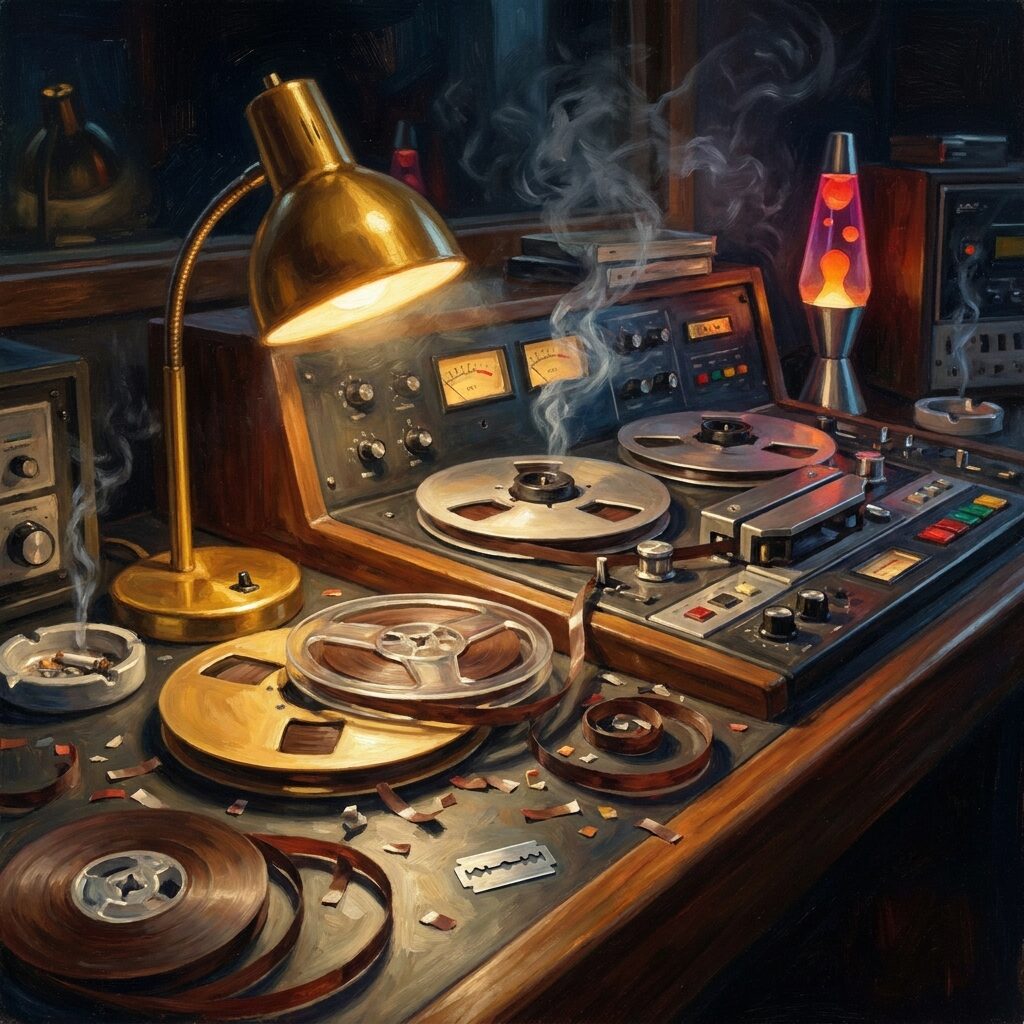
Here’s what doesn’t make sense: across decades of records, breakups, and new lineups, Fleetwood Mac wrote exactly one song that credits all five members of their most famous roster. One. And that song, “The Chain,” wasn’t really written. It was assembled. Orphaned lyrics got matched with recycled guitar riffs. A rejected Christine McVie composition was carved up for parts. A bass line showed up during a jam session meant for something else entirely. The bridge was spliced into the master tape with an actual razor blade.
The only song all five of them made together was a Frankenstein monster. And it almost got scrapped.
Record Plant Studios, Sausalito, California, early 1976. Five people, two couples in the process of destroying their relationships, one drummer whose marriage was also collapsing, all locked in a studio making what would become the best-selling album of their careers. A velvet bag of cocaine sat on the mixing desk for communal use. Mick Fleetwood, self-described “King of Toot,” seriously considered giving their drug dealer a co-producer credit on the sleeve. He couldn’t, in the end. The dealer was murdered before the album came out. Engineers Ken Caillat and Richard Dashut nearly got fired because they spent five days just getting the drum sounds right. Lindsey Buckingham once tried to choke Caillat. Buckingham and Stevie Nicks had screaming matches while recording backup vocals. Christine McVie told her ex-husband that “You Make Loving Fun” was about her dog, because the truth, that it was about the band’s lighting director she was sleeping with, would have made an already unbearable situation genuinely dangerous.
Out of this wreckage came “The Chain.” Track seven on Rumours. Never released as a standalone single. Left off the original Greatest Hits compilation. And yet it became their concert opener for thirty years, the BBC’s Formula One theme for nearly two decades, and the song sitting at 340 million Spotify streams and still climbing. Which is strange, because the song barely holds together. You can hear the seams where different pieces were grafted onto each other, where someone’s rejected demo got a second life inside someone else’s chord progression. But that’s also why it works. It’s a song about not breaking apart, and it sounds like something that almost did. The fragility isn’t a flaw. It’s the whole thing.
Five Fault Lines
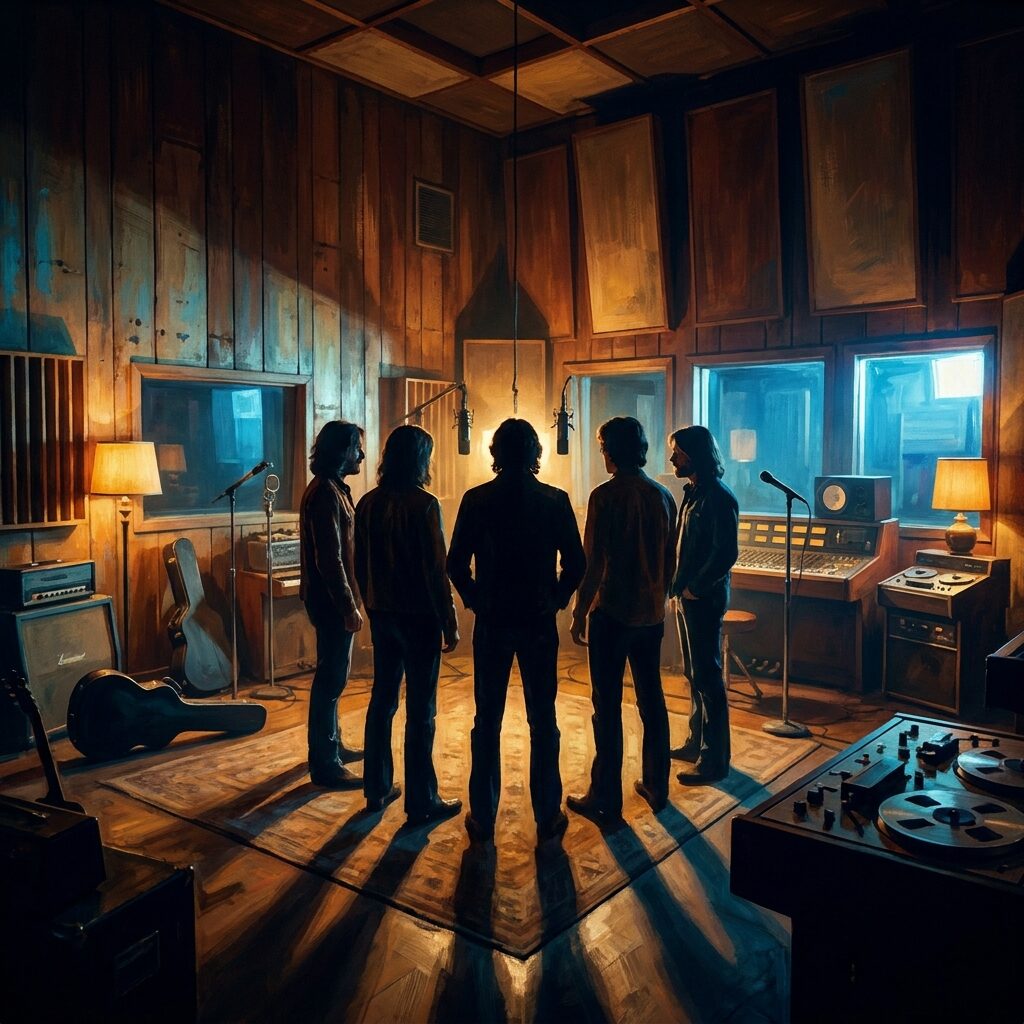
Fleetwood Mac’s classic lineup was a mess of collapsing relationships, two divorces, a breakup, a secret affair, and a public one, all happening at once while they made the biggest album of the decade.
You need the fault lines to understand the song.
Fleetwood Mac started as a British blues band in 1967, built around guitarist Peter Green and drummer Mick Fleetwood. The band that made Rumours had almost nothing to do with that group, a transatlantic thing reassembled through accidents and desperate phone calls. By 1974, they’d burned through multiple guitarists and were going nowhere commercially. Fleetwood, looking for a new studio, heard an engineer play a track from an obscure, commercially failed album by a duo called Buckingham Nicks. He called to book the studio. The engineer told him it wasn’t available, but the guitarist from that album might be. Fleetwood wanted Lindsey Buckingham. Buckingham said he’d only join if Stevie Nicks came too. That’s how the lineup that would sell 120 million records got assembled, out of someone else’s flop.
By the time they entered the Record Plant in early 1976 to start work on their eleventh studio album, every romantic relationship inside the band was falling apart at once. John and Christine McVie were divorcing after eight years of marriage, Christine later said they were “as cold as ice to each other because John found it easier that way.” Buckingham and Nicks were ending an approximately eight-year on-off relationship, one of those slow-motion collapses where two people keep circling back to hurt each other because neither knows how to stop. Mick Fleetwood and Jenny Boyd, sister of Pattie Boyd, who’d been married to both George Harrison and Eric Clapton, because the sixties and seventies were a very small world, were divorcing too. They’d remarry about four months later. Then divorce again.
And underneath all of that, two more entanglements. Christine was having an affair with Curry Grant, the band’s lighting director, the one she’d write “You Make Loving Fun” about before telling John it was inspired by their dog. And Nicks and Fleetwood had a brief, secret affair during the sessions. Five people. At least five fractures. All of them in the same room, every day, writing songs about each other.
“Maybe we would have killed each other if we hadn’t have been able to write those songs,” Nicks told the BBC in 1998. She wasn’t being dramatic. She was being precise. The songs were the pressure valve. Every member wrote about the people standing ten feet away in the live room. “Dreams” was Nicks to Buckingham. “Go Your Own Way” was Buckingham to Nicks. “Don’t Stop” was Christine to John. “You Make Loving Fun” was Christine to the lighting guy. The whole album is a stack of letters nobody meant to read aloud, performed by their authors in front of the people they were written about.
Every song on Rumours is a solo confession. Except one.
Spare Parts and Razor Blades
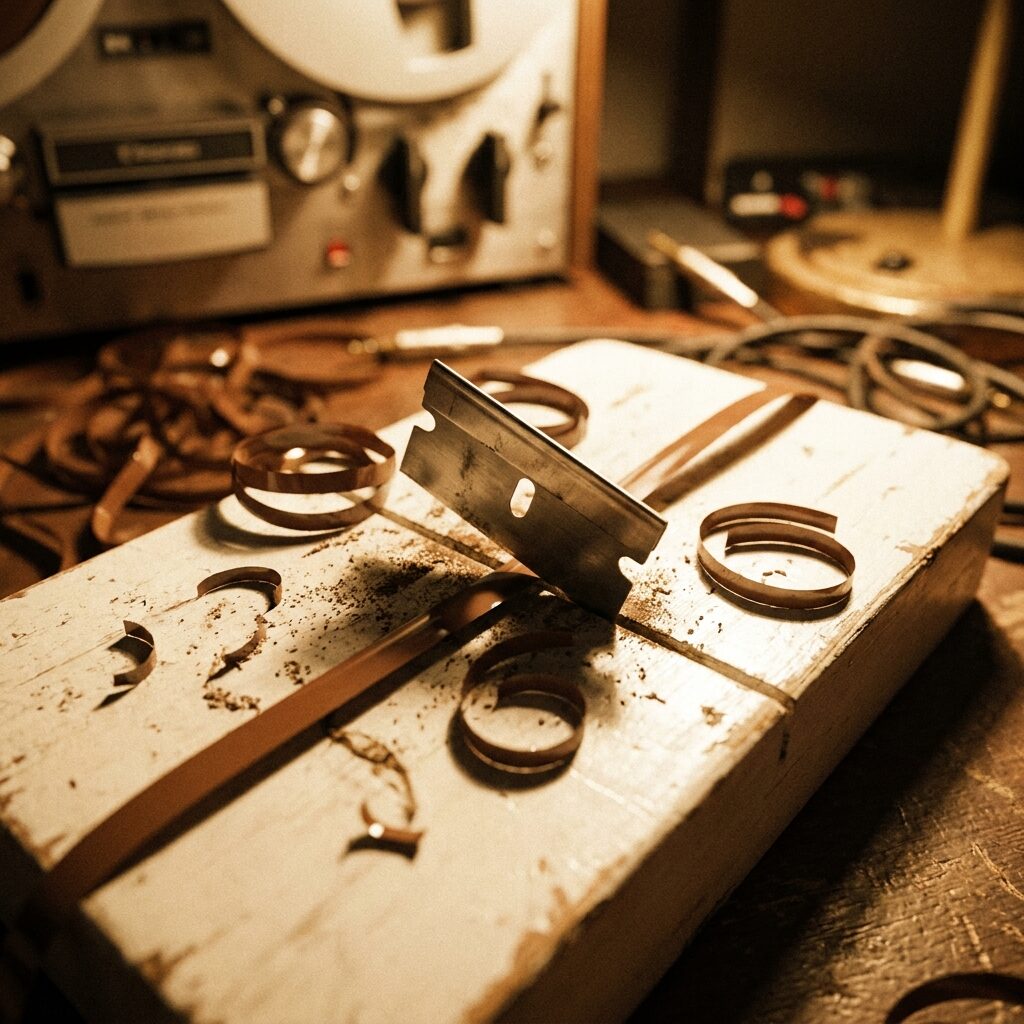
“The Chain” got stitched together from five separate scraps: a stalled Christine McVie song, a leftover Buckingham Nicks riff, orphaned Stevie Nicks lyrics, a spontaneous John McVie bass line caught on the third take, and a bridge spliced in with a literal razor blade.
If you wanted to write a song the normal way in 1976, you’d sit down with a guitar or a piano, work out a melody, scribble some lyrics, bring it to the band, and arrange it together. That is not what happened with “The Chain.” What happened was five people independently throwing parts into a pile, walking away, and then one of them figuring out three weeks before deadline that the pile was actually a song.
It started with Christine McVie. She had a composition called “Keep Me There,” also known by the rather wonderful working title “Butter Cookie (Keep Me There),” and it was the first thing Fleetwood Mac recorded for Rumours. The initial tracking session on February 2, 1976, featured Mick Fleetwood on drums, John McVie on his Alembic bass, Christine on organ, and Buckingham on a Fender Stratocaster. They laid it down. Christine sang a vocal take, replaced it with a new one the following day. It was fine. And then it sat there, not quite working, not quite abandoned.
Buckingham, meanwhile, had been carrying around a fingerpicked guitar riff he’d originally recorded for “Lola (My Love),” a track from the 1973 Buckingham Nicks album, the same one that had commercially tanked but accidentally gotten him and Nicks recruited into Fleetwood Mac. The riff had been waiting for a second life. He recycled it as the intro, a delicate fingerpicked figure that sounds nothing like what comes after it.
Then Nicks showed up one day with a handful of lyrics she’d written for something else entirely. “I’ve written some words that might be good for that thing you were doing in the studio the other day,” she told Buckingham. Among those donated words: if you don’t love me now, you will never love me again. Just tossed in, like dropping a grenade into a care package. Nicks and Christine reworked the lyrics together, fitting them around the skeleton of “Keep Me There,” though a blues-style piano motif from the original got ejected from the arrangement in the process.
John McVie’s contribution came from somewhere else altogether. During a jam session intended for another song, he spontaneously played a bass riff. That bass riff. The ten-note passage that would become the most recognizable thing on the entire album. “Just like that it just came to him,” recalled Ken Caillat. “What a part!” It was their third run-through of the jam. Caillat had the tape rolling. If he hadn’t, if they’d stopped at two takes, if McVie’s fingers had gone somewhere else on the third pass, the song as we know it wouldn’t exist.
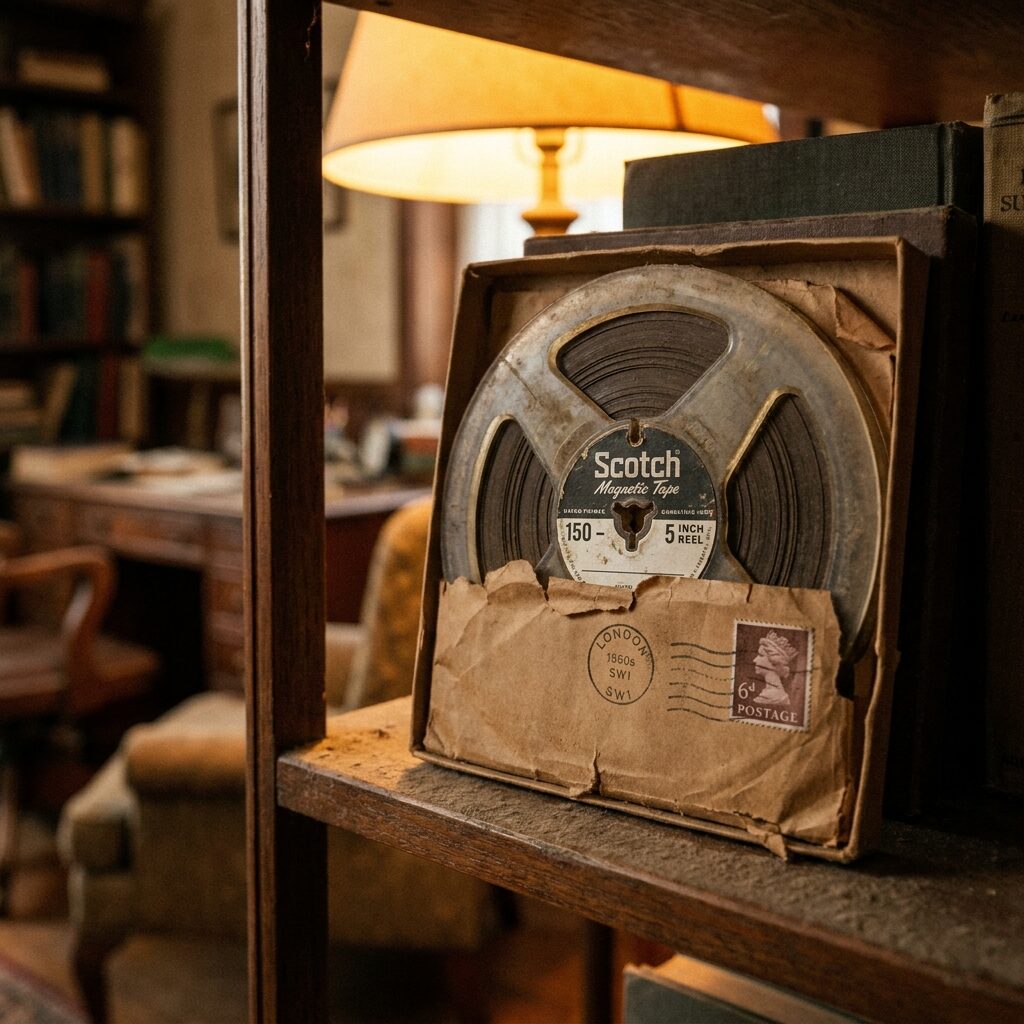
And the bridge? Spliced in from yet another piece using a razor blade to physically cut and join the analog tape. Literally glued into the song.
For weeks, this collection of fragments sat in pieces. The band listened back and made a grim assessment: they liked the bridge. That was it. The rest could go. “The Chain” was about to be cut from Rumours entirely.
Then, three weeks before they needed to wrap the album, Buckingham had a breakthrough. “He took the verses apart, played a Dobro and asked Mick to play a straight quarter-note beat on the kick,” Caillat recalled. “Next, Lindsey rewrote the chorus and put a whole new rhythm to it. Everything clicked.” Buckingham wrote entirely new verses to fit around the bridge they’d salvaged, and then they figured out how to connect the front half of the song to McVie’s bass riff by working backwards. Starting from the moment the bass enters, they used Fleetwood’s kick drum as a metronome and mapped the preceding section measure by measure, building the song in reverse from its most iconic moment.
They found the destination first, that massive, ominous bass entrance, and then built the road to it. The whole approach to the song was backwards.
The engineers had their own war stories from these sessions. Caillat and Dashut had nearly been fired at the start for spending five days on drum sounds; the band thought they were incompetent. The console automation crashed on day one. They experimented with a drum tunnel that went nowhere. The drums and guitar were the only instruments recorded in each other’s presence. Everything else was overdubbed separately, each member working alone on a song that would be credited to all of them.
“The Chain” wasn’t composed. It was curated. Five people who could barely stand to be in the same room each contributed a fragment from a different failed project, and one of them, under extreme deadline pressure, figured out how to make those fragments talk to each other. The song that credits all five members is the one where none of them were working on it at the same time.
Two Songs in a Trench Coat
“The Chain” is really two songs fused together, a brooding folk-rock meditation and a hard-rock crescendo, all in E minor, where every chord pulls downward and John McVie’s bass riff at 3:04 transforms everything.
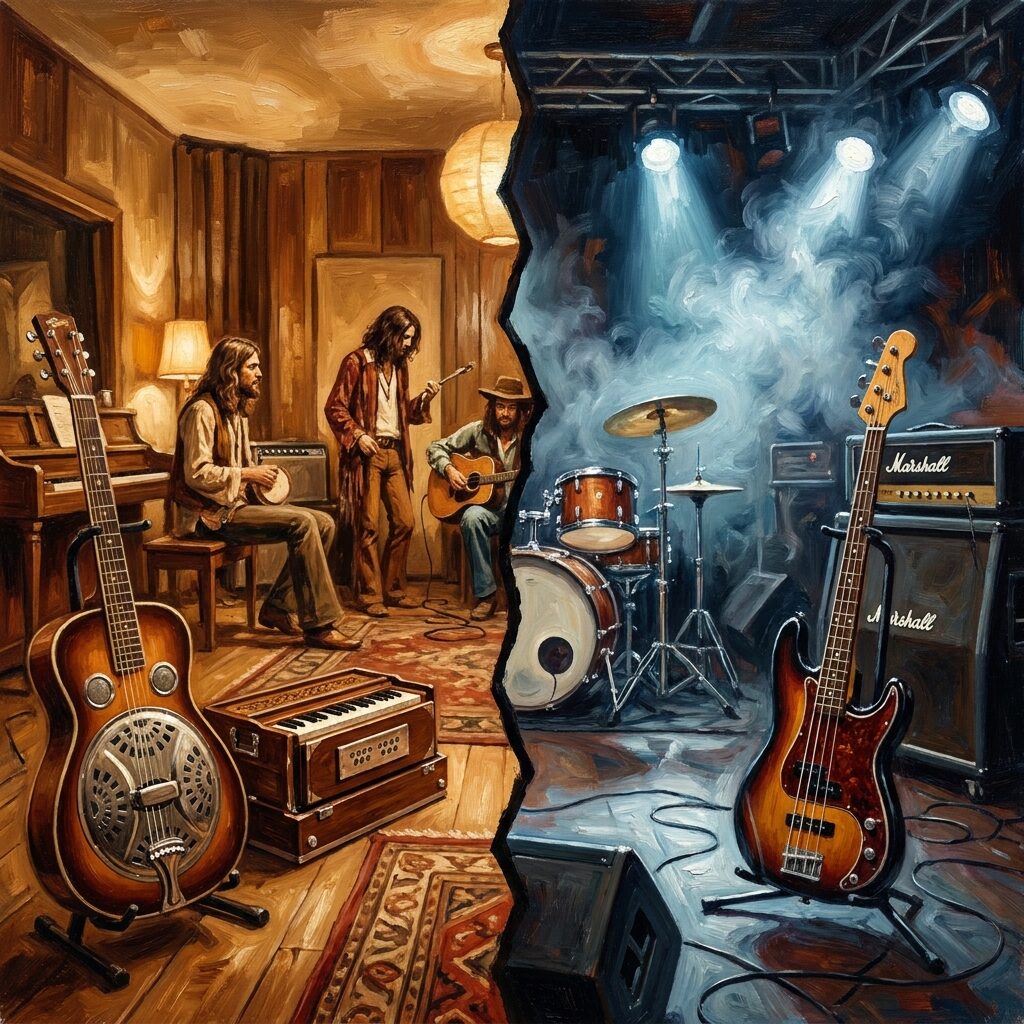
Play “The Chain” for someone who’s never heard it and ask them to tell you when the second song starts. They’ll know. Everyone knows. Because “The Chain” isn’t really one song. It’s two songs wearing a trench coat, and the seam between them is so obvious, so jarring, so good that it shouldn’t work at all.
The first half is folk-rock. Buckingham’s fingerpicked Dobro, Christine McVie’s harmonium and Hammond organ sustained in long notes and panned just off-center, “filler,” technically, but the kind of filler that gives the mix its ghostly texture. Three-part vocal harmonies, with Nicks layering multiple takes featuring third and fifth intervals to build those ethereal, blended choruses. The tempo sits at roughly 76 BPM, a medium walking pace that feels unhurried, almost resigned. Gorgeous and bleak at the same time.
About that bleakness: the song lives in E minor, and the primary chord movement, Em, Am, Bm, is built off the 1st, 4th, and 5th scale degrees, all minor. Every single chord pulls downward. That’s unusual for a pop-rock track. Most songs in this genre throw in a major chord somewhere for relief, a moment of brightness. “The Chain” refuses. The verse progression, Em to A to D to C to Em, circles back to where it started, like someone pacing in a room they can’t leave. The chorus parks on Am and Am7, which is somehow even more claustrophobic. No resolution. No sunshine breaking through. Just the loop.
Then there’s the rhythmic trick that makes the verses hypnotic. Buckingham instructed Fleetwood to play a straight quarter-note pattern on the kick drum, not a standard rock beat, not a shuffle, just four even kicks per bar. It’s a stoptime device, and it strips away the rhythmic complexity you’d expect, leaving this bare, metronomic pulse underneath the vocals. Billboard called it a “heartbeat-like bass drum,” and that’s right. It sounds like a heartbeat. Steady, persistent, a little ominous. The kind of heartbeat you become aware of when you’re lying awake at three in the morning wondering if everything’s about to fall apart.
Then 3:04 happens.
John McVie’s bass enters with that ten-note riff, played on his custom 1976 Alembic Series I fretless bass with a stainless steel fingerboard, strung with flatwound strings and played with a pick, which is what gives it that particular growl, that midrange snarl that cuts through everything. (That bass sold at Julien’s Auctions in 2022 for $100,000, nearly doubling its high estimate. Someone really wanted to own the instrument that played those ten notes.) Fleetwood’s drums build slowly underneath, and the whole song transforms. The folk-rock meditation is over. What follows is hard-rock crescendo that sounds like it belongs on a completely different album, which, given the song’s Frankenstein origins, it basically does.
The technical details matter here. Fleetwood had what Caillat described as an “extremely light foot” on the kick drum, so they used Kepex noise gates on the drums to tighten everything up and prevent the kick from bleeding into the overhead mics. A small production choice, but it’s the reason the drums sound so controlled in the first half and so explosive when they finally open up. The restraint was engineered, not natural, which is also a fair description of everything else happening during these sessions.
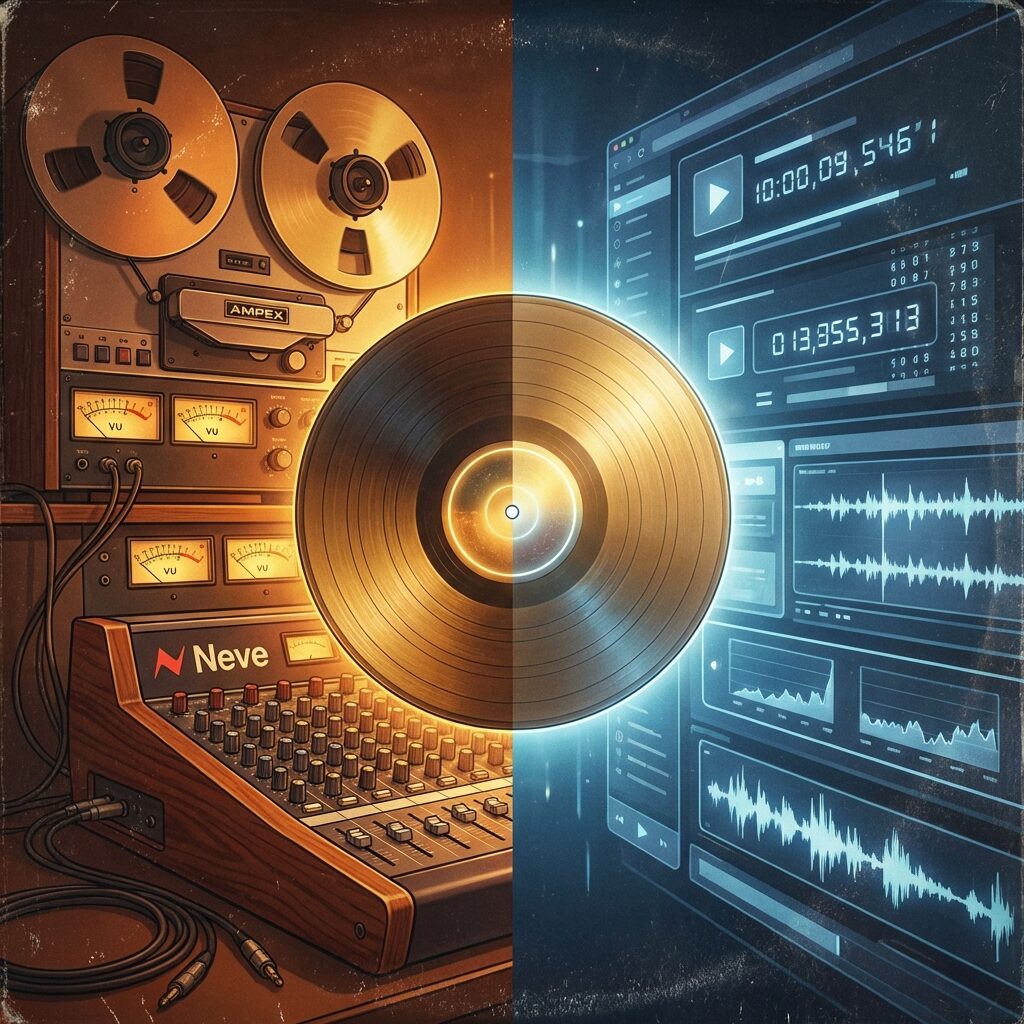
The whole thing was tracked on 16-track analog tape through an API console, with a non-API mixing desk featuring parametric EQs for the final mix. Dolby noise reduction. Ten microphones on the drums, plus a Neumann U87 out in the live room for ambience. Nicks sang through an RE20. None of this matters to the casual listener, and all of it matters to the sound. The warmth, the depth, the way McVie’s bass seems to come from somewhere below the speakers, that’s analog tape and careful mic placement and engineers who nearly got fired for caring too much about drum tones.
Damn Your Love, Damn Your Lies
“The Chain” works as a breakup song, a band manifesto, and something more primal about the fear of losing people, and to this day, the five credited writers can’t agree on who actually wrote what.
(Fuck)
[Verse 1: Lindsey Buckingham & Stevie Nicks]
Listen to the wind blow
Watch the sun rise
Run in the shadows
Damn your love, damn your lies
[Chorus: Lindsey Buckingham, Both, Stevie Nicks]
And if you don’t love me now
You will never love me again
I can still hear you sayin’
You would never break the chain
(
Never break the chain
)
And if you don’t love me now
(
You don’t love me now
)
You will never love me again
I can still hear you sayin’
(Still hear you saying)
You would never break the chain
(
Never break the chain
)
[Verse 2: Lindsey Buckingham & Stevie Nicks]
Listen to the wind blow
Down comes the night
Run in the shadows
Damn your love, damn your lies
Break the silence
Damn the dark, damn the light
[Chorus: Lindsey Buckingham, Both, Stevie Nicks]
And if you don’t love me now
You will never love me again
I can still hear you sayin’
You would never break the chain
(
Never break the chain
)
And if you don’t love me now
(
You don’t love me now
)
You will never love me again
I can still hear you sayin’
(Still hear you saying)
You would never break the chain
(
Never break the chain
)
And if you don’t love me now
(
You don’t love me now
)
You will never love me again
I can still hear you sayin’
(Still hear you saying)
You would never break the chain
(
Never break the chain
)
[Instrumental Bridge]
[Outro: Both, Lindsey Buckingham]
Chain keep us together
Run in the shadow
Chain keep us together
Runnin’ in the shadow
Chain keep us together
Runnin’ in the shadow
Chain keep us together
Run in the shadow
Chain keep us together
Run in the shadow
Chain
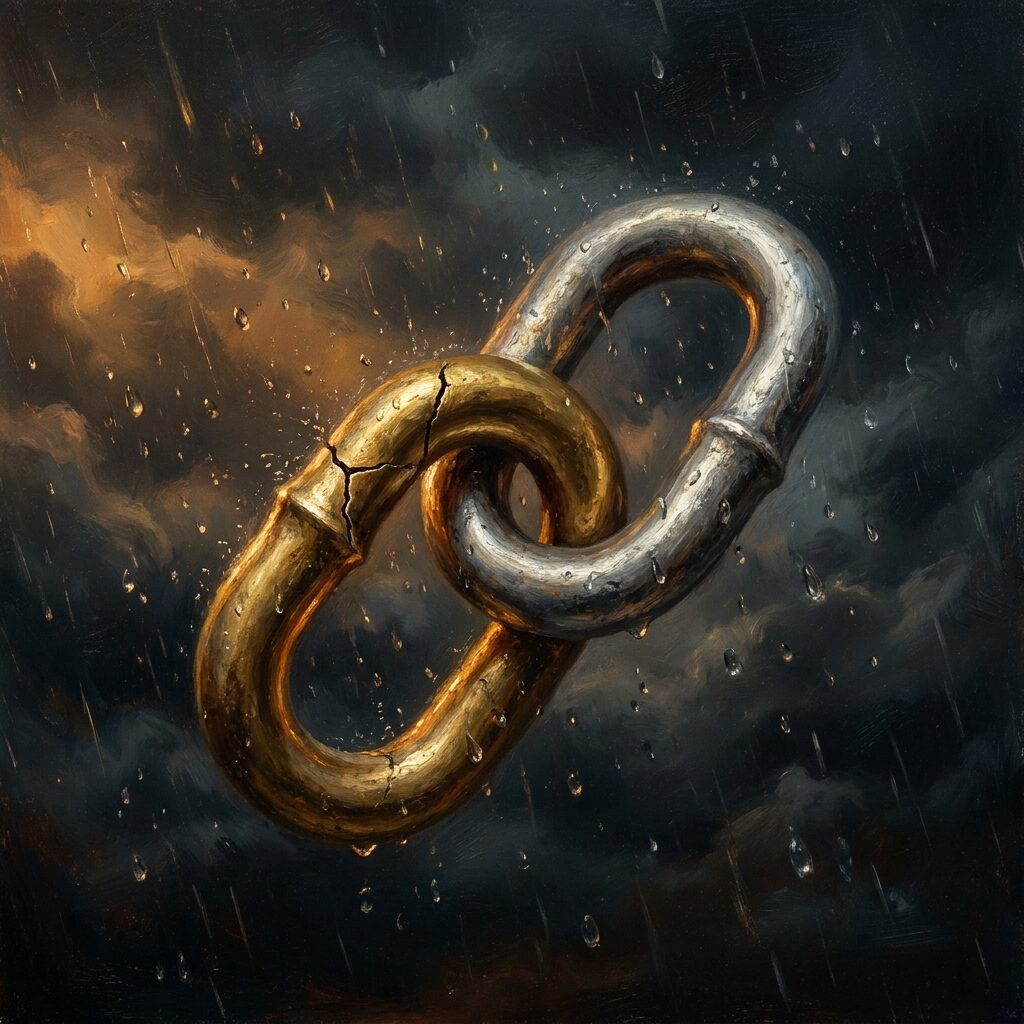
Listen to the wind blow. Watch the sun rise. Run in the shadows. Damn your love, damn your lies.
On the surface, the lyrics of “The Chain” are simple. Deceptively so. Nature imagery, a bitter accusation, a plea that doubles as a threat: if you don’t love me now, you will never love me again. Straightforward enough. Except when you know who’s singing it, and who they’re singing it to, and what was happening between them at the time. At which point every line becomes a live grenade.
Nicks wrote those verse lyrics. She’s singing them in the studio, standing next to Buckingham, the man she’s in the process of leaving after eight years. If you don’t love me now, you will never love me again. That’s not abstract. That’s not metaphorical. That’s one human being looking at another and saying: this is your last chance, and we both know you’re going to blow it. The fact that Buckingham then sings harmony on the line, his voice literally joining hers to deliver the threat, is either the most professional thing anyone has ever done in a recording studio or the most passive-aggressive. Possibly both.
But “the chain” itself, that central image, means different things depending on what you bring to the song. If you’re going through a breakup, it’s about the bond between two people, the thing that held you together that’s now fraying. If you know anything about the band, it’s about the agreement, spoken or unspoken, that these five people would keep making music together no matter how much they wanted to walk away. Chain, keep us together. That’s not romance. That’s a business arrangement disguised as a prayer. And if you zoom all the way out, it’s about something harder to name. The fear that whatever invisible thing binds you to the people you need might snap, and you’ll be left standing in the wreckage alone.
Christine McVie understood this. “There is a heavy connection with the band and The Chain,” she said, which is a characteristically understated observation from someone who rarely overstated anything. The song became the band’s mission statement, but it became that by accident. Nobody sat down and said, “Let’s write our manifesto.” They threw scraps into a pile, and the pile turned out to be the truest thing they’d ever say about themselves.
Here’s where it gets messier: nobody fully agrees on who wrote what. Nicks maintained that “The Chain” was primarily her song. Buckingham questioned whether Fleetwood contributed significantly. Some sources credit the lyrics solely to Nicks; others say Buckingham and Christine McVie wrote the chorus lyrics while Nicks provided the verses; still others say Nicks and Christine reworked lyrics together for the first section. The collaborative credit, Buckingham, Fleetwood, C. McVie, J. McVie, Nicks, is both the song’s greatest truth and its most disputed claim. Five names on a song that five people can’t agree they co-wrote. If you wanted a metaphor for the band itself, you couldn’t invent a better one.
The Album That Ate Itself
Rumours sold over 40 million copies, spent 31 weeks at No. 1, and won Album of the Year, beating Hotel California and Aja, while the people accepting the Grammy could barely stand each other.
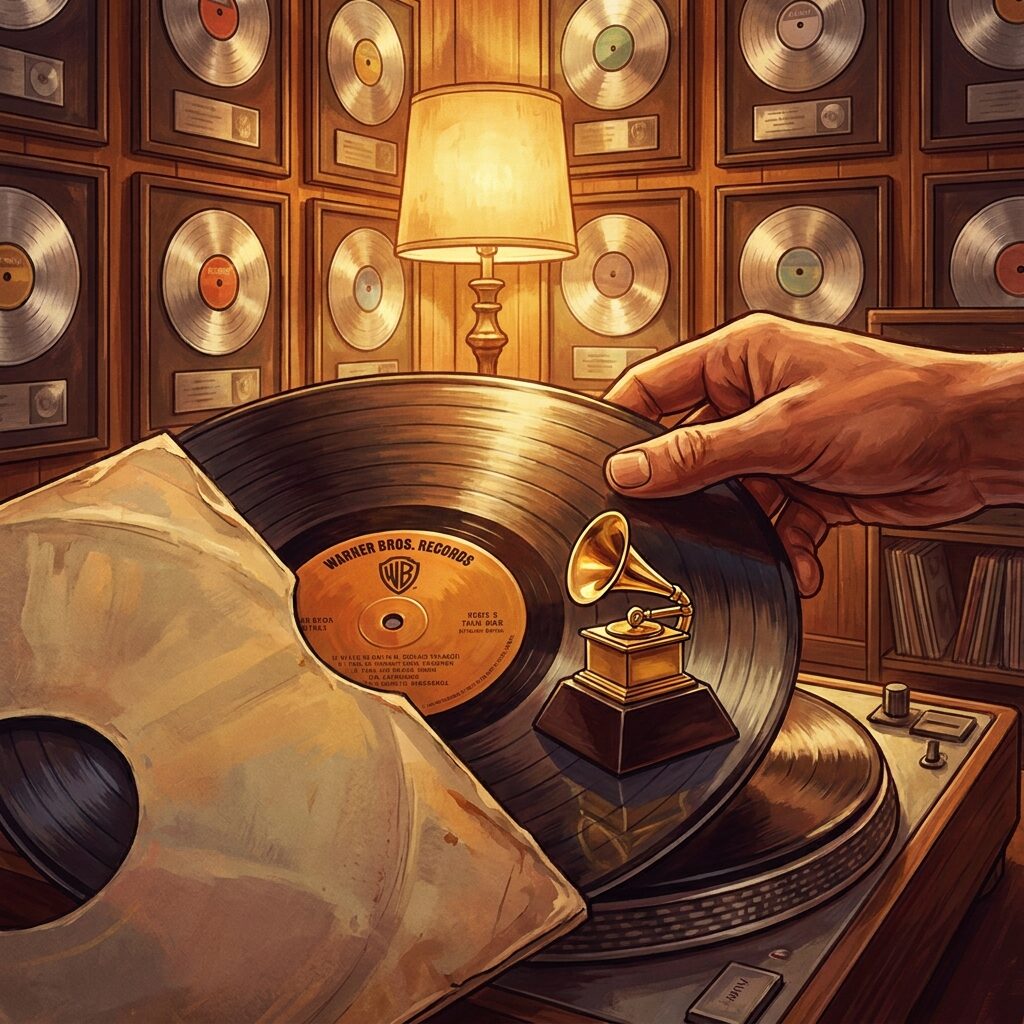
The numbers for Rumours are stupid. Over 40 million copies sold worldwide. Thirty-one weeks at No. 1 on the Billboard 200. Diamond certification, 20 times platinum, in the United States alone, with Diamond certifications in the UK, Canada, and Australia on top of that. No. 7 on Rolling Stone’s 500 Greatest Albums of All Time. Preserved in the Library of Congress’s National Recording Registry in 2017. Named to TIME’s All-TIME 100 Albums list. And here’s the one that gets me: it was the UK’s bestselling album on vinyl in 2020, moving 32,500 copies on wax forty-three years after release. The thing refuses to go away.
“The Chain” sits differently from everything else on the record. It’s track seven on an album where every single song is about the people in the room, eleven tracks of confessions, accusations, pleas, and passive-aggressive love letters performed by their authors in front of their subjects. But “The Chain” is the only one they all wrote together. The only collective statement on an album of individual wounds. “Dreams” is Nicks to Buckingham. “Go Your Own Way” is Buckingham to Nicks. “Songbird” is Christine’s alone. “The Chain” is all five of them, looking at each other and saying: we stay.
And then there’s the Grammys. February 23, 1978, at the Shrine Auditorium in Los Angeles. Rumours won Album of the Year, presented by Crosby, Stills & Nash, another band that knew a thing or two about members who couldn’t stand each other. Look at the other nominees: the Eagles’ Hotel California, Steely Dan’s Aja, James Taylor’s JT, and John Williams’ Star Wars soundtrack. In almost any other year, Hotel California or Aja walks away with it. This wasn’t any other year. Each member of Fleetwood Mac won two Grammys that night, one as artist, one as co-producer, and the people accepting those awards could barely tolerate being in the same room. Here’s a fun detail: Rumours is one of only six albums in Grammy history to win Album of the Year and nothing else. They took the big one and went home.
The album was inducted into the Grammy Hall of Fame in 2003. The band made the Rock and Roll Hall of Fame in 1998. They got a star on the Hollywood Walk of Fame and a Brit Award for Outstanding Contribution to Music. And through all of it, “The Chain”, never a single, never on the greatest hits, kept quietly becoming the song that defined them.
Britain’s Engine Note
John McVie’s bass riff soundtracked Formula One in Britain for nearly two decades. Then it showed up in Guardians of the Galaxy, got pulled back onto the UK charts by a Brad Pitt racing film in 2025, and lent its chaos to a Tony-winning Broadway play about the sessions that created it.
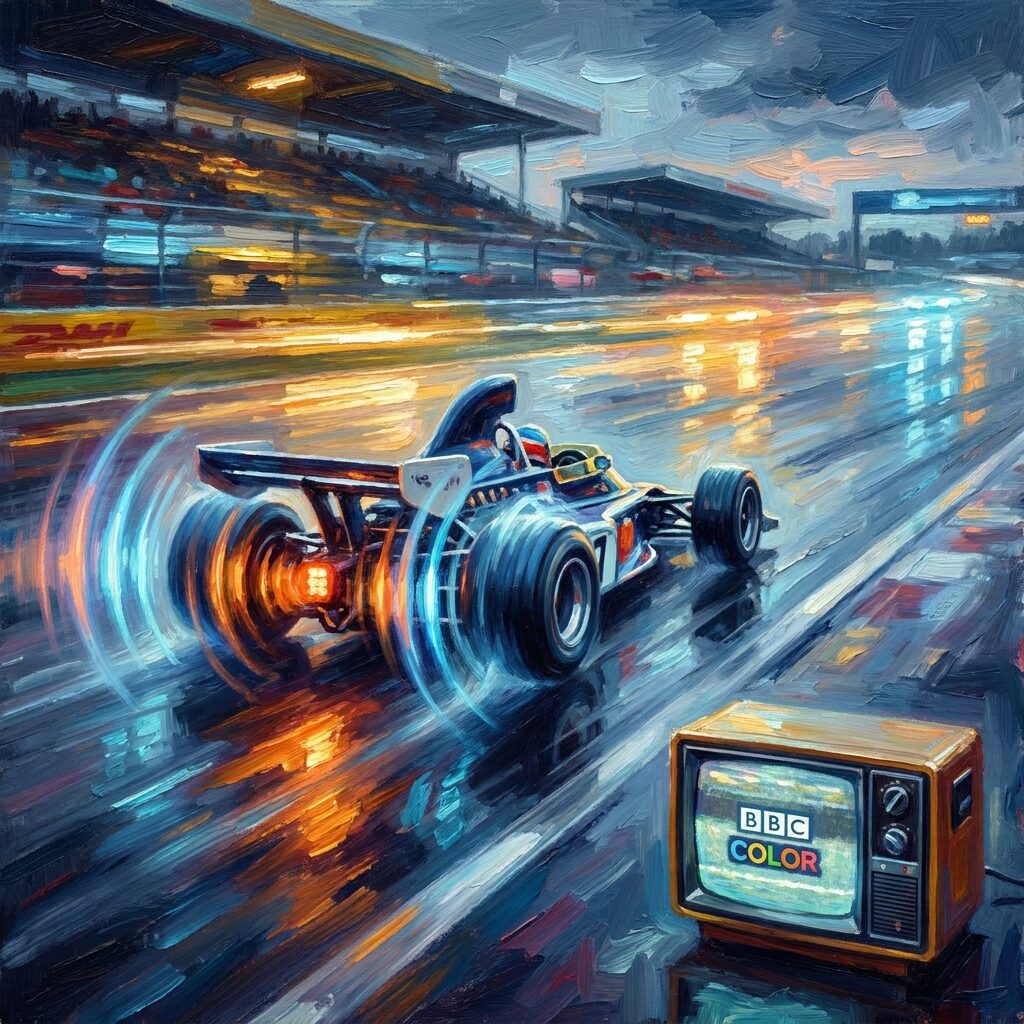
In 1978, someone at the BBC had an idea. They needed a theme for their Formula One coverage, and they chose the outro of “The Chain”, that bass riff, those building drums, the explosive guitar that follows. It was a perfect match. McVie’s bass line accelerates like a car bearing down on a corner; the eruption when Buckingham’s guitar kicks in feels like the straight after the apex. It wasn’t just a good choice. It was so good that the two things fused permanently in British consciousness.
The BBC used it from 1978 to 1996, when ITV took over F1 rights and dropped it. The outcry was real. When the BBC regained coverage in 2009, they brought “The Chain” back, and Murray Walker, the legendary F1 commentator, a man whose excitement could make a traffic jam sound like the last lap at Monza, was visibly delighted. By that point radio DJs were using it as bed music for any motor racing conversation, regardless of the broadcaster. Channel 4 retained it when they took over terrestrial coverage in 2016. Forty years on, the song and the sport are still inseparable in the UK. Most British fans under fifty have never known F1 without it.
That connection came roaring back when the trailer for the Brad Pitt F1 film dropped in 2025, featuring “The Chain” prominently. The song reentered UK charts on three tallies simultaneously, eventually climbing to No. 68 on the Official Singles Chart. That was its first time in the UK Top 75, and Fleetwood Mac’s first new Top 75 entry in 35 years, their 26th overall. A forty-eight-year-old deep cut, driven back onto the charts by a movie trailer.
F1 isn’t the only second act, though. In 2017, James Gunn used “The Chain” twice in Guardians of the Galaxy Vol. 2, once when Peter, Gamora, and Drax board Ego’s ship, and again during the climactic battle where Peter fights Ego with Yondu’s guidance. Gunn called it one of the two “most deeply embedded” songs in the film. Every member of Fleetwood Mac watched the scene before approving its use. During filming, the song was blasted from speakers filling the entire set with no dialogue. The actors performed to it, moved to it, felt it in their chests. “‘The Chain’ is one because it is about the Guardians, at least in the way we use it,” Gunn told Rolling Stone. A song about five dysfunctional people bound together by something stronger than their desire to leave. Yeah, that tracks.
Then there’s Stereophonic, the 2023 Broadway play that fictionalized the Rumours sessions and won five Tony Awards including Best Play from thirteen nominations. The production brought the chaos of those Sausalito sessions to a theater audience: the collapsing relationships, the creative friction, the drugs, the genius that came out of the wreckage. It also brought a lawsuit. In October 2024, Ken Caillat and co-author Steven Stiefel sued the creators, alleging they’d adapted Caillat’s 2012 memoir Making Rumours: The Inside Story of the Classic Fleetwood Mac Album without permission. “I feel kind of a numnuts… I feel ripped off,” Caillat said. Playwright David Adjmi responded that “any similarities to Ken Caillat’s excellent book are unintentional.” The suit was settled in December 2024, terms undisclosed. Even the story about making the album turned into a fight over creative ownership, because of course it did. With this band, everything comes back to the question of who owns what, and whether the thing you made together belongs to anyone individually.
The Opener That Never Left
Never released as a single from Rumours, “The Chain” became Fleetwood Mac’s concert opener for over thirty years, surviving lineup changes, firings, reunions, and a drummer walking out alone to the sound of his own foot.

“The Chain” was never released as a single from Rumours. Not a promotional single, not a radio single, nothing. “Go Your Own Way,” “Dreams,” “Don’t Stop,” “You Make Loving Fun”, those were the singles. “The Chain” was just an album track. Track seven. And yet, for over thirty years, across multiple lineups and eras and levels of internal dysfunction, it was the song that opened the show.
The band had “Dreams”, a No. 1 hit. They had “Go Your Own Way”, arguably their most famous single. They had “Rhiannon,” “Landslide,” a catalog full of songs that people actually bought as singles. And every night, they chose to open with the Frankenstein track. The one assembled from scraps. The one that nearly got cut. The one about the chain that keeps them together. Every concert started the same way: we’re still here, and here’s the song that explains why.
The 1997 reunion changed the song’s status completely. The Dance, recorded May 23, 1997, at Warner Brothers Studios in Burbank, debuted at No. 1 on the Billboard 200 with 199,000 copies sold in its first week. It moved a million copies within eight weeks, eventually selling over six million worldwide, making it the fifth best-selling live album of all time in the U.S. The live version of “The Chain” finally earned a Grammy nomination: Best Rock Performance by a Group or Duo with Vocal. Twenty years the song had existed without a single release from its parent album or a Grammy nod. It took a reunion tour to get either.
When Lindsey Buckingham was fired from the band in April 2018, prompting a lawsuit he filed in October, settled two months later, details undisclosed, the remaining members replaced him with Neil Finn of Crowded House and Mike Campbell of Tom Petty and the Heartbreakers. Their first public performance with the new lineup? Ellen, September 5, 2018. The song they opened with? “The Chain.” What else would it be. They played 80-plus shows across eight countries on the An Evening with Fleetwood Mac tour, from Tulsa in October 2018 to Las Vegas in November 2019. “The Chain” opened every single one.
The Perth show is the one I keep thinking about. RAC Arena, August 2019, the Australian tour opener. Mick Fleetwood walked out alone. Just the drummer. A giant screen behind him projected footage of his foot laying down the opening beat, close-up, rhythmic, unmistakable. The man who’d held this band together through every breakup and firing and lineup change, getting his solo entrance. The drummer who was the chain, walking out to the song about the chain.
At the Brisbane Entertainment Centre, fans had been betting on the opener. One reportedly joked: “You can Go Your Own Way home because it won’t be ‘The Chain.'” It was. It’s always “The Chain.”
72 Covers and Counting
From Evanescence recording a dark take for a video game to Florence Welch playing it exactly once at Glastonbury to Harry Styles claiming the classic rock lineage to Tantric letting a radio station pick their cover, “The Chain” keeps finding new interpreters across genres and decades, 72 and counting.
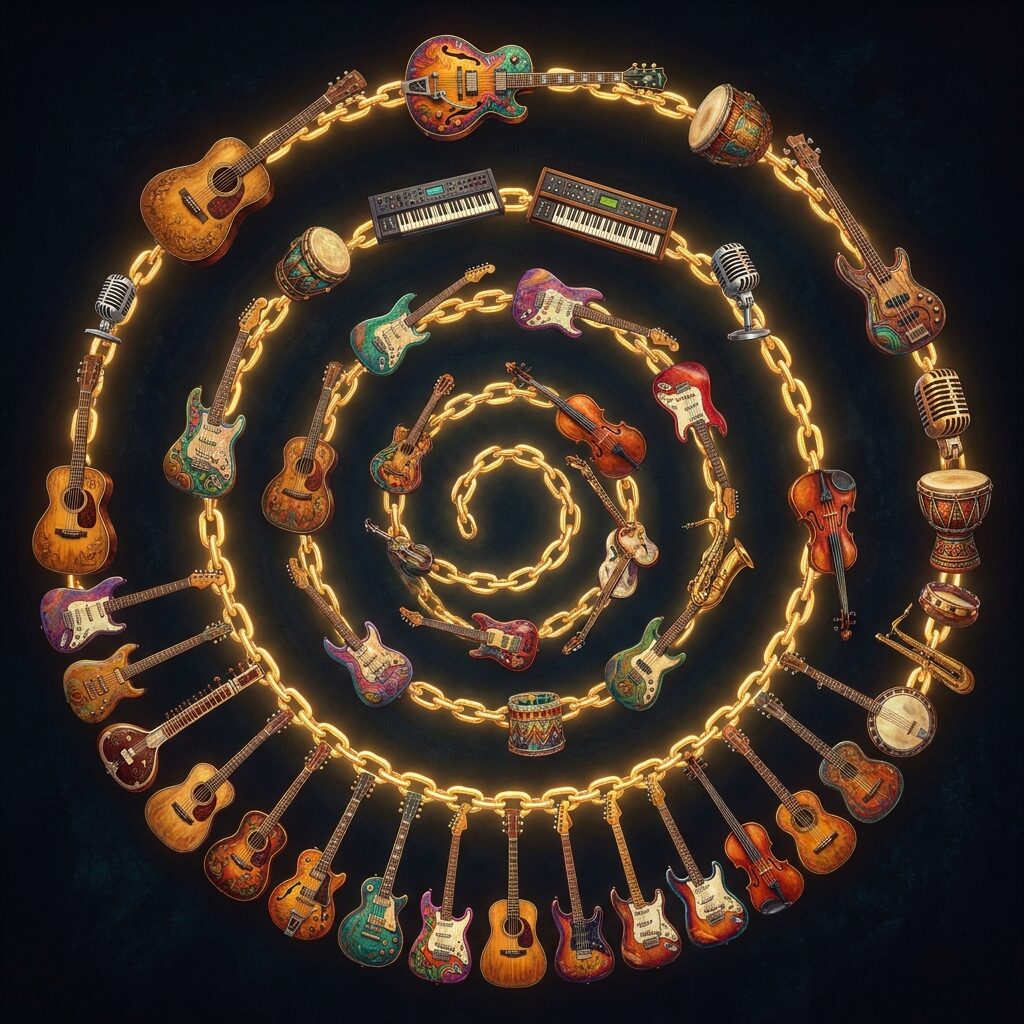
There’s a Spotify playlist out there that documents 72 covers of “The Chain.” Seventy-two. For a song that was never a proper single, that number is hard to square. But the track has a way of lodging itself in other musicians’ heads, and what they do with it once it’s there varies wildly.
The one that hits hardest might be Evanescence’s version, recorded in 2019 for the video game Gears 5. It was their first new rock recording in eight years, and Amy Lee clearly knew what she was after. “We love Fleetwood Mac and wanted to paint a dark and epic picture with our take on ‘The Chain’,” she said. “The lyrics make me feel the power of standing together against great forces trying to pull us apart, perhaps even from the inside.” That last phrase, perhaps even from the inside, might be the most precise description of the original song that anyone outside the band has ever offered. The threat to the chain isn’t external. It’s the people holding it.
Florence Welch went somewhere else with it entirely. At Glastonbury 2010, Florence + The Machine performed “The Chain,” and Welch announced that it was her “favorite song of all time” and that the band would only ever play it once. That’s it. One performance, one festival, then it goes back in the vault. She treated it like something you don’t touch twice, too important to become a regular set piece, too meaningful to risk wearing out through repetition. Loving a song so much you refuse to let yourself get comfortable playing it is its own kind of devotion.
Harry Styles covered it on BBC Radio 1’s Live Lounge in 2017, right before his first solo tour. A former boy-band member stepping into the classic rock lineage, choosing this particular song to signal where his solo career was headed, it read as deliberate. And then there’s the Tantric story, which is my favorite because it’s so perfectly dumb. Their label required them to include a cover on their 2004 album After We Go. Instead of deliberating, they tuned into a classic rock radio station and decided to cover whatever came on first. It was “The Chain.” The cover hit No. 36 on Billboard’s Mainstream Rock chart. Sometimes the universe just picks for you.
Other artists have taken their swings, Hole covered it for The Crow: City of Angels soundtrack in 1996, Three Days Grace and Loch Lomond have their versions, The Highwomen covered it for The Kitchen in 2019, but the sheer range across those 72 versions says more about the song than any single cover does. It holds up when it’s dark and heavy. It holds up stripped back and acoustic. It works in a video game, at Glastonbury, on a pop star’s radio session. That structure, two distinct halves, the impossible bass riff, the build from quiet resignation to full detonation, is loose enough to absorb nearly any interpretation while keeping the thing that makes it unmistakably “The Chain.”
The Chain Holds
A song assembled from failures became the definitive statement of unity for a band that was falling apart, and it’s still climbing charts nearly fifty years later, because everyone knows what it feels like to be terrified of what breaks when the chain snaps.
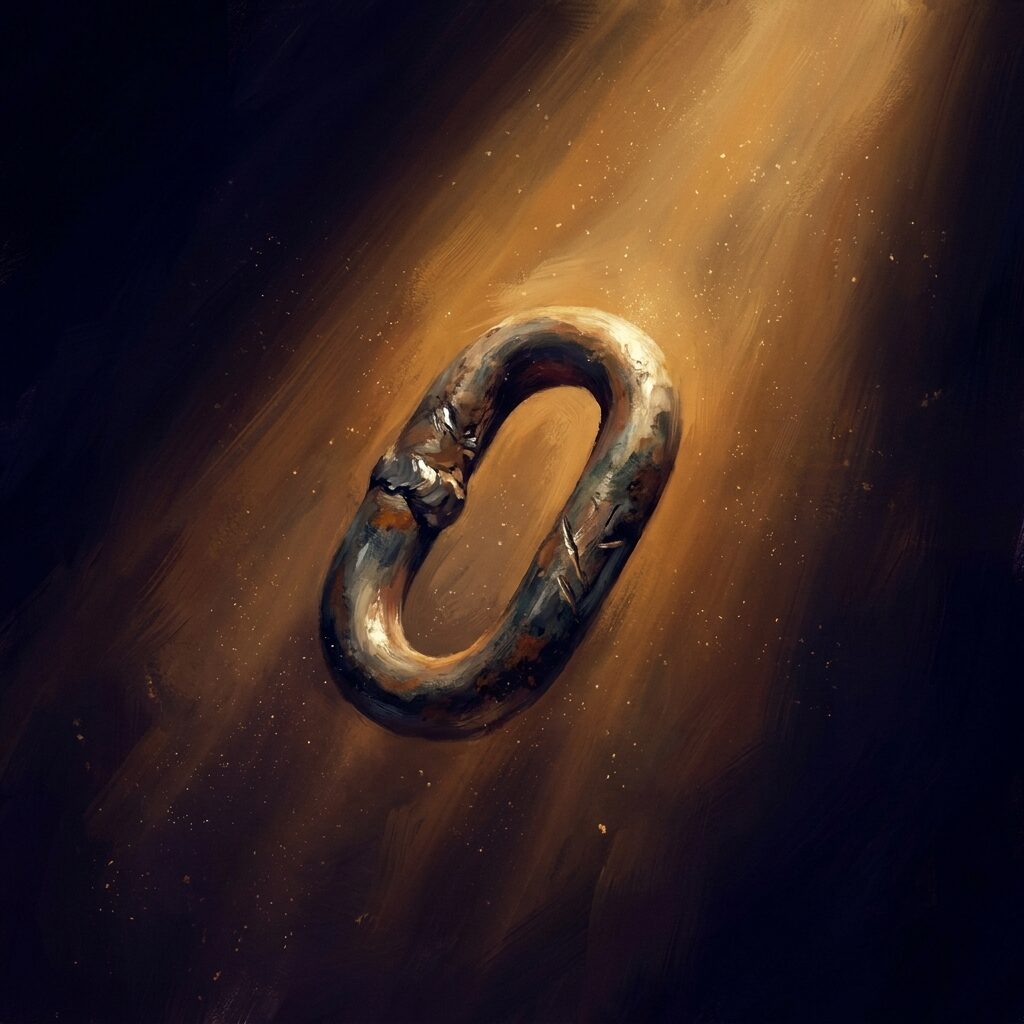
So here’s where we end up. A song that wasn’t written, it was assembled. From a failed Christine McVie track, a recycled Buckingham Nicks riff, orphaned Stevie Nicks lyrics, a bass line from a jam for a different song, and a bridge spliced in with a razor blade. Made by five people who were systematically dismantling every relationship between them. Structured as two songs that barely belong together. Nearly cut from the album. Never released as a single. And it became the thing that defined them, the opener, the manifesto, the one song that credits all five names, the track that said we stay when everything else on the album said we’re leaving.
Christine McVie died in November 2022, and with her went any realistic hope of a final reunion of the Rumours lineup. The chain broke. Actually, physically, irreversibly broke. You could argue it had been fraying for decades, through Buckingham’s firing, through the lineup changes, through the long stretches where they couldn’t be in a room together, but Christine’s death was the break that nobody could splice back together.
And yet the song keeps climbing. It entered the UK Top 75 for the first time in 2025, forty-eight years after it was recorded, at No. 68. Fleetwood Mac’s first new entry in the Top 75 in 35 years. It’s charted on the Billboard Global 200, hit No. 3 on Rock Digital Song Sales after fourteen years of slow ascent, accumulated over 340 million Spotify streams. In 2026, it’s still gaining momentum. A song that was almost thrown away is, half a century later, finding its biggest audience yet.
I think I know why. Not just the bass riff, though the bass riff alone would be enough. Not just the F1 connection or the Guardians of the Galaxy placement or the Brad Pitt trailer. Those things introduce the song. They don’t explain why it stays.
It stays because everyone who has ever loved someone, or been part of a family, or belonged to any group held together by something they can’t quite name, everyone knows what that chain feels like. You know the feeling. The invisible thread you don’t think about until it goes taut. The one you’re terrified of losing. If you don’t love me now, you will never love me again. That’s not a lyric. That’s the thing you think at 3 AM but don’t say, because saying it makes it real.
“The Chain” was built from wreckage. Five broken pieces from five broken people, held together with tape and three weeks of Lindsey Buckingham refusing to let it die. And maybe that’s the final truth of the song: the seams are what make it work. You can hear the fragments. The two halves don’t quite match. The bass riff feels like it’s arriving from a different dimension. None of that is a flaw, it’s the whole point. The song sounds like what it is: something that should have fallen apart and didn’t. And sometimes, if you’re lucky, that’s enough to hold for longer than anyone has any right to expect.
🎸 Did you know? “The Chain” is the ONLY Fleetwood Mac song credited to all 5 members — and it was literally assembled from rejected scraps spliced together with razor blades. It almost got cut from Rumours entirely. 🔗 #FleetwoodMac #Rumours #ClassicRock https://bit.ly/4u5H0l5

Click to Tweet