The Taxi Was Waiting
Peter Gabriel’s biggest hit was a last-minute jam recorded as the musicians were literally leaving the studio. It became his only #1, knocked Genesis off the top spot, and spawned the most awarded music video in history.
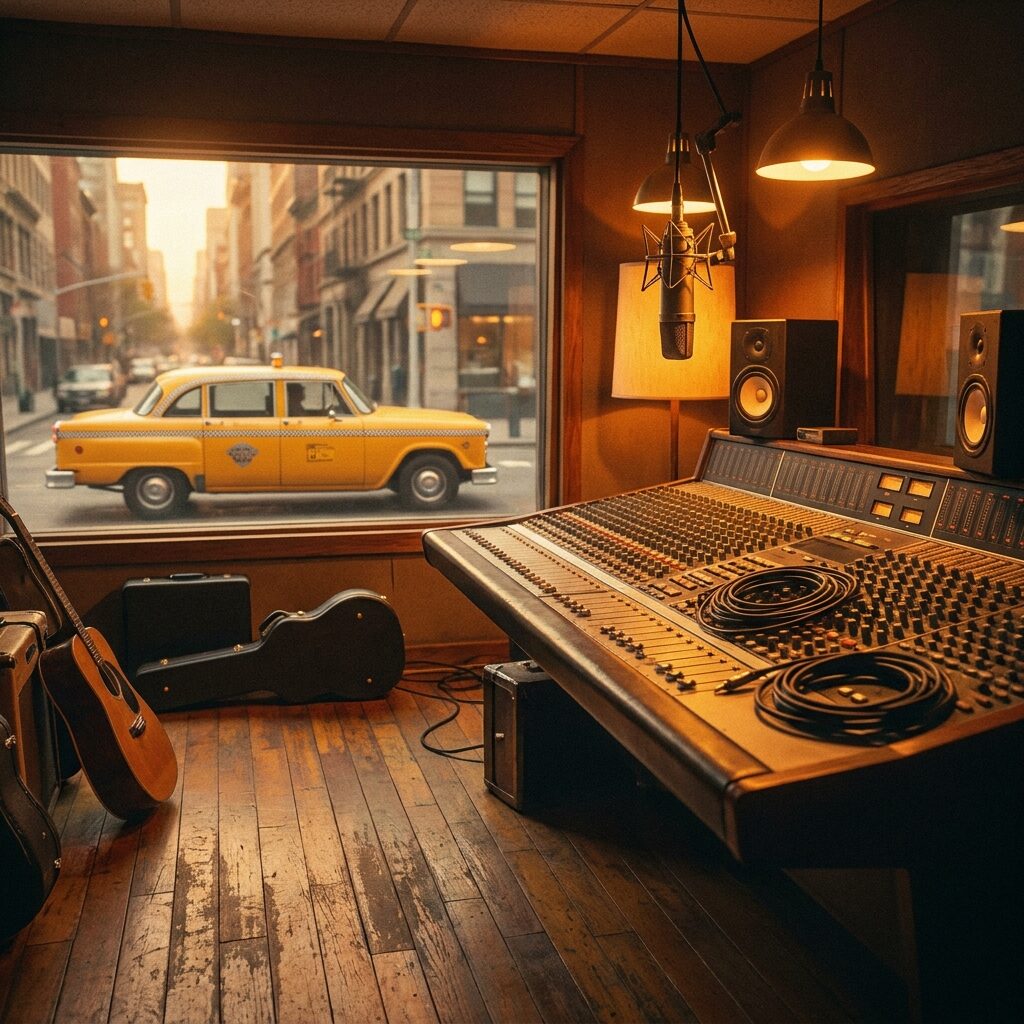
Manu Katché had called a taxi. The French drummer was done, weeks of sessions at a converted cowshed in Bath, England, and he wanted to get back to Paris. Tony Levin, the bassist who’d played with everyone from John Lennon to King Crimson, was packing his bags. The album was basically finished. Nearly a year of work on Peter Gabriel’s fifth solo record, and everyone was running on fumes.
Then Gabriel walked in with one more idea.
“Tony Levin reminded me that he was packing his bags to go home, and I called him back into the studio, saying ‘I’ve got this one idea that maybe we can fool around with for the next record, but I like the feel,'” Gabriel later recalled. “That was ‘Sledgehammer.’ It was late in the day and we just fell into the groove.”
Katché sat down behind the drums and laid down his part in a single, unedited take. When Gabriel asked if he’d do a few more passes, just to be safe, Katché refused. He knew. Another attempt would only make it worse. The full band cut the track live in two or three takes, the only song on the entire album recorded that way.
Nobody in that room knew what they had. That last-minute jam, that throwaway groove captured with musicians who literally had one foot out the door, it became Peter Gabriel’s first and only US number one hit. More awkwardly, it knocked his former band Genesis off the top of the Billboard Hot 100. Genesis, the prog-rock institution he’d co-founded and walked away from a decade earlier, bumped from the chart by their own ex-frontman. The music video swept nine VMAs, a record that still stands in the Guinness book. MTV played it more than any other video in the channel’s history. Gabriel, the respected art-rock eccentric, was suddenly a pop star whether he liked it or not.
Which is the strange part. Peter Gabriel was not supposed to write songs like this. He had released four solo albums so deliberately uncommercial that he refused to even name them, fans nicknamed them Car, Scratch, Melt, and Security because the record company had to call them something. He used to perform in a fox head costume with Genesis. He wrote concept albums about genetic engineering and surrealist fiction. He was more likely to collaborate with Senegalese musicians than chase a radio hit. And yet here he was, channeling Otis Redding and Stax Records, writing a soul-funk song packed with sexual innuendo about sledgehammers and steam trains and bumper cars. The guy who named an album after a photo of his melting face had decided to make people dance, and the question nobody could answer yet was whether the world would buy it.
The Anti-Pop Star Goes Pop
Gabriel spent the first part of his career in theatrical prog-rock Genesis, then released four stubbornly untitled solo albums that critics loved and nobody bought. With So, he finally gave an album a name, hired Daniel Lanois, and let the hooks breathe. But “Sledgehammer” traced back even further, to a seventeen-year-old Gabriel watching Otis Redding at the Ram Jam club in 1967. The Stax sound had always been in him. The question was whether anyone would believe it coming from a guy who once banned cymbals from an entire record.

“Sledgehammer” should never have worked, and you need some context to appreciate just how weird it was that it did. Peter Gabriel spent the first chapter of his career as the frontman of Genesis, from their formation in 1967 through his departure in 1975. Not the Phil Collins-era Genesis that your parents slow-danced to. I mean the Genesis that performed multi-act rock operas where Gabriel dressed as a flower, a fox, and an old man called the Musical Box. The Genesis of The Lamb Lies Down on Broadway, a double concept album about a Puerto Rican juvenile delinquent navigating a surrealist underworld. That Genesis.
When Gabriel left, he didn’t exactly soften his approach. His four solo albums, released between 1977 and 1982, were so resolutely uncommercial that he wouldn’t even give them titles. The record label needed something to put on the spine, so fans adopted nicknames based on the cover art: Car, Scratch, Melt, Security. These were serious, often difficult records. Melt featured no cymbals on the entire album because Gabriel banned them. Security leaned hard into world music and African polyrhythms years before Paul Simon made that commercially viable with Graceland. Gabriel was respected, admired, critically praised. He was not selling millions of records.
With So, something changed. For the first time, Gabriel gave an album an actual title. He brought in Daniel Lanois, the Canadian producer who’d just reinvented U2’s sound on The Unforgettable Fire, and made a conscious decision to be more accessible. Not to sell out, exactly, but to let the hooks breathe a little. To stop burying the melodies under layers of conceptual architecture.
The seed of “Sledgehammer” went back much further than 1985, though. Gabriel had been in love with soul music since he was a teenager. In 1967, the same year Genesis formed, a seventeen-year-old Gabriel saw Otis Redding perform at the Ram Jam club in London. It changed him. He later called Redding his all-time favourite singer. The Stax sound, that raw Memphis groove built on punchy horns and unshakeable rhythm sections, had been running underneath everything Gabriel did, even as he spent two decades making the least Stax-like music imaginable.
So when Gabriel sat down to write what would become “Sledgehammer,” it wasn’t some betrayal of artistic identity. It was a part of himself that had been waiting in the wings for nearly twenty years finally stepping to the front of the stage. As he put it in the So press release, the song was his attempt to replicate “the spirit and the style” of 1960s soul: the playful energy, the grooves that grabbed you by the hips, the lyrics that said one thing and meant something much more fun. The real question wasn’t art versus commerce. It was whether anyone would buy a Stax-style soul track packed with sexual innuendo coming from the guy known for conceptual art-rock and world music.
A Cowshed, a Sledgehammer, and a Single Take
Recorded at Gabriel’s converted cowshed studio in Bath and finished at New York’s Power Station, “Sledgehammer” came together through happy accidents, a one-take drum performance from Katché who refused to do another pass, shared guitar tracks because they ran out of tape, and Memphis Horns trumpeter Wayne Jackson getting the call of a lifetime twenty years after first meeting Gabriel.
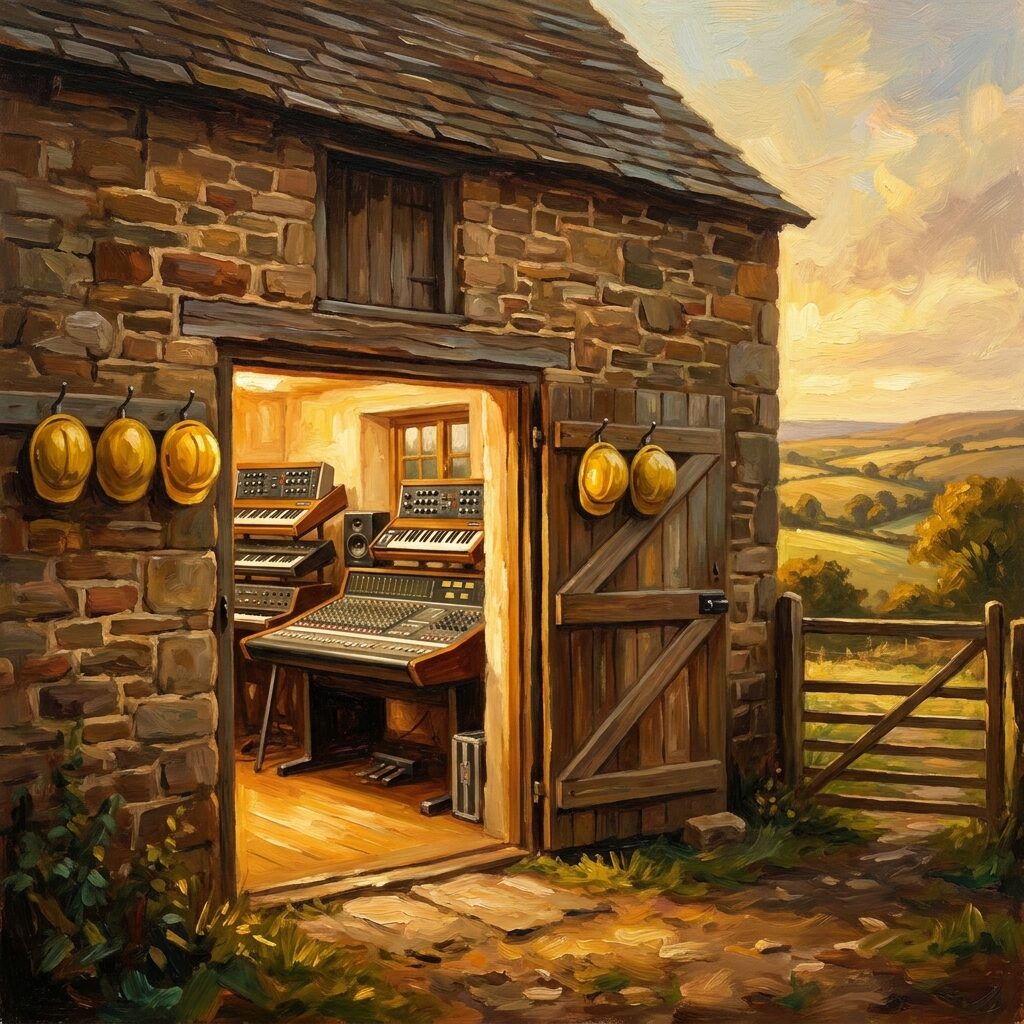
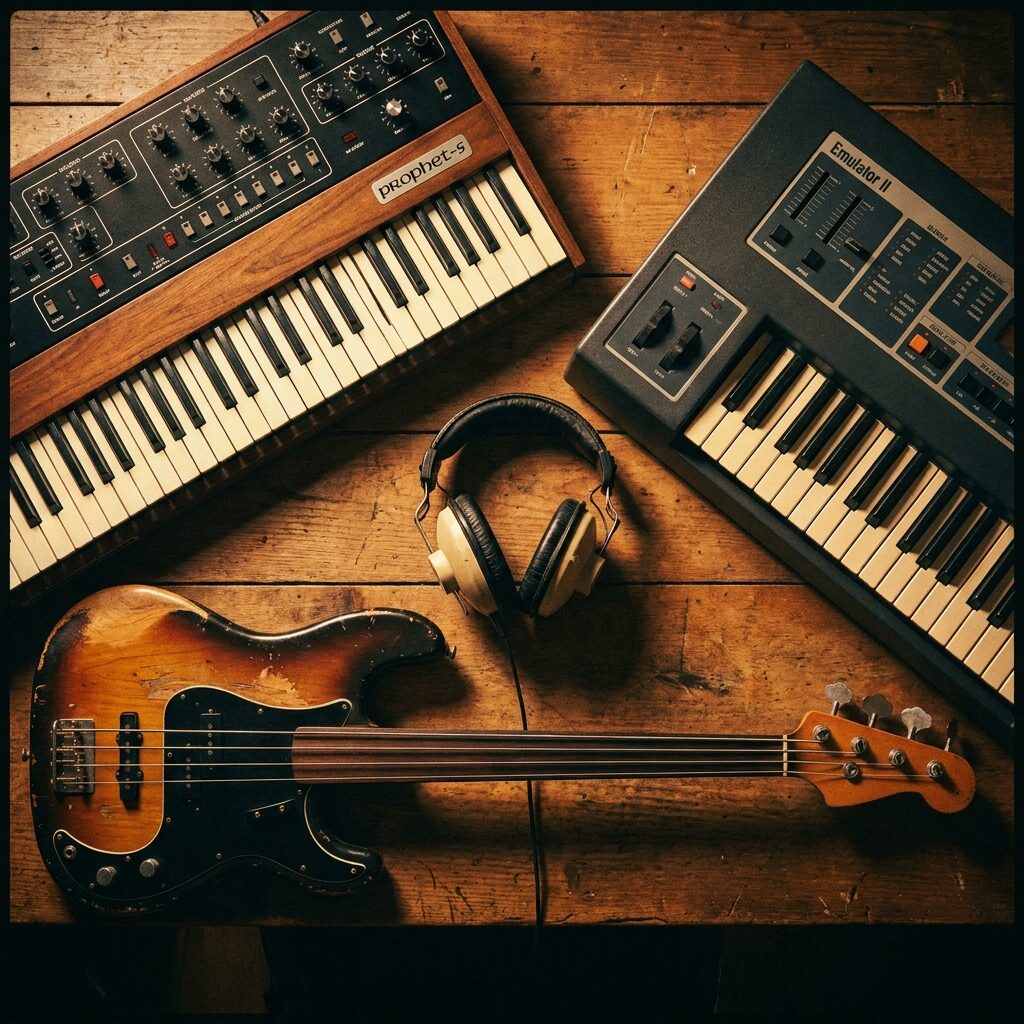
The place where So came to life was not exactly Abbey Road. Ashcombe House was a Gothic revival country house in Bath, Somerset, that Gabriel had rented since 1978. The studio was a converted barn, formerly a cowshed, a long rectangular building with very minimal acoustic treatment. If you’re picturing some gleaming, purpose-built facility, dial that way back. This was a working space carved out of agricultural architecture, where the control room happened to contain an SSL E-Series mixing desk and Gabriel’s formidable keyboard rig: an E-mu Emulator II, a Fairlight CMI Series II, a Sequential Circuits Prophet-5, and a Yamaha CP70 electric grand piano.
The live room had a PA system that doubled as an echo chamber. The control room and live room had no sight lines between them, which would become relevant later. It was, by all accounts, a space that prioritized character over comfort, and that turned out to suit what Gabriel and Lanois were trying to do.
Production on So began in February 1985. Gabriel and Lanois figured they’d need about six weeks. They were off by roughly forty-six weeks. Gabriel’s process was iterative to the point of obsessive, songs would be demoed as keyboards and guitars over a Linn drum machine, then slowly built up layer by painstaking layer. The album eventually cost £200,000 to make.
Dave Bascombe, the Tears for Fears engineer, handled initial tracking for the first couple of months before departing in late May due to disagreements with Lanois. Kevin Killen took over engineering duties and would become essential to the record’s sound. By April 1985, bass and drums were being added, with Tony Levin and Manu Katché each spending around two to three weeks at Ashcombe House.
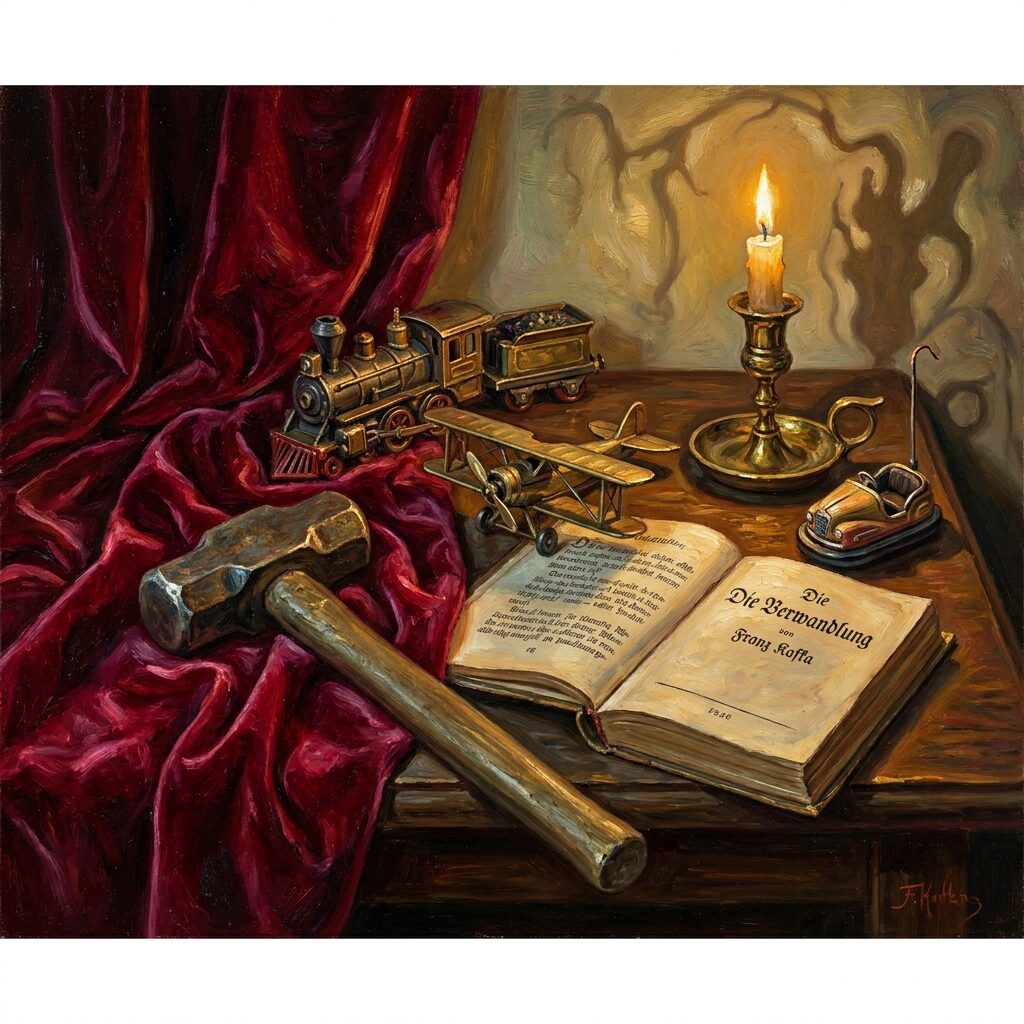
The sessions had a slightly unhinged energy. Gabriel, Lanois, and guitarist David Rhodes wore yellow construction hardhats while recording, just to keep things loose. At some point, someone mentioned using an actual sledgehammer, though whether this contributed to the song’s title or came after the title existed depends on who’s telling the story. The Kafka connection is more concrete: Gabriel had been reading a 1904 letter Franz Kafka wrote to his friend Oskar Pollak, “a book must be the axe for the frozen sea within us.” The idea of breaking through, of shattering something frozen and getting to what’s alive underneath, became the conceptual spine of a song that was also, let’s be honest, about more physical forms of breaking through.
Now, here’s where it gets good. Every other track on So was built up through careful overdubbing, instruments recorded separately, layers added over weeks and months. “Sledgehammer” was the exception. It was the last song conceived for the album, and it came together in a rush of spontaneous energy that was completely out of character for these sessions.
When Gabriel called Katché and Levin back from their departure preparations, they set up as a full band, Katché on drums, Levin on fretless bass with a pick, David Rhodes on guitar (switching between a Steinberger six-string, a Fender Stratocaster, and an old Shergold twelve-string that Gabriel owned, which Rhodes described as “a dog to play, but it had a nice sound”), Lanois on twelve-string electric guitar, and Gabriel on keyboards and vocals.
Katché’s drum performance is the part everyone talks about. One take. Unedited. The groove you hear on the record is exactly what he played the first time through. When Gabriel asked for additional passes, standard procedure, the kind of thing any reasonable producer would request, Katché said no. He trusted the moment more than the process, and he was right. That single take has a tension and a looseness to it that you simply cannot replicate when a musician is trying to recreate something they’ve already done. The slight variations, the micro-decisions made in real time, that’s what gives “Sledgehammer” its rhythmic feel, that sense of a groove that’s locked in but still breathing.
The full band cut the track live in two or three takes. Think about that in the context of an album where every other song was assembled piece by piece over months. “Sledgehammer” was captured the way the records Gabriel was paying homage to were made, musicians in a room together, playing off each other, committing to a performance.
Because there weren’t enough tracks on the tape, Lanois and Rhodes had to record their guitar parts simultaneously to a single shared track. After each take, they’d turn to each other: “Were you good that time?” If one of them flubbed a part, both had to do it again. It’s the kind of constraint that forces commitment, you can’t punch in a fix on one guitar without erasing the other.
Gabriel’s vocal was recorded in the control room rather than the live room, because there were no sight lines between the two spaces. Think about that, one of the most recognizable vocal performances of the decade, sung in the room with the mixing desk because the studio layout left no other option.
Daniel Lanois contributed one of the song’s most distinctive production choices. He suggested sampling Gabriel’s sung word “sledgehammer” using an AMS 1580 digital delay, truncating it to make it sound artificial and robotic. That chopped, processed vocal, the way the word seems to stutter and catch, became one of the track’s defining textures, a moment where the raw soul energy collides with something almost mechanical. It’s a small detail, but it’s the kind of thing that separates a good record from one that stays with you.
In September 1985, Gabriel and Lanois flew to New York to complete overdubs at the Power Station, the studio in Hell’s Kitchen that had become the room everyone wanted to record in. They spent five days there, adding horns, acoustic piano, keyboards, additional bass, and vocals.
The horn session is a story on its own. Gabriel reached out to Wayne Jackson, the trumpeter who’d been a cornerstone of the Memphis Horns and the Stax house band, the man who’d played on records by Otis Redding, Al Green, and dozens of other soul artists. Jackson had first met Gabriel almost twenty years earlier. By 1985, Jackson’s career had gone quiet following the death of his longtime partner Andrew Love’s predecessor, Robbins, in 1982. Gabriel’s call was a lifeline. Jackson recruited Mark Rivera on saxophone and Don Mikkelsen on trombone, and together they gave “Sledgehammer” the brass punch it needed, that horn riff that locks in with the Prophet-5 synth, punching through the mix like a fist through a wall.
The Power Station sessions added another layer of sonic weight to the track. Staff engineer Bruce Lampcov enhanced the snare drum sound using the studio’s live echo chamber, a four-story stairwell that added a massive, cavernous reverb to Katché’s already powerful drum sound. Lanois loved it. If you’ve ever wondered why the snare on “Sledgehammer” sounds like it could knock you over, that’s four stories of New York stairwell doing the work.
P.P. Arnold and Dee Lewis added backing vocals to “Sledgehammer” in October 1985, giving the choruses the soulful harmonic support the song needed.
By this point, all the material had been transferred to Mitsubishi thirty-two-track digital audio tape due to synchronization problems between two Studer tape machines. Songs existed in extended form, “Sledgehammer” ran close to ten minutes, and had to be edited down. Six different reels existed because of the sheer number of takes.
Kevin Killen, the engineer who’d been there from the midpoint of the sessions, captured the feeling in the room: “Everybody thought ‘Sledgehammer’ was shaping up to be a really great song, even without the lyrics it was totally infectious.”
And then there’s this detail, which I love: while So was being overdubbed at the Power Station, Kraftwerk were in the same studio finishing their album Electric Café. Someone played “Sledgehammer” for them. The German electronic pioneers, the band that had essentially invented an entire genre of music, were reportedly “knocked back by how fantastic it sounded. They felt their record was puny sonically by comparison.” When you’ve made Kraftwerk feel small, you’ve done something right.
Why This Groove Hits Different
From the Emulator II shakuhachi sample that became one of pop’s most recognizable intros to Tony Levin’s octave-pedal bass and a hidden piano at 2:20, “Sledgehammer” packs an absurd amount of arrangement sophistication into what registers as a simple funk track.
“Sledgehammer” is doing a lot more than most people catch on a casual listen. It sounds simple. It is not simple.
That opening. You know it instantly. The breathy, ethereal flute sound that floats in before anything else is a shakuhachi sample, a synthesized bamboo flute pulled from the E-mu Emulator II’s factory sound library. (There’s some debate about whether it came from the Emulator II or Gabriel’s Fairlight CMI. Engineer Kevin Killen gave contradictory answers about this in the same online thread, which is the kind of thing that drives gear nerds absolutely crazy.) Whatever the source, that sample became one of the most recognizable openings in pop music. You’ve heard it elsewhere: Enigma used it, it shows up in Sade’s “Love Is Stronger Than Pride,” and hip-hop artists would sample it for years afterward. But Gabriel got there first.
The harmonic structure is sneakier than it sounds. The intro opens in E-flat minor, running Ebm7 to Bmaj7 to Ab7, building this moody, almost ominous atmosphere. Then comes the trick: when the full band enters, the harmony lands unexpectedly on an Eb7 chord, shifting the whole feel from minor to Mixolydian for the verse. It’s a subtle move, but it’s the moment the song pivots from mysterious to funky. Music theorist Ethan Hein has pointed out that E-flat minor is “a clear indication giveaway that this song was written by a keyboard player and not a guitarist,” since a guitarist would almost certainly have landed in a more common key. Gabriel’s keyboard-centric approach gives the harmony a voice-leading smoothness that guitar-driven funk rarely gets near.
The verse settles into a static E-flat Mixolydian funk groove, synth chord stabs alternating between Eb and Db. The chorus pivots around a Cm to Db chord change, and there’s a brief C minor interlude, just five seconds long, that works as a structural hook connecting the verses. Most listeners would never consciously notice it, but they’d absolutely feel it if it were gone.
Now, Tony Levin’s bass. If the drums are the heartbeat of “Sledgehammer,” the bass is the bloodstream. Levin played his fretless Music Man Sabre with a pick, running through what was likely a Boss OC-2 octave pedal that doubled his tone an octave lower. Someone described the result as “bubbling with fatness and transients all at once,” and that nails it. There’s a thickness and a purr to that bass tone that you feel in your chest. What’s interesting is that Levin follows the synthesizer chord holds rather than grooving with the offbeat drums. While the guitars and drums create rhythmic tension with their offbeat patterns, the bass anchors everything to the harmonic foundation. It’s an unusual choice for a funk track, and it’s part of why the groove feels so solid without being predictable.
Gabriel called his Prophet-5 synthesizer “an old warhorse” and said he liked “the cheap organ sound you hear quite a lot in ‘Sledgehammer.'” That “cheap” sound turns out to be load-bearing. It gives the synth parts a gritty, analog warmth that keeps the track from sounding too polished. Digital synths were becoming the default by 1986, and Gabriel’s attachment to the Prophet-5’s rougher textures gave the song a lot of its character.
The guitars, Rhodes on his various six and twelve-strings, Lanois on twelve-string electric, play on the offbeat, weaving in and out of the beat. They alternate between palm-muted funk lines and simple chord grooves, adding rhythmic complexity without stepping on the vocals or the horn riff. These two guitarists were sharing a single track on the tape, which meant their parts had to complement each other perfectly. No room for one to dominate.
There are details in this arrangement that reward close listening even after hundreds of plays. At 2:20, after the lyric “why don’t you call my name,” there’s a piano buried in the mix that suddenly pops out. It’s extremely hard to hear in the dense arrangement, but once you notice it, you can’t unhear it. At 3:12, there’s a vocoder section where Gabriel raps “sledge, sledgehammer” through vocal processing, adding a robotic, almost alien texture to a song that’s otherwise dripping with organic soul energy. The shakuhachi returns at 3:22 for a solo, playing the same melodic line four times over the Eb-B-Ab bass groove from the intro, a structural callback that ties the whole thing together.
Hooktheory rates the song as having higher harmonic complexity than average, and they’re right. But here’s the thing about “Sledgehammer”: none of this complexity registers as complex when you’re listening. It just feels like a groove that grabs you and won’t let go. All those harmonic tricks, all that arrangement work, it’s there to make your body move, not to impress you. And that’s a harder thing to pull off than it looks.
Kafka, Bumper Cars, and Innuendo
Beneath the playful parade of phallic metaphors, sledgehammers, steam trains, big dippers, sits a Kafka reference about transformation and a raw autobiographical thread: Gabriel’s own marriage was falling apart, and the song’s innuendo doubles as a last-ditch attempt to connect when words have failed.
Hey, hey, you
Tell me how have you been?
[Verse 1]
You could have a steam train
If you just lay down your tracks
You could have an aeroplane flying
If you bring your blue sky back
All you do is call me
I’ll be anything you need
[Verse 2]
You could have a big dipper
Going up and down, all around the bends
You could have a bumper car, bumping
This amusement never ends
[Chorus]
I wanna be your sledgehammer
Why don’t you call my name?
Wow! Oh, let me be your sledgehammer
This will be my testimony
Yeah (Yeah)
[Verse 3]
Show me ’round your fruit cage
‘Cause I will be your honey bee
Open up your fruit cage
With that fruit that is sweet as can be
[Chorus]
I wanna be your sledgehammer
Why don’t you call my name?
Wow! You’d better call the sledgehammer
Put your mind at rest
I’m going to be the sledgehammer
This can be my testimony
Wow! I’m your sledgehammer
Let there be no doubt about it
[Post-Chorus]
Sledge, sledge
Sledgehammer
[Outro]
I get it right
I kicked the habit (
Kicked the habit, kicked the habit
)
Shed my skin (
Shed my skin
)
This is the new stuff (
This is the new stuff
)
I go dancing in (
We go dancing in
)
Oh, won’t you show for me? (
Show for me
)
I will show for you (
Show for you
)
Hey, show for me, huh (
Show for me
)
I will show for you
Yeah, yeah, yeah, yeah
Yeah, I do mean you (Show for me)
Only you
You been coming through (Show for you)
I’m gonna build that power
Build, build up that power, hah (Show for me)
Hah, I’ve been feeding the rhythm, huh
I’ve been feeding the rhythm (Show for you)
Gonna feel that power, hey, build in you (Show for me)
Hah, come on, come on, help me do
Come on, come on, help me do (Show for you)
Yeah, yeah, yeah, yeah
Yeah, yeah, yeah, yeah, you (Show for me)
I’ve been feeding the rhythm
I’ve been feeding the rhythm (Show for you)
It’s what we’re doing, doing
All day and night (Show for me)
Come on, come on, help me do
Come on, come on, help me do (Show for you)
Yeah, yeah, yeah, yeah
Yeah, yeah, yeah, yeah, you (Show for me)
I’ve been feeding the rhythm…
Gabriel didn’t hide what “Sledgehammer” was about. In the So press release, he spelled it out: “The lyrics of many of those songs were full of playful sexual innuendo, and this is my contribution to that songwriting tradition. It is also about the use of sex as a means of getting through a breakdown in communication.”
That second sentence is the one worth sitting with. “Sometimes sex can break through barriers when other forms of communication are not working too well,” Gabriel elaborated. This isn’t a song about wanting someone. It’s a song about reaching for someone physically because you’ve run out of words. That’s a sadder, stranger idea than the song’s reputation would have you believe.
But the surface level deserves its due, because it’s genuinely great fun. The parade of phallic symbols is relentless and keeps getting goofier: the titular sledgehammer, a steam train, an aeroplane, a big dipper, a bumper car. “Laying down your tracks” works as innuendo. The “bends” and “ups and downs” of the big dipper trace curves on a body. “Bumping” needs no explanation. A honey bee pollinating a fruit cage pushes the sexual imagery into the natural world. Each metaphor outdoes the last in sheer whimsy, and the cumulative effect lands as joyful rather than leering. Gabriel sounds like he’s having the time of his life stacking these images on top of each other.
There’s a canny logic to the approach. In 1984, Frankie Goes to Hollywood’s “Relax” had been banned by the BBC for sexually explicit content. The ban, predictably, only made the song more popular, but it also left radio programmers nervous about anything that crossed the line too openly. Gabriel’s wall of metaphors let him be far more suggestive than “Relax” while keeping plausible deniability intact. Every image in “Sledgehammer” is technically innocent. A sledgehammer is just a tool. A steam train is just transportation. The innuendo lives entirely in the listener’s mind, which is exactly where the best innuendo has always lived. It’s the same trick that made Marvin Gaye’s “Let’s Get It On” work: the music and the delivery tell you everything the lyrics don’t quite say.
Now, the layer most people walk right past. “I kicked the habit, shed my skin, this is the new stuff” isn’t just a come-on. That’s metamorphosis. That’s Kafka. The song’s title came from Kafka’s line about a book being “the axe for the frozen sea within us,” and the imagery of shedding skin, of transformation, of becoming something new, connects directly to Kafka’s Metamorphosis, a story about isolation, alienation, and the desperate struggle to simply exist as yourself. When Gabriel sings about shedding his skin, he’s reaching for something bigger than seduction. He’s talking about breaking free from whatever prison you’ve built around yourself, whether that’s emotional walls, a failing relationship, or an artistic identity that’s become a cage.
And about that failing relationship: Gabriel’s first marriage ended in divorce the year after “Sledgehammer” was released. When he talks about “the use of sex as a means of getting through a breakdown in communication,” there’s a personal specificity to that phrase that goes beyond theoretical songwriting. The breakdown in communication wasn’t abstract for Gabriel in 1985. It was his life. That gives lines like “open up your fruit cage” and “show me round your fruit cage” a bittersweet quality if you’re listening for it. The desperation underneath the playfulness. The attempt to connect through the body because the words have stopped working.
On the surface, “Sledgehammer” is Gabriel at his most fun and accessible. Underneath, it’s a song about transformation and failed connection written by a man whose personal life was coming apart. You can dance to it without ever hearing the sadness. But the tension between Kafka and bumper cars is what keeps the song interesting thirty years later. The joy is real. The pain is real. They sit right on top of each other, and neither one cancels the other out.
16 Hours Under Glass with Dead Chickens
Director Stephen R. Johnson didn’t even like the song. Nick Park animated with rotting chicken carcasses. Gabriel lay under glass for 16 hours with paint peeling his skin. The result won nine VMAs, a record that still stands nearly four decades later.

The music video for “Sledgehammer” completely overtook the song. It became the thing people talked about, the thing that got played a thousand times on MTV, the thing that won every award going. And the way it came together makes almost no sense.
Start with the director. Stephen R. Johnson had previously directed Talking Heads’ “Road to Nowhere” using a mix of animation techniques, which is what put him on Gabriel’s radar. Johnson’s reaction to hearing “Sledgehammer” was not enthusiasm. “I didn’t even like it, frankly,” he later admitted. “I thought it was just another white boy trying to sound Black. But Peter Gabriel took me to dinner, got me drunk on wine, and I agreed to do it.” So the most awarded music video in history was greenlit because a skeptical director got tipsy at dinner.
The concept would be ambitious today. In 1986, when stop-motion animation in music videos was basically nonexistent, it was borderline reckless. Gabriel would lie on his back under a sheet of glass while animators from Aardman Animations, a Bristol studio that had mostly done children’s TV, placed objects on the glass above him, shooting frame by frame on 16mm negative. Two thousand feet of film total. Every second of finished animation required twenty-four individual frames, each one set up by hand.
Gabriel lay under that glass for sixteen hours. Paint was applied directly to his face for certain sequences, the scene where clouds and sky seem to drift across his features, and it made his skin sore. “Painful” was the word he used. But it worked: Gabriel’s face becomes a canvas for an entire world of animated objects, each sequence flowing into the next while the song plays out.
The Aardman team included people who would go on to reshape animation entirely. Peter Lord and David Sproxton, the studio’s co-founders, oversaw the production. Richard Goleszowski contributed animation. And then there was Nick Park, a young animator who personally handled the dancing chicken sequence.
About those chickens. Park animated two dead, headless, featherless, oven-ready chicken carcasses, making them appear to dance across the frame. Under the hot studio lights, the carcasses started to rot and stink during the shoot. David Sproxton later noted: “When you’re filming chickens, you didn’t want anything too hot, or the chickens would be cooking in front of Nick.” This is the same Nick Park who would go on to create Wallace and Gromit and co-direct Chicken Run in 2000. The man who made the world’s most beloved animated chicken movie got his start by puppeteering dead chickens. He’s never quite lived that down.
The Brothers Quay, the American-born twin filmmakers known for their darkly surreal stop-motion work, contributed additional animation sequences. Their sections have a more unsettling, art-house quality that plays off Aardman’s warmer, goofier approach in interesting ways.
One of the video’s best sequences is a tribute to Giuseppe Arcimboldo, the sixteenth-century Italian painter who created portrait heads composed entirely of fruits, vegetables, and flowers. In the video, fruits align on the glass to form Gabriel’s face in an Arcimboldo-style composite. The last fruit Gabriel eats in this sequence is a cherry, which, if you’ve been paying attention to the song’s innuendo, adds yet another layer. The final rotating shot includes Gabriel’s daughters Anna-Marie and Melanie, the animators, Johnson’s girlfriend, and six women posing as backup singers.
One technical detail that Sproxton admitted in hindsight: “No lenses were matched across shooting sections. It hadn’t really occurred to us.” The slight visual inconsistencies between sequences actually work in the video’s favor, in an era when MTV was getting slicker and more polished, “Sledgehammer” looked deliberately rough, handmade, and unlike anything else on the air.
At the 1987 MTV Video Music Awards, “Sledgehammer” won nine awards: Video of the Year, Best Male Video, Best Concept Video, Best Direction, Best Editing, Best Art Direction, Best Special Effects, Best Overall Performance, and Most Experimental Video. (It lost Viewer’s Choice to U2’s “With or Without You,” which is a reasonable consolation prize.) Gabriel also received the Video Vanguard Award as a personal honor. Those nine wins from a single video remain a Guinness World Record. Lady Gaga came closest with seven wins for “Bad Romance” in 2010, but nobody has matched the “Sledgehammer” sweep.
Rolling Stone ranked it the number one music video of all time in their 1993 list. MTV named it the number one animated video ever made, and according to multiple sources including TIME Magazine and Gabriel’s own website, it became the most played video in MTV history. Channel 4 in the UK ranked it second on their all-time list. It was broadcast in the Soviet Union, India, and China, markets that had otherwise shown zero interest in Peter Gabriel’s music.
For Aardman, the video changed everything practically overnight. Sproxton called it “a fantastic door opener” for the studio. Within a few years, they’d parlayed the attention into Creature Comforts, then the Wallace and Gromit shorts, then feature films. The stop-motion empire that gave us Chicken Run, Shaun the Sheep, and Early Man traces its big break directly back to sixteen hours of fruit, paint, and rotting poultry.
Gabriel himself was characteristically generous about the video’s role in the song’s success: “I’m not sure it would have been as big a hit without the video. I think it had a sense both of humor and of fun, neither of which were particularly associated with me.” That second sentence matters more than the first. The video didn’t just sell the single, it let people see a side of Gabriel that his art-rock seriousness had kept hidden. Turns out the guy was funny. He just needed someone to put fruit on his face to prove it.
Knocking Genesis Off the Throne
When “Sledgehammer” hit #1 on the Billboard Hot 100, it knocked off “Invisible Touch” by Genesis, Gabriel’s former band, in what might be pop’s most absurdly perfect chart coincidence. Both songs turned out to be the only #1 hits either act would ever have.
The chart story of “Sledgehammer” has a coincidence baked into it that no screenwriter would get away with.
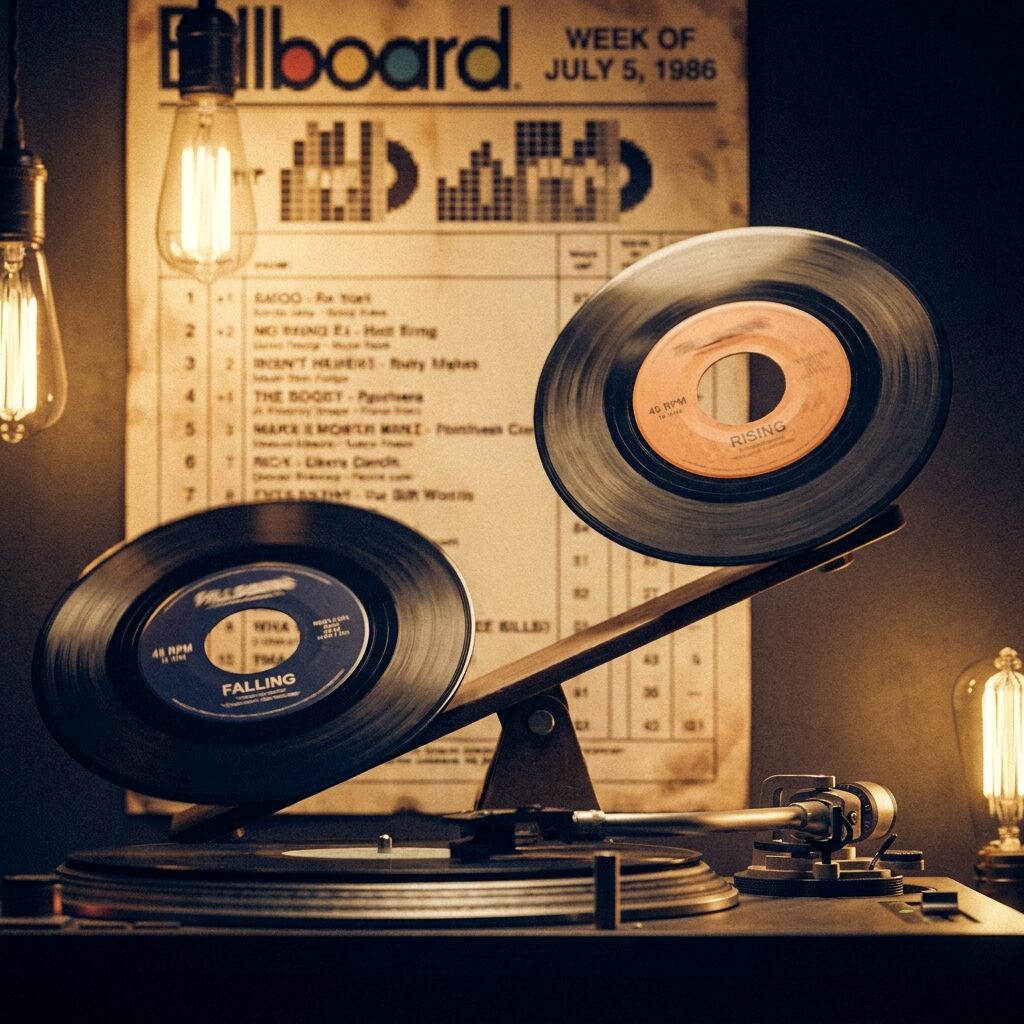
The single came out on April 21, 1986, a month before the So album dropped on May 19. It climbed steadily through the spring and into summer, spending twenty-one weeks on the Billboard Hot 100. By mid-July, it had reached number two. The song blocking it from the top? “Invisible Touch” by Genesis, the band Gabriel had co-founded nineteen years earlier and walked away from in 1975.
On July 26, 1986, “Sledgehammer” knocked “Invisible Touch” off the top spot. Genesis fell to number three. Both songs turned out to be the first and only US number one hits for their respective acts, Gabriel and Genesis each got exactly one week at the summit, and it was the same summit, one replacing the other. You can’t make that up.
Phil Collins, who’d taken over as Genesis’ frontman after Gabriel’s departure, was typically unbothered when he finally learned the details. Speaking to The Guardian in October 2014, Collins said: “I read recently that Peter Gabriel knocked us off the No. 1 spot with ‘Sledgehammer.’ We weren’t aware of that at the time. If we had been, we’d probably have sent him a telegram saying: ‘Congratulations, bastard.'”
“Sledgehammer” didn’t just top the Hot 100. It went to number one on four Billboard charts: the Hot 100, Album Rock Tracks (for two weeks), Hot Dance Club Play, and Airplay (for three weeks). In Canada, it hit number one and held there for four weeks. It reached number four in the UK, spending eighteen weeks in the top seventy-five. It charted in over fifteen countries, cracking the top ten in virtually every one.
The album followed the single up. So hit number one in the UK and peaked at number two in the US, staying on the American chart for ninety-three weeks, well over a year and a half. It was certified five-times Platinum by the RIAA, meaning over five million copies sold in the US alone, and three-times Platinum in the UK. It topped the charts in seven countries.
Worth pausing on what that meant for Gabriel specifically. He’d spent a decade building a cult following with challenging, sometimes deliberately inaccessible music. His previous album, Security, had peaked at number twenty-eight in the US. Now, off the back of a last-minute jam recorded in a cowshed with musicians who were trying to leave, he had the biggest album and biggest single of his career, a career that would run for nearly four more decades without ever touching these numbers again. Everything else in his discography looks flat next to “Sledgehammer.” It wasn’t a peak so much as a freak event.
From Naughty by Nature to Fort Stewart
The song’s second life ranges from hip-hop sampling to US Army morning reveille at Fort Stewart, while its video handed Aardman the visibility that led to Wallace and Gromit and Chicken Run, and Genesis spent years fielding accusations that “I Can’t Dance” was a knockoff.

A song’s chart run tells you how popular it was. What happens afterward tells you something else entirely. “Sledgehammer” has had a weird and wandering second life, turning up in places Gabriel couldn’t have predicted if he’d tried.
Start with the sampling. That shakuhachi intro, the Emulator II flute that opens the track, proved impossible for hip-hop producers to leave alone. Naughty by Nature’s “Hip Hop Hooray” in 1993 built its hook around it. 3rd Bass grabbed elements of “Sledgehammer” for “Pop Goes the Weasel” in 1991, a song whose video featured Henry Rollins doing a Vanilla Ice impression, which deserves its own essay. Jermaine Dupri sampled it for “I’ve Got to Have It” featuring Monica and Nas in 2000. Action Bronson and Party Supplies flipped it for “Contemporary Man” in 2012. The thing has been sampled, interpolated, and referenced so many times its DNA runs through multiple generations of music at this point. Gabriel even sampled himself, reusing elements for his 1992 single “Steam.”
The Aardman connection goes well beyond a single music video. David Sproxton was blunt about what “Sledgehammer” did for the studio, he called it “a fantastic door opener.” Before that video, Aardman was a small Bristol animation house making children’s television. The exposure from “Sledgehammer” led to Creature Comforts, which won the Academy Award for Best Animated Short Film in 1990. That led to the Wallace and Gromit series, which turned into an international juggernaut. Which led to Chicken Run in 2000, the highest-grossing stop-motion animated film at the time, co-directed by Nick Park, the same guy who’d animated those rotting chicken carcasses under hot studio lights fourteen years earlier. Dead poultry on Peter Gabriel’s face to one of the most successful animation studios in the world. The path is straighter than you’d think.
Then there’s the military thing, which is honestly one of the odder footnotes in pop history. The US Army’s 3rd Brigade, 3rd Infantry Division, nicknamed the “Sledgehammer” Brigade, adopted Gabriel’s song as their unofficial anthem. They blasted it through loudspeakers on Kelley Hill at Fort Stewart, Georgia, every morning after physical training. Picture that for a second: soldiers finishing their PT at dawn, sweat still drying, and “Sledgehammer” comes booming across the base. A long way from a cowshed in Bath.
Playing “Sledgehammer” live required its own problem-solving. When Gabriel toured behind So in 1986, he didn’t bring a horn section on the road. Instead, keyboard player David Sancious sampled individual notes from the Memphis Horns’ original studio recording and mapped them to keyboard sections, rebuilding the brass parts in real time by triggering samples. In 1986, this was genuinely novel, sampling technology was barely out of the gate, and pulling apart a horn arrangement into individually playable notes was a serious technical puzzle. Sancious turned a keyboard into a one-man brass section, and the approach foreshadowed the sample-based live performance techniques that would become routine in the decades after.
Gabriel brought the same core band back together for the Back to Front tour in 2012, sixty-seven concerts performing So in sequence. David Rhodes on guitar, Tony Levin on bass, Manu Katché on drums, David Sancious on keyboards. Youssou N’Dour, who had opened the original 1986-87 tour, was unavailable for a wonderfully unexpected reason: he was serving as Minister of Culture and Tourism in Senegal.
And then there’s Genesis. The shadow of “Sledgehammer” apparently trailed Gabriel’s former band for years. In 1991, Genesis released “I Can’t Dance,” and the band spent time defending the song against accusations that it was basically a copy of “Sledgehammer.” The comparison wasn’t entirely unfair, there are textural similarities, but it says something about the weight of Gabriel’s song that five years later, his old bandmates still couldn’t put out a funk-adjacent track without being measured against it.
The song has scattered itself across media in ways both predictable and absurd. It showed up in a 1987 episode of Miami Vice, where Jan Hammer used a slightly altered shakuhachi refrain. A 1993 Vauxhall Cavalier commercial used it in the UK. The producers of the TV series Sledge Hammer! (1986-1988) approached Gabriel about using the song as their title theme, but the rights were too expensive. Even Rush Limbaugh played it on his show in 2012, which might be the most unexpected context for a Kafka-inspired soul-funk track about sexual innuendo that anyone could come up with.
The Accident That Defined a Career
Gabriel’s only #1 was also his most un-Gabriel-like song, or was it? The art-rock sensibility hiding inside the pop veneer is exactly what makes “Sledgehammer” endure.
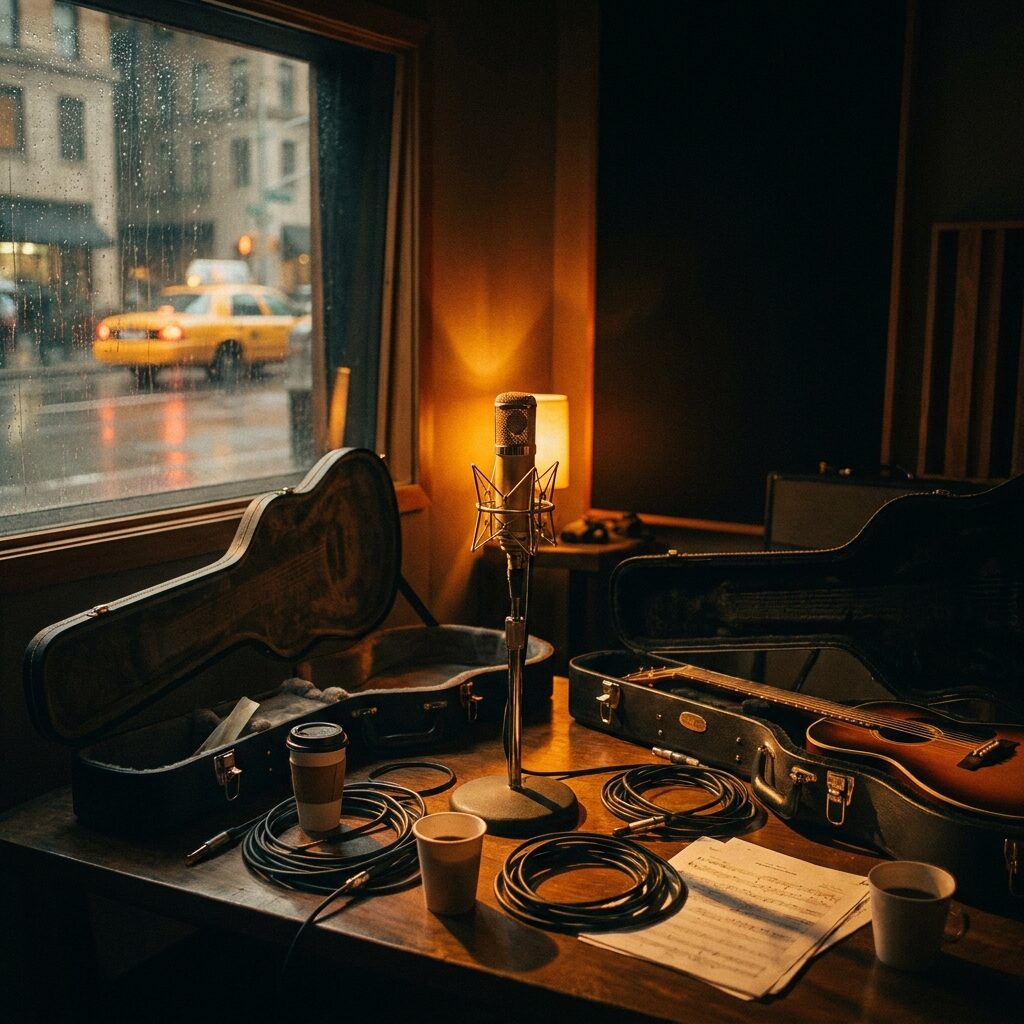
So let’s go back to that cowshed. The taxi is waiting outside. The bags are packed. The album is done, or it was supposed to be. And Peter Gabriel, a man who has spent the better part of a year meticulously layering every track, who has driven his engineers and musicians to the edge of exhaustion with his iterative process, decides on impulse to try one more idea. Just to fool around with. Maybe for the next record.
Everything that makes “Sledgehammer” extraordinary comes from that moment of letting go.
The drum part is a single take because the drummer was ready to leave and refused to do another. The guitars share a track because they ran out of tape. The vocal was recorded in the control room because the studio’s architecture left no other option. The video was directed by a man who didn’t like the song. The dancing chickens were animated with rotting carcasses by a young animator who would later build an empire on animated poultry. Every constraint, every happy accident, is load-bearing in the finished product.
Gabriel’s only number one hit is widely considered his least characteristic song, the guy who made Melt and Security writing a straightforward funk banger with lyrics about steam trains. But is it really that un-Gabriel? Listen again. The harmonic sophistication is there, that E-flat minor to Mixolydian shift, the unexpected chord resolutions that a guitarist would never write. The literary depth is there too, Kafka’s frozen sea, the metamorphosis imagery, real anguish about communication breakdown hiding underneath the playful innuendo. The vocoder section at 3:12 is pure art-rock weirdness smuggled into a pop song. The Emulator II shakuhachi opening is a prog musician’s instrument being used to create something entirely new.
“Sledgehammer” didn’t succeed despite being a Peter Gabriel song. It succeeded because it was one, where all his instincts toward experimentation, literary reference, and sonic sophistication got channeled into the most accessible, danceable, joyful framework he could find. The art-rock sensibility is all over it. He just stopped announcing it.
Artists in every medium know this but struggle to act on it: the best work sometimes happens when you stop trying so hard. Gabriel spent a year carefully constructing So, and his biggest hit fell together in an afternoon. Katché’s refusal to do a second take wasn’t laziness. It was wisdom. The first instinct, captured before self-consciousness kicks in, is often the truest one.
Gabriel himself was characteristically honest about what happened: “I’m not sure it would have been as big a hit without the video. I think it had a sense both of humor and of fun, neither of which were particularly associated with me.” That’s a rare pop star giving credit to the visual artists instead of hoarding the spotlight. He understood that “Sledgehammer” wasn’t just his, it belonged to Katché and Levin and Rhodes, to Lanois and Killen, to Wayne Jackson and the Memphis Horns, to Nick Park and his decomposing chickens, to Stephen R. Johnson who didn’t even want the gig.
“No-one expected it to do quite what it did,” Gabriel said. “I think we knew that it was very fresh, and that mix of hand made with its imperfections, when everything else was getting smoothed out and digitised, really made it stand out.”
In the summer of 1986, pop music was chasing digital perfection, gated reverbs, sequenced drums, polished production. The song that rose above all of it was the one cut live in a cowshed, in a couple of takes, by musicians who were supposed to be somewhere else. The frozen sea within us doesn’t get broken by precision. It gets broken by whatever axe you grab in a hurry, swung without thinking, when you’ve got nothing left to lose.
The taxi can wait.
🎬 Did you know? Nick Park animated the Sledgehammer dancing chickens with two real dead, rotting chicken carcasses — then went on to create Wallace & Gromit and direct Chicken Run 🐔 #PeterGabriel #80sMusic #MusicTrivia https://bit.ly/4mPHwkY

Click to Tweet