The Take Nobody Planned
In the fall of 1976, Television recorded their ten-minute guitar epic in a single take at A&R Studios. The drummer thought it was a rehearsal. The engineer, Andy Johns, who’d worked with Led Zeppelin and the Stones, initially thought they couldn’t play, then took the finished tapes home and couldn’t stop listening.
A&R Recording, West 48th Street, Manhattan. Fall of 1976. The same studio where the Ramones cut their debut a year earlier. Television, four guys from the Bowery scene who’d been rehearsing this material for the better part of three years, are running through a song called “Marquee Moon.” Drummer Billy Ficca is playing it loose, relaxed, because as far as he knows, this is a rehearsal. The tape is rolling, but nobody told him.
Ten minutes later, engineer Andy Johns turns to Tom Verlaine and says they should do another take. Verlaine’s response: “Forget it.”
That was it. One pass. No effects, no compression, no studio trickery. Two guitars, a bass, and drums captured live in a room. The recording that came out of that single take would rewire how people thought about the guitar for decades.
The Andy Johns part of this story is worth lingering on. Johns was a heavyweight. He’d engineered for the Rolling Stones, Led Zeppelin, Free. His first impression of Television? “They couldn’t play and couldn’t sing and the music was very bizarre.” This was a guy who’d miked up John Bonham’s drums, and now he was being told to make the drum sound smaller. He’d dialed up the big room tones he was famous for, and Verlaine made him tear the whole setup down and start over.
But after they finished mixing, Johns took the tapes to a rehearsal space and played them on large speakers. He was, in his own words, “bowled over.” He later called the album one of his all-time favorite records. That turnaround tells you something about what was on the tape. A guy who’d heard “When the Levee Breaks” through the monitors couldn’t stop listening to these four weirdos from CBGB.
Consider the timing. This is 1976 going into 1977. The Ramones had just proved you could make a rock record with three chords and two minutes. The Sex Pistols were about to burn the whole house down. Punk had declared war on virtuosity, on excess, on anything that took longer than it needed to. And right there in the middle of it, Television made a ten-minute guitar epic with no distortion, no power chords, no posturing. It should have been everything punk was reacting against. Instead it cut deeper than most of it.
Ahmet Ertegun, the president of Atlantic Records, heard Television and said four words: “This is not Earth music.” Hard to argue with the feeling, but “Marquee Moon” is about as terrestrial as it gets. It’s New York City music, specific to a time and a place and a scene. It just came from a corner of the city that nobody had bothered to look at yet.
A Band Built to Disagree
Television grew out of the Neon Boys in 1973, built CBGB’s first stage with their own hands, lost Richard Hell to an irreconcilable split over what the band should be, and then rehearsed for years, stripping songs down to their bones before they ever got near a real studio.
It started in late 1972 with a trio called the Neon Boys: Tom Verlaine on guitar and vocals, Richard Hell on bass and vocals, Billy Ficca on drums. They lasted about four months in that configuration, long enough to record a handful of demos, not long enough to play out. On March 12, 1973, they recruited Richard Lloyd as a second guitarist and renamed themselves Television. The name was Hell’s idea, a pun on “tell a vision.” Pretentious and populist at the same time, which was pretty much the band’s whole deal.
Their manager Terry Ork convinced CBGB owner Hilly Kristal to give them a regular slot, and the band literally built the club’s first stage. They constructed the platform they’d perform on. A band building the infrastructure of a scene that didn’t exist yet, it sounds like a metaphor, but it was just Tuesday.
Patti Smith caught them early and wrote the first press review for the SoHo Weekly News in June 1974. Her description of Verlaine’s playing has become legendary: “He plays lead guitar with angular inverted passion like a thousand bluebirds screaming.” That’s the kind of sentence that either makes you roll your eyes or makes you desperate to hear the band. For most people who read it in 1974, it did both.
Television had a fundamental problem, though, and his name was Richard Hell. Or more accurately, the problem was that Hell and Verlaine were two people with completely incompatible visions sharing the same stage. Verlaine wanted control, precise arrangements, disciplined performance, songs that built like architecture. Hell wanted ripped shirts, safety pins, the raw energy of not quite knowing what was going to happen next. Verlaine reportedly told Hell to “stop jumping around” during songs. He’d sometimes refuse to play Hell’s compositions live, including “Blank Generation,” which would later become one of punk’s defining anthems.
Hell left in early 1975. Whether he quit or was fired depends on who you ask, nearly fifty years later, the sources still can’t agree. Hell himself put it best: “We hated each other, as only best friends can.” He went on to form the Heartbreakers with Johnny Thunders and Jerry Nolan (who’d just quit the New York Dolls the same week), and later Richard Hell and the Voidoids. His departure was the most important thing that ever happened to Television.
That sounds harsh. Hell was obviously talented. But his leaving was the first act of subtraction that would define everything the band did from that point forward. Verlaine didn’t want a co-frontman pulling the band toward anarchy. He wanted two guitars in precise conversation. Arrangements that breathed. You can’t get there with someone thrashing around next to you onstage.
Fred Smith was the fix. He quit Blondie on March 7, 1975, to take over on bass. His assessment of his former band was blunt: “Blondie was like a sinking ship and Television was my favourite band.” Debbie Harry later quipped, “Boy, did he make a mistake”, though history would disagree. Smith was steadier, more rhythmically locked-in, exactly the kind of bassist who could hold the bottom together while Verlaine and Lloyd went exploring above.
And then they rehearsed. Not the way most bands rehearse, a few hours here and there, running through the set, having a beer. Television rehearsed four to six hours a day, six to seven days a week. Lloyd later said they were “both really roughshod musicians on one hand and desperadoes on the other, with the will to become good.” They threw out most of the material they’d accumulated over three years. They played the songs over and over until the arrangements became living things, flexible enough to stretch in performance but tight enough to snap back into shape.
By the time they signed with Elektra Records in August 1976, they’d been a band for over three years and had released exactly one single, “Little Johnny Jewel,” a seven-inch on Ork Records. The most rehearsed, least recorded band in New York.
Three Years, Twenty Verses, One Take
“Marquee Moon” started life as a 20-verse acoustic song in 1974, went through failed demo sessions with Brian Eno, and spent two more years getting stripped down before Television walked into A&R Studios and cut it in a single take, no effects, no compression, just guitars into amplifiers.
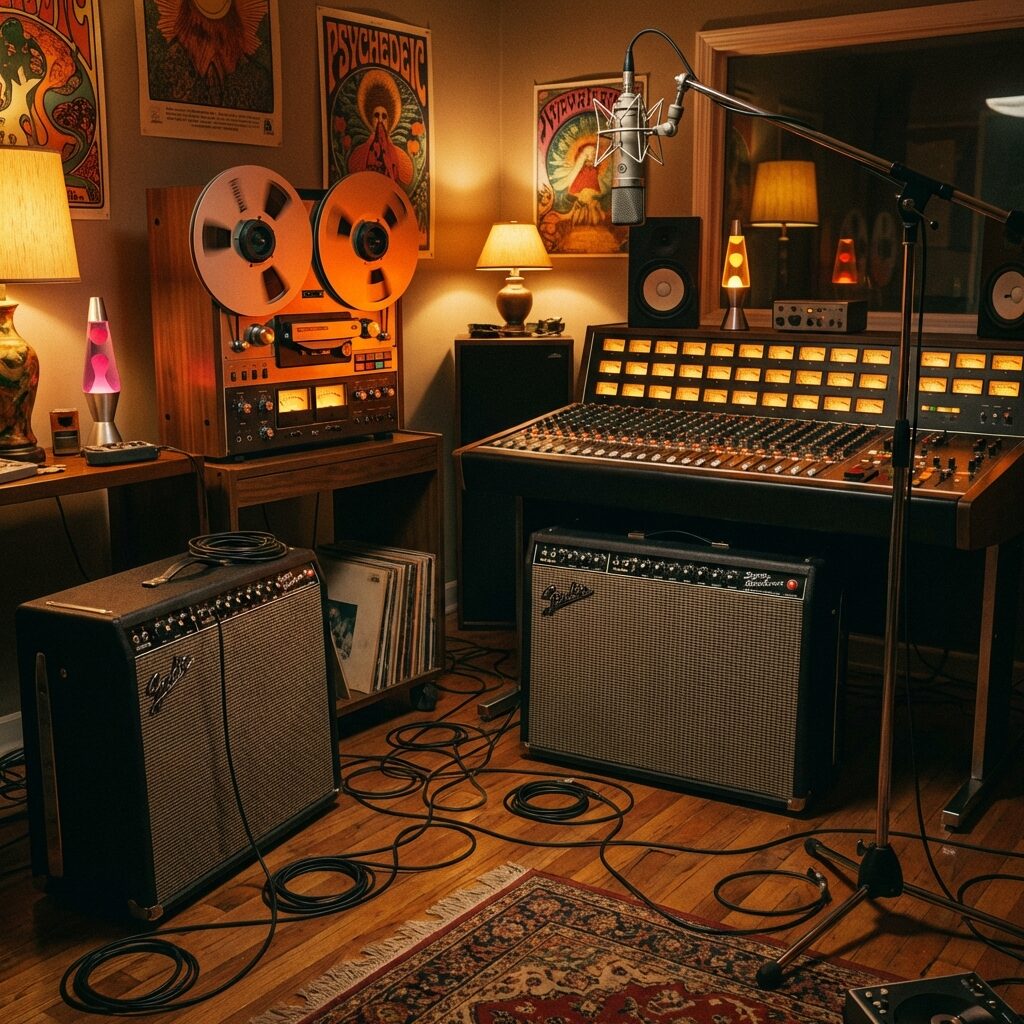
Verlaine told Melody Maker’s Caroline Coon in 1977: “Marquee Moon was written about three years ago and actually it had 20 verses to it. It’s a song I used to do on acoustic guitar.” Twenty verses. Think about that for a second, a folk-song-length epic on acoustic guitar, written by a guy who’d end up known almost entirely for what he could do with an electric. The whole life of the song was a process of stripping things out.
The earliest known recording comes from a rehearsal tape made at Terry Ork’s loft in early 1974. Even in that rough form, you can hear the two-guitar interplay taking shape: the opening guitar’s morse-code stutter, a thudding bass pulse, still played by Richard Hell at that point, and Lloyd’s insistent riff, which Pitchfork later described as “a subliminal nod to the horns on James Brown’s ‘I Feel Good.'” The bones were there. The song just had too much flesh on them.
The first real attempt at a proper recording came in mid-December 1974, when Television cut five demos with Brian Eno at Good Vibrations Studio, a run-down room in an office building near Times Square. The sessions were set up by Richard Williams, then head of A&R at Island Records. On paper, Eno and Television made sense together, two acts working at the avant-garde edge of rock music. In practice, it went badly.
Verlaine rejected the recordings outright: “He recorded us very cold and brittle, no resonance. We’re oriented towards really strong guitar music… sort of expressionistic.” Williams later reflected that he “didn’t realise at the time what a perfectionist Tom was.” The piano on the demo version of “Marquee Moon”? That was Verlaine playing, not Eno. Eno played no keyboards at all during the sessions. Lloyd was even more dismissive, arguing in a YouTube comment years later that the sessions were “NOT produced by Brian Eno” in any meaningful sense. The perfectionist and the oblique strategist just couldn’t share a studio.
Those demos have never been officially released, though they’ve circulated as bootlegs since the late 1970s, first on an Italian vinyl pressing that misspelled Eno’s name as “Bryan,” later on bootleg CDs with misleading titles. They’re a weird time capsule of what “Marquee Moon” might have sounded like if Verlaine had been willing to meet someone halfway. He wasn’t.
Two more years of live performance and relentless rehearsal followed. When Television finally signed with Elektra in August 1976, Verlaine chose Andy Johns as his engineer specifically for the guitar sounds Johns had captured on the Rolling Stones’ Goats Head Soup. Lloyd said Johns had produced “some of the great guitar sounds in rock.” What they wanted was warmth, clarity, guitars sounding like guitars in a room. What Johns tried to give them first was Led Zeppelin.
The clash started immediately. Johns arrived at A&R Studios and set up Billy Ficca’s drum kit in his signature Zeppelin-style configuration, big room sound, ambient mics, the works. Verlaine hated it. He made Johns tear it all down and rebuild it close-miked, minimal, unadorned. “Johns would dial up the big drum sound he was famous for,” one account goes, “but the band wanted a small drum sound.” Every instinct Johns had built up over years of recording arena rock was wrong for this band.
But Johns was a pro, and he adjusted. He figured out how to capture what Television actually sounded like, which was unlike anything he’d recorded before. The approach was almost stubbornly simple: live recording, the band playing together in a room. No effects. No compression. No studio processing of any kind. Lloyd put it plainly: “We used no effects whatsoever on Marquee Moon, just guitars into amplifiers.”
Johns did contribute one thing that mattered. He turned Verlaine and Lloyd onto the idea of overdubbing their guitar parts, tracking them to left and right channels, with subtle doubling of Lloyd’s solos to create a natural chorusing effect. Not through pedals or studio gear, but through the tiny variations that happen when a person plays the same part twice. It’s the only real “production” on the record, and you won’t notice it unless you’re listening for it.
The title track itself was captured in that single, now-legendary take. Ficca playing with the looseness of someone who thinks the tape isn’t rolling. Verlaine’s solo building over the second half of the song, improvised in the moment, following wherever the music went. And when Johns suggested they try another pass, just to have a safety, just in case, Verlaine shut it down. “Forget it.” He knew. That kind of thing doesn’t happen twice.
Ten Minutes of Crystal Architecture
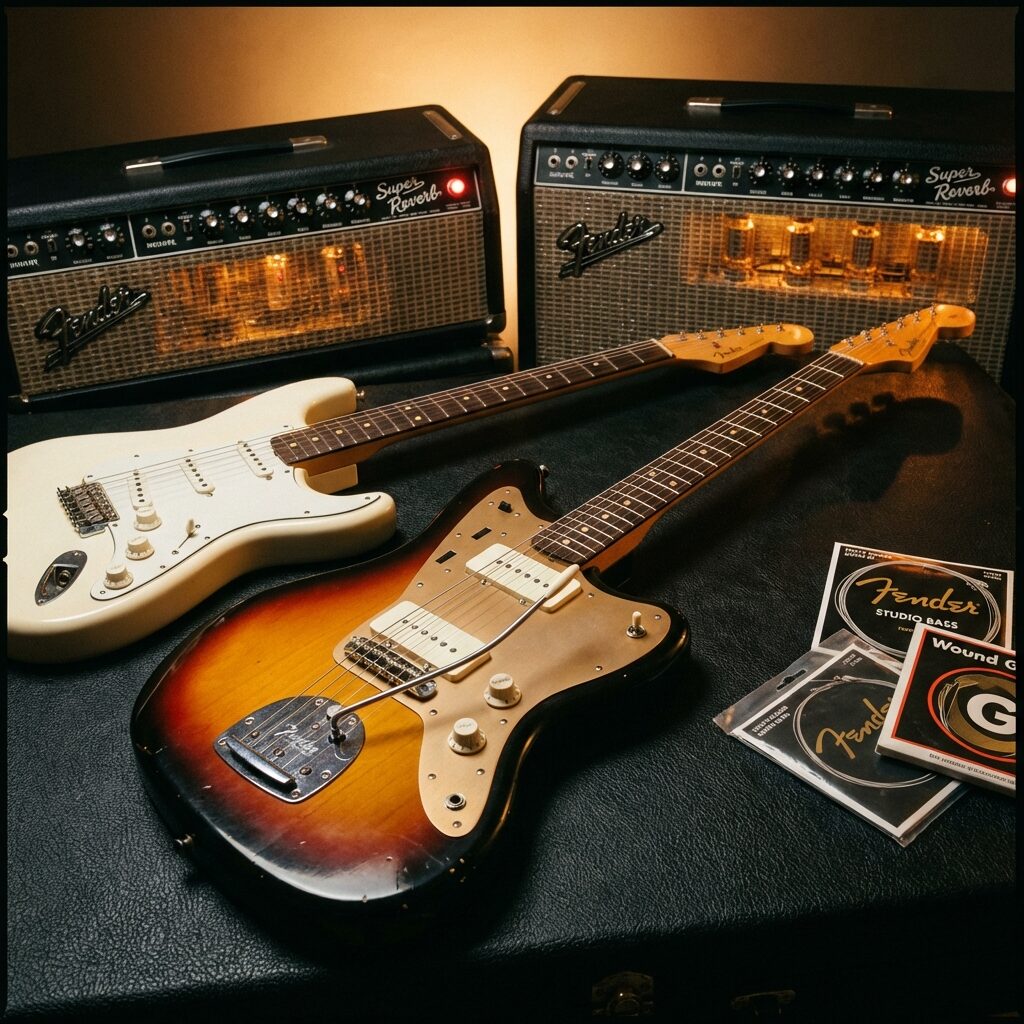
Built on the tension between E minor and D Mixolydian, “Marquee Moon” features two guitars in constant conversation rather than the traditional rhythm/lead split, all played on cheap Jazzmasters through clean Fender amps with no effects whatsoever.
Let’s talk about what actually happens in this song, because the structure matters as much as anything else. You could describe “Marquee Moon” as a three-verse song with an extended coda, and you’d be technically correct. You’d also be missing the point.
It opens with that guitar stutter, a rhythmic, almost morse-code-like pattern that’s become one of the most recognizable intros in rock. Ficca’s drums enter, and the band locks into a groove that’s propulsive without being aggressive. Three verses follow, each one ending with the “Life in the hive puckered up my night / A kiss of death, the embrace of life” chorus. After the second chorus, Richard Lloyd takes a brief guitar solo, melodic, controlled, purposeful. After the third chorus, Tom Verlaine begins an extended improvised solo that essentially consumes the entire second half of the song.
That solo is where the song stops being a rock track and becomes something harder to categorize. The liner notes make an unusual point of crediting each solo specifically: “Guitar Solo After The Second Chorus, Richard; Guitar Solo After The Third Chorus, Tom.” That kind of credit doesn’t show up on punk records. It barely shows up on any records. These two guitarists understood themselves as distinct voices in a conversation, not interchangeable parts, and they wanted you to know it.
The harmony is where I start losing friends at parties, but bear with me. The song sits in the space between E minor and G major, relative keys sharing the same set of notes. The verses move through D, B minor, A minor, and G7. But when Verlaine starts soloing, he shifts into D Mixolydian, lowering the seventh note of a D major scale by a half step, giving you a C natural instead of a C sharp. It’s a small move on paper. In practice, it’s the difference between sounding resolved and sounding like you’re perpetually reaching for something just out of grasp.
His soloing technique follows a pattern that shows up across the whole album: he runs up a scale, then regresses slightly after each step. Two steps forward, one step back. It creates this sense of climbing that’s never quite linear. You keep thinking you’re about to arrive somewhere, and then the ground shifts. Jazz logic in punk clothing. Verlaine himself described the approach: “I would play until something happened. That comes from jazz, or even the Doors, or the Five Live Yardbirds album, that kinda rave-up dynamics.”
Now, the gear. This matters because for Television, the choice of equipment was a declaration of intent. Verlaine played a 1958 Fender Jazzmaster, sunburst finish, anodized aluminum pickguard, two single-coil soapbar pickups. He’d bought it for around $150 because, as he put it, “In ’73/’74 you could buy a Jazzmaster for $150 easily. Nobody wanted them.” He ran it through a blackface Fender Super Reverb, four ten-inch Jensen speakers, with heavy strings, approximately .014 to .058 gauge with a wound G string. That’s significantly heavier than what most guitarists use. It gives you more sustain and a thicker tone, but it fights you. You have to mean every note.
Lloyd played a 1961 Fender Stratocaster with jumbo frets through the same model amp, another blackface Super Reverb. His description of the band’s gear philosophy doubles as a mission statement: “Fender guitars and blackface Supers. No effects. Conscious decision. Anti-Marshall and anti-hippy longhair!”
Think about what that means in 1976. Every heavy band was playing Gibsons through Marshalls. Hendrix’s ghost still hung over everything. And here’s Television choosing the cheapest, least fashionable guitars on the market and plugging them into clean amplifiers with nothing in between. No fuzz, no wah, no chorus, no delay. Verlaine made extensive use of his Jazzmaster’s vibrato arm, one of the few tools he allowed himself, working the pitch in ways that gave his playing an almost vocal quality. But that was it. Everything you hear on the record is fingers, strings, wood, magnets, and tubes.
The Verlaine/Lloyd relationship is what makes the whole thing work. They weren’t doing the traditional rhythm guitar/lead guitar split. They were two melodic voices weaving around each other, sometimes in harmony, sometimes in counterpoint, sometimes in what feels like an argument where both sides are winning. Lloyd’s parts tend to be more structured, more riff-oriented. Verlaine’s are more fluid, harder to predict. Together they create a texture where you can hear every note but there’s no dead air. It’s full without being cluttered.
Verlaine’s influences are all over the solo if you know where to listen. The Stravinsky-like angularity of some passages. The free-jazz wailing that channels Albert Ayler. The rave-up dynamics borrowed from the Five Live Yardbirds. The Doors’ willingness to ride a groove into the unknown. But none of these references take over. They flash through and disappear, folded into something that sounds only like Television.
Ficca, for his part, deserves more credit than he usually gets. Playing his walnut-finish Camco kit, bought with the album advance, he was, by all accounts, “fiendishly devoted to Tony Williams,” which tells you everything about his approach. He’s not bashing. He’s listening. He’s creating space. On a song this long, with solos this extended, the drummer’s job is to be the architecture the soloist climbs on. Ficca builds a structure you don’t notice until it’s gone.
Urban Paranoia as Poetry
Verlaine named himself after a French Symbolist poet, and he meant it, his lyrics work the same way, evoking mood over meaning. The Cadillac pulled into the graveyard, the choruses shift from “waiting” to “I ain’t waiting,” and when pressed on what any of it meant, he just called it “ten minutes of urban paranoia.”
Tom Verlaine, born Thomas Joseph Miller in Denville, New Jersey, took his stage name from the nineteenth-century French Symbolist poet Paul Verlaine. The Symbolists believed poetry should evoke feelings and atmospheres rather than describe things directly, what they called “reactionary imagination and dreams against naturalism and realism.” Tom Verlaine’s lyrics do the same thing, just with guitars.
His reading habits tell you a lot: the French Symbolists, Emily Dickinson, William Blake, hardboiled film noir. You can hear all of it in “Marquee Moon.” The imagery lands somewhere between vivid and elusive, you can see the scenes, but they slide away when you try to hold them still. “I remember how the darkness doubled / I recall lightning struck itself.” There’s Dickinson’s compression, noir’s mood lighting. You feel it before you understand it, if you ever do.
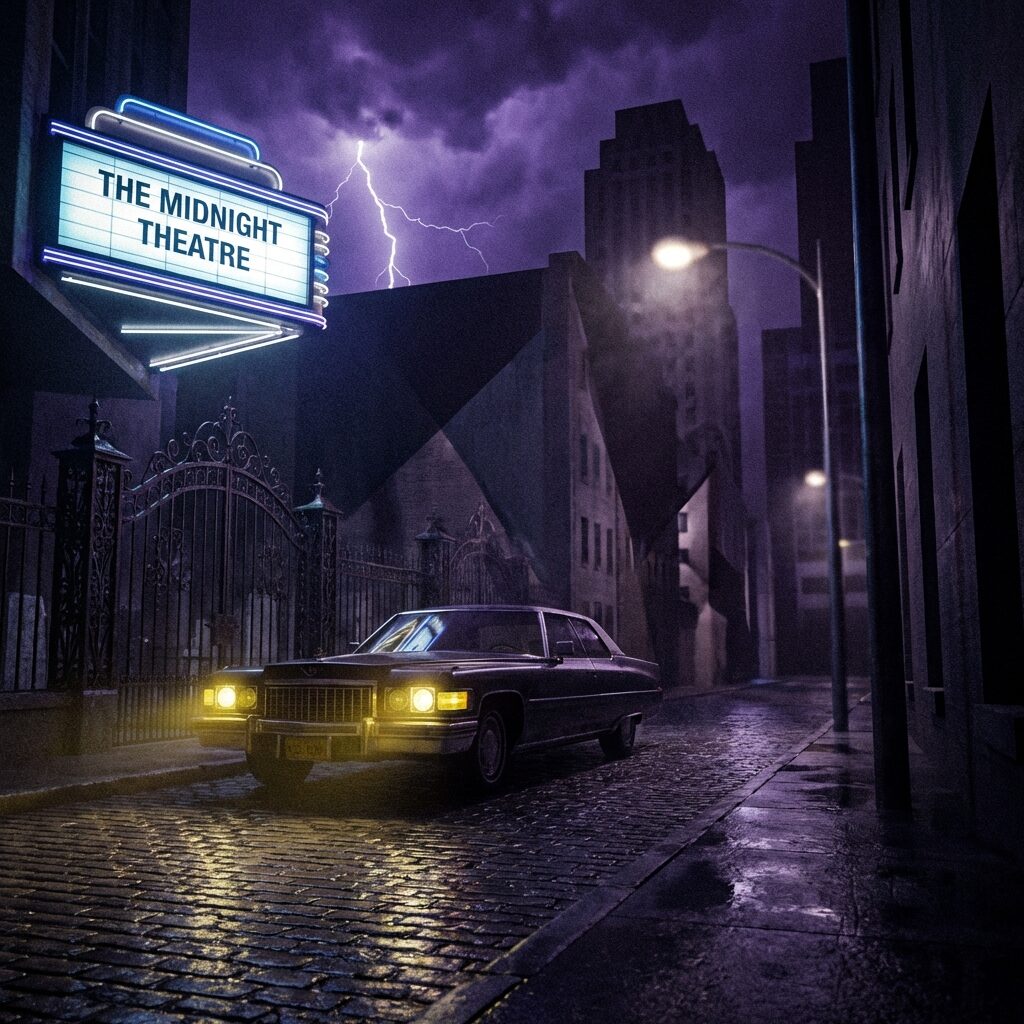
The narrative core of the song, if you can call it a narrative, lives in the Cadillac verse. “Well, the Cadillac, it pulled out of the graveyard / Pulled up to me / All they said, ‘Get in.'” Then: “The Cadillac, it puttered back into the graveyard / Me, I got out again.” Someone offers a ride to somewhere dark. The narrator goes along. Then he gets out. That’s it. But try getting it out of your head.
The choruses are where the real architecture sits. Each one ends the same way, standing beneath the marquee moon, but the verb shifts. First chorus: “just waiting.” Second chorus: “hesitating.” Third chorus: “I ain’t waitin’, uh uh.” Waiting, hesitating, refusing to wait. The whole emotional movement of a ten-minute song lives in that verb change. Something is being offered, and the narrator slowly decides he doesn’t want it.
So what’s it about? Verlaine was no help. “Just atmosphere,” he said. He also called it “ten minutes of urban paranoia.” When Punk magazine pushed him, he offered: “You don’t have to say what you mean to get across.” Lloyd added his own cryptic layer: “It’s like you say five words and you mean the sixth.”
The interpretation that won’t go away, and Verlaine would hate me for even typing this, connects the song to the heroin scene around CBGBs in the mid-1970s. The Cadillac is a dealer’s car. The graveyard is where the deal goes down, or where the deal leads. The three phases, waiting for a connection, hesitating before scoring, deciding not to, map onto someone flirting with addiction and pulling back. Gary Mulholland wrote that he figured the song is about “rock ‘n’ roll’s relationship with dem nasty drugs and the art of choosing life over death.”
Fair enough. But it’s one reading among many, and Verlaine wanted it that way. The lyrics work as a story about temptation of any kind, artistic, romantic, existential. The graveyard could be literal or metaphorical. The marquee moon could be a theater marquee, a carnival tent, a metaphor for performing under artificial light. He kept the meaning open on purpose, and he never closed it.
One strange footnote worth mentioning. The lyrics, with their images of darkness and lightning, were written well before July 14, 1977, when the great New York City blackout killed the lights across the entire city, accompanied by lightning storms. Verlaine didn’t predict the blackout. But the song sounds like a city on the edge of going dark, and that coincidence has stuck with people ever since.
A Flop That Never Went Away
“Marquee Moon” cracked the UK top 30 as a single and album but sold fewer than 80,000 copies in the US, never touching the Billboard 200, yet the album hasn’t gone out of print once since 1977.
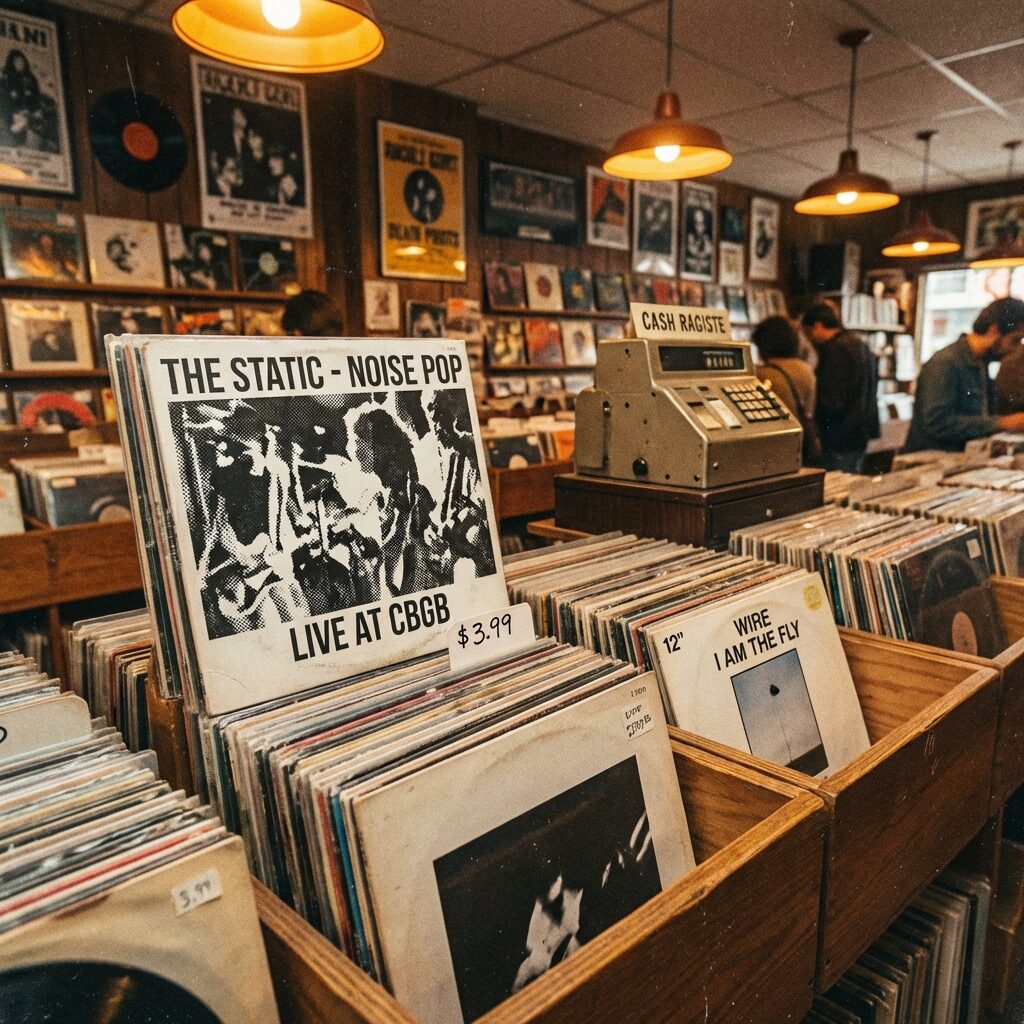
The reception split along the Atlantic like a cracked mirror. In the UK, “Marquee Moon” was a genuine hit, the single reached number 30 on the charts, and the album climbed to number 28. The single release was innovative for its time: the first pressing was a twelve-inch limited to 25,000 copies, with stereo on one side and mono on the other. The subsequent seven-inch split the track into two parts, “Marquee Moon (Part I)” at 3:13 and “Marquee Moon (Part II)” at 6:45, because you couldn’t fit ten minutes on a seven-inch single and have it sound like anything. The follow-up single, “Prove It,” did even better in the UK, peaking at number 25.
In America? Crickets. The album sold fewer than 80,000 copies and didn’t chart on the Billboard 200 at all. Not even for a week. Elektra essentially gave up on promotion before the band had finished touring. The US tour didn’t help matters, Television was booked as the opening act for Peter Gabriel, who was, as one writer put it, “still at his proggiest.” Imagine being a Television fan in 1977, showing up to hear “Marquee Moon,” and sitting through an hour of early Genesis-adjacent art rock first. Or imagine being a Peter Gabriel fan and having this angular, confrontational New York band thrust upon you as an appetizer. Nobody in those audiences knew what to do with each other.
Critics, at least, understood what they were hearing. The album placed number 3 on the Village Voice’s Pazz & Jop poll for 1977, pulling 327 points from 26 critics. Roy Trakin, writing in the SoHo Weekly News, practically begged readers to set aside their preconceptions: “Forget everything you’ve heard about Television, forget punk, forget New York, forget CBGB’s.” He knew the labels were getting in the way of the music.
Verlaine himself had a weirdly inverted view of his own work. “As peculiar as it sounds,” he told Select magazine, “I’ve always thought that we were a pop band. You know, I always thought Marquee Moon was a bunch of cool singles.” A bunch of cool singles. The man who made a ten-minute improvised guitar epic thought he was writing pop songs. Either that’s delusion or it’s a kind of clarity the rest of us haven’t caught up with yet.
But here’s the thing that matters more than any chart position: the album has never gone out of print. Not once, since February 1977. It’s been reissued, remastered, repressed on colored vinyl and audiophile-grade wax and Mobile Fidelity one-step editions limited to 3,000 numbered copies. Fewer than 80,000 people bought it the first time around, but the people who did buy it never stopped telling their friends. That’s what a so-called failure looks like when you check back in fifty years later, a record that couldn’t sell but also couldn’t die.
The Rankings That Keep Climbing
“Marquee Moon” jumped from #381 to #173 on Rolling Stone’s Greatest Songs list between 2004 and 2021, the album ranks in the top ten of the 1970s on Pitchfork and #4 all-time on NME, and the ongoing mastering debate over a tape that’s slowly losing its highest frequencies proves people are still picking this record apart half a century later.
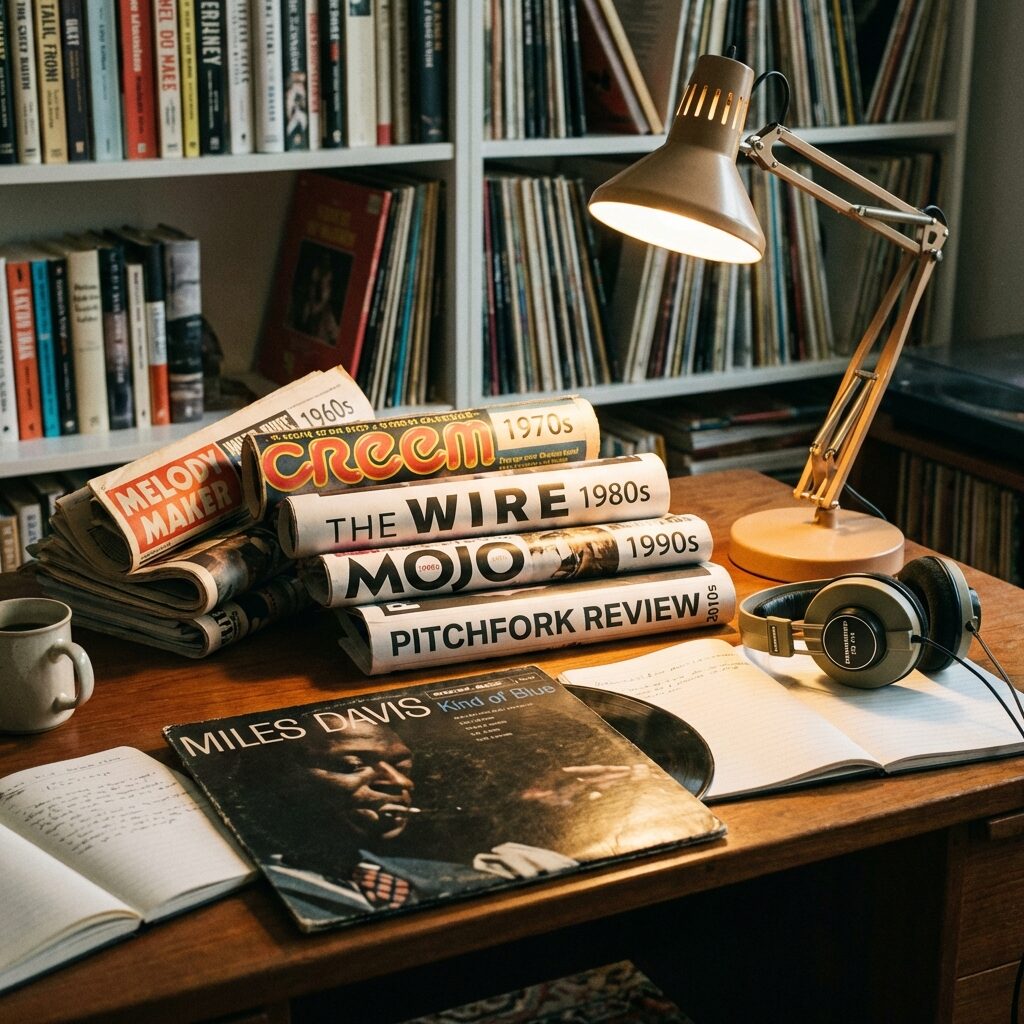
Most songs, if they make a greatest-ever list at all, hold their position or gradually slide down as new music accumulates above them. “Marquee Moon” goes the other direction. On Rolling Stone’s 500 Greatest Songs of All Time, it sat at number 381 in the 2004 edition. By the 2021 revision, it had climbed to number 173. That’s one of the biggest jumps on the entire list. At 9:58, it’s also the third-longest track there, after the Doors’ “The End” and Bob Dylan’s “Desolation Row.” Pretty good company for a song that couldn’t crack the Billboard 200.
The album rankings tell an even stranger story. NME put Marquee Moon at number 4 on their Greatest Albums of All Time list in 2003, above Revolver, above Nevermind, above almost everything. Pitchfork ranked it number 7 among the best albums of the 1970s. Rolling Stone has steadily moved it up their own list, from 128 in 2003 to 107 in 2020. It appears on virtually every credible all-time list: Colin Larkin’s All Time Top 1000 Albums at number 53, 1001 Albums You Must Hear Before You Die, Rate Your Music around number 64, BestEverAlbums.com at 44 overall. The consensus keeps getting stronger, not weaker, which is the unusual part.
Stephen Thomas Erlewine’s AllMusic review put it plainly: “A guitar rock album unlike any other… it’s impossible to imagine post-punk soundscapes without it.” He’s right. Without Marquee Moon, the guitar sounds of the next two decades, from Joy Division to Sonic Youth to Radiohead, don’t exist in the same form. Rob Sheffield, writing for Rolling Stone, called it “one of the all-time classic guitar albums.” Two sentences, both accurate, neither reaching for more than what’s there.
If you want evidence that people are still picking this record apart nearly five decades later, look at the mastering debate. In 2024, Rhino released a High Fidelity edition cut by Kevin Gray at Cohearent Audio from the original analog stereo master tapes, 180-gram vinyl, all-analog, limited to 5,000 copies. Gray admitted in a YouTube video that he’d never heard Marquee Moon before mastering it. One of the most respected mastering engineers in the business, and he’d never listened to it. There’s something almost funny about that.
Michael Fremer, writing for Tracking Angle, had mixed feelings: “The reissue sounds great! Far better than the original pressing in terms of bass response, transient clarity and all of the audiophile ‘check marks’ but, I argue, it’s not likely what Tom Verlaine intended at all!” Critic Malachi Lui found Gray’s cut “lacking in excitement and urgency” compared to Chris Bellman’s 2012 reissue. Underneath all the audiophile arguing sits a physical problem nobody can fix: the original master tape has been losing its highest frequencies over time, which means every remaster is working with slightly less information than the one before. The definitive version of “Marquee Moon” may be the one that existed for a few hours in A&R Studios in 1976, heard by four musicians and one engineer, and never heard by anyone in quite that form again.
The Aftershock
Television’s dual-guitar attack left fingerprints everywhere. The Edge couldn’t copy the two-guitar sound alone, so he built U2’s shimmer-and-delay style trying. The Strokes updated the Verlaine/Lloyd interplay for the 2000s. Flea sat in a dark room and listened a thousand times. The Kronos Quartet proved the compositions work even stripped of guitars, and one anonymous fan spent 45 years assembling a six-and-a-half-hour super-mix from 50 bootleg solos.
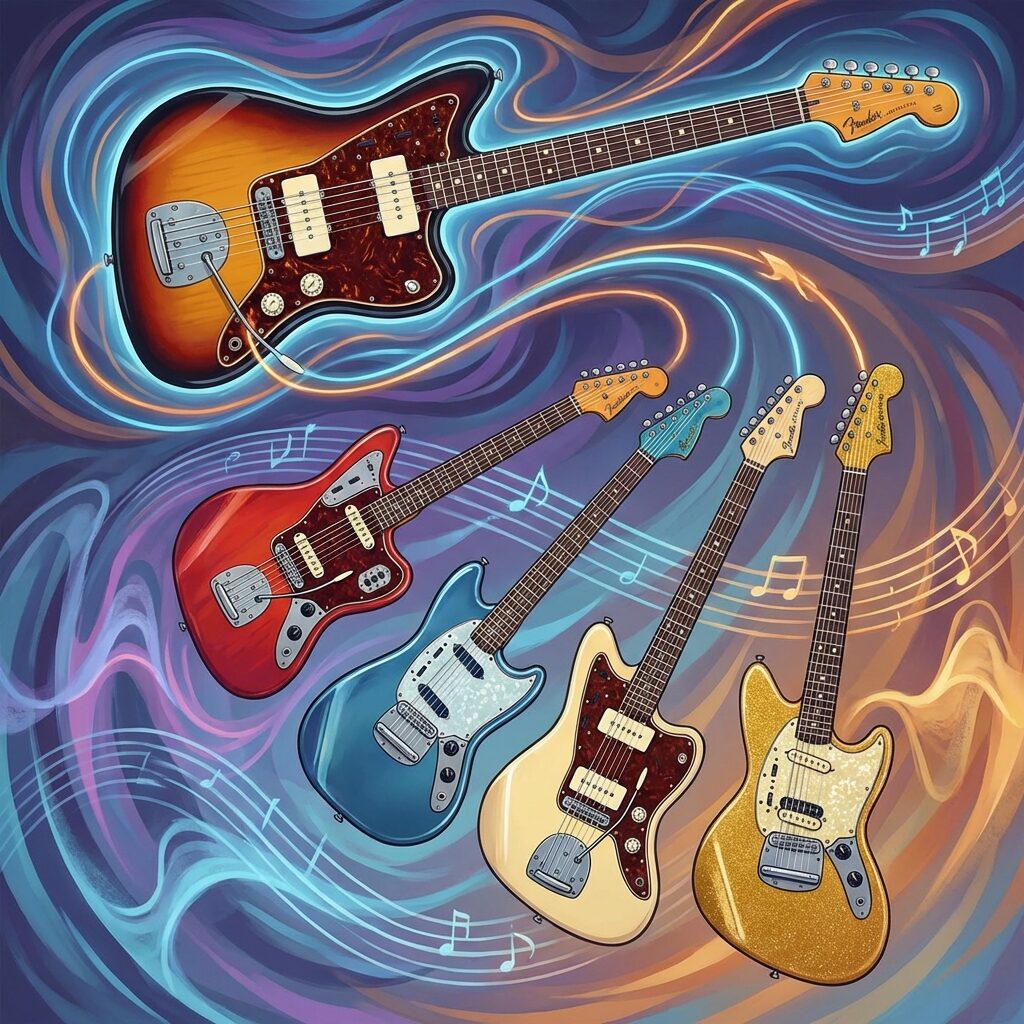
The most obvious line runs to Dublin. The Edge has said it outright: “The Marquee Moon album really set me off as a musician… if Tom Verlaine and Richard Lloyd can do that with the instrument, what can I do?” Early U2 rehearsals had him spending hours copying Verlaine licks. But he couldn’t replicate the dual-guitar sound with one guitarist, so he started using effects pedals to fake it. Delay, reverb, the shimmering textures that would define U2’s sound from Boy through The Joshua Tree and beyond, all of it was, at root, one guitarist trying to sound like Television. Which is a strange little twist: the band that used no effects spawned an entire guitar architecture built on them.
The Strokes connection is more obvious. Albert Hammond Jr. and Nick Valensi’s interlocking guitar style on Is This It is basically the Verlaine/Lloyd conversation updated for the 2000s. Julian Casablancas named his later band the Voidz as a nod to Richard Hell and the Voidoids, keeping the Television family tree going. A record shop owner in Portland apparently placed a copy of Marquee Moon on the counter with a Post-It note that read: “Fuck The Strokes, This is the real sound of New York City.” Harsh, maybe. But you can see the point.
The reach goes past guitar bands, though. Flea, Flea, from the Red Hot Chili Peppers, one of the most physically explosive musicians in rock, described his relationship with the album in terms that sound almost meditative: “Listened to Marquee Moon 1000 times. And I mean LISTENED, sitting still, lights down low taking it all in. Awe and wonder every time.” That image, Flea sitting still in a dark room, listening, tells you something about the kind of attention this music asks for.
The Kronos Quartet recorded an all-string arrangement of “Marquee Moon” for Rubáiyát, Elektra’s 40th anniversary compilation in 1990. Translating a guitar epic into a string quartet isn’t just a novelty, it shows the composition stands on its own, independent of the specific timbres that made it famous. The architecture holds even when you swap out every instrument.
Luna’s COVID-era cover might be the most touching version. Dean Wareham recorded vocals and guitar in Los Angeles. Sean Eden tracked guitar in San Francisco. Lee Wall played drums in Austin. And founding bassist Justin Harwood, who’d left the band in 2000, played bass from Auckland, New Zealand. Four musicians in four cities, separated by a pandemic, connecting through a song written about urban isolation in 1974. Sometimes a cover says more about a song’s meaning than any essay could.
Sonic Youth followed Verlaine’s lead in seeking out affordable Fender offset guitars, Jazzmasters and Jaguars that nobody wanted in the 1970s and ’80s, turning budget instruments into tools for noise and texture. The gear choice became a cultural statement: Television showed you didn’t need expensive equipment to make music that mattered, and a whole generation of bands ran with that.
And then there’s the fan, unnamed, as far as I know, who compiled a six-and-a-half-hour super-mix from the guitar solos of 50 different bootleg performances spanning 45 years. Six and a half hours of one solo, played differently every time, documented across nearly half a century. That’s not fandom. That’s obsession dressed up as archival work. It’s also maybe the best argument for what made “Marquee Moon” special in the first place, the solo was improvised, so every performance was a one-off, and this person wanted to hear all of them.
Still Not Waiting
Tom Verlaine died in January 2023, but his archive, including the original 20-verse draft, was acquired by the New York Public Library in 2026. The verses he cut away will outlast him, even though cutting them was the whole point.
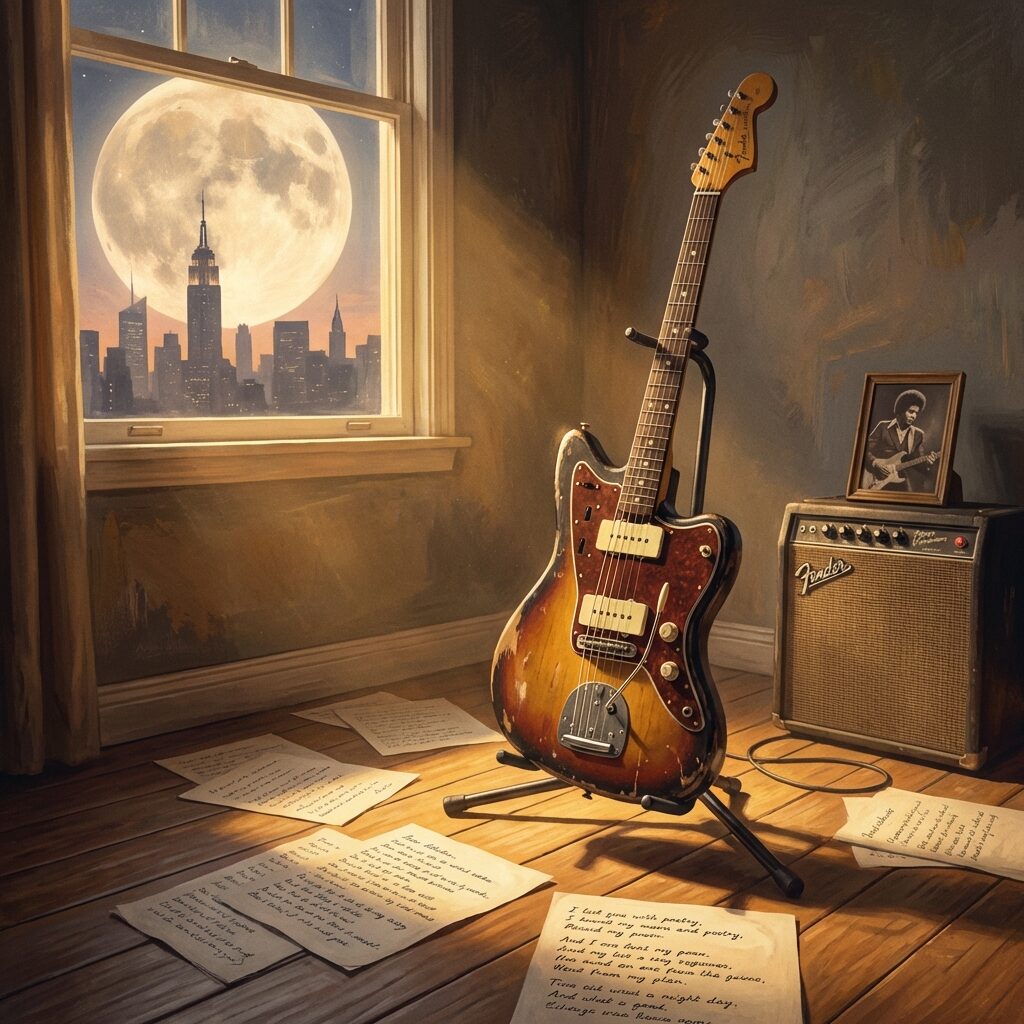
Tom Verlaine died on January 28, 2023, in New York City. He was 73.
The tributes piled up fast. Patti Smith wrote for The New Yorker: “Had I been a boy, I would’ve been him… There was no one like Tom. He possessed the child’s gift of transforming a drop of water into a poem that somehow begat music.” Thurston Moore posted something quieter and harder to read: “Went by the book stalls outside Strand yesterday thinking I’d see you as usual, have a smoke, talk about rare poetry finds for a couple of hours. Gonna miss you, Tom.” Mike Scott of the Waterboys got closest to the thing itself: “Tom Verlaine has passed over to the beyond that his guitar playing always hinted at.”
In January 2026, the New York Times announced that Verlaine’s archive, lyric drafts, unpublished poetry, notebooks, studio and rehearsal tapes, had been acquired by the New York Public Library for the Performing Arts. Somewhere in those papers is the original 20-verse version of “Marquee Moon.” There’s something strange about that. The song spent three years being stripped down to its essence, and now the discarded material lives in a public institution. The verses Verlaine cut away will outlast him, even though cutting them was the whole point.
I keep coming back to the single take. Not because it’s a good story, though it is, but because of what it says about preparation and spontaneity. Television rehearsed for years. They rejected Eno’s production. They fought with Johns over drum sounds. They stripped away effects, compression, extra verses, everything that wasn’t absolutely necessary. And then, when all that work had been done, they played the song once in a room, and the drummer didn’t even know it counted.
That’s not polish. That’s presence. You don’t get a perfect single take by trying to nail a perfect single take. You get it by doing so much work beforehand that the performance becomes inevitable.
And those three choruses, waiting, hesitating, “I ain’t waitin'”, they’ve aged into something like prophecy. For almost fifty years, “Marquee Moon” has kept climbing the lists, kept showing up in new bands’ guitar tones, kept demanding the kind of attention Flea described, sitting still, lights down low, awe and wonder every time. The rest of us are still catching up. The song was never waiting for us.
🎸 Did you know? Television’s 10-minute epic “Marquee Moon” was captured in a single take — and the drummer didn’t even know they were recording. He thought it was a rehearsal. #Television #MarqueeMoon #PunkRock 🎶 https://bit.ly/41wZDlT

Click to Tweet