You Already Know This Song
Bruce Swedien said you can identify “Billie Jean” from three or four drum hits. But a song that sounds like pure instinct was actually ground out through months of obsessive, contentious work, ninety-one mixes, fights over the title, an intro nobody could agree on. Every argument ended the same way: someone tried to overthink it, and feel won.

Three drum hits. Maybe four. That’s all it takes.
Bruce Swedien, who spent months engineering every microsecond of “Billie Jean,” had this concept he called “sonic personality”, that a great recording announces itself before the melody arrives. Most songs need a verse, a hook, maybe a chorus before you can place them. “Billie Jean” needs a kick drum and a hi-hat. You recognize it somewhere below conscious thought. Your feet are already moving by the time your brain catches up.
Which makes it strange that the song sounds like it arrived fully formed. It feels effortless, like it couldn’t have been made any other way. But it was ground out over months of obsessive, sometimes bitter work. Ninety-one mixes. Quincy Jones and Michael Jackson fighting over the title. Louis Johnson playing the bass line on every instrument he owned trying to find the right tone. An intro that nearly got cut. A vocal captured in a single take that Jackson still couldn’t stop second-guessing.
Late 1982. Westlake Recording Studios, Los Angeles. Two 3M/M79 two-inch 24-track tape machines running in sync. Swedien and Jones called the setup the “Acusonic Recording Process,” which sounds like a branding exercise until you hear what it actually did. No digital processing. Tape saturation, careful mic placement, and a room full of people who were simultaneously falling apart and doing the best work of their lives.
Every creative argument over “Billie Jean” followed the same pattern: someone tried to overthink it, and the song pulled them back to what felt right. Jones wanted a different title. Swedien mixed it ninety-one times. The intro ran longer than any sensible person would allow. Each time, instinct won. The song seemed to understand itself better than the people making it.
This is the story of how a recording built through painstaking, almost neurotic precision succeeded because the people involved kept surrendering to feel.
A Rolls-Royce on Fire
“Billie Jean” drew from Jackson 5-era groupie encounters and a terrifying 1981 stalker incident, but the song was born on the Ventura Freeway, where Jackson was so absorbed in the melody that he didn’t notice his Rolls-Royce had caught fire.

The woman in the song doesn’t exist. Or she’s a composite of too many women who did.
During the Jackson 5 years, groupies were everywhere, women who showed up with stories, claims, and occasionally lawyers. In his 1988 autobiography Moonwalk, Jackson addressed it directly: “There never was a real Billie Jean. The girl in the song is a composite of people my brothers have been plagued with over the years.” In a 1996 MTV interview, he put it more bluntly: “Billie Jean is kind of anonymous. It represents a lot of girls. They used to call them groupies in the ’60s.”
But one incident in 1981 made the song feel less like an idea and more like a warning. As biographer J. Randy Taraborrelli documented, a woman had been writing Jackson letters for months, claiming he was the father of one of her twins. Jackson had never met her. The letters kept coming, professions of love, each one further from reality than the last. Then a parcel arrived containing her photograph, a gun, and a letter with instructions: Jackson should kill himself at a specific time. She would kill their baby and then herself, and they’d all reunite in the “next life.”
Jackson’s response was unsettling in its own way. He had the photograph framed and hung above the family dining room table, to his mother Katherine’s dismay, so he could memorize her face “in case she ever turns up someplace.” The family later learned the woman had been committed to a psychiatric hospital. After that, the fear wasn’t hypothetical anymore. He knew what she looked like.
The songwriting itself happened at Jackson’s Hayvenhurst home studio in Encino. He laid down a rhythm track on a Linn LM-1 drum machine, mumbling and ad-libbing over the top, and according to Rolling Stone, nailed the vocals in a single take. But the story Jackson loved to tell about “Billie Jean” wasn’t about the studio. It was about the Ventura Freeway.
“One day during a break in a recording session I was riding down the Ventura Freeway with Nelson Hayes,” he wrote in Moonwalk. “‘Billie Jean’ was going around in my head… We were getting off the freeway when a kid on a motorcycle pulls up to us and says, ‘Your car’s on fire.'” The entire underside of Jackson’s Rolls-Royce had caught fire. He’d been so deep inside the song that he hadn’t noticed his car was literally burning. If that’s not instinct overriding everything else, I don’t know what is.
Then there’s the bassline, and this is where the story gets interesting in a different way. Backstage at a session (sources differ on whether it was the “We Are the World” recording or Live Aid in 1985), Jackson walked up to Daryl Hall and said: “Hey, man, I hope you’re okay with that. You know, I stole ‘No Can Do’ for ‘Billie Jean.'” He was talking about “I Can’t Go for That (No Can Do),” the Hall & Oates hit from 1981. Hall’s response was perfect, he said he’d lifted his bassline from somewhere else too, that “it was something we all do.” Meanwhile, Quincy Jones claimed the bass was actually inspired by Donna Summer’s cover of “State of Independence” by Jon Anderson and Vangelis. Anderson himself seemed fine with it: “They took the riff and made it funky for ‘Billie Jean’… So that’s kinda cool, that cross-pollination in music.”
The truth is probably all of it and none of it. Nobody writes a bassline that good in a vacuum.
When Michael Says Dance, Shut Up
Quincy Jones wanted to rename it, cut the intro, and mixed it 91 times, but every battle ended the same way: Jackson’s instinct won the room, and mix number two was the version that mattered.

Quincy Jones wanted to call it “Not My Lover.”
Sit with that. The man who produced Off the Wall, who would go on to produce the best-selling album of all time, wanted to ditch the title that half the planet now recognizes on sight. His logic tracked, he worried audiences would think of tennis player Billie Jean King. Jackson said no. And he was right. “Not My Lover” tells you what the song is about. “Billie Jean” gives you a woman you can’t get rid of, a name that sticks the way the song’s paranoia sticks. The title does half the work.
Then there was the intro.
Twenty-nine seconds. At the time, it was the longest intro in pop music. Jones wanted it gone. He wanted the melody up front. His exact words: “The intro to ‘Billie Jean’ was so long you could shave during it. I said we had to get to the melody sooner.” And by the numbers, he had a point. Radio programmers counted seconds. Everybody knew about attention spans. Twenty-nine seconds of just drums and bass was a gamble.
Jackson’s answer was five words: “That’s what makes me want to dance.”
Jones told the story later with the good humor of someone who knows he lost: “And when Michael Jackson tells you, ‘That’s what makes me want to dance,’ well, the rest of us just have to shut up.” That exchange is basically this whole article in miniature. The producer’s brain said cut it. The artist’s body said keep it. The body won.
The bass recording was its own saga. Louis Johnson, ranked 38th on Bass Player magazine’s “100 Greatest Bass Players of All Time”, played the bassline on every bass guitar he owned. Every single one. Same part, different instrument, over and over, until Jackson heard the one that felt right: a Yamaha. Not the most expensive in the room, not the one you’d pick off a spec sheet. Just the one that locked into the groove the way Jackson’s ear demanded. All that exhaustive work existed to serve one gut feeling.
And then the mixes. God, the mixes.
Bruce Swedien mixed “Billie Jean” ninety-one times. That’s not a typo and it’s not an exaggeration. Ninety-one complete mixes, each with a different balance, different EQ choices, a different relationship between the kick drum and the bass. Swedien was working at approximately 85dB SPL, doing most of it on Auratone 5C speakers, small, unforgiving reference monitors that don’t flatter anything. He estimated 80% of the mix happened on those little boxes.
After ninety-one attempts, Jones finally said: go back and listen to mix number two.
They did. Swedien’s own account is painfully honest: “I did 91 mixes of ‘Billie Jean,’ and finally Quincy said ‘Let’s go back and listen to mix number two.’ And we did, and it blew us all away! I had overmixed that song right into the pooper.” The best version had been sitting there almost from the start. Ninety subsequent passes had only dragged it further from where it needed to be. Mix two became the version the world heard.
One more fight worth mentioning. Jackson, hearing the final product, told Jones it sounded essentially identical to his home demo. He wanted co-producing credit and additional royalties. Jones said no to both. The official credit reads “Produced by Quincy Jones and Michael Jackson”, but Jackson felt his original vision had survived the process more or less intact, and he had a point. The demo, released on Thriller: Special Edition in 2001, is rougher, rawer, built on that Linn LM-1 drum machine, but the bones are the same song. What Jackson heard in his head before anyone else got involved was already most of the way there. The studio didn’t build “Billie Jean.” It caught up to it.
Anatomy of an Obsession
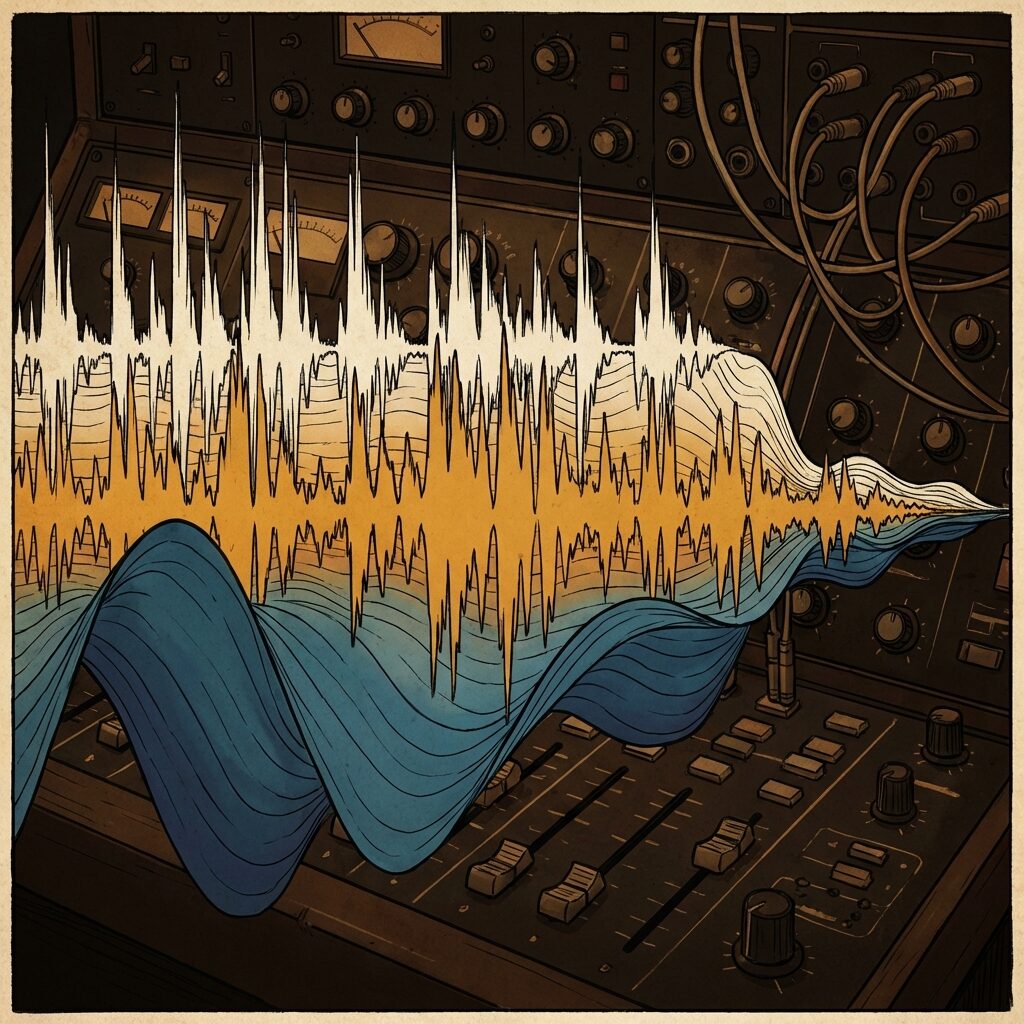
What sounds like a simple groove is actually an engineering obsession: three bass sources blended into one feel, four-layer synth stabs on a Yamaha CS-80, live drums recorded to sound mechanical, and a vocal effect made by singing through six feet of cardboard tube.
What does this song actually do to you, and why?
“Billie Jean” sits in F-sharp minor at 116 BPM. On paper, that’s a moderate tempo. But the emphasis lands on beats two and four rather than one and three. Your body reads that backbeat as a pull rather than a push, which makes the groove feel slower and more deliberate than the metronome suggests. The tempo says walk. The feel says prowl. That mismatch is where the song lives.
The structure is verse–pre-chorus–chorus with a bridge. The verse progression is just F-sharp minor to G-sharp minor, back and forth, hypnotic in its simplicity. The pre-chorus opens things up with D to F-sharp minor repeated three times, then D to C-sharp dominant seventh. That C-sharp seven is the moment. It’s a dominant chord with a bluesy seventh that creates a gravitational pull back to the tonic, a held breath before the chorus drops.
But the architecture matters less than the textures, and the textures are where Quincy Jones and Bruce Swedien’s obsessiveness really comes through.
Start with the bass. If you think you’re hearing one bass, you’re not. Louis Johnson’s electric bass guitar carries the opening, that iconic descending line everyone can hum. But when the chord sequence enters, a Minimoog bass joins underneath, thickening the low end without cluttering it. The bass pattern never rests for more than an eighth note and centers on a seventh interval. And here’s a detail that kills me: every time the line passes through the tonic note, it’s doubled by a distorted synth bass playing in unison with a shaker. So the root note, the one moment of harmonic resolution, gets this extra weight you feel more than hear. Three bass sources, engineered to sound like groove. You’re not supposed to notice the seams. You don’t.
Now the chord stabs, those stabbing synth chords that enter at 0:22 and basically define the song’s personality. Bill Wolfer programmed and performed them on a Yamaha CS-80. But he wasn’t just playing a single patch. Those stabs are four separate layers: three different CS-80 patches (one string-like, one brass-like, one voice-like) plus Jackson’s own vocal “oohs,” a two-part harmony that includes notes from the played chords. Four layers that hit your ear as one sound.
Wolfer’s approach to the CS-80 was specific. He used pulse width modulation and detuning to create the thickness, not the CS-80’s built-in chorus circuit, which he found “noisy as hell.” His “secret sauce,” as he described it, was setting a shorter release on the filter than on the VCA amplifier. This simulates the resonance of a hollow-body string instrument, the way a guitar or cello body continues to ring after the string stops vibrating. It’s why those stabs have that particular percussive decay, that sense of an acoustic instrument being channeled through electronics. Wolfer, who first developed the sound during the Jacksons’ 1981 Triumph tour, later reflected with characteristically dry humor: “Forty years later, I like to think back on that, and know that nearly everyone on the planet has heard me play. I’m the least famous musician that everybody has heard play!”
The drums deserve their own paragraph because the story behind them is genuinely wild. Leon “Ndugu” Chancler played live drums, not a drum machine, despite what the mechanical precision might suggest. He played along with a drum machine and had to match it exactly: kick on beats one and three, snare on two and four, eighth-note closed hi-hats throughout. His live performance was then captured as a tape loop. The result is a drum part with the inhuman precision of a machine but the dynamic variation of a human being. It breathes, but it never wavers.
Swedien’s recording setup for those drums was its own project. He built a custom eight-foot-square wooden drum platform raised ten inches off the studio floor, originally constructed for “Rock With You” and repurposed here. He removed the front head of the kick drum and placed cinder blocks inside for weight, then had a special cover made from furniture blanket material with a zippered hole for the microphone. Between the snare and the hi-hat, he placed a purpose-built foot-square panel made of wood and mu-metal, a nickel-iron alloy typically used for magnetic shielding, to isolate the two sounds from each other. The snare mic was a Shure SM57 from the late 1970s. Sennheiser MD-421 on the kick. The reverb on the drums features a sixteenth-note predelay, a tiny calculated gap between the drum hit and the reverb tail, which gives the snare that distinctive snap-then-wash quality.
Two more details I can’t let go of. First: Tom Scott’s uncredited lyricon part, a wind-controlled analog synthesizer that sounds like nothing else. Jones called it “ear candy, just a subliminal element that works well.” You probably can’t pick it out of the mix. But if someone removed it, you’d feel the hole. That’s what happens when an arrangement has been fussed over past the point of reason.
Second: the cardboard tube. At the 2:12 mark, when Jackson sings “don’t think twice,” there’s a strange, distant quality to his voice, like he’s singing from down a hallway. That’s because Swedien had him sing through a six-foot-long cardboard tube. Not a digital effect. Not a plugin. A literal tube of cardboard between the singer and the microphone. Dumbest-looking solution in the room, and it worked perfectly.
The Lie Becomes the Truth
Jackson’s lyrics run on deliberate ambiguity, the narrator insists on innocence while dropping details that undercut his own case, and the song’s warning that “the lie becomes the truth” played out in real life for decades.

Most pop songs about paternity disputes don’t survive their own premise. The subject is too specific, too legal. “Billie Jean” survives because Jackson never lets you settle into a single reading of what’s actually happening.
The chorus is clear enough, “Billie Jean is not my lover / She’s just a girl who claims that I am the one / But the kid is not my son”, and if the song stopped there, it would be a denial and nothing more. But Jackson keeps introducing details that undermine the narrator’s certainty. In the second verse, Billie Jean finds the narrator’s girlfriend and tells her “we danced ’til three.” Then she shows a photo of a baby. And then this line, the most destabilizing moment in the song: the baby’s eyes “looked like mine.”
Is he guilty? Is she lying? Jackson never resolves it, and that refusal to resolve is what keeps the song tense. The narrator keeps insisting on his innocence, but the details he provides keep undercutting his case. He remembers the smell of her perfume. He admits “this happened much too soon.” He knows what the baby’s eyes look like. For a man who was never there, he remembers an awful lot.
The language gets deliberately biblical in places where a lesser songwriter would have kept things conversational. “For forty days and for forty nights / The law was on her side”, that’s Old Testament framing for a paternity dispute. Forty days and forty nights is the duration of Noah’s flood, of Jesus’s temptation in the desert, of Moses on Mount Sinai. Jackson is casting this woman’s pursuit as something mythic, which either elevates his suffering or reveals his grandiosity, depending on how much you trust him as a narrator.
And then there’s “dance on the floor in the round.” I’ve seen at least four interpretations of this line, and honestly, they all work. It could be a euphemism for a sexual encounter. It could reference a courtroom, proceedings happening “in the round,” the narrator circling a legal arena. It could be theater-in-the-round staging, which fits the song’s sense of being watched and judged from every angle. Or it could just be literal dancing. The ambiguity isn’t laziness. Jackson built the line to hold all of those meanings at once, and the song is richer for never choosing one.
Chris Cornell, who would go on to perform “Billie Jean” over two hundred times as an acoustic reimagining, nailed what makes the lyrics work in a 2009 Rolling Stone interview: “The story isn’t spoon-fed to you. It’s poetic.” That word, poetic, is doing real work there. Cornell wasn’t saying the lyrics are pretty. He was saying they operate the way poetry does, through compression and ambiguity, through the gaps between what’s said and what’s meant. Jackson trusted the listener to fill those in, to feel the story rather than having it explained.
There’s a grim real-world coda to the song’s central theme. “The lie becomes the truth” isn’t just a lyric, it’s a prediction. Lavon Powlis spent more than two decades pursuing Jackson with paternity claims, trespassing arrests, restraining orders, and lawsuits. She filed a $150 million paternity suit in 1987 claiming Jackson fathered her three children; it was dismissed for lack of evidence. She was arrested multiple times at his Encino property. In 2008, she filed a billion-dollar lawsuit seeking joint custody of Jackson’s son Blanket, claiming to be his wife and Blanket’s birth mother. A Los Angeles Municipal Court judge, sentencing her for one trespassing violation, actually quoted lyrics from Jackson’s “Leave Me Alone.” The lie didn’t just become the truth for Billie Jean. It became the truth for Lavon Powlis. She lived inside the song’s nightmare for real.
Fifty Grand and a Color Barrier
The video that broke MTV’s color line was made for $50,000 with manually triggered floor tiles, because the budget couldn’t cover pressure sensors. Jackson had to nail every mark perfectly, and that forced precision is half the reason the video still works.

Before we talk about what the “Billie Jean” video looked like, we need to talk about what MTV looked like in early 1983. The network had launched on August 1, 1981, and its playlist was, to put it plainly, almost entirely white. Rock bands, new wave acts, the occasional pop singer, but Black artists were functionally excluded. Musical Youth’s “Pass the Dutchie” had cracked through, but it was treated as a novelty rather than a precedent. As Rob Tannenbaum put it in I Want My MTV: “MTV’s playlist was 99 percent white until Michael Jackson forced his way on the air by making the best music videos anyone had ever seen.”
The forcing was done by Walter Yetnikoff, the combative president of CBS Records. Yetnikoff went directly at MTV with a threat that was simple and devastating: play “Billie Jean” or I pull every CBS artist from your network and go public with accusations of racism. MTV’s initial response, according to multiple sources, was that Black music wasn’t “MTV’s audience.” Yetnikoff didn’t blink. MTV relented, first placing the video in medium rotation, then moving it to heavy after the viewer response made the business case undeniable. The video premiered on MTV on March 10, 1983.
And the video that broke a racial barrier on the most important music platform of the decade was made for fifty thousand dollars.
Director Steve Barron shot on 16mm film instead of 35mm because the budget demanded it. The concept for the illuminated floor tiles, which became one of the most recognizable images in music video history, was originally developed for a Joan Armatrading video that never materialized. It was a Midas Touch concept: everything Jackson touches transforms. Jackson had wanted mannequins that would spring to life, but that was cut for budget. The tiles themselves weren’t pressure-sensitive; they couldn’t afford that technology. Jackson had to hit his marks with surgical precision, stepping on exact spots at exact moments, so the tiles could be triggered manually to create the illusion that his footsteps were generating light.
That constraint is worth sitting with. The technology wasn’t there, so the performance had to be perfect. There was no room for improvisation in the choreography, no margin for error in the footwork, because every illuminated tile depended on Jackson landing precisely where Barron needed him. The result looks magical and effortless, which is the same tension running through all of “Billie Jean.” The budget forced a kind of exactness that a better-funded production might never have demanded, and that exactness is half of why the video still holds up.
Barron himself seemed to sense what was happening: “When people see this, the world is going to change. It was just irresistible and brilliant and totally enthralling to watch.” He was right. The video didn’t just promote a single. It broke open a door that MTV had kept shut on purpose, and nobody managed to close it again.
The Night the World Rearranged
Jackson initially refused to appear at Motown 25 and tried to prevent the taping of his performance, then walked out and delivered a moment so indelible he’d spend the rest of his career being asked to repeat it, doing exactly what he later described: letting the song tell him what to do.
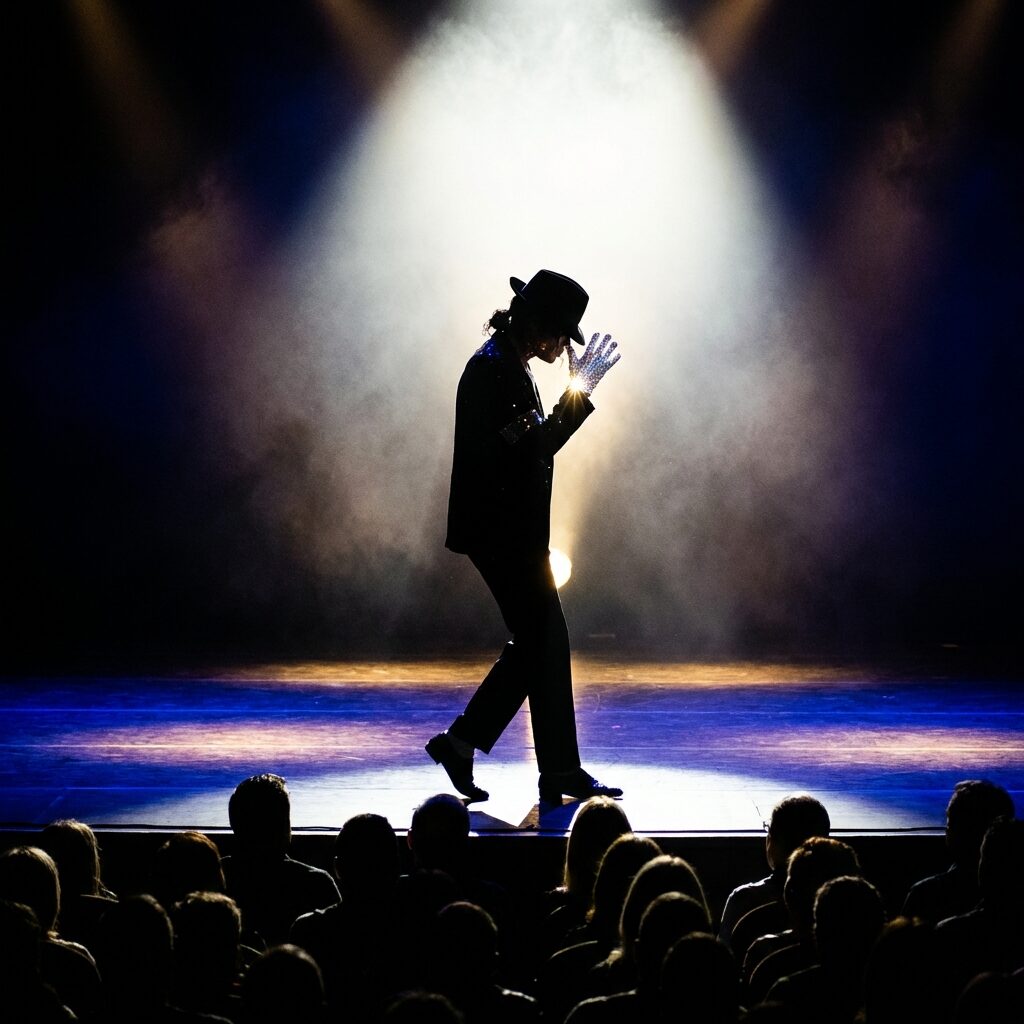
Jackson didn’t want to do it.
Motown 25: Yesterday, Today, Forever was being taped on March 25, 1983, at the Pasadena Civic Auditorium, a television special celebrating the label that had made him famous. Jackson felt he was doing too much television. He said no. Berry Gordy convinced him by offering something Jackson actually wanted: a solo performance slot, separate from the Jackson 5 reunion that was the nominal reason for his appearance. That solo slot would change everything.
Jackson’s attorney sent a letter to producer Suzanne de Passe explicitly forbidding them to tape the “Billie Jean” portion of the performance. Jackson wanted it for the live audience only, a one-time event, unrepeatable, existing only in the memory of the people in the room. So here’s this man demanding total control over what the world gets to see, minutes before he walks onstage and does something nobody, probably including him, fully planned. The performance was ultimately included in the broadcast.
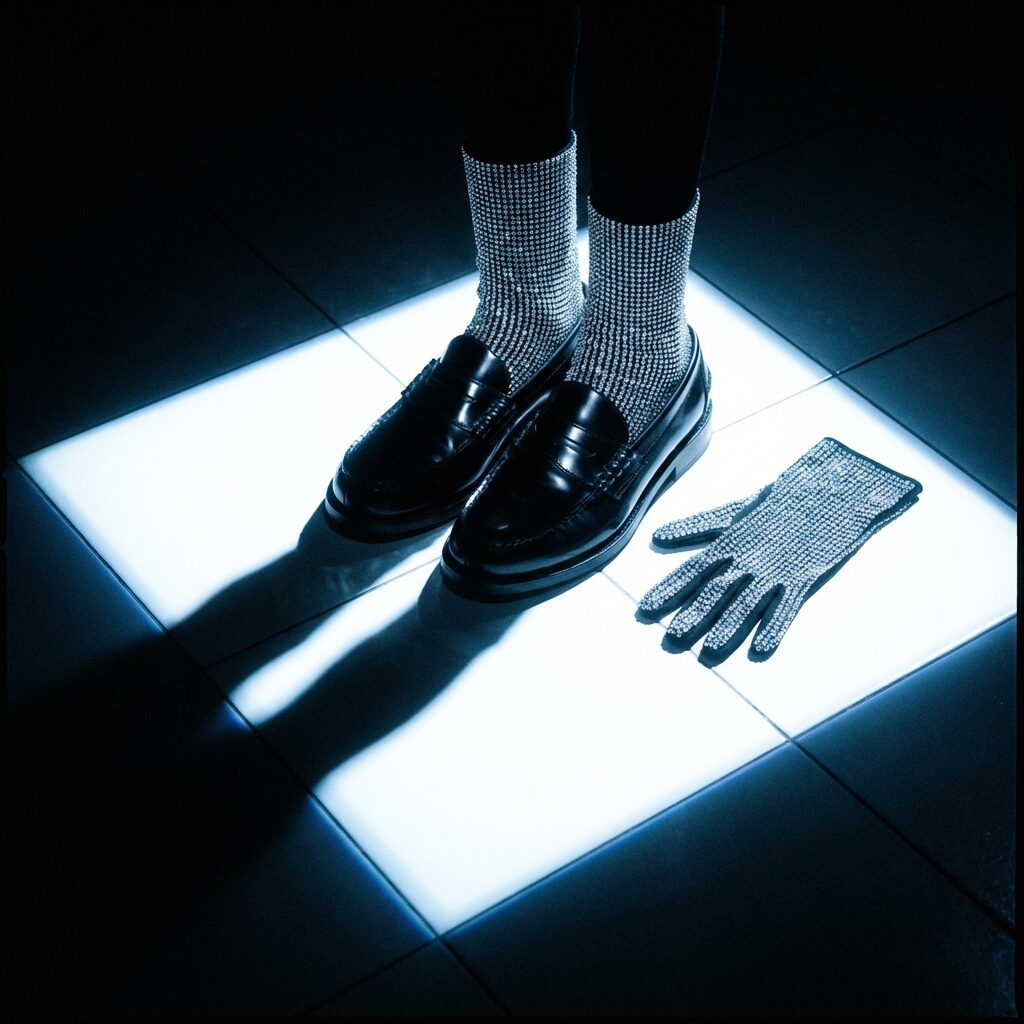
The outfit was deliberate down to every sequin. Black high-water tuxedo pants. A black sequined jacket borrowed from his mother Katherine. Silver lamé shirt. Crystal-laden white socks in Fred Astaire penny loafers, and if you don’t think the Astaire reference was intentional, you haven’t been paying attention. A single white rhinestone glove on his left hand, containing 1,200 hand-sewn rhinestones. A black fedora placed on his head as the first drum hits landed.
And then the moonwalk.
The move Jackson performed that night wasn’t invented by him, and he never claimed it was. Originally called “the backslide,” it had a lineage stretching back decades. Jeffrey Daniel of Shalamar, a Soul Train dancer, had performed it on British television during “A Night to Remember” on Top of the Pops in 1982, and he was the primary person who taught Jackson the technique. Geron “Casper” Candidate and Derek “Cooley” Jackson also trained him in popping, locking, and the backslide. Go further back and you find Cab Calloway doing a version called “The Buzz” in the 1930s. Bill Bailey performed it on film in 1955. Marcel Marceau used it in his “Walking Against the Wind” routine. Dick Van Dyke did a variation on the Pat Boone Show in 1958. The technique itself originates from the pantomime exercise “Marche sur place” by mime masters Etienne Decroux and Jean-Louis Barrault, first captured on film for Children of Paradise in 1944.
Jackson didn’t invent the move. He took decades of movement vocabulary, compressed it into a single moment, performed it while the biggest record in the country played underneath him, and made the whole thing look like it just occurred to him. Every dancer who’d done the backslide before him had done it in a context people could forget. Jackson made it impossible to forget.
An estimated 47 million people watched when NBC broadcast the special on May 16, 1983. Jackson was disappointed afterward. He felt he hadn’t stayed on his toes long enough during the moonwalk sequence. His internal standard was so punishing that the performance people still talk about four decades later wasn’t good enough for the person who did it.
When asked about it later, Jackson said something that might be the most revealing quote in his entire career: “I pretty much stood there and let the song tell me what to do.” After all the rehearsal, all the deliberate costuming, all the technique learned from Jeffrey Daniel and Casper and a lineage of movement going back to Parisian mimes in the 1940s, when the moment came, he stopped thinking and listened to the song. Instinct won again.
Sammy Davis Jr. asked for the sequined jacket afterward. Jackson gave it to him. The audiences at every subsequent concert would demand that Jackson replicate the Motown 25 performance exactly, note for note, step for step. The one-time-only moment that Jackson’s attorney tried to keep off tape became the thing he was contractually and emotionally stuck reproducing for the rest of his career. He wanted a moment that couldn’t be captured. Instead he created one that couldn’t be escaped.
Four Charts, One Artist, Six Weeks
Jackson became the first artist to top four Billboard charts at once and held them all for six weeks. In 2014, a teenager’s lip-sync video pushed the song back onto the Hot 100, more than thirty years later, because some songs just don’t age out.

The numbers are almost redundant at this point. The song was everywhere and everybody knew it. But the specifics still matter, because they tell you how far ahead of everything else it actually was.
On March 5, 1983, Michael Jackson became the first artist in music history to simultaneously hold the number one position on four pop and R&B charts: the Hot 100, Black Singles, Black LPs, and Top LPs & Tapes (the Billboard 200). He held all four for six consecutive weeks. Nobody had done that before. The charts didn’t have a precedent for one person dominating that completely across that many formats at once.
“Billie Jean” sat at number one on the Hot 100 for seven weeks, March 5 through April 22, 1983. It was Jackson’s fastest-rising number one since the Jackson 5’s triple run of “ABC,” “The Love You Save,” and “I’ll Be There” in 1970, and it remained his longest-reigning Hot 100 number one until “Black or White” matched it with seven weeks in 1991. On the R&B chart, it held the top spot for nine consecutive weeks.
The song was certified Diamond by the RIAA, over ten million units sold in the United States. It remains Jackson’s best-selling solo single. As of 2008, it was still getting more than 250,000 spins per week in clubs worldwide. On June 10, 2021, the music video became the first 1980s clip by a solo artist to reach one billion views on YouTube.
But my favorite chart statistic is the weird one. In 2014, more than thirty years after its release, “Billie Jean” re-entered the Hot 100 at number 14. The reason? A teenager named Brett Nichols lip-synced it at a high school talent show, and the video went viral. Ninety-five percent of the song’s chart performance that week came from streams of that viral video. A kid born decades after the song came out stood on a high school stage, channeled it, and enough people responded to push it back onto the most competitive chart in music. That kind of thing doesn’t happen to songs that have aged out of relevance.
“Billie Jean” was also the engine that pushed Thriller to 66 million copies worldwide, still the best-selling album in history, and nobody else is close. Seven of Thriller‘s nine tracks were released as singles. All seven reached the top ten. The album topped the Billboard chart for a record 37 non-consecutive weeks. But “Billie Jean” was the one that broke it open, the single that made the album unavoidable. Billboard ranked it as the number two song of the entire year in 1983, behind only the Police’s “Every Breath You Take.”
The Song That Won’t Sit Still
Chris Cornell performed his acoustic “Billie Jean” 218 times. That a song built on the most sophisticated production of its era could survive being stripped to one voice and a guitar, and still work, says something about what’s actually holding it together.

You can learn a lot about a song by watching what happens when other people try to inhabit it.
Chris Cornell’s acoustic version is the one worth talking about. He started performing it around 2006, and by the time he died in 2017, he’d played it 218 times live, 147 of those between 2006 and 2012 alone. He recorded a studio version for his 2007 album Carry On. The Los Angeles Times called it “dark, creepy,” which gets at something real. Cornell stripped out the groove, the synths, all of Swedien’s production architecture, and what was left was the story: paranoid, ambiguous, unsettling. That the song survived that kind of gutting, from the most layered production of its era down to one voice and a guitar, says something about what’s actually holding it together.
Cornell was open about what drew him to it. He called the lyrics “brilliant” and “poetic,” and you could hear that in how he performed them, not as pop scaffolding for a beat, but as a narrative he wanted to sit inside. A rock singer with one of the great voices of his generation, spending years returning to a pop song by the biggest pop star who ever lived. That goes well past novelty cover territory.
The covers and answer songs started almost immediately. In 1983, Lydia Murdock released “Superstar,” an answer song told from Billie Jean’s perspective, her side of the story. It was a clever move, and the fact that it worked said something about the song’s narrative having enough room for a second point of view. That same year, Club House, an Italian studio group, mashed “Billie Jean” with Steely Dan’s “Do It Again” and landed in the top ten in Belgium, Ireland, and the Netherlands. Slingshot released a note-for-note remake that hit number one on the Billboard Dance/Disco charts. David Cook brought Cornell’s arrangement to American Idol Season 7 in 2008 and charted on the Hot 100.
What’s odd is how comfortably it moves between genres. Acoustic folk, Italian disco mashup, faithful dance remake, television talent show, it works in all of them. You can remove everything Swedien built and the song still stands. You can pile on things that were never there and it just absorbs them. Most songs don’t have that kind of foundation. Most songs are their arrangement.
Trust the First Take
The most obsessively crafted pop recording ever made worked because everyone involved, after fighting about it, trusted what felt right. Forty-some years on, the song hasn’t budged.
So here’s the paradox one more time.
The vocals were nailed in one take. The intro that Jackson refused to cut became the most recognizable opening in pop. The mix that survived ninety-one attempts was the second one they tried. Jackson was so locked into the song in his head that his car caught fire and he didn’t notice. He stood on a stage in front of 47 million people, drew on years of training and technique, and then, in his own words, “pretty much stood there and let the song tell me what to do.”
Everything about “Billie Jean” is obsessively, almost pathologically crafted. The composite bass, the four-layer synth stabs, the live drums engineered to sound mechanical, the mu-metal isolation panels, the cinder blocks in the kick drum, the six feet of cardboard tube. But all of it, every painstaking choice, was trying to protect something that can’t actually be engineered. The feeling that a song is right, that your body gets it before your brain catches up.
You can still identify the song from three drum hits. Forty-some years on, it still makes you want to move. That’s what Jackson knew when he told Quincy Jones to leave the intro alone. That’s what he knew when the Rolls-Royce burned. The rest of us just had to shut up.
As Stereogum put it in their Number Ones column: “In the seven weeks that ‘Billie Jean’ held down the #1 spot, the world rearranged itself around the song.” The world is still rearranging. The song hasn’t moved.
🎧 Did you know? Bruce Swedien mixed “Billie Jean” 91 times — then Quincy Jones said go back to mix #2. It became the final version. 🎶 #MichaelJackson #BillieJean #Thriller #1980s https://bit.ly/40Ygw8v

Click to Tweet