The Police | Every Breath You Take
The Most Dangerous Love Song
“Every Breath You Take” is the most-played song in radio history and one of the most misunderstood, a surveillance anthem routinely mistaken for a wedding ballad by the millions who love it most.
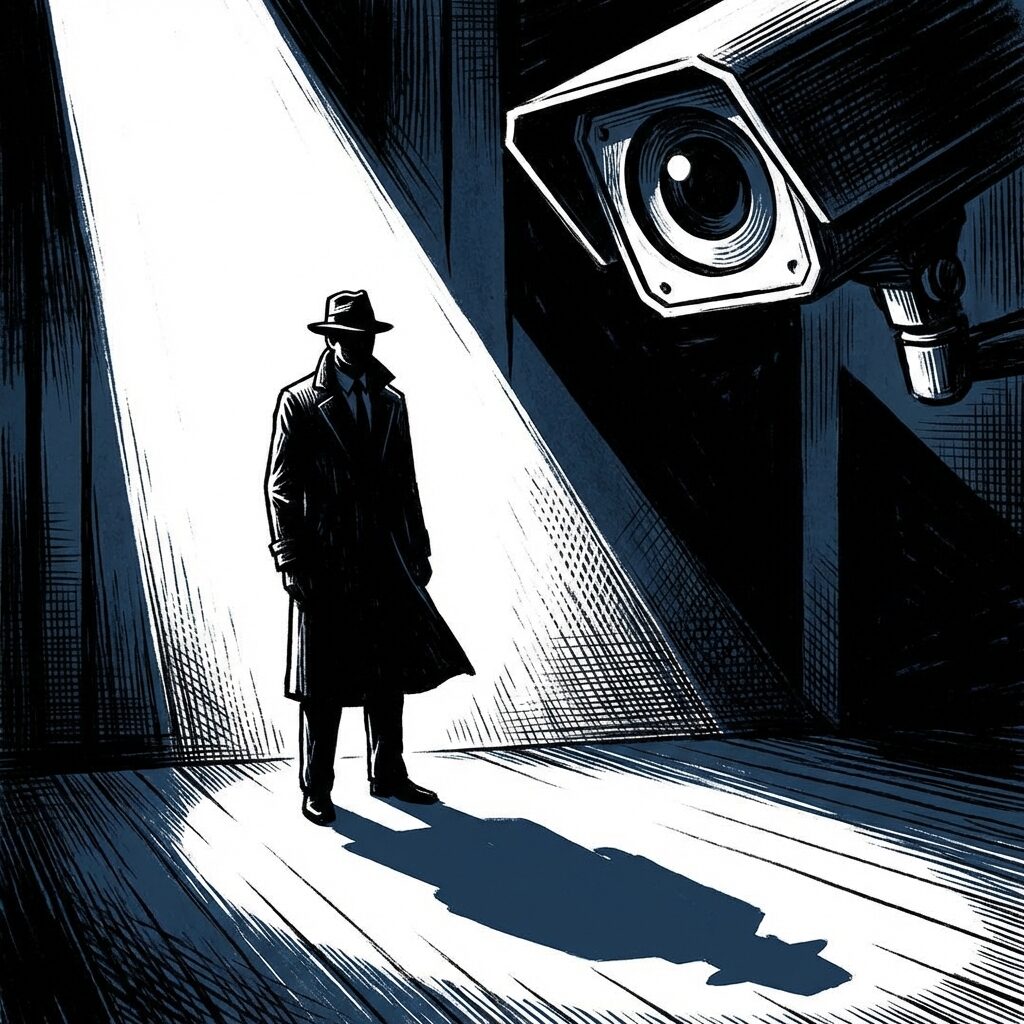
Imagine telling Sting that you played his song at your wedding. His response: “Well, good luck.”
Not a joke. That’s the man who wrote it, offering what might be the most backhanded blessing in pop history to couples who chose “Every Breath You Take” as their first-dance song. He’s said it more than once. He means it every time.
The numbers are staggering: nearly 15 million radio plays, eight weeks at number one on the Billboard Hot 100, best-selling single of 1983. Over three billion Spotify streams, up 89% in 2024, another 36% in 2025, as if the song is still accelerating forty-plus years out. BMI officially crowned it the most-played song in radio history in May 2019, knocking the Righteous Brothers’ “You’ve Lost That Lovin’ Feeling” off the top after 22 years. One of only seven music videos from the 1980s to crack a billion YouTube views.
And a huge chunk of the people who love it most have no idea what it’s actually about.
That gap, between what the song sounds like and what it is, is the most interesting thing about it. But pull on that thread and the whole story unravels: a love song that isn’t, a band recording “together” that wasn’t, a guitarist’s career-defining moment that earned him nothing, a tribute that became a legal windfall. And right now, in a London courtroom, a dispute over who actually owns this thing, a dispute that is, almost poetically, about the exact themes Sting wrote into the lyrics at three in the morning four decades ago.
Ownership. Control. Surveillance. Who gets to say what belongs to whom.
Here’s how it started.
Three Guys, One Room Too Many
By 1982, The Police were the biggest band in the world and could barely stand to be in the same building, a toxic dynamic that somehow produced their defining record.
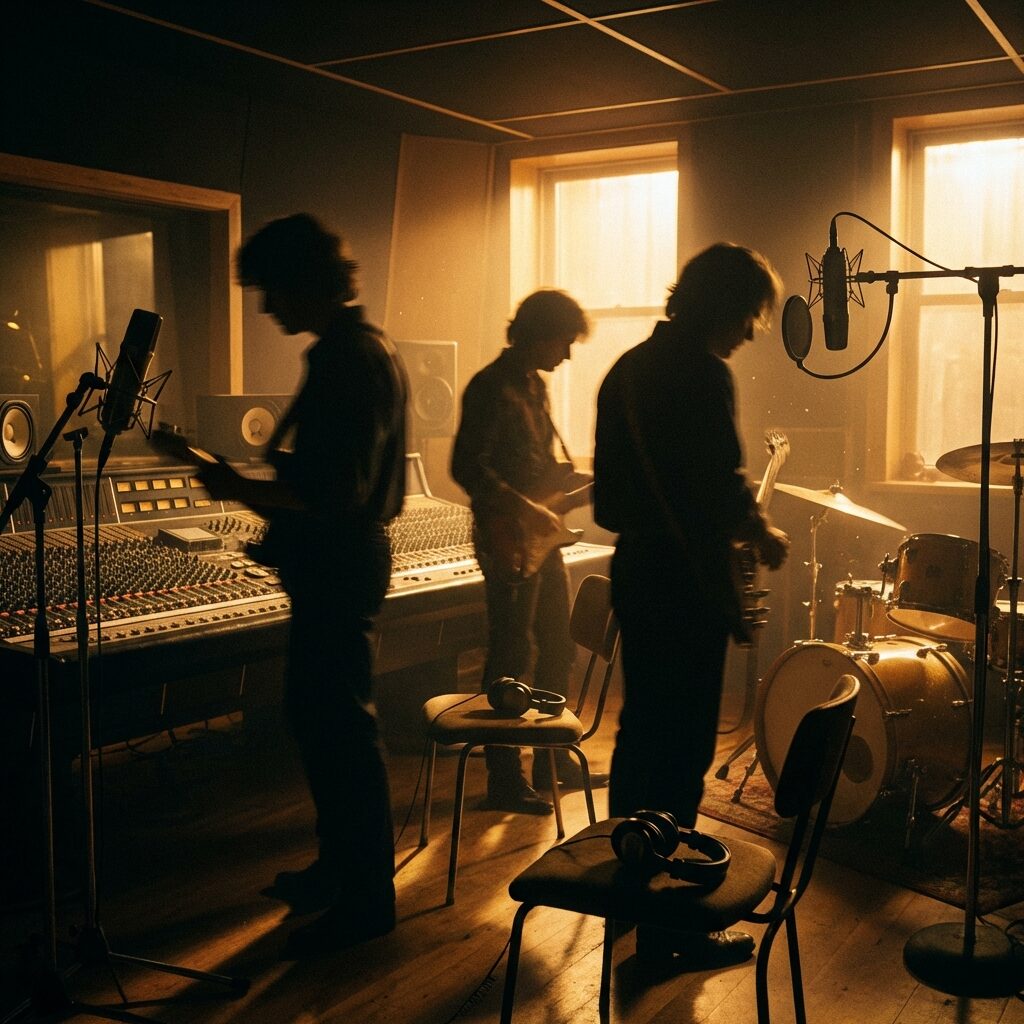
To understand how “Every Breath You Take” got made, you have to understand what The Police were in late 1982. And what they were, in a word, was: finished. They just didn’t know it yet.
On paper, they were at the peak. The biggest band in the world. Ghost in the Machine had gone top five on both sides of the Atlantic. They’d sold out arenas everywhere. Stewart Copeland’s drumming was reshaping how a generation of players thought about the kit. Andy Summers had become one of the most distinctive guitar voices in pop. Sting had crossed over into something like cultural celebrity, that jawline on magazine covers, the classical training worn conspicuously but not quite obnoxiously.
Behind the scenes, it was falling apart. Producer Hugh Padgham, who worked with them on Synchronicity, was blunt about it in a 2026 interview: “By the time of Synchronicity, they were sick of each other. Sting and Stewart hated each other, and although Andy didn’t show as much venom, he could be quite grumpy, and there were both verbal and physical fights in the studio.”
Verbal and physical fights. In the studio. While making a record.
Sting’s personal life was its own disaster. He’d separated from his first wife, actress Frances Tomelty, mother of his first two children, and had started a relationship with Trudie Styler, who happened to be Tomelty’s best friend and next-door neighbor in Bayswater. He’s called this period a “mental breakdown.” The guilt, the chaos, the longing and possessiveness of someone watching his own life come apart, all of that was swirling in his head when he sat down to write.
The three of them were genuinely incompatible as collaborators by this point, but each brought something nobody else could. Sting was the auteur, melodist, lyricist, commercial engine, the one who drove everyone insane. Copeland was a restless, technically ferocious drummer who needed to be reined in as much as unleashed. And Summers, who had just finished recording I Advance Masked with avant-garde guitarist Robert Fripp, was operating in a completely different harmonic world, a jazz-influenced experimenter who’d been spending his off-hours playing Béla Bartók violin duets on guitar.
Synchronicity was their fifth album. It was also their last. They were too far in to see that, but the tension tearing them apart was, somehow, barely, the same tension producing the best work of their lives.
Ian Fleming’s Desk, 3 AM
The song was born at the desk where James Bond was invented, nearly fell apart during a brutal tropical recording session, and only survived because a producer heard something worth saving in a piano idea nobody else was paying attention to.
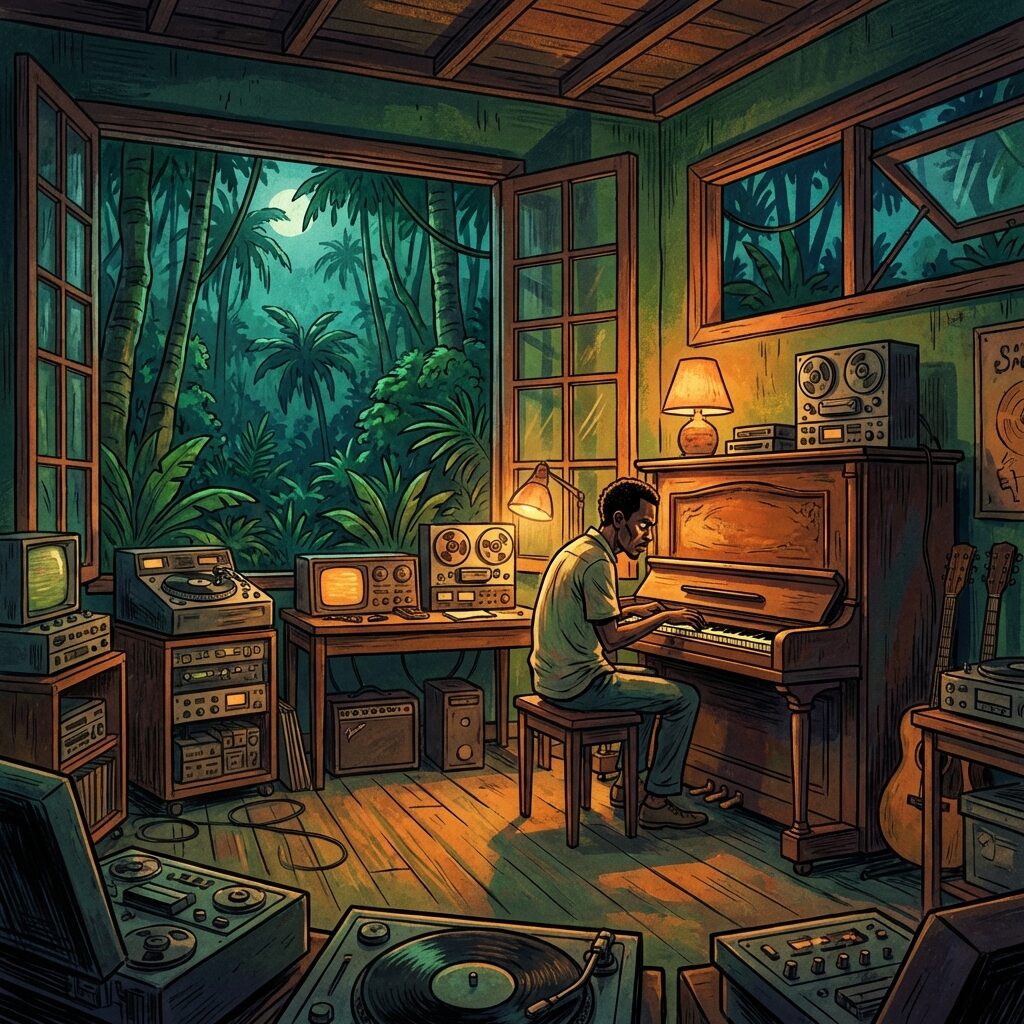
Before any of the studio chaos, there was a night in Jamaica.
Sting had retreated to the Goldeneye estate in Oracabessa Bay, Ian Fleming’s property, where Fleming wrote every James Bond novel. Sting was hiding from the wreckage of his personal life, trying to write songs, and not sleeping well. One night he woke with a line fully formed in his head: every breath you take, every move you make, I’ll be watching you.
He sat down at the piano, probably the same one where Fleming had conjured the world’s most famous fictional spy, a character built on surveillance, on watching, on knowing, and had a complete song in half an hour. “I woke up in the middle of the night with that line in my head, sat down at the piano and had written it in half an hour,” Sting told The Independent in 1993. “I was thinking of Big Brother, surveillance and control.”
A song about watching, written at the desk of the man who created the definitive modern watcher. It’s almost too neat.
Sting demoed it alone in October 1982 at Utopia Studios in North London, playing a Hammond organ over a rolling, gospel-inflected arrangement that Andy Summers later compared to Billy Preston. It sounded nothing like The Police. Didn’t matter. Miles Copeland, the band’s manager, and also Stewart’s older brother, a dynamic that added its own complications to everything, heard the rough take and allegedly said: “I’m going straight to A&M. This is going to be a number one.”
He was right. Getting there, though, took months of misery.
The band went to George Martin’s AIR Studios in Montserrat, a gorgeous Caribbean facility, which sounds like paradise until you account for the lack of air conditioning and three men who couldn’t stand each other. The studio had a Neve 8078 console and an MCI 24-track tape machine. The gear was fine. The people were not.
They couldn’t be in the same room. Literally. Sting set up in the control room, bouncing on a jogging mat while recording vocals and bass. Summers worked in the live area. Copeland was exiled to the dining room of an adjacent house, connected to the others only by a video monitor. Three separate spaces. One band. Barely.
Producer Hugh Padgham described working “full-on for 10 days and having nothing on tape that was playable.” Things got bad enough that a summit with Miles Copeland was needed just to agree to keep going. The band spent roughly six weeks on the snare drums and bass alone. Sting wanted a straight, unadorned rhythm from Copeland, no fills, no flourishes. Which was, as Padgham put it, “the complete antithesis of what Stewart was about.” Copeland’s sticks kept flying out of his hands in the heat. Padgham’s fix: gaffer-tape the drumsticks to Copeland’s palms. And the headphones to his head.
The track nearly got scrapped entirely.
What saved it was a bridge. Padgham overheard Sting “fiddling around on the piano, banging away on the same note” and shouted encouragement through the talkback. That idea became the bridge, the emotional hinge of the song, where the obsession in the lyric starts cracking through the polished surface. Sting then spent three more days getting every vocal syllable right, which makes sense when you hear how much is riding on the delivery of each phrase.
The bass drum you hear isn’t Copeland, it’s an Oberheim DMX drum machine. Copeland’s hi-hat was processed through a 300-millisecond delay from a Korg digital delay line; he took that unit on tour to replicate the sound live. The percussion was assembled piece by piece. Sting’s bass was always DI’d directly, never mic’d, with a Boss chorus pedal adding thickness. A Dutch upright electric double bass the crew nicknamed “Brian” doubled the root notes. The whole rhythm section was built in the tropical heat by people who were barely speaking.
And it still needed saving.
One Take. One Riff. One Record.
Andy Summers transformed a nearly abandoned song into a pop landmark with a single take on a modified 1963 Telecaster, and received zero songwriting credit for doing it.
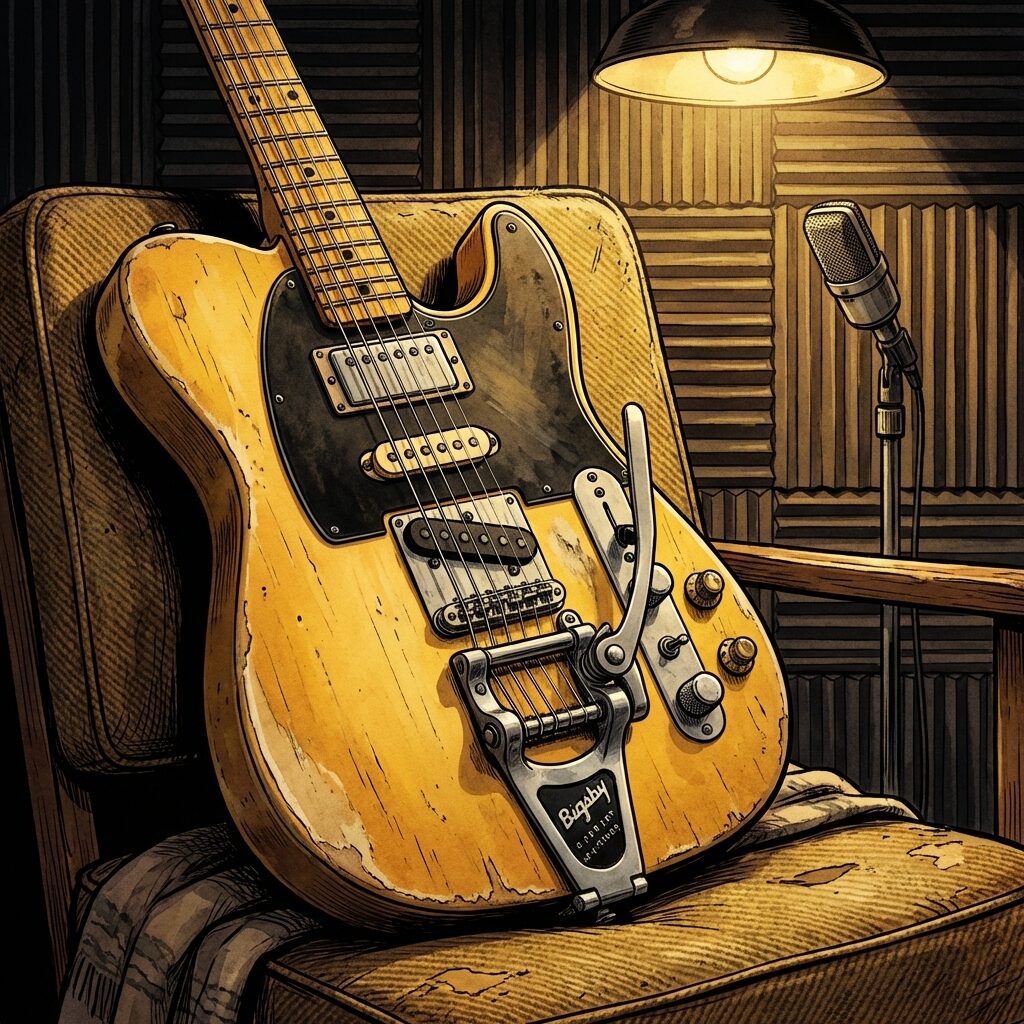
At some point during the sessions, with the track still not working and the band’s patience long exhausted, Sting turned to Andy Summers and essentially said: go in there and do something.
The exact phrasing was “Go on, go in there and make it your own.” Which is either a generous creative invitation or a last resort, depending on how you read it. Probably both.
Summers had just come off recording I Advance Masked with Robert Fripp, an avant-garde collaboration that had pushed his harmonic thinking somewhere unusual. He’d been working through Bartók violin duets on guitar, absorbing the Hungarian composer’s approach to wide intervals and dissonance. He was actively trying to avoid thirds, the chord tone that gives a major or minor triad its emotional color, and stack ninths instead, creating a more open, ambiguous voicing. The sus2/add9 sound. Suspended, unresolved, slightly unsettling.
He picked up his modified 1963 Fender Telecaster and played the part in a single take.
Listen to what he actually does. He’s not strumming chords, he’s arpeggiated, picking individual notes with wide-spaced fingerings, driving eighth notes with a combination of palm muting and open picking that creates a textural shimmer rather than a rhythmic chop. The voicings skip the third of each chord and stack the ninth on top, giving every chord that neither-major-nor-minor quality that fits perfectly with a lyric that’s neither love song nor threat, or is both, depending on the day.
To play along with the original recording, you have to tune your guitar down a half step, because Summers had a chorus pedal in the signal chain that drags the pitch down slightly. The song lives in this micro-flat space, simultaneously in one key and slightly somewhere else. Even the guitar part is not quite what it appears to be.
In the chorus, Summers layered 20, yes, twenty, tracks of guitar power chords. You don’t consciously hear twenty guitars; you hear one enormous, slightly overwhelming wave of sound that frames Sting’s vocal like a spotlight. Sometimes he’d double-track the arpeggios, panning one straight and one with chorus, then reversing them for stereo width. The Fripp collaborator had figured out how to make pop music sound massive.
“Without that guitar part there’s no song,” Summers told Record Collector. “That’s what sealed it. My guitar completely made it classic and put the modern edge on it. I actually came up with it in one take.”
And then: “And of course, the fucking thing went right around the world, straight to Number 1 in America.”
You can hear the pride in that. You can also hear something else, the bitter edge of a man who watched his defining moment get attributed entirely to someone else. Because when the songwriting credits were filed, the name on the line was Sting’s alone. No Summers. No Copeland. The guitarist who saved the song in one take got an album credit and a performance royalty. That’s it.
It would take forty years for that particular bill to fully come due.
Old Chords, New Clothes
The song is built on a chord progression borrowed from 1950s doo-wop, but what the production does with it, the delayed hi-hat, the arpeggiated add9 voicings, the Neve console, turns something generic into something that sounds like nothing else.
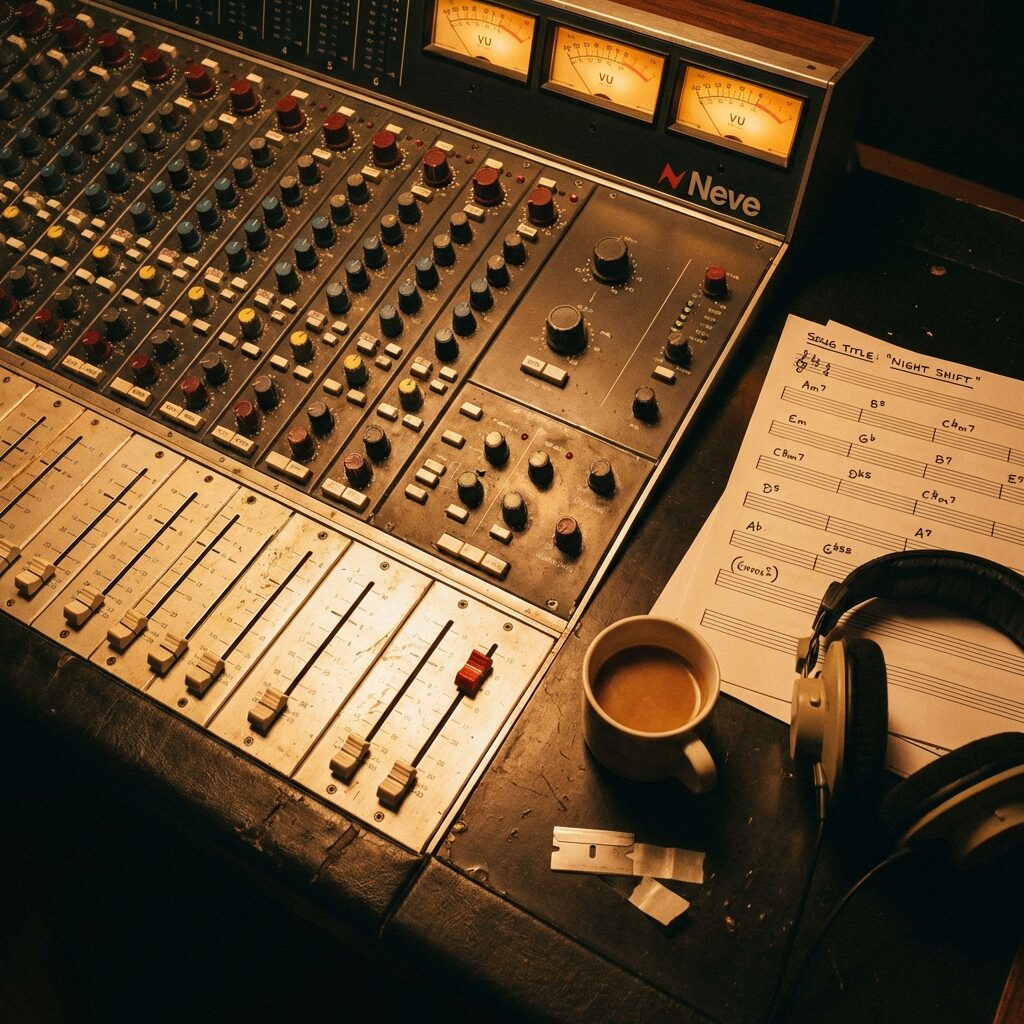
Let’s talk about what’s actually happening musically. Because Sting will tell you himself, he “probably nicked it off Stand By Me.”
He’s not wrong. The I–vi–IV–V progression is as old as rock and roll, a doo-wop skeleton running through hundreds of songs: “Stand By Me,” “Every Little Thing She Does Is Magic,” “La Bamba,” “Blue Moon,” “Earth Angel.” It’s the harmonic equivalent of a 4/4 time signature, not really a choice so much as an inheritance. Sting dressed it up with add9 voicings, and Summers declined to play the thirds at all, leaving each chord with an unresolved, open quality. There’s actually a minor dispute about how to transcribe them: Hal Leonard’s official edition calls them C(add9) and D(add9), implying the third is present but unvoiced. Wise Publications says they’re Csus2 and Dsus2, literally suspended, no third. Summers doesn’t play the third. You decide.
The chords move: A(add9) to F♯m9 to D(add9) to E(add9) and back. That occasional D7 adds a bluesy flatted seventh, a small detail that gives the harmony a slightly anxious quality right where the lyric turns most possessive. Smart writing, intentional or not.
The bridge is where it gets interesting. It climbs from the IV chord up to a ♭III, a chord borrowed from the parallel minor, modal interchange, then resolves back to the I. In context, it feels like the song briefly dropping its mask. The major-key surface holds steady through verses and choruses; then the bridge pulls in this chord from a darker tonal world and the temperature shifts for a moment. Then back to the primary section, back to the mask. The structure mirrors the lyric almost by accident.
The production is where generic becomes iconic. Hugh Padgham was running the Neve 8078 console, cutting tape with actual razor blades in pre-Pro Tools fashion. The bass is DI’d with Boss chorus adding low-end thickness. The kick drum is an Oberheim DMX machine, sitting under the mix like a metronome that doesn’t breathe. Copeland’s hi-hat, the most human element in the rhythm section, runs through a Korg digital delay unit with a 300-millisecond lag, giving it that slightly-behind sensation, precise and breathing at the same time.
Then there’s Summers’ guitar: 8th-note arpeggios, wide-spaced voicings, the chorus pedal’s gentle pitch drift, processed through a Roland JC-120 Jazz Chorus for the washed sound and a Fender Twin Reverb for sharper tones. Twenty tracks of guitar power chords in the chorus, stacked until they stop sounding like a guitar part and start sounding like an orchestral texture.
Padgham is effectively the fourth member of the band here, mediator, problem-solver, the guy who heard the bridge when no one else did. He’s not credited as a songwriter either, but the record doesn’t exist without him absorbing the interpersonal chaos and keeping the sessions functional. Engineers and producers rarely get their due in these conversations, and Padgham’s work on Synchronicity is one of the more underappreciated achievements in 1980s pop production.
The sum: a 1950s chord sequence, jazz-inflected voicings, reggae-influenced bass, drum machine kick, a delayed hi-hat, and twenty layers of guitar playing open chords on a slightly out-of-tune instrument. 117 BPM, 4/4, four minutes and thirteen seconds on the album. That’s what’s under the hood.
Love Song or Threat?
The lyrics read like a stalker’s monologue, “every smile you fake,” “you belong to me”, and Sting has spent forty years explaining whether he knew that when he wrote them.
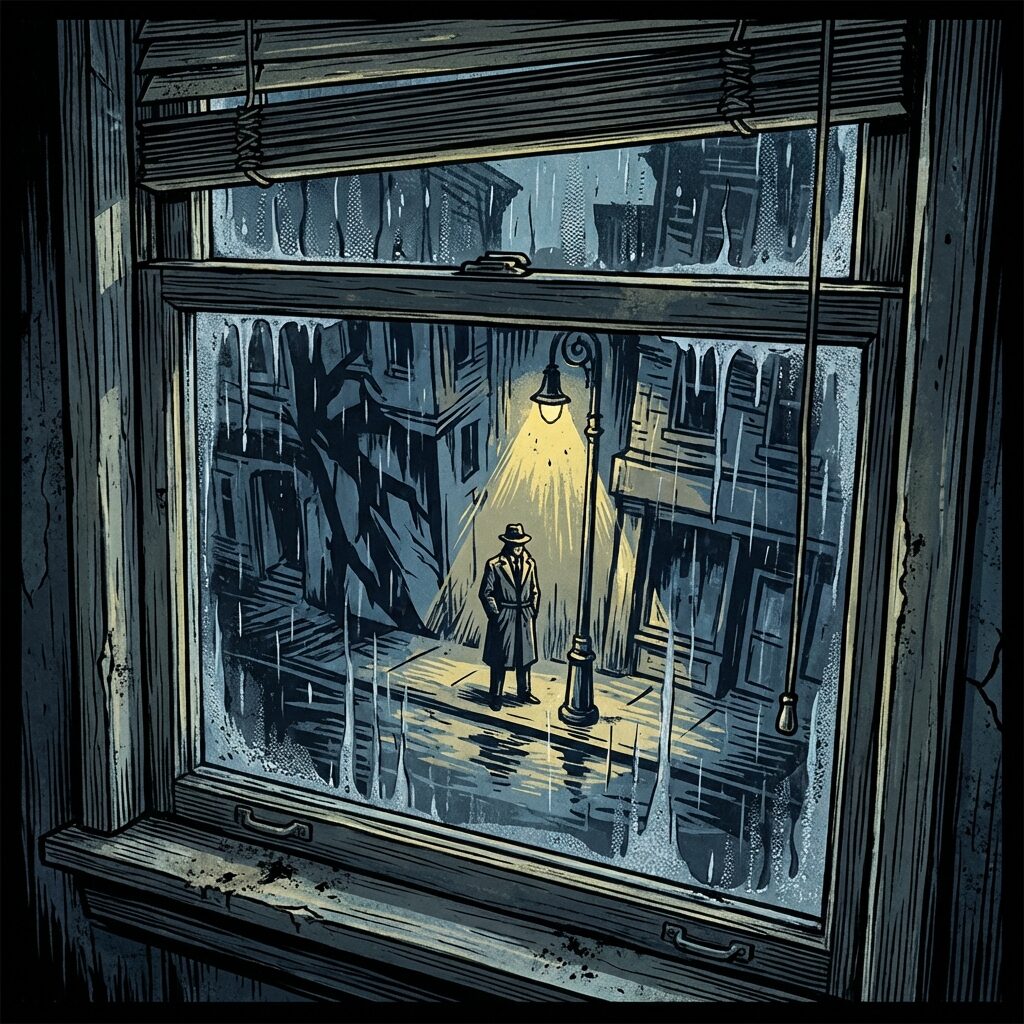
Put yourself in the position of hearing this song for the first time, knowing nothing about it. Really listen to what it’s saying.
“Oh, can’t you see / you belong to me.” Not “I love you.” Not “I need you.” You belong to me. That’s ownership, not affection. “Every smile you fake / every claim you stake.” He’s cataloguing her deceptions. He knows she’s faking smiles. He’s watching. “Every move you make, every step you take, I’ll be watching you.” Not “I’ll be there for you.” Not “I’ll be missing you.” Watching.
The whole lyric is written from the perspective of someone who lost the relationship and is now surveilling the person who left. The title phrase isn’t a love declaration; it’s a threat with a melody on top.
Sting was thinking about George Orwell when he wrote it, specifically 1984 and Big Brother, the surveillance state that watches you whether you consent to it or not. “I was thinking of Big Brother, surveillance and control,” he told The Independent in 1993. The personal context was his crumbling marriage to Frances Tomelty, his guilt about his affair with Trudie Styler, the possessiveness of a man watching his own domestic world fall apart. The lyric is the inner monologue of that emotional state, set to the catchiest melody he’d written in his life.
And then it became the most popular wedding song of its decade.
Sting told NME in 1983 that he watched Andy Gibb perform it on television, “some girl” beside him, the whole thing tender and sincere, and found himself hearing the words for what they were while watching someone miss the point entirely. “I could still hear the words, which aren’t about love at all. I pissed myself laughing.”
Here’s where it gets complicated, though. There’s a revisionism debate worth taking seriously. Sting has also said, in other contexts: “I wasn’t aware of any of this. I just thought I was just writing a hit song!” Which is a very different version of events from the Big Brother / surveillance / control account. American Songwriter has argued the sinister reading was added retroactively, that the song was written as a straightforward commercial melody, and the dark interpretation got layered on afterward once critics started noticing the possessive language.
Which is true? Probably both. Sting himself said in Isle of Noises: “My intention might have been to write a romantic song, seductive, enveloping and warm… then I saw another side of my personality was involved, too, about control and jealousy, and that’s its power.” That’s the most honest version, the song contains both things, the darkness wasn’t fully conscious but wasn’t fully absent either, and it came from the same emotional wreckage that was tearing his personal life apart at the time.
He knew enough to write the antidote. “If You Love Somebody Set Them Free,” from his 1985 solo debut The Dream of the Blue Turtles, was Sting’s explicit reckoning with what the earlier song had been, a correction in the form of a pop song, freedom as the answer to possession. You don’t write that answer if you hadn’t eventually understood the question.
Bergman in a Ballroom
Directed by Godley and Creme with a visual vocabulary borrowed from a 1944 jazz film, the video was among the first major clips to ignore its own lyrics entirely, and it made a young Richard Marx feel like he was watching Ingmar Bergman.
In September 1983, MTV was barely two years old and still working out what a music video could be. The default approach was literal: here are the lyrics, here is the band miming those lyrics somewhere that made visual sense. Breakup song? Two people arguing. Driving song? Film the artist driving. Nobody had pushed against the format enough to find out what it could actually do.
Then “Every Breath You Take” arrived.
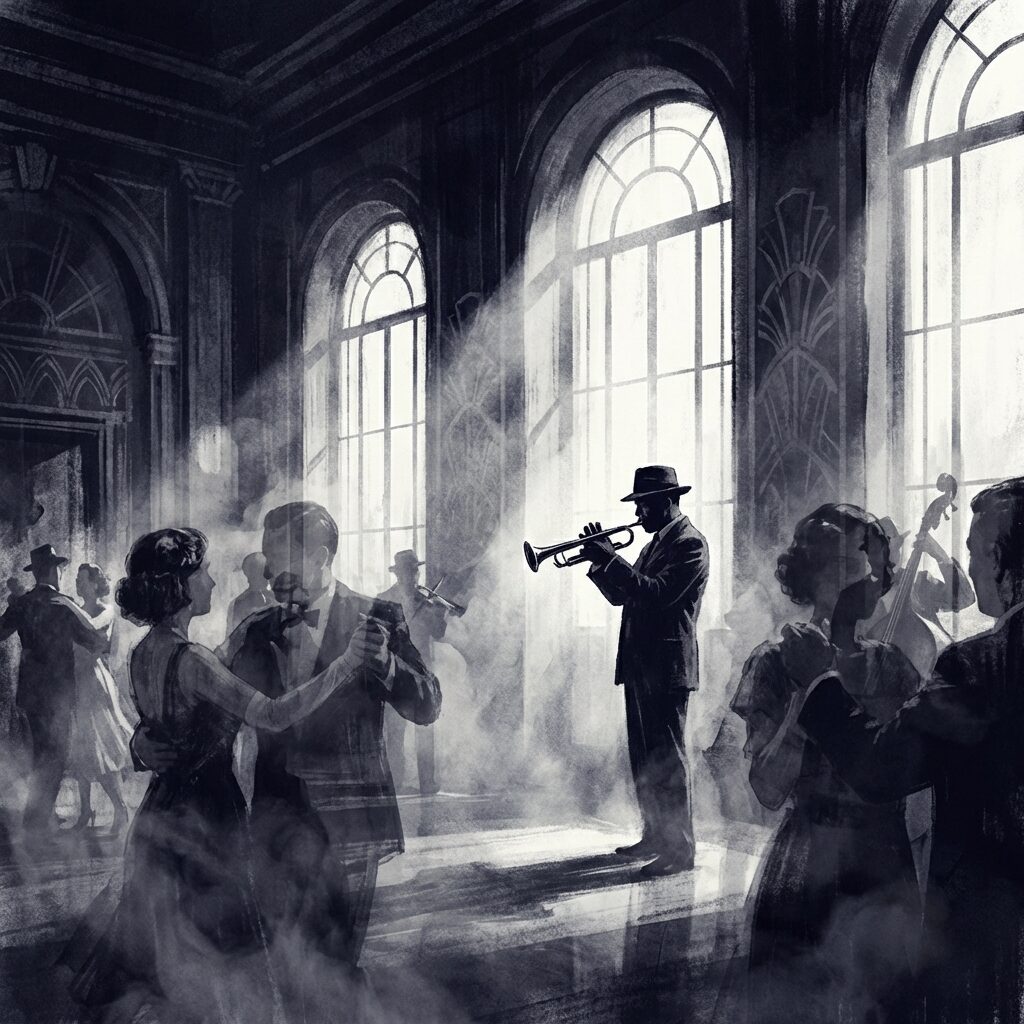
The video was directed by Godley and Creme, Kevin Godley and Lol Creme, ex-10cc, by then reinvented as video directors with more ambition than most. Before the shoot, A&M executive Jeff Ayeroff showed them Gjon Mili’s 1944 short film Jammin’ the Blues, a jazz documentary that Mili, a Life magazine photographer, shot in deep chiaroscuro, turning musicians into silhouettes and pools of light. That’s what they were going for.
The cinematographer was Daniel Pearl. If that name sounds familiar from a very different context: yes, Pearl also shot The Texas Chain Saw Massacre. He brought that sensibility with him, multiple exposures, layered imagery, band members existing in what feels like several moments at once. Godley and Creme had admired Pearl’s work on a Tom Petty video and borrowed both the cinematographer and the location.
What they made was a darkened ballroom with floor-to-ceiling windows, the band performing in shadow, shot in black and white with a blue tint. Sting plays upright double bass instead of his Fender, which fits the atmosphere and looks better on camera. There’s no story. No narrative to follow, no lyrics illustrated. Just mood and shadow and the low-grade unease of being observed.
The only non-musician in the video is a window washer working alone outside the frame. Godley’s explanation: “The window washer felt right for that kind of noir feel.” A person doing ordinary work, separate from everything else. Small detail, exactly right.
Richard Marx, then an unsigned artist watching music videos obsessively to figure out what made them work, put it more plainly than most critics did: “The first video I watched over and over was ‘Every Breath You Take’. It was like seeing a Bergman film. Directors usually spelled out every word of the lyrics in a video, but this was the first video I knew that didn’t do that. It was abstract.”
The video cost somewhere between $75,000 and $100,000, real money in 1983, and premiered June 12th of that year. At the inaugural MTV Video Music Awards in September 1984 it was nominated for five awards, winning Best Cinematography for Daniel Pearl, the first time MTV had given out that award. That it lost Video of the Year to The Cars’ “You Might Think” is the kind of thing that seems more inexplicable the further you get from it.
Over 1.6 billion YouTube views as of early 2026. One of seven music videos from the 1980s to hit that number. The restraint that must have seemed like a gamble in 1983 turned out to age better than almost any literal treatment would have.
The Numbers Are Absurd
Eight weeks at number one, the best-selling single of 1983, and a royalty stream that now accounts for an estimated quarter to a third of Sting’s total publishing income, from one song.
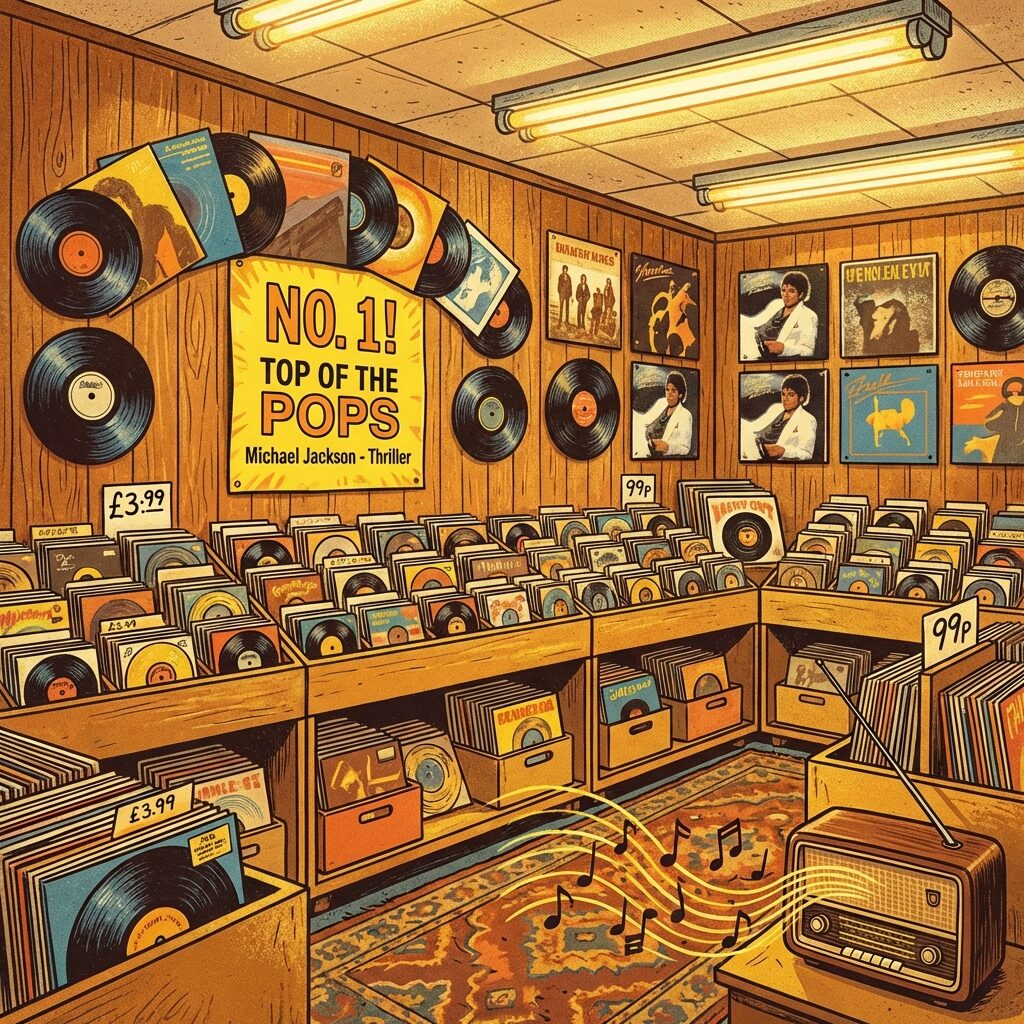
On July 9, 1983, “Every Breath You Take” hit number one on the Billboard Hot 100. It replaced Irene Cara’s “Flashdance… What a Feeling” and stayed there for eight weeks. Stayed there while people were getting married to it, totally misunderstanding what it was about, and Sting was laughing to himself about Andy Gibb.
It had debuted on June 4th, entering at number 36. That kind of climb, from 36 to 1 in five weeks, doesn’t happen for a song people are ambivalent about. The song had already finished its four-week run at the top of the UK Singles Chart before it even hit number one stateside. Two continents, back to back.
On the Billboard Hot 100 the week of its American peak, six of the top ten singles were British acts. Six. The last time that had happened was 1965, at the height of the British Invasion. A new wave band from London, a drummer, a guitarist, and a bassist from Newcastle, had briefly reversed the cultural current to roughly the same degree as The Beatles, The Rolling Stones, and The Kinks had nearly two decades before.
It ended the year as the best-selling single in the United States. It’s the fifth-best-selling US single of the entire 1980s. Certified 8x platinum by the RIAA. In 2019, BMI made it official: most played song in radio history, at nearly 15 million radio spins, eclipsing the Righteous Brothers’ record that had stood for 22 years. Only ten BMI-registered songs have ever hit 10 million US radio plays. This is one of only two by a UK act, Van Morrison’s “Brown Eyed Girl” being the other.
Three billion Spotify streams and still going up. Streams jumped 89% in 2024, then another 36% in 2025. The song isn’t declining. It isn’t plateauing. It’s, somehow, still growing. The Stranger Things placement helps (more on that in a moment), but the growth predates it. Something about this song keeps finding new listeners who respond to it the same way people did in 1983, misreading it, maybe, but feeling it regardless.
The financial reality: roughly $730,000 to $740,000 per year in royalties. Credited solely to Sting. Estimated in 2010 to account for somewhere between a quarter and a third of his total music publishing income. From one song. In 2022, Sting sold his entire catalog of 600-plus songs to Universal Music Group for an estimated $300 million. Which song was doing a lot of the heavy lifting on that valuation? You can probably guess.
Puff Daddy’s $300M Thank You
When Puff Daddy sampled “Every Breath You Take” without clearance for his B.I.G. tribute, Sting sued and claimed 100% of publishing royalties. The catch: what got sampled was Andy Summers’ guitar riff, and Summers, with no songwriting credit, got nothing.
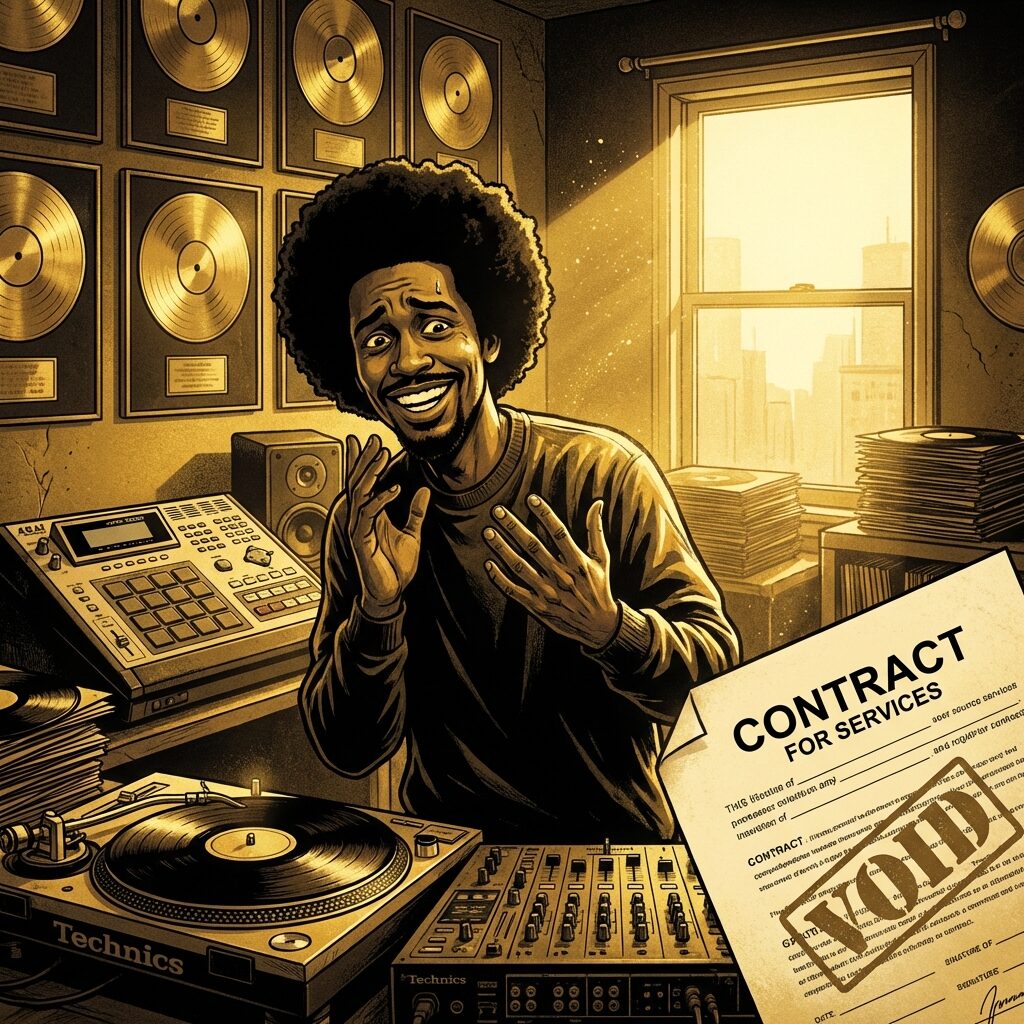
On March 9, 1997, the Notorious B.I.G. was shot and killed in Los Angeles. He was 24 years old. Two and a half months later, Sean “Puff Daddy” Combs released “I’ll Be Missing You”, a tribute to his friend built around a sample of “Every Breath You Take.”
One problem: he hadn’t asked permission.
The sample was uncleared. The song hit number one on the Billboard Hot 100 anyway and stayed there for eleven weeks. It reached number one in sixteen countries. It shipped over three million copies in the US alone. It won the Grammy for Best Rap Performance by a Duo or Group. One of the biggest tribute songs in pop history, built on an unauthorized sample.
Sting sued. Because the sample was uncleared, he could claim 100% of publishing royalties rather than the standard cut. Reports circulated that the song earned him around $2,000 a day, Snopes has rated that figure uncorroborated, so treat it skeptically. What’s not in dispute is that the money was real. Sting mentioned in a 2003 Rolling Stone interview that the royalties helped pay for his children’s education. So in some roundabout way, Puff Daddy’s unauthorized sample became an inadvertent tuition check.
Here’s the part that still stings: Puff Daddy didn’t sample Sting’s melody. Not his lyrics, not his bass line. He sampled Andy Summers’ guitar riff, the arpeggiated add9 voicing that Summers invented in one take and has long argued is actual songwriting. The thing that got sampled was, in the most literal sense, Andy Summers’ work.
Andy Summers got nothing. No songwriting credit on “Every Breath You Take” means no publishing claim. The guitarist whose playing was literally lifted walked away empty-handed.
Stewart Copeland turned this into a recurring bit. “One of our favourite in-band riffs,” he said in 2018, “is that, when Puff Daddy sampled Every Breath You Take, he sampled Andy’s guitar figure, not the melody or the lyrics. Me and Andy go, ‘Go on Sting, pay Andy his royalties,’ and Sting will say, ‘OK Andy, here you are…'”, Copeland paused, “Not reaching anywhere near his wallet.”
Despite the lawsuit and the money dispute, Sting performed with Puff Daddy at the MTV VMAs on September 4, 1997. Whether that was pragmatism or just an acknowledgment that the song had become something larger than its legal mess is hard to say. The tribute was real even if the clearance wasn’t. Sting’s relationship with “Every Breath You Take” has always been shaped by what other people decide it means, and that was true long before Puff Daddy got involved.
Who Owns This Song?
In August 2025, Summers and Copeland sued Sting in London High Court over unpaid royalties, and the central argument, that the guitarist who saved the song deserves credit for it, echoes the song’s own obsessions with ownership and control.
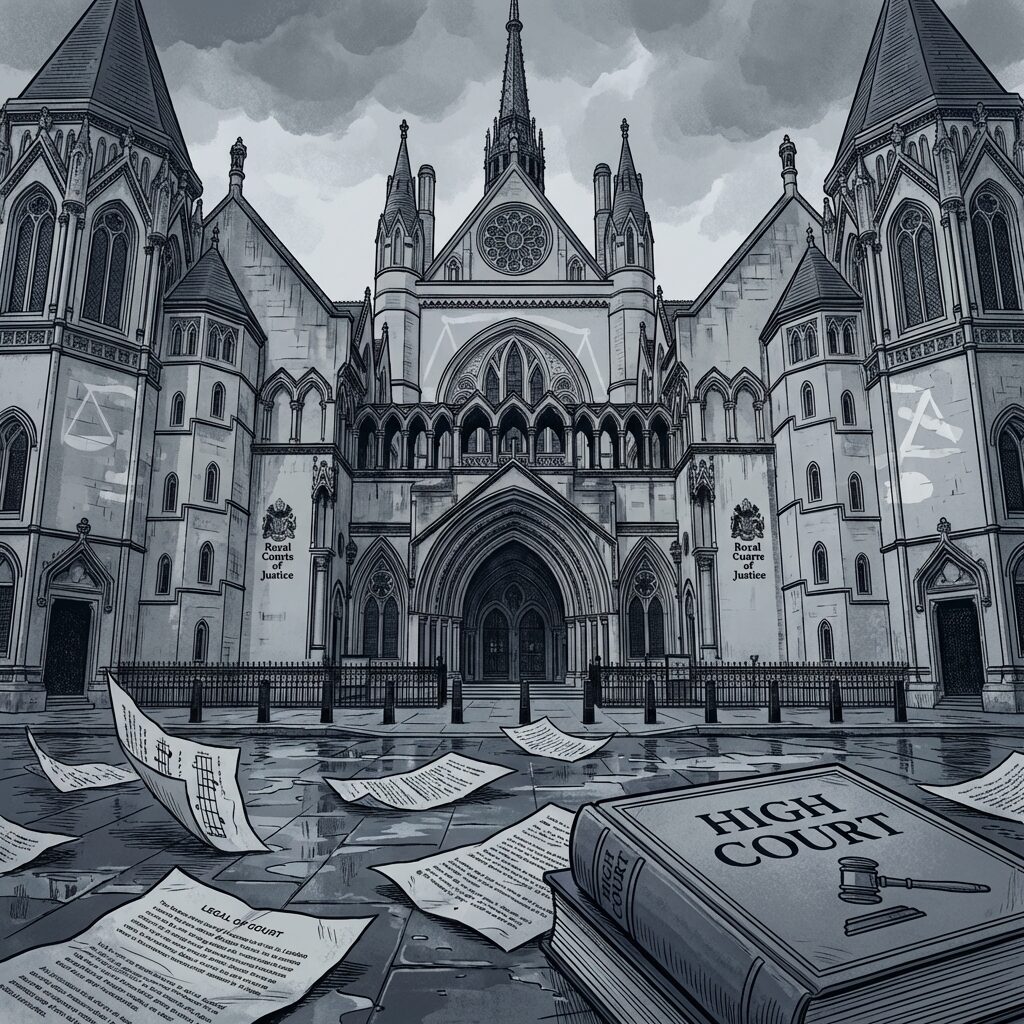
In August 2025, Andy Summers and Stewart Copeland filed a lawsuit against Sting, born Gordon Matthew Thomas Sumner, and his company Magnetic Publishing Limited in London High Court.
The claim: somewhere between $2 million and $10.75 million (£1.5 million to £8 million and change) in unpaid royalties for “Every Breath You Take” and other Police songs including “Roxanne” and “Every Little Thing She Does Is Magic.”
The core dispute goes back to a 1977 oral agreement. Summers and Copeland say that early on, the three of them agreed Sting would take a higher share of publishing income as the primary songwriter, but that Summers and Copeland would each receive 15%. That deal was eventually put in writing, in 1981, then revised in 1995 (some sources say 1997), then again in 2016.
The location of that 1977 conversation is already contested. Summers remembers it happening on the street outside Miles Copeland’s office in Notting Hill. Sting disputes the location and disputes that it was ever a firm agreement at all. They don’t agree on where they were standing when they allegedly made a deal now worth millions of dollars.
Sting’s legal team argues the most recent revision, the 2016 agreement, only obligates payment “from the manufacture of records,” meaning streaming and digital revenue falls outside it. Summers and Copeland argue that streaming is just a new delivery mechanism for the same commerce, and the agreement covers it.
At a January 2026 pre-trial hearing, it emerged that Sting had already paid $870,000 (£647,000) to his bandmates since the lawsuit was filed, what his legal team called payment for “certain admitted historic underpayments.” In the same documents, Sting’s representatives argued that Copeland and Summers may have been “substantially overpaid” under previous agreements. So: admitted underpayments, alleged overpayments, same filing. Court documents have their own logic.
Summers has said more than once that he deserves a songwriting credit he’s never received. On the Jeremy White Show in 2023: “Every Breath You Take was going in the trash until I played on it.” Copeland has backed him on this. Hugh Padgham has offered a more complicated read, that Sting had essentially sketched the guitar figure on the Hammond organ demo and Summers “translated” it to guitar rather than inventing it outright. Summers strongly disputes that characterization.
The question underneath the legal one is worth sitting with: when does instrumental contribution become songwriting? A riff that rescues a song, that ends up as its most recognizable element, the thing that gets sampled three thousand times, is that arrangement, or composition? The music industry’s traditional answer is arrangement. Copyright attaches to melody and lyrics. Riffs, however central, are considered performance rather than authorship.
What’s hard to ignore is where that leaves us. A song about surveillance and possession, about watching someone, claiming them, the entitled certainty of “you belong to me”, is now being argued over in a London courtroom on exactly those terms. Who does this song belong to? Sting wrote the words. Summers says he saved it with a guitar part. Copeland built the rhythmic foundation. Padgham held the whole thing together in the room. Three billion streams, $740,000 a year, and a High Court docket.
If you were going to write a song about owning something nobody can fully agree belongs to them, you’d be hard pressed to do better than this one.
Still Watching
Forty years on, the song is still accelerating, and the unresolved lawsuit mirrors the unresolved lyric, still asking the same question: who does this belong to?

Every element of this song’s story contains a gap between what it appears to be and what it actually is.
A love song that’s about control. A band recording as a unit that was actually three people in separate rooms who couldn’t look at each other. A guitarist’s career-defining moment that earned him no songwriting credit. A tribute that became a legal payday. A marriage anthem that its author greets with “well, good luck.” Everywhere you look, the surface says one thing and the substance says another.
And still it grows. Three and a half million Spotify plays per day as of early 2026. Streams that jumped 89% in 2024 and then kept going. Generations who weren’t born when it hit number one finding it through Stranger Things, Mike and Eleven at the Snow Ball, slow dancing under crepe paper streamers, a song about obsessive surveillance playing over the most innocent romantic scene the show could construct. The gap between surface and meaning, reproduced again for a new audience.
The lawsuit remains unresolved. A London High Court will eventually make a determination about a 1977 conversation whose location Sting and Summers can’t agree on, and that determination will produce a number, some portion of $740,000 per year, argued over by three men who made one of the defining records of the 1980s and have been arguing about it ever since. Whether Andy Summers deserves a songwriting credit that would change the historic record is, strictly speaking, not what’s before the court. The court will decide who gets paid. Whether the guitarist who saved a song in one take should be recognized as having written part of it, that question stays open.
Sting put it most honestly, in that Isle of Noises passage: “My intention might have been to write a romantic song, seductive, enveloping and warm… then I saw another side of my personality was involved, too, about control and jealousy, and that’s its power.”
That’s the most honest thing anyone has said about this song. He wrote it with one intention and found something else inside it. Which is exactly what everyone who’s ever misidentified it as a love song has also been doing, finding the warmth in it, feeling the enveloping quality, not quite seeing what’s watching them from the other side of the melody.
The song about “I’ll be watching you” has become a song the whole world watches. Forty years in, nobody can fully agree on what they’re seeing.
“Every Breath You Take” was almost scrapped — until Andy Summers saved it in ONE take. And then got zero songwriting credit. 🎸👀 #ThePolice #1980s #EverBreathYouTake https://bit.ly/4sHdCkz

Click to Tweet