The Wait
The most famous drum moment in pop history works because of three and a half minutes of near-silence before it, a song built entirely out of what’s missing.
You already know what’s coming. That’s the whole point.
Put on “In the Air Tonight” right now, the album version, not some streaming edit, and start a timer. You’ll sit through three minutes and forty seconds of synth pads, a ticking drum machine, and Phil Collins’ voice floating in near-darkness before it happens. Three minutes and forty seconds. In a pop song. In 1981, when radio programmers measured patience in eight-bar intros.
And then.
Ten descending tom-tom hits. No cymbals, no snare. Just those toms crashing through the silence like someone kicking down a door you forgot was there. It is, by most accounts, the most famous drum fill in pop history. Rolling Stone put it plainly in 2021: “No other drum fill has ever wormed its way as deeply into the popular consciousness as Phil Collins’ descending 10-note tom-tom break on ‘In the Air Tonight.'”
But here’s what makes this song worth writing about forty-five years later: that fill only works because of everything that was taken away first. There are no cymbals on the drum kit. There was no plan for the lyrics. There was no marriage to come home to. There are no drums at all for over half the song’s runtime. The track is built almost entirely out of absence, what’s not there shapes it more than what is. Every element people remember exists because something else got stripped out.
This is a song defined by what’s missing.
An Empty House in Surrey
Collins cleared out the master bedroom of his empty house, filled it with recording gear, and improvised nearly every lyric in a single take, putting a collapsing marriage straight into a microphone with no plan and no filter.
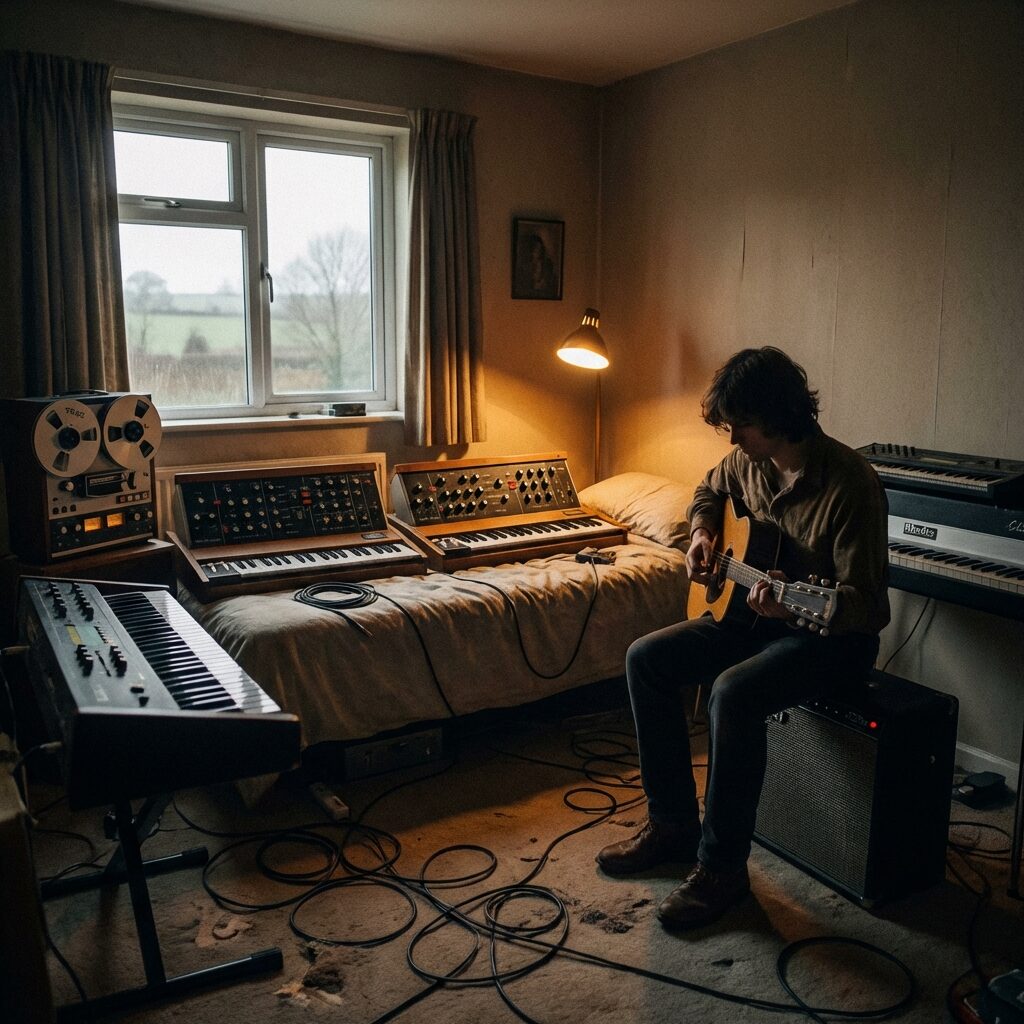
Phil Collins and Andrea Bertorelli first met as eleven-year-old kids in a London drama class. They reconnected years later when Genesis played Vancouver, married in 1975, and by 1978 it was falling apart. The culprit was touring, the thing that grinds down musicians’ marriages with reliable efficiency. During the 1978 Genesis world tour supporting …And Then There Were Three…, Andrea took their two children and went to her parents in Vancouver. Collins followed in late ’78, trying to hold things together. He couldn’t. He came back to England in April 1979.
“I had a wife, two children, two dogs, and the next day I didn’t have anything,” Collins said later. He came home to what he described as “a virtually empty house.”
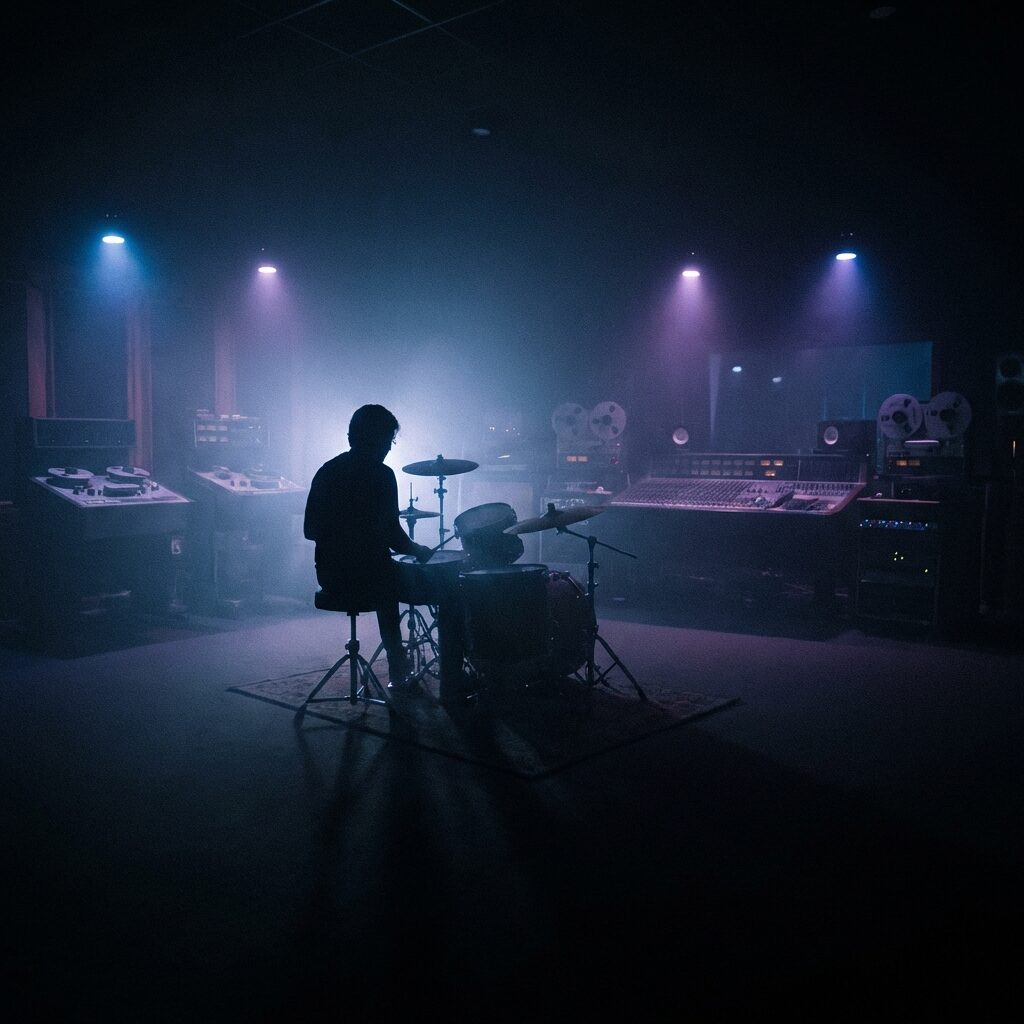
Then he did something that almost sounds like a songwriter’s invention of himself: he cleared out the master bedroom and turned it into a recording studio. The room where his marriage had lived became the room where he sat alone processing the loss of it. That’s the actual origin of “In the Air Tonight”, not a chord progression, not a production trick, but a guy surrounded by gear in the bedroom where his wife used to sleep.
The equipment was a snapshot of late-’70s home recording: a Brenell Mini 8 one-inch eight-track tape machine, an Allen & Heath Modular II console, a Fender Rhodes Stage 73 electric piano, a Collard & Collard grand piano, and a Roland VP-330 Vocoder Plus. Two pieces mattered more than the rest. The Sequential Circuits Prophet-5 synthesizer, one of the earliest fully programmable polyphonic synths, designed by Dave Smith and John Bowen in 1977, produced those eerie, suspended pads that hang over the whole song. And a Roland CR-78 CompuRhythm, the first microprocessor-controlled programmable drum machine, provided the skeletal pulse underneath. Collins had been offered one by Roland when Genesis toured Japan in ’78 but turned it down. He later called them back. That dry, insistent tick running through “In the Air Tonight”? The CR-78’s Disco 2 preset in its A variation, pushed through reverb and compression.
A man alone with machines. That was the whole arrangement.
One day, working on a piece in D minor, which Collins called, nodding at Spinal Tap before Spinal Tap existed, “the saddest key of all”, he landed on a chord sequence he liked, switched on the microphone, and started singing. Almost everything that came out was improvised. “The lyrics you hear are what I wrote spontaneously,” Collins told interviewers. “That frightens me a bit, but I’m quite proud of the fact that I sang 99.9% of those lyrics spontaneously.”
He wasn’t crafting a statement or working through drafts. He was venting, anger and loss and frustration going straight into a microphone with no filter and no plan. The original demo ran eight tracks: stereo Prophet-5, stereo Rhodes, voice, vocoder, and the CR-78. No live drums. No drum fill. When he later tried adding drums to the demo, he’d hit a drum, sprint to the fader, hit another drum, sprint back. The iconic fill didn’t exist yet. Nobody had even thought of it.
There’s a footnote Collins has spent decades trying to minimize. When he performed “In the Air Tonight” on Top of the Pops on January 15, 1981, he placed a white paint pot and brush next to his keyboard, then swapped it for a red one during “I Missed Again.” The press read it as a dig at Andrea’s relationship with their painter and decorator, the man Collins publicly blamed for the marriage ending. Collins insisted he’d just found the paint backstage. Andrea told the Daily Mail: “I felt sick and betrayed. I knew straight away it was a message to me.” Collins later admitted he’d written the original demo lyrics on a piece of the decorator’s stationery. The divorce story is messier than Collins’ telling suggests, Andrea actually filed on the grounds of Phil’s adultery, not hers. In 2015, she told the Daily Mail she was “sick of” her ex-husband’s version of events. In 2016, she announced legal action over his autobiography Not Dead Yet.
But none of that matters to the song as a recording. What matters is the emotional condition it came out of: a man in a bedroom that used to mean something else, improvising words he didn’t fully understand, putting hurt he couldn’t quite name into a microphone. His marriage left and the music moved into the empty space.
The Accident at Townhouse
The iconic drum sound wasn’t engineered, it was a pure accident. A talkback mic meant for studio communication picked up Collins’ cymbal-less kit through a speech compressor, and a noise gate cut the decay to silence. Nobody designed any of it.
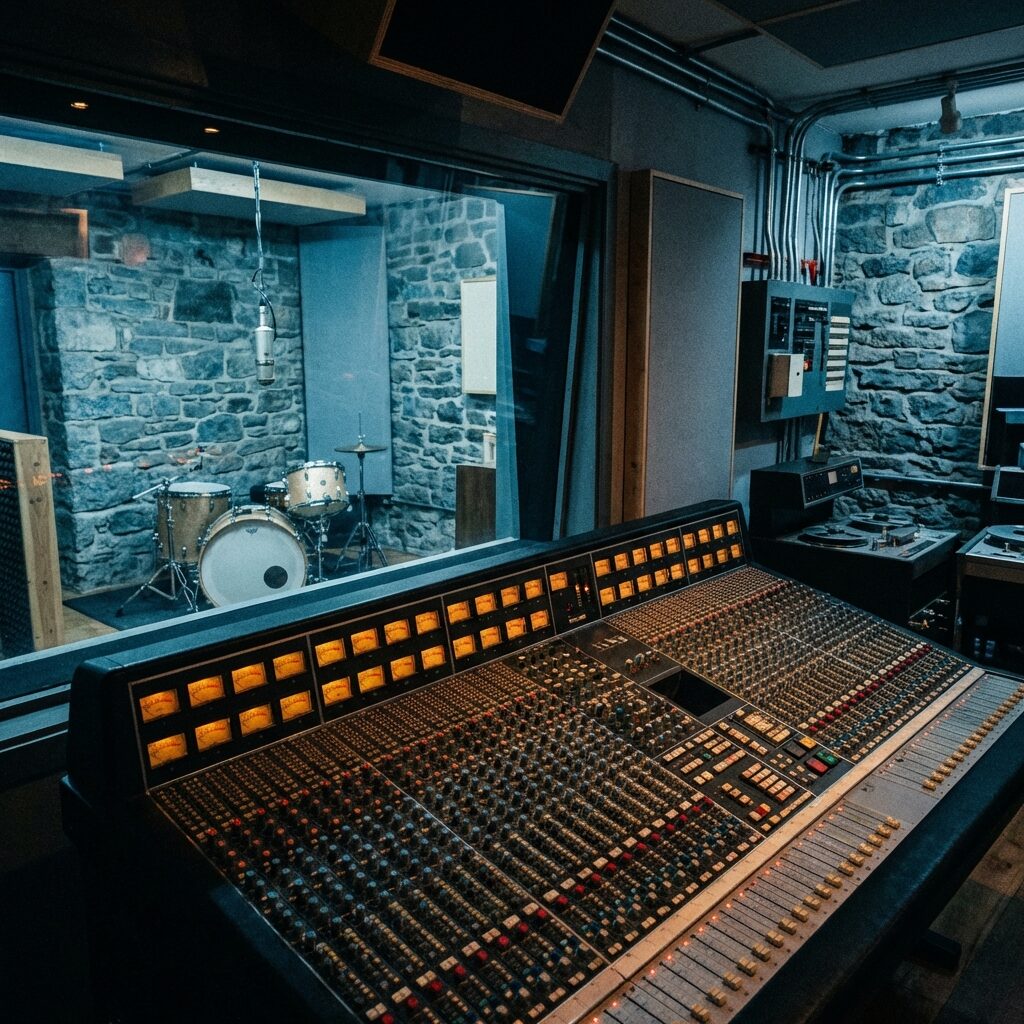
Before “In the Air Tonight” got its drums, the drum sound that would define it had to be invented. Except nobody invented it. It fell out of a mistake.
In 1979, Collins was at Townhouse Studios in Shepherd’s Bush, London, playing drums on Peter Gabriel’s third solo album. The studio, nicknamed The Stone Room, was built using rock quarried from the grounds of the Manor Studio near Oxford. It housed one of the first Solid State Logic SL-4000B consoles ever installed: forty channels, forty compressors, forty noise gates. A ridiculous amount of processing power for 1979. The board had a feature called “reverse talkback”, labeled “Listen Mic” on the console, which was just a heavily compressed microphone circuit meant to pick up speech across the room so engineers could talk to musicians during takes.
Gabriel had given Collins an unusual instruction: remove every cymbal from your kit. All of them. No hi-hats, no crashes, no rides. Hugh Padgham, the engineer, later explained the thinking: “The single thing that messes up the sound more than anything else is the cymbals.” Without that high-frequency wash bleeding into every mic, you could get closer to the drums. You could actually hear the room.
Then the thing happened. “Phil was playing the drums one day,” Padgham told MusicRadar. “I opened this microphone to speak to him while he was still playing the drums and out came the most unbelievable sound.”
What Padgham had done, without meaning to, was route Collins’ live drums through a compressor designed for speech. The massive compression of the talkback circuit crushed the drum signal, made the room sound enormous, explosive, almost violent. And when Collins stopped playing, the noise gate in the talkback chain slammed shut, cutting the sound to absolute silence in an instant. No natural decay. No ring. Just: massive sound, then nothing.
“When I pushed the button for the compressor on the console, there was a noise gate already in the chain,” Padgham recalled. “Phil stopped playing and the sound suddenly went to nothing. It was like, ‘Oh my god, that’s amazing.'”
A note for the gear-minded: everyone calls this sound “gated reverb.” It isn’t, technically. It’s a heavily compressed room microphone hitting a noise gate. The distinction matters because nobody designed this. Nobody sat down with a reverb unit and a gate and dialed in parameters. A mic that was never meant to record anything picked up drums it was never meant to hear, processed through compression it was never meant to apply, and the gate that existed purely for talkback functionality shaped the decay. Every part of it was an accident.
Overnight, the Townhouse engineers rewired the board so the reverse talkback signal could be recorded to its own discrete track. Later SSL 4000 models made this a one-button feature. Gabriel told Collins to play continuously for five minutes, which became the track “Intruder,” the opening song on Peter Gabriel (1980). But Collins took the sound with him. When he went back to his home demos and started thinking about how to record them properly, he had a new weapon: a drum sound born from subtraction. No cymbals. No natural room decay. Less stuff in the signal, and somehow a bigger sound coming out.
D Minor and the Art of Restraint
A four-chord Aeolian loop over a static bass pedal, an arrangement that builds from two instruments to a full band, and a drum fill that was never planned.

Let’s talk about what’s actually happening in the music, because the structure of this song is simpler than it has any right to be, and that’s exactly why it works.
The chord progression is a four-chord loop in D Aeolian: Dm – C – B♭ – C. That’s i – ♭VII – ♭VI – ♭VII if you’re counting scale degrees. An Aeolian shuttle, the chords rock back and forth over a static D bass pedal that barely moves for five and a half minutes. It’s modal, it’s hypnotic, and it refuses to resolve. There’s no dominant chord pulling you toward a cadence. No harmonic surprise. The harmony just hovers. It sits there, waiting for something that never comes.
Now listen to how the arrangement exploits that stasis. For the first stretch of the song, you’re hearing two instruments: the CR-78 drum machine ticking away on that Disco 2 preset, and the Prophet-5 synthesizer laying down those ghostly pads. That’s it. Two sound sources in a pop song released in 1981, when production was getting denser and busier by the month. Collins gives you almost nothing and dares you to keep listening.
Then the Rhodes electric piano creeps in. Then Collins’ voice, mixed almost completely dry, with just a quarter-note tape delay extending the ends of his phrases. That delay matters more than it sounds like it should. It creates a sense of space without adding reverb, which would warm the sound and make it feel less lonely. The dryness is the point. You’re hearing a voice in a room, not a voice in a cathedral. It’s intimate in a way that feels almost uncomfortably close, like someone talking to themselves and not realizing you can hear.
The vocoder kicks in on the words “I remember”, the VP-330 processing Collins’ voice into something half-human, half-machine. At the exact moment the lyrics invoke memory, the voice itself becomes altered, filtered, not quite real. Memory distorts things. The vocoder makes you hear that distortion. It’s one of those production choices that sounds obvious in retrospect but probably wasn’t.
And then, at 3:40, the dam breaks.
Ten descending tom-tom notes. Collins played a Premier 717 Elite Black custom kit with six toms, and he asked for only toms, no cymbals, no snares. The fill was completely improvised. “I didn’t sit down and think, ‘What would be the best drum fill?’ I just did it,” Collins told MusicRadar. “It could have been anything.” He described the sound of the toms less charitably: “Barking seals, that’s what it sounds like.”
After the fill, everything arrives at once: live drums with that massive compressed-room sound, bass guitar (John Giblin on a 1958 Fender Precision), guitar from Daryl Stuermer running a Suntech Super Stratocaster through Boss DS-1 distortion and CE-1 Chorus, violin from L. Shankar entering after each “oh Lord” in the chorus, and multi-tracked backing vocals all performed by Collins himself. You’ve been sitting in near-silence for three and a half minutes, and suddenly every frequency is accounted for. It’s almost violent.
One more detail worth mentioning: the Prophet-5 parts on the final record are the ones from Collins’ home demo. They tried re-recording them professionally at Townhouse Studios. It didn’t work. The studio versions were technically cleaner but they lost something, some quality of a man alone at 2 AM with a synth that couldn’t be faked under proper studio conditions. So they kept the demos. Sometimes the rough take is the real one.
A Song Its Writer Doesn’t Understand
Collins improvised the lyrics in one take and genuinely has no idea what the song means. That blankness is exactly why millions of people hear their own fury in it.

“Well, if you told me you were drowning, I would not lend a hand.”
That opening line is vicious. Cruel and direct in a way that pop music in 1981 mostly wasn’t. But listen to what follows it: “I’ve seen your face before, my friend, but I don’t know if you know who I am.” The venom drains out almost immediately, replaced by something confused, almost lost. This isn’t a person in control. This is someone reaching for a feeling they don’t have the words for yet.
Collins has said the same thing for forty years, in interview after interview: he genuinely does not know what this song is about. “I wrote the lyrics spontaneously,” he told an interviewer in 2016. “I’m not quite sure what the song is about, but there’s a lot of anger, a lot of despair and a lot of frustration.” Elsewhere: “Nobody knows what the song is about, and I kind of like the mystery.” And more bluntly: “I can promise you, it’s not what you think it’s about, because I don’t know what it’s about.”
He’s not being coy. When you improvise lyrics in a single take while processing a divorce you haven’t finished feeling yet, what comes out isn’t a story. It’s a mood. The drowning metaphor sits next to phrases that sound like things you’d actually say to someone you’re furious with, “you can wipe off that grin,” “it’s all been a pack of lies”, and none of it adds up to a plot. It runs on emotional logic. “The hurt doesn’t show, but the pain still grows / It’s no stranger to you and me.” That’s not a narrative beat. That’s a feeling borrowing the shape of language.
Listeners, predictably, couldn’t leave the ambiguity alone. The urban legend that grew around this song is one of the most stubborn in pop music. The story goes something like this: Collins witnessed a man watching someone drown without helping, tracked the bystander down, invited him to a concert, and spotlit him during the performance. The legend has variations, in some, the drowning victim is Collins’ friend; in others, the bystander is a rapist. None of them are true. Collins denied every version in a BBC World Service interview. Snopes rated the claim false years ago. It refuses to die anyway.
Eminem gave the legend its widest audience in “Stan” from The Marshall Mathers LP (2000), where the obsessive fan character references it, and gets the title wrong: “You know the song by Phil Collins, ‘In the Air of the Night’ / About that guy who could a saved that other guy from drowning / But didn’t, then Phil saw it all, then at a show he found him?” Even inside a song about unhealthy parasocial relationships, the legend gets treated as fact. That’s how deep into the culture it burrowed.
But the lyrical vagueness isn’t a problem to be solved. I’d argue it’s the whole engine. Because Collins doesn’t know what the song is about, and because the words came from raw, unprocessed feeling rather than any plan, the lyrics work like a blank space you project onto. You hear your own betrayal in them. Your own contempt for someone who wronged you. Your own late-night fury at a situation you can’t change. The drowning line works not because it describes a real drowning but because everyone has felt that specific kind of anger, the kind where you’d watch someone suffer and feel nothing about it. That’s an ugly, honest emotion, and Collins caught it precisely because he wasn’t aiming for it.
No intended meaning left room for everyone’s meaning. The song keeps doing this, getting out of its own way.
Where’s the Backbeat?
Atlantic Records’ chief panicked at the drumless mix and demanded a backbeat, but the single version he pushed for has vanished from streaming. The sparse album cut is the one that survived.
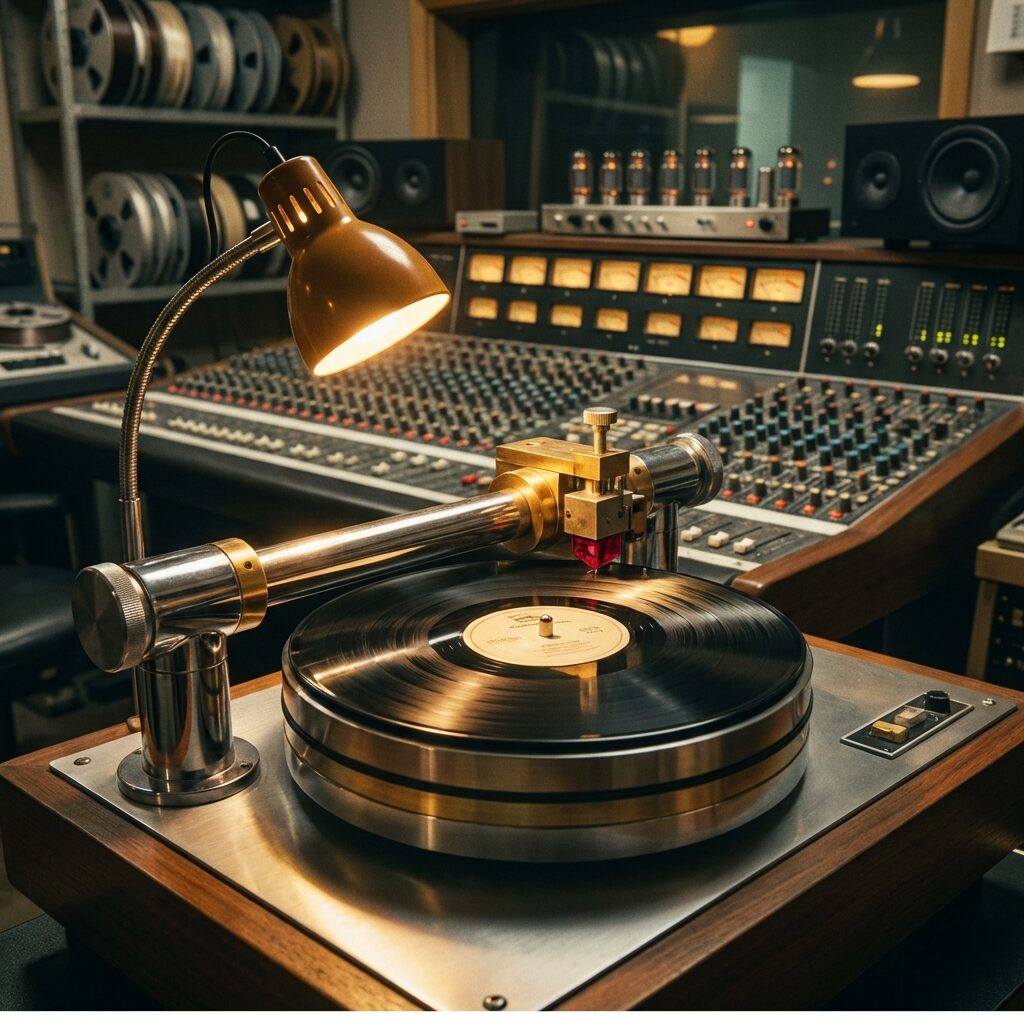
Phil Collins didn’t set out to have a solo career. That’s not false humility, it’s documented fact. He brought his home demos to Ahmet Ertegun, the legendary head of Atlantic Records, essentially as a creative exercise. Ertegun heard finished songs where Collins heard sketches. The demos were good enough to release.
Collins initially considered hiring an outside producer. The shortlist included George Clinton, Maurice White, and Phil Ramone. George Clinton producing “In the Air Tonight.” Imagine that for a second. But Collins realized he didn’t actually want a collaborator shaping the sound. He wanted someone to confirm that his instincts were right. So he produced it himself with Hugh Padgham engineering.
Padgham drove down to Collins’ house on a sunny day, listened to the demos, and they played Frisbee in the garden. That’s how a record that would sell ten million copies worldwide got started.
The recording happened between August and November 1980, split between Townhouse Studios in London and The Village Recorder in Los Angeles. The Townhouse sessions used that SSL SL-4000B console, the same board where the gated drum sound had been discovered. The Village Recorder had a Neve console with NECAM automation for mixing. Collins’ vocals were captured with a Beyerdynamic M88 microphone through an Allen & Heath Mini Limiter, relatively modest gear by professional studio standards. “Yes, the mic and limiter are cheap!” Collins said. “Although I’m recording in these posh studios, I’ve never been into flash gear. I mix everything on a pair of $200 speakers!”
Daryl Stuermer, who played guitar on the track, first heard the demos while driving back to London from a Genesis rehearsal. His reaction says a lot about how Collins was perceived within his own band: “I didn’t even know he was a songwriter. It was a really moody piece, just him and a drum machine, and I didn’t know whether the lyric was complete or not.” Collins’ bandmates in Genesis apparently felt similarly. Collins claims he offered “In the Air Tonight” to the band, but Mike Rutherford and Tony Banks rejected it as “too simple.” Tony Banks insists Collins never actually played it for them. One of those stories is true and the other isn’t, and at this point it probably doesn’t matter.
The real fight came at the end of the process. Collins presented the final mix, Ertegun visited the cutting room in New York and panicked. “Where’s the down beat, where’s the backbeat?” the Atlantic chief asked. Collins explained that the drums would come in eventually. “Yeah, you know that and I know that,” Ertegun shot back, “but the kids don’t know that; you’ve got to put the drums on earlier.”
So Collins, at the last minute, recorded an additional drum part and edited it into an earlier section of the mix. This became the single version, 4:59 instead of the album’s 5:34, with drums appearing much sooner. The single version charted, got radio play, did its commercial job. And then it essentially vanished. Search for “In the Air Tonight” on any major streaming platform today and you’ll find the album version, live recordings, remixes, the original demo. The single edit that Ertegun demanded? Gone. The version the market was supposed to need, the one with the backbeat where the kids could find it, turned out to be the disposable one. The version with three and a half minutes of nothing is the one that lasted.
Five Minutes Through Miami
Michael Mann gave 5.5 minutes of the Miami Vice pilot to the song, stripped out nearly all other audio, and created what became the definitive visual pairing for a track built on empty space.

Three years after its release, “In the Air Tonight” showed up somewhere nobody expected, and arguably never left.
The pilot episode of Miami Vice, “Brother’s Keeper,” which premiered on NBC on September 16, 1984, has a sequence that still feels like it shouldn’t have been allowed on network television. Crockett and Tubbs are driving through nighttime Miami in a black Ferrari Daytona Spyder 365 GTS/4. The scene runs approximately five and a half minutes. Five and a half minutes of prime-time, major-network television handed over to a pop song. Michael Mann, the show’s executive producer, did something borderline reckless with the audio: he stripped nearly everything out. No traffic noise, no ambient city hum. Just selected fragments of dialogue, the metallic click of Tubbs loading his shotgun in the passenger seat, and Collins’ track playing almost in full.
Then the scene turns. Crockett pulls over at a phonebooth, remember those, and calls his ex-wife Caroline. He asks her if their relationship was “real.” It’s the kind of question you only ask when you already know the answer. A man driving through darkness, reaching out to a marriage that’s already over. If that sounds familiar, it’s Collins’ own story, grafted onto a fictional cop in a Ferrari. You could call the parallel heavy-handed, but it lands because the feeling is real on both ends. Collins wrote from that place. The scene lives there.
What Mann seemed to grasp about the song is something most listeners sense without thinking about it: all that empty space in the arrangement leaves room for pictures. A denser mix would compete with the visuals. This one just sits underneath them, barely there. Critic Matt Zoller Seitz said that after the Miami Vice pilot, the song was essentially stamped as “Property of Michael Mann.” That overstates it, but not by much. For anyone who watched that pilot at the right age, “In the Air Tonight” is that drive. Neon smeared across wet asphalt. A car moving through a city that couldn’t care less.
The pilot won two Emmys, for sound editing and cinematography, and Collins himself later appeared in the series, playing a con man named Phil Mayhew in the Season 2 episode “Phil the Shill.” The series finale deliberately echoed the pilot scene, bringing things full circle. But it’s that first drive people remember. Five and a half minutes where Mann bet that a song could carry a scene better than any script, and he was right.
The Fill That Won’t Die
From a gorilla rescuing Cadbury’s brand to Mike Tyson air-drumming in The Hangover, the fill turned into shared cultural shorthand, so powerful that one BBC showrunner had to fade it out early because audiences would stop following the plot just waiting for it to hit.

Most songs have a cultural moment and then fade. “In the Air Tonight” keeps stumbling into new ones.
In 2007, a gorilla saved a chocolate company. Cadbury’s Dairy Milk brand was in trouble, a 2006 salmonella contamination at their Marlbrook plant in Leominster had forced the recall of over a million bars, sickened 37 people, cost £30 million in lost sales, and resulted in a £1 million fine. Market share had dropped 5%. The brand needed a reset.
What it got was a 90-second tracking shot of a gorilla sitting behind a drum kit. The ad, created by Fallon London under creative director Juan Cabral, showed the gorilla (performed by actor Garon Michael in a suit) listening to “In the Air Tonight” with increasing intensity, then erupting into the drum fill. No product shots until the final frame. No voiceover. No pitch. Just a gorilla, a drum kit, and the wait.
Michael wasn’t a drummer. He practiced the fill over and over to get the timing right. Marketing director Phil Rumbol fought internally for four months to get the ad approved, the concept was, to put it mildly, a hard pitch. It premiered during the Channel 4 Big Brother finale on August 31, 2007, to over eight million viewers. Dairy Milk sales increased 9%. Cadbury regained and exceeded the market share they’d lost. The return on investment was three times the normal rate. The ad won the Film Grand Prix Lion at Cannes Lions 2008, Campaign of the Year from Campaign magazine, and awards from BAFTA, Clio, ANDY, D&AD, and Epica. It became the most-watched commercial on YouTube at the time. A Marketing Magazine poll voted it the nation’s favourite ad of all time.
The Cadbury ad works for the same reason the song works: it’s all about the wait. You know the fill is coming. The gorilla knows the fill is coming. The tension is the whole point. When it finally hits, the release is physical, you feel it in your chest. Cabral understood something simple: the shape of the song is the ad. He didn’t need a product narrative. He needed a creature that looked like it felt the way you feel right before that fill drops.
Two years later, in Todd Phillips’ The Hangover (2009), Mike Tyson appears in a trashed Las Vegas hotel room, sitting at a piano as the song plays. As the fill approaches, Tyson holds up his hand: “Shhh, this is my favorite part coming up right now.” He air-drums the fill, then punches Zach Galifianakis unconscious. Rolling Stone noted that the scene “marked the moment where the Fill broke through to another level of pop-cultural immortality.” The joke only lands because the audience already knows the fill. It’s shared knowledge, you don’t need to explain it. You just need to say “shhh” and everyone leans in.
Video games got there too. In Grand Theft Auto: Vice City Stories (2006), Collins became the first real-life celebrity to physically appear as himself in a GTA game. The final mission, literally titled “In the Air Tonight,” requires the player to protect Collins from mob hitmen during a concert. If you fail, the game delivers a brutal death message: “Phil definitely felt it coming in the air tonight…” Complete the mission and you can buy a $6,000 concert ticket to watch Collins perform the song, using audio from his 1985 No Jacket Required tour.
My favorite cultural footnote, though, comes from Ashes to Ashes, the BBC’s time-travel cop drama set in 1981. Showrunner Matthew Graham wanted to use the full song in the series finale. He ultimately faded it out early because he realized audiences would be “desperately waiting for the ‘duh-dum-duh-dum'” instead of following the plot. Sit with that for a second: a showrunner cut a song from his own show because its climactic moment was so anticipated it would steal the audience’s attention from the actual drama. You can’t put the fill in a scene without the scene becoming about the fill.
Y’all Didn’t Prepare Us
Twin brothers from Gary, Indiana heard the song for the first time in 2020. Their reaction video went viral, downloads spiked 1,516%, and two guys born in 1998 with zero context had the same gut-level response listeners had in 1981, proof that the fill’s power isn’t nostalgia but structure.

On July 27, 2020, two twenty-two-year-old twins from Gary, Indiana put on headphones and listened to “In the Air Tonight” for the first time.
Tim and Fred Williams, posting as TwinsthenewTrend, had been making reaction videos for a while, mostly pulling five-figure view counts. The Collins video was different. You can watch it happen in real time: they’re nodding along to the synths, feeling the mood, commenting on the atmosphere, and then the fill drops and they lose their minds. The leaning back, the open mouths, the immediate rewind, it catches something that every longtime fan of the song has lost and can never recover: what it felt like to hear that moment cold.
“Y’all didn’t prepare us for that!” one of them says. No. Nobody can.
The video racked up 4.9 million views in two weeks and eventually passed six million. On August 6, a Twitter repost pulled 63,000 retweets and 291,000 likes. Then the numbers went haywire. Over a three-day window from August 7 to 9, downloads of “In the Air Tonight” rose 1,516% compared to the previous three days. Streams jumped 46%. Collins’ entire solo catalog drew 11,000 digital downloads in three days, a 602% spike. The song topped the iTunes chart, hit No. 3 on Billboard’s Digital Song Sales chart, and debuted at No. 9 on Hot Rock & Alternative Songs. Genius pageviews for the lyrics spiked 472%. Director Ava DuVernay tweeted: “Phil has jumped to the top of iTunes ’cause new folks are discovering and old folk are remembering how dope this song is.”
Here’s the thing that matters more than any sales figure: the Williams twins proved the song’s power isn’t nostalgia. It isn’t tied to 1981 or to knowing who Phil Collins is or to having watched the Miami Vice pilot. Two guys born in 1998, from Gary, Indiana, with zero context for the song, had the same gut-level, whole-body reaction to the fill that people had in 1981. The structure works. The absence works. The wait works. No preparation required.
The viral moment pairs nicely with the song’s most famous live outing. On July 13, 1985, Phil Collins became the only performer to play at both the London and Philadelphia Live Aid concerts on the same day. He took the Wembley stage at 3:18 PM for a 32-minute set, performing “In the Air Tonight” on piano. Then he helicoptered to Heathrow, caught a regularly scheduled Concorde to New York (he paid for his own ticket), helicoptered to Philadelphia, and by 7:30 PM was onstage with Eric Clapton at JFK Stadium. He greeted the crowd with: “I was in England this afternoon. Funny old world, isn’t it?”
Pete Townshend, backstage at one of the venues, reportedly asked Collins: “Are you going to do that fucking song again?” As if it were the only one he ever played. Townshend meant it as a jab, but he was accidentally making the same point the Williams twins would make thirty-five years later. You can’t not play it. You can’t not react to it.
Still Waiting for It
“In the Air Tonight” lasts because it taught pop music what jazz already knew, what you leave out shapes everything that stays.

A marriage falls apart and the empty bedroom becomes a studio. The cymbals come off the drum kit, and somehow the biggest drum sound of the decade rushes in to fill that gap. Collins improvises the lyrics with no plan, and their vagueness turns out to be a gift, millions of strangers hear their own private fury in words that weren’t really about anything specific.
Then three and a half minutes pass with almost nothing happening. And when the explosion finally comes, it feels earned in a way that very few moments in pop music ever have.
Phil Collins gets a strange deal from history. He’s filed under soft-rock easy listening, the “Sussudio” guy, the Disney soundtrack guy, the Genesis frontman who swapped out Peter Gabriel’s weird art-rock era for radio-friendly hits. Fair enough. Some of that reputation is earned. But “In the Air Tonight” is none of those things. It’s genuinely experimental, and it’s emotionally raw in a way that most experimental music can’t touch. A drum machine, a synthesizer, a dry vocal, and three minutes of near-empty air, and it hits harder than any wall of guitars I can think of.
The song lasts because it taught pop music something that jazz and classical and ambient already knew: silence is louder than noise. The space between notes carries more weight than the notes themselves. What you leave out shapes everything that stays.
Put it on right now. You know exactly what’s coming, and it doesn’t matter, the waiting is the whole point. When those ten tom-tom hits finally land, improvised, unplanned, barking seals and all, you’ll feel it the way people have felt it for forty-five years. That never wears off. Negative space, once carved out, can’t be filled back in. You just sit inside it and wait.
🥁 Did you know? The drum fill on “In the Air Tonight” was completely improvised. Phil Collins called it “barking seals” and said “it could have been anything.” The most iconic fill in pop history was a total accident. #PhilCollins #80sMusic #DrumFill 🎶 https://bit.ly/47YPp0X

Click to Tweet