The Weight of a Riff
Arctic Monkeys wrote the most-streamed rock song in history on a guitar Alex Turner bought as a joke, and when he first played the riff for the band, he was worried they’d gone too far.
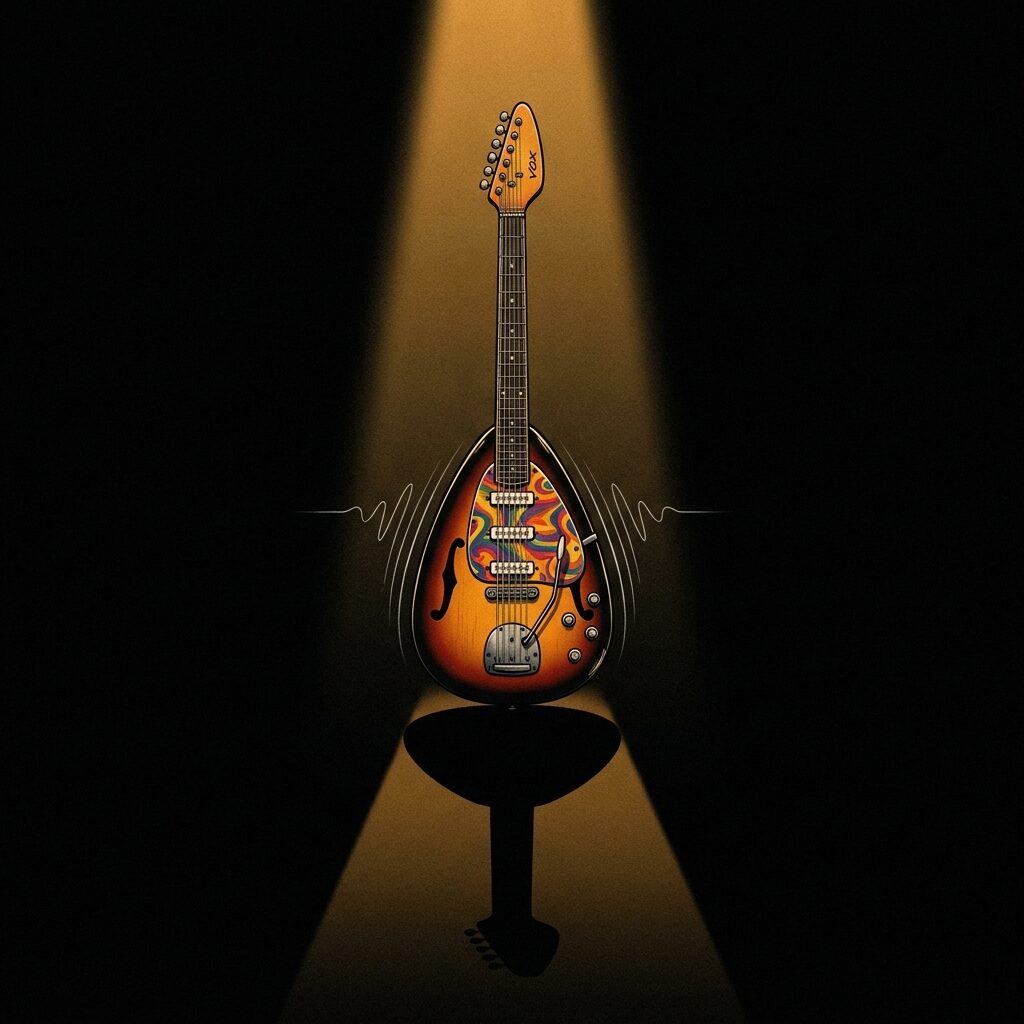
Somewhere in a Los Angeles rehearsal room in late 2012, Alex Turner picked up a guitar he’d bought as a joke. It was a 1960s Vox Starstream XII, a teardrop-shaped oddity with built-in fuzz, tremolo, and a treble booster, originally designed in the mid-sixties with the actual guitar building outsourced to Italy. The kind of instrument you buy because it looks wild and you figure it’ll be good for a laugh. Turner plugged it in and a riff fell out of it. Five notes. Slow. Heavy. The kind of thing that makes everyone in the room stop talking.
James Ford, the band’s producer, heard it and felt something click into place. “It felt kind of heavy, and heavy in mood as well,” he later told NME. “It had a weight to it that I really like. I remember when that came together being really excited, and seeing the picture crystallise of where we were going.”
Where they were going was somewhere that made them nervous. Arctic Monkeys, four lads from Sheffield who’d been playing together since secondary school, were deliberately channeling Dr. Dre and Timbaland. They wanted to know what happens when you hand a rock band the compositional instincts of an R&B producer. And they weren’t sure the result would hold together. Turner brought the riff to the group with genuine anxiety. “Have we gone too far?” he wondered. “Does it sound too much like Dr Dre or something?”
It didn’t sound too much like anything. It sounded like the future of their band. That riff became “Do I Wanna Know?”, the opening track on AM, the most-streamed rock song of its generation, and the track that currently sits at roughly 2.7 billion Spotify plays. A number that puts a 2013 rock song in the top 60 most-streamed songs in Spotify history, competing with pop and hip-hop for all-time records.
What holds people is the contradiction at the center of the thing. The riff sounds ruthlessly precise, like it was labored over for months, but it came from a novelty guitar Turner barely took seriously. The lyrics are desperate and lovelorn, but they ride a groove stolen from hip-hop swagger. Turner is asking a question he clearly already knows the answer to, which is the whole point, the song is about wanting something you can’t talk yourself out of. That unresolved pull is probably why, more than a decade on, 2.7 billion listens later, nobody seems to be done with it.
Sheffield Boys in the Desert
By 2012, Arctic Monkeys were a decade old and their last record had been merely “nice”, so they moved to LA, set up in a Hollywood studio, and started pulling from the hip-hop they’d always loved.
Let’s rewind. By late 2012, Arctic Monkeys were no longer the scrappy kids who’d broken the internet before “breaking the internet” was a phrase anyone used. Their 2006 debut had been the fastest-selling debut album in UK chart history, built on a MySpace following that, at the time, actually did feel like something new. They’d made four more records since then, each pulling in a different direction, from the Sheffield garage punk of the debut to the Queens of the Stone Age-influenced desert rock of Humbug to the more polished, occasionally safe territory of Suck It and See.
Suck It and See was fine. Competent. Nice, even. And “nice” is about the worst thing you can say about a rock band that used to feel dangerous. They were a decade old, and bands at that point either find another gear or start the slow slide into legacy-act territory.
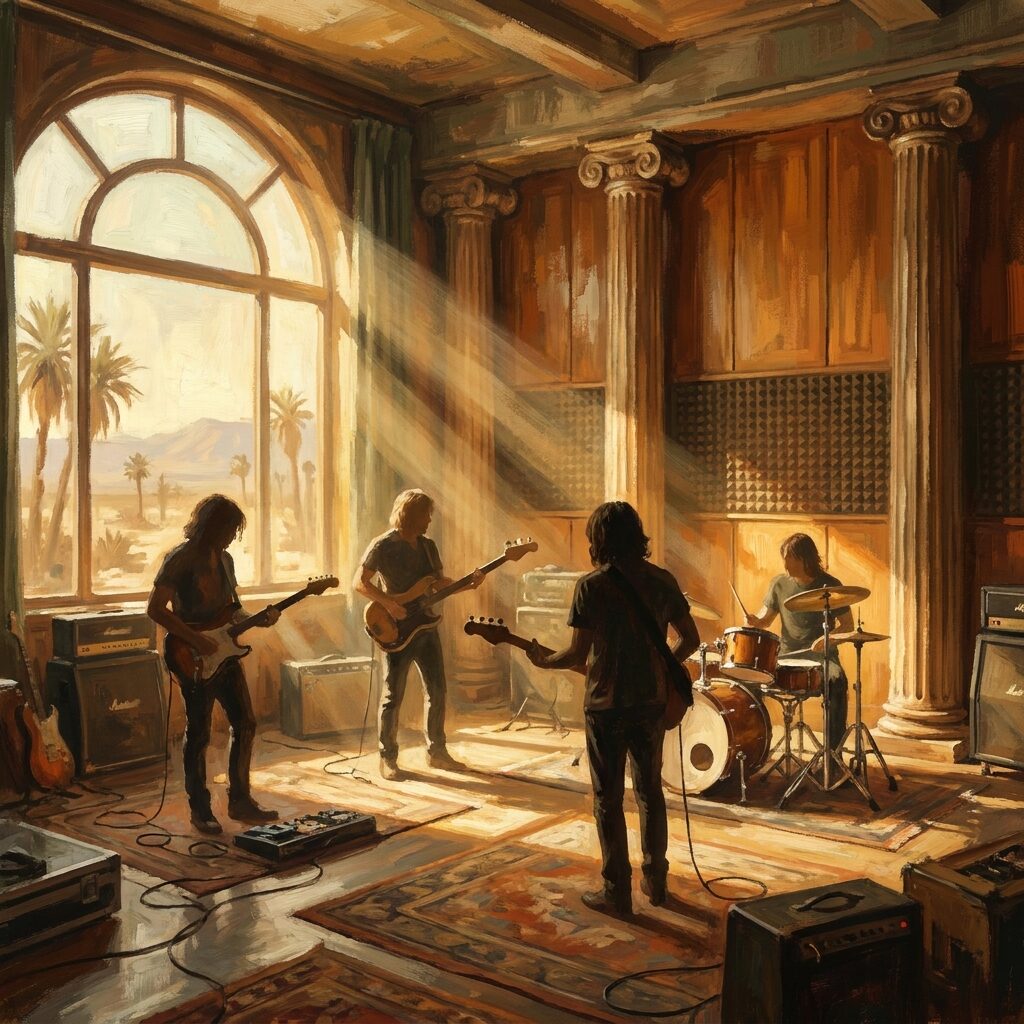
They found another gear. The band relocated to Los Angeles, setting up at Sage & Sound Studios, a Hollywood recording space “fashioned with wood and faux Greek architecture” that could not have been further from Sheffield. For roughly six months, they jammed there daily, working out ideas, building grooves, scrapping things and rebuilding them from scratch.
What happened next makes more sense if you know what Alex Turner was listening to. He’s always been open about the fact that his taste doesn’t stop at guitar bands. Method Man is one of his favorite lyricists. He grew up on Dr. Dre, Wu-Tang Clan, OutKast, Eminem, Cypress Hill, Snoop Dogg. “I love John Cale as much as I love Method Man,” he told SPIN in 2013. “It’s just what mood you’re in. I think some people perhaps have a hard time dealing with that, that we’re into both of those things.”
Before the LA sessions, the band took a writing trip to Joshua Tree, recording at the legendary Rancho De La Luna studios. Most of what they came up with didn’t make it. Matt Helders was blunt about it: “We went to Joshua Tree for a couple of weeks to do some writing and work on some ideas, and ‘Do I Wanna Know?’ is probably the only song that survived from that session, although not in the form it is now.” The song existed as a seed, a mood, a riff, a direction, but it took months of tinkering in that faux-Greek Hollywood studio before it became the track that blew everything open for them.
Cassette Tapes and Dr. Dre Beats
The most-streamed rock song of its era was demo’d on a birthday-gift cassette recorder with “crap-quality electronics,” and the band built it like hip-hop producers layering a beat, not rockers jamming in a room.
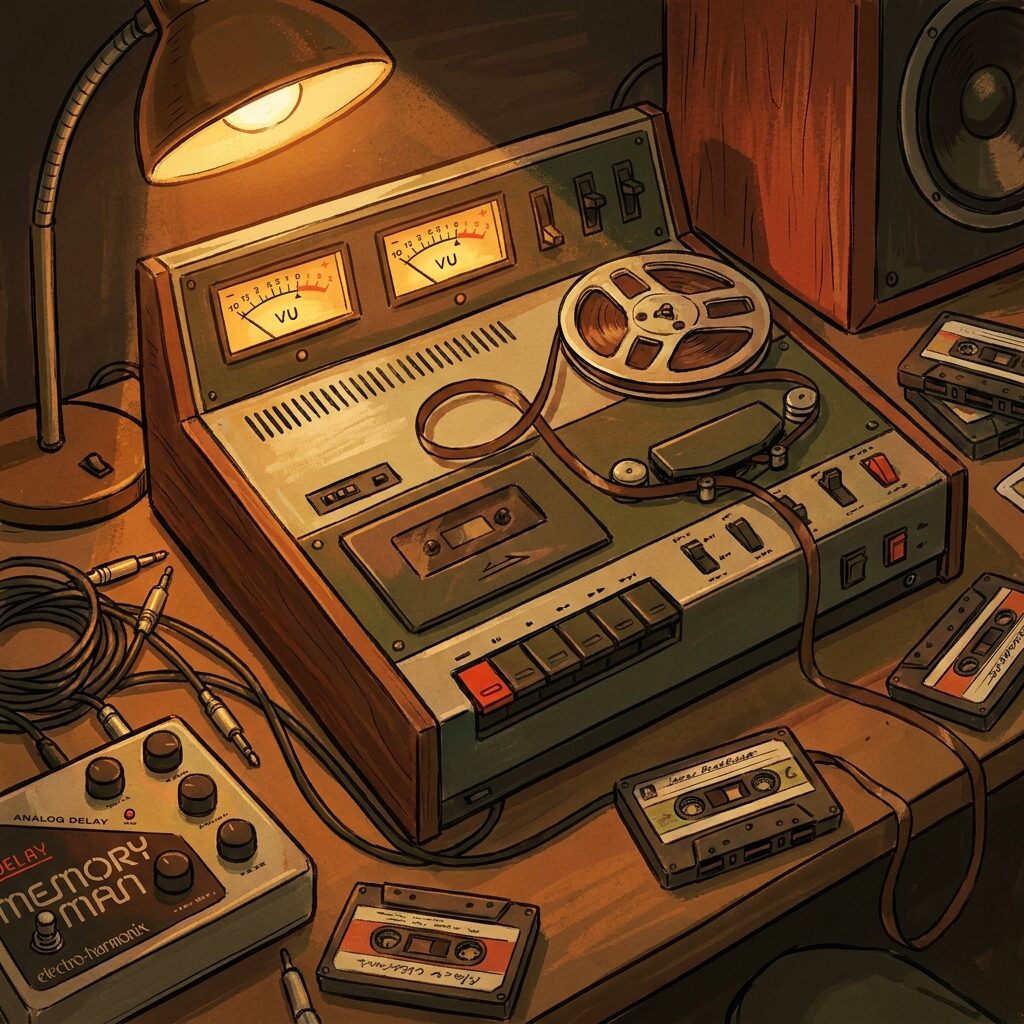
Here’s what gets me about the making of “Do I Wanna Know?”, the sonic foundation of a song with 2.7 billion streams was laid down on a cassette recorder that someone gave Alex Turner for his birthday. A 1970s four-track with what Helders cheerfully described as “crap-quality electronics.” But that was the point. The warmth and grit of those tape demos had a character that digital recording couldn’t touch. The demos were captured on cassette first, then handed to James Ford, who worked the loops and ideas up in Ableton Live.
This way of working, bouncing between analog tape and digital editing, became how the entire AM album got made. But the thinking behind it went beyond gear. Turner laid out the concept in an interview with Q Magazine: “We had this idea for a record where you take the compositional perspective of an R&B producer and apply that to a four-piece rock’n’roll band. Manipulating our instruments to make building blocks for the song in a way I’d imagine Timbaland or someone constructs music.” Then, because Turner is always smarter than he lets on: “That’s one way of looking at it. The other way is we just made it up!”
Both things are true, and that’s sort of the whole trick of the song. Ford completely shifted his production approach from Suck It and See, where he’d gone for a “band in a room” feel with minimal computer involvement. “On the last record we tried to do a ‘band in a room’ type thing, with barely any computers used,” Ford told Sound on Sound. “It was very much to tape. But this one was a case of ‘all bets are off’. The band wanted to push things on and do something different.” The new method: lay down bass and drums first, build the groove, then layer everything else on top. Hip-hop production logic applied to rock instrumentation.
For the gear nerds, and I am absolutely one of you, the signal chain on “Do I Wanna Know?” is worth walking through. Turner’s Vox Starstream XII ran through a Coopersonic Valveslapper Dual Valve Distortion pedal (an overdrive he’d been using since the band’s third album), then into a Boss DM-1 Delay Machine, then into a two-amp setup: a Selmer Zodiac Twin 30 run bright and punchy for reverb, and a Magnatone Custom 410 providing tremolo and vibrato. Ford explained the approach: “We sometimes ran that and his old Magnatone at the same time. It has a really nice vibrato on it and reverb. So sometimes we’d mix those two signals together, but just onto the one track.” Turner doesn’t use a reverb pedal at all. He gets all his reverb directly from that Selmer amp. Both guitar parts on the track carry a subtle tremolo that gives the whole thing its hypnotic sway.
Nick O’Malley’s bass, a P-bass through a vintage Ampeg Portaflex, sits low and heavy in the mix, anchoring that 85 BPM groove. Helders’ drums are tight and precise, drenched in reverb and echo that deliberately mimics classic hip-hop production. Electronic samples thread through the track. The whole thing was constructed, not simply performed.
One near-miss that fans love to think about: Haim were originally asked to sing backing vocals on the track. The timing didn’t work out. They were finishing their own debut album, Days Are Gone, and couldn’t spare the sessions. Este Haim told NME about it with obvious regret: “We didn’t have enough time to come in and learn the harmonies. It would have been our biggest dream come true, to sing on an Arctic Monkeys record.” It’s fun to imagine what that version would have sounded like, but honestly, the QOTSA-style falsetto harmonies the band ended up with give the track a slightly sinister quality that Haim’s voices might have softened. Sometimes you get the version you needed by accident.
Hip-Hop Bones, Rock Skin
At 85 BPM in G minor, “Do I Wanna Know?” is built like a hip-hop beat wearing a rock guitar’s clothing, with a structure so unorthodox that the chorus doesn’t show up until a minute and a half in.

Let’s talk about why this song hits different from a structural perspective, because once you see how it’s built, you can’t unsee it.
The riff is in G minor, crawling along at 85 BPM. For context, that’s slow for a rock song. Really slow. Most rock tracks sit between 110 and 140 BPM. But 85 BPM? That’s hip-hop tempo. That’s where Dr. Dre lives. That’s where boom-bap breathes. The primary chords are Gm, Cm, and Dm, built off the 1st, 4th, and 5th scale degrees of the minor scale, which gives the whole thing a dark, circular quality. There’s nowhere to escape to harmonically. You’re trapped in the groove, and that’s the point.
The Black Sabbath comparisons were inevitable. That descending riff has a weight and menace that recalls “War Pigs,” and the band clearly heard it too. They started dropping the actual “War Pigs” riff into live performances of “Arabella,” another AM track. But where Sabbath is thunderous, “Do I Wanna Know?” is predatory. It doesn’t attack. It creeps.
Matt Helders deserves a lot of credit for what he doesn’t do here. He’s a technically gifted drummer who made a conscious choice to suppress his chops and serve the groove. His playing is tight and precise, sitting right in the pocket, never showing off. The heavy reverb and echo on his kit are pure hip-hop production, that cavernous drum sound you hear on classic Dre records. The cymbal work is worth paying attention to: verses and pre-choruses get only a single cymbal hit, keeping that restrained, tension-building feel. Then the choruses open up with prominent cymbal work throughout, like the song is finally exhaling.
The structure is where things get really interesting. This is not a normal rock song. The chorus doesn’t arrive until one minute and thirty-six seconds in. A minute thirty-six. Most pop and rock songs have hit you with the chorus by the one-minute mark. “Do I Wanna Know?” makes you wait, and that patience, borrowed directly from verse-heavy hip-hop traditions, is part of what makes the eventual payoff so satisfying.
The form runs: Verse 1, Pre-Chorus 1, Chorus 1, Verse 2, Pre-Chorus 2, Chorus 2, then a third pre-chorus, followed by a pre-chorus/chorus hybrid that bleeds into the outro. That third pre-chorus is rare in any genre. Hit Songs Deconstructed called it “a more unorthodox flow.” And here’s another thing: the song’s title, “Do I Wanna Know,” appears in the pre-chorus, not the chorus. The chorus itself is built around “crawling back to you.” For a hit single, that’s unusual. Most hits hammer the title in the most prominent melodic position. Turner puts it in the buildup instead, so the question is always hanging in the air, unresolved, even when the song opens up.
The production details that create the mood are surgical. When Turner asks “do you have the guts,” everything drops out except the drums. Just voice and beat, naked and confrontational. The falsetto backing vocals threading through the entire track, those QOTSA-style harmonies, add a slightly sinister edge, like there’s a second voice in the narrator’s head echoing his obsessions back at him. Turner explained his own approach to arrangement as fundamentally rhythmic: “Sound less like four lads playing in a room this time. Essentially, that’s what it is, but if you can find a way to manipulate the instruments or the sounds to the point where it sounds a bit like a hip-hop beat that’d be boss in your car, then I think there’s something quite cool about that.” Something quite cool about that. British understatement at its finest.
Midnight Confessions at 85 BPM
Turner wrote lyrics dripping with bravado, “simmer down and pucker up”, but the whole song is built around a question he’s too terrified to actually ask.
Have you got colour in your cheeks?
Do you ever get that fear that you can’t shift the type
That sticks around like summat in your teeth?
Are there some aces up your sleeve?
Have you no idea that you’re in deep?
I’ve dreamt about you nearly every night this week
How many secrets can you keep?
‘Cause there’s this tune I found
That makes me think of you somehow an’ I play it on repeat
Until I fall asleep, spillin’ drinks on my settee
[Pre-Chorus]
(Do I wanna know) If this feelin’ flows both ways?
(Sad to see you go) Was sorta hopin’ that you’d stay
(Baby, we both know) That the nights were mainly made
For sayin’ things that you can’t say tomorrow day
[Chorus]
Crawlin’ back to you
Ever thought of callin’ when
You’ve had a few?
‘Cause I always do
Maybe I’m too
Busy bein’ yours
To fall for somebody new
Now I’ve thought it through
Crawlin’ back to you
[Verse 2]
So have you got the guts?
Been wonderin’ if your heart’s still open
And if so, I wanna know what time it shuts
Simmer down an’ pucker up, I’m sorry to interrupt
It’s just I’m constantly on the cusp of tryin’ to kiss you
But I don’t know if you feel the same as I do
But we could be together if you wanted to
[Pre-Chorus]
(Do I wanna know) If this feelin’ flows both ways?
(Sad to see you go) Was sorta hopin’ that you’d stay
(Baby, we both know) That the nights were mainly made
For sayin’ things that you can’t say tomorrow day
[Chorus]
Crawlin’ back to you (Crawlin’ back to you)
Ever thought of callin’ when
You’ve had a few? (You’ve had a few)
‘Cause I always do (‘Cause I always do)
Maybe I’m too (Maybe I’m too busy)
Busy bein’ yours (Bein’ yours)
To fall for somebody new
Now I’ve thought it through
Crawlin’ back to you
[Outro]
(Do I wanna know) If this feelin’ flows both ways?
(Sad to see you go) Was sorta hopin’ that you’d stay
(Baby, we both know) That the nights were mainly made
For sayin’ things that you can’t say tomorrow day
(Do I wanna know?) Too busy bein’ yours to fall
(Sad to see you go) Ever thought of callin’, darlin’?
(Do I wanna know?) Do you want me crawlin’ back to you?

The title tells you everything. “Do I wanna know if this feeling flows both ways?” The whole song lives in that question mark. Not in the answer, in the fear that knowing might be worse than not knowing. It’s a question about whether to ask a question. If you’ve ever typed and deleted the same text three times, you already understand.
Turner has always had a gift for lines that sound tossed-off but cut deep when you sit with them. “Too busy bein’ yours to fall for somebody new” is one of those. Look at that word “busy.” It reframes devotion as involuntary, not a choice but an occupation. He can’t fall for someone else because he’s fully employed being in love with this person. It’s funny and devastating in the same breath, and he makes it look easy, which probably means it wasn’t.
The song’s logic is nighttime logic. “The nights were mainly made for sayin’ things that you can’t say tomorrow day.” That’s the 3 AM headspace where these thoughts live, the hour when your defenses are down and you text things you’ll regret, when the things you’d never say in daylight feel not just permissible but urgent. The slow, dark groove mirrors that headspace. This isn’t a song that happens in bright rooms. It happens in the dark, under covers, staring at a phone screen you keep turning back on.
What makes the lyrics work is how the swagger keeps cracking. “Simmer down and pucker up” is pure confidence, a command, almost arrogant. But then he’s also the guy admitting “I’ve dreamt about you nearly every night this week” and “I’m sorry to interrupt, it’s just I’m constantly on the cusp of trying to kiss you.” That word “cusp” is doing a lot of work. He’s not kissing anyone. He’s on the verge of it, perpetually. The bravado is a front for someone who can’t actually close the distance, and you can hear him know it.
Fans have debated for years whether the song is about an ex-girlfriend or a new crush. The evidence supports both readings. Lines like “crawling back to you” suggest a past relationship, while “we could be together if you wanted to” reads more like a proposition to someone new. Turner himself deflected when asked directly: “There’s a bit of a story there, but it’s more about the feeling of just wanting to know if something’s going to happen or not.” He keeps it about the sensation, not the narrative, which is the right call. The moment you pin it to a specific story, you lose everyone who’s projecting their own situation onto it. And projection is what this song was built for. Everyone has a 3 AM person. Turner just gave that feeling a riff.
Inside Turner’s Brain
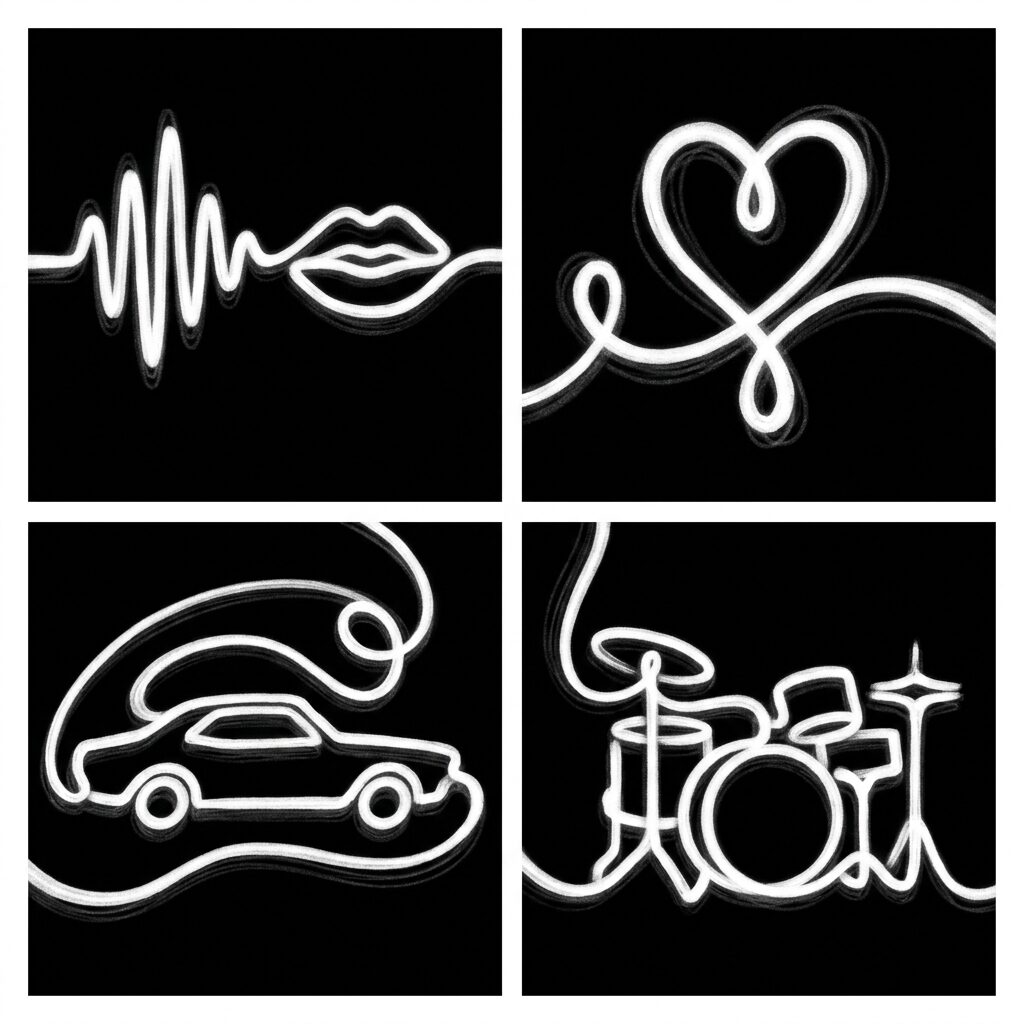
David Wilson’s animated video for “Do I Wanna Know?” skips the band entirely. Black-and-white sound waves morph into lips, cars, and hearts, turning an obsessive thought loop into something you can watch. It’s hit 1.8 billion YouTube views, partly because there’s nothing in it to age.
Most rock videos in 2013 followed a familiar playbook: band performs in interesting location, interspersed with narrative footage that may or may not connect to the lyrics. David Wilson threw that playbook in the trash.
The video for “Do I Wanna Know?” is entirely animated. Black-and-white sound waves pulse in sync with the riff, then morph into shapes: cars, hearts, lips singing, women playing drums, the AM logo. No band performance. No love interest looking wistful in the rain. Just the interior experience of the song made visible. Wilson drew on risqué cartoonist Vince Collins, and the influence shows in those fluid, slightly surreal transformations.
“The video’s very much from inside someone’s brain,” Wilson explained. “From this perspective it’s kind of Alex Turner’s brain.” He nailed it. What you’re watching is the visual equivalent of being stuck in an obsessive thought loop at 3 AM. Shapes forming and dissolving, one image triggering the next, the same patterns repeating with variations. It’s what the inside of your head looks like when you can’t stop thinking about someone.
The video hit a billion YouTube views in June 2020, with the exact count at 1,001,608,013. That put Arctic Monkeys among fewer than twelve rock acts to reach that number. For perspective, the next most-viewed Arctic Monkeys video, “R U Mine?,” had 246 million views at the time. A billion versus 246 million. The gap is absurd. As of now, the video sits at roughly 1.8 billion views and still climbing.
Going abstract turned out to be the smartest thing about it. Because there’s no literal visual narrative, there’s nothing to date. No fashion choices that scream 2013, no specific setting to pin it to a moment. The sound waves just pulse and transform, and they look as good now as they did then. Wilson gained longevity by stripping things away rather than piling them on.
The Slow Creep to Everywhere
Arctic Monkeys dropped “Do I Wanna Know?” on a random Tuesday in June with no promotion at all. It spent 65 weeks on the UK chart, became their first platinum single, and gave them their first-ever Billboard Hot 100 entry, after five albums of never charting in America.

The release strategy tells you something about where the band’s head was at. On June 19, 2013, Arctic Monkeys just put “Do I Wanna Know?” on iTunes. No announcement, no press cycle, no social media countdown. It showed up on a random Tuesday and that was that.
In the UK, it entered the Singles Chart at number 11, their highest debut since “Fluorescent Adolescent” in 2007. But the entry position barely matters compared to what followed: 65 weeks in the UK top 100. Over a year of continuous chart presence. It picked up quintuple-platinum certification from the BPI, making it their first platinum single ever, after five albums and over a dozen singles. You don’t expect to find the biggest song of your career on album five, but here we are.
The US side is harder to believe. Before this, Arctic Monkeys had never appeared on the Billboard Hot 100. Not once. They were huge in Britain and had a devoted American following, but mainstream US chart success just hadn’t happened. “Do I Wanna Know?” finally cracked the Hot 100 in December 2013, peaking at number 70. On the Alternative Songs chart it did much better: 10 weeks at number one, reaching the top spot in January 2014 during its 20th week, passing Cage The Elephant’s “Come A Little Closer.” Peter Berard, Domino’s director of marketing, told Billboard the run was built on radio loyalty: “The band has built a devoted fan base with persistent touring and the support of radio. Reaching the top of the chart thanks to programmers and stations who’ve championed Arctic Monkeys since [‘Dancefloor’] makes it all the more gratifying.”
Those 2013-2014 chart numbers look almost modest now. Streaming changed the song’s whole scale. New listeners find it every day, and it currently sits at roughly 2.7 billion Spotify streams, putting it in the top 60 most-streamed songs in the platform’s history. A 2013 rock song, sitting alongside the biggest pop and hip-hop releases ever made. It charted in 39 countries. It’s still growing.
The parent album, AM, rode that momentum. It debuted at number one in the UK with 157,329 first-week copies, the second fastest-selling album of 2013 in Britain, behind only Daft Punk’s Random Access Memories. In the US it reached number six on the Billboard 200, a career best, and has since gone four-times platinum via the RIAA. And then there’s the vinyl stat: AM became the best-selling vinyl album of the entire decade in Britain, moving 73,000 units on wax. At a time when vinyl was supposedly a niche collector’s format, AM outsold everything.
A Riff That Won’t Leave
From Peaky Blinders to TikTok truck memes to Hozier turning it into a gospel-tinged floor cry, “Do I Wanna Know?” keeps reaching people who have no idea they’re listening to a song about not wanting to know anything at all.

“Do I Wanna Know?” didn’t just chart well and disappear. It embedded itself in culture in a way that most rock songs released after 2010 simply haven’t. It keeps finding new audiences through doors the band never could have anticipated.
The Peaky Blinders placement was a big one, an instrumental version used in the Season 2 finale, perfectly matched to the show’s moody Birmingham noir. That sync introduced the song to an audience that might never have sought out an Arctic Monkeys record, and the fact that it fit so naturally into a show set nearly a century before it was recorded says something about how the track works on a purely atmospheric level. It also appeared in The Vampire Diaries and Ubisoft’s 2014 driving game The Crew, each placement pulling in a slightly different crowd.
Then there’s the Hozier cover, which took on a life of its own. He performed it for BBC Radio 1’s Live Lounge in 2014, stripping the song down and rebuilding it in his own gospel-tinged style with backup singers and a completely different emotional register. The cover went properly viral on Instagram and TikTok in January 2025, over a decade after it was recorded, as a sound for fan edits. One fan comment nailed the difference: “‘Do I Wanna Know’ by the Arctic Monkeys gives the vibe of partying to forget someone. Hozier’s version is laying on the floor in the rain.” Same lyrics, same melody, two completely different flavors of heartbreak. A song that can hold both of those readings without either one feeling forced is doing something right.
The internet found its own uses for the riff, as the internet does. A Ford F-150 meme trend emerged on TikTok with users creating fake truck commercials scored to the opening guitar line, which is funny and absurd and also proof that the riff had become shorthand, a cultural reference point completely divorced from its original context. The lyrics became, as one outlet put it, “instantly quotable, permeating internet culture, memes, and social media shorthand for expressing romantic uncertainty.” When your song becomes a meme template, you’ve crossed from popular into ubiquitous.
The critical establishment caught up too. Guitar World ranked the riff number 3 in their list of the 20 best guitar riffs of the decade. Rolling Stone placed the song at number 85 on their list of the 250 Greatest Songs of the 21st Century. BBC Radio 2 included it in their Greatest Guitar Riffs of All Time. NME’s editor Mike Williams called AM “absolutely and unarguably the greatest record of their career” and gave it a perfect 10/10. The Grammy nomination came in 2015 for Best Rock Performance, they lost to Jack White’s “Lazaretto,” which is a respectable loss if you’re going to lose. They did take home the BRIT Award for British Album of the Year and the Q Award for Best Track. Rolling Stone called it “the highlight of the U.K. crew’s soul-rock overhaul album AM.” Rolling Stone Australia got more poetic about the riff itself: “Seductive, hypnotic, exhilarating, just a tiny bit evil.” Hard to argue with any of those adjectives.
Glastonbury and the Ghost
From a dark theater in Ventura to headlining the Glastonbury Pyramid Stage twice, “Do I Wanna Know?” was the song that settled any lingering question about whether Arctic Monkeys had outgrown their own origin story.

The first time anyone outside the band heard “Do I Wanna Know?” was May 22, 2013, at The Majestic Ventura Theater in California. Opening date of the AM Tour, a warm-up gig on the way to Sasquatch Festival. They walked on in near-darkness to what one reviewer described as “a thousand or so screeching preteen girls,” and just played the thing. No announcement, no release date, no context, just a new song from a band that had been quiet for a while. LA Record called it “a mouth-watering set, including a brand spanking new tune called Do I Wanna Know?” A month later it hit iTunes. A year later you couldn’t escape it.
Glastonbury 2013, June 28, is where it really landed. Arctic Monkeys opened their Pyramid Stage headline set with the song, Turner in a sharp striped suit and teddy quiff, dropping straight into those bluesy electronic throbs in front of roughly 100,000 people. The Guardian’s review put it simply: “The ghost of 2007 is laid to rest.” That ghost being the question that had trailed the band for six years, whether they were still the kids from “I Bet You Look Good on the Dancefloor” or something else entirely. Four minutes in, nobody was asking anymore. Miles Kane came out later for “505,” but by then the point had been made.
What happened next was absurd, speed-wise. On February 8, 2014, they played a sold-out Madison Square Garden, a venue that two years earlier would’ve been an ambitious five-year plan. That’s how fast AM rewired their career. They went from mid-level American cult act to arena headliner in under a year.
There’s a perfect little rock-and-roll footnote buried in the timeline: the band was supposed to perform “Do I Wanna Know?” on Jimmy Kimmel Live! on October 9, 2013, but got bumped because Kanye West talked too long during his interview segment. They performed a week later, October 16, on the outdoor stage. Getting bumped by Kanye running his mouth is the kind of thing that writes itself.
Ten years after that Glastonbury set, they were back on the Pyramid Stage in June 2023 for their third headline slot. Different band by then, deep into the Tranquility Base Hotel & Casino and The Car years, all lounge piano and orchestral arrangements. But when that intro started crawling in, the crowd lost it. Radio X reported it as the most vocal moment of the night, and anyone who’s watched the footage knows why. Ten years on, the riff still does exactly what it did in that dark room in Ventura. People just stop and listen.
Still Crawling Back
A song about not wanting to know became the thing everyone knows, and we keep crawling back to it because, like the question it asks, it never resolves.

A song about not wanting to know became the thing everyone knows. 2.7 billion streams of an unanswered question, every single play is someone pressing play on uncertainty, on that 3 AM feeling of wanting to reach out and being afraid of what you’ll hear back. That’s not irony, exactly. It’s more like proof that the question was always the point.
Think about the chain of accidents that got us here. A teardrop-shaped guitar bought as a joke. A birthday-gift cassette recorder with electronics so cheap they produced a warmth that expensive gear couldn’t replicate. A Sheffield rock band channeling Dr. Dre in a Hollywood studio with faux Greek columns, genuinely worried they’d lost the plot. A song that almost didn’t survive its first writing session at Joshua Tree. None of this was supposed to work together. That’s probably why it does.
“Do I Wanna Know?” keeps getting played because the feeling hasn’t gone anywhere. The details rotate, we’re texting instead of calling, the apps change, the person changes, but the 3 AM uncertainty is the same as it ever was. You’re staring at your phone, composing a message you might delete, wondering if the other person is doing the same thing. Turner gave that feeling a riff so heavy it feels like gravity, and a question so simple it might never get a satisfying answer.
“Do you want me crawling back to you?” We keep crawling back to this song because it never resolves. The question hangs there at the end, same as it did at the beginning, same as it will the next time you press play at 3 AM because you can’t sleep and you’re thinking about someone you probably shouldn’t be thinking about. The riff creeps in. The drums lock into that groove. And you’re right back in it, caught between knowing and not wanting to know, which turns out to be where most of us actually live.
🎸 Did you know? Arctic Monkeys’ “Do I Wanna Know?” riff came from a teardrop-shaped 1960s Vox guitar Alex Turner bought as a joke. It now has 2.7 BILLION Spotify streams. #ArcticMonkeys #DoIWannaKnow #IndieRock https://bit.ly/3QarB4u

Click to Tweet