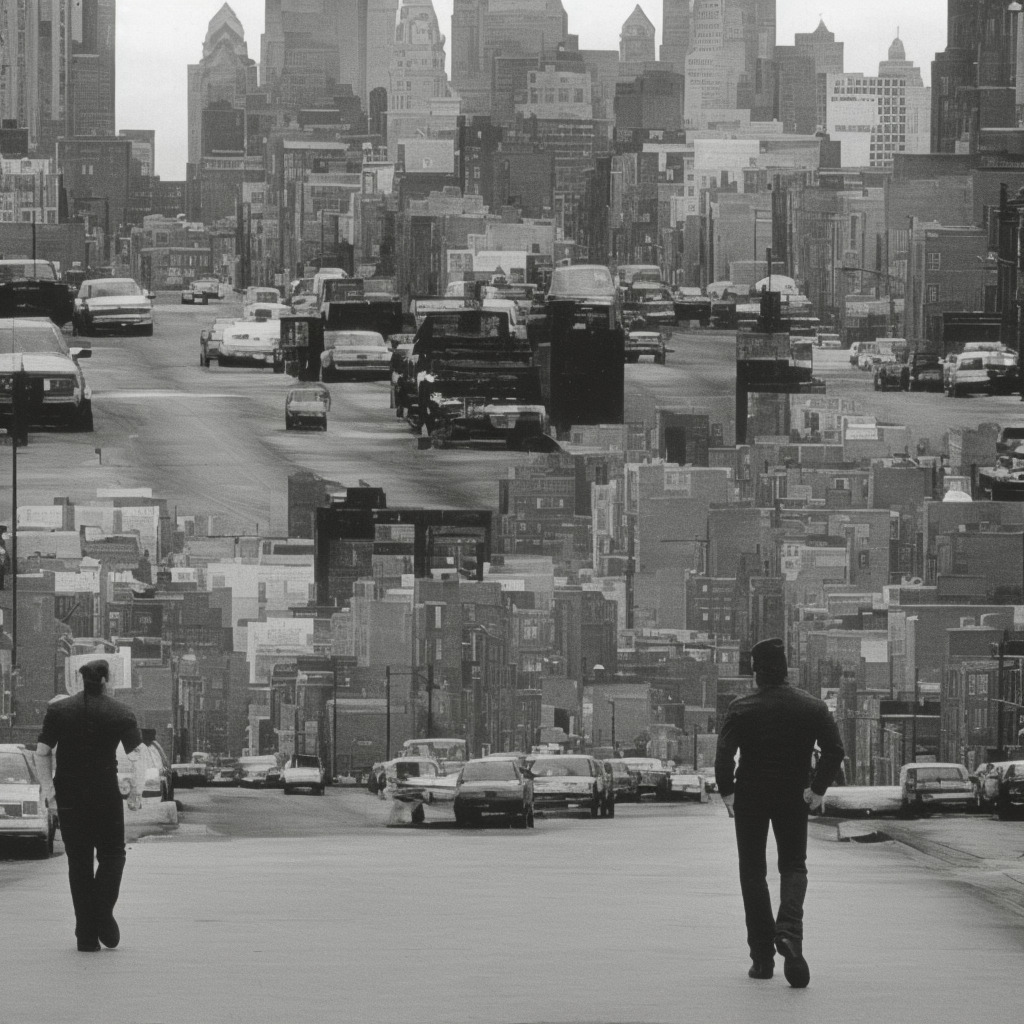
The Song That Wasn’t a Hit
“Everlong” never charted on the Billboard Hot 100 and only peaked at #3 on Alternative Airplay. By any normal measure, it wasn’t a hit. But it crossed a billion Spotify streams, tops practically every “Best Foo Fighters Song” list ever made, and somehow became the rock song people can’t stop caring about, 25 years later.
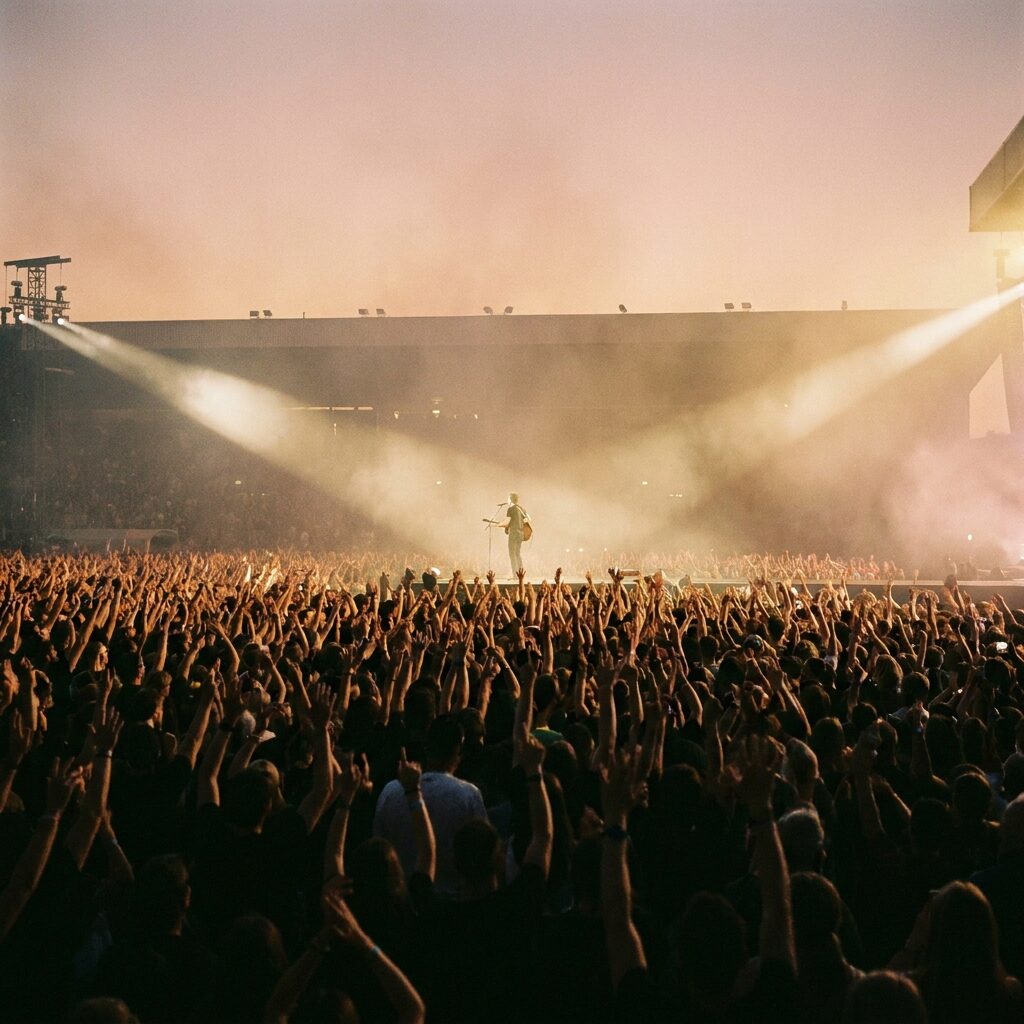
Taylor Hawkins said it plainly in an NME interview: “The funny thing about ‘Everlong,’ people consider that our biggest sort of hit, but at the time, it really wasn’t that big of a hit.”
He wasn’t being modest. He was stating fact. When “Everlong” dropped as the second single from The Colour and the Shape in August 1997, it peaked at number three on Billboard’s Alternative Airplay chart, number four on Mainstream Rock, and number 42 on Hot 100 Airplay. The actual Hot 100? It never appeared. Not once. In the summer of 1997, Hanson’s “MMMBop” and Puff Daddy’s “I’ll Be Missing You” were eating the world, and a mid-tempo alternative rock song about new love wasn’t exactly elbowing its way onto Total Request Live.
Fast-forward to now. Over one billion streams on Spotify, the first Foo Fighters song to cross that threshold, hitting the milestone on December 2, 2023, which happened to be bassist Nate Mendel’s 55th birthday. Number 409 on Rolling Stone’s 500 Greatest Songs of All Time. Number one on the Rolling Stone readers’ poll of best Foo Fighters songs, and not by a little, by 500 votes, which the magazine called “possibly the biggest blow-out we’ve ever seen.” Number one on Kerrang’s list. Number one on Entertainment Weekly’s list. Number one on Uproxx’s list. Number one on Exclaim’s, on WatchMojo’s, on TheTopTens’. Certified double platinum in the US, eight times platinum in Australia. The song that 70,000 people sang back to Dave Grohl, word for word, at Wembley Stadium when he was too broken to sing it himself.
Here’s what I keep coming back to with “Everlong”: it was cobbled together from scraps. A riff that Grohl thought he’d stolen. A song written in 45 minutes on a borrowed floor during the worst Christmas of his life. Backing vocals recorded over a phone line at two in the morning. A microphone chosen specifically because it sounded bad. It wasn’t even supposed to be on the album.
And every single thing that turned it into what it is, the acoustic version, the Letterman connection, its role as a memorial, happened by accident. Nobody planned any of it. “Everlong” just kept finding new reasons to matter, year after year, until a love song written by a heartbroken guy on his friend’s floor somehow became the rock song that an entire generation refused to let go of.
This is the story of how that happened.
Sleeping Bags, Sonic Youth, and 45 Minutes
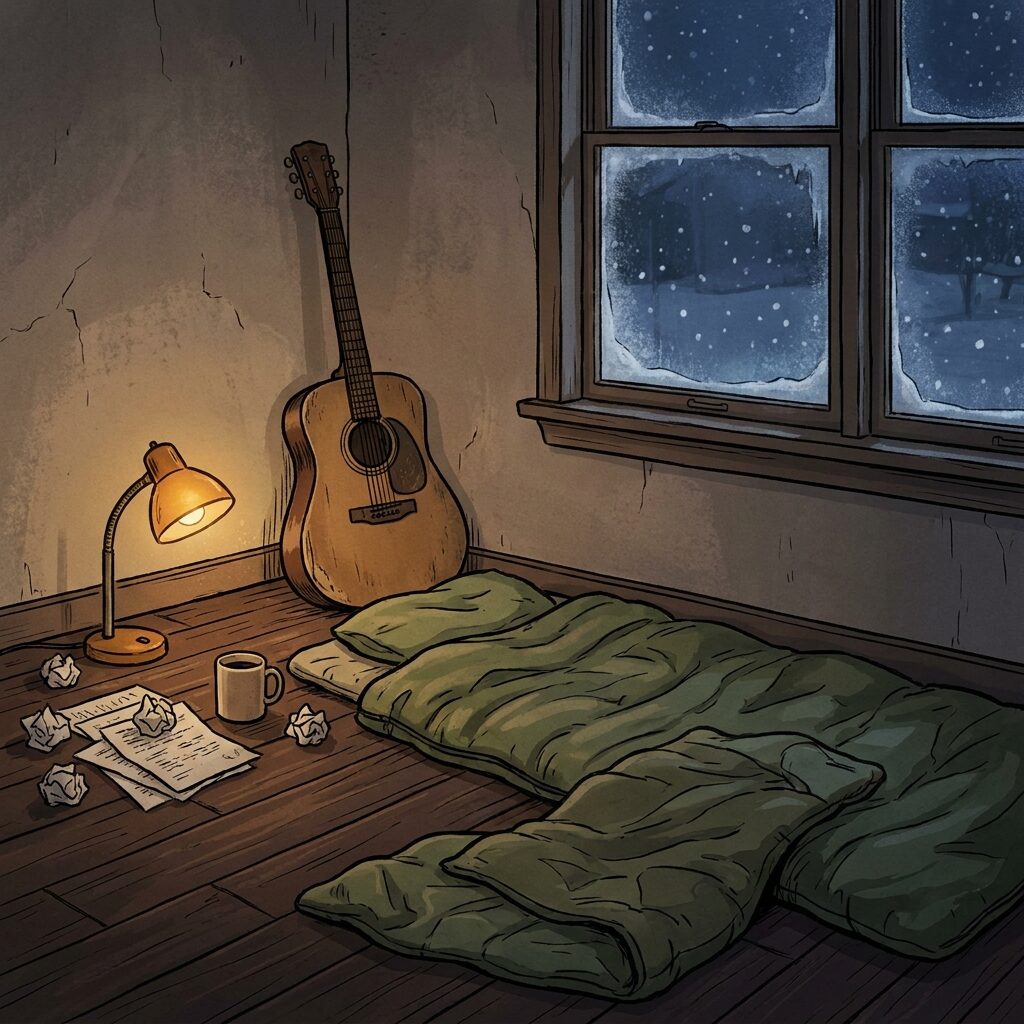
“Everlong” came out of a disastrous recording session, a riff Grohl was sure he’d stolen from Sonic Youth, and 45 minutes of songwriting on a friend’s floor during the worst Christmas of his life, sleeping in a sleeping bag with no home and no money, falling in love with Louise Post while still mourning the end of his marriage.
To understand where “Everlong” came from, you need to understand how badly everything else was going.
The first recording sessions for The Colour and the Shape started on November 18, 1996, at Bear Creek Studio, a residential facility on a ten-acre plot in Woodinville, Washington. The kind of place bands book when they want to disappear into the work. Except the work was falling apart. Drummer William Goldsmith and guitarist Pat Smear were both on the verge of quitting. Grohl later called the sessions a “bad experience.” He scrapped nearly everything they recorded.
But something small happened during one of those frustrating days. Between takes of “Monkey Wrench”, which uses drop D tuning, Grohl was noodling on his guitar. Just killing time, the way guitarists do when nothing’s clicking. He landed on a chord that grabbed him, and a riff started forming around it. The problem was, it sounded familiar. Too familiar. He was convinced he’d ripped off Sonic Youth’s “Schizophrenia” from their 1987 album Sister. He literally called it a “Sonic Youth rip-off.”
So he did what you’d do if you happened to be friends with Sonic Youth: he played it for Thurston Moore and Kim Gordon. They listened, told him it was original, said they loved it, and urged him to go with the demo version. That killed the anxiety. Now there was a riff, but not yet a song.
The band took a holiday break after Bear Creek. Grohl went back to Virginia, where the rest of his life was waiting to fall apart.
His marriage to photographer Jennifer Youngblood was over. Not winding down, not on the rocks, over. She’d kicked him out of their house. He had no access to his own bank account. He was sleeping in a sleeping bag on the floor at vocalist Pete Stahl’s place. Christmas 1996. No home, no money, a band that might not survive the winter.
But there was one thing. Somewhere in the wreckage, he’d fallen in love with Louise Post, the vocalist and guitarist of Veruca Salt. And that collision, the lowest point of his life running headlong into a new relationship, is where “Everlong” actually lives.
He picked up an acoustic guitar. Forty-five minutes later, he had a complete song.
Forty-five minutes. Less time than a single episode of prestige TV. Grohl has said the lyrics capture “the fervor of new love”, that desperate, electric feeling of finding someone when your whole world is on fire. The words came out fast because they had nowhere else to go. He wasn’t crafting; he was confessing.
What makes that Christmas week even stranger: during the same stretch, Grohl also wrote “Walking After You.” Different song, different woman. “Walking After You” was the woe-is-me heartbreaker about wanting his ex-wife back, slow, aching, resigned. “Everlong” was the opposite: urgent, alive, reaching forward instead of looking back. Two songs, two women, one broken holiday season. If you play them back to back, you get the full picture of a guy whose life has just detonated and who is somehow grieving and falling in love at the same time.
Before heading back to start proper recording, Grohl brought the new song to WGNS Studios in Washington, D.C., a space with cement floors, brick walls, and fourteen-foot ceilings, run by his friend Geoff Turner, frontman of the D.C. hardcore band Gray Matter. Grohl recorded an instrumental demo there, playing every instrument himself: drums, guitars, bass. No vocals. He laid down “Walking After You” the same day, that recording, played with mallets and drum brushes, made the final album untouched. But the rough “Everlong” instrumental has never been released. It’s still out there somewhere, a first draft of a song that didn’t know what it was going to become.
A Phone Call at 2 AM
Recorded on all-analog equipment in a converted silent movie theater, “Everlong” got its dreamy intro from a deliberately terrible CB radio microphone, and its backing vocals from Louise Post singing over two telephone lines at 2 AM after Grohl woke her from a dead sleep in Chicago. He then matched her phone-line fidelity by singing his own harmonies through the same bad mic, a lo-fi accident and a lo-fi choice merging into the song’s most intimate texture.
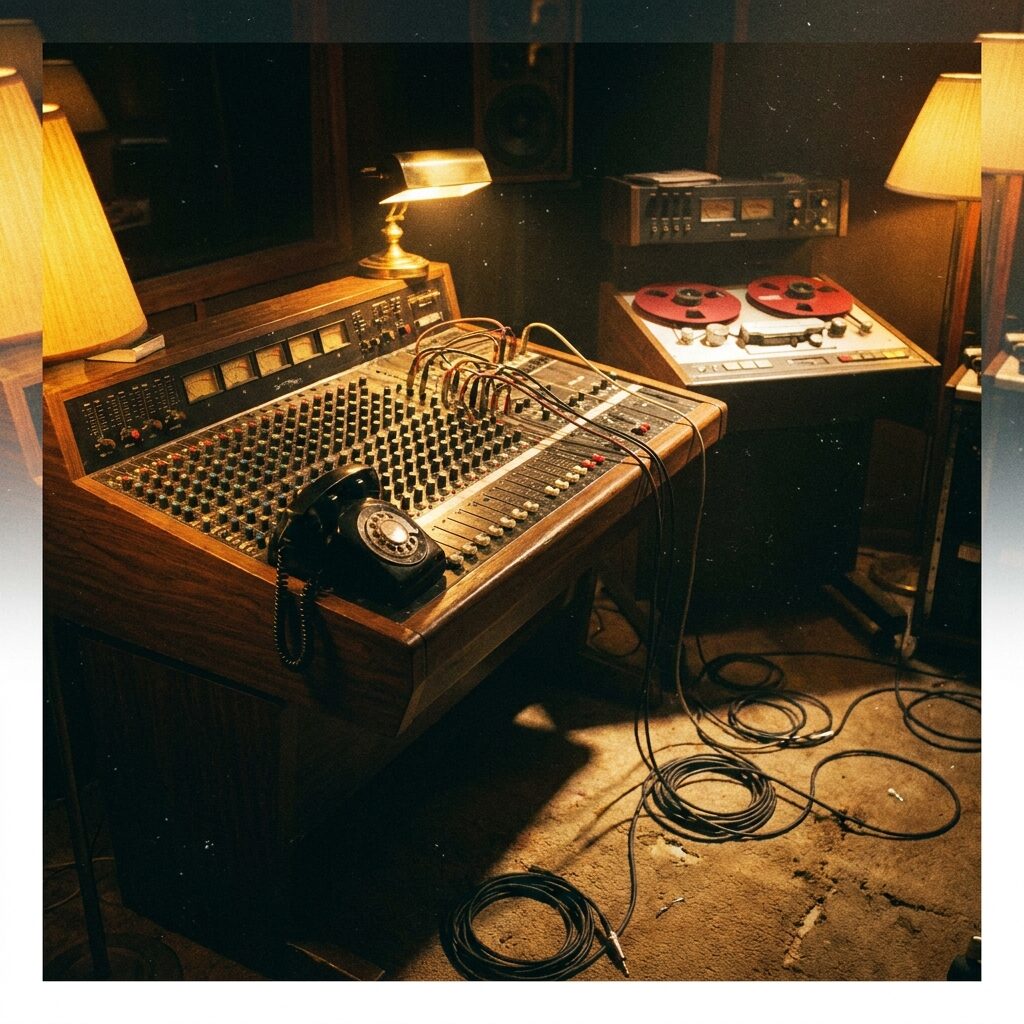
When Grohl reconvened with producer Gil Norton at Grandmaster Recorders in Hollywood, formerly The Bijou, a converted silent movie theater at the corner of Sunset and Cahuenga, he played Norton the “Everlong” demo. Norton’s reaction was instant: it “brought the whole album together.”
Think about that for a second. The song that made the album cohere wasn’t even supposed to be on it. It didn’t exist when the sessions started. Grohl wrote it on a floor during a holiday break, recorded it as an afterthought in a D.C. studio, and now Norton was saying it was the backbone of the whole record.
The recording setup at Grandmaster was old-school, even by 1997 standards. All Class A Neve 8028 console. Studer A827 tape machine. No Pro Tools, no fader automation. Entirely analog. Recording engineer Bradley Cook and assistant engineers Ryan Boesch and Todd Burke ran the board while Grohl played drums, rhythm guitar, and sang lead. Pat Smear handled lead guitar. Nate Mendel played bass. Everything committed to tape in real time, the way records got made before computers turned recording into an endless series of undo buttons.
But the detail I keep coming back to is the microphone choice for the intro.
Norton suggested recording the solo guitar intro through an Astatic JT40 microphone. If you’re not a gear person, here’s what you need to know about the JT40: it sounds bad. On purpose. No clarity, no high-end sparkle, no detail. It was a cheap microphone designed for CB radio operators and PA systems, not for studio recording. Norton picked it specifically because it sounded bad, that dullness, that lack of definition, would give the intro its dreamy, underwater quality. Like hearing the song through a wall. Like catching a melody you half-remember from sleep.
That’s the sound that opens “Everlong.” Not despite the bad microphone. Because of it.
And then there’s the phone call.
Louise Post was asleep in Chicago. It was 2 AM. Grohl was in the studio in Los Angeles, tracking vocals, and he needed her voice on the record. So he called her. Woke her up from a dead sleep. And right there, groggy and half-conscious, she sang backing vocals over the telephone.
Not over some fancy ISDN line or early internet audio connection. Over two regular telephone lines, one for her monitor so she could hear the track, one for recording her voice. The “doo doo doo” melodies that float alongside the lead guitar riff, the chorus harmonies, all captured through a phone line at 2 AM from a woman who’d been dreaming minutes earlier. Post later recalled on Instagram: “I sang these back-ups over the phone at 2am after being woken up from a deep sleep in Chicago by DG who was tracking the vocals for ‘Everlong’ in LA.” The “doo doo doo” parts were inspired by Veruca Salt’s own 1996 track “Shimmer Like a Girl.”
It gets weirder. After Post’s vocal session, Grohl recorded his own chorus harmonies through that same Astatic JT40, the crappy CB radio mic Norton picked for the intro guitar. He was deliberately degrading the quality of his own voice so it would sit in the same sonic space as hers. Two lo-fi sources, one accidental and one intentional, merging into a vocal texture that sounds the way closeness feels. Two people singing to each other across a distance they can’t close, and the technology failing in exactly the right way to make that distance audible.
The recording has one more hidden layer that took over a decade to discover. During the song’s breakdown section, Grohl recorded three spoken-word tracks, an idea borrowed from John Lennon’s technique of inserting random samples into mixes, like on “I Am the Walrus.” The plan was to blend all three, but only one made the final cut: a retelling of assistant engineer Ryan Boesch’s childhood story about being punished for disturbing his father’s sleep. Boesch’s dad worked night shifts and slept on Sundays. When the kids were too loud, he’d make them hold his heavy construction boots above their heads while he napped. The story is buried under layers of guitar and distortion, nearly inaudible. Nobody could decipher it until 2008, when Rock Band 2 players extracted the isolated multitracks and finally heard the words clearly.
And the whispered section at the very end? That was originally Post’s voice, a recording of the dream she’d been having when Grohl woke her up at 2 AM. A dream about their relationship. Grohl later removed it and replaced it with three tracks of his own: a love letter to Post, a passage from a technical manual, and another story about an engineer’s father. The original recording of Post whispering her dream into a telephone has never been released. It exists somewhere, a recording of a dream, interrupted by a phone call, about the person on the other end of the line.
Thinking About Guitar Like a Drummer
“Everlong” is structurally odd in ways most listeners feel but can’t name, a seven-bar verse, suspended chords that hover without resolving in the verse then collapse to raw power chords in the chorus, and it all traces back to Grohl hearing guitar riffs as kick-and-snare patterns, because he’s a drummer who happened to pick up a guitar.
Grohl has said something about “Everlong” that I think about constantly: he hears the riff as a kick-and-snare pattern. Not as a guitar part. As drums.
That’s a drummer’s brain writing guitar music, and it explains why “Everlong” hits you physically before it hits you musically. The low-end muted notes are the kick drum. The higher accent notes are the snare. Grohl isn’t thinking in terms of melody or harmony when he plays that riff. He’s thinking in terms of hits and spaces, downbeats and upbeats. The guitar just happens to be what’s in his hands. The rhythm lives somewhere deeper than that.
The song is in drop D tuning, D A D G B E, with the low string tuned down a whole step. Same tuning they were using for “Monkey Wrench,” which is how the riff came out during those Bear Creek sessions. Drop D gives you that big, open low D to drone against, and Grohl leans on it constantly. The open sixth string rings underneath almost every chord in the song, this persistent low-end anchor that the rest of the harmony kind of floats on top of.
The verse chords are worth looking at closely, because they’re doing something most listeners feel without being able to name. The progression is Dmaj7–Bsus2–Gsus2–Bsus2. If you’re not a theory person, here’s what matters: those are all suspended chords. They don’t fully commit to being major or minor. The “sus2” means the third of the chord, the note that normally tells you whether something sounds happy or sad, gets replaced by the second. So the chords hover. They feel open and unresolved, like a question that keeps getting rephrased but never quite landed on. The Dmaj7 voicing doesn’t even have a fifth in it, just a stripped-down, airy shape that lets the open strings do the work.
Then the chorus hits and everything changes. Same harmonic territory, B, G, D, but now it’s B5–G5–D5. Power chords. No extensions, no suspensions. Just root and fifth, driven hard into the amp. It’s the same notes carrying completely different emotional weight. The verse holds back; the chorus stops holding back.
And then there’s the structural weirdness that most people feel without ever consciously noticing. The verse is seven bars long. Not four, which is standard. Not eight, which is the next most common option. Seven. It’s an odd number, literally, and it creates this nagging sense of incompleteness, you get pulled forward into the next section because your brain is expecting one more bar that never comes. It’s like a sentence that ends one word too
See what I did there? That’s what seven bars feels like.
The guitar technique in the verses involves splitting chords into low and high parts across a two-bar pattern, with the low-string notes locking in the rhythm and the high-string notes ringing out the harmony. Underneath that, there’s a muted rhythm guitar part, a constant, choked, percussive chug that anybody who’s listened to Nirvana will recognize immediately. It’s Kurt Cobain’s simmering groove, the quiet tension before things blow open. Grohl spent years playing drums behind that sound. It’s in his musical DNA, and he couldn’t shed it even if he wanted to. Maybe especially when he didn’t want to.
The tempo sits around 158 BPM, allegro, fast enough to feel urgent but not frantic. What’s worth paying attention to is that the energy builds through the song not by getting faster but by getting denser. The tempo stays essentially constant. What changes is texture: how many guitars are playing, how hard they’re hitting, whether the drums are driving or pulling back. The arrangement does all that work without ever reaching for the cheap trick of speeding up.
Breathe Out So I Can Breathe You In
The lyrics of “Everlong” capture the anxiety underneath euphoria, a man falling in love while his life is falling apart, writing lines so charged with dual meaning that even Bob Dylan singled one out for praise.

Grohl told Kerrang! in 2006: “That song’s about a girl that I’d fallen in love with and it was basically about being connected to someone so much, that not only do you love them physically and spiritually, but when you sing along with them you harmonise perfectly.”
Read that quote again. The song is about singing with someone. About harmonizing. And it was written for the woman who actually sang on the recording, the woman who was woken up at 2 AM to add her voice to a song about how perfectly their voices fit together. The song is its own evidence. The recording is the thing the lyrics describe.
That kind of circularity would feel like a gimmick if the lyrics themselves weren’t so honest. But they are. “Breathe out so I can breathe you in / Hold you in” isn’t a metaphor being clever with itself. It’s the physical reality of intimacy compressed into ten words. The literal exchange of breath between two people close enough to share air.
“Tonight I throw myself into / And out of the red, out of her head, she sang” works on at least two levels at once. “Out of the red” is financial: Grohl was broke, no bank account, locked out of his own house. But it’s also emotional, as in out of the danger zone, out of the pain. And “out of her head” could be Post losing her mind over him, or it could be Grohl escaping from inside the head of his ex-wife. The line doesn’t resolve. It doesn’t have to. Both readings are true at the same time, and that’s what December 1996 sounded like inside Dave Grohl’s skull.
The title line, “if everything could ever feel this real forever / if anything could ever be this good again,” is where the anxiety lives. Listen to what those words are actually saying. They’re not a celebration. They’re a fear. If this could last. If anything could be this good. There’s a tremor under the euphoria, a knowledge that new love is fragile under the best circumstances, and these are emphatically not the best circumstances. Grohl is falling in love while his life disintegrates around him, and the song knows, even at its most soaring, that this feeling might not survive what’s coming.
Which brings us to the line that even Bob Dylan noticed.
“You’ve got to promise not to stop when I say when.”
Dylan reportedly complimented Grohl on it, suggesting he might learn it himself. You can see why it would appeal to the man who wrote “Don’t Think Twice, It’s All Right.” The line does something sophisticated with a simple phrase. “Say when” normally means “stop,” like when someone’s pouring your drink and you’ve had enough. So “promise not to stop when I say when” means: don’t listen to me when I tell you I’ve had enough. Keep going when I try to pull away. Don’t let me sabotage this.
It’s a request for someone to override your own defense mechanisms. To love you past the point where you try to make them stop. And it takes a particular self-awareness to write that line. You have to know you’re the type to push people away, and you have to ask someone in advance not to let you do it. For a guy who’d just blown up his marriage and was terrified that his new relationship was too good to be real, it might be the most vulnerable line he ever wrote.
You can’t talk about these lyrics without mentioning “Walking After You,” written the same week, about the same emotional territory from the opposite direction. Where “Everlong” reaches forward (breathe you in, hold you in, promise not to stop), “Walking After You” looks backward. Regret instead of desire. Loss instead of discovery. Together, the two songs are a complete portrait of one man’s emotional state during a single week that was tearing him apart and putting him back together simultaneously. “Everlong” is the song that won. “Walking After You” is the one that had to lose. Both are true, and they need each other.
Giant Hands and Evil Dead
Michel Gondry directed the “Everlong” video as a practical-effects horror comedy about dreams. Color for dreams, black and white for reality, Taylor Hawkins in drag, and a giant prosthetic hand that Gondry says came from his own childhood dreams, not Evil Dead, though the video parodies that too.
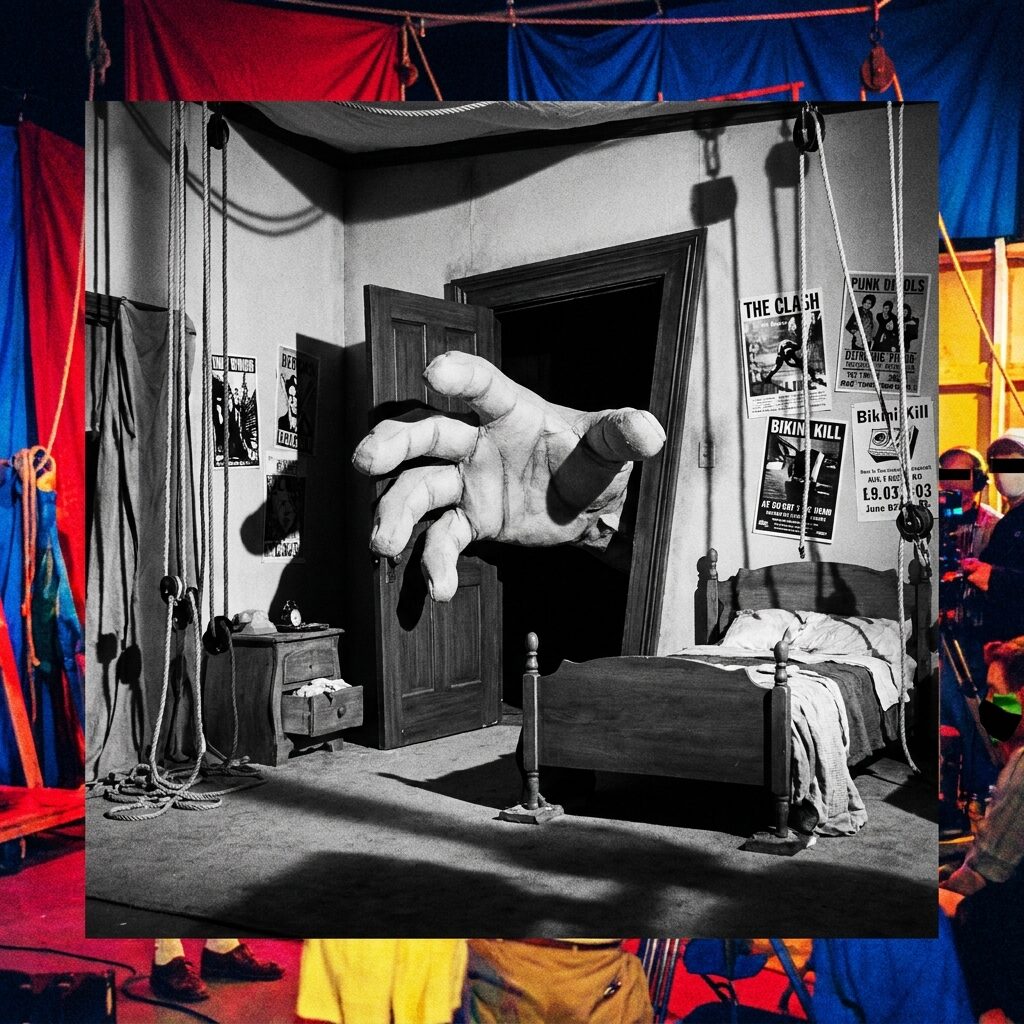
The “Everlong” music video is Michel Gondry’s work. In 1997 he was still a few years from directing Eternal Sunshine of the Spotless Mind, but already the most inventive person shooting music videos. His pitch for “Everlong” was basically: horror movie about dreams, except funny, and we build everything by hand.
It’s a strange, great video. Grohl plays a Sid Vicious-type hero with Liberty spikes and an “I’M A MESS” badge. Taylor Hawkins appears in drag as Grohl’s wife, a nod to Nancy Spungen. Pat Smear and Nate Mendel are Teddy Boy villains who terrorize the couple. The plot, loosely speaking, involves dreams bleeding into reality, escalating slapstick fights, and Grohl developing a comically enormous hand.
That giant hand is one of the images people remember most, and for years the assumption has been that it’s an Evil Dead reference, since that franchise is all about possessed hands with minds of their own. Gondry has said the idea actually came from dreams he had as a kid, though the video does deliberately parody Evil Dead in several shots. This is a distinction that matters mostly to film nerds, but it says something about how Gondry works: he starts with the personal and subconscious, then layers the pop culture on top.
The video’s best visual trick is the color scheme. Dream sequences are in vivid color. Real-world scenes are black and white. That’s backwards from how movies have handled dreams for decades, where reality gets color and dreams are washed out or monochrome. Gondry flips it, and the effect is that the dreams feel more alive than waking life. For a song about the intensity of new love, that’s exactly right. The feeling is more vivid than reality. The dream is the real part.
Every effect in the video is practical. No digital compositing, no CGI. The giant hand is a prosthetic. The fight choreography is deliberately clumsy in a way that comes off charming instead of incompetent. The finale has Hawkins’ bed collapsing to reveal a hidden mini-drum kit underneath, a sight gag that doubles as a character reveal. Even in drag, even playing someone else’s wife, Hawkins is a drummer. Always a drummer.
The video earned three MTV VMA nominations in 1998: Best Rock Video, Best Special Effects, and Best Art Direction. It lost Best Rock Video to Aerosmith’s “Pink,” which, no offense to Steven Tyler, has not aged as well.
Howard Stern’s Accidental Revolution
The acoustic version of “Everlong” only exists because Howard Stern’s team rejected Grohl’s first song suggestion and told him to play a hit instead. He’d never once tried “Everlong” on acoustic guitar. That off-the-cuff performance redirected the entire band’s career.
March 18, 1998. Dave Grohl is at the Howard Stern Show. It’s 7 AM. He has an acoustic guitar and a slot to play one song.
He suggests “For All the Cows.”
Stern’s team says no. Play a hit. Someone on the production side suggests “Everlong.” The problem is, Grohl has never played “Everlong” acoustically. Not once. He’s never even thought about it. In his mind, it’s a rock song. A loud song. A song that needs drums and distortion and a wall of guitars to function.
He plays it anyway.
Something happened in that room. Grohl has talked about it multiple times, and he always comes back to the same idea: that three-minute performance changed the band’s direction. “Something happened that morning that was really special,” he told SiriusXM. “It sort of changed the direction of our band. Up until then, we really focused on rock stuff. Something happened that morning where we thought ‘Wow, maybe we can do this too.'” He later added: “That song blew up all over again because of that version and it was purely because of Howard. I don’t know where we’d be right now if it hadn’t been for that morning in his studio.”
Strip away the distortion, the drum fills, the layered guitars, and what you’re left with is the skeleton of the song: the suspended chords, the seven-bar verses, the melody that keeps climbing. All of that structural craft, which the electric version buries under volume and energy, is suddenly naked. You can hear every decision Grohl made in those 45 minutes on Pete Stahl’s floor.
Rather than release the “slightly sloppy” Stern recording, Grohl went back to WGNS Studios, the same D.C. space where he’d cut the original instrumental demo, and recorded a proper acoustic version with engineer Geoff Turner. The session produced what’s been described as “a very quiet, almost withdrawn version.” Grohl had a cold. Outside the studio, a Metrobus rumbled past, and the microphones picked it up. The cold gave his voice a rasp. The bus gave the track ambient noise. Neither was planned. Both made the recording better.
The acoustic version was sent to radio stations nationwide and became a staple of Foo Fighters’ live shows. But here’s the part that always catches people off guard: it didn’t appear on an official release for eleven years. Not until the 2009 Greatest Hits album, which featured “Everlong” twice, the standard version and the acoustic. For over a decade, the acoustic “Everlong” existed as a kind of folk artifact, passed around through radio recordings and concert bootlegs. Everyone knew it. Nobody could buy it.
Dave Saving Dave
David Letterman called “Everlong” his favorite song by his favorite band and said it helped him survive quintuple bypass surgery in 2000. That relationship lasted 18 years. On Letterman’s final episode in 2015, he broke his own show’s curfew to let the band play one last time, then told the audience, “These people saved my life.”
In January 2000, David Letterman had quintuple bypass surgery. He was off the air for roughly fifteen weeks, the longest absence in the show’s history. During his recovery, one song became his constant companion. “My favorite song,” he called it, “by my favorite band.”
“Everlong.”
When Letterman was ready to come back, his producer Sheila Rogers arranged for Foo Fighters to appear on the first episode. The band cancelled a South American tour to make it happen. A band at the peak of their touring career, walking away from stadium shows and all that revenue, because a late-night host they admired needed them for his comeback. On February 21, 2000, they took the Late Show stage. Letterman introduced them as “my favorite band playing my favorite song.” During the performance, Grohl shouted out bandleader Paul Shaffer and called out to the host: “Welcome back, Dave.”
One Dave saving another Dave. A song about romantic love turned into a song about survival.
That was the second of five times Foo Fighters would perform “Everlong” on Letterman’s show, spanning from 1997 to 2015. The relationship between Letterman and that song turned into something you almost never see on late-night television, a host who actually, personally loved a piece of music, with no irony and no angle. Letterman genuinely loved the song, and it genuinely meant something to him during the worst period of his life.
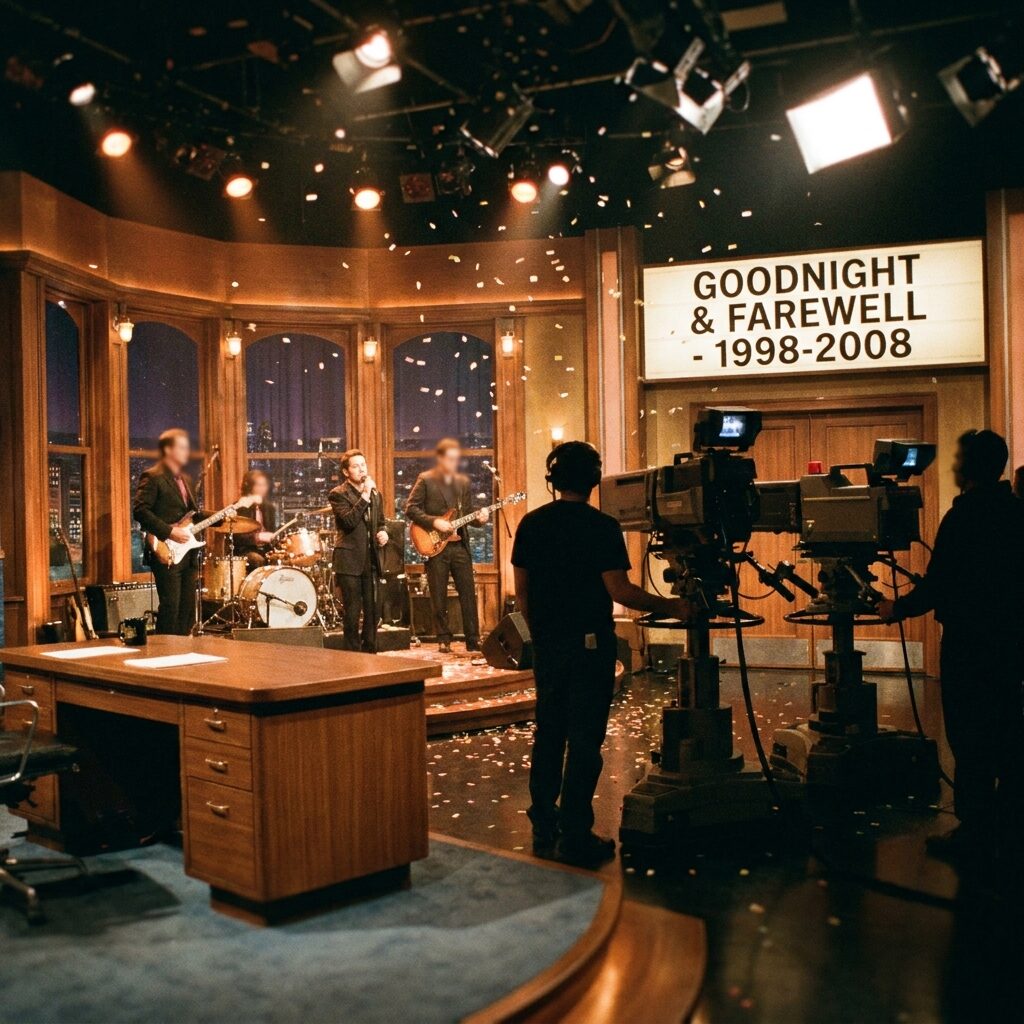
The final performance came on May 20, 2015, the last episode of the Late Show with David Letterman. Foo Fighters were the final musical guests. They wore tuxedos. The performance ran past six minutes, accompanying a career-spanning montage edited by executive producer Barbara Gaines. Letterman had originally wanted to use a recording for the montage but changed his mind, he wanted the band playing live, in the room, one last time. The episode broke its 12:35 AM curfew. Nobody cared.
And then Letterman said the thing that put all of it in a different light. Not about the song’s melody or the riff or the production. About what it did for him. “Fifteen years ago I had open heart surgery, and these people saved my life.”
A love song written on a friend’s floor about a woman in another city. A recovery anthem for a comedian who almost died. The song didn’t change. What people heard in it did. “Everlong” kept picking up new weight, kept meaning something different than it had the week before, and Letterman claiming it as his personal anthem might be the strangest and most affecting chapter in the song’s whole life. Nobody writes a rock song hoping it’ll help a talk show host survive heart surgery. But that’s what happened. And Letterman, a man who built an entire career on ironic detachment, on refusing to be caught caring, dropped all of it and said so on national television.
The Song He Never Played On
Taylor Hawkins never played drums on the studio recording of “Everlong.” Grohl played everything. But Hawkins performed it live for twenty-five years until the song was more his than anyone’s. It was the last song he ever played, five days before he died in Bogotá. At the Wembley tribute concert, Grohl walked out alone with an acoustic guitar, and 70,000 people sang it for him when his voice gave out. His sixteen-year-old son Shane sat behind the kit that same night and tore through “My Hero,” and for a few minutes you could see his father in every hit.
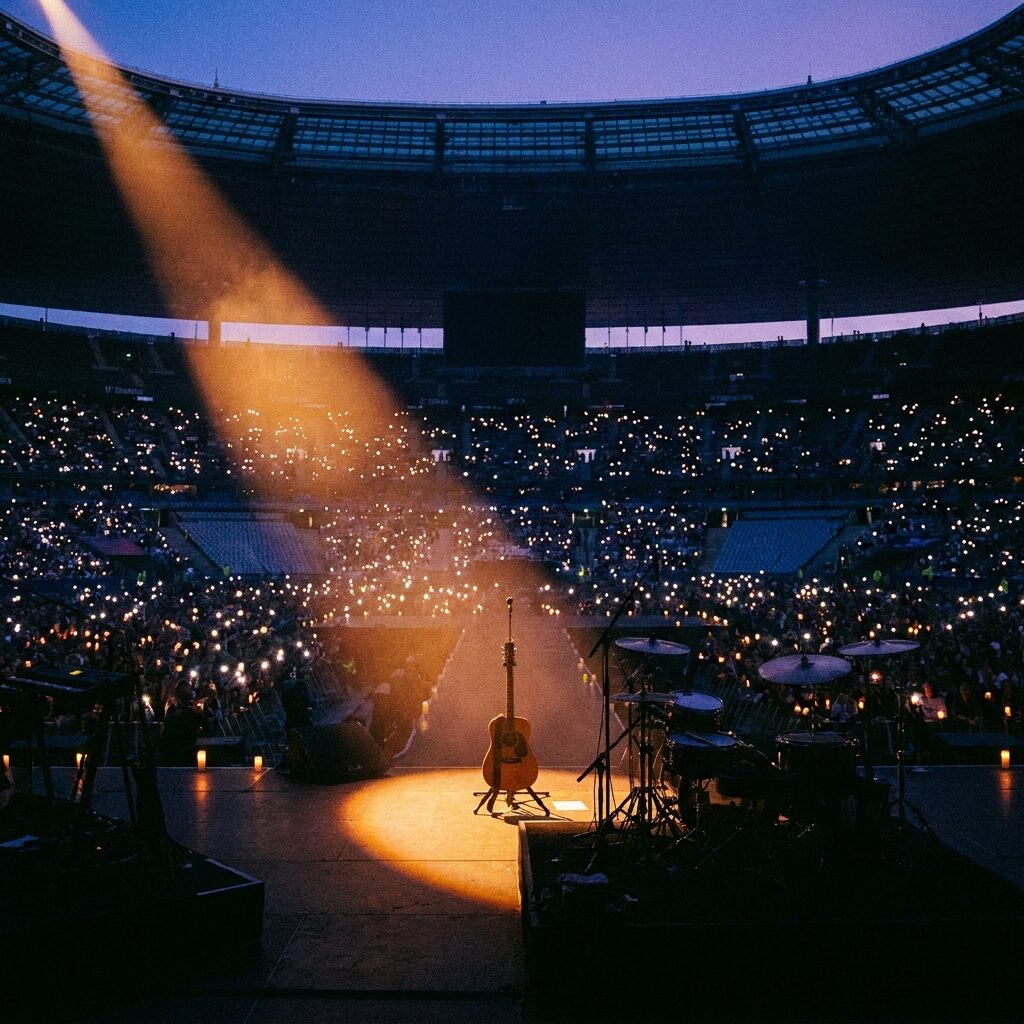
Here’s the irony that sits at the center of everything: Taylor Hawkins never played drums on “Everlong.”
Not a single hit. Not one fill. On the studio recording, Dave Grohl played drums, rhythm guitar, and lead vocals. Hawkins didn’t join Foo Fighters until after The Colour and the Shape was completed. He came over from Alanis Morissette’s band in 1997, arriving just in time to tour behind an album he hadn’t touched.
And yet. If you ask most rock fans which song they associate with Taylor Hawkins, the answer is “Everlong.” If you ask them to picture Hawkins behind his kit, the song playing in their head is “Everlong.” He made it his own the only way a live musician can: by playing it thousands of times, in thousands of venues, over twenty-five years, until the song and his performance of it became inseparable. The studio recording belongs to Grohl. The live experience belongs to Hawkins. And for most fans, the live experience is the real one.
March 20, 2022. Lollapalooza Argentina. The Hipódromo De San Isidro in Buenos Aires. Foo Fighters played a nineteen-song set, and the last song, the encore, the goodbye, the one they always close with, was “Everlong.” Five days later, on March 25, Taylor Hawkins was found dead at the Casa Medina hotel in Bogotá, Colombia. He was 50 years old.
The last song Taylor Hawkins ever performed was the song he never played on.
Five days before his death, Grohl had said something on stage in Argentina that would become unbearable in retrospect: “I don’t say goodbye. I don’t like to say goodbye. I know that we’ll always come back.”
They didn’t come back. Not the way he meant.
What came instead were two tribute concerts, both enormous. Wembley Stadium in London on September 3, 2022: nearly six hours, fifty songs, 70,000 people. The Kia Forum in Los Angeles on September 27: fifty-three songs. Paul McCartney played. Lars Ulrich played. Brian May, Liam Gallagher, Miley Cyrus. Nandi Bushell, the eleven-year-old drummer who’d challenged Grohl to a drum battle and won, played. The guest list went on and on, because Taylor Hawkins had that effect on people. Everyone wanted to show up for him.
But the moment everyone remembers from Wembley isn’t any of the guest performances. It’s the end.
Grohl walked out alone. Just him and an acoustic guitar. The same configuration that had changed the band’s direction on Howard Stern’s show in 1998, the same stripped-down arrangement that had soundtracked David Letterman’s recovery. He said four words: “This one’s for Taylor.”
And then 70,000 people sang “Everlong.”
Not sang along. Sang. Grohl could barely get through it. There are videos where his voice breaks and the crowd carries the melody for him, breathe out so I can breathe you in, hold you in, and the song that was written about harmonizing with a lover becomes a song about harmonizing with grief. With memory. With 70,000 people who needed to say goodbye to someone they never met but felt like they knew, because they’d watched him play this song for a quarter of a century.
A love song written on Pete Stahl’s floor that turned into a farewell for a drummer who never played on it. That’s “Everlong.” The meaning keeps shifting. It probably always will.
One more image from those tribute concerts, because it matters: Shane Hawkins, Taylor’s sixteen-year-old son, sitting behind a drum kit at Wembley and playing “My Hero.” Not “Everlong,” but “My Hero.” A different song, but it hit just as hard. Shane played the hell out of it. The crowd lost their minds. And for a few minutes, you could see Taylor Hawkins in his son’s playing, right there on the same stage where his absence had been so enormous just hours before.
If Everything Could Ever Feel This Real Forever
“Everlong” has outlasted the relationship that inspired it, the band lineup that first played it, the era that produced it, and the drummer who became synonymous with it. A song assembled from wreckage in 45 minutes that became indestructible through a series of accidents nobody could have planned.

A song assembled from wreckage that became indestructible.
That’s the sentence I keep coming back to. “Everlong” was a riff that Grohl thought was stolen, written into a complete song in 45 minutes on a friend’s floor during the worst period of his life, recorded with a microphone chosen for sounding bad, with backing vocals captured over a phone line at 2 AM, for an album it was never planned to be on. It never charted on the Hot 100. It lost the MTV VMA to Aerosmith.
And none of that mattered. Because the song kept becoming something else.
New love. Then an acoustic revelation that changed the band’s entire direction, born from a rejected song suggestion on a morning radio show. Then a recovery anthem for a man who’d survived heart surgery and needed something to hold onto. Then a memorial for the drummer who never played on the recording but played it live for twenty-five years until it was the last song he ever performed.
Every single one of those transformations was unplanned. Grohl didn’t write an acoustic version; Howard Stern’s team forced his hand. Letterman didn’t choose “Everlong” as a branding exercise; he chose it because it kept him alive. And nobody planned for Taylor Hawkins to die five days after playing it for the last time.
“Promise not to stop when I say when.” That line, the one Bob Dylan loved, has become the song’s own operating principle. “Everlong” never stopped. Every logical moment to stop arrived, the relationship ended, the lineup changed, the era passed, the drummer died, and the song kept going. Kept accumulating meaning. Kept outgrowing whatever it had been the year before.
Uproxx wrote that “the gap between ‘Everlong’ and every other Foo Fighters song is wider than it is for any other major rock band with their best song vs. the rest of their catalogue.” That’s true, and I think the reason is simple: no other song has lived this many lives. You can write a great song. You can’t plan for it to mean something new every decade. You can’t engineer the accidents that turn a love song into a survival hymn into a eulogy. You can only write something honest enough to hold all those meanings without breaking.
Grohl wrote “Everlong” in 45 minutes because he was falling in love and falling apart at the same time, and the song captured both feelings in the same breath. That’s why it survives. Not because it’s perfect, but because it’s true. Joy and terror living in the same chord progression. And it turns out those are the songs that last, the ones where you can’t quite tell if someone is reaching for something or letting go of it.
Everlong.
🎸 Did you know? The backing vocals on “Everlong” were recorded over the phone at 2 AM — Louise Post was woken from a deep sleep in Chicago and sang through two telephone lines. #FooFighters #Everlong #90sRock 🎶 https://bit.ly/4cRcXrA

Click to Tweet