The Almost-Gift
Kevin Parker tried to give his best song to Mark Ronson. Ronson sent it back, and it went on to outstream everything else Parker ever made.
Kevin Parker spent days pacing a hallway somewhere in America, rehearsing a conversation he kept trying to talk himself out of having. He was a few days deep into recording with Mark Ronson, and there was a track sitting back home in Fremantle that he had already decided wasn’t a Tame Impala song. Too pop. Too disco. Too dorky, honestly. It belonged on Ronson’s album, Parker figured, not his own. All he had to do was say it out loud.
When he finally worked up the nerve, Ronson got there first. “Oh yeah, dude,” he said. “I was going to say this song is yours.”
That song was “The Less I Know The Better.” The track its own creator tried to give away became the most popular thing he has ever made. Two billion streams and counting. Four times platinum in America. And in March 2020, the number one song of the entire decade in triple j’s Hottest 100 of the 2010s, voted there by more than 1.8 million listeners.
The title nearly tells the whole story by itself: the less precious Parker was about this song, the better it turned out. But the full version is stranger than the punchline. It starts with a fifteen-minute desperate demo, and the bassline everybody knows turns out not to be a bass at all.
One Man, All Disco
Tame Impala is one guy in Fremantle with a fixation. By 2014, the fixation was disco.
One man, all disco
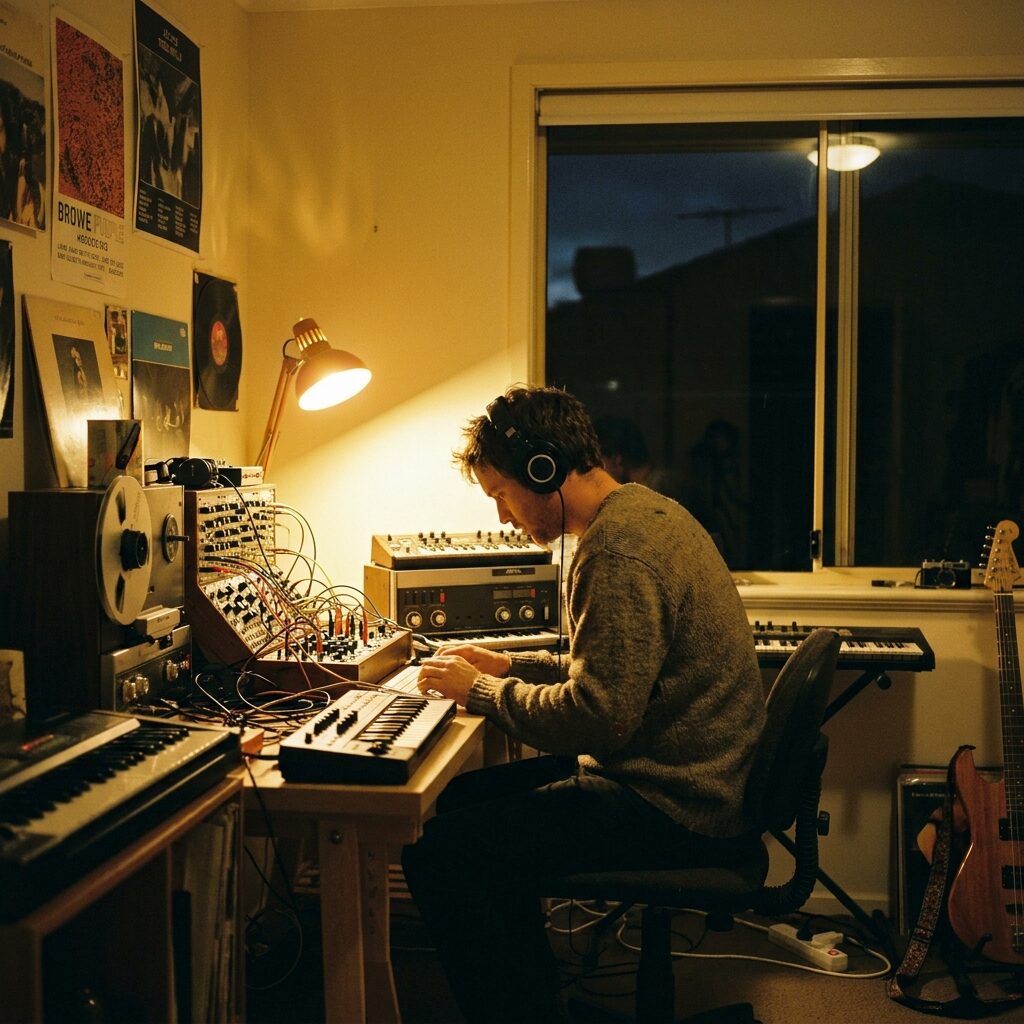
Start with the setup, because it never stops being absurd. Tame Impala is a band the way a pen name is an author. Since forming in Perth in 2007 and signing to Modular Records, Kevin Parker has written, performed, produced, recorded, mixed and engineered essentially everything that carries the name. Other people orbit the operation. Rob Grant lends additional engineering. Greg Calbi masters the results in New York. Everyone else you hear is Parker.
The studio itself was barely a studio. Currents got made in a corner of one room of his Fremantle house, surrounded by gear accumulated through years of happy misuse: tape machines like a Revox B77 and an Ampex ATR-700 for drum saturation, an old Studer 963 console he kept purely for routing, mics occasionally wired out of phase in his early days because nobody had told him otherwise. When he finally earned some real money from this album, his victory purchase was a pair of ATC monitors to replace the HS7s he’d been perfectly content with.
By 2014 he was deep into an obsession that didn’t match the psychedelic rock catalog he’d built. “I’ve been obsessed with disco for the last year or two,” he told Under The Radar in 2015. And he wasn’t exaggerating. A year or two of disco went into the record, much of it assembled inside Ableton Live with bus compression heavy enough that, in his words, “everything breathes in unison.”
The problem was that disco funk sat awkwardly next to everything fans expected from the project. Parker knew it. He could hear his own catalog pushing back against what he wanted to make. He made it anyway. Currents turned out to be the album where he let synth-funk, R&B grooves and pop structures through the gate alongside the psych epics.
One track carried the tension harder than the rest. It had a dorky white disco-funk groove, dorky lyrics, a dorky grin across its whole face. Parker loved it precisely because it wasn’t cool, which is exactly why he assumed it couldn’t be a Tame Impala song. His own words, from that same period: “That song originally I thought shouldn’t be on a Tame Impala album.”
He was half right. It probably belonged on somebody’s album. Just not Ronson’s.
Fifteen Desperate Minutes
Half an hour, fifteen minutes, or one hotel-room night, depending on who’s telling it. The demo that stuck was grabbed in a panic before the idea could evaporate.
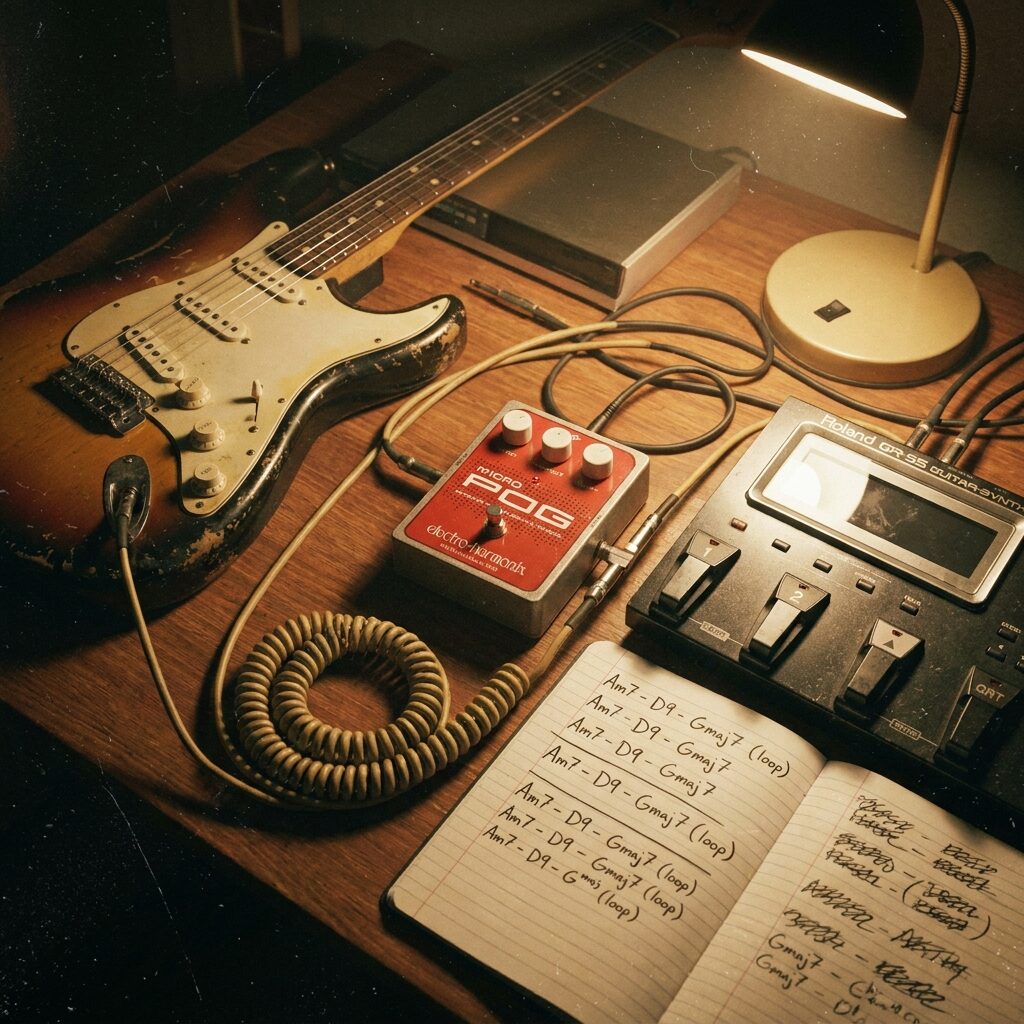
Ask Kevin Parker how long the “The Less I Know The Better” demo took and you’ll get a different number every time. The conflicting answers are part of the mythology at this point. In a Noisey interview he said roughly half an hour, alone in his home studio, “a little studio, because I was between houses.” People who’ve watched his Mix With The Masters breakdown report him claiming fifteen minutes, on the grounds that the song was just a loop anyway. Mixdown magazine has him demoing it late at night in a hotel room with hardly any gear.
Take your pick. All three agree on the desperation, at least. Parker already had chords and a melody in his head when the missing piece showed up: a gnarly bass riff, as he described it. And once that riff appeared, he understood it was perishable.
“I just had the idea,” he told Far Out Magazine. “I was like, ‘I got to record this before I forget it’.” He got about a minute of it down in roughly fifteen minutes and moved on. That panicked scratch take is the song. The version you’ve streamed two billion times is the take he grabbed before it could get away.
Even once the idea was safely on tape, the pace didn’t slow. Recording most of the first half of the track, everything up to the first chorus, took about an hour once the vocal melody clicked. The obsessiveness came later: for one song on that album, either this one or “‘Cause I’m a Man,” Parker pressed record and stop in Ableton over a thousand times, capturing partial vocal takes of sometimes a single word. His exact count was 1,057, and even he can’t remember which track they belong to.
Here’s the part bass players don’t want to hear: there is no bass on the track’s most famous line. That slithering low-end figure is a guitar run through an octave pedal. Depending which deep dive you trust, it went through the P-Bass preset on a Roland GR-55 guitar synth, pitched down an octave with a bit of drive smeared across it. Parker himself has been candid about how unglamorous the chain was. The preset “actually sounds terrible,” he admitted, and he’d forgotten he’d even added overdrive and something like chorus after recording, because he was in such a hurry. Years later he pulled up the session and auditioned the raw riff without any processing. His verdict: “It sounds hilariously bad.”
The processed version ended up being the track’s signature sound. It also fits how Parker thinks about riffs. “The way that I know I’ve done a new riff that is cool, is if my hands don’t want to do it,” he has said. “If you let your hands do the thinking, it will just be the same old shit.” His hands didn’t want to play that figure. So he hit record in a panic. The panic took fifteen minutes.
The Gift Refused
Parker took days to work up the nerve to offer the song to Mark Ronson. By then Ronson had already decided it wasn’t his either.
The intro teased it, so here’s the whole scene. Parker had earmarked the track for Mark Ronson’s Uptown Special, the 2015 album Ronson was assembling. In Parker’s head the logic was airtight: the song was too pop and too disco for Tame Impala, and Ronson was the guy who did this style properly. All he had to do was say so.
He couldn’t manage it. Parker spent days recording alongside Ronson in America, carrying the secret around like something breakable. “I was too shy to tell them the truth,” he admitted later, and this was old behavior. When he signed his first record deal, he never got around to mentioning that Tame Impala was one guy. Nobody asked, apparently. When he finally worked up the nerve to hand over the song, Ronson waved it straight back at him. “Oh yeah, dude, I was going to say this song is yours.”
So there they were, two creators each convinced the song belonged to the other. The tiebreak went to whoever had written it, which is how a track nearly filed under somebody else’s name ended up closing arguments about Parker’s best work.
There’s a small irony in how it played out. The man famous for being a one-person operation couldn’t manage a one-sentence conversation about his own song. Shyness has shaped Tame Impala’s whole public story, and it very nearly settled this song’s fate too, right up until Ronson ended the argument for him.
Parker has been gracious about the what-if ever since. He doubts Ronson loses sleep over it. “I don’t know if he regrets it now,” Parker said. “I don’t know if he knows how successful it is… He’s obviously not exactly kicking himself.” None of this reads like a skeptic getting out of the way, either. Ronson was one of Parker’s loudest champions, and years later the first public voice praising The Slow Rush. He never doubted the song. It sounded like Parker, so back to Parker it went.
Anatomy of a Groove
C-sharp minor at 117 BPM, an intro like tuning into an old radio, bells at 0:41, a grit-fuzz synth riff at 2:23, and a Mellotron cameo nobody saw coming.
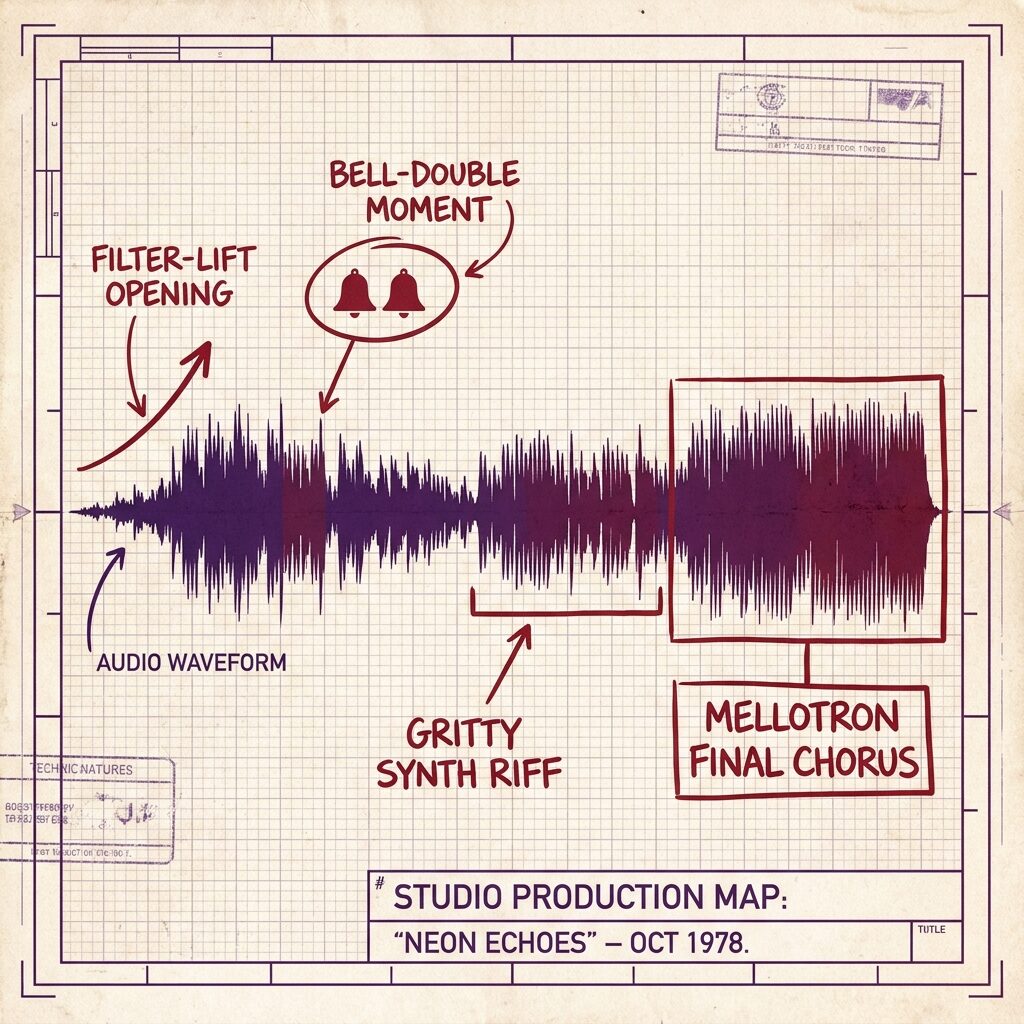
Under the dorky grin, the thing is built like a Swiss watch. The key is C-sharp minor at around 117 BPM in common time, give or take a BPM depending which analysis you check. The chord inventory stays tight: C-sharp minor, B, E, plus an E7 for spice, with the bass walking step-wise between them, which is a big part of why the groove feels inevitable rather than busy.
Then there’s the opening, one of the most recognizable entrances of the decade. The track starts band-passed, low end and high end filtered out, like hearing the song through a wall or an old radio. Right as the guitars enter, the filter lifts and the full spectrum floods in. None of that was accidental. Parker wanted nostalgia first and payoff second, and the filtered intro was how he got from one to the other. It’s the sonic equivalent of a hand reaching for a dial.
The drums keep it simple to a degree that borders on stubborn. A straight kick-snare pattern with hardly any variation, which gives the groove its electronic, almost looped feel. Parker’s stated goal for Currents-era drums was to sound “classic, awesome, and Dave Fridmann-y,” and he engineered toward it obsessively. He parked his main drum mic against the side of the snare shell and compressed until he found what he called the most perfect trip-hoppy sound.
The layers above the loop are where the song hides its treasures. At 0:41, bell-like keys double the chords, a DX7-flavored shimmer fans have traced back to a Roland JV-1080 patch called “JV Rhodes.” The verse pad breathes away underneath like a Juno-106, which tracks, because Parker owns the real thing. The second chorus gets its own pad with a slow attack. Strings swell into the second verse and then vanish on automation. And a Rhodes-style electric piano carries the choruses through a phaser, an effect Parker has never met a track he didn’t want to smear.
And at 2:23 comes the strangest moment of all, a coarse, trippy synth riff that sounds pushed through a guitar amp. Forensic listeners reckon it probably was, possibly via the onboard amp simulation of a Boss BR-600 recorder Parker leaned on all over his first album. One fan rebuilt the chain as a Juno emulation into an amp sim into an Electro-Harmonix Small Stone phaser and got close enough to prove the point.
Then the closing tricks. Mellotron strings, the tape-driven sound Tame Impala deploys constantly on stage, show up exactly once in the studio version: the very last chorus. An 80s-cheese synth line punctuates the ending, and the same sleuths suspect Farfisa organ chords hiding in the mix, which would be unusual for this project. For a song supposedly too dorky to release, the production is packed with decisions this deliberate.
Trevor, Heather, Ignorance
A love triangle, a ten-year ultimatum, and an outro aimed at Superman. The catch: Trevor himself is just a filler name that fit the meter.
On the album, the song sits at track seven, right after a synth vignette called “Gossip.” That placement is the plot. The narrator is literally mid-earshot when the news arrives, and over the next three and a half minutes we get the whole sordid triangle in four characters: the narrator, his crush, her new man Trevor, and Heather, the rebound his friends keep prescribing.
The beats land with timestamped cruelty. Around 37 seconds in: “She was holding hands with Trevor. Not the greatest feeling ever.” Then the advice: pull yourself together, try your luck with Heather. Then the gut punch: “Then I heard they slept together.” And then the title line, triage instead of heartbreak: “Oh, the less I know the better.” Every new detail is a wound he could have declined.
Genius’s editors read the title as insecurity logic: the more details people volunteer about his crush and Trevor, the more those details colonize his thoughts, until she’s ruined for him in real time. Nobody here is claiming bliss. Ignorance is simply the last wall between him and a picture he can never unsee. There’s a crueler reading underneath: he keeps asking anyway.
Later comes the decade-long negotiation that keeps the song from being pure self-pity. She offers him a horizon: “It’s not now or never. Wait ten years, we’ll be together.” He answers like a man trying to negotiate with gravity: “Better late than never. Just don’t make me wait forever.” Hope and humiliation in the same exchange. One lyric analyst counted the rhyme scheme and called it a masterclass in minimalist pop storytelling: monorhyme grids, a chained chorus vowel, and lyrics that open as physical snapshots and end up somewhere closer to cognitive damage by the bridge.
The women in the story get their own readings. Heather exists mostly as other people’s advice, and plenty of listeners doubt any of it was sincere: the running theory is that the girlfriend floated Heather herself, to keep another rival off her scent. Even the narrator’s fantasy of her, “on his shoulder like every night,” is secondhand intelligence, gossip he wasn’t present for.
And then the outro, the part half the internet now knows by heart: “Come on, Superman, say your stupid line.” Who’s Superman? Fans have spent a decade arguing. Trevor, mocked as her idea of a hero. The narrator himself, hyping up one last pathetic attempt. A surrender flag. All of the above. Parker has never settled it, though he did clarify one detail: Trevor is nobody. Just a filler name that fit the meter.
Read the Lyrics
The whole four-character drama, from first rumor to final taunt, in under forty lines.
I ran out the door to get her
She was holding hands with Trevor
Not the greatest feeling ever
Said, “Pull yourself together
You should try your luck with Heather”
Then I heard they slept together
Oh, the less I know the better
The less I know the better
Oh my love, can’t you see yourself by my side?
No surprise when you’re on his shoulder like every night
Oh my love, can’t you see that you’re on my mind?
Don’t suppose we could convince your lover to change his mind
So goodbye
She said, “It’s not now or never
Wait ten years, we’ll be together”
I said, “Better late than never
Just don’t make me wait forever”
Don’t make me wait forever
Don’t make me wait forever
Oh my love, can’t you see yourself by my side?
I don’t suppose you could convince your lover to change his mind
I was doing fine without ya
‘Til I saw your face, now I can’t erase
Giving in to all his bullshit
Is this what you want? Is this who you are?
I was doing fine without ya
‘Til I saw your eyes turn away from mine
Oh, sweet darling, where he wants you
Said, “Come on Superman, say your stupid line”
Said, “Come on Superman, say your stupid line”
Said, “Come on Superman, say your stupid line”
Notice how much story fits inside how little space. Four named characters, one location change, and a time jump of ten years, delivered almost entirely in monorhyme. The chorus never explains who Trevor is or why Heather matters; it doesn’t have to. By the time the narrator hands the last word to Superman, you know exactly whose love life keeps collapsing into gossip, and exactly why he keeps asking for details he’d rather not have.
The Slowest Billion
#66 in Australia. #195 in France. Then a billion streams, then another billion, then it out-charted its own peak five years after release.
The first verdict on “The Less I Know The Better” was a shrug. As a single in late 2015 it peaked at #66 on Australia’s ARIA Singles Chart, #195 in France, #23 in Belgian Flanders, and #35 on Billboard’s Hot Rock Songs chart. Four charts, twenty-two weeks, nothing that looks like destiny. For a future juggernaut, that is a remarkably quiet landing. Plenty of third singles die right there.
Instead, this one kept breathing. Streaming rewards songs people never skip, and nobody skips this one. By Songfacts’ earlier snapshot it had already passed 450 million Spotify streams with no promotional push behind it. APRA AMCOS confirmed one billion streams on 3 May 2021. On 17 June 2025 it crossed two billion and joined Spotify’s Billionaires Club, which is apparently a real thing. The official video has its own counter going too, past 118 million views.
Certifications crawled. RIAA Gold in July 2018. Platinum in December 2019. Four times platinum by February 2022, by which point nobody was calling it a single anymore. Canada went platinum in 2018, the UK Silver in 2021, and gold and platinum awards piled up elsewhere besides.
The strangest turn came in March 2020, when the song won triple j’s Hottest 100 of the 2010s and re-entered the ARIA Top 50 for the first time in its life, charting 49 places higher than its original peak. A song out-charting itself five years after release is the kind of thing that isn’t supposed to happen. Nobody appears to have told this one.
Step back and the album makes the case from the other side. Lonerism, the record before it, sold a respectable 210,000 copies in the US over several years. Currents, with help from this song’s long streaming tail, went platinum in America. The song had finally caught up to what listeners already knew, which, given the title, feels like the point.
Critics Catch Up
A gorilla mascot video picked up design awards and the album cleaned up on 2015’s year-end lists. Wherever the song turned up, it won.
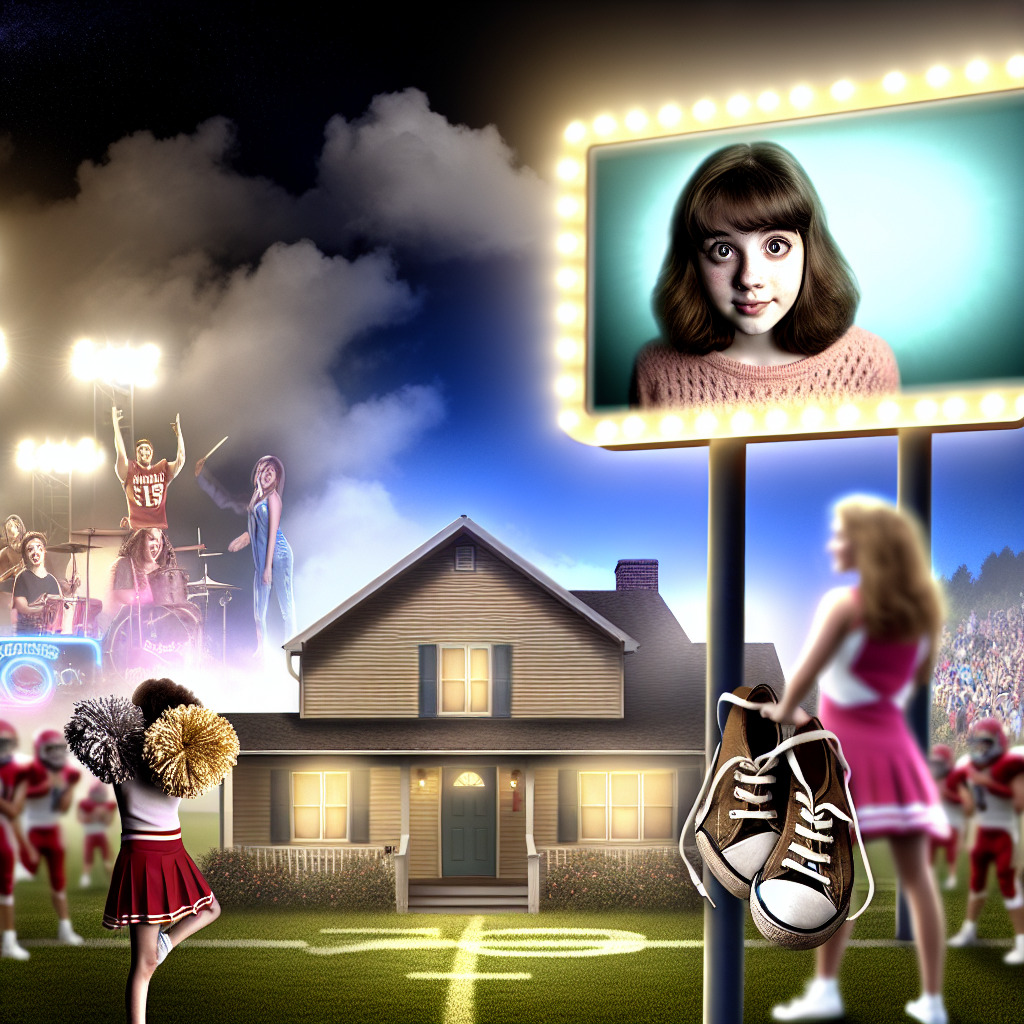
The video gave the song a second life before the streams did. Directed by Canada, the Barcelona collective with a taste for saturated color and soft eroticism, it drops a high school love triangle into a gym where the rival is a gorilla mascot named Trevor. It mixes live action with hand-drawn animation and was filmed over five days in Spain. Billboard called it “a strange tale of high school lust and jealousy (and King Kong) played out in a technicolor trip.” In 2016 it won a D&AD Graphite Pencil, along with nominations for its cinematography at the UK Music Video Awards and for Best Video at the MTV EMAs. Rolling Stone’s VMA coverage filed it alongside Beyoncé’s “Formation” and Adele’s “Hello.” As for Laia Manzanares, the cheerleader, the viral fame got big enough that she had to create an Instagram account just to manage it.
The album did plenty of lifting on its own. Currents debuted at #4 on the Billboard 200 and earned a Grammy nomination for Best Alternative Music Album. The year-end lists liked it even more. It topped Q’s year-end list, landed at #4 in Spin, took a 9.3 and Best New Music from Pitchfork, and an 84 on Metacritic. Pitchfork critic Ian Cohen heard Michael Jackson in it specifically, writing that the track “merges Thriller’s nocturnal, hard funk with the toxic paranoia of Bad.”
Even the rarities market agreed. For Secret 7″ 2016, the song was one of seven tracks pressed a hundred times each on 7-inch vinyl, each copy housed in a one-of-a-kind sleeve sold blind for Amnesty International, alongside Lennon and Etta James. Collectors queued for up to 36 hours. Not bad for a dorky disco throwaway.
Decade’s Unlikely Champion
1.8 million voters, one gorilla-sized upset, and the prediction model that got it wrong.

Australia’s first verdict came in January 2016: #4 in triple j’s Hottest 100 of 2015, with “Let It Happen” right behind at #5. Two Currents tracks in the year’s top five. Impressive, but only one data point.
The referendum arrived on 14 March 2020, when triple j counted down the Hottest 100 of the decade. More than 1.8 million votes came in. When the tally reached #1, it was “The Less I Know The Better,” beating Gotye’s “Somebody That I Used to Know,” Arctic Monkeys’ “Do I Wanna Know?” and Flume. The electorate skewed young, with 18 to 24-year-olds casting 47.9 percent of the votes, and Australian acts took 49 slots including eight of the top ten. When triple j ran an all-Australian edition in 2025, the song was still there at #19.
The result embarrassed the forecasters, too. The 100 Warm Tunas prediction model, which aggregates public betting-style picks before each countdown, had picked Violent Soho’s “Covered In Chrome.” The actual audience had other ideas. Fitting, for a song that exists as an argument that gut calls beat careful models.
The decade between those two polls filled up with everyone else’s versions. Ngaiire turned it into slow-burning soul on Like a Version in September 2015, two months before Tame Impala stripped it down on the same segment themselves. In April 2020, with the world locked down, Blossoms recorded it over video with Miles Kane and stitched their separate living rooms into a split-screen band. Still Woozy made it bedroom-pop. Scary Pockets funked it up with Elise Trouw and Dave Koz, and a minor Reddit controversy broke out over the crime of leaving out the bassline. Dutch producer Mau P built a tech-house track directly on top of the original sample. Somewhere in all that, a Manila bassist was teaching the riff on a Squier Bronco.
Live, the song had already become a festival instrument. After its debut at Splendour in the Grass in July 2015, barely a week after the album dropped, it showed up in more than 230 setlists through the end of the 2019 touring cycle. But the version everyone remembers is the full-band festival mix: that riff arrives, the crowd takes the chorus out of his hands, and tens of thousands of people sing a song its author tried to give away.
Say Your Stupid Line
The title was a survival strategy. It turned out to be a production philosophy, too.
One more look at the title, because it turns out the whole story was hiding inside it. The less Parker knew, the better. He had no idea the riff would define his career when he rushed to tape it. Nobody warned him a fake bassline was a liability. As for disco being wrong for Tame Impala, he didn’t know that either, mostly because it wasn’t. The song works because nobody precious ever got hold of it long enough to sand the dorky edges off.
His hands figured it out before he did. The take grabbed in desperation turned out to be the keeper. The loop he built in fifteen minutes now sits under a song that’s been streamed two billion times. And the track Parker refused to claim back then is the one that owns every festival crowd it meets.
The internet even found a use for his most defeated line. In late 2025, “Come on, Superman, say your stupid line” went viral on TikTok, where people lip-sync the taunt before revealing the phrase they’re notorious for saying in real life. A decade on, the outro of a song about drowning in unwanted details is a punchline people volunteer for. Parker’s narrator would be furious. Parker, presumably, is delighted.
Right now, somewhere, a first-time listener is hearing that bassline with no idea it was never a bass. The song doesn’t care. Neither, by the end, did Kevin Parker, which was kind of the whole trick. Somewhere Trevor is still holding hands with her. Superman, for the record, never said his stupid line. And the less you know about how any of it got made, the better it sounds.
Gear in this story
Saul earns a commission from purchases made through links above. Gear listed only where it appears in the story.
The bassline on Tame Impala’s ‘The Less I Know The Better’ isn’t even a bass — it’s a guitar through a synth preset! Kevin Parker tried giving the whole song away 😱🎸 #TameImpala #Currents #DiscoFunk https://bit.ly/4xR0hso

Click to Tweet