The Paradox
A 15-second TV teaser became a 10-hour YouTube loop, and a song built to reject the internet broke Spotify’s all-time streaming record, the contradiction at the heart of “Get Lucky” never really resolved itself.
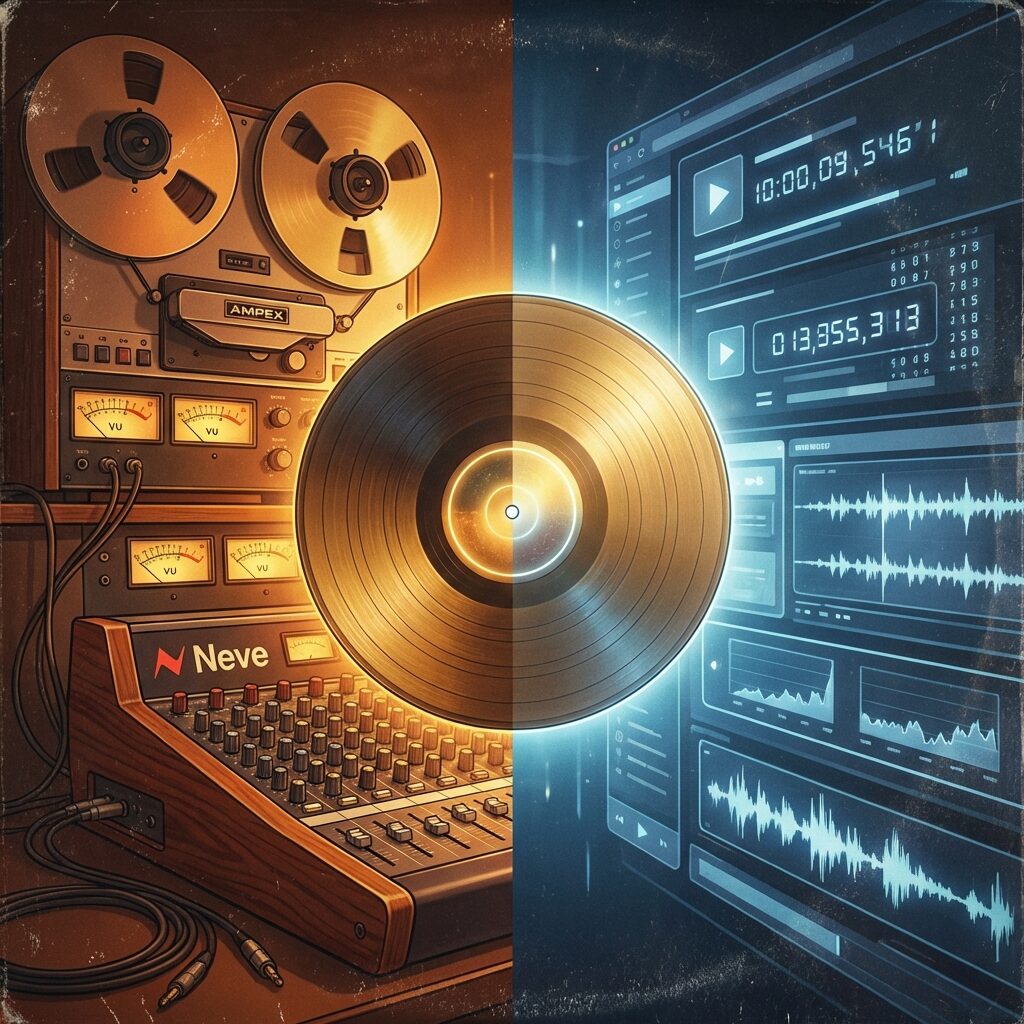
Somewhere in early 2013, somebody took a 15-second television clip and looped it into a 10-hour YouTube video. That clip, a snippet from an SNL ad break, nothing more than a pulsing beat and a guitar lick that sounded like it had been polished with a chamois, became the ad people couldn’t stop replaying. They weren’t just watching it. They were living inside it, letting those fifteen seconds wash over them for hours at a time, chasing a feeling they couldn’t quite name from a song that didn’t technically exist yet.
Here is the thing that still gets me about “Get Lucky.” Daft Punk made this record with an explicit, almost militant philosophy: record it as if the internet never existed. No samples pulled from dusty vinyl. No laptop production shortcuts. No digital-first rollout. They hired real session musicians, booked studios with analog tape machines, and insisted on the kind of live performance that the music industry had largely abandoned in favor of Pro Tools grids and quantized perfection. Thomas Bangalter and Guy-Manuel de Homem-Christo wanted to make something that felt like 1977, not 2013.
And then the internet lost its mind over it.
“Get Lucky” broke Spotify’s all-time single-day streaming record in both the UK and US on the day it dropped, April 19, 2013. It became the first song to generate one million UK streams in a single week. It topped charts in more than 30 countries. A song built to reject digital culture became the most digitally consumed piece of music on the planet. That contradiction never really resolved itself, and I think that’s part of why the song still lingers.
The collaborators who made this possible sound like a joke with too many punchlines. Two French electronic musicians who perform in robot helmets and hadn’t released an album in eight years. A funk guitarist from 1970s New York who most of the industry had written off as a legacy act. And a vocalist who showed up to his session in Paris so jet-lagged that his handlers fed him some unspecified “crazy elixir” to keep him upright, and who then forgot the entire recording session for a full year afterward.
This is the story of what happened when robots tried to become human, and accidentally made the song nobody could escape in 2013.
Robots in Search of a Soul
By 2008, Daft Punk were fed up with where electronic music had gone, so they decided to reject all of it and build an album from live sessions with the actual musicians everyone else was sampling.
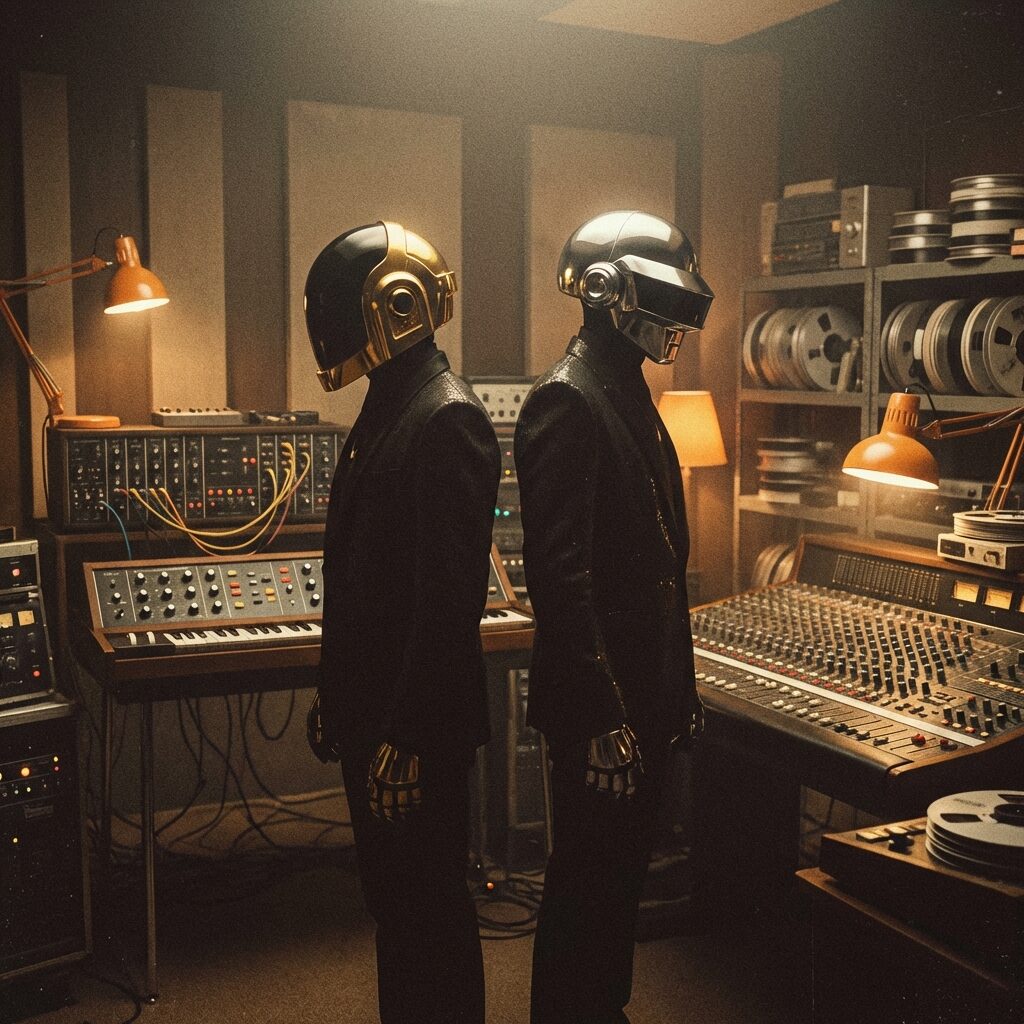
To understand why “Get Lucky” exists, you have to understand where Daft Punk had been, and how completely uninterested they were in where everyone else was headed.
Thomas Bangalter and Guy-Manuel de Homem-Christo started as sample-heavy French house producers. Their 1997 debut Homework hit like a brick wall. “Around the World” and “Da Funk” were built from loops and filters and the kind of mechanical repetition that somehow felt thrilling instead of numbing. Then Discovery in 2001 went somewhere weirder: vocoder-drenched pop songs wrapped in an anime film, pulling from soft rock and Supertramp as much as from Chicago house. The Alive 2006/2007 tours turned all of it into a stadium-sized light show that basically invented what a modern electronic live performance could even be.
And then silence. For years.
In 2008, they started working on new material in Paris, recording demos for about six months. But what was happening in electronic music around them, the EDM boom, the festival arms race, the drop-centric productions getting louder and more compressed every year, left them cold. Bangalter put it bluntly: “Electronic music right now is in its comfort zone and it’s not moving one inch.”
Random Access Memories was their answer, and it was almost comically stubborn. The idea sounds simple enough: instead of sampling old records, hire the people who actually played on them. Bring them into a studio. Let them play. Daft Punk booked Conway Studios in Los Angeles and put together a session band that could’ve stepped off a late-’70s album cover: Nathan East on bass, Paul Jackson Jr. on guitar, John “JR” Robinson on drums, Chris Caswell on keyboards. These were musicians who had played on Michael Jackson’s Thriller and Off the Wall. They tracked eight or nine songs in a single week, running both an Ampex tape machine and Pro Tools simultaneously, comparing the analog and digital versions of every element to decide which sounded better.
The whole thing was self-financed, which is the part that still gets me. Daft Punk didn’t shop the album to labels while it was in progress. They paid for everything themselves, years of studio time, dozens of session musicians, multiple studios across multiple continents, and then walked into Columbia Records with a finished record and a vision. They brought a copy of Rock ‘n’ Roll Billboards of the Sunset Strip, the photography book, to show exactly the aesthetic they wanted for the marketing campaign. Here’s the album. Here’s how we want to sell it. Take it or leave it.
Columbia took it.
Fifteen Years in the Making
Daft Punk and Nile Rodgers first met at a listening party in 1997 and spent fifteen years trying to find time to work together. Pharrell stumbled into the project by coincidence at a Madonna party, recorded his vocals in Paris while so jet-lagged he forgot the entire session for a year, and the whole thing took five studios across two continents to finish, all for one four-chord song.
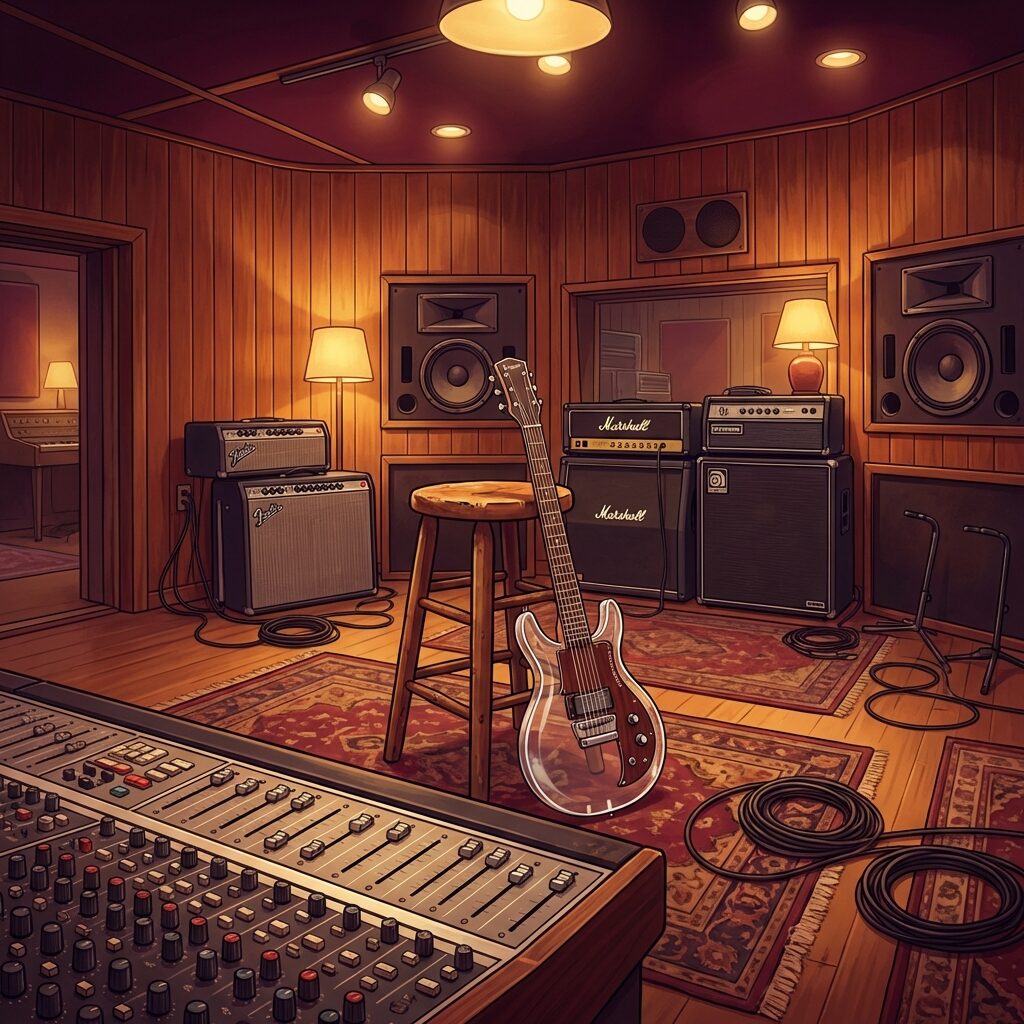
The connection between Daft Punk and Nile Rodgers didn’t start with “Get Lucky.” It started in 1997, at a listening party in New York for Homework. Bangalter and de Homem-Christo were 22-year-old French kids with a debut album that was about to change dance music. Rodgers was there, and they got along immediately. They stayed in touch. They talked about working together. Schedules never lined up.
Four years later, when Rodgers attended the Discovery listening party, Daft Punk pulled him aside and told him something quietly: they’d dedicated the album to Bernard Edwards. Rodgers’ late Chic bandmate, the bassist whose playing had shaped an entire generation of producers, many of whom had sampled his work without ever meeting him. The dedication wasn’t in the liner notes. It was personal. And it told Rodgers something about who these two guys in helmets actually were.
Fifteen years of friendship and scheduling conflicts. That’s how long it took.
Pharrell’s arrival was pure coincidence. He first heard about the Random Access Memories project at a party hosted by Madonna. When Daft Punk asked what he’d been working on musically, Pharrell told them he was “in a Nile Rodgers place”, meaning he’d been chasing that clean, rhythmic guitar style. He had no idea Rodgers was already on the record. None of it was planned. “If you just want me to play tambourine, I’ll do it,” Pharrell offered. They had something bigger in mind.
The recording of “Get Lucky” stretched over roughly 18 months and bounced between studios on two continents. It started at those initial Conway Studios sessions in Los Angeles, where the full band tracked the basic instrumental, a nameless, Wurlitzer-centered groove with no vocals and no Nile. Daft Punk were there every day, giving direction, shaping the feel. The track had something, but it wasn’t the song yet.
Then Rodgers entered the picture. His sessions happened at Electric Lady Studios in New York City, and if you know your studio history, you know why that detail matters. This was the same studio, in the same Greenwich Village neighborhood where Rodgers grew up, where the first Chic single had been recorded. Bangalter specifically insisted that Rodgers bring his plexiglass Guitarman guitar, the custom-made instrument that basically is the Chic sound.
What happened next rewired the whole track. After hearing the demo, Rodgers asked Daft Punk to mute everything except the drums. He wanted to start from nothing. Just the kick and snare and his guitar, building the part from scratch, trying different approaches until Bangalter and de Homem-Christo were visibly pleased. The Wurlitzer-centered track they’d started with became a guitar track. “Everybody else wound up re-playing to me,” Rodgers said. He wasn’t exaggerating, the other musicians literally went back and re-recorded their parts to fit around his playing.
Nathan East was called back roughly six months after the initial sessions to re-cut the bass from scratch. “The song had gone to another level,” East explained. “My mission was to match the bass part with what was going on in the guitars.” He described the process as “doing my Bernard Edwards impersonation, trying to add the Chic vibe.” When he finished, his reaction was immediate: “Please make me a mix of this, I want to go home with this one.”
The vocal sessions happened in Paris, at Gang Recording Studio, and Pharrell would literally not remember them. He’d just gotten off a transatlantic flight, thoroughly jet-lagged. According to Scott Greer, Def Jam’s executive VP, “Pharrell had gotten off a plane totally jet-lagged, and they made him take some crazy elixir.” Whatever it was, it worked, at least in the moment. Daft Punk pushed him through take after take, insisting on specific phrasings, never quite satisfied. “I never went in there to perfect it and they continued to push me,” Pharrell recalled. He didn’t know who would end up singing the final version. He didn’t even know if his takes would make the cut.
Then he went home and forgot everything.
Not figuratively. He forgot the song existed. For a full year, Pharrell had no memory of “Get Lucky”, not the melody, not the lyrics, not the session. He half-jokingly wondered if Daft Punk had “tampered with his memory.” The more likely explanation, as the duo pointed out, was that his lyrics and performance had been so off-the-cuff, so in-the-moment, that his jet-lagged brain simply never wrote the experience to long-term memory. When he finally heard the finished version a year later, it was like hearing someone else’s song. He said the music evoked “being on an exotic island during a peachy colored sunrise.”
The song was mixed at Conway Recording Studios by Mick Guzauski on a Neve 88R console, then mastered by Bob Ludwig at Gateway Mastering in Portland, Maine. Additional sessions had taken place at Henson Recording Studios and Capitol Studios in Hollywood. All told, “Get Lucky” involved at least five studios, two continents, and well over a year of work, for a single four-chord song that runs six minutes and nine seconds.
Four Chords, Infinite Argument
One four-chord loop repeated for 6:09 without changing, but the tonal ambiguity, Rodgers’ layered guitar parts, and a hidden counterpoint bridge kicked off arguments across music theory forums that lasted years.
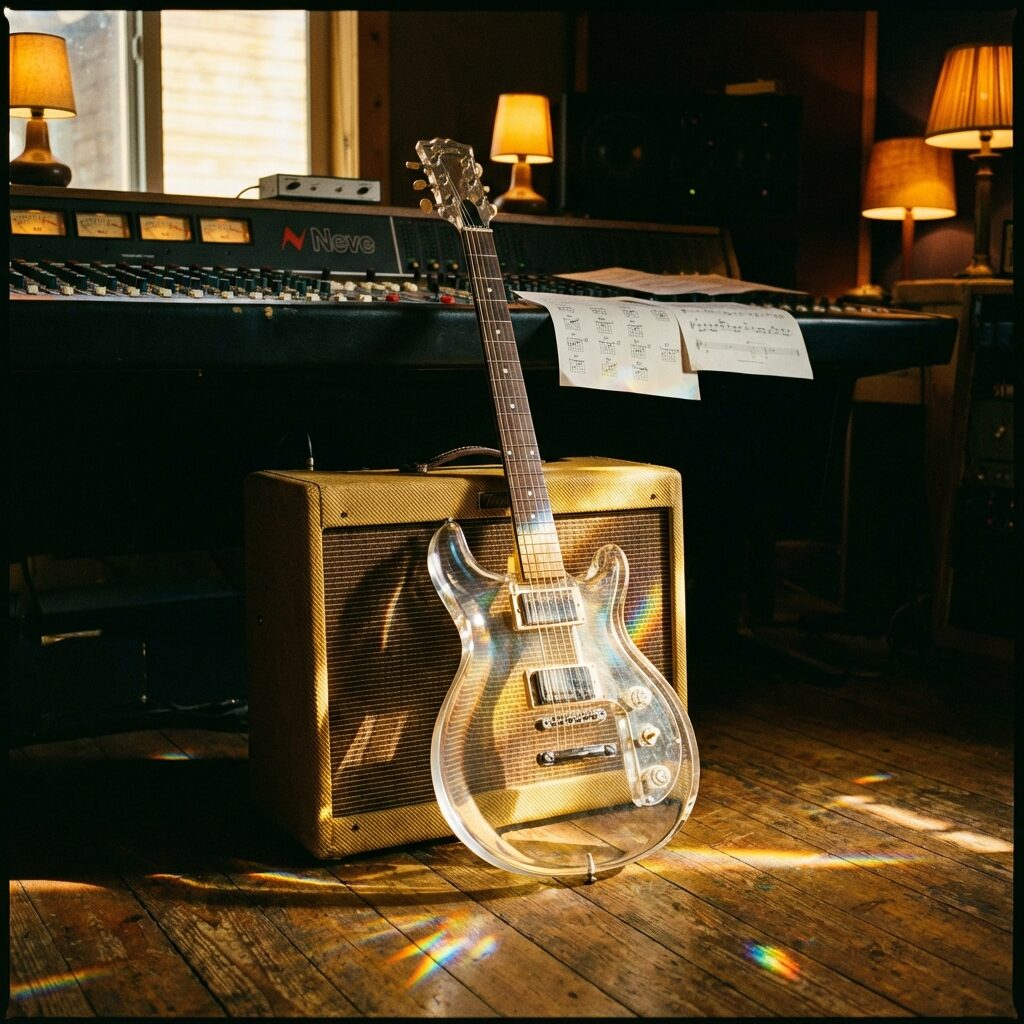
Let’s talk about the music. Because “Get Lucky” sounds simple, almost insultingly simple, and that’s exactly what makes it worth pulling apart.
The whole song runs on a single four-chord loop: Bm7–D–F#m7–E. One progression, repeated for six minutes and nine seconds. No key change. No bridge chord. No modulation. Chilly Gonzales pointed out that Daft Punk had already used this same progression in “Around the World” back in 1997. They liked it enough to recycle it, and honestly? It hits different with Nile Rodgers playing it.
Here’s where it gets fun, though. If you spent any time on music theory forums in 2013 and 2014, you know this chord progression started a weirdly heated fight about what key the song is actually in. Hooktheory calls it B Dorian. Wikipedia goes with F# minor. Owen Pallett, writing for Slate, analyzed it using a transposed framework of D Dorian and A Aeolian. A Reddit thread on r/musictheory pulled 142 upvotes and 112 comments, people going back and forth like it was theology.
The thing is, the tonal center really is ambiguous. The melody is diatonic to A major, containing G-sharps and D-naturals, which fits within B Dorian. But depending on which chord your ear treats as “home,” you could argue for several different keys and sound credible doing it. Owen Pallett rated the ambiguity “a 3 on a Kinsey scale” and declared, clearly enjoying himself, that “it is aurally unclear what the I chord even is!”
That puts “Get Lucky” in good company. The Dorian mode, that raised sixth degree that gives the minor scale a brighter, more slippery character, runs through some of the best grooves in pop history. Stevie Wonder’s “I Wish.” Chic’s “Good Times.” “Scarborough Fair.” Tears for Fears’ “Mad World.” Something about that mode makes a groove feel melancholy and propulsive at the same time, like it’s reaching for something just out of range. Which fits a song about chasing a moment you don’t want to end, if you’re into that kind of reading.
Now, what Rodgers actually does with his guitar. There are two layered parts: the prominent scratchy chord rhythm everyone recognizes, that percussive, choppy strumming that defined the Chic sound, and underneath it, a subtler single-note melodic riff that most people don’t consciously hear but absolutely feel. His chords rarely use more than three notes. His tone is completely clean, no effects. Mixer Mick Guzauski confirmed it: “He didn’t have to be processed, Nile just sounded great the way he is.” The guitar was recorded using a blend of direct signal and a mic’d amp summed together.
Worth remembering: before Rodgers got involved, the track was built around a Wurlitzer electronic piano. Same chords, same progression, completely different feel. His arrival didn’t change the song’s structure. It changed what the song felt like to listen to.
The bridge is worth stopping on because there’s a genuinely clever bit of writing hiding inside what sounds like just another section of a disco track. Daft Punk overlay the pre-chorus hook with the chorus hook simultaneously, subject and countersubject, if you want to get classical about it. Owen Pallett scored it roughly 6 out of 10 on a counterpoint exam, which is both a backhanded compliment and a real acknowledgment that there’s actual craft at work. Classical technique inside a four-on-the-floor groove. You don’t need to know it’s there for it to land.
The production, predictably, was obsessive. Daft Punk and Guzauski A/B tested analog versus digital iterations of every single element, deciding case by case which sounded better. The mixdown went into a Pro Tools session plus three half-inch Ampex tape machines, one running at 15 inches per second, two at 30. They bought a vintage reconditioned Neve 33609 compressor for the sessions, then ended up preferring Conway Studios’ house unit and traded. An API 2500 compressor handled parallel compression on the drum tracks. A Universal Audio 1176LN sat on the kick and snare.
If you’re not a gear person, none of those model numbers mean anything. But what they add up to is that Daft Punk treated the production of a pop single with the kind of attention audiophile labels bring to pressing jazz vinyl. Every decision was deliberate. Every piece of equipment was chosen, tested, and sometimes swapped for something that sounded marginally better. Six minutes of music that sounds like it rolled off the cuff, built by people who agonized over which tape speed to use.
Slicing a Golden Moment
Pharrell’s lyrics work as a loop mirroring the music’s own repetition, but sit with them and you’ll find phoenix mythology, a nod to Aristotle’s unmoved mover, and a quiet pronoun shift from ‘I’ to ‘we’ that does more narrative work than most songs manage in an entire bridge.
Like the legend of the phoenix, huh
All ends with beginnings
What keeps the planet spinnin’, ah-ah
The force from the beginnin’
Huh, look
[Pre-Chorus: Pharrell Williams]
We’ve come too far
To give up who we are
So let’s raise the bar
And our cups to the stars
[Chorus: Pharrell Williams]
She’s up all night to the sun
I’m up all night to get some
She’s up all night for good fun
I’m up all night to get lucky
We’re up all night to the sun
We’re up all night to get some
We’re up all night for good fun
We’re up all night to get lucky
We’re up all night to get lucky
We’re up all night to get lucky
We’re up all night to get lucky
We’re up all night to get lucky
[Verse 2: Pharrell Williams]
The present has no ribbon
Your gift keeps on giving
What is this I’m feelin’?
If you wanna leave, I’m with it, ah-ah
[Pre-Chorus: Pharrell Williams]
We’ve come too far
To give up who we are
So let’s raise the bar
And our cups to the stars
[Chorus: Pharrell Williams]
She’s up all night to the sun
I’m up all night to get some
She’s up all night for good fun
I’m up all night to get lucky
We’re up all night to the sun
We’re up all night to get some
We’re up all night for good fun
We’re up all night to get lucky
We’re up all night to get lucky
We’re up all night to get lucky
We’re up all night to get lucky
We’re up all night to get lucky
[Chorus: Pharrell Williams]
She’s up all night to the sun
I’m up all night to get some
She’s up all night for good fun
I’m up all night to get lucky
We’re up all night to the sun
We’re up all night to get some
We’re up all night for good fun
We’re up all night to get lucky
We’re up all night to get lucky
We’re up all night to get lucky
We’re up all night to get lucky
We’re up all night to get lucky
[Chorus: Pharrell Williams]
She’s up all night to the sun
I’m up all night to get some
She’s up all night for good fun
I’m up all night to get lucky
We’re up all night to the sun
We’re up all night to get some
We’re up all night for good fun
We’re up all night to get lucky
We’re up all night to get lucky
We’re up all night to get lucky
We’re up all night to get lucky
We’re up all night to get lucky
[Bridge: Daft Punk]
We’re up all night to get
We’re up all night to get
We’re up all night to get
We’re up all night to get
We’re up all night to get
We’re up all night to get
We’re up all night to get
We’re up all night to get
We’re up all night to get back together
We’re up all night to get (Let’s get funked again)
We’re up all night to get (Funky)
We’re up all night to get lucky
We’re up all night to get lucky
We’re up all night to get lucky
We’re up all night to get lucky
We’re up all night to get lucky
We’re up all night to get lucky
We’re up all night to get lucky
We’re up all night to get lucky
We’re up all night to get lucky
[Pre-Chorus: Pharrell Williams]
We’ve come too far
To give up who we are
So let’s raise the bar
And our cups to the stars
[Chorus: Pharrell Williams]
She’s up all night to the sun
I’m up all night to get some
She’s up all night for good fun
I’m up all night to get lucky
We’re up all night to the sun
We’re up all night to get some
We’re up all night for good fun
We’re up all night to get lucky
We’re up all night to get lucky
We’re up all night to get lucky
We’re up all night to get lucky
We’re up all night to get lucky
[Outro: Pharrell Williams]
We’re up all night to get lucky
We’re up all night to get lucky
We’re up all night to get lucky
We’re up all night to get lucky
We’re up all night to get lucky
We’re up all night to get lucky
We’re up all night to get lucky
We’re up all night to get lucky
We’re up all night to get lucky
We’re up all night to get lucky
We’re up all night to get lucky
We’re up all night to get lucky

Pharrell described his lyrical concept in the most Pharrell way possible: “I was trying to slice a really good moment and keep it on repeat.” That’s the whole philosophy. The lyrics are themselves a loop, mirroring the music’s circular repetition, the same phrases returning, the same feeling cycling back, the golden moment refusing to end because the song won’t stop spinning.
“Getting lucky,” Pharrell insisted, “is not just sleeping with her, but meeting someone for the first time and it just clicking.” He told Rolling Stone: “‘Up all night to get lucky’ means you don’t want the night to end.” So it’s a song about connection wearing the clothes of a song about pursuit. That distinction is why the hook still works a billion Spotify streams in, instead of wearing thin after a weekend.
What gets me every time I actually sit with the lyrics is how much philosophical weight Pharrell smuggled into what everyone files under “party song.” The opening verse, “Like the legend of the phoenix / All ends with beginnings / What keeps the planet spinning / The force from the beginning”, isn’t just referencing the phoenix myth of cyclical renewal. That “force from the beginning” is basically Aristotle’s unmoved mover, the prime cause that sets everything in motion without itself being moved. It’s a strange thing to find in a disco track, and I think that’s partly why the song holds up to repeated listening in a way that pure vibes usually don’t.
Then there’s the wordplay in verse two: “The present has no ribbon / Your gift keeps on giving.” “Present” as the current moment and “present” as a gift, time and generosity collapsed into the same word. The gift of right now. The now that keeps giving. It’s the kind of lyric that sounds like nothing at tempo but rewards you when you slow down and read it on the page.
The most interesting thing structurally happens in the shift between verse and chorus. The verses are built around “she” and “I”, separate people, separate wants. “She’s up all night to the sun / I’m up all night to get some.” Two different agendas occupying the same night but not the same experience yet. Then the pre-chorus hits and it’s all “we”, “We’ve come too far to give up who we are.” Individual desire has quietly become shared experience. Two strangers have become a unit. The song doesn’t announce this. It just lets the pronouns do the work, which is more elegant than any bridge lyric could be.
That’s the trick of it. You want the golden moment on repeat, and the music repeats, and the lyrics say so, and here you are pressing play again. Pharrell sliced the moment. It stayed sliced.
The Tease That Broke the Internet
Daft Punk’s “Get Lucky” rollout used zero paid internet ads and no music video. Instead they dropped cryptic teasers, put up billboards with no release date, and delivered album copies in armored briefcases. People filled in the gaps themselves, and the scarcity became the whole point.
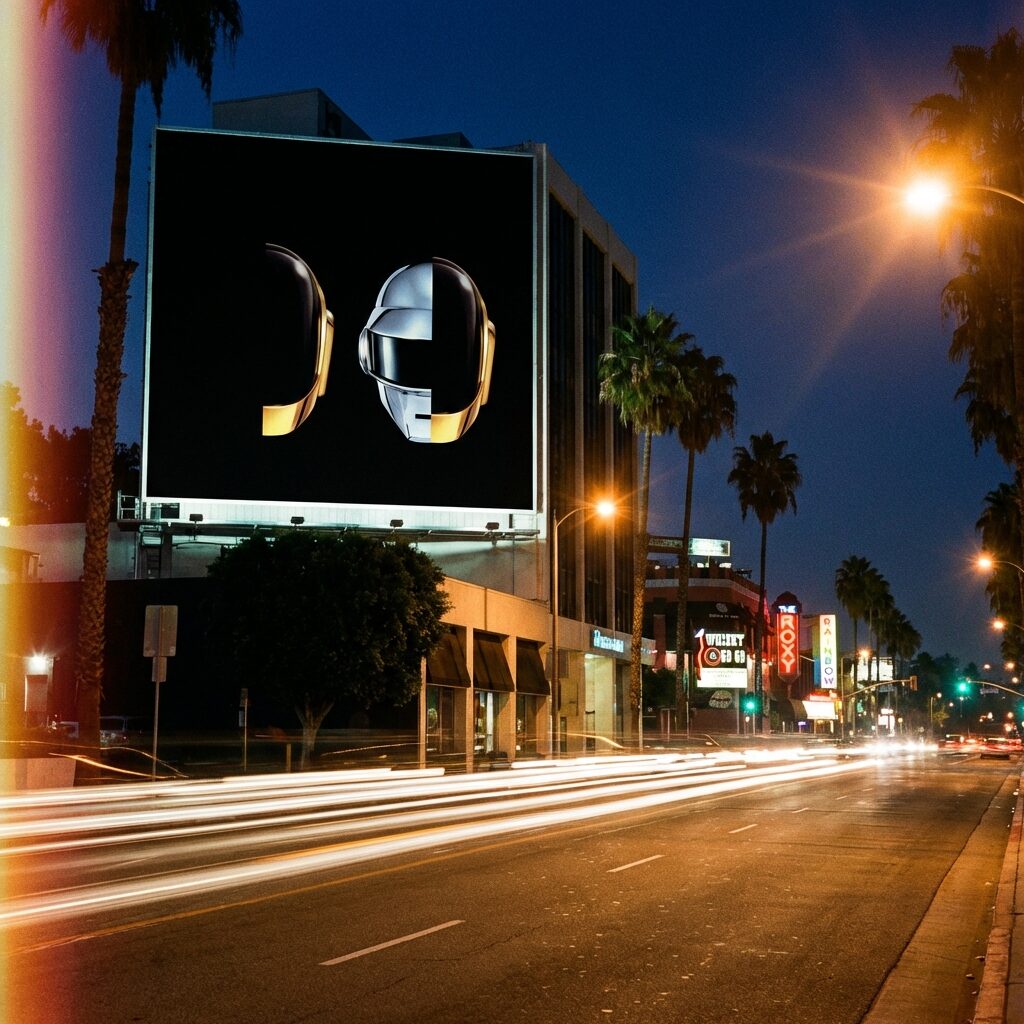
Thomas Bangalter understood something about desire that most marketing departments spend millions trying to learn: “You cannot make people excited by giving them everything. It is a process of tempting, of teasing, of creating desire.”
The “Get Lucky” rollout was an exercise in saying no. No paid internet advertising. No official music video, ever. No live appearances. Instead, Daft Punk dropped breadcrumbs and let the internet lose its collective mind filling in the gaps.
A cryptic Facebook post revealed the album artwork. The servers crashed at 50 hits per second. Then came the SNL teasers, two 15-second clips aired during commercial breaks on March 2, 2013, and later that month, offering nothing more than a beat, a guitar riff, and those helmets. Fifteen seconds. That’s all anyone had to work with. Somebody looped it into a 10-hour YouTube video anyway. Fan-recut “full versions,” stitched together from whatever scraps existed, pulled 400,000 views.
The physical campaign ran the same playbook. Billboards went up at SXSW on March 8. More at Ultra Miami on March 15. Then along the roads to Coachella. Then the Sunset Strip, because Bangalter and de Homem-Christo had showed up at Columbia with that billboard photography book and said, this is the aesthetic. Old-school rock star mystique. The billboards didn’t list a release date. No streaming link. Just the helmets and the album title.
The Coachella reveal on April 11, 2013, was the first time anyone heard Pharrell’s involvement. A 60-second teaser played simultaneously across three stages, and the crowd lost it. Bangalter and de Homem-Christo were actually there. They’d arrived helmetless in black SUVs, slipped into the VIP area, and watched the whole thing unfold without anyone recognizing them.
Two days later, a 60-second SNL spot aired. Eight days after that, the single dropped.
The analog commitment carried through to the press campaign too. Album copies went to French radio executives in armored briefcases. Hedi Slimane of Saint Laurent designed new robot uniforms for the promotional cycle. Daft Punk commissioned “The Collaborators,” a web series produced with Vice and Intel featuring the musicians and producers who worked on the album.
Then the Colbert thing happened, which turned out to be the best accident of the whole campaign. Daft Punk had agreed to appear on The Colbert Report on August 6, 2013, agreed to appear, but not speak or perform. Then MTV claimed exclusive TV rights for the upcoming VMAs on August 25, and since both shows were Viacom properties, Daft Punk had to cancel the day before taping. Colbert’s response was perfect. He spoiled MTV’s planned VMA surprise on air and produced a celebrity dance video to “Get Lucky” featuring Matt Damon, Jeff Bridges, Bryan Cranston, Hugh Laurie, Jimmy Fallon, Jon Stewart, Henry Kissinger, the Rockettes, and the cast of Breaking Bad. Robin Thicke showed up to perform “Blurred Lines” as a replacement. Colbert declared “Get Lucky” the “Song of the Summer of the Century.”
The weird thing is that none of this should have worked. We’re all swimming in content. Every artist drops teasers and behind-the-scenes footage and Instagram Lives. Daft Punk gave people almost nothing, and people made it into everything themselves. Turns out the scarcity was the product.
A Million Sales in 69 Days
The anti-digital anthem smashed Spotify’s streaming records and gave Daft Punk their first-ever Hot 100 top-40 hit, then spent five weeks stuck at #2 behind the only other song Pharrell was on.
The irony writes itself, but I’m going to write it anyway: a song made to reject digital culture broke Spotify’s all-time single-day streaming record the day it came out. April 19, 2013. The previous records had been held by Bastille’s “Pompeii” in the UK and Justin Timberlake’s “Pusher Love Girl” in the US. Spotify didn’t even disclose the actual number. It didn’t need to.
“Get Lucky” became the first song to generate one million UK streams in a single week. It topped Spotify’s first-ever weekly streaming chart in May 2013 with 911,420 plays. By August, it had passed 100 million streams. By December 2023, it crossed one billion, Daft Punk’s first song to hit that mark as a primary artist.
On the charts, the irony kept compounding. “Get Lucky” debuted at number 19 on the Billboard Hot 100 on April 24, 2013, with 113,000 downloads in its first week. This was Daft Punk’s first-ever top-40 Hot 100 hit. One of the most influential electronic acts of the past 30 years had never cracked the American top 40 before this song.
It peaked at number two. And it stayed there for five consecutive weeks.
The song blocking it? Robin Thicke’s “Blurred Lines”, which also featured Pharrell Williams. That made Pharrell the first artist to simultaneously hold the top two spots on the Hot 100 since the Black Eyed Peas in 2009. The rivalry became 2013’s defining chart story: two Pharrell songs fighting for the top spot week after week, two different takes on retro-pop competing for the same cultural space. One of those songs would age very differently than the other, but in the summer of 2013, they were locked in a dead heat.
The UK numbers were more lopsided. “Get Lucky” debuted at number three on the UK Singles Chart on April 21, selling more than 50,000 copies in its first 48 hours. It climbed to number one the following week and held there for four consecutive weeks, Daft Punk’s first-ever UK chart-topper and their first top-10 hit since “One More Time” in 2000. It cleared 100,000 sales three weeks running.
On June 28, 2013, just 69 days after release, “Get Lucky” crossed one million UK sales. Only the 136th single to reach that threshold in 60 years of UK Singles Chart history. Nile Rodgers’ reaction was appropriately stunned: “The fact that Get Lucky has sold a million copies in the UK is one thing, but to do it in 69 days?! I’m awestruck.” It was Rodgers’ biggest UK hit ever and his first million-seller in the country. Daft Punk became only the second French act to sell a million copies of a single in Britain.
In France, the song debuted at number one on April 27, selling 38,887 copies in three days, the best-selling digital single in a one-week period in French chart history. It stayed on the chart for 62 weeks and was eventually certified Diamond by SNEP.
By September 2013, worldwide sales exceeded 7.3 million copies. In the US alone, it moved 3.475 million by April 2014 and was eventually certified 8x Multi-Platinum by the RIAA. The Random Access Memories album debuted at number one in twenty countries and became the only Daft Punk album to top the US Billboard 200.
The 10th anniversary edition of the album in May 2023 caused “Get Lucky” streams to jump 18 percent to 2.6 million that tracking week. A decade out, and the song was still picking up new listeners. Still racking up plays on the very platforms it was built to defy.
The Night the Robots Won
Daft Punk went five-for-five at the 2014 Grammys, capped by a Stevie Wonder medley that had McCartney and Ringo on their feet, and a 10-second helmet hug that said more than any speech could.
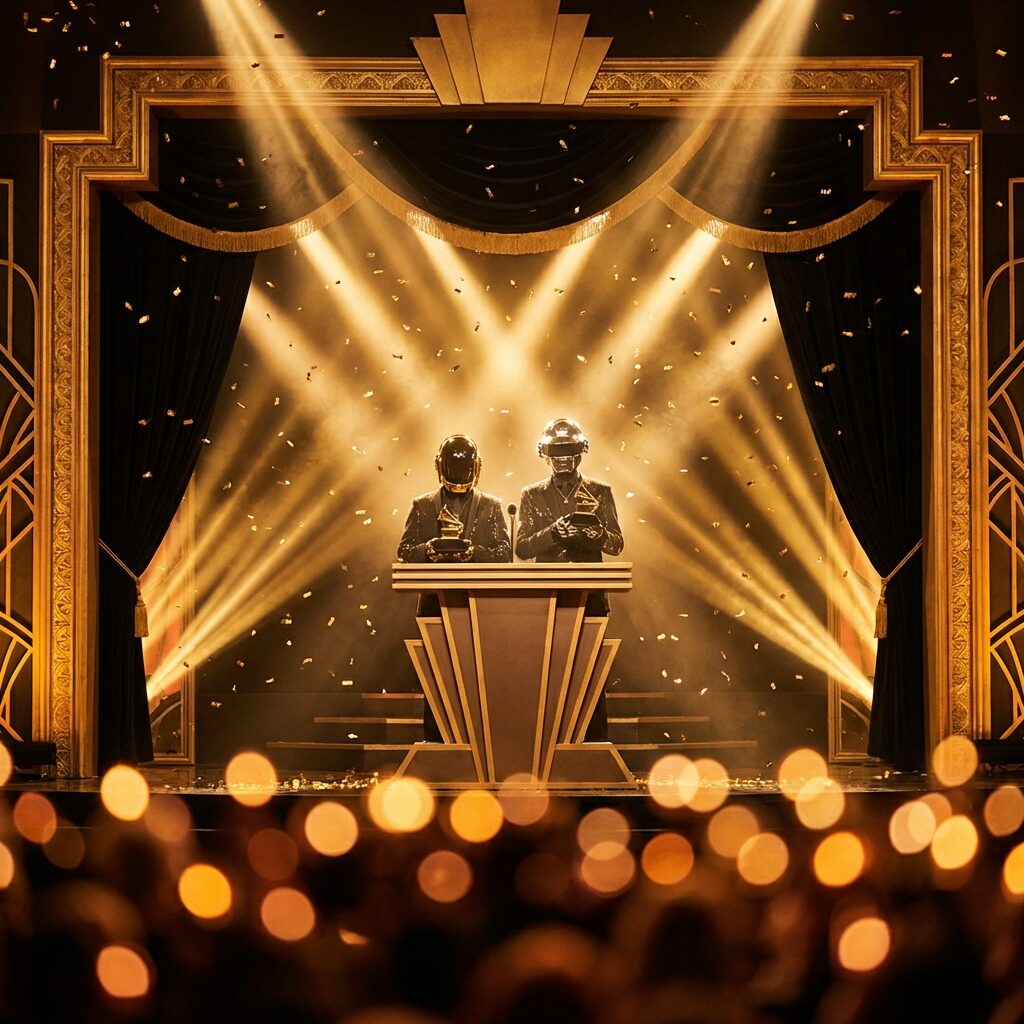
January 26, 2014. The 56th Annual Grammy Awards. Staples Center, Los Angeles. Daft Punk walked in with five nominations. They walked out with five wins.
Record of the Year for “Get Lucky”, beating Imagine Dragons’ “Radioactive,” Lorde’s “Royals,” Bruno Mars’ “Locked Out of Heaven,” and Robin Thicke’s “Blurred Lines.” Best Pop Duo/Group Performance for “Get Lucky.” Album of the Year for Random Access Memories. Best Dance/Electronica Album. Best Engineered Album, Non-Classical. A clean sweep. Five for five.
But the performance is what people remember.
Neil Patrick Harris introduced it. The stage was designed as a fake analog recording studio, because of course it was. Stevie Wonder, Pharrell Williams, and Nile Rodgers performed while Daft Punk remained hidden. Then, three minutes in, a black screen dropped to reveal the duo in all-white helmets and suits, manning DJ decks at the back of the stage. The medley ran from Chic’s “Le Freak” to Stevie Wonder’s “Another Star,” weaving through “Harder, Better, Faster, Stronger” and “Get Lucky”, less a live set than a musical history lesson that happened to make everyone lose their minds.
The camera kept cutting to the audience, and every cut told the same story. Yoko Ono dancing. Katy Perry dancing. Beyoncé and Jay Z dancing. Steven Tyler dancing. Paul McCartney and Ringo Starr dancing, and Ringo was overheard saying to Paul, “Let’s all renew our vows.” McCartney had been spotted watching from the floor during rehearsals earlier that day. This wasn’t polite industry applause. The room had come unglued.
When the awards came, Pharrell accepted “on behalf of the robots” while Bangalter and de Homem-Christo stood behind him, silently nodding. One member blew a kiss. When they won Album of the Year, the night’s biggest prize, the two pulled each other into a hug that lasted about 10 seconds, helmets clinking together, saying nothing. Someone later wrote that it “proved they were human after all.” If you know the title of the last track on Random Access Memories, you know why that stung.
“Honestly, I bet France is really proud of these guys right now,” Pharrell said during his Record of the Year acceptance speech. “Get Lucky” became France’s only entry on Rolling Stone’s 500 Greatest Songs of All Time list, where it sits at number 465.
Not everyone was celebrating, of course. The critical reception had always been a spectrum. Pitchfork gave “Get Lucky” their Best New Track designation, calling Rodgers’ guitar the song’s “real elegance.” The Guardian praised it as “the best thing Pharrell Williams has been involved with for a long time.” Digital Spy gave it five stars. Billboard called it “dreamy, retro-meets-futurism magic.”
On the other end: Clash Music published a piece titled “Get Lucky Is Daft Punk’s Worst Moment,” arguing that “instead of sampling a forgotten relic, a long lost seven inch, Daft Punk simply lifted an entire culture, right down to the guitar player.” A London Times writer coined the term “Dad Punk.” These weren’t entirely unfair criticisms. Where does homage end and appropriation begin? When you revive a sound with bigger budgets and shinier helmets, who gets to call it innovation?
But those criticisms rest on an assumption that hiring Nile Rodgers to play guitar on your record is the same as sampling a Nile Rodgers record. It’s not. One is borrowing a sound. The other is collaborating with the person who invented it. Rodgers wasn’t some session player adding anonymous flavor. He rebuilt the song from the drums up. He was a co-writer. That’s not homage. That’s a partnership.
What the Robots Revived
“Get Lucky” split Nile Rodgers’ career into before and after, fueled Pharrell’s unreal 2013 run, and somehow wound up covered by a Russian military choir at the Sochi Olympics, a disco song that kept showing up in places nobody could have predicted.
“Get Lucky” changed lives, starting with the people who made it.
Nile Rodgers talks about his career in two halves: before Random Access Memories and after. “Life was one way before Random Access Memories, and completely different after,” he said. The before version: respected, inducted into the Rock and Roll Hall of Fame with Chic in 2017, but mostly a legacy act. Nobody was calling him to cut new tracks. The after version: a greatest hits compilation, induction into the Songwriters Hall of Fame, and Chic’s first new single in over 23 years, “I’ll Be There,” released in 2015. He went from being the guy people sampled to the guy people wanted in the room. He was 60 years old and suddenly booked again.
Pharrell, meanwhile, had a 2013 that almost doesn’t seem real. “Get Lucky” was just the start. “Blurred Lines” with Robin Thicke owned the summer. “Happy” from the Despicable Me 2 soundtrack burrowed into every corner of the planet. Pharrell became the first artist to land three million-selling UK singles in one calendar year. Grammys, Oscars, number ones everywhere you looked, 2013 was when Pharrell Williams stopped being the producer’s name in small print and became famous on his own terms.
But the song’s reach went places nobody could have predicted. On February 7, 2014, at the Sochi Winter Olympics opening ceremony, the Russian Ministry of Internal Affairs Choir, roughly 50 members, a military ensemble founded in 1939, covered “Get Lucky” during the pre-ceremony lead-in at Fisht Olympic Stadium. They wore full military dress. A few members pulled off their hats to take lead vocals. The clip went viral internationally, though NBC never aired it in the US. The choir had already released their own music video version, complete with fog machine and strobe lights.
Sit with that image for a second. A French disco-funk track, written by two guys in robot helmets, a guitarist who came up in 1970s New York, and a pop producer from Virginia, performed by a Russian military choir at what was already one of the most politically charged Olympics in recent memory. If you need one scene to explain how far “Get Lucky” traveled from its origins, that’s it.
The streaming numbers kept climbing long after the hype cycle ended. The song crossed one billion Spotify streams in December 2023, Daft Punk’s first to hit that mark as primary artists. (They’d already been featured on two billion-stream tracks: The Weeknd’s “Starboy” and “I Feel It Coming.”) By then, over 500 songs had reached a billion Spotify streams, but a 2013 release still pulling those numbers a full decade later is genuinely unusual. The 10th anniversary edition of Random Access Memories bumped streams by 18 percent when it dropped in May 2023.
Rolling Stone ranked it the number one track of 2013. The Guardian ranked it number one. The Village Voice’s Pazz & Jop poll ranked it number one. Spin named it Best Song of 2013. It placed third on Triple J’s Hottest 100. Billboard put it on their 100 Songs That Defined the Decade list. It sits at number 465 on Rolling Stone’s 500 Greatest Songs of All Time, not bad for what was supposed to be a setup single.
They built it to push back against the digital age. It ended up living there permanently.
The Force from the Beginning
The anti-internet anthem became the internet’s favorite song, the robots proved they were human, and then they disappeared, all ends with beginnings.
Here’s the part that still gets me. Daft Punk didn’t even think “Get Lucky” would be the hit.
They released it as the lead single to set up “Lose Yourself to Dance”, that was supposed to be the smash, the one that crossed over. “Get Lucky” was the appetizer. The table-setter. Nile Rodgers’ one-word assessment of how that plan worked out: “Oops.”
The anti-internet record became the internet’s favorite song. The analog manifesto broke digital streaming records. The robots who refused to show their faces became the most visible act of 2013. Every piece of the “Get Lucky” story contradicts itself, and every contradiction makes the song more interesting.
But the contradiction that matters most is the simplest one. “Get Lucky” works because it sounds human. Really, actually human. Nile Rodgers’ guitar, clean, unprocessed, three notes at a time, carries a rhythmic feel that no quantization grid can replicate. Pharrell’s pushed falsetto, recorded jet-lagged and half-delirious in a Paris studio, has imperfections that no vocal tuning software would preserve. Nathan East’s bass, channeling James Jamerson through Bernard Edwards, has the kind of micro-timing variations that come from fingers on strings and decades of muscle memory. Algorithms can get close to all of that, but close isn’t it. The warmth lives in what a machine would correct.
Two robots figured that out before the rest of the industry caught up. And then, having proved it, they disappeared.
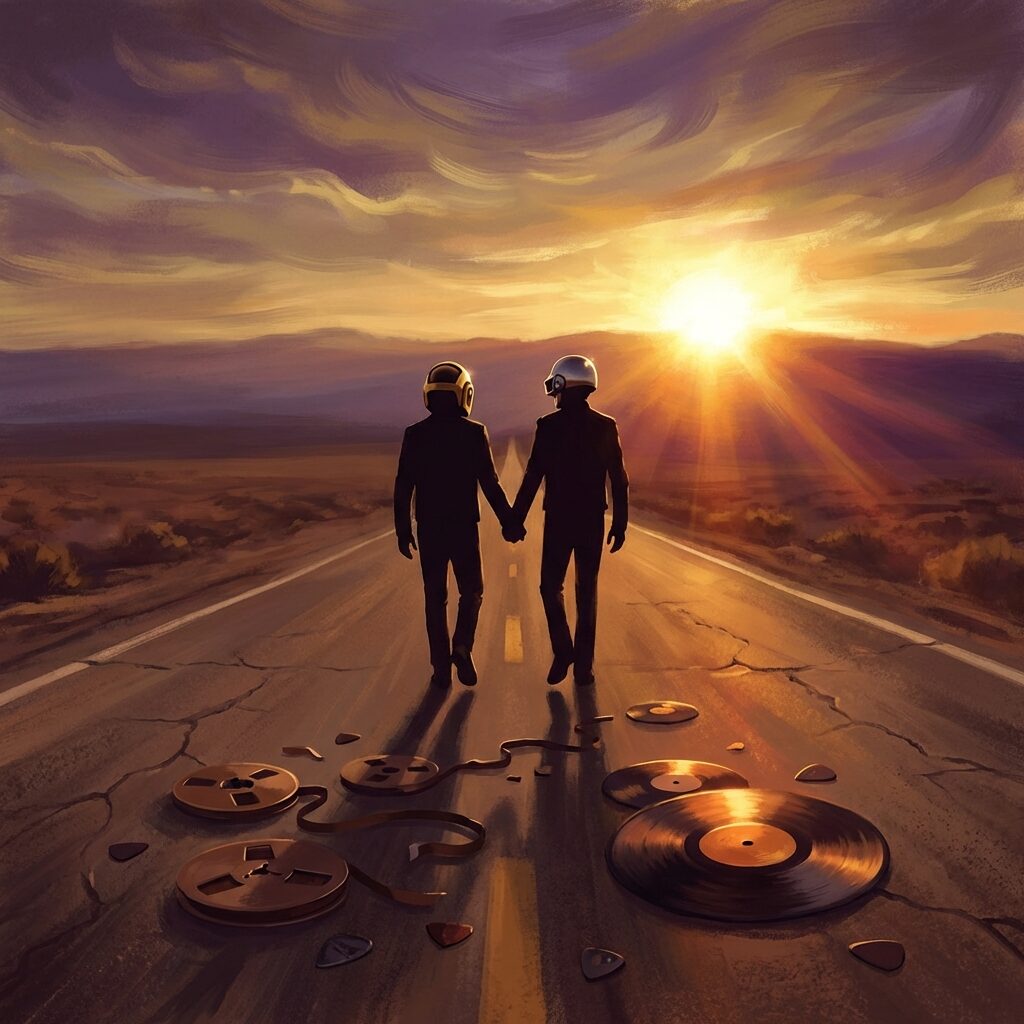
On February 22, 2021, Daft Punk released an eight-minute video titled “Epilogue.” In it, the two helmeted figures walk through a desert. One removes the other’s jacket, reveals a self-destruct mechanism on his back, and activates it. The robot walks away and detonates. The surviving figure walks toward the sunset. No statement. No farewell tour. Just the video.
They became human, made a record that proved it, and then vanished.
Like the legend of the phoenix. All ends with beginnings.
Did you know? Daft Punk released “Get Lucky” as a throwaway to set up “Lose Yourself to Dance” as the real hit. Nile Rodgers’ reaction? “Oops.” 🤖🎸 #DaftPunk #GetLucky #RandomAccessMemories https://bit.ly/4mvhcMF

Click to Tweet