Through the Bars of a Rhyme
Mark Knopfler admitted he couldn’t write a love song ‘the way it’s meant to be’, then wrote maybe the best love song in rock, born from a real breakup and a 1937 resonator guitar at The Power Station in 1980.
Here’s a song that tells you, right up front, that it’s going to fail. “I can’t do the talks like they talk on the TV,” Mark Knopfler sings in that sandpaper whisper of his, “and I can’t do a love song like the way it’s meant to be.” He’s waving a white flag before the second verse even starts. He’s telling you he doesn’t have the tools for this.
And then he writes maybe the best love song in rock and roll.
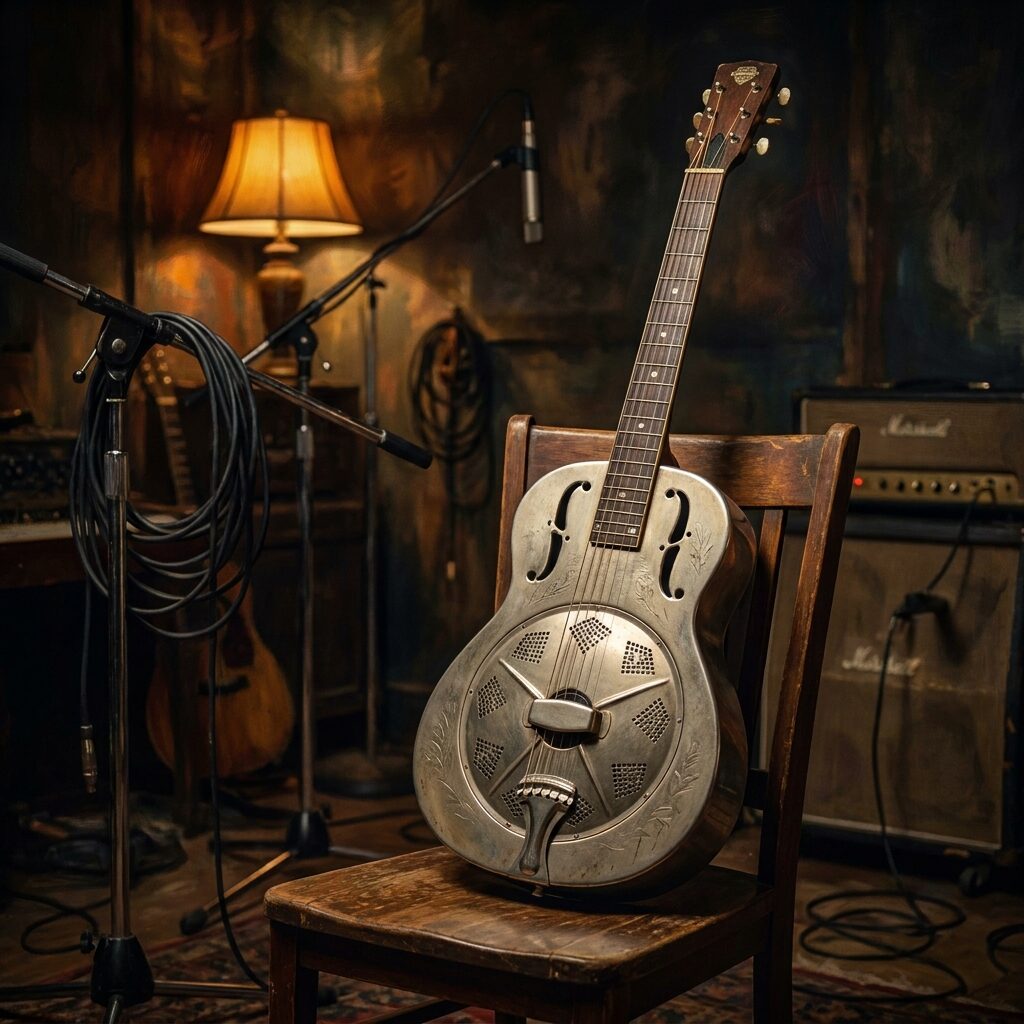
It’s the summer of 1980. The Power Station, New York City. Knopfler is sitting with a 1937 National Style O resonator guitar, a beat-up nickel-on-brass thing with a single-cone resonator, bought years earlier from his friend Steve Phillips, back before Dire Straits even existed. He’s got a broken heart and a head full of Shakespeare and Springsteen, and he’s about to turn a real breakup into something that will outlast everyone involved.
“Romeo and Juliet” isn’t Shakespeare’s version of the story, though. Not really. In Shakespeare, it’s feuding families keeping the lovers apart. In Knopfler’s version, the feuding families have been replaced by something worse: fame. The music industry. The way people use each other on the way up and call it something casual on the way out.
There’s a real Juliet behind this song. A punk rocker from Chicago who dismissed her relationship with Knopfler in a magazine interview with a single, devastating word. We’ll get to her. But first, you need to understand something about “Romeo and Juliet”: it’s a song about a songwriter who can only reach the person he loves through songs, and he knows she’ll never take them seriously. That’s heartbreak with no exit door.
The song that came out of that situation has been covered by the Indigo Girls, performed at Abbey Road by the Killers, used as a punchline in a Simon Pegg comedy, and streamed over 55 million times on Spotify. It peaked at number 8 in the UK and was never even released as a single in the United States. Nobody cared. The song found people anyway.
A Punk, a Phone Call, and a ‘Scene’
Holly Beth Vincent, punk rocker, Clash tourmate, Blondie opener, broke up with Knopfler by phone and dismissed their relationship as a “scene” in a magazine interview. That one word became the emotional core of one of rock’s greatest love songs.
Holly Beth Vincent was born Holly Beth Cernuto in Chicago in 1956. Both her parents had been big band singers in the 1940s, her father Bob Vincent eventually became entertainment director at Harrah’s Lake Tahoe after the family relocated to Nevada. She grew up surrounded by music and got her first acoustic guitar at ten.
She ran away from home in 1972, at sixteen. Eventually found her way back to Los Angeles, finished school, and dove into the city’s punk and rockabilly scene. She drummed in a rockabilly outfit called The Brothel Creepers. She fronted an all-female punk band called Backstage Pass that landed a track on the LA punk compilation Saturday Night Pogo. She was not, in any sense of the word, sitting around waiting for a boyfriend to give her a career.
But this is where it gets tangled.
In 1978, Vincent formed Holly and the Italians in Los Angeles with drummer Steve Young. The band relocated to London in early 1979. And Vincent moved in with Mark Knopfler.
Knopfler, riding the massive success of “Sultans of Swing” and Dire Straits’ debut album, opened doors. He introduced Vincent to Charlie Gillett, the BBC disc jockey and music historian who ran Oval Records. Through Gillett’s label, Holly and the Italians released their single “Tell That Girl to Shut Up” in December 1979, a minor UK hit that would later be covered by Transvision Vamp, reaching number 45 in the UK in 1988. Vincent landed on the front page of Melody Maker twice before the single even dropped. Twice. For context, bands spent entire careers trying to get one Melody Maker cover.
Things kept accelerating. Holly and the Italians toured with the Clash. They opened alongside the Selecter for Blondie at the Hammersmith Odeon on January 22, 1980. Photographer Lynn Goldsmith spotted them at the Hammersmith show and connected them with Gary Kurfirst, the manager behind Blondie, the Ramones, the B-52’s, and Talking Heads. Virgin Records signed them for two albums. Holly Vincent’s career was on a steep climb, and at least some of the rocket fuel came from Knopfler’s network.
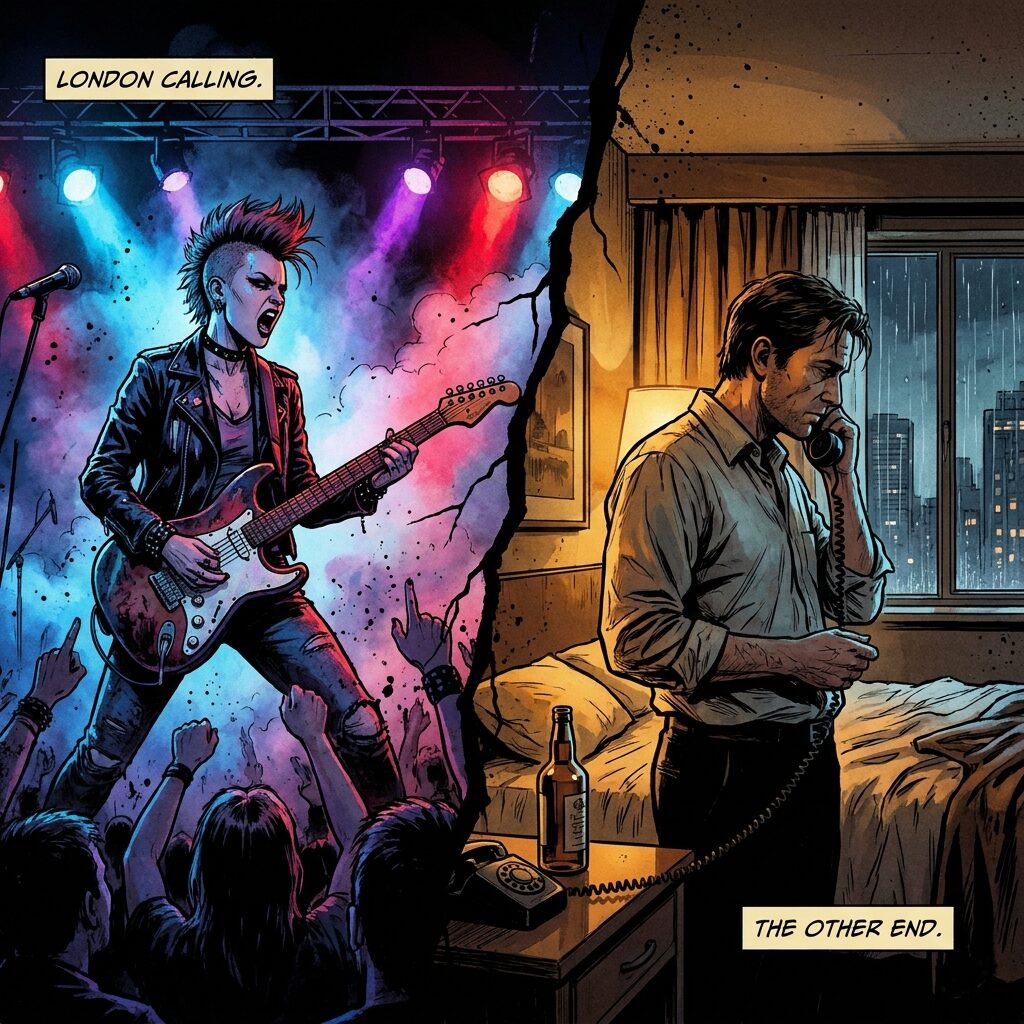
Then, while Dire Straits were on tour in the United States, Vincent called and ended the relationship.
That would have been painful enough. What came next was worse. In an interview after the breakup, Vincent casually dismissed the whole relationship as a “scene.” Just a scene. Not a love affair, not a chapter, not even a mistake worth dwelling on. A scene. The way you’d describe running into someone at a party you barely remember.
If you’ve ever had someone reduce something that meant the world to you into a footnote, you know exactly how that lands. And if you listen to “Romeo and Juliet” with that knowledge, the lyric “Now you just say, oh Romeo, yeah, you know I used to have a scene with him” stops being poetry. It’s a quote. He’s throwing her own word back at her.
The line “How can you look at me as if I was just another one of your deals” tells the other side of it, Knopfler’s conviction that Vincent had used him to get a foothold in the music industry and then discarded him once the connections were made.
Now, fairness demands we hear Vincent’s version. In a CultureSonar interview years later, she put it differently: “What happened was that I had a scene with Mark Knopfler and it got to the point where he couldn’t handle it and we split up.” Her framing positions Knopfler as the one who couldn’t cope, with her independence, her rising career, or some combination of both.
Who’s telling the truth? Probably both of them. Probably neither. Breakups are Rashomon with better dialogue. What matters for our purposes is that Knopfler took the pain and the anger and the humiliation of being reduced to a “scene” and turned it into a song that would outlive both their versions of events. Vincent would go on to form new bands, record with Joey Ramone, briefly join the Waitresses (lasting two weeks before failing to show up for a Columbia University gig), and eventually self-release music on Bandcamp. Knopfler would write one of rock’s definitive heartbreak songs. That’s not a fair trade. But songwriting never is.
The Power Station Sessions
Knopfler tapped producer Jimmy Iovine and E Street Band keyboardist Roy Bittan, stumbled onto the song’s opening arpeggio while fiddling around on a 1937 resonator guitar in open-G tuning, and wound up re-recording all the rhythm parts himself after his brother walked out mid-session.

The Communiqué Tour wrapped on December 21, 1979, in London. Knopfler spent the first half of 1980 writing, and when it came time to record, he reached out to Jimmy Iovine. The reason was specific: Knopfler had been floored by Iovine’s production on Patti Smith’s “Because the Night,” the song co-written with Bruce Springsteen. Iovine had engineered and mixed Born to Run and Darkness on the Edge of Town before producing Smith’s Easter. He knew how to make something intimate sound big without losing what made it intimate in the first place.
The Springsteen connection paid off literally. Iovine brought Roy Bittan into the sessions, the E Street Band’s keyboardist, the guy who played the piano intro on “Jungleland.” Bittan’s keyboards layered over Knopfler’s acoustic guitar foundation with a patience that suited the song. He built atmosphere rather than stepped on it. The result carried some E Street warmth without ever sounding like a Springsteen record.
Iovine later reflected on the sessions in Rolling Stone: “I think he wanted to take Dire Straits to that next step, especially in terms of the songs, and to have the album really make sense all together, which I think it does.”
Recording ran from June 20 to August 25, 1980, at The Power Station in New York City. Somewhere in those weeks, Knopfler picked up a 1937 National Style O, tuned it to open G, and started what he later called “just fiddling around.” That’s where the opening arpeggio came from. He wasn’t trying to write anything. He had a broken heart and an old resonator guitar and he found those cascading notes almost by accident. Years later, in the Sky Arts documentary Guitar Stories, he picked up the National again and showed how the open-G tuning practically led his fingers to the pattern.
Things got complicated in August. David Knopfler, Mark’s brother and the band’s rhythm guitarist, quit Dire Straits after a series of heated arguments between the two of them. This was almost immediately after they’d filmed a BBC2 Arena documentary about the group. Mark went back and re-recorded all the rhythm guitar parts himself. Sid McGinnis filled in on rhythm guitar for the remaining sessions, though he went uncredited on the album. Whether he intended it or not, “Romeo and Juliet” ended up being even more singularly Mark Knopfler’s creation. His voice, his lead guitar, his rhythm guitar, his song about his breakup.
Knopfler was honest about where his attention went on Making Movies. He told Bill Flanagan in Written In My Soul: “I wasn’t feeling good or collected when I wrote ‘Solid Rock’; I deliberately wrote and recorded that and ‘Expresso Love’ fast. I took more time to record ‘Romeo and Juliet’ because it took more time to write and demanded special attention.” You can hear it. The song breathes. There’s space between the notes that “Solid Rock” never allows itself.
Early demos featured just acoustic guitar and vocals, barely more than Knopfler singing to himself. The production problem was obvious: how do you build a full band arrangement around something that fragile without flattening it? Listen to the way the full band enters on the chorus. It doesn’t bury the quiet of the verse. It makes you feel the quiet more.
Six Minutes of Heartbreak Architecture
The song’s three-chord I-IV-V structure hides real complexity, open G tuning that makes one guitar sound like two, Knopfler’s pickless fingerstyle softening a resonator’s bark, and a single Gm7 chord that only appears in the chorus, dropping one shadow into an otherwise bright room. That tiny harmonic shift does more emotional work than most songwriters get out of an entire bridge.
So here’s the thing about “Romeo and Juliet”, it sounds simple. It is not simple.
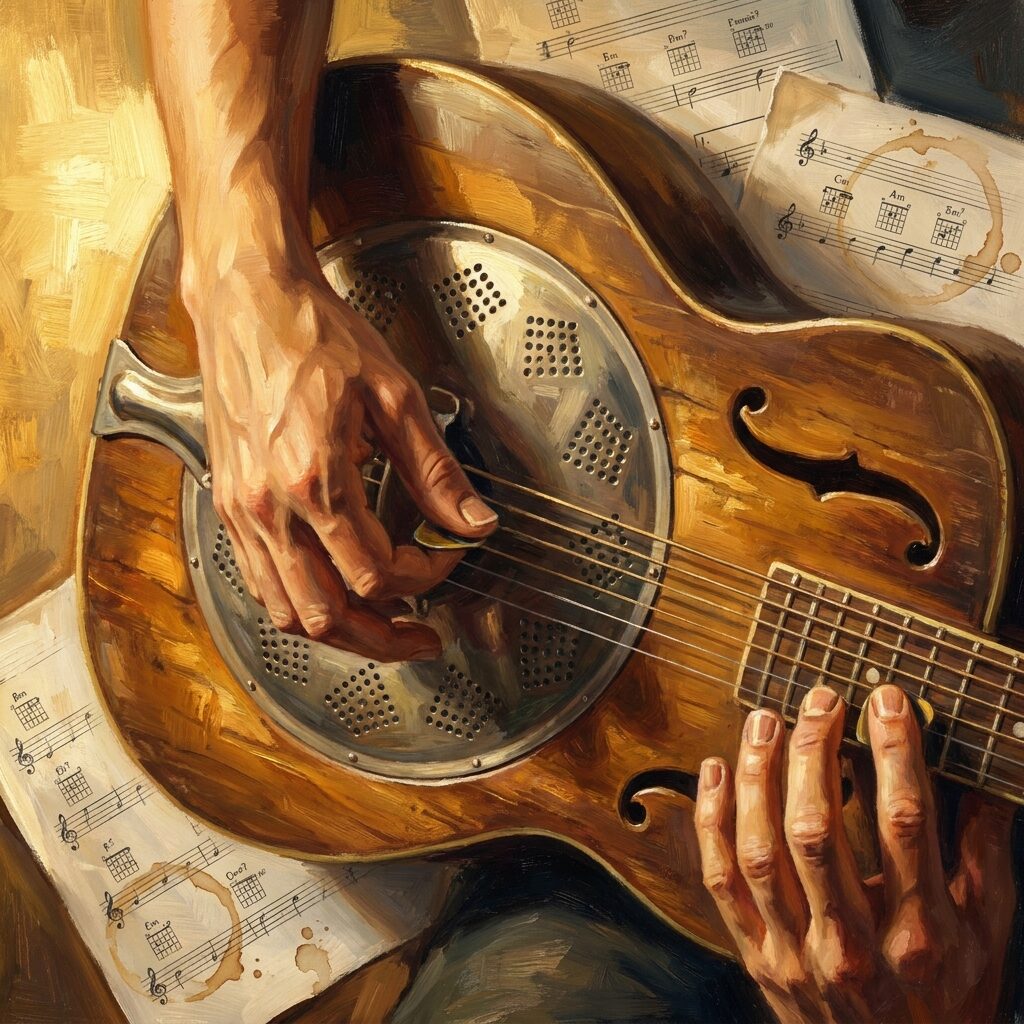
The guitar is tuned to open G (D G D G B D, low to high) with a capo at the third fret, which brings the concert pitch up to F Major. The primary chord movement is I-IV-V: F Major, B-flat Major, C Major. Three chords and the truth, as Nashville people say, and on paper it looks like something you’d teach a beginner. But open G tuning changes everything about how those chords ring. Notes sustain and bleed into each other in ways standard tuning won’t give you. Those arpeggiated figures that open the song, that tumbling run of notes everyone recognizes, only exist because of the tuning. Open strings ring against fretted ones, and suddenly one guitar sounds like two. It’s a tuning trick, but it’s a hell of a tuning trick.
Knopfler plays with his thumb and first two fingers. No pick. This is how he always plays, and it matters more here than on almost any other Dire Straits track. A pick gives you a brighter, more uniform attack. Fingers let you whisper one note and dig into the next, controlling exactly how each string speaks. On a resonator guitar, already louder and more metallic than a standard acoustic, fingerpicking takes the edge off the instrument’s natural bark. The result sounds almost like speech. You’re hearing a man think out loud through six strings as much as through his voice.
The dynamic shape of the song is where you really see the work. Verses are spare: fingerpicked resonator, barely any accompaniment, Knopfler’s voice right in your ear. Then the chorus blows the doors open, drums, bass, Bittan’s keyboards flooding in underneath. That contrast tracks the emotional movement exactly. The verses are private, interior, a guy turning things over in his head at 2 AM. The choruses are the part where he stops mumbling and actually says it out loud, to the street, to anyone who’ll listen. Shakespeare did the same thing with the balcony scene, just without the Marshall stack.
One harmonic detail worth paying attention to: the Gm7 chord. It shows up only in the chorus. Every chord in the verses is major, bright, open, weirdly sunny for a song this sad. Then the chorus drops in this one minor seventh chord, and the harmonic color shifts just enough that you feel a pull toward something unresolved. The chorus chords move through F, C, D minor, B-flat, and then that Gm7 lands, and every time it does, something catches. I keep coming back to this detail because it’s such a small move. Knopfler doesn’t drown you in minor-key sadness. He puts one shadow in an otherwise bright room. That single chord is doing more emotional work than most songwriters get out of an entire bridge.
Then there’s the tempo. 87 beats per minute, slower than a resting heart rate. Slow enough to feel intimate, to let the listener sit inside each line before the next one arrives. But here’s what keeps it from dragging across six full minutes: the rhythmic conversation between the fingerpicked guitar and Pick Withers’ drums. Even in the quietest passages, there’s a subtle forward lean. The song walks. It never runs. But it also never stands still, which is harder to pull off than people think.
Three Love Stories in One Song
Knopfler layers Shakespeare’s balcony scene, West Side Story’s “Somewhere,” and The Angels’ “My Boyfriend’s Back” into a single narrative, then delivers the line that makes it all work: “All I do is kiss you through the bars of a rhyme.”
A love-struck Romeo sings a streetsuss serenade
Laying everybody low with a love song that he made
Finds a streetlight, steps out of the shade
Says something like, “You and me babe, how about it?”
Juliet says, “Hey, it’s Romeo
You nearly gave me a heart attack”
He’s underneath the window
She’s singing, “Hey la, my boyfriend’s back
You shouldn’t come around here
Singing up to people like that
Anyway, what ya gonna do about it?”
[Chorus]
“Juliet, the dice was loaded from the start
And I bet, when you exploded into my heart
And I forget, I forget the movie song
When you gonna realize
It was just that the time was wrong, Juliet?”
[Verse 2]
Come up on different streets
They both were streets of shame
Both dirty, both mean
Yes, and the dream was just the same
And I dreamed your dream for you
And now your dream is real
How can you look at me
As I was just another one of your deals?
Well you can fall for chains of silver
You can fall for chains of gold
You can fall for pretty strangers
And the promises they hold
You promised me everything
You promised me thick and thin, yeah
Now you just say, “Oh Romeo, yeah
You know I used to have a scene with him”
[Chorus]
“Juliet, when we made love you used to cry
You said I love you like the stars above, I’ll love you ‘til I die
There’s a place for us, you know the movie song
When you gonna realize
It was just that the time was wrong, Juliet?”
[Verse 3]
“I can’t do the talks like they talk on the TV
And I can’t do a love song like the way it’s meant to be
I can’t do everything, but I’d do anything for you
I can’t do anything except be in love with you
And all I do is miss you and the way we used to be
All I do is keep the beat to bad company
And all I do is kiss you through the bars of a rhyme
Juliet, I’d do the stars with you anytime”
[Chorus]
“Juliet, when we made love you used to cry
You said I love you like the stars above, I’ll love you ’til I die
There’s a place for us, you know the movie song
When you gonna realize
It was just that the time was wrong, Juliet?”
[Outro]
And a love-struck Romeo sings a streetsuss serenade
Laying everybody low with a love song that he made
Finds a convenient streetlight, steps out of the shade
Says something like, “You and me babe, how about it?”
“You and me babe, how about it?”
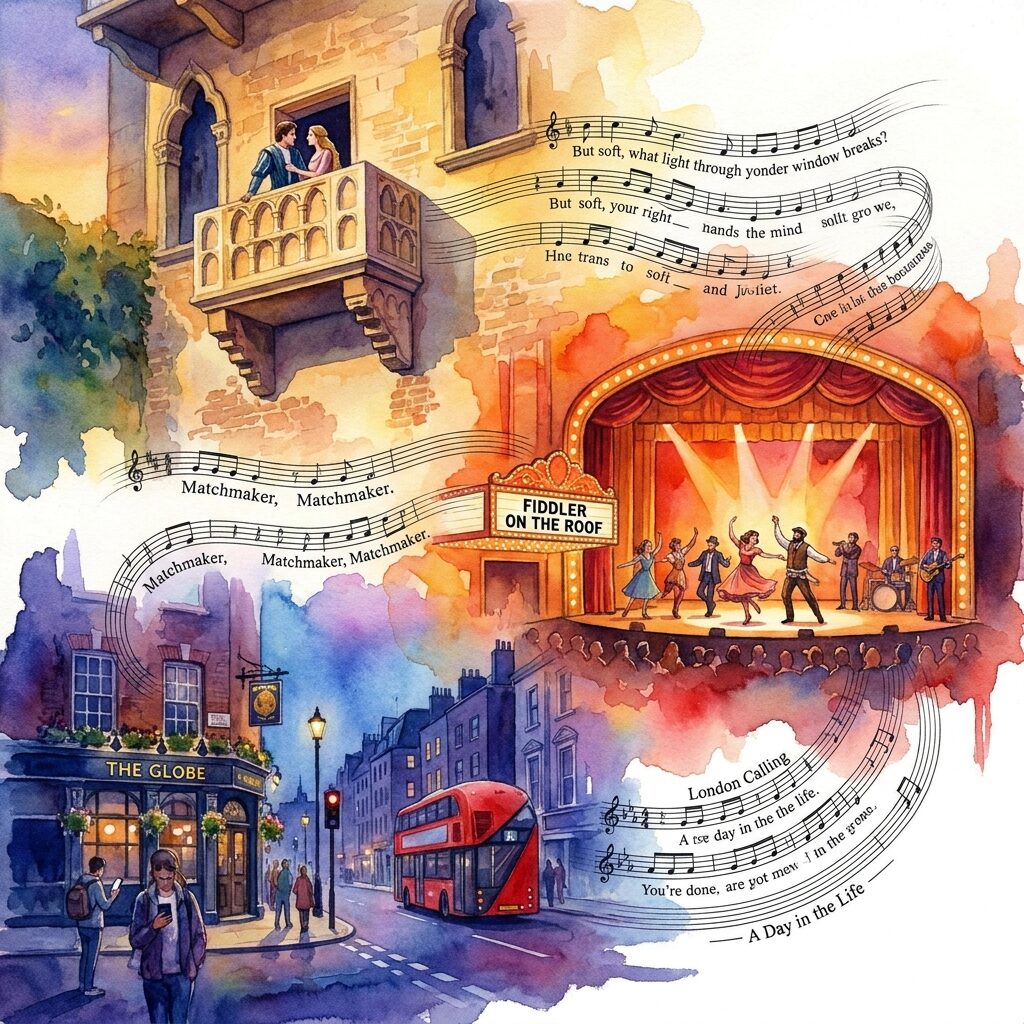
Most songwriters are happy to tell one story per song. Knopfler tells three at once, and the way they braid together is what makes “Romeo and Juliet” more than a great breakup song.
The first layer is Shakespeare. Obviously. The title announces it, and the imagery follows through, Romeo underneath the window, the different streets keeping the lovers apart (standing in for the feuding Montagues and Capulets), the sense of doomed love that was written before it even began. “Juliet, the dice was loaded from the start,” Knopfler sings, and that’s the Shakespearean fatalism right there, the recognition that some love stories are built to fail, that the falling in love is just the setup for the falling apart. “I’d do the stars with you any time” carries a double meaning: both the romantic gesture and a nod to Shakespeare’s “star-crossed lovers” from the prologue. The tragedy was baked in from the beginning.
The second layer is West Side Story. “There’s a place for us, you know the movie song”, that’s a direct quote from “Somewhere,” the Leonard Bernstein and Stephen Sondheim ballad from a musical that is itself a retelling of Romeo and Juliet. So you’ve got a rock song quoting a Broadway musical based on a Shakespeare play. Three versions of the same doomed romance, nested inside each other like Russian dolls. And the key word in that line isn’t “place”, it’s “you know.” He’s appealing to a shared cultural memory, a song they both understand, a promise of belonging that exists in fiction because it can’t exist in real life.
The third layer is pure pop sarcasm. “Hey la, my boyfriend’s back” lifts directly from The Angels’ 1963 hit “My Boyfriend’s Back.” In the original, the girlfriend is thrilled, her boyfriend’s coming home and the guy messing with her is going to get what’s coming to him. In Knopfler’s version, Juliet throws the line out with casual cruelty. Her boyfriend’s back? So what. She’s moved on. The excitement of the original gets inverted into dismissal. A joyful pop lyric turned into a weapon.
And then there are the lines that don’t reference anything except Mark Knopfler’s own bleeding heart.
“A lovestruck Romeo sings a streetsuss serenade.” That word, “streetsuss”, doesn’t exist in English. Knopfler made it up because the language didn’t have what he needed. It suggests street-smart, street-tough, a serenade that’s been roughed up by the real world. Not a serenade from a balcony in Verona but from a curb in London, sung by a guy who knows he looks ridiculous and does it anyway. The official Mark Knopfler website spells it “streetsusss” with three s’s, as if even the spelling can’t quite pin down what the word means. One commenter compared it to Michael Jackson coining “tenderoni” in “P.Y.T.”, a word that exists only inside the song that invented it.
“You just say, oh Romeo, yeah, you know I used to have a scene with him.” We’ve already traced this line back to Holly Vincent’s interview. But listen to how it works in the song. The shift from the narrator’s voice to Juliet’s quoted speech, that “you just say”, puts the listener in the room. You can hear her saying it. Offhandedly, to someone else, while Romeo stands close enough to overhear. The devastating part isn’t the dismissal itself. It’s the word “just.” You just say it. Like it costs you nothing.
But here’s the line that makes the entire song, the one that turns a very good breakup song into something you carry around for years: “All I do is kiss you through the bars of a rhyme.”
Sit with that for a second. The songwriter is a prisoner of his own medium. The only way he can reach the woman he loves is through songs, through lyrics, through rhyming couplets she’ll hear on the radio or read in a liner note and probably never connect to anything real. He can’t talk to her. He can’t touch her. All he can do is arrange words in a pattern and hope some ghost of actual feeling passes through. The bars of a rhyme, a prison made of meter and consonance. I don’t think there’s a more self-aware line in rock music. A songwriter admitting that his art is both his only tool and the thing that keeps him from what he actually wants.
People have argued about this line for decades, by the way. The vocal delivery is ambiguous enough that listeners have heard “bars of a Rhine” or “bars of Orion.” The official Knopfler website confirms it’s “bars of a rhyme.” The mishearings almost prove the point, even the line about the inadequacy of words gets lost in translation.
Across the song’s verses, the emotional arc moves from romantic idealism to bitter realism to something like resigned acceptance. The first verse is all serenade and starlight, Romeo beneath the window. By the middle verses, the tone has curdled, deals, scenes, dismissals. And by the end, there’s an exhausted honesty. He can’t do a love song the way it’s meant to be. He knows it. He does one anyway. That failure is the whole point.
Too Cerebral for MTV
Director Lester Bookbinder shot a surreal, literal visual adaptation of the lyrics that MTV turned down for being too long and too cerebral, roughly a year before the network would put Dire Straits into heavy rotation.
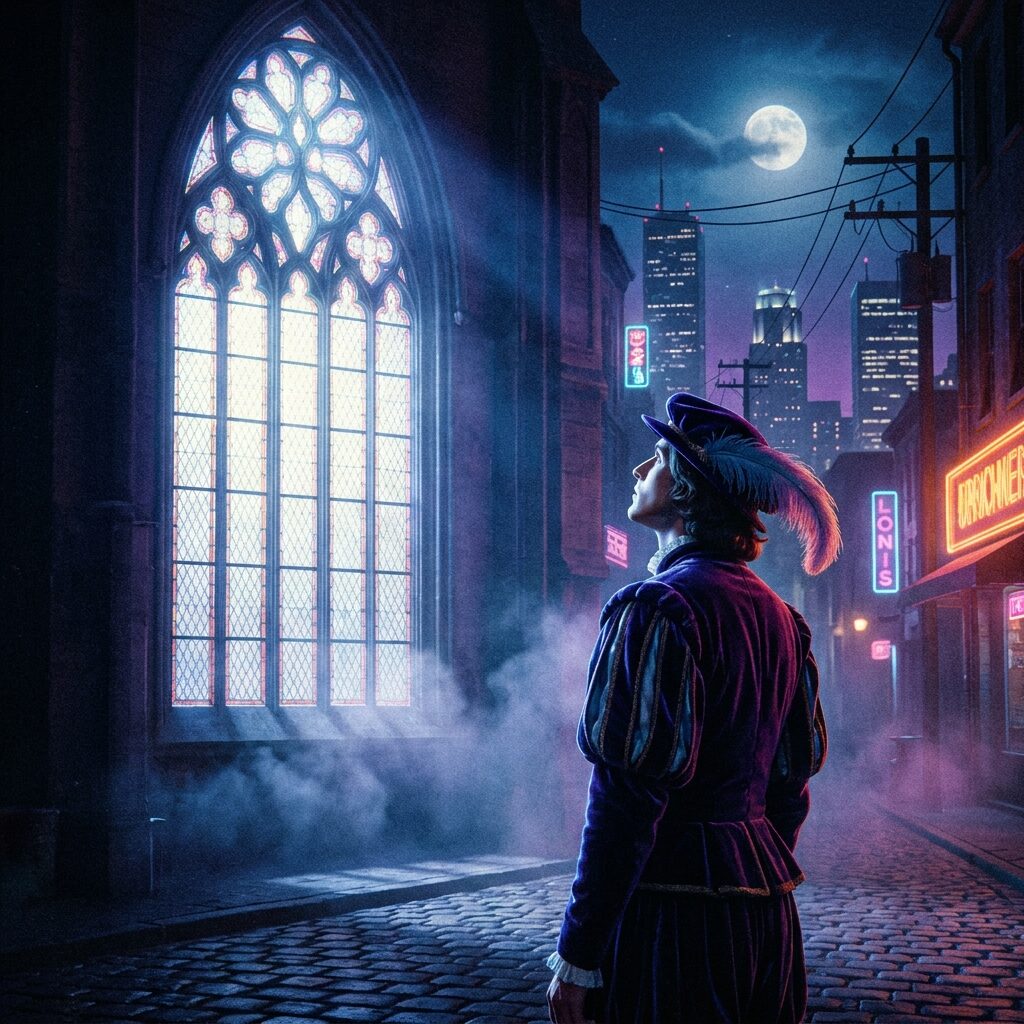
The music video for “Romeo and Juliet” was directed in 1981 by Lester Bookbinder, a fashion and commercial photographer whose visual sense was sharper than what most music video directors were bringing at the time. Maria Grace played Juliet. Howard Miller played Romeo. Knopfler appeared as himself, credited simply as “voice,” which says a lot about how he saw his role in the whole thing.
Bookbinder’s approach was to literally adapt the lyrics into visual imagery. When Knopfler sings about Romeo underneath the window, you see Romeo underneath the window. When the song references the movie song, you get cinematic framing. The result is surreal and a little odd, closer to a European art film than a performance clip, but it holds together thematically, which is more than you could say for most music videos being made in 1981. The video currently holds a 7.5 rating on IMDb, which suggests it’s aged better than you’d expect.
Bookbinder directed three videos for Making Movies, “Romeo and Juliet,” “Tunnel of Love,” and “Skateaway”, and these were compiled into a short film, also called Making Movies, that was screened theatrically and released on VHS and Beta. Collectively known as the “Lester Bookbinder Trilogy,” they’ve since been remastered in 4K. Releasing music videos as a theatrical short film was a strange thing to do in 1981. You had to believe your videos were worth watching on their own terms, not just as promotion between songs on the radio.
The irony is hard to miss. MTV launched roughly a year after these videos were made. When the network got around to considering them, the answer was no. Too long. Too slow. Too cerebral. This from the same network that would, just a few years later, put Dire Straits’ “Money for Nothing” into heavy rotation, partly for its computer animation and partly because the lyrics literally said “I want my MTV.” But in 1981, MTV wanted fast cuts and lip-syncing, not Bookbinder’s meditative visual poems. The network wasn’t ready for what Knopfler was already doing.
A fun footnote: the “Skateaway” video featured Jayzik Azikiwe, credited as Jay Carly, the daughter of Nigeria’s first president, Nnamdi Azikiwe. Nothing about these videos was as simple as it looked.
A Hit That America Missed
Despite reaching #8 in the UK, “Romeo and Juliet” was never released as a single in America. Nobody at the label thought to. Yet it’s quietly racked up 55 million Spotify streams, passed along not by algorithms but by people who love it.
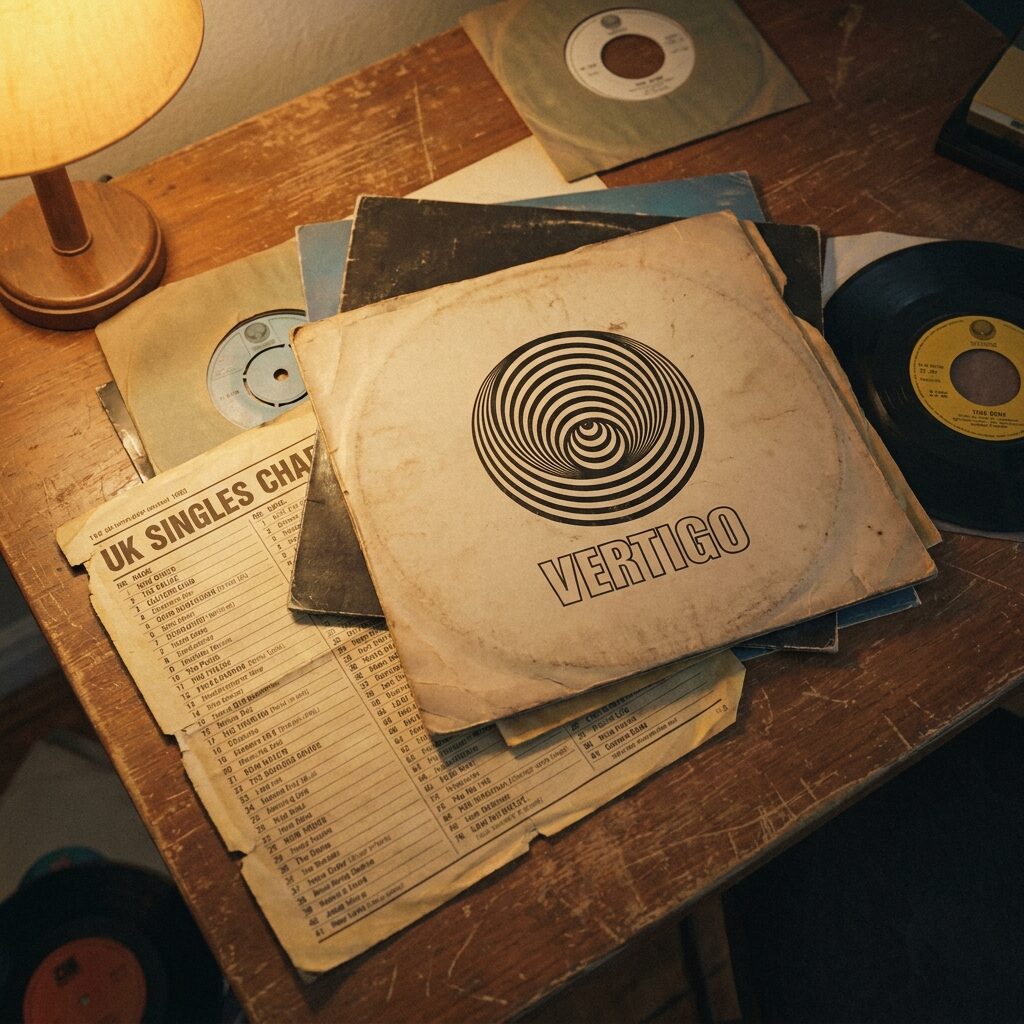
“Romeo and Juliet” peaked at number 8 on the UK Singles Chart when it came out on January 9, 1981, on Vertigo Records. It earned a BPI Silver certification for 200,000 units sold in Britain. A proper hit by any measure.
In the United States, it was never released as a single. One of the most beloved songs in Dire Straits’ catalog, a song that would go on to be covered by major artists and accumulate tens of millions of streams, was simply not made available as a standalone purchase in the world’s biggest music market. Michael Gallucci, writing for Ultimate Classic Rock, called it “a shame, because it’s one of Knopfler’s most timeless songs.” I’d call it one of rock’s stranger missed opportunities, a record label decision that, in retrospect, looks inexplicable.
The album it lived on did just fine without the single push. Making Movies hit number 1 in both Italy and Norway, reached number 4 in the UK, and climbed to number 19 in the US. It was the fifth best-selling album of 1981 in Australia. In Italy alone, it sold a million copies, the biggest-selling album of the year. It spent 252 weeks on the UK Albums Chart. That’s nearly five years. The album moved 3.8 million copies across Europe and eventually earned Platinum certification from the RIAA in the US, though that certification didn’t come until 2001, more than two decades after release.
But here’s what I find more interesting than the chart positions. “Romeo and Juliet” has had a long, slow digital life that nobody planned. As of recent counts, it’s accumulated roughly 55 million Spotify streams and around 280,000 digital sales. For context, “Sultans of Swing” and “Money for Nothing” have each cleared two million downloads. “Romeo and Juliet” isn’t in that tier. It sits in a smaller group alongside “Walk of Life” and “Brothers in Arms”, songs that continue to sell steadily, year after year, without blockbuster numbers. It’s not a smash hit. It’s something rarer and, I think, more interesting: a song people keep finding without anyone pushing it on them. Nobody discovers “Romeo and Juliet” because an algorithm surfaced it or a TikTok trend revived it. They discover it because someone they trust says, “You need to hear this.”
Romeo Becomes Everyone
Amy Ray of the Indigo Girls turned the song into a queer love declaration, the Killers called it “one of the finest songs ever,” and the real Juliet later ended up recording for Ray’s label, a coincidence too good to invent.
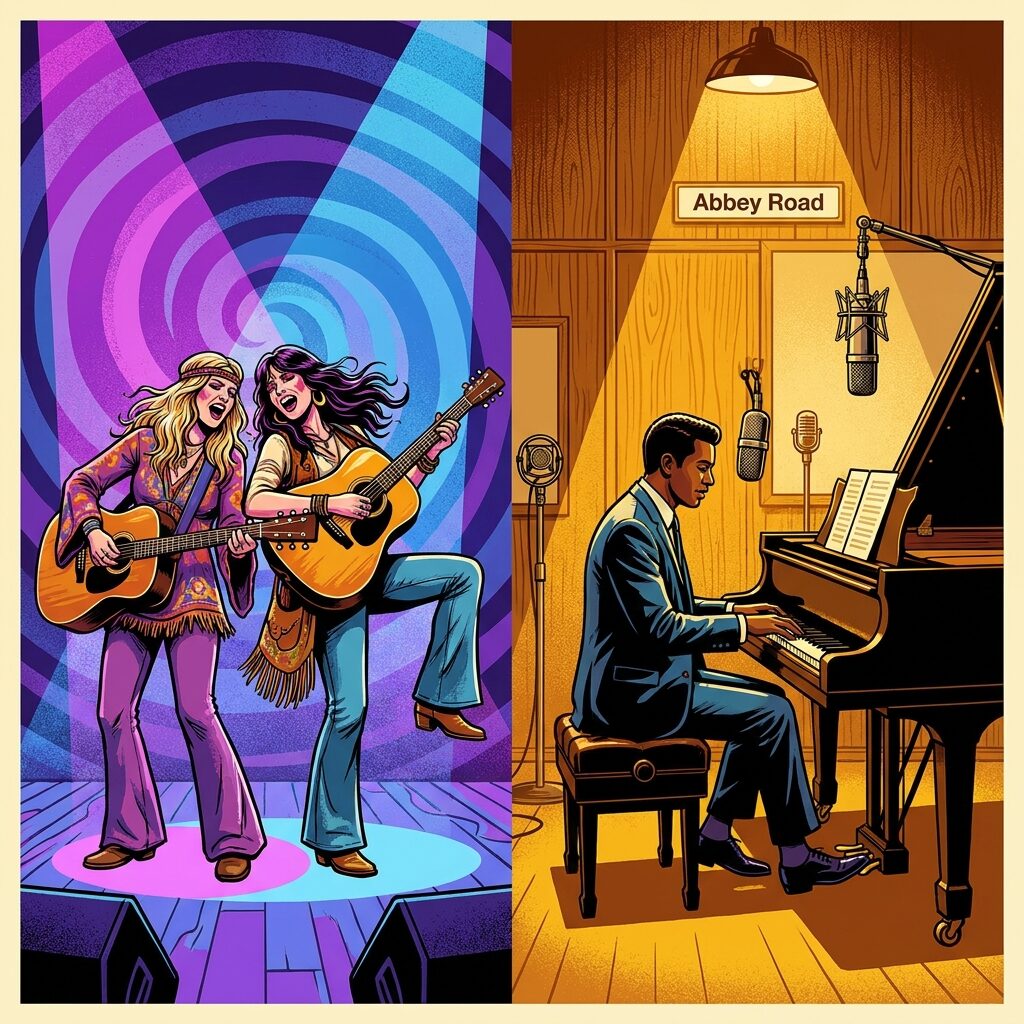
You know a song has outgrown whoever wrote it when other artists start bending it into shapes the author never imagined. “Romeo and Juliet” has been covered a lot, but two versions are worth paying attention to, because they reveal different reasons the song keeps pulling people in.
Amy Ray of the Indigo Girls started playing “Romeo and Juliet” live around 1987, a full five years before the Indigo Girls recorded it for their 1992 album Rites of Passage. Five years is not a casual cover. That’s a song you’ve road-tested, lived inside, broken in like a pair of boots before you ever take it into a studio.
What Ray does with it is worth studying. As a lesbian artist, she turns the song into a queer love declaration. Romeo singing to Juliet becomes a woman singing to a woman, and suddenly the social barriers keeping them apart carry a different kind of weight. She changes the chorus across its three repetitions: “One day I’m gonna realize” becomes “One day you’re gonna realize” and then “One day we’re gonna realize,” turning Knopfler’s solitary ache into a plea for mutual recognition. Where Knopfler plays wounded, Ray pushes harder, adds anger, demands more. She tends to improvise lyrics in live performances, so the song shifts with her mood and her audience on any given night. The core feeling is the same, love that can’t quite reach its object, but everything around it gets reshaped.
There’s also an irony here that almost feels scripted: Holly Vincent, the real Juliet behind Knopfler’s song, later recorded for Amy Ray’s label in the early 1990s. The woman who inspired Romeo’s heartbreak wound up in the professional orbit of the artist who took that heartbreak and made it mean something completely different. You couldn’t make that up.
Then there’s the Killers. In 2007, they recorded “Romeo and Juliet” at Abbey Road Studios for the Channel 4 show Live from Abbey Road. It came out first as a B-side on their “For Reasons Unknown” single, then landed on the compilation Sawdust that November. The original plan was to record it with Johnny Borrell of Razorlight, but Borrell got sick and couldn’t make it. What the Killers did instead was a straightforward, reverent rock cover, no radical reimagining, just a band that clearly loved the material and wanted to play it well.
Brandon Flowers didn’t hedge about why. “We’re not overly anxious about Dire Straits, though,” he told Q magazine. “We’re not ashamed of covering ‘Romeo And Juliet,’ either. It’s one of the finest songs ever. Brilliant melodies.” When the frontman of one of the biggest rock bands of the 2000s says that about your song, he’s not doing press. He’s telling you what got to him.
The song has also turned up in film in ways that reward close attention. In Edgar Wright’s 2007 comedy Hot Fuzz, “Romeo and Juliet” plays during a car crash investigation, and the crash involves actors who had been performing in a local production of Romeo and Juliet. It’s a joke inside a joke: a song about a modern Romeo and Juliet scoring a scene about actors playing Romeo and Juliet who’ve met a violent end. The kind of layering that makes you rewind.
The song also appeared in Empire Records (1995) and Can’t Hardly Wait (1998), and turned up in an episode of The Goldbergs. None of these placements made the song famous. It was already famous, or maybe “famous” isn’t quite the word. It was already known, the way certain songs just are, without anyone being able to pinpoint exactly when that happened.
The Quiet Masterpiece
Ranked the #1 greatest Dire Straits song by ClassicRockHistory.com and consistently placed in the band’s top five, “Romeo and Juliet” didn’t peak on arrival. It’s a song that keeps getting better as the years pile up, gaining emotional weight that only distance from your own losses can provide.
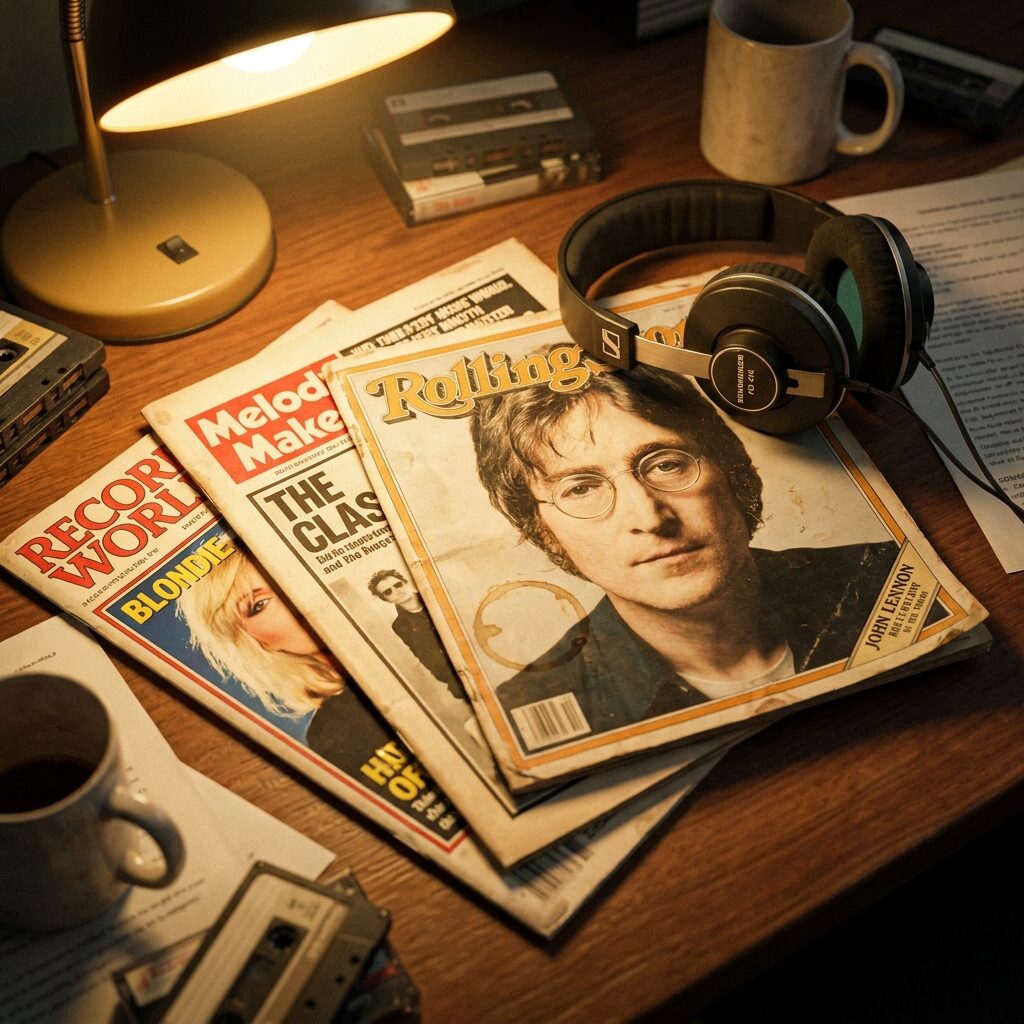
“Romeo and Juliet” didn’t land with instant critical fanfare. Its reputation accrued over time, through covers, through people playing it at 2am after arguments, through the slow realization that a song about lost love hits harder at 40 than it did at 20.
ClassicRockHistory.com ranked it the number 1 greatest Dire Straits work. Not “one of the best.” The best. Ultimate Classic Rock’s Michael Gallucci placed it third, calling it “one of Knopfler’s loveliest songs, and maybe his all-around greatest composition.” Classic Rock magazine’s Paul Rees put it at number four, describing most of the song as “spine-tingling” with a “heart-tugging” refrain. It consistently lands in the top five across publications that rank the band’s catalog. Consider the competition: “Sultans of Swing,” “Money for Nothing,” “Brothers in Arms,” “Telegraph Road.” Beating any one of those would be impressive. Beating nearly all of them is a different conversation.
The album it anchored got a warmer reception than the band’s first two records. David Fricke, writing in Rolling Stone, gave Making Movies four stars and wrote what became the definitive take on the record for decades: “Making Movies is the record on which Mark Knopfler comes out from behind his influences and Dire Straits come out from behind Mark Knopfler. The combination of the star’s lyrical script, his intense vocal performances and the band’s cutting-edge rock & roll soundtrack is breathtaking, everything the first two albums should have been but weren’t.” That’s not a review. That’s a coronation. Stephen Thomas Erlewine’s retrospective AllMusic review gave it 4.5 out of 5.
Record World zeroed in on Knopfler’s vocal delivery, calling the song “a compelling performance that’s both beautiful and forceful” with “Dylanesque” vocals. The Dylan comparison comes up constantly, and it’s earned. Both singers talk their way through songs rather than singing them in any conventional sense. But where Dylan leaves you decoding, Knopfler lays it bare. You never have to guess what he means. That clarity is its own kind of artistry, even if it gets less credit than mystique does.
Rolling Stone placed Making Movies at number 52 on their 100 Best Albums of the Eighties list. And the song keeps finding new audiences willing to reassess it. As Classic Song of the Day observed: “Forty years on, ‘Romeo and Juliet’ still packs a tremendous emotional punch, but now with years of regret mixed into things.” That’s what happens with the best songs about lost love. Time doesn’t soften them. It sharpens them. You hear it at 25 and think it’s sad. You hear it at 45 and realize Knopfler wasn’t exaggerating a single word.
Still Singing Up at the Window
Knopfler admitted he couldn’t write a proper love song, and that failure is exactly what made “Romeo and Juliet” one, six minutes of answering the worst possible dismissal, the moment your grand romance gets reduced to an anecdote, still performed decades later by a Romeo who never stopped singing.

So here’s where we end up. Mark Knopfler wrote a song in which the narrator flat-out tells you he can’t do a love song “like the way it’s meant to be.” And that admission, not a humble-brag, an actual concession of defeat, is exactly what makes it work. Love songs that know they’re love songs are performing. They hit their marks, find their key changes, land on the word “forever” at the right moment. “Romeo and Juliet” refuses to do any of that. It stumbles. It quotes other, better love songs and admits it can’t live up to them. It tells you the dice were loaded. And somehow, by failing at the love song on purpose, it gets closer to what the feeling actually is, that helpless, inarticulate thing where everything you say sounds wrong, than the polished ballads ever manage.
Holly Vincent is still out there. She plays small clubs. She self-releases music on Bandcamp. She had a career, a real one, with genuine highlights: touring with the Clash, opening for Blondie, writing songs that other artists covered. She is not a footnote. But the song Knopfler wrote about her has 55 million Spotify streams and counting. His version of their story is the one that endured, the one that got taught back to the culture through covers and film placements and late-night arguments about what the greatest love songs really are. Who got the last word? I’m not sure that’s even the right question. The better one might be whether a song that started as one person’s wound eventually stops belonging to either of them.
“Romeo and Juliet” endures not because of Mark and Holly’s specific breakup but because it nails something almost everyone has felt: the moment you realize the other person has moved on. The moment your grand romance has been filed away as an anecdote. “You know I used to have a scene with him.” That’s the cruelest thing you can do to a love affair. Not hate it. Not regret it. Shrug at it. File it under “things that happened.” And what Knopfler did was take that shrug and answer it with six minutes of everything he had.
He’s still performing the song decades later. Romeo, still singing up at the window. Still kissing through the bars of a rhyme. Still unable to do a love song like the way it’s meant to be. Still doing one anyway.
🎸 Did you know? Dire Straits’ “Romeo and Juliet” was never released as a single in the US — yet it’s racked up 55 million Spotify streams. One of rock’s greatest commercial blind spots. #DireStraits #MarkKnopfler #1980s 🎶 https://bit.ly/3OyiIBn

Click to Tweet